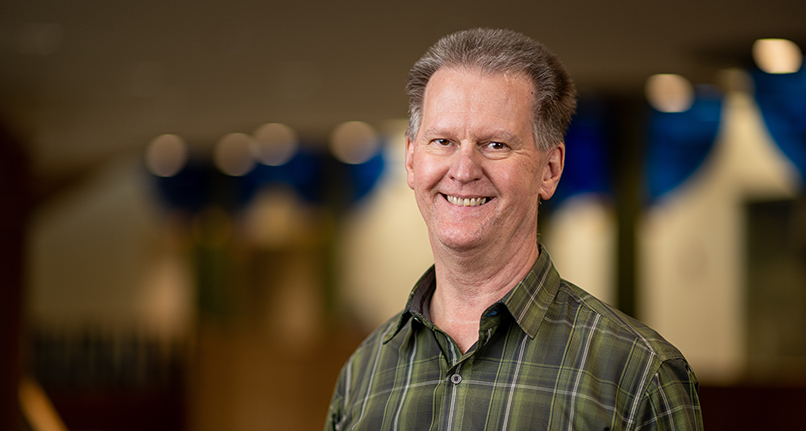
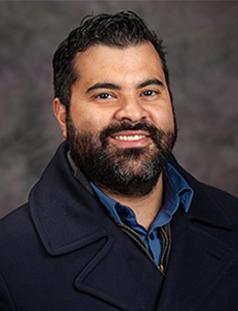
Timothy D Johnson is a Professor in the Biostatistics department at the University of Michigan School of Public Health . His research focuses on Bayesian statistical methods, neuroimaging analysis, and biomedical data modeling. Education: PhD, University of California, Los Angeles (1997) MS, University of California, Riverside (1986) BS, University of California, Riverside (1984) Research Interests: Dr. Johnson develops advanced Bayesian methodologies for high-dimensional biomedical data, particularly in neuroimaging applications. His work addresses challenges in spatial statistics, mixture models, and variable parameter spaces, with applications spanning neuroscience, cancer, endocrinology, and radiology. Publications Trends: His recent work emphasizes scalable Bayesian frameworks for neuroimaging, applications of stimulated Raman histology in oncology, and statistical solutions for clinical radiology. Many articles focus on improving diagnostic accuracy in gliomas and understanding social cognition through neuroimaging.
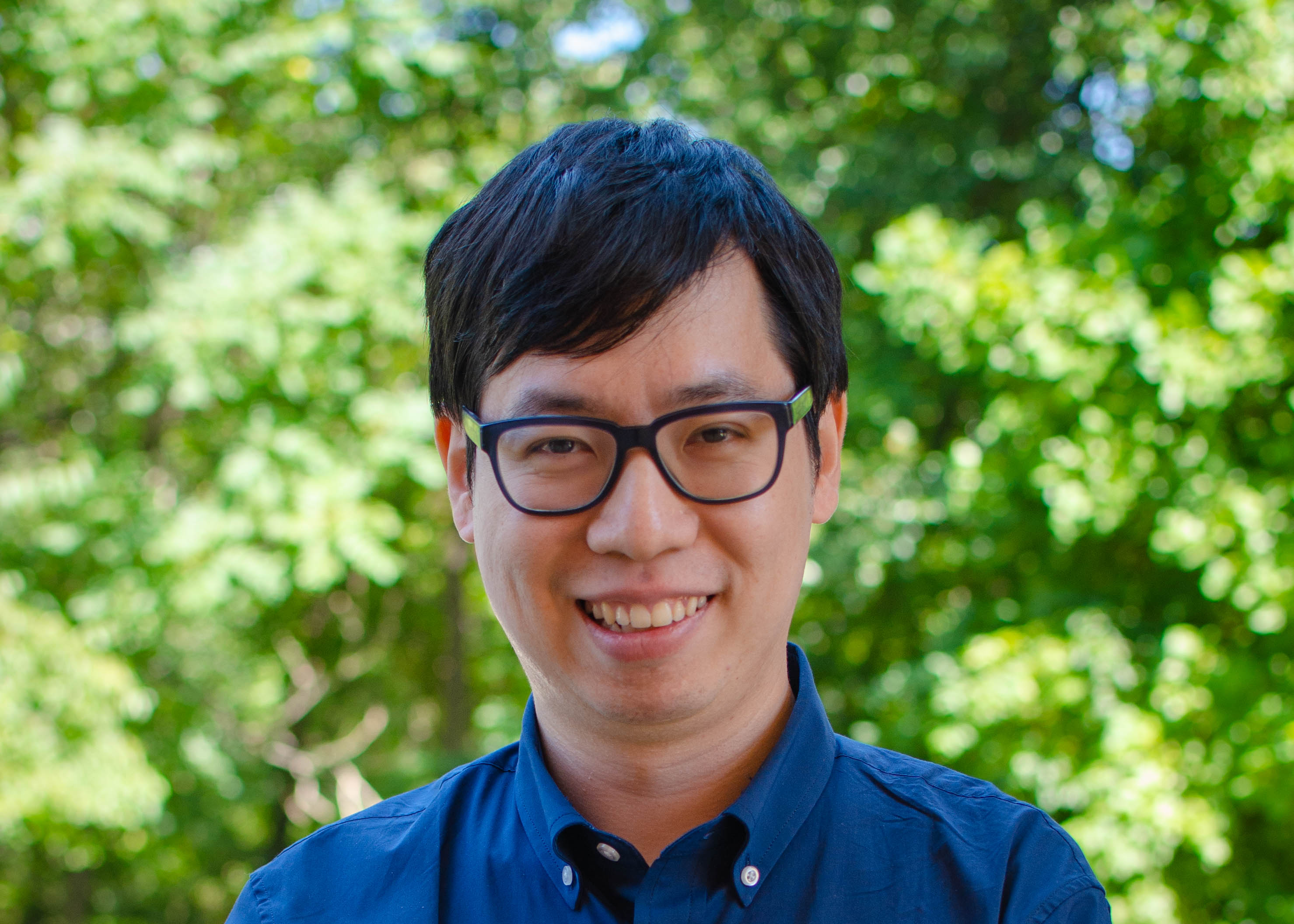
Remo Kretschmann is a Postdoctoral Researcher at the Institute of Mathematics , University of Potsdam, specializing in Uncertainty Quantification . He is associated with project A04 of the collaborative research centre SFB 1294 Data Assimilation . His academic journey includes doctoral studies at Universität Duisburg-Essen and a master’s/bachelor’s at Technische Universität München. Education Doctorate in Mathematics (2019), Universität Duisburg-Essen Master of Science in Mathematics (2012), Technische Universität München Bachelor of Science in Mathematics (2009), Technische Universität München His research focuses on statistical inverse problems with high-dimensional parameter spaces, non-Gaussian noise models , and Bayesian hypothesis testing . He investigates regularization methods in nonparametric Bayesian inference and Gaussian approximation of posterior distributions for inverse problems. Selected research trends include: Bayesian hypothesis testing for inverse problems Optimal regularization techniques in statistical inference Laplace approximation error analysis Posterior mode characterization Applications in imaging and deconvolution He has contributed to open-source software for sampling in inverse problems and numerical simulations for regularized hypothesis testing.
Prof. Dr. Christiane Fuchs is a full professor at the Faculty of Economics of Bielefeld University and heads the Data Science Group . She is also leading the Biostatistics Research Group and Core Facility Statistical Consulting at Helmholtz Munich . Her academic affiliations include the Bielefeld Graduate School of Economics and Management and the Bielefeld Center for Data Science (BiCDaS) . Education : MSc in Computational Modeling, Brunel University West London (2003) Diploma in Mathematics with Computer Science, University of Hanover (2005) PhD in Statistics, Ludwig Maximilian University of Munich (2010) Research interests span stochastic modeling , Bayesian inference , uncertainty quantification , and statistical applications in economics, medicine, and epidemiology. She specializes in diffusion processes , high-dimensional data analysis , and integrated statistical methods for cross-domain data (genomics, clinical, environmental). Recent publications focus on AI-driven clinical decision support systems , spatial epidemiology , fractional diffusion modeling , and statistical serology validation . Her work bridges methodological innovation in Bayesian statistics with real-world applications in infectious disease dynamics and hematological malignancies . Principal investigator in third-party funded projects from DFG , BMBF , NIH , and Helmholtz Association , including the UQ Consortium (2019-2024) and KoCo19 prospective COVID-19 cohort (2020-2024). She has developed statistical software packages like stochprofML and adaSC3 , and contributed to network-regularized regression methods. As Vice Rector for Research and Networking at Bielefeld University since 2023, she drives institutional research strategy while maintaining active roles in scientific societies including the International Society for Bayesian Analysis and Deutsche Statistische Gesellschaft .
Omer Ozturk is a Professor of Statistics at The Ohio State University (OSU), affiliated with the Department of Statistics. He joined the faculty in 1996 and has held editorial roles at journals including Environmental and Ecological Statistics, and Communications in Statistics. His research focuses on robust and nonparametric statistical methods, particularly in developing efficient sampling designs that minimize costs while maximizing information through auxiliary variables and ranking techniques. He has been funded by the NSA and NSF and actively collaborates with the U.S. Census Bureau as a Summer at Census Scholar. Education: PhD in Statistics from Penn State University (1994). Research Interests: Omer’s work emphasizes statistical inference under relaxed distributional assumptions, including robust methods, nonparametric techniques, and uncertainty quantification. He specializes in finite population sampling designs, such as ranked set sampling and judgment post-stratification, which leverage auxiliary information to enhance efficiency. His contributions span meta-analysis, spatial statistics, and Bayesian mixture modeling, with applications in epidemiology, environmental science, and agriculture. Articles Overview: His recent work addresses meta-analysis of survival times, spatially balanced sampling, and Bayesian modeling with ranked set samples. He developed the R package 'metamedian' for median-based meta-analysis and explored trade-offs in spatial sampling efficiency. His research consistently emphasizes practical applications in reducing sampling costs while improving statistical precision. Awards: ASA Fellow (2010). Advising & Grants: Omer has received grants from NSA and NSF, and his work frequently involves collaboration with institutions like the U.S. Census Bureau. Although specific student advisees are not listed, his research outputs suggest involvement in training graduate students in statistical methodology and applications. Labs/Teams: While no specific lab names are mentioned, his collaborations span statistical methodologies in environmental and medical research contexts, leveraging interdisciplinary teams for applied problems.
Dr. Tianzhou (Charles) Ma is an Associate Professor of Biostatistics in the Department of Epidemiology and Biostatistics at the University of Maryland. His research focuses on developing novel statistical methods and software for genetics and bioinformatics, with applications in neuroscience, cancer, and epidemiology. Key interests include meta-analysis, Bayesian analysis, machine learning, and high-dimensional variable selection. Education: PhD in Biostatistics, University of Pittsburgh (2018) MS in Biostatistics, Yale University (2013) BS in Genetics and Biotechnology, University of Toronto (2010) Research Interests: Bioinformatics, Statistical Genetics, Big Data Integration, Machine Learning, Neuroscience, and Cancer. His work emphasizes translating statistical methodologies into clinical and public health solutions. Publications: Recent work spans brain aging studies, genetic fine-mapping, and public health interventions. His articles explore topics like white matter aging, functional connectome analysis, and pathway-guided models in transcriptomics. Labs & Teams: Director of the Ma Lab@UMD, focused on interdisciplinary research bridging biostatistics, genomics, and neuroimaging.
Carl Boettiger is an Associate Professor in the Department of Environmental Science, Policy, and Management at the University of California, Berkeley. He leads the Boettiger Group, focusing on ecological forecasting, decision-making under uncertainty, and data science applications in conservation. His research integrates theoretical ecology with computational methods to address regime shifts in ecological systems. Education: Ph.D. in Population Biology, UC Davis (2012) B.A. in Physics, Princeton University (2007) Research Interests: Theoretical ecology, ecoinformatics, modeling, and data science with applications in resilience, early warning signals, and natural resource management. His work combines Bayesian inference, optimal control theory, and software development to enhance ecological predictions. Publications: Research spans ecological forecasting, conservation decision-making, and open science tools, with recent work emphasizing machine learning applications in fisheries management and biodiversity monitoring. Awards: CAREER Award, NSF (2020) Early Career Fellow, Ecological Society of America (2020) Hellman Fellow (2018) Volterra Award (2011) Students and Grants: Advises graduate students on conservation technology and ecological modeling. Secured over $15M in grants from NSF, NASA, and private foundations for projects on ecological forecasting and open-source software development. Labs and Teams: Leads the Boettiger Group and co-founded the Eric and Wendy Schmidt Center for Data Science and Environment. Contributes to rOpenSci and Rocker open-source communities.
Michael Schweinberger is a Professor of Statistics at The Pennsylvania State University (Penn State), affiliated with the Eberly College of Science. Previously, he served on the faculty of Rice University and held visiting positions at the University of Washington, Seattle, and the University of Missouri, Columbia. He also held postdoctoral positions at Penn State and the University of Washington. Schweinberger earned his Ph.D. in Statistics from the University of Groningen, Netherlands. His research focuses on the statistical science of networks, including applications to artificial intelligence, neuroscience, genetic diseases, epidemiology, social media, and economics. He emphasizes developing scalable models and methods for large networks, causal inference in networked systems, and high-dimensional data analysis. His work has been funded by the U.S. National Science Foundation (NSF), the U.S. Department of Defense (DoD), and the Netherlands Organisation for Scientific Research (NWO). While no specific scientific awards are listed, his contributions to network statistics are recognized through editorial roles with journals such as the Journal of Computational and Graphical Statistics and the Journal of Statistical Software. He also served as a reviewer for prestigious institutions like the European Research Council (ERC) and the German Research Foundation (DFG). Schweinberger has advised two Ph.D. students: Jonathan R. Stewart and Sergii Babkin. He has also served on 17 Ph.D. committees. His teaching portfolio includes courses on statistical learning with networks, stochastic modeling, and mathematical statistics.
Fangzhe Qiu is an Associate Professor at University College Dublin's School of Irish, Celtic Studies and Folklore. He leads the ERC-funded project 'FLEXI', investigating late medieval Irish legal texts using computational methods. His research focuses on historical linguistics, Old Irish law, and corpus linguistics, with interdisciplinary interests in Turcology and language rights advocacy. Qiu holds a PhD in Early and Medieval Irish from University College Cork (2015), an MPhil in Celtic Studies from Oxford (2011), and a BA in Law and Philosophy from Peking University (China). He is fluent in multiple languages, including Cantonese and Uyghur, and actively promotes Irish culture in Chinese-speaking audiences through books like Medieval Irish Legends (2022) and translations of Irish poetry. Teaching responsibilities include courses on Early Irish language, medieval law, and literature. He has secured significant grants, including the Ad Astra Fellowship (2020–2024), and coordinates modules like 'Law & Society in Early Ireland' and 'Introduction to Early Irish.' His publications span top journals in Celtic Studies, edited volumes, and popular works. Current projects emphasize text reuse in legal digests and software development for early Irish text analysis.
Carlos Rodríguez is an Associate Professor in the Department of Mathematics and Statistics at the State University of New York at Albany (SUNY Albany). He has maintained an academic server since 1993, hosting research papers, teaching materials, and software tools. His research focuses on statistical inference, mathematical physics, and online mathematics, with notable contributions to Bayesian nonparametrics, density estimation, and maximum entropy methods. He teaches courses such as calculus, linear algebra, and machine learning, and has developed software like Mapleman the Math Bot. His research interests emphasize geometric interpretations of statistical concepts, including entropic priors, Bayesian networks, and model selection criteria like CIC. He has explored applications in neutron depth profiling and probabilistic graphical models. Rodríguez's work bridges theoretical foundations with computational methods, as seen in his papers on MCMC algorithms and cross-validated Bayesianism. His server archives over two decades of publications, including seminal works on optimal recovery, ignorance theory, and likelihood principle critiques. While not explicitly listed, his contributions to statistical education and software development highlight his commitment to advancing both research and pedagogy in mathematics and statistics.
Dr. James D. Stamey serves as Chairman and Professor of the Department of Statistical Science at Baylor University. He holds a B.S. in Mathematics from Northwestern State University (1995), an MBA from Baylor University (1997), and a Ph.D. in Statistics from Baylor (2000). His research focuses on applying Bayesian methods to imperfectly measured data, with applications in pharmaceutical research, epidemiology, economics, and political science. Recent work emphasizes correcting misreporting in healthcare and public health datasets, structural zeros in contingency tables, and cost-effectiveness analysis in clinical trials. He advises graduate students on pharmaceutical-related dissertation topics, blending academic rigor with real-world problem-solving. Dr. Stamey is actively involved in Baylor's academic and community life, including consulting services and departmental leadership. His publications span Bayesian modeling innovations, misclassification correction techniques, and interdisciplinary applications in healthcare and social sciences. He collaborates with industry partners on nonclinical trial methodologies and contributes to regulatory guidelines through working groups like the DIA/ASA-BIOP Nonclinical Bayesian Working Group. Dr. Stamey’s work bridges theoretical statistics with practical challenges in public health, economics, and biomedical research. Outside academia, he enjoys family activities, tennis, pickleball, and supporting Baylor athletics. His wife and two Baylor-educated sons are active members of their local Catholic community.
Dr. Daniel Huang is an Assistant Professor in the Department of Computer Science at San Francisco State University. His research focuses on quantum computing, probabilistic programming, machine learning, and theoretical computer science. He explores interdisciplinary areas such as hybrid classical-quantum systems, Gaussian process optimization, and computational chemistry modeling. His work bridges algorithmic design with practical applications, including quantum circuit simulation and molecular geometry optimization. Dr. Huang’s recent publications highlight advancements in GPU-based quantum computing, gradient-constrained neural networks, and probabilistic programming languages like Push. He emphasizes the integration of physical priors into machine learning models and explores disruptive technologies like quantum visualization tools. His research often involves collaborative projects, as seen in works on meta-Gaussian processes and data-parallel inference algorithms. His academic contributions span over a decade, with notable papers in probabilistic program semantics, logic in linear spaces, and compiler optimizations for probabilistic models. Though no awards or grants are explicitly listed, his active publication record reflects sustained scholarly engagement. Contact: danehuang@sfsu.edu , Thornton Hall 906.
Kishore Pochampally is a Part-time Senior Lecturer at Tufts University's Gordon Institute, School of Engineering. He concurrently holds a Professor position in Management Science and Information Systems at Southern New Hampshire University (SNHU). His expertise spans quantitative studies, operations/project management, business analytics, reliability analysis, and supply chain design. He holds a B.E. in Mechanical Engineering from National Institute of Technology (India), and M.S./Ph.D. in Industrial Engineering from Northeastern University. Teaching focuses on Lean Six Sigma, business statistics/analytics, and project management, with recognition including SNHU's 2023-24 Teaching Excellence Award (full-time faculty category). His research emphasizes reverse supply chains, closed-loop systems, and statistical methodologies, with over 24 publications and four authored books. Professional certifications include Six Sigma Black Belt, PMP®, CAP®, and CSM®. Corporate engagement includes workshops on Six Sigma and project management, plus exam preparation for PMP and Six Sigma certifications. His work has global citation impact across six continents.
Samuele Tosatto is an Assistant Professor in the Computer Science Department at the University of Innsbruck and affiliated with the Digital Science Center. His research focuses on enabling robots to learn in real-world environments through reinforcement learning and abstraction techniques, addressing challenges in scalability and efficiency. Ph.D. in Computer Science from Technical University of Darmstadt (2020) M.Sc. and B.Sc. in Software Engineering from Polytechnic University of Milan His work emphasizes theoretical aspects of reinforcement learning, particularly policy gradient estimation and temporal-difference methods. Recent publications highlight innovations in data-driven teleoperation, movement primitives, and off-policy optimization, aligning with his goal of bridging simulation-to-reality gaps. He teaches courses including Introduction to Robotics, Optimization and Numerical Computation, Machine Learning, and Data Analysis II. His research is disseminated via platforms like Google Scholar and samueletosatto.com.
Dr Julian Stander is an Associate Professor in Mathematics and Statistics at the University of Plymouth, affiliated with the School of Engineering, Computing and Mathematics within the Faculty of Science and Engineering. His research focuses on Bayesian statistical methods, statistical disclosure control, sports analytics, and public health applications. He has supervised six PhD students and numerous Italian project students. Dr Stander is a Senior Fellow of the Higher Education Academy and a notable educator, recognized as the runner-up for the SSTAR Postgraduate Teacher/Supervisor of the Year Award 2017/18. His teaching spans statistical data modeling, R programming, and data science, with a particular emphasis on Bayesian inference using Stan software. He actively contributes to the development of R packages like plotrix and geofacet , advancing tools for data visualization and spatial analysis. Recent research trends highlight his work on UK political representation, pandemic policy evaluation, historical demographic studies, and ecological modeling. He frequently applies statistical methodologies to diverse fields such as criminal justice, healthcare, and sports, emphasizing interdisciplinary collaboration. Awards reflect his dual excellence in research and pedagogical innovation.
Dr. Adrian Correndo is an Assistant Professor and holds the Pick Family Chair in Sustainable Cropping Systems at the Department of Plant Agriculture, Ontario Agricultural College, University of Guelph in Guelph, Ontario, Canada. His research focuses on developing and evaluating sustainable cropping systems that address the challenge of producing food, fuel, and fiber without degrading natural resources. Dr. Correndo's educational background includes: B.S. in Agronomy from the University of Buenos Aires M.S. in Soil Science from the University of Buenos Aires Ph.D. in Agronomy from Kansas State University Dr. Correndo's research spans sustainable agriculture, soil science, and data analytics. His work heavily relies on maintaining and leveraging long-term trials at the Elora Research Station, where management practices such as tillage, crop rotation, cover crops, and fertilization management are studied. He is particularly interested in developing accessible digital tools that apply modern data analytics like machine learning and Bayesian statistics to agricultural challenges. His research bridges the gap between statistical methodology and practical farming applications, with a strong emphasis on reproducible programming and open-source software development. His publication record demonstrates a clear trajectory toward integrating advanced statistical methods with agricultural research. The majority of his work focuses on maize and soybean production systems, soil fertility, and nutrient management. A significant portion of his recent publications involves developing R packages and digital tools that make complex statistical analyses accessible to farmers and agricultural professionals. His research shows a strong commitment to creating practical, science-based solutions for sustainable farming systems in Ontario and beyond. Dr. Correndo has been awarded the prestigious Pick Family Chair in Sustainable Cropping Systems, established by Martin and Denise Pick to develop effective, simple-to-use cropping systems that address soil degradation. Before joining the University of Guelph, Dr. Correndo worked on research and extension in soil fertility and crop nutrition as the Assistant Agronomist (2008-2018) for the Latin America Southern Cone Program of the International Plant Nutrition Institute (IPNI), and from 2018 to 2023 at Kansas State University as a Graduate Research Assistant while pursuing his Ph.D. in Agronomy (2018-2021), and as a Post-doctoral Fellow (2022-2023) working on corn and soybean production research and extension. Dr. Correndo is actively involved with the Elora Research Station, where he maintains long-term trials examining various agricultural management practices. He emphasizes teamwork and mentoring as essential components of his professional and personal philosophy, working to inspire and support the next generation of agricultural leaders.