معرفی
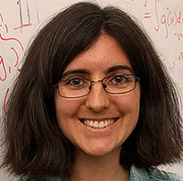
Omer Ozturk is a Professor of Statistics at The Ohio State University (OSU), affiliated with the Department of Statistics. He joined the faculty in 1996 and has held editorial roles at journals including Environmental and Ecological Statistics, and Communications in Statistics. His research focuses on robust and nonparametric statistical methods, particularly in developing efficient sampling designs that minimize costs while maximizing information through auxiliary variables and ranking techniques. He has been funded by the NSA and NSF and actively collaborates with the U.S. Census Bureau as a Summer at Census Scholar.
Education: PhD in Statistics from Penn State University (1994).
Research Interests: Omer’s work emphasizes statistical inference under relaxed distributional assumptions, including robust methods, nonparametric techniques, and uncertainty quantification. He specializes in finite population sampling designs, such as ranked set sampling and judgment post-stratification, which leverage auxiliary information to enhance efficiency. His contributions span meta-analysis, spatial statistics, and Bayesian mixture modeling, with applications in epidemiology, environmental science, and agriculture.
Articles Overview: His recent work addresses meta-analysis of survival times, spatially balanced sampling, and Bayesian modeling with ranked set samples. He developed the R package 'metamedian' for median-based meta-analysis and explored trade-offs in spatial sampling efficiency. His research consistently emphasizes practical applications in reducing sampling costs while improving statistical precision.
- Awards: ASA Fellow (2010).
Advising & Grants: Omer has received grants from NSA and NSF, and his work frequently involves collaboration with institutions like the U.S. Census Bureau. Although specific student advisees are not listed, his research outputs suggest involvement in training graduate students in statistical methodology and applications.
Labs/Teams: While no specific lab names are mentioned, his collaborations span statistical methodologies in environmental and medical research contexts, leveraging interdisciplinary teams for applied problems.