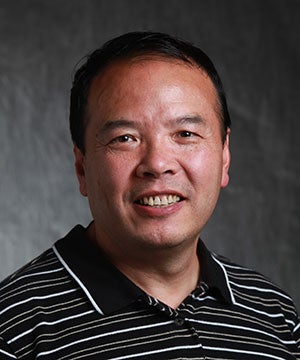
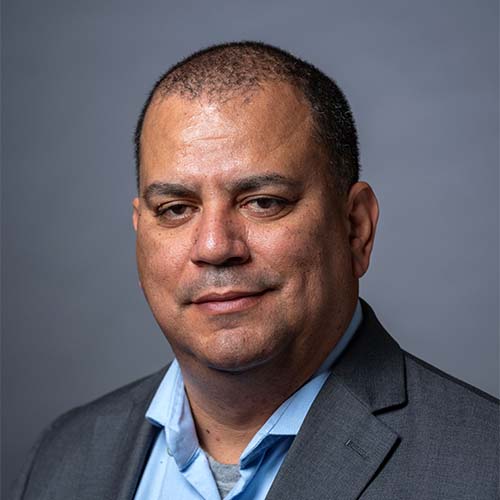
Qiang Ji is a Professor in the Department of Electrical, Computer, and Systems Engineering at Rensselaer Polytechnic Institute (RPI), directing the Intelligent Systems Laboratory (ISL). He holds IEEE and IAPR Fellowships. Dr. Ji's research focuses on AI, computer vision, Bayesian methods, and robotics, with contributions to causal discovery, 3D reconstruction, and Tibetan multi-dialect speech recognition. He previously served as an NSF program director managing machine learning and computer vision initiatives. His academic journey includes positions at the University of Nevada, Reno, and visiting roles at institutions like Carnegie Mellon's Robotics Institute. Education: PhD in Electrical Engineering from the University of Washington. Research interests span machine learning, probabilistic graphical models, and human-computer interaction. Notable contributions include Bayesian adversarial learning, knowledge-augmented deep learning, and physics-aware human motion prediction. His work bridges theoretical advancements with applied systems like gaze estimation and facial action unit detection. Awards: IEEE Fellow (202?), IAPR Fellow (202?). Professional roles include conference committee chairs and editorial board memberships. Key research themes include uncertainty quantification, causal inference, and cross-domain learning challenges.
Professor Stephen Roberts holds the Royal Academy of Engineering / Man Group Chair in Machine Learning at the University of Oxford. He is affiliated with the Oxford-Man Institute and Somerville College. With a DPhil in machine learning and a physics background, his research spans environmental science, financial systems, and geophysics. He co-leads the Machine Learning Research Group and directs the EPSRC Centre for Doctoral Training in Autonomous, Intelligent Machines and Systems (AIMS). His academic journey includes prior faculty roles at Imperial College London before joining Oxford in 1999. Key research interests include tidal analysis using AI, climate modeling, geospatial data interpretation, and financial algorithm design. He has pioneered tools like RTide for coastal flooding prediction and developed machine learning frameworks for environmental and economic applications. Education: DPhil in Machine Learning, Physics undergraduate degree Affiliations: Oxford-Man Institute, Somerville College, EPSRC AIMS CDT Key Projects: SWOT mission data corrections, Antarctic bedrock mapping, carbon footprint reduction in ML His work bridges disciplines, applying ML to solve complex problems in climate science, finance, and geology. Awards include Fellowship of the Royal Academy of Engineering and IET. Current focus areas include improving climate model accuracy and fostering interdisciplinary training through the AIMS program.
Peiyi Wang is an Assistant Professor at Peking University's School of Electronics Engineering and Computer Science, Institute for Artificial Intelligence. With strong research output spanning both natural language processing and robotics, Wang maintains significant collaborations with Southern University of Science and Technology and National University of Singapore, particularly in soft robotics research with Professor Cecilia Laschi. Additionally, Wang is actively involved with DeepSeek-AI, contributing to several major language model initiatives including DeepSeek-R1 and DeepSeek-V2. Peking University, School of EECS, Institute for Artificial Intelligence (Primary) Southern University of Science and Technology (Collaborative) National University of Singapore (Collaborative) DeepSeek-AI Research Organization Dr. Wang's research spans two primary domains with significant intersection points. In natural language processing, Wang focuses on large language model reasoning capabilities, mathematical verification, uncertainty estimation, and preference alignment. The robotics work centers on soft robotics, particularly origami-inspired designs, strain-based modeling, and control systems for continuum manipulators. These domains converge in Wang's work on vision-language models, embodied AI, and multimodal reasoning systems. Recent work demonstrates particular innovation in mathematical reasoning verification (Math-Shepherd), soft robotic control systems, and red teaming frameworks for language model safety. Wang's publication record shows remarkable productivity, with over 40 publications between 2021-2025 across top-tier venues including ACL, EMNLP, CVPR, and IEEE Transactions on Robotics. The work demonstrates consistent progression from foundational NLP tasks to increasingly sophisticated multimodal and reasoning systems. The most recent publications (2024-2025) show particular emphasis on mathematical reasoning verification, soft robotics control, and language model safety evaluation. While specific awards aren't documented in the provided materials, Wang's work has clearly gained significant recognition through acceptance at top-tier conferences and collaborations with leading researchers in both NLP and robotics fields. Wang's research demonstrates strong interdisciplinary connections, bridging theoretical NLP work with practical robotics applications. The work with DeepSeek-AI suggests active industry collaboration while maintaining strong academic research output. Current research directions appear focused on improving language model reasoning reliability while developing novel soft robotic systems that can interact safely and effectively with complex environments.
Dr. Lydell Wiebe is a Professor and Acting Chair of Civil Engineering at McMaster University. He specializes in earthquake engineering, structural dynamics, and seismic resilience, focusing on controlled rocking systems and steel structures. His research group combines large-scale experiments and advanced modeling to enhance building resilience in seismic regions. Dr. Wiebe holds a BASc (2005) and PhD (2013) from the University of Toronto, and an MSc in Earthquake Engineering from the ROSE School in Italy (2008). He serves as Chair of CSA S16 Working Group 9 (Seismic Design) and is Vice-President of the Canadian Association for Earthquake Engineering. His teaching awards include the McMaster University Faculty of Engineering Teaching Excellence Award (2017) and the McMaster Students Union Award for Excellence in Teaching (2014, 2017). He teaches courses on structural analysis, seismic design, and civil engineering fundamentals. Research Focus: Seismic resilience, self-centering systems, and masonry innovation Professional Roles: Editorial Boards of the Journal of Earthquake Engineering and Canadian Journal of Civil Engineering His research emphasizes transforming seismic resilience into a routine design outcome, with applications in steel braced frames and masonry systems. Recent work addresses foundation design, energy dissipation mechanisms, and probabilistic risk assessment for critical infrastructure. Awards: GJ Jackson Fellowship, HA Krentz Research Award Key Projects: Controlled rocking braced frames for low-seismicity regions, resilient masonry systems
Lori Graham-Brady is a Professor in the Department of Civil and Systems Engineering at Johns Hopkins University's Whiting School of Engineering. She serves as Vice Dean for Faculty and directs the Center on AI for Materials in Extreme Environments (CAIMEE), while also holding secondary appointments in Mechanical Engineering and Materials Science and Engineering. Her research focuses on stochastic mechanics, multiscale modeling, and machine learning applications for understanding material variability under extreme conditions. Research areas include probabilistic mechanics, AI-driven materials design, and fragmentation modeling. Leadership roles: Director of CAIMEE, former Director of Center for Materials in Extreme Dynamic Environments, founding Director of HT-MAX, and founding Associate Director of HEMI (2012-2024). Education: PhD in Civil Engineering and Operations Research from Princeton University. Her recent work emphasizes AI for multiscale mechanics, error propagation in material characterization, and digital microstructure generation. Publications highlight stochastic modeling of ceramics, composites, and metals under impact and high-strain-rate loading. Scientific awards include the Presidential Early Career Award, Huber Civil Engineering Research Prize, and Fellowships in ASCE EMI and USACM. She led NSF IGERT programs and serves as Associate Editor for the ASCE Journal of Engineering Mechanics.
Ewan Dolier is a Research Fellow in the Department of Physics at the University of Strathclyde, Faculty of Science. He is actively involved in cutting-edge research on laser-driven ion acceleration and plasma physics, working within the SCAPA (Scottish Centre for the Application of Plasma-based Accelerators) facility. His work bridges experimental physics and machine learning techniques to optimize and diagnose high-energy particle beams. His research interests include: Laser-Plasma Interactions Machine Learning for Physics Optimization Proton and Ion Beam Acceleration Synthetic Diagnostics using Neural Networks High Repetition Rate Laser Systems Relativistic Transparency Regime Physics The recent trend in his publications shows a strong focus on integrating artificial intelligence and deep learning models into the control and analysis of laser-driven particle acceleration experiments. His work spans experimental design, data-driven optimization, and advanced diagnostics using scintillating fiber spectrometers and synthetic models. His scientific contributions have been presented at major plasma physics conferences and published in high-impact journals such as Communications Physics and High Power Laser Science and Engineering . Notable projects include: External Experiment at the Gemini High-Power Laser Facility (Deep Learning for Ion Acceleration) Development of High Repetition-Rate Target Systems at SCAPA Doctoral Training Partnership research (2019–2024) He collaborates extensively with leading researchers such as Paul McKenna and Ross Gray, and contributes to multi-investigator datasets and simulations. Ewan Dolier completed his PhD in 2024 with a thesis on advancing laser-driven ion acceleration using machine learning and instability analysis.
Colin Wilson is a Professor in the Department of Cognitive Science at Johns Hopkins University . He is on leave during Fall 2025. His research spans theoretical and experimental phonology, phonetics, cross-language perception/production, and computational modeling. Specialties : Theoretical phonology, phonotactics, constraint learning Techniques : Artificial grammar, probabilistic models, acoustic analysis Research Trends Recent publications focus on interpretable neural networks for morphological learning, phonetic covariation in American English stops, and cross-language speech processing. Key areas include constraint-based grammar, Bayesian inference, and phonotactic probability. Teaching History Colin has taught courses at JHU (2008-2017) and UCLA (2001-2007) including Phonology I/II, Bayesian Inference, and language processing seminars. He co-taught with Donca Steriade, Bruce Hayes, and others.
Matthew A. Franchek is a Professor in the Department of Mechanical and Aerospace Engineering at the University of Houston, where he has served since 2002. His career spans over three decades, including prior roles as Professor and Chair at the University of Houston (2002–2009), Director of the Biomedical Engineering Program (2002–2009), and faculty positions at Purdue University from 1992 to 2002. He earned his Ph.D. (1991), M.S. (1988), and B.S. (1987) in Mechanical Engineering from Texas A&M University and the University of Texas at Arlington, respectively. Dr. Franchek’s research focuses on Dynamic Systems, Measurement and Control , with expertise in linear/nonlinear system identification, multivariable control theory, diagnostics/prognostics, and adaptive control. His engineering applications span internal combustion engines , exhaust after-treatment , noise/vibration control , and health prognostics for cardiovascular/respiratory systems . His recent publications highlight applications in superconductor manufacturing, aeroelastic stability, magnetic actuators, and subsea engineering. 2002 Best Paper Award, ASME Journal of Dynamic Systems, Measurement and Control 2001 ASME Dynamic Systems and Control Division Young Investigator Award 1997 CASA/SME University Lead Award 1997 Feddersen Faculty Fellow, Purdue University Multiple teaching awards at Purdue University (1994–2001) and Texas A&M University (1991) He has served as an Associate Editor for the ASME Journal of Dynamic Systems, Measurement and Control, held leadership roles in ASME and IEEE, and organized symposia on nonlinear control and robust control at international conferences. His professional activities include advisory roles at Cummins Incorporated and reviewing for NSF and numerous journals.
Christophe Andrieu is a Professor in Statistics within the School of Mathematics at the University of Bristol. His research bridges theoretical probability, computational statistics, and applied mathematics, with significant contributions to Markov Chain Monte Carlo methodologies and Bayesian inference frameworks. He maintains active collaborations across engineering and data science domains. His educational background includes: M.A. from List.Natnl.Scis.App.Lyon Additional M.A. (institution unspecified) Ph.D. from Paris Andrieu's research focuses on Markov Chain Monte Carlo theory , where he develops convergence guarantees and efficiency bounds for complex samplers. His work extends to non-reversible MCMC algorithms , piecewise deterministic processes , and gradient-free optimization techniques. Recent publications demonstrate innovative approaches to state-space models and numerical integration, often addressing high-dimensional statistical challenges through stochastic approximation methods. His fingerprint reveals deep specialization in Markov chain convergence analysis and computational Bayesian statistics. His 15 most recent publications (2021-2025) exhibit consistent focus on theoretical foundations of Monte Carlo methods, particularly convergence analysis of Markov chains and novel sampler designs. Key trends include the application of weak Poincaré inequalities to pseudo-marginal MCMC, development of self-organizing state-space models, and exploration of hypocoercivity in piecewise deterministic processes. The work spans both theoretical advancements and practical implementations for engineering and statistical applications. Andrieu has secured significant research funding including: COmputational Statistical INference for Engineering and Security (COSINES) (2018-2023) New Approaches to Data Science (2018-2023) He has supervised 5 research students and maintains active collaborations in computational statistics and machine learning. His network shows strong connections with probability theory and engineering research groups.
Alexandre Barreto serves as an Associate Professor in the Department of Cyber Security Engineering at George Mason University, specializing in cybersecurity applications for transportation systems and critical infrastructure. His work integrates air traffic management expertise with advanced security protocols to address defense and infrastructure vulnerabilities. Education PhD, Instituto Tecnológico de Aeronáutica, Brazil Barreto's research centers on transportation security (particularly aviation), cyber impact assessment, and blockchain applications for critical infrastructure. He develops secure protocols for air traffic systems like ADS-B and creates decision support frameworks for defense scenarios. His methodology combines machine learning, network security, and risk modeling to enhance resilience in smart grids and urban air mobility systems. Analysis of his 15 most recent publications reveals dominant themes in aviation cybersecurity (ADS-Bsec frameworks, Cyber-ARGUS), energy infrastructure protection (SIAD-AERO), and blockchain integration for air traffic management. Over 60% of his work focuses on securing air traffic surveillance systems, while emerging research explores carbon emissions prediction and deep space navigation applications. Advising and Grants No specific student advisement records or grant funding details were documented in the source material, though his classroom activities span graduate and undergraduate cybersecurity education.
Eric P. Xing is a Professor at the Language Technologies Institute of Carnegie Mellon University , and currently serves as President of the Mohamed bin Zayed University of Artificial Intelligence . His work bridges machine learning methodology with computational biology and large-scale AI systems . Research Focus: Developing machine learning theory for high-dimensional, dynamic data Building foundation models for biology (AIDO, scLong, ProteinAligner) Designing scalable AI architectures (Pollux, LLM360, PAN) Advancing interpretable and controllable NLP systems Scientific Leadership: Founded the SAILING Lab at CMU Co-chaired ICML 2014 and ICML 2019 Recipient of the Jay Lepreau Best Paper Award (OSDI 2021) Education & Mentorship: Advises PhD students across machine learning and computational biology Alumni include faculty at ETH Zurich, University of Chicago, and UC San Diego
Eric Barth is Professor of Mechanical Engineering and Professor of Neurological Surgery at Vanderbilt University's School of Engineering. He serves as Director of the C* Control laboratory (also known as the Laboratory for the Design and Control of Energetic Systems) and is affiliated with the Vanderbilt Institute for Surgery and Engineering (VISE), an interdisciplinary entity bringing engineers and physicians together to impact healthcare. His educational background includes: Ph.D. in Mechanical Engineering from Georgia Institute of Technology M.S. in Mechanical Engineering from Georgia Institute of Technology B.S. in Engineering Physics from University of California - Berkeley Professor Barth's research focuses on dynamic systems and control with applications spanning multiple domains. His primary interests include the design, modeling and control of mechatronic and fluid power systems, free-piston internal combustion and free-piston Stirling engines, energy storage and harvesting systems, and MRI compatible pneumatic robots for medical applications. His work applies a system dynamics and control perspective to problems involving the control and transduction of energy, encompassing multi-physics modeling, control methodologies formulation, and model-based design. His recent publications reveal a strong trajectory connecting mechanical engineering principles with medical applications, particularly in neurosurgery. The research spans energy systems (especially Stirling engines and novel energy storage approaches) and advanced medical robotics for MRI-guided interventions. This dual focus demonstrates his ability to bridge theoretical control systems with practical applications in both energy and healthcare domains. Professor Barth actively advises several doctoral students including David Comber, Joshua J Cummins, Alexander V. Pedchenko, and E. Bryn Pitt. His research is supported by significant funding, notably from the Center for Compact and Efficient Fluid Power, an NSF Engineering Research Center. The C* Control laboratory he directs occupies approximately 1000 square feet and contains specialized equipment including an 8-camera high-bandwidth optical tracking system, mechanical breadboard tables, pneumatic equipment with high-bandwidth servo-valves, specialized pressure sensors, a thermographic camera, high-speed video equipment, 3D printers, and a 2D laser cutter. Computational facilities include a network of approximately 20 machines running MATLAB/Simulink and SolidWorks, with access to additional CNC machining resources through the School of Engineering and the University.
Jay Barney is the Presidential Professor of Strategic Management and Pierre Lassonde Chair of Social Entrepreneurship in the Department of Entrepreneurship & Strategy at the University of Utah's David Eccles School of Business. Previously holding the Chase Chair for Excellence in Corporate Strategy at Ohio State University, he is a foundational scholar in strategic management renowned for developing the resource-based view of the firm. Education: Doctor of Philosophy, Yale University Master of Arts, Yale University Bachelor of Science, Brigham Young University Barney's research revolutionized strategic management through his seminal work on how costly-to-copy firm resources create sustained competitive advantage, establishing the VRIN (Valuable, Rare, Inimitable, Non-substitutable) framework. His scholarship bridges strategic management and entrepreneurship, examining opportunity formation processes, social entrepreneurship for poverty alleviation, and the philosophical foundations of entrepreneurial research. Current work increasingly focuses on integrating social impact with strategic advantage, particularly through industrialization solutions to poverty and stakeholder engagement under uncertainty. Analysis of his 2012-2016 publications reveals three dominant research streams: (1) theoretical extensions of resource-based theory into human capital, IT capabilities, and multinational contexts; (2) philosophical and methodological foundations of entrepreneurship research; and (3) social entrepreneurship applications addressing poverty and public interest. These works consistently appear in top-tier journals including Strategic Management Journal and Academy of Management Review, demonstrating rigorous theoretical development coupled with practical implications for organizational strategy. Scientific Awards: SMS Fellow Fellow of the Academy of Management Honorary Doctorate from University of Lund Honorary Doctorate from Copenhagen Business School Honorary Doctorate from Universidad Pontificia Comillas As a dedicated educator, Barney teaches doctoral seminars and strategy courses while mentoring PhD students in strategic management and entrepreneurship. His professional impact extends through executive training programs across North America and Europe, and strategic consulting engagements focused on organizational transformation. He has significantly shaped the field through editorial leadership as associate editor of Journal of Management, senior editor of Organization Science, and co-editor of Strategic Entrepreneurship Journal, while serving in officer roles for both the Strategic Management Society and Academy of Management's Business Policy and Strategy Division. Barney's research activities are closely integrated with the Lassonde Entrepreneur Institute at the University of Utah, where his social entrepreneurship chair supports initiatives connecting strategic management principles with poverty alleviation efforts and opportunity creation in resource-constrained environments.
Professor Gerhard Wolber leads the Molecular Drug Design research group at the Institute of Pharmacy , Freie Universitaet Berlin. His work focuses on computational approaches to drug discovery, with expertise in G-protein coupled receptors (GPCRs) , cytochrome P450 enzymes , Toll-like receptors , and viral protease inhibitors . He supervises a team of 13 PhD candidates 3 researchers 2 Master's students engaged in projects ranging from calcium channel blockers to CYP enzyme modulators for cancer therapy. Recent publications highlight his lab's contributions to pan-coronavirus drug discovery, TLR8 antagonism, and calcium channel inhibition. The team employs advanced methodologies including Molecular dynamics simulations Fragment-based de novo design Bayesian neural networks DFT calculations 3D pharmacophore modeling to bridge computational predictions with experimental validation. Notable projects include Virtual screening for TREM2-targeted glioblastoma therapeutics Allosteric communication path analysis via MDPath Immune checkpoint inhibitors for cancer immunotherapy Biased GPCR ligand development demonstrating a multidisciplinary approach to contemporary drug design challenges.
Professor Nicholas Warren is a Chair in Sustainable Materials at the School of Chemical, Materials and Biological Engineering at the University of Sheffield. With a PhD from Sheffield and academic experience at Leeds University (2016-2024), his research integrates polymer chemistry with automation technologies. Education: University of Bristol (2005), University of Sheffield (PhD) Academic Positions: Postdoc at Sheffield (2005-2016), University Academic Fellow at Leeds (2016-2024), Associate Professor (2021-2024) Current Role: Chair in Sustainable Materials (2024-present) Research focuses on polymer science with flow chemistry , online monitoring , and artificial intelligence to advance sustainable materials. Key article trends include self-driving laboratories , multi-objective optimization , and nanostructured polymer systems . Scientific recognitions include: 2022 Macro Group UK Young Researchers Medal 2023 RSC Reaction Chemistry & Engineering Outstanding Early Career Paper Award Advisees span current and alumni PhD students like Dr Stephen Knox , Anna Morrell , and Dr Charlotte Pugsley . His team employs self-driving lab platforms that combine robotics, AI, and online analytics for accelerated materials discovery.