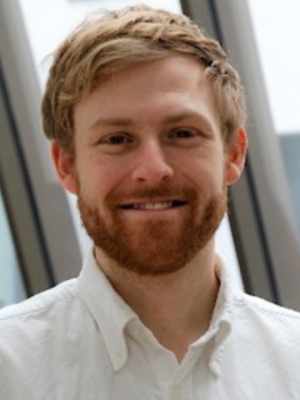
Benjamin Black is a Lecturer in the Department of Civil, Environmental and Geomatic Engineering at ETH Zurich, focusing on simulation modeling of socio-ecological systems and land use change. Research explores: Land use change modeling calibration techniques Protected area effectiveness assessment Participatory methods for environmental decision-making Uncertainty quantification in predictive models Ecological infrastructure valuation Key publications develop novel approaches for: Validating transition potential predictions in cellular automata models Counterfactual assessment of protected area impacts using propensity score matching Participatory Bayesian networks for policy intervention design Research contributes to the VALPAR.CH project assessing ecological infrastructure values in Swiss parks.
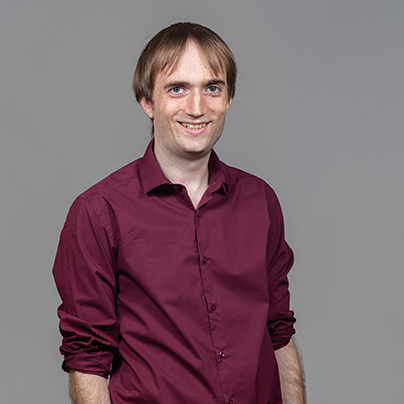
Arnór Elvarsson is a Lecturer at ETH Zurich's Department of Civil, Environmental and Geomatic Engineering, affiliated with the Institute of Construction and Infrastructure Management (IBI). He holds a PhD from ETH Zurich (2021) and an MSc in Spatial Development & Infrastructure Systems (2018), for which he received the Culmann Award. His research focuses on infrastructure planning under uncertainty, strategic decision-making, and adaptive planning methods to enhance societal responsiveness. He has professional experience as a Project Engineer at Infrastructure Management Consultants and a Specialist at EFLA Engineers. Education: BSc in Civil & Environmental Engineering from the University of Iceland (2014), MSc from ETH Zurich (2018), and ongoing PhD at ETH Zurich. His work integrates digital tools and uncertainty modeling to improve long-term infrastructure planning. Key projects include exploring adaptive mobility infrastructure, responsiveness in planning processes, and automated vehicle impacts. Research Interests: Infrastructure planning methodologies, transport demand modeling, decision-making under uncertainty, and the interplay between land-use and mobility. He teaches courses on infrastructure optimization tools and interdisciplinary project activities. Awards include the 2018 Culmann Award for his Master's thesis. Publications span topics like probabilistic pavement forecasts, automated vehicle deployment strategies, and infrastructure responsiveness. He advises students on Master's and Bachelor's theses and contributes to grants focused on transport infrastructure development and uncertainty modeling. Labs/Teams: Active in ETH Zurich's Infrastructure Management group, focusing on adaptive planning and uncertainty analysis. Collaborates on interdisciplinary projects with industry partners like BIM4AMS and MAPFalke.
Andrei Atanov is a Researcher at the Laboratoire d'intelligence et d'apprentissage visuels (VILAB) within the School of Computer and Communication Sciences at École Polytechnique Fédérale de Lausanne (EPFL) . His research focuses on advanced topics in artificial intelligence, computer vision, and machine learning, with particular emphasis on multimodal learning, vision-language models, and robust generalization. He is affiliated with the Department of Computer Science and contributes to projects exploring innovative solutions for vision tasks using computationally designed sensors and diffusion models. His work often bridges theoretical advancements with practical applications in robotics and generative systems. Key research areas include developing large vision-language models, optimizing vision algorithms for low-sensor environments, and enhancing model robustness through diversification strategies. His publications span topics from 3D data augmentation to uncertainty estimation in deep learning, reflecting a broad yet technically deep expertise in AI fundamentals and applications.
Marco Bagatella is a doctoral researcher at the Institute of Machine Learning (ETH Zürich), focusing on advanced machine learning and artificial intelligence research. His work spans reinforcement learning, behavioral cloning, and causal inference, often addressing challenges in generalization, exploration, and policy adaptation. Contact: marco.bagatella@inf.ethz.ch Specializes in Reinforcement Learning (including offline and multi-task settings) Expertise in causal modeling and counterfactual data augmentation Investigates graph neural networks for biological systems Active contributor to AI/ML publications (15+ recent works) His research explores problem space transformations, optimal transport for zero-shot imitation learning, and temporal logic-based exploration. Current projects focus on improving policy robustness and adaptability across diverse domains. Scientific awards: No formal honors listed yet. Collaborates with ETH Zurich's machine learning teams on cutting-edge algorithm development and theoretical analysis.
Prof. Stelian Coros is an Associate Professor at the Department of Computer Science, ETH Zürich, and Head of the Institute for Intelligent Interactive Systems. His research focuses on robotics, computational design, and control systems, with applications in robotic manipulation, simulation, and autonomous systems. His work integrates principles from computer science, mechanical engineering, and artificial intelligence to advance the capabilities of robots in real-world environments.
Dr. Mohamed Abdalmoaty is a Researcher at ETH Zürich's Institut für Automatik, specializing in the Department of Automatic Control. His work focuses on Data-Driven Modelling and Control , with expertise in system identification, stochastic systems, and optimal control. He holds an affiliation within the Professorship for Complex Systems Control. His research interests emphasize data-driven approaches for predictive control, frequency-domain identification, and nonlinear dynamical systems. He has contributed to advancements in Kalman filter formulations, stochastic Wiener models, and cybersecurity in control systems, particularly in medical applications like the artificial pancreas. Abdalmoaty’s recent publications (2022–2024) highlight innovations in time-varying normalizing flows, privacy-preserving network control, and robust parameter estimation under uncertainty. His work bridges theoretical control systems with practical applications in machine learning and biomedical engineering. He has developed software tools for system identification and simulation, including implementations for frequency-domain analysis and nonparametric closed-loop identification. His research aligns with emerging trends in hybrid machine learning-control frameworks and resilient cyber-physical systems.
De Lapparent Matthieu is a Full Professor at HES and Director of the Interdisciplinary Institute for Business Development (IIDE) at the Haute école d'Ingénierie et de Gestion du Canton de Vaud. His expertise spans Transport and Logistics, Mathematical Economics, Econometrics, Industrial Organization, and Behavior Modeling . He leads research projects focusing on urban development, energy systems, and transportation economics. Affiliations: IIDE, HES-SO Key roles: Director, Principal Investigator (4 completed projects funded by Société du Grand Paris, Planair SA, etc.) Research interests include: - Discrete choice modeling for mobility and infrastructure decisions - Energy network optimization (gas distribution, microgrids) - Urban sustainability and brownfield rehabilitation - Risk analysis in transportation and decision-making Recent studies explore EV charging dynamics, blockchain in energy markets, and spatial distribution of employment in Île-de-France. His work integrates quantitative methods with policy applications, emphasizing practical tools for urban planners and industry. Grants and projects total over CHF 100k in funding. Collaborations include institutions like Société du Grand Paris, Mobil'Homme Sàrl, and academic partners within HES-SO.
Jonathan Scarlett is an Associate Professor at the National University of Singapore (NUS), holding joint appointments in the Department of Computer Science, Department of Mathematics, and the Institute of Data Science. His research focuses on information theory, machine learning, and high-dimensional statistics, with contributions to topics such as group testing, Bayesian optimization, and coding theory. He has received notable awards including the NUS Presidential Young Professorship and MIT TR35 Innovators (Asia Pacific) recognition. Scarlett advises numerous PhD students, including Yang Sun, Zihan Li, and Arpan Losalka, whose theses address challenges in inverse problems, kernel-based optimization, and safety in Bayesian optimization. His work spans theoretical foundations and practical applications, with recent publications exploring optimal group testing algorithms, error exponents in DNA storage, and robust bandit optimization. He leads collaborative projects on distributed statistical estimation and adversarial machine learning, leveraging interdisciplinary methods from signal processing and information theory. His academic journey includes a postdoc at the LIONS laboratory (2014–2017) before his promotion to Associate Professor in 2024. Scarlett actively contributes to the academic community through editorial roles, conference organization, and over 100 peer-reviewed publications. His lab develops novel frameworks for handling uncertainty in data-driven systems, with applications to healthcare, communication networks, and autonomous systems.
Alexandre Alahi is an Associate Professor at École Polytechnique Fédérale de Lausanne (EPFL), where he leads the Visual Intelligence for Transportation (VITA) laboratory. He is affiliated with the School of Architecture, Civil and Environmental Engineering (ENAC), the Institute of Infrastructure (IIC), and also contributes to diversity initiatives at ENAC. His research focuses on integrating computer vision, machine learning, and robotics to develop socially-aware AI for transportation and autonomous systems. University: École Polytechnique Fédérale de Lausanne (EPFL) School: School of Architecture, Civil and Environmental Engineering Department: Institute of Infrastructure, IIC Research Lab: Visual Intelligence for Transportation (VITA) Alexandre's research interests center on computer vision, machine learning, robotics, and AI safety, particularly in human trajectory prediction, depth estimation, and socially-aware autonomous navigation. He investigates how AI can understand and predict human behavior in complex environments to improve safety in mobility systems. His work bridges theoretical advances with real-world applications in autonomous driving, urban planning, and healthcare. His recent publications span a wide array of topics including omnidirectional stereo matching, trajectory forecasting, cross-view localization, AI security, and depth estimation. These works demonstrate a strong trend toward building generalizable, robust, and socially-compliant AI systems, with increasing focus on uncertainty quantification, safety certification, and real-world deployment. The integration of multimodal data and the development of foundation models are recurring themes. Alexandre has received numerous scientific accolades, including: Top 100 Most Influential Scholar in Computer Vision (2022–2023) Editor’s Choice Award, Image and Vision Computing (2021) Honorable Mention, ICCV Workshop (2019) CVPR Open Source Award (2012) ICDSC Challenge Prize (2009) Top 20 Swiss Venture Leaders (2010) He has advised numerous PhD students whose theses cover diverse topics such as human motion prediction, person re-identification, trajectory forecasting, and AI security. His lab has secured significant recognition and funding, enabling impactful research with real-world applications. Alexandre has also co-founded startups like Visiosafe, demonstrating strong industry engagement and technology transfer. The VITA lab fosters interdisciplinary collaboration, working across computer vision, robotics, transportation engineering, and human-centered AI. The team develops datasets, benchmarks, and open-source tools to advance the field and promote reproducibility.
Daniel Kuhn is a Full Professor at the Swiss Federal Institute of Technology Lausanne (EPFL), where he holds the Chair of Risk Analytics and Optimization in the College of Management of Technology. His research focuses on developing computational methods for data-driven decision-making under uncertainty, with applications in engineered systems, machine learning, and finance. Previously, he held positions at Imperial College London and Stanford University. Education includes: PhD in Economics, University of St. Gallen MSc in Theoretical Physics, ETH Zurich Research interests span data-driven optimization , stochastic programming , and robust decision-making frameworks . His work develops computationally tractable methods for uncertainty quantification in complex systems, bridging operations research with statistical learning. Current investigations focus on distributionally robust optimization using Wasserstein metrics and applications in energy markets and fair machine learning. Publication analysis reveals three primary trends: 1) Fundamental advances in distributionally robust optimization theory, 2) Machine learning applications with uncertainty guarantees, and 3) Energy system optimization under regulatory constraints. His methodological work consistently emphasizes computational tractability and practical applicability. As lab director of the Risk Analytics and Optimization group, he leads research on: Stochastic control systems Data-driven decision frameworks Robust machine learning Current PhD students include researchers working on federated learning fairness, optimal power flow, and reinforcement learning theory. Past graduates have made significant contributions to Wasserstein distributionally robust optimization and vehicle-to-grid frequency regulation.
Bozorg Mokhtar is an Associate Professor at the School of Engineering and Management of the Canton of Vaud (HEIG-VD) , part of the University of Applied Sciences and Arts Western Switzerland (HES-SO). His research focuses on power systems, smart grids, and renewable energy integration. BSc and MA in Electrical Engineering from HES-SO Key projects: SCCER FURIES Phase 2 (WP3 on hybrid AC-DC grids), funded via CTI and HES-SO Research Interests include grid stability, power electronics, and energy storage optimization. He explores probabilistic flexibility indices , grid-forming inverters , and digital twin platforms for distribution networks. His work addresses challenges like peak shaving , carbon trading mechanisms , and dynamic state estimation . Scientific Contributions span 15 recent articles on DER aggregation, rail-to-EV energy recycling, and voltage control algorithms. His collaborations include researchers like Rachid Cherkaoui (EPFL) and Mauro Carpita (HEIG-VD).
Cédric Wasser is a Lecturer and Research Associate at the University of Basel , affiliated with the Microeconomic Theory group within the Faculty of Business and Economics. His research focuses on applied microeconomic theory, including market and mechanism design, information design, and contest theory. He holds a PhD in Economics from the University of Basel (2010) and has held academic roles at institutions like the University of Bonn and University of Mannheim. His work bridges theoretical frameworks with practical applications in policy and market structures. Notable contributions include studies on partnership dissolution mechanisms, strategic information disclosure in auctions, and optimal contest design. Education & Career: PhD in Economics, University of Basel (2010) Postdoctoral Researcher, University of Bonn (2013–2019) Interim Professor, University of Mannheim (2018) Researcher at Humboldt University of Berlin (2009–2012) Research Interests: Wasser’s work examines strategic interactions in economic systems, particularly in contexts involving incomplete information. Key themes include: Design of efficient dispute resolution mechanisms Information asymmetry in auctions and contests Optimal policy structures for partnerships and competitive environments Applications of game theory to real-world market dynamics Publications: Recent contributions analyze topics such as differential treatment in contests, competitive information disclosure, and partnership dissolution. His work appears in top journals like the RAND Journal of Economics , Games and Economic Behavior , and American Economic Journal: Microeconomics . Labs/Teams: Member of the Microeconomic Theory Group at University of Basel, collaborating on projects related to mechanism design and policy applications.
Giorgia Adorni is a Researcher with a Ph.D. at the Department of Innovative Technologies (DTI) within the University of Applied Sciences and Arts of Southern Switzerland (SUPSI). She specializes in computational thinking education, algorithmic assessment, and AI-driven educational tools. Her work focuses on developing frameworks for computational thinking problem design, multi-interface learning platforms, and intelligent tutoring systems using Bayesian networks and reinforcement learning. Affiliations: Institute of Information Systems and Networking (ISIN) Her research interests include the intersection of technology and education, particularly in measuring and enhancing algorithmic thinking skills. She contributes to projects like the Virtual CAT platform for gesture-based algorithm assessment and frameworks like FADE-CTP to guide educational activity design. Recent work explores hybrid reinforcement learning approaches to solve complex educational tasks optimally.
Dr. Thomas Möllenhoff is a post-doctoral researcher at RIKEN AIP's Approximate Bayesian Inference Team. He earned his PhD in Informatics from the Technical University of Munich in 2020, where he focused on nonconvex optimization methods for image processing and computer vision. Education: PhD in Informatics (Technical University of Munich, 2020) His research bridges Bayesian principles with deep learning advancements. Recent work involves Sharpness-aware minimization (SAM) and uncertainty estimation in neural networks. He received recognition for his contributions to computer vision (CVPR 2016) and Bayesian deep learning (NeurIPS 2021 challenge). Scientific Awards: Best Paper Honorable Mention at CVPR 2016 First-place at NeurIPS 2021 Challenge on Approximate Inference in Bayesian Deep Learning
Dr. Jean-Marie Fuerbringer is a Lecturer and Scientific Assistant at École Polytechnique Fédérale de Lausanne (EPFL), affiliated with the School of Basic Sciences and the Section of Physics. He also collaborates with the SCI STI FM Group at EPFL Valais Wallis and contributes to teaching at UNIL’s College of Sciences. His roles span academic instruction, scientific collaboration, and pedagogical management. PhD in Sensitivity Analysis of Numerical Simulation Models, EPFL (1992) Engineer in Physics, EPFL (1987) Visiting Researcher, NIST, USA (1995–1997) Visiting Professor, Catholic University of Lima, Peru (1997–2001) His research centers on Design of Experiments (DOE) , skills and competence management , and building physics , particularly air exchange and simulation validation. He has contributed significantly to university pedagogy and industrial training systems. His work bridges engineering, education, and applied statistics. His publications from 1990 to 2017 reflect a trajectory from building energy modeling and sensitivity analysis to educational diagnostics and industrial competence systems. Key themes include experimental design, simulation confidence, airflow modeling, and fuzzy logic in skills assessment. The research spans civil, mechanical, and environmental engineering, with strong applications in pedagogy and organizational management. While no formal scientific awards are listed, his long-standing contributions to EPFL’s academic and administrative structures, including leadership roles in mechanical engineering and doctoral education, reflect institutional recognition. Dr. Fuerbringer has taught courses on experimental design, physics education, and modeling. He has collaborated with researchers and students across disciplines, though no formal PhD advisees are listed. His work in project management at the Laboratory of Production Management and Processes (LGPP) involved skills development and pedagogical innovation. He has also contributed to online learning platforms and proactive competence management systems. He is actively involved in research and teaching, with affiliations to the Section of Physics and the SCI STI FM Group, focusing on experimental methodologies and their applications in both academia and industry.