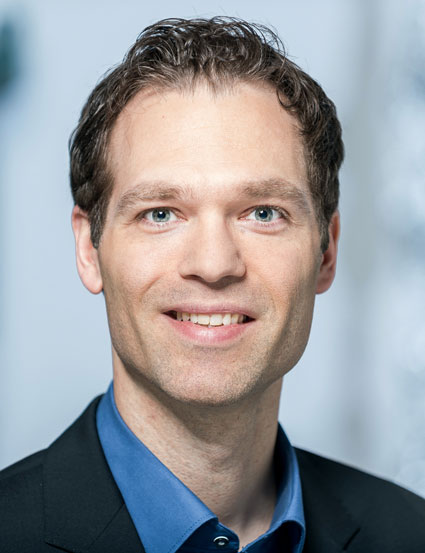
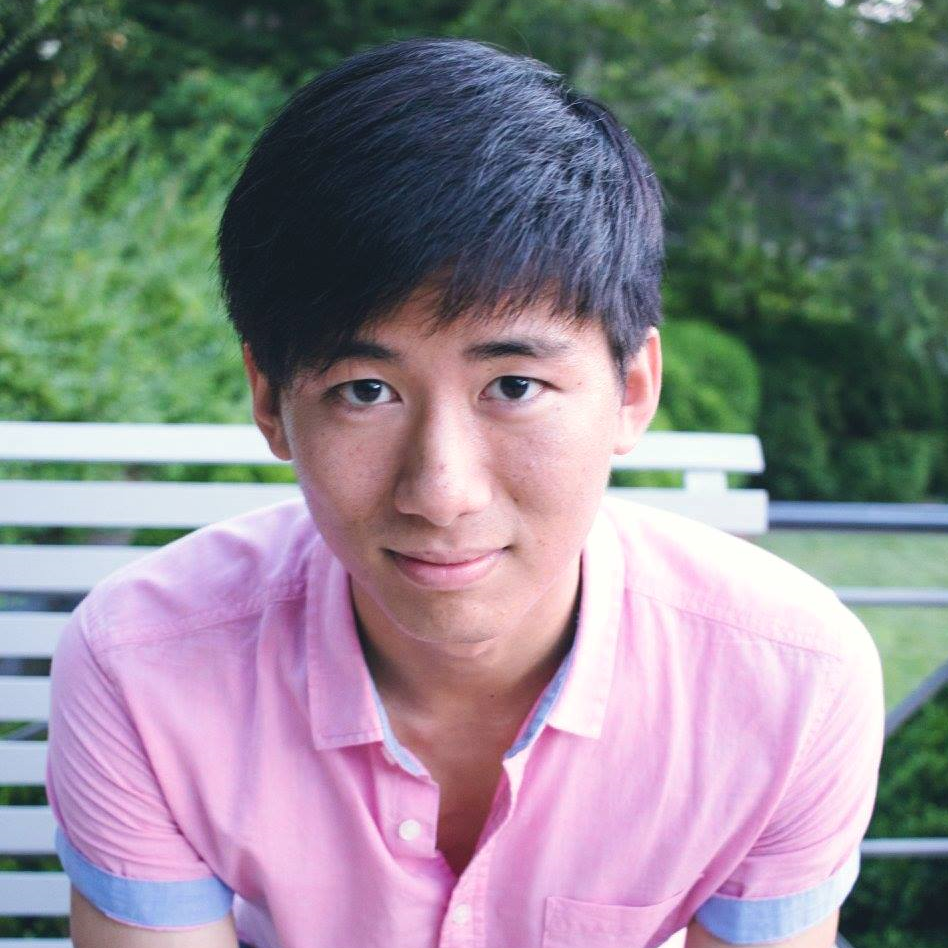
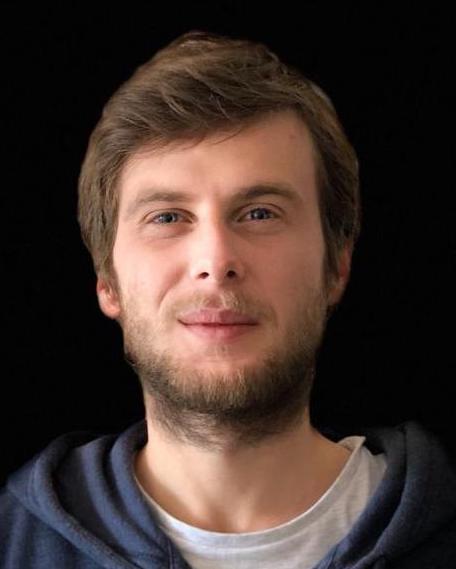
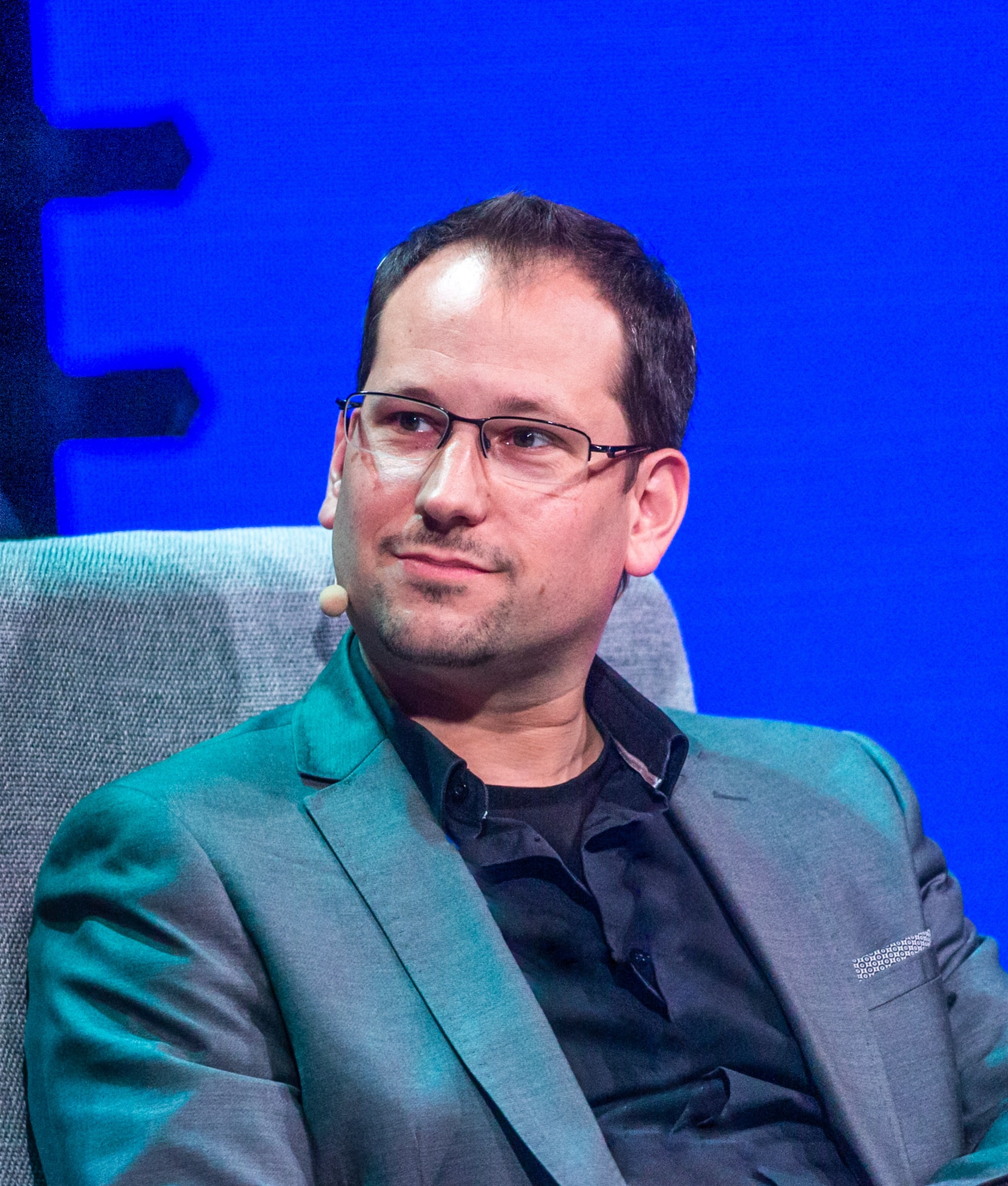
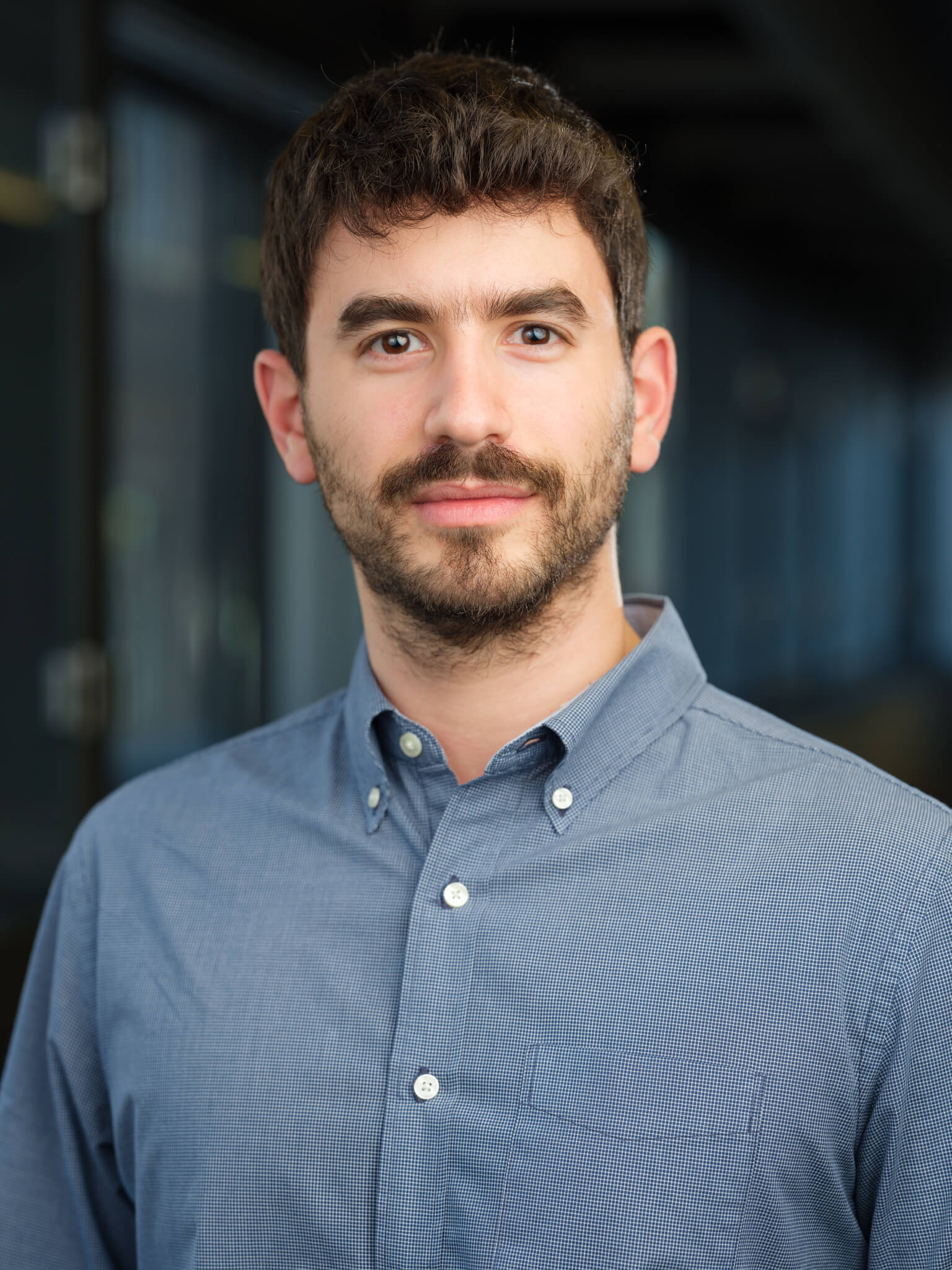
Mirko Birbaumer is a Professor at the Lucerne School of Engineering and Architecture (HSLU), specializing in data science and machine learning applications. He holds a PhD in computer-assisted image analysis from ETH Zurich and has completed advanced executive education at MIT in Innovation and Strategy. PhD in Systems Biology (ETH Zurich, 2010) Executive Certificate in Innovation and Strategy (MIT, 2022) Advanced Executive Certificate in Innovation, Strategy, and Technology (MIT, 2024) His research integrates statistical data analysis , computer vision , and digital health , with applications spanning industrial quality control, medical imaging, and environmental monitoring. Recent work focuses on physics-informed neural networks, interpretable anomaly detection, and causal machine learning. His projects include AI-driven solutions for medical diagnostics, predictive maintenance in manufacturing, and environmental anomaly detection. He has supervised over 20 student theses on topics like deep learning for knee osteoarthritis detection, monocular depth estimation, and AI-assisted logo similarity analysis. He leads the Data Science profile in the Master of Science and Engineering program and teaches courses on deep learning, Bayesian machine learning, and computer vision. His methodological expertise includes agent-based modeling, statistical analysis, and explainable AI.
Prof. Dr. Sven Seuken is an Associate Professor at the University of Zurich's Department of Informatics, leading the Computation and Economics Research Group. He is affiliated with ETH Zurich's AI Center and co-directs the Zurich Center for Market Design. His roles include Chief Economist at Worldcoin and founder of Market Design Consulting GmbH. He holds a Ph.D. from Harvard University and has been recognized with awards such as the ERC Starting Grant and Google Faculty Award. His research bridges AI, game theory, and market design, focusing on practical applications like auction mechanisms and resource allocation. Education: Ph.D. in Computer Science, Harvard University (Advisor: David C. Parkes) Research Interests: Market Design Artificial Intelligence Economics and Computation Computational Mechanism Design Algorithmic Game Theory Machine Learning Recent Work Trends: Articles emphasize AI-driven market mechanisms, dynamic auctions, mobile network optimization, and scalable multi-agent systems. Key themes include truthful aggregation, cross-optimization, and reinforcement learning in strategic environments. Awards: ERC Starting Grant (2020) Google Faculty Research Award "Top 40 under 40" by Capital magazine (2017) Grants & Roles: Secured major grants including the ERC MIAMI project. Advises on market design for companies and serves as a mentor for the German Academic Scholarship Foundation. Active in organizing conferences like EC'22. Labs/Teams: Leads the Computation and Economics Research Group and collaborates with the Zurich Center for Market Design to advance applied market solutions.
Prof. Ingo Leya is a Professor at the Department of Space Research & Planetary Sciences at the University of Bern. His research focuses on cosmic ray physics, meteoritics, and planetary science with emphasis on cosmogenic nuclide dating, isotopic analysis of meteorites, and early Solar System processes. He leads studies on terrestrial age determination of meteorites using 14 C and 10 Be systems, and investigates irradiation effects in calcium-aluminum-rich inclusions (CAIs) and chondrules. Key research topics include the shielding dependence of cosmogenic isotopes, spatial origins of micrometeorites, and lunar magma ocean solidification. His work integrates experimental data with advanced computational models, such as Bayesian parameter optimization for spallation processes. Leya’s team operates cutting-edge facilities like the MASCOT mass spectrometer for cosmogenic noble gas analysis and the EGT time-of-flight spectrometer for multielement isotope analysis. Recent projects address pre-accretionary irradiation effects in Allende meteorites, potassium isotope studies in iron meteorites, and the constancy of galactic cosmic rays over time. His research contributes to understanding Solar System formation, planetary evolution, and cosmic ray exposure histories of extraterrestrial materials.
Dr. Andrea Carron is a Senior Lecturer at ETH Zürich, affiliated with the Intelligent Control Systems group under Professor M. Zeilinger at the Department of Mechanical and Process Engineering. He holds a PhD in Information Technology from the University of Padova (2016) and was a Postdoc at ETH Zurich from 2016 to 2020. Education: B.S. and M.Sc. in Control Engineering (University of Padova, 2010 and 2012) Professional Roles: Senior Lecturer (ETH Zurich, 2022–present), Postdoc Fellow (ETH Zurich, 2016–2020) Research Interests: Andrea Carron's work focuses on Model Predictive Control (MPC) and Learning-based Control with safety guarantees. His research addresses challenges in Distributed Safe Learning , Coverage Control , and Autonomous Racing , utilizing Gaussian Processes and Stochastic Control frameworks. He has developed safety filters for racing vehicles, scalable MPC for mobility-on-demand systems, and Kalman-filter-enhanced GP regression techniques. Article Trends: Recent publications emphasize Autonomous Racing (ForzaETH Race Stack), Safe Learning for distributed systems, Gaussian Process applications in control, and Robust MPC under uncertainty. His work bridges machine learning and classical control theory, with applications in robotics and real-time systems. Teaching Activities: He has taught courses such as Signals and Systems and Advanced Model Predictive Control at ETH Zurich and Ashesi University since 2017. Course content includes discrete-time signal processing, system identification, and control algorithms.
Jonathan Dong is a Researcher at the École Polytechnique Fédérale de Lausanne (EPFL) within the School of Engineering. He works at the Biomedical Imaging Laboratory (LIB), focusing on advanced imaging techniques and computational models. PhD Students: Hu Zhiyuan, Liu Yan His research spans biomedical imaging, computational optics, and machine learning applications in imaging inverse problems. Recent work emphasizes phase retrieval, optical reservoir computing, and quantum information in microscopy. Key article trends show expertise in MRI classification , optical tomography , deep learning for imaging, and scattering media analysis . Collaborations include technical development in optoacoustics and super-resolution microscopy. Contact: jonathan.dong@epfl.ch | Office: BM 4141, EPFL, Station 17, Lausanne
Richard Baltensperger is a Full Professor at the University of Applied Sciences and Arts Western Switzerland (HES-SO) , affiliated with the Fribourg School of Engineering and Architecture and the HumanTech - Technology for Human Wellbeing Institute . His research spans numerical analysis, thermal kinetics, and ecological network modeling. Key research areas include: Thermal stability prediction using kinetic models Remote teaching methodologies in chemistry IoT-enabled material shelf-life monitoring Optimization of acoustic sensor networks Thermal hazard analysis for reactive chemicals Complex systems in ecology His work on merging DSC and large-scale testing data has improved safety temperature predictions for materials, while recent publications explore AI-driven sensor placement optimization. He employs advanced statistical methods (AIC/BIC) for model selection and has developed applications for smartphone-based deterioration tracking via data loggers. Current research at the HumanTech Institute focuses on technology applications for environmental and materials safety. Publications show collaborations with institutions like the Federal Institute for Materials Research and Testing (BAM) in Germany.
Dmitry Vetrov serves as a Professor of Computer Science at Constructor University in Bremen, where he founded and leads the Bayesian Methods Research Group. His academic foundation includes graduation from Moscow State University in 2003 and completion of his PhD in 2006, establishing a career centered on advancing probabilistic machine learning methodologies. His educational trajectory features: Undergraduate studies at Moscow State University (2003) Doctoral degree (PhD, 2006) Vetrov's research program critically bridges Bayesian statistics with deep learning architectures, with his group pioneering efficient diffusion model algorithms, loss landscape characterization in neural networks, scalable stochastic optimization tools, tensor decomposition applications for large-scale ML systems, and enhanced conditional text generation frameworks. This work manifests practical implementations across generative AI domains while maintaining theoretical rigor in probabilistic modeling. Analysis of his 2024-2025 publications reveals a concentrated research thrust toward diffusion model innovation, spanning text generation (token embedding smoothing, language model encoding properties), image synthesis (hair transfer, gesture generation), and scientific applications (protein modeling, genetic fine-mapping). Key thematic threads include sampler acceleration, theoretical property analysis of diffusion processes, and robust evaluation frameworks for generative systems. No scientific awards were documented in the source materials. Mentorship outcomes demonstrate significant impact, with three recent PhD students securing research positions at DeepMind. While specific grant details remain undisclosed, the group's prolific output across NeurIPS, ICML, and CVPR indicates sustained research funding. The Bayesian Methods Research Group operates as an integrated innovation hub within Constructor University's academic ecosystem. The research collective he directs maintains active development of Bayesian-deep learning fusion techniques, with current projects emphasizing diffusion model efficiency, theoretical foundations of optimization landscapes, and cross-domain applications in computational biology and multimodal generation.
Dr. Kevin J Liang is a Research Scientist at Meta Platforms, Inc. , specializing in Deep Learning , Computer Vision , and 3D Reconstruction . He earned his PhD in Electrical & Computer Engineering from Duke University in 2020, with a dissertation on Deep Automatic Threat Recognition for Airport X-Ray Baggage Screening . His research focuses include: 3D Computer Vision (ICON, Fast3R) Few-Shot Learning (Sylph, HyperMix) Federated Learning (WAFFLe) Object Detection (EgoTracks, Self-Supervised Methods) Recent publications demonstrate his leadership in Egocentric Vision (Ego-Exo4D) and Transformer Applications (GliTr). He has received numerous awards including the E Bayard Halsted Fellowship (2017) and Summa cum laude (2015), and serves on program committees for major conferences like NeurIPS and CVPR . As an educator, he developed and taught tutorials for Duke University's Machine Learning School and Coursera courses, covering TensorFlow, PyTorch, and foundational ML concepts for over 600 students.
Matteo Castiglioni is an assistant professor (RTD-A) at the Department of Electronics, Information and Bioengineering (DEIB) at Politecnico di Milano. He received his PhD in computer science from the same institution under the supervision of Prof. Nicola Gatti. His academic career spans multiple teaching roles across various programs at Politecnico di Milano. Castiglioni's research focuses on the intersection of artificial intelligence, algorithmic game theory, and multi-agent systems. He specializes in combining machine learning techniques with economic paradigms to build strategic agents capable of operating in complex multi-agent environments. His work addresses fundamental challenges in contract theory, mechanism design, and strategic decision-making under uncertainty. His publication record shows a clear trajectory toward increasingly sophisticated models that integrate learning with strategic behavior. Recent papers demonstrate expertise in constrained optimization, regret minimization, and handling both stochastic and adversarial environments. His work bridges theoretical computer science with practical applications in economics and market design. Castiglioni has taught across multiple academic levels including B.Sc., M.Sc., and Ph.D. programs. He has served as both professor and teaching assistant for courses in Game Theory, Online Learning Applications, and Computer Science and Engineering programs.
Julien Cornebise is an Honorary Associate Professor in the Department of Computer Science at University College London, with over 20 years of experience in Machine Learning and Artificial Intelligence. His career spans both academic and industry leadership roles, including co-founding startups and directing research at major AI organizations. His academic credentials include an MSc in Computer Engineering, an MSc in Mathematical Statistics, and a PhD in Mathematics specialized in Computational Statistics from University Paris VI Pierre and Marie Curie and Telecom ParisTech. He received the prestigious 2010 Savage Award from the International Society for Bayesian Analysis for his doctoral work. Dr. Cornebise's research interests span multiple AI domains with a strong focus on practical applications that create social impact. His work bridges theoretical foundations with real-world implementations across healthcare, human rights, environmental monitoring, and social good initiatives. He has made significant contributions to medical image analysis, satellite imagery processing, and ethical AI applications. His publication record demonstrates consistent productivity with research spanning from foundational statistical methods to applied AI across diverse domains. Recent work includes significant contributions to medical image analysis, satellite imagery processing, large language models for civic engagement, and ethical AI applications. 2021-2023: Co-founder and acting Chief Scientific Officer at ShiftLab Ltd (grew to 31 people) 2018-2019: Director of Research, Head of Element AI's London Office (AI for Good focus) 2012-2016: Early researcher at DeepMind Technologies Limited (acquired by Google) Postdoctoral positions at SAMSI/Duke University, UBC Vancouver, and University College London Dr. Cornebise has received the 2010 Savage Award from the International Society for Bayesian Analysis. His research has been applied in diverse contexts including healthcare applications with pharmaceutical companies and satellite imagery analysis for the European Space Agency. As an advisor, he works with several technology startups and nonprofits including Amnesty International. He also provides consulting services to various companies and assists venture funds with due diligence on machine learning technologies and strategic matters. His career demonstrates a consistent commitment to bridging cutting-edge AI research with practical applications that create meaningful impact.
Giuseppe Durisi is a Professor at Chalmers University of Technology in Gothenburg, Sweden, specializing in information theory and communication systems. His research bridges mathematically rigorous solutions with practical engineering applications in wireless and optical communication. Primary affiliation: Communication Systems Group , Chalmers University. Research focus: Optimal information transmission, 6G network design, and theoretical foundations of deep learning. Research Interests: Durisi investigates the interplay between latency, reliability, and throughput in digital communication, particularly in millimeter-wave and optical fiber channels . He develops finite-blocklength theory for efficient coding and explores how information theory can explain deep learning performance. Recent Article Trends: His 2025–2024 work emphasizes 6G distributed MIMO networks , energy-harvesting protocols , and machine learning integration into communication theory. Key themes include random access protocols , privacy in wireless aggregation , and hardware-constrained massive MIMO . Scientific Recognition: An IEEE Senior Member, Durisi has published extensively in top journals like IEEE Transactions on Communications and IEEE Transactions on Wireless Communications . Notable Collaborations: Work with teams on radio-over-fiber fronthaul , unsourced multiple access , and time-synchronized URLLC links .
Andreas Knecht is a Researcher at the Paul Scherrer Institute (PSI) in Switzerland, affiliated with the Laboratory for Particle Physics and the Muon Physics group. His work focuses on muon-induced spectroscopy, nuclear structure analysis, and beamline engineering. His research spans muonic x-ray spectroscopy , charge radius measurements , and high-intensity muon beam optimization . Key methodologies include laser spectroscopy , target fabrication , and non-destructive elemental analysis . He contributes to infrastructure projects like HIMB (High-Intensity Muon Beams) and IMPACT upgrades. Recent publications highlight advancements in two-dimensional muon beam compression , superconducting magnet design , and precision detection systems for experiments like Mu3e and MONUMENT. His work intersects experimental particle physics , atomic physics , and applied material science . At PSI, he collaborates on non-destructive testing applications for cultural heritage (e.g., late antique fibula analysis) and energy storage diagnostics via Muon-Induced X-ray Emission (MIXE). His technical expertise includes molecular plating , SiPM cryogenics , and beam monitoring detectors .
Bingcong Li is a postdoctoral researcher at ETH Zurich collaborating with Prof. Niao He and the ODI group. Previously, they completed doctoral studies at the University of Minnesota under Prof. Georgios B. Giannakis, followed by industry experience focused on large language models (LLMs). Education includes a PhD from the University of Minnesota under Prof. Georgios B. Giannakis. Research centers on making computation efficient, accessible, and affordable across heterogeneous resources—from GPU clusters to consumer hardware—through interdisciplinary approaches combining deep learning, optimization, and signal processing. Key research areas address foundational computing architectures, large-scale system sustainability, and personalized AI access. Their work develops theoretically grounded methods for explainable systems, with recent focus on LLM fine-tuning efficiency. Publication trends show consistent contributions to top conferences (NeurIPS, ICML, ICLR) with emphasis on optimization techniques for resource-constrained LLM deployment. Their advising and grant activities aren't explicitly detailed, though they actively participate in academic service through conference talks (EUROPT 2025, ICASSP 2025) and co-organizing events like the Efficient LLMs Fine-tuning Track at AI+X Summit. Lab affiliation centers on ETH Zurich's ODI group under Prof. Niao He, focusing on optimization-driven AI solutions.
Dr. Anastasios Tsiamis is a Lecturer at the Department of Information Technology and Electrical Engineering at ETH Zürich, working in the Automatic Control Laboratory (Professur Control and Computation). His research focuses on the intersection of control theory and machine learning, specifically investigating how system theoretic properties affect the statistical difficulty of learning in system identification, online estimation, and control. Dr. Tsiamis received his Diploma (MEng, five-year degree) in Electrical and Computer Engineering from the National Technical University of Athens (NTUA). He completed his Ph.D. in Electrical and Systems Engineering at the University of Pennsylvania under Professor George Pappas, following graduate research with Professor Petros Maragos and undergraduate work with Professor Kostas J. Kyriakopoulos at NTUA. His primary research areas include Statistical Learning and Control, Data-Driven Control, Online Learning, Risk-Aware Control, and Security and Privacy in Networked Control Systems. Dr. Tsiamis has made significant contributions to understanding the fundamental statistical limits of learning in control systems, particularly focusing on sample complexity. His work on risk-aware optimization develops algorithms that safeguard against catastrophic events while maintaining good average performance, and his security research addresses eavesdropping attacks in remote estimation and motion planning. Analysis of Dr. Tsiamis's recent publications reveals a strong focus on data-driven approaches to control theory with emphasis on distributionally robust methods, risk-aware optimization, and finite sample guarantees. His work bridges theoretical foundations with practical applications across system identification, online learning, and adaptive control, providing rigorous non-asymptotic guarantees for learning-based control algorithms. Dr. Tsiamis has received several notable research recognitions: Best student paper award at IEEE 61th Conference on Decision and Control (2022) Spotlight Presentation at 41st International Conference on Machine Learning (2024) Finalist for best student paper award at American Control Conference (2019) Finalist for young author prize at IFAC World Congress (2017) Oral presentation at 2nd L4DC Conference (2020) Dr. Tsiamis teaches Linear System Theory (227-0225-00L) at ETH Zürich and collaborates extensively with Professor John Lygeros, Professor Manfred Morari, and researchers from the University of Pennsylvania. His publication record demonstrates strong collaborative research across multiple institutions while advancing theoretical foundations of learning-based control. As an active member of the Automatic Control Laboratory at ETH Zürich, Dr. Tsiamis contributes to advancing control systems science through rigorous mathematical analysis and innovative algorithmic development, with applications spanning robotics, energy systems, and networked control.
Dr. Thomas Oskar Weinmann is the Head of the Research Focus Area Scientific Computing & Algorithmics at ZHAW School of Engineering, Zurich University of Applied Sciences (ZHAW). His research interests include Bayesian probabilistic models, machine learning, optimization, and visual computing. He holds a PhD in Mathematics from ETH Zürich (2003–2007) and completed a CAS in Visual Computing at ETH Zürich in 2011. Education: PhD in Mathematics, ETH Zürich (2003–2007) CAS Visual Computing, ETH Zürich (2011) His current research projects include: Smart Acquisition for Ultra-High field NMR Spectroscopy (Deputy project leader, ongoing) Raman for Process Analytics (Team member, ongoing) Target Recognition using Artificial Intelligence (TRAI) (Project leader, ongoing) Completed projects include machine learning applications in NMR spectroscopy, varroa mite counting in honeybee colonies, football motion data analysis, and NoSQL database systems. His publications span Bayesian spectral analysis and query optimization in NoSQL systems.