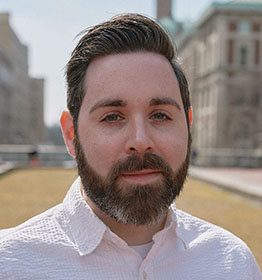
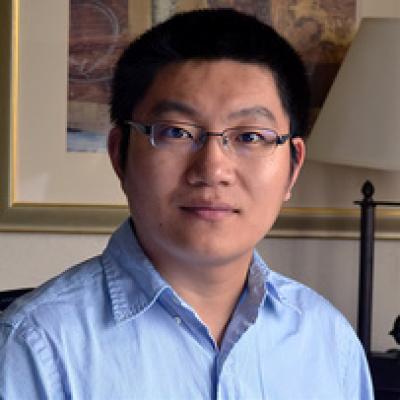
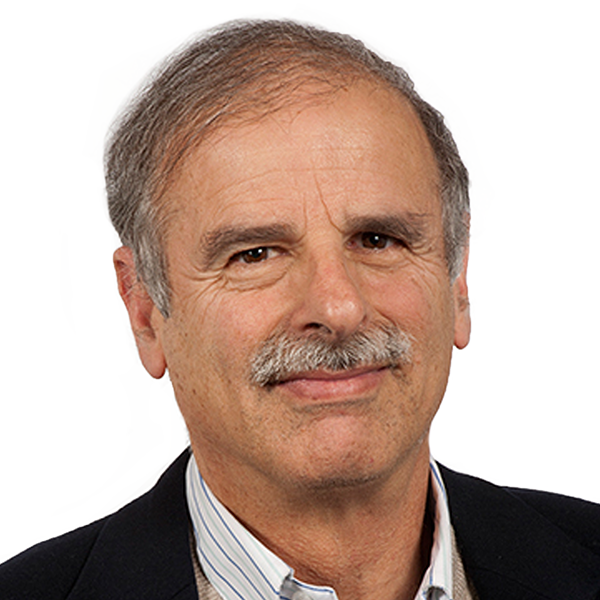
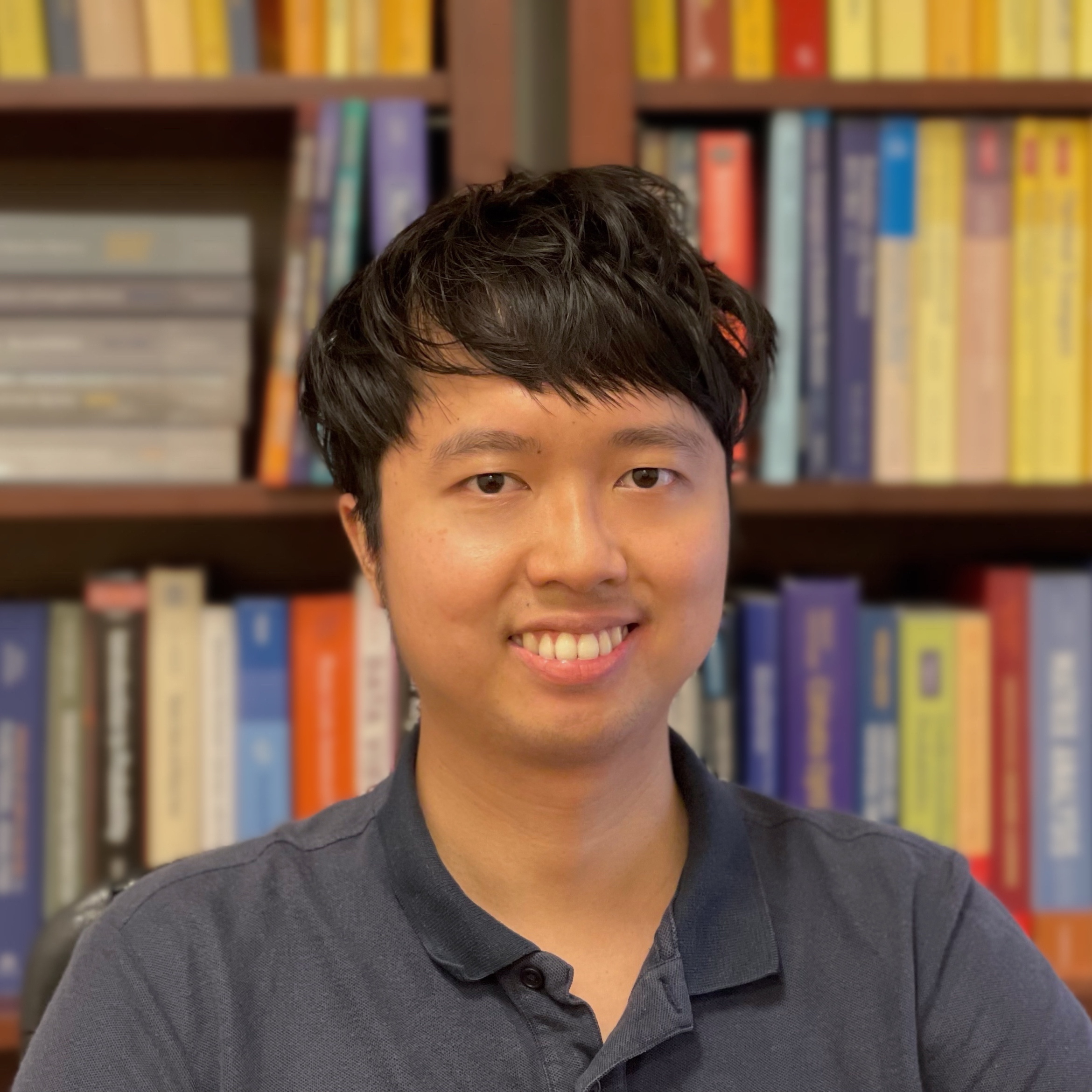
Jonathan L. Auerbach is an Assistant Professor in the Department of Statistics at George Mason University . His work bridges statistics and public policy , focusing on causal inference , longitudinal data analysis , and official statistics . He has contributed to understanding urban myths (e.g., New York City rat populations, building height trends), election fraud , and policy evaluation for initiatives like Vision Zero. Education : PhD in Statistics (Columbia University, 2020), BA in Economics (Cornell University, 2010) Research Interests include data science , causal inference , survey methodology , and urban analytics . His recent work addresses climate change impacts on cherry blossom seasons, federal data security , and street vendor demographics in New York City. Scientific Awards include the 2024-2025 President of Washington Statistical Society , 2020-2021 American Statistical Association Science Policy Fellow , and 2019 Howard Levene Outstanding Teaching Award . He has served as an instructor for courses like Capstone in Statistics and Causal Inference , emphasizing technical communication and data ethics .
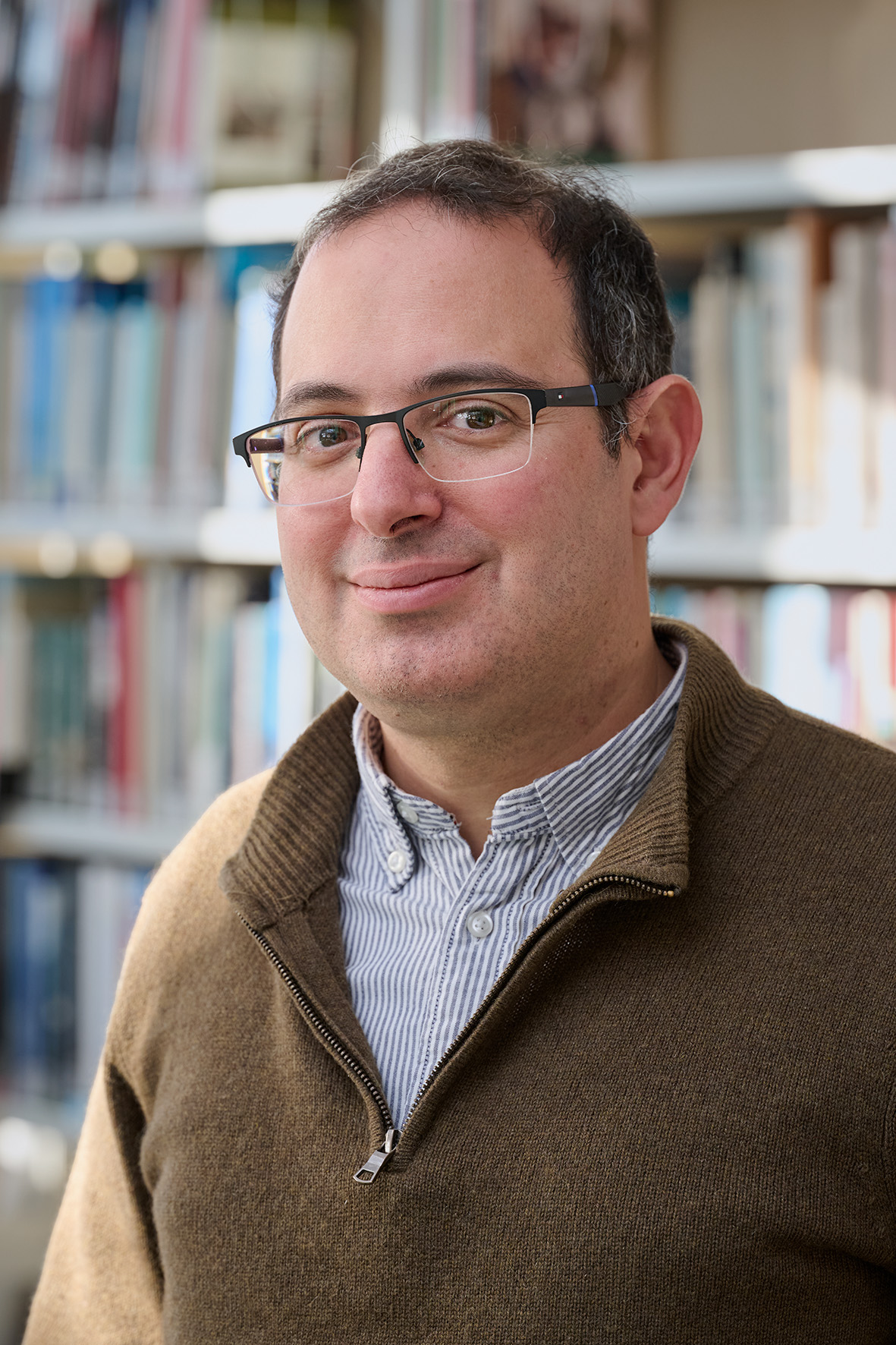
Eythan Levy serves as Senior Assistant in Digital Archaeology at the University of Zurich's Institute of Classical Archaeology within the Faculty of Arts and Social Sciences. Previously, he led an SNSF SPARK project at the University of Bern (2024) and conducted postdoctoral research on stamp seals from the Southern Levant (2022-2023). His research interests focus on computational approaches to archaeological problems, particularly: Computer applications and quantitative methods in archaeology Ancient chronology of the Iron Age Levant Northwest Semitic epigraphy and paleography Archaeology of the Southern Levant Ancient Egyptian archaeology and epigraphy His work bridges computer science and archaeology through innovative methodological frameworks. Levy's publication trends demonstrate consistent interdisciplinary output combining computational methods with archaeological analysis. Recent work focuses on chronological modeling tools, epigraphic analysis of Hebrew seals, multispectral imaging of ostraca, and computational approaches to ceramic typology. His research shows strong emphasis on developing formalized schemes for synchronizing archaeological data and creating specialized software solutions. Levy has developed several significant archaeological software tools : ChronoLog : For computer-assisted chronological modeling Scrypt : Web application for computer-assisted decipherment of ancient inscriptions TPQ Composer : For displaying stratigraphic termini post quem Artifacts Analyzer : For analyzing archaeological artifact datasets These tools represent his commitment to creating practical computational solutions for archaeological challenges. His academic background uniquely combines computer science and archaeology: PhD in Archaeology (Tel Aviv University, 2017-2021) PhD in Computer Science (Université Libre de Bruxelles, 2003-2009) Multiple MA degrees in Archaeology and Ancient Oriental Languages Teaching certificate for higher education This dual expertise enables his innovative approach to digital archaeology.
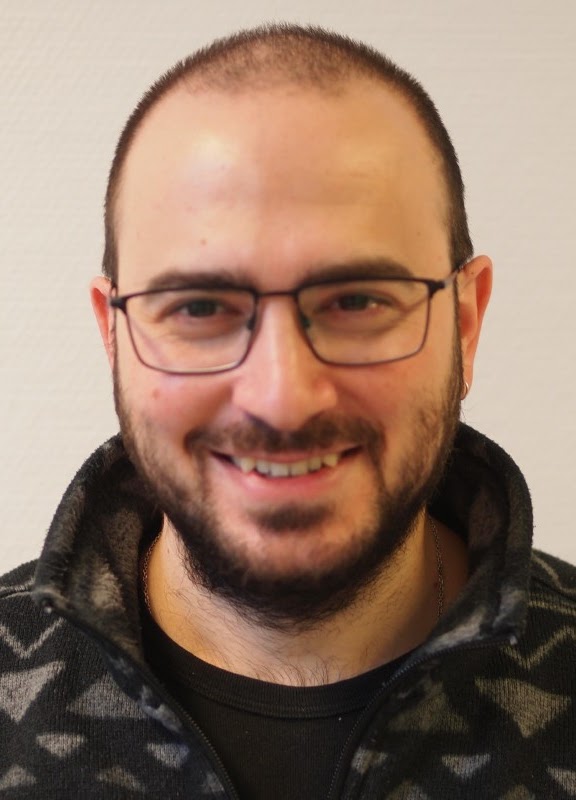
Georgios Arvanitidis is an Associate Professor at the Technical University of Denmark (DTU) in the Department of Applied Mathematics and Computer Science, specifically within the Section for Cognitive Systems (CogSys). He has established himself as a leading researcher in geometric machine learning, focusing on the application of differential geometry principles to enhance machine learning models. His work bridges theoretical mathematics with practical applications in artificial intelligence, with particular emphasis on understanding the geometric structure of data manifolds and latent spaces. Dr. Arvanitidis completed his educational journey with a Bachelor's degree from the Department of Informatics at the Aristotle University of Thessaloniki, followed by a Master's degree in Computer Science from Saarland University supported by the Max Planck Institute for Informatics. He earned his PhD at DTU's Cognitive Systems section under the supervision of Søren Hauberg, with additional research experience at Philipp Hennig's Probabilistic Numerics group. Prior to his current position as associate professor, he was a PostDoc at the Max Planck Institute for Intelligent Systems working with Bernhard Schölkopf. Dr. Arvanitidis's research primarily focuses on differential geometry in machine learning , where he explores how geometric structures can enhance representation learning and statistical modeling. His work in generative models investigates how learning the geometry of data manifolds can improve deep learning architectures. In the domain of deep learning theory , he examines why deep learning models generalize effectively on unseen data, with particular attention to the curvature properties of loss landscapes. His research in approximate Bayesian inference applies geometric principles to improve uncertainty quantification in neural networks. Through his innovative approaches, Dr. Arvanitidis has established himself as a leading researcher in geometric machine learning, contributing to both theoretical foundations and practical applications across various domains including robotics and life sciences. The publication trends of Dr. Arvanitidis reveal a consistent and evolving focus on geometric approaches to machine learning problems. His recent work (2023-2025) demonstrates increasing sophistication in applying Riemannian geometry to deep learning architectures, with particular emphasis on latent space geometry, optimization on manifolds, and geometric interpretations of neural network behavior. A notable pattern is the progression from foundational work on geometric representations to more applied research in areas like robotics and causal inference. His publications span top-tier conferences including NeurIPS, ICML, ICLR, and AISTATS, reflecting the high impact of his research. The interdisciplinary nature of his work is evident in collaborations across mathematics, computer science, and robotics domains, with recent papers addressing challenges in multimodal sampling, safety guarantees for dynamical systems, and counterfactual explanations. Dr. Arvanitidis has received several notable scientific awards and recognitions: Sapere Aude starting grant from the Independent Research Fund Denmark (DFF) GADL funding i-Rase, Pathfinder, and EIC (European Innovation Council) funding Best reviewer award for NeurIPS 2019 Best reviewer award for NeurIPS 2018 Best student paper award at Robotics: Science and Systems (R:SS) 2021 Dr. Arvanitidis actively mentors PhD students and researchers, currently supervising Alejandro Valverde, Johanna Gegenfurtner, and Albert Kjøller Jacobsen. He has previously co-supervised Alison Pouplin's PhD and worked with research assistant Georgios Pantis. His group receives substantial funding through multiple prestigious grants including the Sapere Aude starting grant from the Independent Research Fund Denmark, as well as European Innovation Council funding. He has been instrumental in creating opportunities for students interested in geometric machine learning, offering BSc and MSc thesis projects focused on generative models, deep learning theory, and optimization techniques. Dr. Arvanitidis also contributes significantly to the academic community as a reviewer for top conferences including ICLR and TMLR, and as an area chair for NeurIPS, ICML, AISTATS, and UAI. He co-organized the Machine Learning Summer School 2020 in Tübingen, further demonstrating his commitment to education and community building. Dr. Arvanitidis leads a vibrant research group focused on geometric machine learning within the Cognitive Systems section at DTU. His team includes multiple PhD students working on cutting-edge research at the intersection of differential geometry and artificial intelligence. The group has developed notable software tools, including the "geometric_ml" GitHub repository with over 70 stars, which contains implementations for applying Riemannian geometry in machine learning. His research has practical applications in robotics, where geometric approaches enable more robust motion planning, as evidenced by his work on "Reactive Motion Generation on Learned Riemannian Manifolds" which received a best student paper award. Additionally, his methodologies have found applications in life sciences, as mentioned in his 2022 AISTATS paper. The collaborative nature of his work is evident through extensive partnerships with researchers at institutions including the Max Planck Institute for Intelligent Systems, University of Cambridge, and various European universities. His recent news items indicate active engagement with the academic community through talks, conference presentations, and ongoing supervision of new PhD students joining his group.
Dr. Jaswinder Lota is a Reader in Engineering at the University of East London , School of Architecture, Computing and Engineering, Department of Engineering & Construction. He is also a Visiting Academic at University College London’s Department of Electronic and Electrical Engineering, and a Chartered Engineer with extensive industry and academic experience. Education: BSc BEng MEng PGCert HE PhD Research Interests: Dr. Lota specializes in signal processing, circuits and systems, wireless communication, and their applications in radar systems (weather/military), low-power sustainable networks beyond 5G/6G (robotics, automation, healthcare), and electronic technologies for hydrogen propulsion. His work integrates AI-driven channel modeling and impulsive noise analysis. Scientific Awards: IEEE CAS Society Certificate of Appreciation (2019) Grants and Collaborations: He has secured significant funding, including a £2.5K International Research Collaboration Award (2016), £2.5K Research Internship Award (2015), £76K Impact Grant (2014), and a £7M MoD-funded project (1999-2004). Collaborators include UCL and NYU. Leadership: Dr. Lota leads the Smart Cities Research group at UEL and contributed to the REF 2021 submission. He has served as Associate Editor for IEEE TCAS I and Guest Editor for multiple IEEE journals.
Xin Li is a Professor in the Department of Electrical and Computer Engineering at Duke University and serves as the Associate Vice Chancellor at Duke Kunshan University. He holds a Ph.D. from Carnegie Mellon University (2005) and has held leadership roles in research consortia like the FCRP Focus Research Center and the Center for Silicon System Implementation (CSSI). His research bridges integrated circuits , machine learning , and cyber-physical systems , with applications in autonomous driving, battery lifetime prediction, and smart buildings. Education : Ph.D., Carnegie Mellon University (2005); M.S., Fudan University (2001); B.S., Fudan University (1998) His work emphasizes robust design methodologies for analog/RF circuits, data-driven predictive modeling , and Bayesian inference for high-dimensional variation spaces. Recent publications focus on generative adversarial networks for circuit design, multi-view imputation for incomplete data, and knowledge-driven autonomous systems . He has received numerous accolades, including the NSF CAREER Award (2012) , IEEE Donald O. Pederson Best Paper Awards (2013, 2016) , and IEEE Fellow (2017) . He has served as Editor for journals like IEEE Transactions on Biomedical Engineering and as Chair for conferences including ISVLSI and CAD/Graphics.
Harald Uhlig holds the Bruce Allen and Barbara Ritzenthaler Professorship at the University of Chicago Department of Economics. He is a leading expert in macroeconomics, monetary economics, and financial economics with a focus on dynamic stochastic general equilibrium models, Bayesian econometrics, and economic policy analysis. Ph.D. in Economics, University of Minnesota (1990) Diplom in Mathematics, TU Berlin (1985) His research spans business cycles, growth theory, financial crises, and economic policy, particularly analyzing monetary-fiscal interactions, sovereign debt dynamics, and the impact of financial markets on macroeconomic stability. He has pioneered methods in vector autoregressions and numerical solution techniques for economic models. The 15 most recent articles show a focus on cryptocurrency economics, sovereign debt crises in monetary unions, fiscal stimulus effects, and financial health economics. Subfields include DSGE modeling, asset pricing, and policy analysis under uncertainty. Frank P. Ramsey Prize (2005) Fellow of the Econometric Society (2003) Alfred P. Sloan Fellowship (1989-1990) Fulbright Scholarship (1985-1986) He has advised 21 PhD students across Tilburg University, Humboldt University Berlin, and University of Chicago. Grants include NSF awards for macroeconomic risk analysis and INET funding for research on economic fragility.
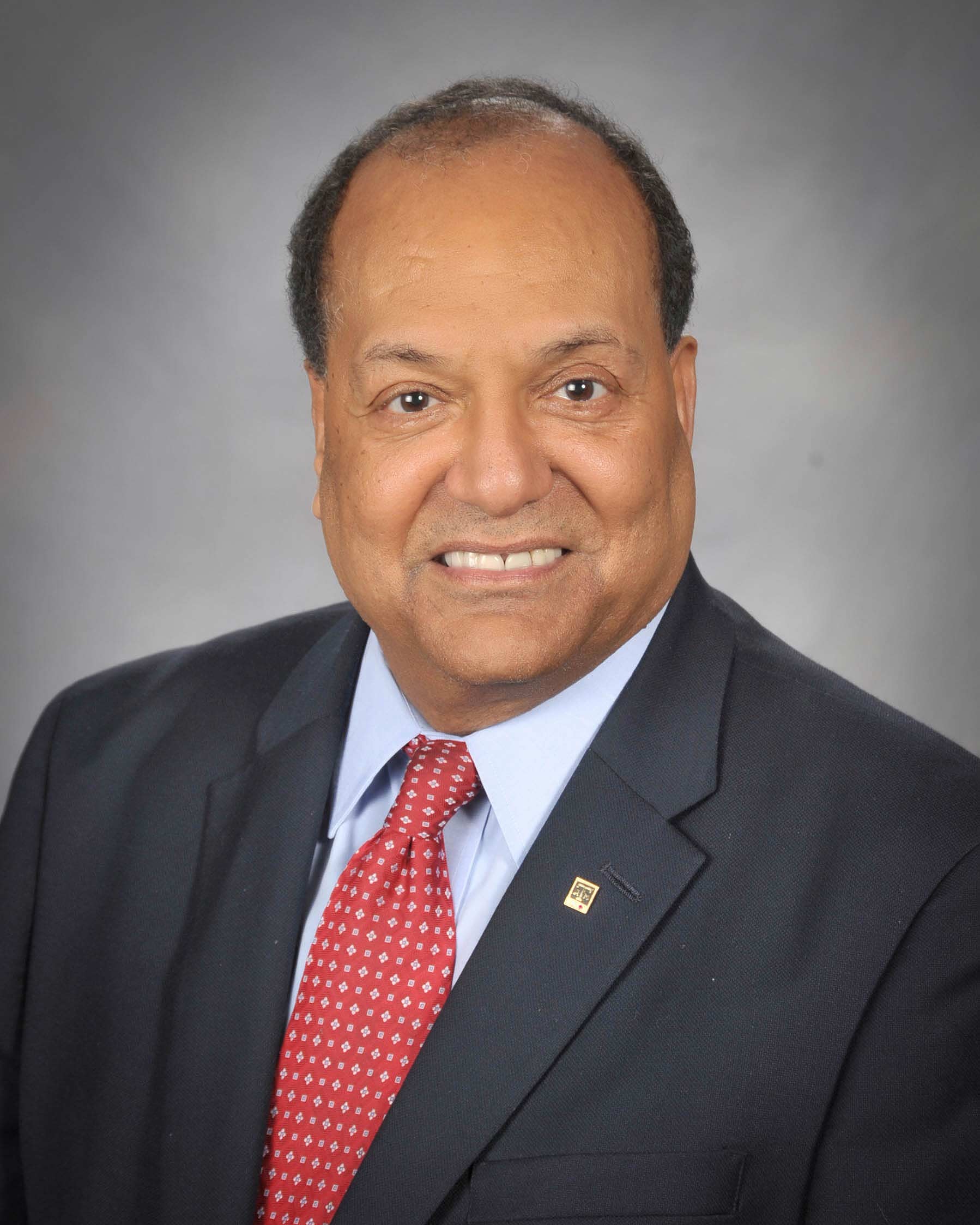
Dr. Yassin A. Hassan is a Professor at the College of Engineering , Texas A&M University , with joint appointments in Nuclear Engineering and Mechanical Engineering . He holds the L.F. Peterson '36 Chair II , is a University Distinguished Professor , and directs the Center for Advanced Small Modular and Microreactors (CASMR) . Ph.D., Nuclear Engineering, University of Illinois – 1980 M.S., Nuclear Engineering, University of Illinois – 1975 B.S., Engineering, University of Alexandria in Egypt – 1968 His research interests include: Computational & Experimental Thermal Hydraulics Reactor Safety Fluid Mechanics Two-Phase Flow Turbulence & Laser Velocimetry Imaging Techniques His recent publications focus on: Thermal hydraulics of heat pipes and microreactors AI integration in nuclear thermal-fluid systems Flow regime transitions in wire-wrapped fuel assemblies CFD validation for pebble bed and molten salt reactors Uncertainty quantification in reactor simulations Flow visualization techniques under elevated pressures Scientific awards include: American Nuclear Society Seaborg Medal (2008) James N. Landis Medal (ASME, 2017) Akiyama Medal (ICONE 24, 2016) Arthur Holly Compton Award (ANS, 2003) Texas A&M TEES Research Impact Award (2018-2019) Honorary professor, Bangor University, UK Dr. Hassan leads the Thermal-Hydraulics Research Laboratory and has pioneered advancements in reactor safety, digital twin technologies, and AI-driven thermal-fluid simulations.
Owais Khan serves as an Assistant Professor in the Department of Biomedical Engineering at Toronto Metropolitan University, where he leads research in cardiovascular biomechanics to improve heart disease diagnosis and treatment through engineering-driven approaches combining computational simulations, medical imaging, and biomechanics. His research program focuses on three interconnected pillars: developing physics-based computational models for blood flow simulation in patient-specific anatomies; advancing medical imaging techniques like dynamic CT myocardial perfusion and vessel wall MRI for quantitative physiological assessment; and conducting fundamental biomechanics studies to optimize prosthetic valve designs. This work directly addresses critical clinical challenges including heart surgery complications, aneurysm rupture prediction, and vein graft failure in coronary bypass patients. Khan's publication record demonstrates consistent innovation in cardiovascular computational modeling, with recent work emphasizing personalized medicine through physics-informed neural networks, multi-fidelity uncertainty quantification, and integration of CT perfusion imaging for coronary hemodynamics. His research bridges engineering principles with clinical cardiology to enable virtual treatment planning and risk stratification without additional patient risk. His scientific contributions have been recognized with prestigious awards including the American Heart Association Postdoctoral Fellowship, NSERC Postdoctoral Fellowship, Baxter Young Investigator Award, and MITACS Globalink Research Award. As director of the Cardiovascular Imaging and Modeling Biomechanics Lab (CIMBL), Khan maintains active collaborations with clinicians and radiologists at major hospitals, facilitating direct translation of engineering solutions to clinical cardiovascular medicine through a multi-disciplinary approach focused on personalized treatment strategies.
Ramez M. Hajj is an Assistant Professor in the Department of Civil and Environmental Engineering at the University of Illinois at Urbana-Champaign (UIUC). He holds affiliations with the Grainger College of Engineering and has served in multiple academic and professional roles, including editorial board memberships and leadership in organizations like the Transportation Research Board. His research focuses on asphalt materials and flexible pavements, spanning molecular-level investigations to large-scale infrastructure applications, with particular emphasis on viscoelasticity, composites, and machine learning. Education: Bachelor of Science in Civil Engineering with a minor in Engineering Science and Mechanics, Virginia Tech (2014) Master of Science in Civil Engineering, University of Texas at Austin (2016) Doctor of Philosophy in Civil Engineering, University of Texas at Austin (2019) Research Interests: Asphalt binder rheology and chemistry Computational modeling of infrastructure materials Pavement design, maintenance, and recycling Application of AI and machine learning in materials engineering Self-healing asphalt technologies Sustainable infrastructure solutions Publications: His work spans over 50 peer-reviewed articles, emphasizing innovations in asphalt material science and infrastructure resilience. Recent research highlights include AI-driven predictive models for asphalt properties and novel methods for evaluating pavement performance using ultrasonic techniques. Awards and Honors: Outstanding Reviewer awards from leading journals (2021–2022) Teaching excellence recognitions from the Center for Innovation in Teaching and Learning Illinois-Indiana Sea Grant Faculty Fellowship Grants and Funding: Research is supported by agencies such as IDOT, USDA, MnDOT, and industry partners. Projects include developing self-healing asphalt capsules and optimizing pavement design algorithms. Labs and Teams: Leads research initiatives in advanced material characterization and AI-driven infrastructure solutions within UIUC’s Civil and Environmental Engineering department.
David Jensen is a Professor in the College of Information and Computer Sciences (CICS) at the University of Massachusetts Amherst. He directs the Knowledge Discovery Laboratory and the Computational Social Science Institute. His research focuses on machine learning, causal modeling, and analyzing large social, technological, and computational systems. Jensen's work is supported by organizations like the National Science Foundation and DARPA. Education: DSc in Engineering and Policy, Washington University in St. Louis (1992) MS in Engineering and Policy, Washington University in St. Louis (1988) BS in Mechanical Engineering, University of Nebraska (1986) Research Interests: Causal inference in relational and dynamic systems Machine learning applications in security and privacy Computational social science Large-scale network analysis Achievements: Recipient of teaching awards from UMass College of Natural Sciences (2011) and CICS (2022) 2017 IEEE INFOCOM Test of Time Paper Award Leadership roles in conferences and journals, including action editor for the Journal of Machine Learning Research Labs and Affiliations: Founder of the Knowledge Discovery Laboratory (2000) Director of the Computational Social Science Institute (2018-2022) Member of the Computing Community Consortium (CCC) Council
Hao Zhang is an Associate Professor in the Department of Computer Science at the Manning College of Information and Computer Sciences (CICS), University of Massachusetts Amherst. He directs the Human-Centered Robotics Laboratory (HCRLab), focusing on lifelong collaborative autonomy, robot adaptation, and human-robot teaming. His research integrates robotics, AI, and machine learning to develop algorithms for real-world applications like manufacturing, autonomous driving, and environmental monitoring. He holds an NSF CAREER Award and DARPA Young Faculty Award, among other recognitions. Dr. Zhang earned a PhD from the University of Tennessee, Knoxville (2014) and an MS from the Chinese Academy of Sciences (2009). His work addresses challenges in unstructured environments through innovations like self-reflective terrain adaptation and graph-based perception systems. He actively promotes equity in robotics through his PROGRESS outreach program. His research sponsors include NSF, DARPA, and industry partners such as Toyota. Publications span conferences like RSS, ICRA, and IROS, with best paper awards. He serves on editorial and program committees for top-tier journals/conferences including RA-L, NeurIPS, and AAAI.
David Castañón is a Professor of Electrical and Computer Engineering (ECE) and Systems Engineering (SE) at Boston University. He holds a PhD from MIT (1976) and has held leadership roles including Department Chair of BU ECE (2010-2014) and President of the IEEE Control Systems Society (2008). His research focuses on stochastic control, optimization, game theory, and distributed computing, with applications in sensor management, inverse problems, and autonomous systems. Education: PhD, Massachusetts Institute of Technology (1976). Key affiliations include the Center for Information and Systems Engineering, the Rafik B. Hariri Institute for Computing, and the ALERT Department of Homeland Security Center of Excellence. He teaches courses such as EC702 Recursive Estimation and EC719 Statistical Learning Theory. Research interests span stochastic control, estimation theory, optimization algorithms, and multi-agent systems. Notable contributions include work on sensor management, cooperative operations, and inverse problem solutions for medical and security imaging. His work often integrates theoretical frameworks with practical applications in autonomous systems and distributed computing. Scientific achievements include IEEE Fellow status (2006), CSS Distinguished Member Award, and leadership roles in major conferences like the IEEE Conference on Decision and Control (2007 as General Chair). He has also served on the Air Force Advisory Board and the IEEE Society Review Committee. Grants and lab affiliations include the NSF Engineering Research Center for Subsurface Sensing (2001-2013) and the SENTRY DHS Center of Excellence (2021-present). His interdisciplinary collaborations bridge robotics, medical imaging, and security systems.
Raymond H. Cuijpers is an Associate Professor at Eindhoven University of Technology in the Human Technology Interaction group. His research focuses on Cognitive Robotics , Human-Robot Interaction , and Artificial Intelligence for cognitive agents, with applications in healthcare robotics and aging population support. PhD in Physics of Man from Utrecht University (2000) Postdoctoral research at Erasmus MC Rotterdam and Radboud University Nijmegen Key research areas include: Developing socially intelligent robots with proper social cue interpretation Hybrid AI approaches for real-world complexity handling Visual-haptic perception integration in human motor control Service robots for COPD patient assistance (KSERA project) Rescue robotics and tele-operation applications Recent research output (2025) includes studies on: Personalization in human-robot communication Optimal lighting for elderly visual perception Human-robot bonding mechanisms Interactive sensorized platforms for homecare (GUARDIAN) Audiovisual temporal integration in virtual environments He coordinates large-scale European projects like GUARDIAN and previously KSERA, contributes to sustainable development goals through healthcare robotics, and serves on editorial boards of leading journals including International Journal of Social Robotics . His work spans both technical robotics development and human-centric interaction studies.
Hayriye Cagnan is a Senior Lecturer (Associate Professor) in the Department of Bioengineering at Imperial College London’s Faculty of Engineering. She specializes in neural engineering and movement disorders, focusing on deep brain stimulation (DBS) and tremor pathophysiology. Her research integrates computational modeling, signal processing, and clinical neuroscience to develop adaptive neurotherapies. Cagnan holds a Ph.D. in Neuroscience from the University of Amsterdam and Philips Research, and has held postdoctoral positions at the University of Oxford and University College London. Education: B.Sc. in Electrical and Electronics Engineering (Cornell University, 2000–2004) – Fulbright Scholar M.Sc. in Engineering and Physical Science in Medicine (Imperial College London, 2004–2005) – Chevening Scholar Ph.D. in Neuroscience (University of Amsterdam/Philips Research, 2010) Research Interests: Her work addresses neural mechanisms underlying Parkinson’s disease, essential tremor, and other movement disorders. Key areas include: Development of adaptive DBS systems for tremor management Neural circuit dynamics and oscillations in basal ganglia networks Non-invasive neurostimulation techniques (e.g., TMS, tRNS) Machine learning for optimizing neurotherapeutic interventions Publications: Recent work emphasizes closed-loop systems, phase-specific stimulation, and translational neuroscience. Her studies explore how DBS modulates movement speed, reward processing, and neural oscillatory patterns in Parkinsonian patients. Awards: MRC Career Development Award (2018) MRC Skills Development Fellowship (2015) British Chevening Scholarship (2004) Lab & Collaboration: Leads the Neuroengineering and Dynamic Systems Lab at Imperial, collaborating with clinicians and engineers to advance neuromodulation therapies. Active in initiatives like NEUROMOD+ for next-generation neurotherapies.
Michael Choi is an Assistant Professor in the Department of Statistics and Data Science at the National University of Singapore (NUS), affiliated with the Institute of Operations Research and Analytics (IORA). Previously, he held a joint appointment with Yale-NUS College (2022–2025) and worked at the School of Data Science (SDS) at the Chinese University of Hong Kong, Shenzhen. He earned his PhD from Cornell University’s School of Operations Research and Information Engineering (ORIE), advised by Prof. Pierre Patie, and holds an undergraduate degree in Actuarial Science from the University of Hong Kong. His research focuses on Markov chains and processes, stochastic algorithms (e.g., MCMC, simulated annealing, Langevin dynamics), and their applications in statistical physics, optimization, Bayesian statistics, information theory, game theory, and theoretical computer science. He explores interdisciplinary connections with quantum computation, control theory, and computational chemistry. Choi actively contributes to the academic community, serving as an Associate Editor of Statistics and Computing since August 2023. He has presented at numerous international conferences and workshops, including the IMS APRM 2026 (Hong Kong), INFORMS International Meeting 2025 (Singapore), and BayesComp 2025 (Singapore). His work bridges theoretical foundations with practical computational methods in stochastic systems.