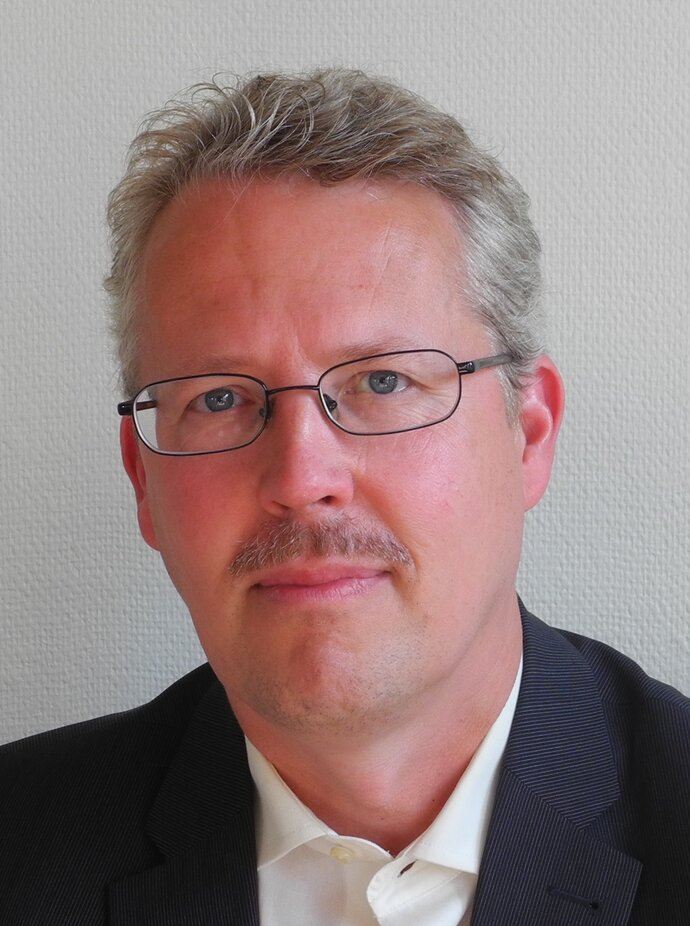
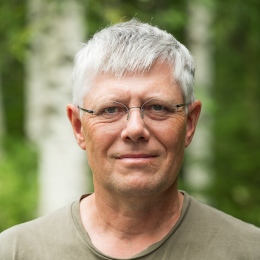
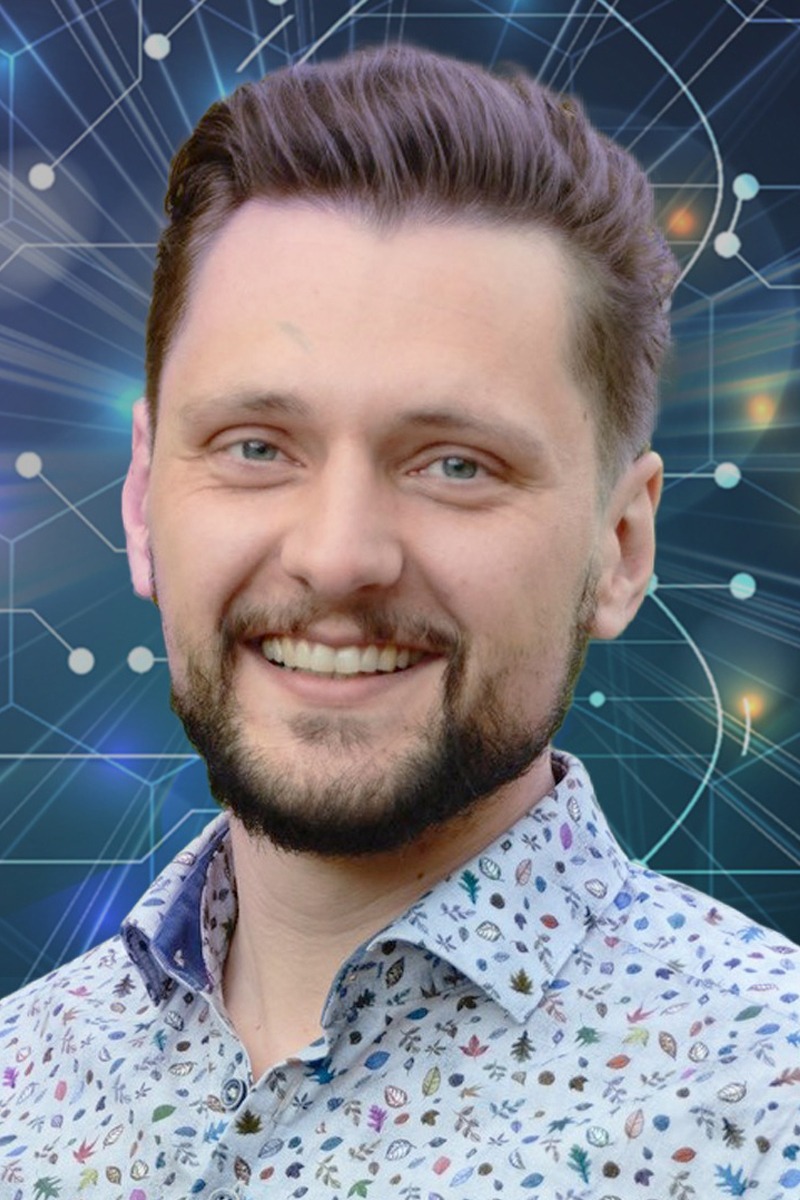
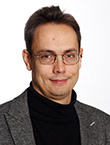
Martin Magnusson is a Senior Lecturer in the Department of Physics at Lund University, Faculty of Engineering (LTH). He is a Principal Investigator at NanoLund: Centre for Nanoscience and Deputy Head of Department. His roles include Director of Studies for the National Resource Centre for Physics Education, teaching the course FAFA45 (Thermodynamics and Electricity) for civil engineering students. Research Interests: His work centers on nanowire growth (particularly Aerotaxy technology), semiconductor nanoparticles, aerosol-based manufacturing, and laser diagnostics. His research aligns with UN Sustainable Development Goals in Condensed Matter Physics, Nano-technology, and biophysics applications. Article Trends: His recent publications focus on nanowire biosensing, laser diagnostics for nanoparticle growth, and stability of aerosol-generated nanoparticles. Keywords include Nanowires Optical Diagnostics Bayesian Modeling Photolysis Aerosol-Liquid Interactions
Erik J Olsson is a Professor in Theoretical Philosophy at the Department of Philosophy , Lund University . He coordinates the Information Quality Research Group (LUIQ) and develops computational tools like Laputa for studying knowledge dynamics in social networks. PhD in Theoretical Philosophy (Uppsala University) Docent in Theoretical Philosophy (Uppsala, 2001) Research Fellow at University of Konstanz (1997-2003) Research Interests: His work focuses on epistemology, philosophy of science, and philosophical logic, particularly coherence theory and knowledge dissemination in digital societies. Current projects examine: Filter bubbles in Google search Knowledge value and stability Epistemic democracy in social networks Generality problem in knowledge categorization Scientific Contributions: Author of Against Coherence (OUP 2005), founder of Academic Rights Watch (2012), and principal investigator for projects funded by Riksbankens Jubileumsfond . His research connects cognitive psychology to epistemic justification frameworks.
Joakim Edsjö is a Professor of Theoretical Physics at the Department of Physics (Fysikum) , Stockholm University , focusing on astroparticle physics and dark matter research. He actively participates in both research and education, serving as section dean for the mathematical-physical section at the Faculty of Science since 2024. Research Interests: Dark Matter, Supersymmetry, Neutrino Detection, Gamma-Ray Astronomy, Computational Physics Teaching: Quantum Mechanics Summer Course (FK5033) Projects: Co-developer of DarkSUSY , WimpSim , and GAMBIT software packages Research Trends: His publications focus on dark matter annihilation signals across multiple astrophysical contexts, including solar neutrino analysis, gamma-ray phenomenology, and computational tool development for beyond-standard-model physics. Key methodologies involve Monte Carlo simulations, cross-experiment data fitting, and neutrino oscillation modeling. Leadership: Previously chaired the Natural Sciences Area's undergraduate education committee (2016-2023) and leads pandemic-era teaching transformation studies comparing global university responses.
Stefan Wastegård is Professor of Quaternary Geology with a specialisation in Quaternary Stratigraphy at Stockholm University's Department of Physical Geography, where he actively teaches bachelor's and master's courses. He leads the research group SUQuaTeSt (Stockholm University Quaternary Tephra Studies), focusing on volcanic ash layers as geochronological tools for correlating Late Quaternary climate records across marine, ice-core, and terrestrial archives in Scandinavia, the Azores, Patagonia, and the North Atlantic region. Wastegård's research centers on resolving uncertainties in Late Quaternary chronologies, particularly addressing radio-carbon dating limitations (radiocarbon plateaux, reservoir effects) and the scarcity of dating methods for periods before 40 ka BP. His work utilizes diverse climatic archives to examine climate synchrony across the North Atlantic, with emphasis on tephrochronology for identifying isochrons in peat bogs, lake sediments, and marine cores. Key interests include Younger Dryas dynamics, Holocene climate events, and volcanic ash dispersal mechanisms. Analysis of his recent publications reveals a sustained effort to expand tephrochronological frameworks geographically and temporally. Major contributions include the first geochemical confirmation of Laacher See Tephra in southern Sweden, extension of Azores tephra dispersal to Ireland, and identification of cryptotephras from moderate Icelandic eruptions in Finland. His studies consistently address methodological challenges while establishing new chronological markers for climate events like the 4.2 ka BP anomaly and Younger Dryas ice-sheet behavior. No scientific awards, prizes, or fellowships are documented in the provided texts. Wastegård has served as main supervisor for seven PhD students: Hans Johansson, Ewa Lind, Carl Lilja, Sofia Andersson, Anders Borgmark, Simon Larsson, and Christos Katrantsiotis. His current research project "Precise linking of late Quaternary palaeoclimate records in the North Atlantic region" compares climate signals across high-resolution archives to understand rapid climate transitions. He has secured funding for numerous completed projects including Holocene tephrochronology for the Faroe Islands and cryptotephra studies in Patagonia. As head of SUQuaTeSt, he directs Stockholm University's Quaternary Tephra Studies group which has pioneered tephrochronological applications in Scandinavia for decades. The team specializes in extracting and analyzing both visible and cryptotephra layers from organic-rich sediments using electron probe microanalysis, collaborating internationally on projects like PASADO in Patagonia and contributing to frameworks such as INTIMATE for glacial-interglacial transitions.
Tobias Andermann is a DDLS Fellow and Principal Investigator at Uppsala University's Evolutionary Biology Centre (EBC), affiliated with SciLifeLab. His research develops quantifiable biodiversity metrics to address the global biodiversity crisis through environmental DNA (eDNA) sampling and machine learning integration. His work focuses on Biodiversity , Bioinformatics , and Environmental DNA analysis, with expertise in Machine Learning , Remote Sensing , and Spatial Analysis . He pioneers eDNA protocols to reconstruct species diversity across the tree of life—particularly for fungi, insects, and protists—using satellite imagery and airborne laser-scan data to model biodiversity patterns. Publications reveal a strong emphasis on deep learning applications for biodiversity assessment, including extinction risk modeling (IUCNN), habitat evolution analysis, and human impact quantification on mammalian diversity. His work bridges computational methods with ecological data to create actionable conservation metrics. Scientific awards: DDLS Fellowship As Principal Investigator, Andermann mentors PhD students Adrian Baggström and Monica Guilera Recoder, and Master's student Mirjam Lichtner. His research receives primary support from SciLifeLab's Digital and Data-Driven Science program, enabling collaborations with taxonomic experts for comprehensive eDNA analysis. His research group at the Evolutionary Biology Centre builds biodiversity databases by integrating eDNA samples with biotic/abiotic predictors, developing machine learning models to predict species distributions and extinction risks while addressing overlooked taxonomic groups through specialized lab protocols.
Cecilia Bergstad serves as a Lecturer in the Department of Psychology within the Faculty of Social Sciences at the University of Gothenburg. She is affiliated with the Section for Applied Psychology and actively participates in multiple research networks including DEEP (Decision-making, Environmental Psychology and Economic Psychology), CAST (Collaboration for Assessment of Sustainable Transport), and PERSON (Platform for European Research on Social Science Energy). Her research activities are closely connected with the Strategic Research Area (SFO) Transport, a collaboration with Chalmers University's Transport Area of Advance. Bergstad earned her Philosophy Doctor of Psychology in 2004 and achieved Docent status in Psychology in 2014. Her educational background has positioned her as a specialist in environmental psychology, particularly focusing on the psychological aspects of transportation behavior and sustainable mobility solutions. Her research interests center on motivation, behavioral changes, and human well-being within environmental psychology, with special emphasis on sustainable transportation. Bergstad investigates how social and psychological factors interact with both built (artificial/digital) and natural environments. She examines psychological determinants of sustainable behaviors, policy acceptance, and the relationship between transportation modes and subjective well-being. Her work frequently addresses gender differences, cross-cultural comparisons, and the psychological barriers to adopting sustainable practices. Analysis of Bergstad's recent publications reveals a consistent focus on sustainable transportation systems, particularly carsharing models, autonomous vehicles, and policy interventions to reduce car dependency. Her research demonstrates interdisciplinary connections between transportation engineering, environmental psychology, and behavioral economics. She frequently employs multigroup analysis to examine cross-cultural differences and has increasingly incorporated climate change considerations into her work, as evidenced by her 2023-2025 publications on net zero futures and sustainable diets. Bergstad actively supervises doctoral students and theses at all academic levels, teaching undergraduate and graduate courses in Environmental Psychology and Survey Methodology. Her research collaborations span multiple institutions, including Chalmers University of Technology (through the FORMAS-funded project on indoor thermal resilience) and international networks like PERSON. She participates in the Gothenburg Air and Climate Network and the Center for Ocean and Society, demonstrating her commitment to interdisciplinary environmental research. Bergstad's laboratory and team affiliations include the Strategic Research Area Transport, DEEP research group, CAST collaboration, and PERSON platform. Her current projects focus on sustainable transport futures, examining intersections of policy, technology, logistics, safety, and well-being. Recent work suggests growing interest in the psychological dimensions of climate adaptation and mitigation strategies across different cultural contexts.
Dr. Rickard Karlsson works as a Lecturer at Linköping University's Department for Swedish as a Second Language, Rhetoric and Language Support (SAROS) under the Department of Culture and Society (IKOS). His teaching focuses on Swedish language didactics, grammar, and assessment of learner languages, with supervision across academic levels. PhD in Languages and Cultures of Europe Upper Secondary School Teacher in Swedish as a Second Language Research spans empirical analysis of adult language acquisition , historical linguistics , and multilingualism ideologies . Google Scholar publications reveal interdisciplinary contributions to particle filter algorithms and automotive sensor systems from 2001-2025. Notable collaborations include Fredrik Gustafsson and Per-Johan Nordlund. Recent publications (2025-2016) merge automotive engineering and historical Linguistics, covering tire diagnostics, cultural exchange patterns, and vibration-based navigation. This dual expertise reflects his transition from technical research to language education, maintaining academic connections across disciplines.
Peter Juslin is a Professor at Uppsala University, affiliated with the Department of Psychology and the Division of Perception and Cognitive Psychology. His research focuses on cognitive psychology, judgment, and decision-making, particularly on phenomena like overconfidence, the naivety of intuitive statistics, and additive probability integration. He collaborates with interdisciplinary teams across psychology, law, and energy systems. PhD in Psychology (1993), Uppsala University Bachelor of Arts (1989) in Psychology and Philosophy, Uppsala University His research explores how humans make probability judgments, the role of similarity-based processes, and applications to real-world domains like legal decision-making and energy consumption. He critiques traditional heuristics-and-biases approaches, proposing instead that naive sampling models explain judgment errors more effectively. Recent work examines cognitive processes in demand response, environmental psychology, and associative models in probability estimation. Key themes include cognitive constraints, sequential decision-making, and the interplay between intuitive and analytic reasoning. Scientific awards include the Torgny Segerstedt Medal (2008), Oscar Award (1998), and New Scientist Award (1994). He was elected to the Royal Swedish Academy of Sciences in 2013. He teaches advanced courses in cognitive psychology, supervises students at all levels, and engages in public science through articles and lectures to governmental agencies.
Daniel Buncic is Professor of Finance at Stockholm Business School, Stockholm University, specializing in empirical finance, macroeconomics, and econometrics. He holds a Ph.D. in Economics from the University of New South Wales and has held positions at Sveriges Riksbank and the University of St. Gallen. His research integrates machine learning with traditional econometric methods for financial forecasting and policy analysis. Research Focus: Buncic's work spans asset pricing, volatility forecasting, exchange rate dynamics, and macroprudential policy. He employs advanced techniques like Bayesian econometrics, nonlinear time-series models, and high-dimensional data analysis to address questions in financial stability and market predictability. His recent work critiques methodological approaches in natural rate estimation and equity return prediction. Publication Trends: His articles frequently address econometric methodology, financial market volatility, and monetary policy transmission, with a growing emphasis on machine learning applications in finance. Common themes include forecasting under structural breaks, model robustness, and cross-market interdependencies. Grants & Advising: He secured a 1.74M SEK grant (2020-2023) from the Jan Wallander & Tom Hedelius Foundation. Currently advising PhD student Qinglin Ouyang, he previously directed Stockholm University's Master’s in Banking and Finance program (2019-2022).
Professor Pauliina Damdimopoulou is a leading researcher in reproductive biology at Karolinska Institutet's Department of Women's and Children's Health. She leads the "Chemicals and female fertility" research group, investigating how environmental chemicals impact female fertility and ovarian function. With over 15 years of experience in endocrinology, reproductive biology and toxicology, she has established herself as an expert in reproductive toxicology and currently serves as ERC ambassador and Professor since 2025. Her educational background includes: Docent (Associate Professor) in endocrine physiology (2015, University of Turku, Finland) Docent in toxicology (2021, Karolinska Institutet) Professor Damdimopoulou's research focuses on environmental exposures like industrial chemicals and air pollution and their links to reduced fertility in women. She's particularly interested in how these exposures affect ovaries and oocytes, which form before birth and represent a finite, non-renewable resource. Her work combines epidemiological studies with controlled in vitro exposure studies to unravel molecular mechanisms by which chemicals affect ovarian function, with the ultimate goal of developing better tools for reproductive toxicity testing. Her recent publications (2023-2025) show a strong interdisciplinary focus on how specific chemical classes (phthalates, PFAS, persistent organic pollutants) affect ovarian function, follicular development, and female fertility. There's a clear trend toward developing better in vitro models for reproductive toxicity testing, mapping molecular pathways affected by environmental chemicals, and translating these findings into improved regulatory frameworks. Her work bridges epidemiology, molecular biology, toxicology, and clinical reproductive medicine. Her scientific awards include: ERC Consolidator Grant (2023) - EUR 2 million for the SAFER project (SAfeguarding female FERtility-development of human-relevant in vitro tools for reproductive toxicity) Professor Damdimopoulou has extensive experience in academic mentoring, having supervised numerous undergraduate students through laboratory training, MSc thesis projects, and served as main supervisor for multiple PhD students. She has formal training in higher education pedagogy and doctoral student supervision. Her research is supported by significant grants including the ERC Consolidator Grant for the SAFER project, which aims to develop human-relevant in vitro tools for reproductive toxicity testing to replace current animal-based methods. She leads the "Chemicals and female fertility" research group at Karolinska Institutet and co-leads the Environmental Endocrinology Focus Area of the European Society of Endocrinology. Her lab develops advanced tissue culture models including 3D spheroid systems and works with human ovarian tissue samples to study chemical effects on reproductive function. The group maintains active collaborations with researchers across Europe and participates in major research initiatives focused on endocrine disruption and reproductive health.
Erik Schaffernicht serves as a Senior Lecturer in the Department of Natural Sciences and Technology at Örebro University's School of Science and Technology. His research is primarily conducted through the Center for Applied Autonomous Sensor Systems (AASS) where he leads work in the Adaptive and Interpretable Learning Systems and Robot Navigation and Perception research groups. Dr. Schaffernicht's research spans multiple areas in robotics and artificial intelligence, with particular expertise in sensor systems, behavior trees, and gas distribution mapping. His work bridges theoretical computer science with practical applications in autonomous systems, environmental monitoring, and human-robot interaction. His research often involves developing novel algorithms for robot perception, control, and decision-making in complex environments. His recent publications demonstrate a strong focus on behavior trees for robot control, gas distribution mapping techniques, and applications of machine learning in robotics. The research shows increasing sophistication in using deep learning approaches for environmental sensing and robot navigation, with applications ranging from industrial safety to healthcare monitoring. Dr. Schaffernicht maintains an active research agenda with numerous publications in top robotics and AI venues, including IEEE Robotics and Automation Letters, Robotics and Autonomous Systems, and various IEEE conference proceedings. His work shows consistent collaboration with researchers across Europe, particularly with the AASS research center at Örebro University. His research projects include both ongoing work on automatic cognitive screening tests using eye-tracking technology and completed projects such as AIR (Action and Intention Recognition), RAISE (Robotic System for Air Quality Assessment), and SmokeBot (Mobile Robots for Disaster Site Inspection).
Håkan Nilsson is a Senior Lecturer/Associate Professor at the Department of Psychology, Uppsala University, specializing in Perception and Cognition. His research focuses on cognitive psychology, decision making, and probability judgment with significant contributions to understanding human reasoning under uncertainty. His primary research interests include: Cognitive biases in probability judgment, particularly the conjunction fallacy How people interpret odds in sports betting contexts Mathematical modeling of decision processes (configural weighted average model) The relationship between numerical ability and decision quality Development of debiasing techniques for probabilistic reasoning Analysis of his recent publications reveals consistent focus on understanding probability judgment mechanisms. His work demonstrates that even numerically skilled individuals remain susceptible to decision paradoxes, suggesting deep-rooted cognitive processes. Notable research areas include how betting odds are converted to probability estimates and why combo bets appear more attractive despite lower probabilities. His scientific contributions encompass: Development of the configural weighted average model for probability judgment Studies on the relationship between numerical ability and susceptibility to decision paradoxes Research on the cognitive substrate of subjective probability Exploration of how monetary incentives affect probability assessment Nilsson has maintained extensive collaborations with Peter Juslin, Anders Winman, and Patric Andersson. His work appears in leading journals including Psychological Review, Journal of Experimental Psychology, and Cognition, demonstrating significant impact in cognitive and decision sciences.
Oleg Kochukhov is a Professor in the Department of Physics and Astronomy at Uppsala University, Sweden, specializing in Astronomy and Space Physics. His research focuses on stellar magnetic fields, stellar atmospheres, and advanced imaging techniques for studying distant celestial objects. Kochukhov maintains an active research program with numerous recent publications in leading astrophysics journals and collaborates with international research teams on major observational projects. Dr. Kochukhov received his physics education at Simferopol University in Crimea, Ukraine, before obtaining his PhD in Astrophysics from Uppsala University. Following his doctoral studies, he conducted postdoctoral research at Vienna University and NORDITA (Nordic Institute for Theoretical Physics) before returning to Uppsala University as faculty. Professor Kochukhov's primary research interests center on magnetic fields and associated phenomena on stellar surfaces. His expertise includes the physics of stellar atmospheres, stellar evolution processes, and computational methods for indirect imaging of remote astronomical objects. He has made significant contributions to the development and application of Doppler imaging and Zeeman-Doppler imaging techniques, which allow astronomers to map stellar surface features and magnetic field topologies despite the stars' great distances. His work frequently focuses on chemically peculiar stars, particularly Ap/Bp stars, and the relationship between magnetic fields and stellar evolution. Analysis of Kochukhov's recent publications reveals a consistent focus on advancing magnetic field measurement techniques, particularly probabilistic approaches to Zeeman-Doppler imaging. His research spans multiple stellar types, from cool M dwarfs to hot Bp stars, with particular attention to chemical abundance patterns and magnetic field topology. He actively utilizes data from space missions like PLATO and ground-based instruments including CRIRES+, demonstrating the interdisciplinary nature of modern astrophysical research. While specific scientific awards are not detailed in the available information, Professor Kochukhov's extensive publication record in high-impact journals and leadership roles in major research projects indicate significant recognition within the astrophysics community. His collaborations with researchers across Europe and beyond demonstrate his standing as an influential figure in stellar magnetism research. Professor Kochukhov's research program involves both observational work using advanced spectroscopic and spectropolarimetric techniques and theoretical modeling of stellar magnetic phenomena. His involvement in major projects like the PLATO mission suggests successful grant acquisition and leadership in large-scale international collaborations. The breadth of his work, spanning from stellar surface imaging to exoplanet atmosphere studies, demonstrates the interconnected nature of modern astrophysical research.