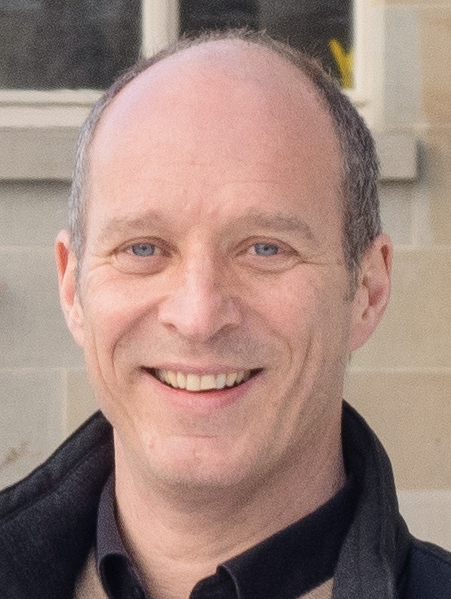
Chris Watkins is Professor of Machine Learning at the Department of Computer Science at Royal Holloway, University of London . His research spans reinforcement learning , evolutionary algorithms , kernel methods in machine learning , epidemiological modeling , and financial mathematics . Key research contributions include: Invention of Q-learning in the 1980s Formal equivalence between evolutionary processes and Bayesian inference Pioneering work on string kernels for non-vectorial data His recent publications focus on evolutionary models satisfying detailed balance (2023), metastability in genetic systems (2022), and error-correcting codes in evolutionary contexts . He has also contributed to understanding fitness fluctuations and genetic architecture . Scientific recognition includes the ECML Innovative Contribution Award (2006) for work on string kernels and grammatical inference. His 1996-1999 research on portfolio optimization anticipated critical issues in financial risk estimation that resurfaced during the 2008 crisis.
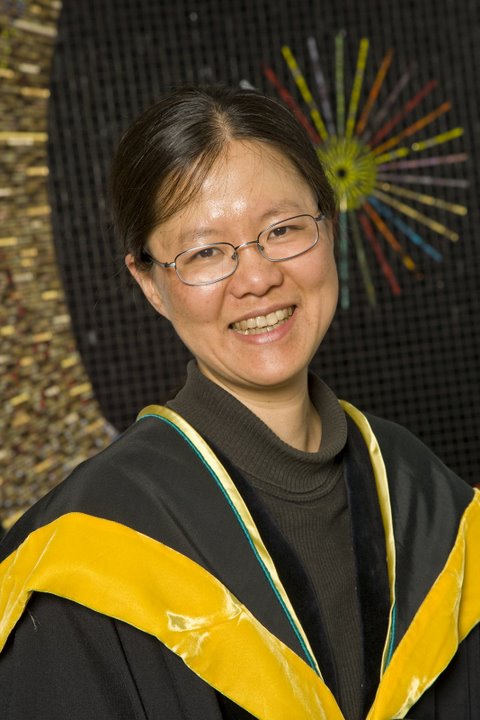
Zhaoping Li is a Professor at the University of Tuebingen and Head of the Department of Sensory and Sensorimotor Systems at the Max Planck Institute for Biological Cybernetics. Her research spans computational neuroscience, focusing on vision, olfaction, and neural dynamics. Research Interests: Computational vision (including efficient coding, saliency maps, V1 modeling), olfactory computation (bulb/cortex networks), neural networks, sensory coding, and nonlinear dynamics. Publications: Author of the textbook Understanding Vision (OUP, 2014), a foundational paper on V1 saliency (TICS, 2002), and works on locomotion circuits (PRL, 2004). Teaching: Offers courses like "Understanding Vision" and "Systems Computational Neuroscience", emphasizing theory-data integration and mathematical modeling. Labs: Leads the Natural Intelligence Lab , advertising PhD/Postdoc positions in psychophysics, fMRI, and computational neuroscience.
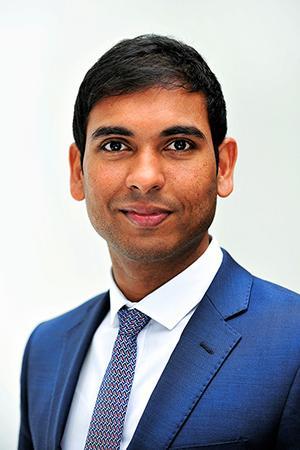
Christian L. Althaus is a computational epidemiologist and Research Team Leader at the Institute of Social and Preventive Medicine (ISPM) at the University of Bern , Switzerland. He chairs the Executive Board of the Swiss Network for Infectious Disease Dynamics (SNIDDY) and served on the Swiss National COVID-19 Science Task Force in 2020. His work combines mathematical modeling and data science to address public health challenges, particularly for emerging infectious diseases like Ebola, MERS, and SARS-CoV-2. Education: Habilitation in Infectious Disease Epidemiology (2017, University of Bern) PhD in Theoretical Biology (2009, Utrecht University) Diploma in Biology (2004, ETH Zurich) Erasmus exchange (2002, Humboldt University Berlin) His research focuses on epidemic modeling , superspreading , vaccine effectiveness , and antimicrobial resistance . Recent work includes analyzing SARS-CoV-2 variants , social contact patterns , and partner notification strategies for STIs. He has developed tools like the EpiLPS Bayesian framework for time-varying reproduction number estimation. Selected scientific awards include the SNSF Ambizione Research Fellowship (2011-2014). Current team members include postdoctoral fellow Laura Di Domenico , PhD student Martin Wohlfender , and collaborators across public health and computational disciplines.
David Ginsbourger is a Professor and Head of Research Group at the Institute of Mathematical Statistics and Actuarial Science (IMSV) within the University of Bern, Switzerland. He maintains dual affiliations through his role at IMSV and as a member of the Multidisciplinary Center for Infectious Diseases (MCID), reflecting interdisciplinary engagement across statistical methodology and applied domains. His research program centers on advanced statistical methodologies with emphases on Gaussian process modeling, uncertainty quantification, and experimental design for computer experiments. Key contributions include novel kernel constructions for equivariant systems, sequential design strategies for excursion set estimation, and efficient computational frameworks for spatial distributional modeling. His work bridges theoretical statistics with practical applications in agriculture, chemoinformatics, environmental science, and risk assessment, demonstrating consistent innovation in handling complex prediction problems under uncertainty. Analysis of his 15 most recent publications (2024-2025) reveals persistent methodological development in Gaussian process theory alongside expanding application domains. Recurring themes include integration-free kernel design for structured data, rare event probability estimation, and multivariate forecast calibration. His research exhibits strong continuity in addressing computational challenges for large-scale inverse problems while increasingly incorporating domain-specific constraints from fields like molecular chemistry and agricultural science. Ginsbourger leads a dedicated research group at IMSV focused on advancing statistical frameworks for computer experiments and uncertainty quantification. The group maintains active collaborations across disciplines, particularly evident in recent work connecting statistical methodology to infectious disease modeling through MCID affiliations and agricultural optimization projects.
Dr. Ugne Stolz is a Researcher at ETH Zürich's Department of Biosystems Science and Engineering in Basel, Switzerland, affiliated with the Professorship for Computational Evolution led by Tanja Stadler. Her work focuses on developing computational models to study viral evolution and immune responses. Research Interests: Her expertise spans computational phylogenetics, phylodynamics, and viral evolution. She investigates reassortment patterns in segmented viruses (e.g., influenza) using Bayesian inference and develops tools like the SCORE package for BEAST 2.5. She also researches T-cell exhaustion in chronic infections like LCMV via single-cell transcriptomics. Publications: Her recent articles (2020–2022) demonstrate interdisciplinary work in virology, immunology, and computational biology, emphasizing viral evolution mechanisms and host-pathogen interactions. Awards: None reported. Grants & Teams: Contributed to SNF-funded research on influenza transmission/evolution (Grant 166258). She collaborates with the Computational Evolution group at ETH Zürich and external partners in virology and immunology.
Leonhard Held is a Professor of Biostatistics at the University of Zurich’s Faculty of Medicine, affiliated with the Epidemiology, Biostatistics and Prevention Institute (EBPI). He actively promotes open and reproducible research in health sciences, serving as Director of the UZH Center for Reproducible Science and as the university’s Open Science delegate. His research focuses on methodological aspects of epidemiological, clinical, and pre-clinical studies, with emphasis on meta-analysis, causal inference, and Bayesian statistical frameworks. Recent work explores reproducibility metrics, data-sharing practices, and the impact of school closures on infectious disease spread. Key trends in his publications include meta-regression for replication projects, survivor average causal effects in RCTs, and reproducibility challenges in oncology trials. He contributes to statistical software development (e.g., R package ‘polyCub’) and methodological guidelines for robust research practices. As a leader in open science, he advocates for training researchers in data-intensive workflows and developing sustainable open research data infrastructure, as evidenced by his involvement in Swiss stakeholder engagement studies.
PD Dr. Mateusz Dolata is Professor (since 2025) at Zeppelin University, Germany, holding the ZF Endowed Chair of Artificial Intelligence. Concurrently, he continues as a senior researcher in the Department of Informatics at the University of Zurich, Switzerland. His expertise lies at the intersection of human-AI collaboration, sociotechnical systems, and digital transformation of advisory services, with a particular focus on healthcare and finance. Education 2025 – Professor (ZF Endowed Chair of AI), Zeppelin University, Germany 2024 – Venia Legendi (Habilitation) in Informatics, University of Zurich, Switzerland 2018 – Doctor of Science in Informatics, University of Zurich, Switzerland 2012 – Master of Science in Media Informatics, RWTH Aachen University, Germany 2010 – Bachelor of Arts in Computational Linguistics and Philosophy, University of Heidelberg, Germany Research Interests Dolata’s research agenda centers on human-AI collaboration in organizational contexts , spanning ethical AI design, multimodal conversational agents, and service innovation. Recent emphases include: AI-mediated customer feedback management (ReAdvisor project) Human-drone collaboration for emergency response Sociotechnical and algorithmic justice in ride-hailing and finance Digital agents supporting chronic-care patients and community health workers Conversational AI in financial advisory encounters Publication Trends Between 2024 and 2025, Dolata has published prolifically in premier venues such as CHI, ECIS, HICSS, JMIR, and IEEE TSE. Themes converge on designing AI artifacts that mediate human collaboration —whether in large-scale brainstorming, community health, persuasive mobile apps, or crisis informatics. Empirical methods blend design-science research with qualitative field studies, underscoring an integrative sociotechnical lens. Scientific Awards & Service General Conference Co-Chair, ECSCW 2021 Steering Committee & Publicity Co-Chair, EUSSET (since 2019) Associate Editor/Editorial Board Member for MISQ, ISJ, JIT, EJIS, BISE, CSCW journal Reviewing roles for ICIS, ECIS, HICSS, WI, ACM CSCW, CHI, INTERACT, DESRIST Advising & Funding Landscape Dolata has supervised more than 60 bachelor’s and master’s theses on topics ranging from conversational agents in banking to drone-supported emergency response. His projects are supported by Swiss and EU funding streams, including the ReAdvisor, Human-Drone Collaboration, and ComBaCaL initiatives. Active collaborations involve interdisciplinary teams across computer science, medicine, public administration, and finance. Labs & Teams He leads the Human-AI Collaboration research cluster at the University of Zurich’s Department of Informatics, while also directing the AI & Work research group at Zeppelin University. The teams comprise doctoral researchers, post-docs, and industry partners exploring next-generation AI services.
Beate Sick is a Professor at the Zurich University of Applied Sciences School of Engineering, specializing in Data Analysis and Statistics. Her work bridges machine learning, probabilistic modeling, and medical applications, particularly in stroke outcome prediction, uncertainty quantification, and statistical methods for healthcare.
Christoph Leuenberger is a Lecturer at the University of Fribourg, holding positions in the Department of Informatics and the Department of Physics, while also serving in the Dean's Office of the Faculty of Science and Medicine. His work bridges computational methods, population genetics, and ecological modeling. He specializes in statistical inference techniques, particularly Bayesian methods applied to genomic data and evolutionary processes. His research focuses on analyzing population trends, genetic diversity, and evolutionary dynamics across species. Key research interests include computational biology, population genetics, and the development of statistical tools for analyzing large-scale genomic datasets. He has contributed to studies on lactase persistence evolution, ancient DNA analysis, and predator population dynamics. His interdisciplinary approach integrates methods from computer science, mathematics, and ecology to address complex biological questions. Recent articles highlight his work in ecological monitoring, Bayesian inference for sex chromosome analysis, and evolutionary jump modeling in phylogenies. These studies underscore his expertise in bridging theoretical frameworks with practical data analysis in genetics and environmental science. No scientific awards or grants are explicitly mentioned in the provided information. He advises no students listed here but actively contributes to teaching and academic administration within the Faculty of Science and Medicine. Labs and teams associated with his work are not specified in the available data. His location is at PER 21 bu. C321, Bd de Pérolles 90, 1700 Fribourg, with contact details via email and ORCID.
Florian Brueck is a Postdoctoral Researcher at the Research Center for Statistics at the University of Geneva, under Prof. Sebastian Engelke. He earned his PhD in Mathematics (Dr. rer. nat.) from the Technical University of Munich (TUM) in 2023, with distinction, under Prof. Matthias Scherer. His research focuses on statistical model comparison, Bayesian non-parametric survival analysis, Lévy processes, extreme value theory, and the integration of machine learning into classical statistics. Education: PhD in Mathematics, TUM (2023) MSc in Financial Mathematics and Actuarial Sciences, TUM (2019) BSc in Business Mathematics, Ludwig Maximilians University Munich (2017) Research Interests: Statistical model selection via Maximum Mean Discrepancy (MMD) Exchangeability and non-parametric Bayesian methods in survival analysis Inference for Lévy and stable processes Extreme value theory applications in risk modeling Machine learning techniques for statistical inference Key Contributions: Developed distribution-free MMD tests for model selection with estimated parameters Advanced infinitely divisible priors for multivariate survival functions Applied generative neural networks to characteristic function estimation Awards & Recognition: None explicitly listed. Advising & Grants: Supervised 5 Master’s theses on topics including MMD-based model selection and clustering-based portfolio optimization Co-led industry project with WWK Versicherungen on risk assessment tools Labs/Teams: Research Center for Statistics at University of Geneva.
Dr. Michael Klippel is a Lecturer and Senior Scientist at the Institute of Structural Engineering, Timber Structures (IBK) at ETH Zurich. He specializes in Timber Engineering, Fire Safety, and Sustainable Materials, leading the 'Fire in Timber Group' since 2014. Klippel coordinates the MAS ETH Fire Safety Engineering program and focuses on advancing timber construction standards. His academic background includes a Dipl.-Ing. in Civil Engineering (2009) from RWTH Aachen University and a Dipl.-Wirt.Ing. in Business Management (2013). Research Interests: Klippel's work bridges structural engineering and fire safety, emphasizing innovative timber applications, carbon-neutral construction, and interdisciplinary projects. His research addresses challenges like fire-resistant CLT design, adhesive performance under fire, and sustainable material utilization. Publications: Key contributions include studies on tall timber structures, carbon credits in real estate, and fire behavior of CLT. His work appears in journals like Sustainability and Journal of Renewable Materials , alongside industry guides and reports. Awards: Honors include the L.J. Markwardt Award (2019), Leo Schörghuber-Preis (2015), and F.C. Trapp-Preis (2010). He also won a VDI student competition for a UHPC bridge design in 2008. Grants & Labs: Klippel leads the 'Fire in Timber Group' and collaborates with industry on standardization projects. His work integrates academic research with practical applications in construction safety and sustainability.
Gersende Fort is a CNRS Senior Researcher affiliated with the Institut de Mathématiques de Toulouse (IMT) at the University of Toulouse. Her research focuses on stochastic approximation methods, Bayesian statistics, optimization algorithms, and computational statistics. She has presented at major conferences such as ICASSP 2025 (Suzhou & Hyderabad) and the French-German-Spanish conference on Optimization (Gijon, 2024), often collaborating with researchers like Eric Moulines and Hoi To Wai. Recent work includes developing sampling techniques for nonsmooth log-concave densities, hierarchical Bayesian models for epidemiological analysis (e.g., COVID-19 reproduction number estimation), and federated learning algorithms. She leads the MAD project funded by the French National Research Agency (ANR), advancing scalable optimization methods. Her publications span technical reports on stochastic proximal-gradient algorithms, fluid-limit-based MCMC tuning, and PLS classification in microarray data analysis. Fort actively engages in academic outreach, including the 'AI and Society' Summit in Paris (2025) and a workshop on mathematics of machine learning. She also contributed to educational initiatives like the Women and Mathematics event in Lavelanet (2024). Her research bridges theoretical foundations with applications in health, optimization, and machine learning.
Tom Griffiths is a Professor of Psychology and Cognitive Science at Princeton University, directing the Computational Cognitive Science Lab and co-leading the Princeton Laboratory for Artificial Intelligence . His research spans computational models of human cognition, Bayesian statistics, and AI systems. Key research themes: mathematical foundations of human intelligence, resource-rational analysis of decision-making, cultural evolution, and AI-human alignment Awards: National Science Foundation, Sloan Foundation, American Psychological Association, Psychonomic Society Recent publications focus on large language models, cognitive resource optimization, and cross-disciplinary insights from psychology, computer science, and neuroscience. He is also co-author of the popular science book Algorithms to Live By .
Yijiang Huang is a Researcher affiliated with the Department of Computer-Aided Robotics at ETH Zürich. His work focuses on advancing computational robotics, with a particular emphasis on structural design optimization, robotic assembly processes, and algorithmic fabrication methods. He holds a position within the Professorship for Computational Robotics and contributes to cutting-edge research in multi-robot systems, topology optimization, and sustainable construction techniques. His research integrates robotics with structural engineering to enhance automation in manufacturing and construction. Key areas include non-repetitive robotic assembly, cooperative multi-arm systems, and the development of frameworks for high-performance design optimization. Huang has published extensively on topics such as task and motion planning (TAMP), deflation methods for non-convex optimization, and bespoke interlocking connections for timber structures. His articles highlight innovations like the CantiBox project, which explores robotic assembly of interweaving timber elements, and protocols linking algorithmic design with construction intent. These contributions aim to bridge gaps between computational methods and real-world applications, emphasizing efficiency, sustainability, and precision in robotic fabrication systems.
Dr. Yi-Chi Liao is a Lecturer in the Department of Computer Science at ETH Zürich, specializing in intelligent interactive systems. Their research focuses on human-robot interaction, wearable technology, and optimization techniques for user interface design. Key areas include developing datasets for naturalistic handover behaviors with robotic limbs, human-in-the-loop optimization methods, and computational workflows for designing input devices. Research Interests: Explores the intersection of robotics, machine learning, and human-centered design. Recent work emphasizes Bayesian optimization techniques, affordance theory, and tactile feedback systems. Projects like the 3HANDS dataset and ThirdHand wearable robotic arm demonstrate innovation in human augmentation and interaction design. Advising: Supervises doctoral student Peizhuo Li in the D-INFK program. Research outputs span 2015–2025, with notable contributions to haptic interfaces, multi-objective optimization, and wearable computing. Active in conferences and journals addressing HCI, robotics, and design automation.