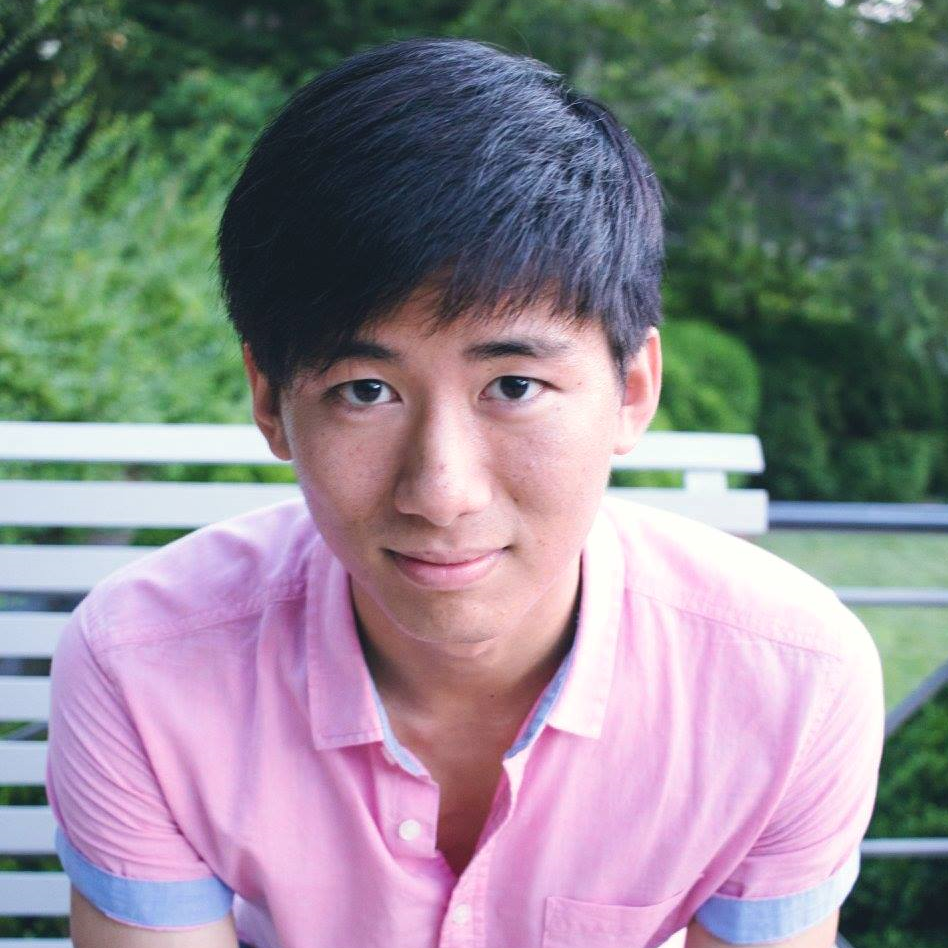
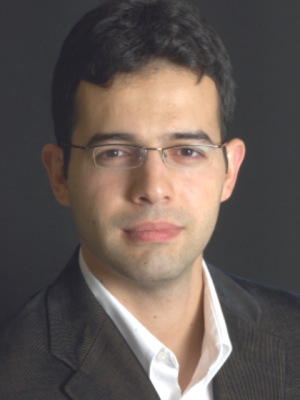
Dr. Kevin J Liang is a Research Scientist at Meta Platforms, Inc. , specializing in Deep Learning , Computer Vision , and 3D Reconstruction . He earned his PhD in Electrical & Computer Engineering from Duke University in 2020, with a dissertation on Deep Automatic Threat Recognition for Airport X-Ray Baggage Screening . His research focuses include: 3D Computer Vision (ICON, Fast3R) Few-Shot Learning (Sylph, HyperMix) Federated Learning (WAFFLe) Object Detection (EgoTracks, Self-Supervised Methods) Recent publications demonstrate his leadership in Egocentric Vision (Ego-Exo4D) and Transformer Applications (GliTr). He has received numerous awards including the E Bayard Halsted Fellowship (2017) and Summa cum laude (2015), and serves on program committees for major conferences like NeurIPS and CVPR . As an educator, he developed and taught tutorials for Duke University's Machine Learning School and Coursera courses, covering TensorFlow, PyTorch, and foundational ML concepts for over 600 students.
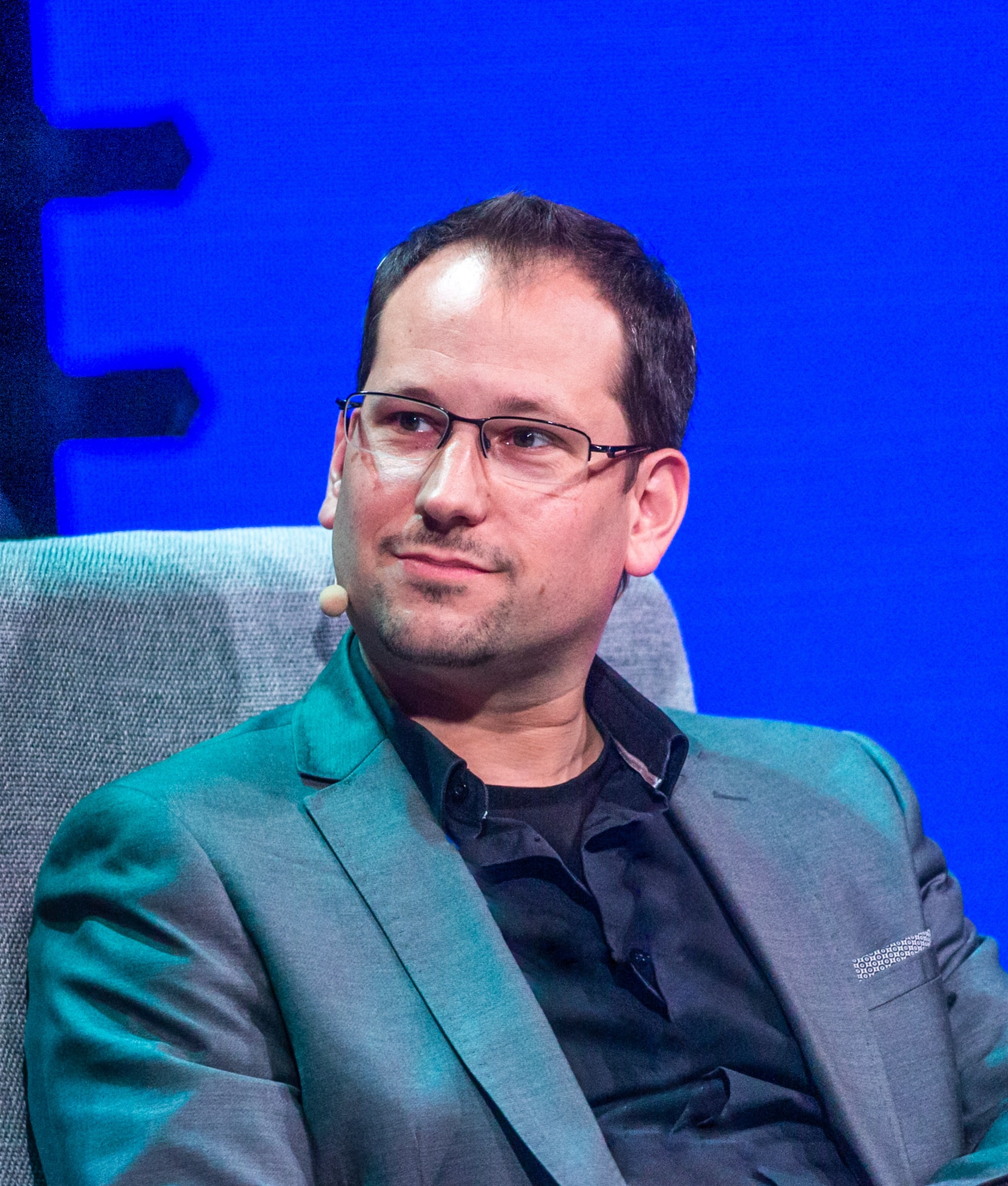
Julien Cornebise is an Honorary Associate Professor in the Department of Computer Science at University College London, with over 20 years of experience in Machine Learning and Artificial Intelligence. His career spans both academic and industry leadership roles, including co-founding startups and directing research at major AI organizations. His academic credentials include an MSc in Computer Engineering, an MSc in Mathematical Statistics, and a PhD in Mathematics specialized in Computational Statistics from University Paris VI Pierre and Marie Curie and Telecom ParisTech. He received the prestigious 2010 Savage Award from the International Society for Bayesian Analysis for his doctoral work. Dr. Cornebise's research interests span multiple AI domains with a strong focus on practical applications that create social impact. His work bridges theoretical foundations with real-world implementations across healthcare, human rights, environmental monitoring, and social good initiatives. He has made significant contributions to medical image analysis, satellite imagery processing, and ethical AI applications. His publication record demonstrates consistent productivity with research spanning from foundational statistical methods to applied AI across diverse domains. Recent work includes significant contributions to medical image analysis, satellite imagery processing, large language models for civic engagement, and ethical AI applications. 2021-2023: Co-founder and acting Chief Scientific Officer at ShiftLab Ltd (grew to 31 people) 2018-2019: Director of Research, Head of Element AI's London Office (AI for Good focus) 2012-2016: Early researcher at DeepMind Technologies Limited (acquired by Google) Postdoctoral positions at SAMSI/Duke University, UBC Vancouver, and University College London Dr. Cornebise has received the 2010 Savage Award from the International Society for Bayesian Analysis. His research has been applied in diverse contexts including healthcare applications with pharmaceutical companies and satellite imagery analysis for the European Space Agency. As an advisor, he works with several technology startups and nonprofits including Amnesty International. He also provides consulting services to various companies and assists venture funds with due diligence on machine learning technologies and strategic matters. His career demonstrates a consistent commitment to bridging cutting-edge AI research with practical applications that create meaningful impact.
Giuseppe Durisi is a Professor at Chalmers University of Technology in Gothenburg, Sweden, specializing in information theory and communication systems. His research bridges mathematically rigorous solutions with practical engineering applications in wireless and optical communication. Primary affiliation: Communication Systems Group , Chalmers University. Research focus: Optimal information transmission, 6G network design, and theoretical foundations of deep learning. Research Interests: Durisi investigates the interplay between latency, reliability, and throughput in digital communication, particularly in millimeter-wave and optical fiber channels . He develops finite-blocklength theory for efficient coding and explores how information theory can explain deep learning performance. Recent Article Trends: His 2025–2024 work emphasizes 6G distributed MIMO networks , energy-harvesting protocols , and machine learning integration into communication theory. Key themes include random access protocols , privacy in wireless aggregation , and hardware-constrained massive MIMO . Scientific Recognition: An IEEE Senior Member, Durisi has published extensively in top journals like IEEE Transactions on Communications and IEEE Transactions on Wireless Communications . Notable Collaborations: Work with teams on radio-over-fiber fronthaul , unsourced multiple access , and time-synchronized URLLC links .
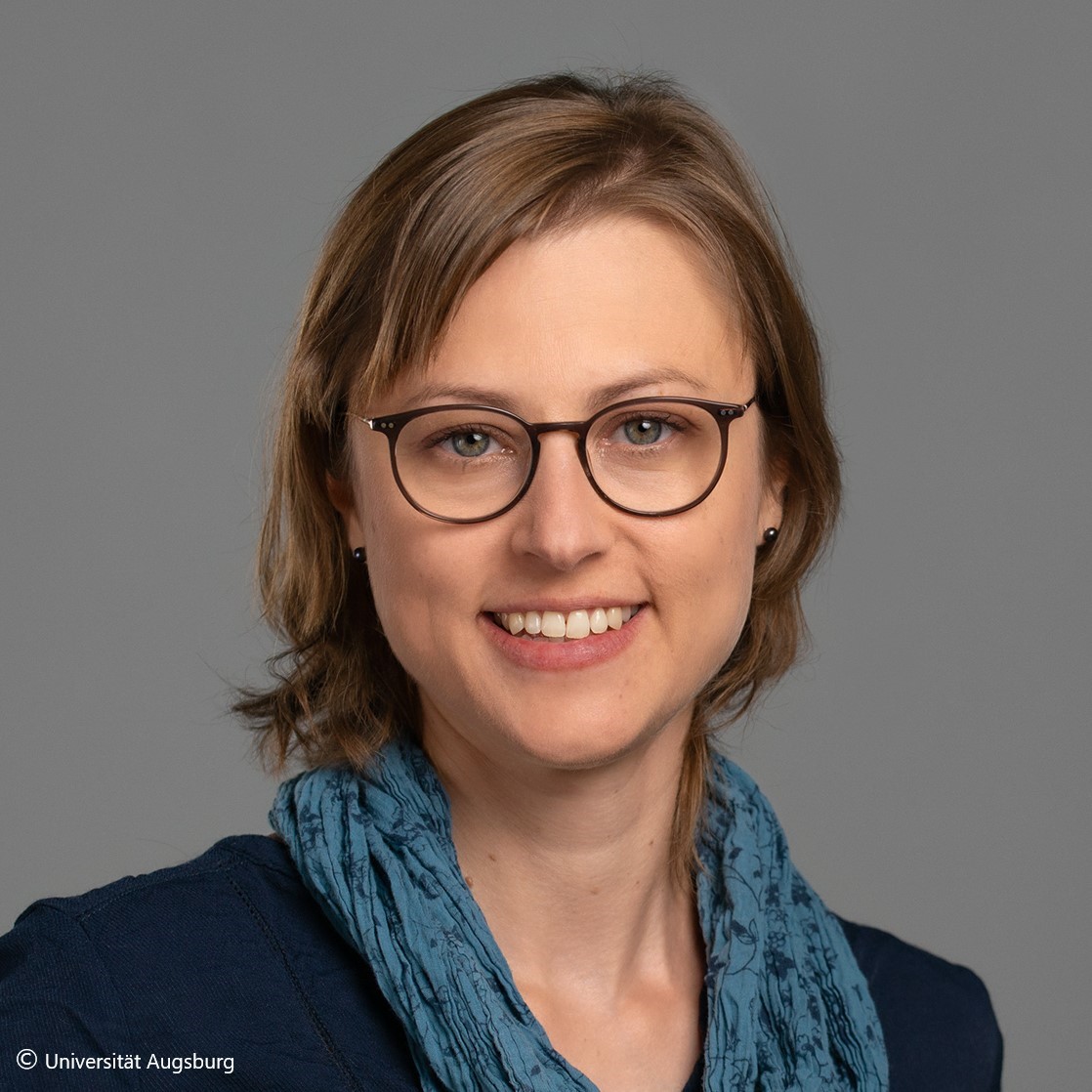
Annemarie Friedrich is a tenured University Professor for Natural Language Understanding (Computational Linguistics) at the Faculty of Applied Computer Science, University of Augsburg. She also holds membership in the Faculty of Philology and History. Previously, she worked as a Senior Expert on Natural Language Processing and Computational Linguistics at the Bosch Center for Artificial Intelligence. Currently, she serves as president of the German Society for Computational Linguistics (GSCL), the primary scientific association for NLP research in German-speaking regions, and is a member of the ACL Special Interest Group for Annotation (ACL SIGANN). University: University of Augsburg School: Faculty of Applied Computer Science Department: Institute of Computer Science Position: University Professor (tenured) for Natural Language Understanding Professor Friedrich's research focuses on computational linguistics and natural language processing with emphasis on semantics and information extraction from text. Her work spans both machine-learning oriented approaches to text mining for scientific text, syntactic and semantic parsing, and uncertainty in deep learning for NLP, as well as corpus-linguistic research on syntax-semantics interface, discourse, pragmatics, aspect, genericity, and modal verbs. She has particular expertise in annotation and corpus creation, recognizing that machine learning models depend fundamentally on underlying data quality. Her research group at Augsburg actively contributes to computational linguistics through numerous publications and datasets. Analysis of Professor Friedrich's recent publications reveals a strong focus on table question answering, patent text processing, uncertainty modeling, and multimodal scientific document understanding. Her work consistently bridges theoretical linguistics with practical NLP applications, with increasing emphasis on robust evaluation methodologies and domain-specific adaptations of language models. Notably, her research group has produced significant resources including the AnnoCTR dataset for cyber threat reports, PAP2PAT for patent generation, and FREB-TQA for evaluating table QA robustness. Professor Friedrich actively mentors multiple PhD students working on diverse topics including document-level patent processing (Valentin Knappich), temporal processing (Timo Schrader), document-level text modeling (Wei Zhou), and topic modeling for digital forensics (Jenny Maria Felser). Her collaborative approach is evident in co-supervision arrangements with researchers from institutions including Bosch Center for Artificial Intelligence, TU Dresden, and Hochschule Mittweida. She has also successfully guided previous PhD students including Sophie Henning (Uncertainty Modeling), Stefan Grünewald (Syntactic Dependencies), and Subhash Pujari Chandra (Neural Patent Classification). Her teaching responsibilities include courses such as Introduction to Natural Language Processing, Introduction to Python Programming, and specialized seminars on Natural Language Understanding for both Bachelor's and Master's students. These courses reflect her commitment to both theoretical foundations and practical implementation skills in computational linguistics.
Bingcong Li is a postdoctoral researcher at ETH Zurich collaborating with Prof. Niao He and the ODI group. Previously, they completed doctoral studies at the University of Minnesota under Prof. Georgios B. Giannakis, followed by industry experience focused on large language models (LLMs). Education includes a PhD from the University of Minnesota under Prof. Georgios B. Giannakis. Research centers on making computation efficient, accessible, and affordable across heterogeneous resources—from GPU clusters to consumer hardware—through interdisciplinary approaches combining deep learning, optimization, and signal processing. Key research areas address foundational computing architectures, large-scale system sustainability, and personalized AI access. Their work develops theoretically grounded methods for explainable systems, with recent focus on LLM fine-tuning efficiency. Publication trends show consistent contributions to top conferences (NeurIPS, ICML, ICLR) with emphasis on optimization techniques for resource-constrained LLM deployment. Their advising and grant activities aren't explicitly detailed, though they actively participate in academic service through conference talks (EUROPT 2025, ICASSP 2025) and co-organizing events like the Efficient LLMs Fine-tuning Track at AI+X Summit. Lab affiliation centers on ETH Zurich's ODI group under Prof. Niao He, focusing on optimization-driven AI solutions.
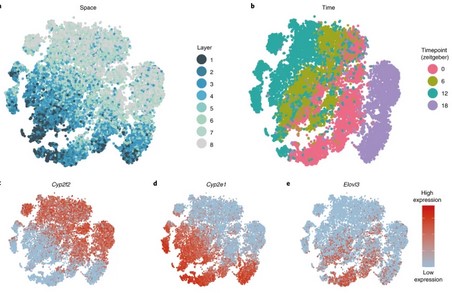
Prof. Felix Naef is a Full Professor at EPFL's School of Life Sciences (SV), leading the Laboratory of Computational and Systems Biology within the Institute of Bioengineering (IBI). His research focuses on quantitative systems biology, integrating theoretical, computational, and experimental approaches to study circadian rhythms, gene regulation, and cellular dynamics. He holds additional roles in teaching and administration, including membership in the Doctoral Program Committee for Computational and Quantitative Biology and the CDS Office. Education: PhD in Physics, EPFL (2000) Postdoctoral training at Rockefeller University (2000-2004) Research Interests: Circadian gene regulatory networks and liver chronobiology Single-cell analysis of transcriptional bursting and noise Systems biology of developmental patterning and metabolic pathways Integration of multi-omics data to model biological oscillators Key Contributions: Pioneered methods to infer circadian time from omics data Discovered space-time interactions in liver zonation and gene expression Advanced understanding of ribosome dynamics and translation elongation Awards: EMBO Member (2020) SNSF Sinergia Grant (2022) Advising & Grants: Supervised over 30 PhD students and postdocs Funded by SNSF, EU Horizon 2020, and industry collaborations Laboratory: The Naef Lab is part of EPFL's IBI, collaborating globally to address fundamental questions in systems biology and chronobiology.
Andrei Atanov is a Researcher at the Laboratoire d'intelligence et d'apprentissage visuels (VILAB) within the School of Computer and Communication Sciences at École Polytechnique Fédérale de Lausanne (EPFL) . His research focuses on advanced topics in artificial intelligence, computer vision, and machine learning, with particular emphasis on multimodal learning, vision-language models, and robust generalization. He is affiliated with the Department of Computer Science and contributes to projects exploring innovative solutions for vision tasks using computationally designed sensors and diffusion models. His work often bridges theoretical advancements with practical applications in robotics and generative systems. Key research areas include developing large vision-language models, optimizing vision algorithms for low-sensor environments, and enhancing model robustness through diversification strategies. His publications span topics from 3D data augmentation to uncertainty estimation in deep learning, reflecting a broad yet technically deep expertise in AI fundamentals and applications.
Marco Bagatella is a doctoral researcher at the Institute of Machine Learning (ETH Zürich), focusing on advanced machine learning and artificial intelligence research. His work spans reinforcement learning, behavioral cloning, and causal inference, often addressing challenges in generalization, exploration, and policy adaptation. Contact: marco.bagatella@inf.ethz.ch Specializes in Reinforcement Learning (including offline and multi-task settings) Expertise in causal modeling and counterfactual data augmentation Investigates graph neural networks for biological systems Active contributor to AI/ML publications (15+ recent works) His research explores problem space transformations, optimal transport for zero-shot imitation learning, and temporal logic-based exploration. Current projects focus on improving policy robustness and adaptability across diverse domains. Scientific awards: No formal honors listed yet. Collaborates with ETH Zurich's machine learning teams on cutting-edge algorithm development and theoretical analysis.
Dr. Mohamed Abdalmoaty is a Researcher at ETH Zürich's Institut für Automatik, specializing in the Department of Automatic Control. His work focuses on Data-Driven Modelling and Control , with expertise in system identification, stochastic systems, and optimal control. He holds an affiliation within the Professorship for Complex Systems Control. His research interests emphasize data-driven approaches for predictive control, frequency-domain identification, and nonlinear dynamical systems. He has contributed to advancements in Kalman filter formulations, stochastic Wiener models, and cybersecurity in control systems, particularly in medical applications like the artificial pancreas. Abdalmoaty’s recent publications (2022–2024) highlight innovations in time-varying normalizing flows, privacy-preserving network control, and robust parameter estimation under uncertainty. His work bridges theoretical control systems with practical applications in machine learning and biomedical engineering. He has developed software tools for system identification and simulation, including implementations for frequency-domain analysis and nonparametric closed-loop identification. His research aligns with emerging trends in hybrid machine learning-control frameworks and resilient cyber-physical systems.
Alexandre Alahi is an Associate Professor at École Polytechnique Fédérale de Lausanne (EPFL), where he leads the Visual Intelligence for Transportation (VITA) laboratory. He is affiliated with the School of Architecture, Civil and Environmental Engineering (ENAC), the Institute of Infrastructure (IIC), and also contributes to diversity initiatives at ENAC. His research focuses on integrating computer vision, machine learning, and robotics to develop socially-aware AI for transportation and autonomous systems. University: École Polytechnique Fédérale de Lausanne (EPFL) School: School of Architecture, Civil and Environmental Engineering Department: Institute of Infrastructure, IIC Research Lab: Visual Intelligence for Transportation (VITA) Alexandre's research interests center on computer vision, machine learning, robotics, and AI safety, particularly in human trajectory prediction, depth estimation, and socially-aware autonomous navigation. He investigates how AI can understand and predict human behavior in complex environments to improve safety in mobility systems. His work bridges theoretical advances with real-world applications in autonomous driving, urban planning, and healthcare. His recent publications span a wide array of topics including omnidirectional stereo matching, trajectory forecasting, cross-view localization, AI security, and depth estimation. These works demonstrate a strong trend toward building generalizable, robust, and socially-compliant AI systems, with increasing focus on uncertainty quantification, safety certification, and real-world deployment. The integration of multimodal data and the development of foundation models are recurring themes. Alexandre has received numerous scientific accolades, including: Top 100 Most Influential Scholar in Computer Vision (2022–2023) Editor’s Choice Award, Image and Vision Computing (2021) Honorable Mention, ICCV Workshop (2019) CVPR Open Source Award (2012) ICDSC Challenge Prize (2009) Top 20 Swiss Venture Leaders (2010) He has advised numerous PhD students whose theses cover diverse topics such as human motion prediction, person re-identification, trajectory forecasting, and AI security. His lab has secured significant recognition and funding, enabling impactful research with real-world applications. Alexandre has also co-founded startups like Visiosafe, demonstrating strong industry engagement and technology transfer. The VITA lab fosters interdisciplinary collaboration, working across computer vision, robotics, transportation engineering, and human-centered AI. The team develops datasets, benchmarks, and open-source tools to advance the field and promote reproducibility.
Prof. Mehmet Fatih Yanik is a Full Professor at the Department of Information Technology and Electrical Engineering at ETH Zürich and Deputy Head of the Institute of Neuroinformatics. He leads the Yanik Lab, focusing on neurotechnology, neuroengineering, and high-throughput screening systems for drug discovery. His career includes tenured positions at MIT (2006-2014) and postdoctoral work at Stanford University. He holds a BS and MS from MIT (Electrical Engineering/Physics and Computer Science) and a PhD in Applied Physics from Stanford. Educations: BS in Electrical Engineering and Physics, MIT (1999) MS in Engineering and Computer Science, MIT (2000) PhD in Applied Physics, Stanford University (2006) Research Interests: Prof. Yanik’s work spans neurotechnology platforms for large-scale neural recording and stimulation, high-throughput in vivo screening systems for drug discovery, and advanced neuroimaging techniques. He pioneered ultra-flexible neural electrodes and non-invasive focused ultrasound neuromodulation. His lab integrates machine learning with neurotechnology to study brain circuit dynamics and anesthetic states. Awards: NIH Director’s Pioneer Award (youngest recipient) ERC Consolidator Award Bridge Discovery Award Technology Review’s 'Top 35 Innovators Under 35' Advising & Grants: His research is supported by NIH, ERC, NSF, and industry partnerships. He directs the NSC Master’s program and teaches courses like "Bioelectronics and Biosensors" . The Yanik Lab collaborates widely, advancing translational neurotechnology for clinical applications. Labs & Teams: The Yanik Lab at ETH Zürich develops cutting-edge tools for neuroscience, including neural interface technologies and AI-driven analysis pipelines for behavioral and neural data.
Marc Langheinrich is a Full Professor and Dean at the Faculty of Computer Science, Università della Svizzera italiana (USI), where he also leads the Research Group for Ubiquitous Computing. His academic journey includes a PhD from ETH Zurich and prior roles at NEC Research and the University of Washington. He is affiliated with the Institute of Information Systems (SYS) at USI. Education: PhD (Dr. sc.) in Computer Science, ETH Zurich, Switzerland (2005) Master’s degree (Dipl.-Inf.) in Computer Science, University of Bielefeld, Germany (1997) Marc Langheinrich's research centers on privacy, security, and usability in ubiquitous and pervasive computing environments. His work explores how communication protocols, user interfaces, and system designs can protect personal data while enabling seamless interactions with smart devices. Key interests include lifelogging, memory augmentation, IoT privacy, and ethical design frameworks. He investigates technical and human factors in privacy-aware systems, often integrating insights from human-computer interaction and social computing. His recent publications demonstrate a strong focus on privacy-preserving machine learning (e.g., federated learning), mobility modeling, affective computing, and dataset development (e.g., LAUREATE). The research spans theoretical frameworks and practical implementations, often involving wearable sensing, multimodal data, and real-world user studies. Scientific Awards: Best Paper Award at DIS '18 for Roaming Objects: Encoding Digital Histories of Use into Shared Objects and Tools Best Paper Honorable Mention at MUM '16 for Design and evaluation of a wearable AR system for sharing personalized content on ski resort maps Marc Langheinrich has supervised numerous PhD and Master’s students, including Anton Fedosov, Evangelos Niforatos, and Matias Laporte. He has led multiple funded research projects in privacy, IoT, and human-computer interaction. He serves as Editor-in-Chief of IEEE Pervasive Magazine and on the steering committee of the IoT Conference Series, reflecting his leadership in the academic community. He leads the Research Group for Ubiquitous Computing at USI, which focuses on privacy-aware systems, digital memory augmentation, and interactive public displays. The group develops technologies that enhance user control over personal data while enabling novel applications in smart environments.
Dr. Thomas Möllenhoff is a post-doctoral researcher at RIKEN AIP's Approximate Bayesian Inference Team. He earned his PhD in Informatics from the Technical University of Munich in 2020, where he focused on nonconvex optimization methods for image processing and computer vision. Education: PhD in Informatics (Technical University of Munich, 2020) His research bridges Bayesian principles with deep learning advancements. Recent work involves Sharpness-aware minimization (SAM) and uncertainty estimation in neural networks. He received recognition for his contributions to computer vision (CVPR 2016) and Bayesian deep learning (NeurIPS 2021 challenge). Scientific Awards: Best Paper Honorable Mention at CVPR 2016 First-place at NeurIPS 2021 Challenge on Approximate Inference in Bayesian Deep Learning
Dr. Alexander Duncan is a Senior Scientific Collaborator at École polytechnique fédérale de Lausanne (EPFL), holding multiple roles across departments. Affiliated with the School of Basic Sciences (SB), Institute of Physics (IPHYS), and Laboratory of Electron Microscopy and Spectroscopy (LSME), he also serves in educational units like EDMX-ENS and SMX-ENS. His research focuses on advanced electron microscopy techniques, oxide heterostructures, and machine learning applications for nanoscale analysis. Materials Science Electron Microscopy Machine Learning for Materials Analysis Nanoscale Imaging Ferroelectric Materials Oxide Heterostructures Duncan's recent publications demonstrate expertise in EDX spectral denoising , symmetry breaking interfaces , and machine learning-aided phase quantification . He has developed novel algorithms for hyperspectral unmixing and atomic-scale reconstruction techniques, with applications in neuromorphic computing and deep mantle mineral analysis. He supervises PhD students including Aebersold Arthur Brian and Sblendorio Gabrielle Anne Laguisma , while actively contributing to open-source software development ( espm and emtables ). Duncan also participates in EPFL's Physics PhD program committee and teaches advanced electron microscopy courses.
Emtiyaz Khan is a Research Professor and Team Leader of the Adaptive Bayesian Intelligence team at the RIKEN Center for Advanced Intelligence Project (AIP) in Japan. His research focuses on developing AI systems that can autonomously learn to perceive, act, and reason throughout their lives, bridging the gap between how living beings and computers learn. Dr. Khan's research interests span multiple areas of machine learning including: Approximate inference and Bayesian statistics Deep learning and neural network optimization Reinforcement learning and active learning Information geometry and signal processing Online learning and continual adaptation His recent work has focused on developing theoretically grounded Bayesian methods for deep learning, with applications in computer vision and decision-making systems. Dr. Khan has made significant contributions to variational inference, Bayesian optimization, and continual learning frameworks that enable AI systems to retain knowledge while learning new tasks. Dr. Khan has received substantial research funding including: (2021-2026, USD 2.23 Million) JST-CREST and French-ANR's grant, The Bayes-Duality Project (2020-2023, USD 167,000) KAKENHI Grant-in-Aid for scientific Research (B), Life-Long Deep Learning using Bayesian Principles (2020-2023, USD 11,000) KAKENHI Grant-in-Aid for Chellenging Research (Exploratory), Linear algebra for continuous learning of large neural networks (2019-2022, USD 237,000) External funding through companies for several Bayes related projects Dr. Khan is actively involved in the machine learning community, having served as General Chair for AISTATS 2026 and given keynotes at major conferences including Bayes Comp 2025 and the 1st EurIPS conference. His work has resulted in multiple papers accepted at top-tier conferences like NeurIPS, with some receiving spotlight presentations.