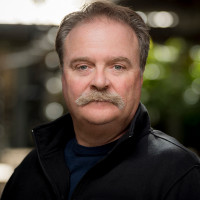
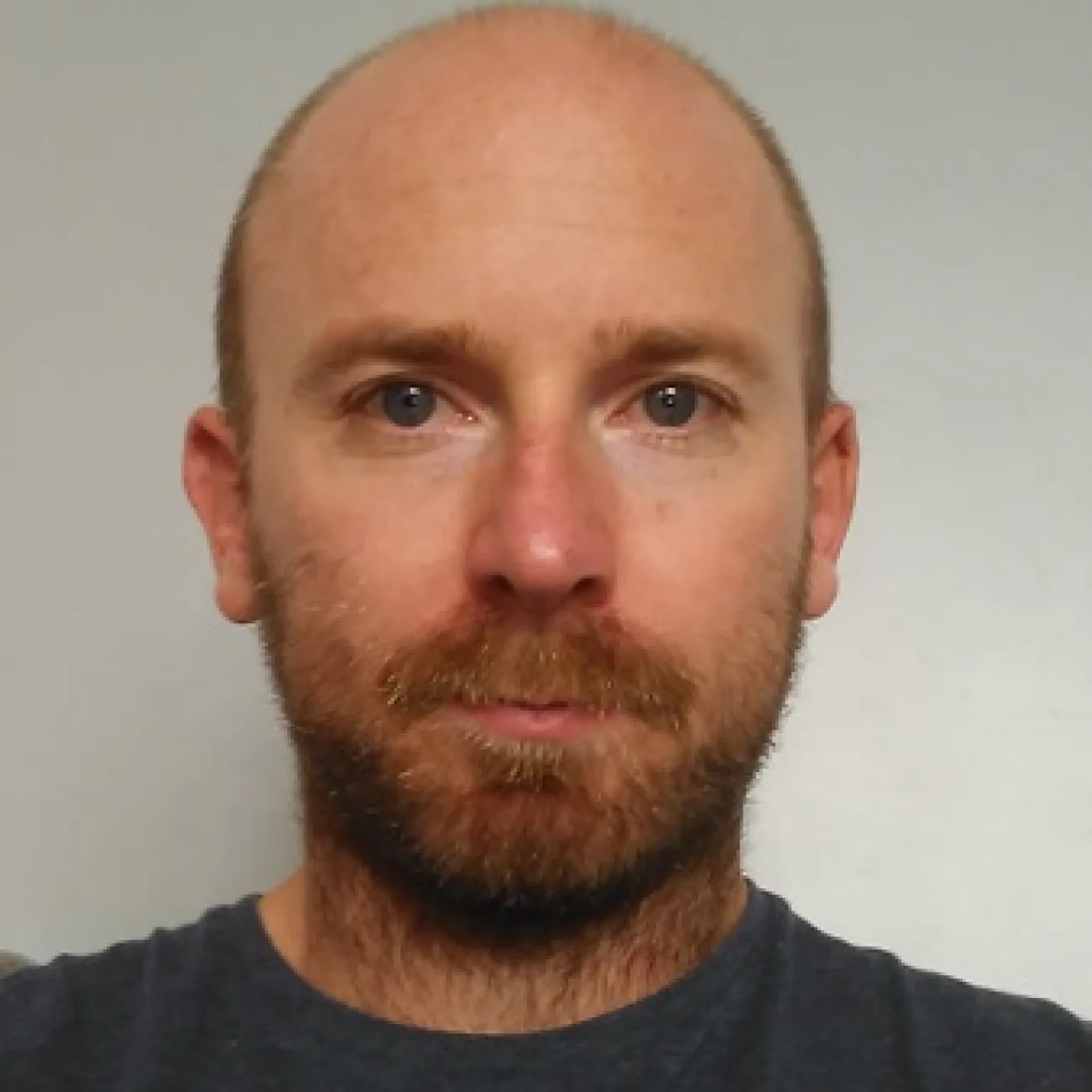
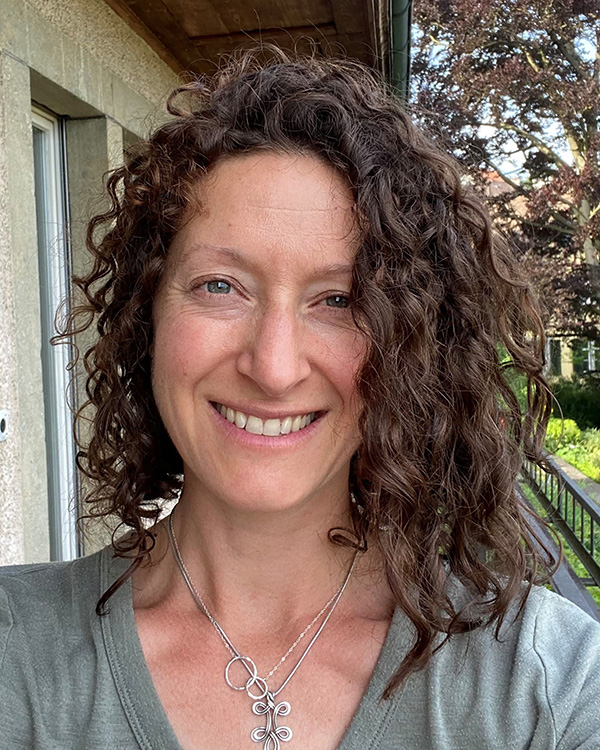
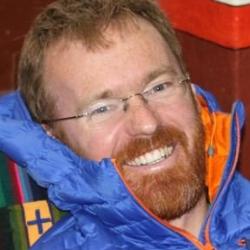
Eric Roberts is a Professor of Geology and Geological Engineering and Director of the Potential Gas Agency at the Colorado School of Mines. His research focuses on basin analysis, energy exploration, and sedimentary geology with specializations in Mesozoic-Cenozoic basins of Gondwana and North America. He leads projects in U-Pb geochronology, critical minerals exploration, and paleoenvironmental reconstruction through vertebrate paleontology and stratigraphy studies. Roberts' work integrates advanced geochronological techniques with field-based analyses to address questions in paleobiology, resource exploration, and earth system dynamics. Key research themes include: Geochronology of sedimentary and volcanic deposits Paleoclimate reconstruction using paleosols Stratigraphic frameworks for dinosaur fossil records Resource potential of helium/hydrogen reserves Antarctic and African vertebrate paleontology His exploration of hominin burial practices in the Rising Star Cave System has provided critical insights into early human behavior. Roberts' interdisciplinary approach bridges geological, biological, and environmental sciences to advance understanding of Earth's history and resource management strategies.
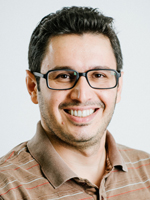
Neal Driscoll is a Professor of Geology and Geophysics at the Geosciences Research Division, Scripps Institution of Oceanography, UC San Diego. He specializes in tectonic deformation, landscape evolution, and seafloor imaging, with a focus on understanding Earth's processes through sediment records. Driscoll co-directs UC San Diego’s Center for Public Preparedness (CP2) and leads ALERTCalifornia, a critical infrastructure network monitoring wildfires, floods, and earthquakes via over 1,000 cameras. His work bridges geohazard mitigation, climate impacts, and disaster response. Education: B.S., Geology, University of New Hampshire M.S., Oceanography, University of Rhode Island Ph.D., Columbia University (Lamont-Doherty Earth Observatory) Research Interests: Driscoll investigates tectonic deformation’s role in shaping landscapes and seascapes, particularly in response to climate and sea-level changes. His fieldwork includes high-resolution seafloor imaging and seismic data analysis in regions like Iceland and California. He also studies neotectonics, geohazards, and coastal processes, with recent focus on the San Andreas Fault system and Salton Trough rift dynamics. ALERTCalifornia: This program uses advanced camera networks to monitor natural disasters, providing real-time data for first responders and researchers. Its infrastructure, originally for earthquake monitoring, now supports multi-hazard tracking, including wildfires and landslides, enhancing public safety and environmental understanding. Awards: Office of Naval Research Young Investigator Award Heezen Award and Storke Award (Lamont-Doherty Earth Observatory) Scripps Undergraduate Teaching Award MIT Distinguished Crosby Lecturer Advising & Grants: Driscoll has mentored students in geology and geophysics, with grants supporting his research on fault systems, climate impacts, and disaster preparedness. His collaborative projects include the Salton Seismic Imaging Project and Arctic Ocean sediment studies. Labs & Teams: Leads ALERTCalifornia and CP2 teams, collaborates with Scripps’ Geosciences Research Division on marine geophysics and tectonic studies, and partners with global institutions like WHOI and Icelandic research groups.
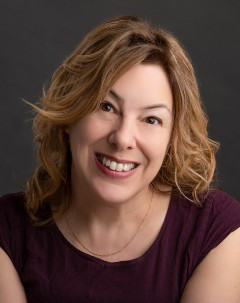
Eric Fortune is an Associate Professor in the Department of Biological Sciences at New Jersey Institute of Technology. His research spans neuroethology, electrosensory systems, and computational biology, with a focus on weakly electric fish and sensorimotor integration. Recent Publications highlight work on Neurophysiological adaptations in weakly electric fish Machine learning applications in flu forecasting Behavioral and neural mechanisms of exploration-exploitation trade-offs Grants include multiple NSF-funded projects on collaborative research in active sensing, neuromechanical systems, and social interaction effects on sensory function. Media Coverage features his role in a $5M Amazon rainforest biodiversity contest, where his team counted over 250,000 critters in a square kilometer.
Dr. Derek Keir is an Associate Professor in Earth Science within the Ocean and Earth Science department at the University of Southampton. He specializes in passive seismology, remote sensing, geochemistry, and field geology to study earthquakes and volcanoes in Africa, Arabia, the Caribbean, and Italy. He leads the Geology and Geophysics research group and serves as Chief Editor of the Structural Geology and Tectonics section in Frontiers in Earth Science , and holds editorial roles in Volcanology and Structural Geology. Education: MSci Geology and Geophysics (Imperial College London, 1998-2002), PhD in Tectonics and Seismology (Royal Holloway University of London, 2002-2006). Previous roles include NERC Research Fellow (University of Leeds, 2007-2011) and Lecturer (University of Southampton, 2011-2015). Research focuses on continental rifting, magmatic systems, and geothermal resources. Notable projects include the South Tanganyika Active Rift Seismicity study (sponsored by Beach Energy) and investigations into the lithospheric structure of the Ontong Java Plateau (NERC-funded). His work combines seismology, InSAR, and geochemical analyses to understand tectonic processes. Publications highlight contributions to understanding volcanic subsidence (Dallol), rift-scale magmatic inflation in Afar, and seismic hazard in the Apennines. Awards include the 2024 Nature Paper (Coevolution of craton margins), Jason Morgan Early Career Award (2011), and Bullerwell Award (2013). Supervises PhD students in INSPIRE programs and collaborates on international projects like the Afar Dallol Drilling initiative. His research bridges field observations with advanced geophysical modeling to advance continental dynamics understanding.
Dr. Julie Fosdick is an Associate Professor in the Department of Earth Sciences at the University of Connecticut. She directs the Basin Analysis and Helium Thermochronology Laboratory and serves as Undergraduate Research Coordinator. Her educational background includes: PhD and MS in Geological & Environmental Sciences (Stanford University) BS in Geological Sciences (UC Santa Barbara, high honors) She completed an NSF Earth Science Postdoctoral Fellowship at the University of Arizona. Fosdick's research reconstructs: mountain-building and erosion processes through: Detrital thermochronology of orogenic systems Sedimentary basin analysis Tectonic-sedimentation interactions Paleotopography evolution Her NSF CAREER Award supports studies of sediment recycling in Argentina's Sierras Pampeanas. Current investigations examine: Post-glacial landscape evolution in Arctic Canada Andean hinterland tectonic development San Andreas Fault dynamics through Neogene deposits Greenland paleoclimate from subglacial sediments Her lab employs multi-method geochronology and thermal history modeling. Fieldwork spans global locations including: Argentine Andes Alaskan Range Greenland ice sheet California fault systems She maintains active collaborations across geoscience disciplines.
John Shaw is the Harry C. Dudley Professor of Structural and Economic Geology and a Professor of Environmental Science and Engineering at Harvard University's School of Engineering and Applied Sciences. He also serves as Vice Provost for Research at Harvard, overseeing institutional research strategy and initiatives. His primary research focuses on structural geology, geophysics, and earthquake hazards, particularly in active fault systems, mountain belt tectonics, and subsurface energy development. Prof. Shaw leads the Structural Geology & Earth Resources Program, an industry-academic consortium that integrates geophysical data (3D seismic surveys, remote sensing) with advanced numerical modeling to address geological and environmental challenges. Education and professional experience: Joined Harvard Faculty in 1997. His research portfolio includes collaborations with the Southern California Earthquake Center (SCEC) and the development of critical infrastructure like the SCEC Unified Community Velocity Model (UCVM). His work emphasizes practical applications such as fault stability assessments and carbon sequestration impact studies. Research interests span: 1) active fault characterization for seismic hazard mitigation, 2) tectonic evolution of mountain belts, 3) numerical modeling of fault dynamics, and 4) geomechanical impacts of subsurface energy projects. His structural modeling innovations have advanced understanding of thrust fault systems and fault-bend folding mechanisms. Professional contributions include leadership roles in interdisciplinary consortia and development of open-source geophysical software frameworks. Administrative duties at Harvard's Office of the Vice Provost for Research (VPR) focus on advancing institutional research capacity and fostering cross-disciplinary collaborations.
Alex Liu is a Researcher at the Department of Earth Sciences within the University of Cambridge. He specializes in palaeobiology , focusing on the origin and early evolution of animals, particularly the Ediacaran biota (~579–539 million years ago), and their co-evolution with Earth's environment. Research Focus: Refines understanding of animal body plan evolution, taphonomy, sedimentology, and macroevolutionary trends. Methodologies: Combines fieldwork, experimental studies, petrology, phylogenetics, and big-data analyses. Collaborations: Works with international museums and research teams on fossil sites in Namibia, Canada, and Brazil. Additional Interests: Explores meiofaunal evolution, paleogeography, paleoclimate, and conservation paleobiology. He supervises Cambridge NERC Doctoral Landscape Awards (DLA) projects and welcomes student contributions to taxonomic, paleoecological, and analytical studies.
Professor John Parnell is the Chair in Geology & Petroleum Geology at the University of Aberdeen , affiliated with the School of Geosciences and Department of Geology and Petroleum Geology . His research focuses on geochemistry, paleoenvironmental reconstruction, trace element cycling, and sedimentary systems , with significant contributions to studies of the Rhynie Chert, Bowland Shale, and Lewisian Complex. Research Interests Professor Parnell's work spans: Geochemical analysis of Paleoproterozoic and Neoproterozoic systems Trace metal mobility in sedimentary and metamorphic environments Organic carbon burial and its tectonic implications Planetary analog studies for Mars exploration Shale resource characterization and environmental impact assessment Recent Publications His recent articles highlight investigations into: Graphitization processes in Scottish Highlands marbles Sulphur isotope records in Precambrian successions Trace element dynamics in the Bowland Shale Biogeochemical cycling at the Precambrian-Cambrian boundary Labs & Collaborations He leads research in the Geofluids Group and collaborates with the Planetary Sciences Department on Mars analog studies.
Nathan Yee is a Professor at Rutgers University, where he has held academic appointments since 2004. He earned his B.Sc. from McGill University (1997) and Ph.D. from the University of Notre Dame (2001), followed by postdoctoral research at the University of Leeds (2001-2003). His career progression includes positions as Assistant Professor (2004-2010), Associate Professor (2010-2016), and full Professor since 2016. Research Focus Yee's research integrates geochemistry and geomicrobiology to study: mineral transformation processes, interactions between metal ions and mineral surfaces, microbial influences on inorganic element cycling, and contaminant behavior in environmental systems. His work combines experimental approaches with modeling to investigate biogeochemical processes relevant to early Earth evolution, microbial metabolism, and environmental remediation. Key themes include biologically catalyzed redox reactions, metal isotope fractionation, and geomicrobial controls on contaminant transport. Publication Trends Yee's recent publications (2021-2025) demonstrate strong emphasis on microbial-metal interactions, isotope geochemistry, and planetary science. Dominant themes include: isotopic tracing of metal cycling (Ni, Cu, Hg), microbial redox transformations of contaminants (Se, Te, U), photochemical processes in early Earth systems, and astrobiological investigations of planetary bodies like Mars and Enceladus. Methodologies frequently combine laboratory experiments with geochemical modeling.
Dr. Luke Fleming is an Associate Professor in the Department of Anthropology at the University of Montreal's Faculty of Arts and Sciences. His research focuses on comparative linguistic anthropology, particularly the typology of honorific systems, kinship-related linguistic avoidance practices, and sociolinguistic dynamics in indigenous and small-scale societies. He has authored over 20 peer-reviewed publications and led numerous research projects funded by the Social Sciences and Humanities Research Council of Canada (SSHRC) and international institutions. Teaching responsibilities include courses on sociolinguistics, linguistic anthropology, and language and culture. He supervises graduate students engaged in interdisciplinary research spanning from Sri Lanka to the Amazon basin. Current projects investigate honorific pronoun systems across Theravada Buddhist communities and Tamil language usage in South Asia. Lead researcher for SSHRC-funded projects studying honorific systems and small-scale sociolinguistics Published in Journal of Linguistic Anthropology , Language in Society , and Anthropological Linguistics Advisor to 9 graduate students since 2018 Research networks include collaborative projects with Patagonian language speakers and ongoing comparative studies linking Southeast Asian honorifics to African avoidance practices. His forthcoming book On Speaking Terms examines kinship-related linguistic avoidance worldwide. Active in program development for interdisciplinary anthropology degrees, contributing to 15 academic programs at undergraduate and graduate levels.
Professor Alex Copley holds the position of Professor of Tectonics at the Department of Earth Sciences, University of Cambridge. His research focuses on understanding Earth's crustal deformation, tectonic forces, and earthquake dynamics across scales from microcrystalline to continental. He employs integrated approaches combining field geology, geophysical data, numerical modeling, and petrological analysis. His work addresses key questions on earthquake controls, tectonic force origins, and crustal material properties, with global field projects spanning Asia, the Middle East, Europe, Africa, and South America. Research interests include: Earthquake mechanics and seismic hazard mitigation Continental tectonics and mountain belt evolution Crustal rheology and lithospheric dynamics Metamorphic petrology and continental collision processes Large-scale controls on critical mineral distributions Recent publications highlight studies on fault mechanics in Iran, Himalayan shortening, and the thermal evolution of mountain ranges. His work bridges fundamental geoscience with societal applications, including earthquake resilience and tectonic influences on resource formation. Affiliations include Bullard Laboratories and collaborations with global institutions. No formal awards are listed in the provided text, though his research has been published in high-impact journals like Nature and Geophysical Research Letters .
Dr. Saman Razavi is an Associate Professor at the University of Saskatchewan, holding dual appointments in the School of Environment and Sustainability (SENS) and the Department of Civil, Geological and Environmental Engineering in the College of Engineering. He is a member of the Global Institute for Water Security and leads the Razavi EnviroFutures Lab. His research focuses on hydrological modeling, water resources management, climate change impacts, and the integration of machine learning with environmental science. Dr. Razavi has earned a PhD in Civil and Environmental Engineering from the University of Waterloo. Education: PhD in Civil and Environmental Engineering, University of Waterloo MS in Civil and Environmental Engineering, Amirkabir University, Iran BS in Civil Engineering, Iran University of Science and Technology Research interests include hydrologic model development, optimization, uncertainty quantification, climate change analysis, and socio-hydrological modeling. He emphasizes interdisciplinary approaches to address water challenges through integrated frameworks that bridge natural science, engineering, and socio-economic factors. Award: Walter L. Huber Civil Engineering Research Prize from ASCE (2024) Advising & Grants: Dr. Razavi leads the Integrated Modelling Program for Canada under Global Water Futures, focusing on transboundary water systems. His work involves developing decision-support tools for flood/drought management and climate adaptation. Labs/Teams: The Razavi EnviroFutures Lab advances research on water-human systems, leveraging AI and big data to enhance resilience against water-related hazards. Current projects include flood-prone area mapping, drought prediction, and socio-hydrological modeling in transboundary basins.
Alessia Ferrari is a fixed-term researcher in the Department of Engineering and Architecture at the University of Parma, Italy. She lectures on Hydrology within the Bachelor’s degree programme in Civil and Environmental Engineering and serves as the reference teacher for the same programme across multiple academic years (2020/2021 – 2025/2026). Research Focus Ferrari’s research integrates advanced numerical modelling with real-world flood-risk management. Key themes include: High-resolution 2-D shallow-water simulations using GPU-parallel codes. Porosity-based approaches for large-scale urban flood modelling. Levee-breach hydraulics and emergency-action planning. Calibration of hydraulic models using tools such as PEST. Integration of machine-learning techniques with physics-based flood forecasting. Publication Trends Across more than 25 peer-reviewed works (2015-2025), Ferrari has concentrated on computational hydraulics applied to extreme flood events in Northern Italy (e.g., Parma 2014, Lamone 2024). Her papers consistently advance numerical schemes (ADER, HLLEM Riemann solvers) and GPU acceleration while validating models against field data, thereby bridging theoretical development and practical flood-mitigation strategies. Contact & Office E-mail: alessia.ferrari@unipr.it Office: Science and Technology Campus – Pavilion 10, Engineering Scientific Headquarters, Parco Area delle Scienze 181/A, 43124 Parma, Italy.
Dr. April Nowell is a Professor of Anthropology in the Department of Anthropology at the University of Victoria's Faculty of Social Sciences, specializing in Paleolithic archaeology, cognitive archaeology, and the archaeology of children. Currently on leave, she leads internationally recognized research projects across Europe, the Levant, Australia, and Africa while actively accepting graduate students. She earned her PhD from the University of Pennsylvania and has developed expertise in Neanderthal lifeways, Paleolithic art, and hominin life histories. Her academic journey reflects deep engagement with both theoretical frameworks and fieldwork across diverse geographical contexts. Nowell's research examines how prehistoric societies structured knowledge transmission, childhood development, and symbolic expression. Her groundbreaking work on finger flutings in Australian caves reveals children's roles in Paleolithic storytelling traditions, while her analysis of Levantine wetland ecosystems demonstrates how Pleistocene humans adapted to environmental shifts. She challenges conventional narratives about Neanderthal cognition and has pioneered methodologies for reconstructing prehistoric childhood experiences through skeletal and material evidence. Her recent publications show consistent innovation in archaeological methodology, particularly in digital documentation of rock art and interdisciplinary approaches to human development. Key trends include integrating bioarchaeological data with cognitive models, examining material culture as evidence of social learning, and analyzing environmental archives to understand human dispersal patterns. Her scientific recognition includes: 2023 EAA Book Prize for Growing Up in the Ice Age: Fossil and Archaeological Evidence of the Lived Lives of Plio-Pleistocene Children Nowell secures major research funding including Social Sciences and Humanities Research Council grants supporting her Azraq Basin project in Jordan and Koonalda Cave research in Australia. She mentors graduate students in Paleolithic theory while collaborating with Indigenous communities and international scholars on field projects spanning five continents. Her work bridges academic research and public engagement through TEDx talks and media appearances examining science communication. She directs field programs at Jordan's Azraq Basin wetlands and Australia's Koonalda Cave, working with multidisciplinary teams including geochronologists, bioarchaeologists, and Traditional Owners to investigate Pleistocene human adaptation and cultural transmission.
Professor David J.A. Evans is a distinguished glacial geomorphologist at Durham University's Department of Geography. His research spans three interconnected themes at the interface of glacial geology and Quaternary science, focusing on palaeoglaciology and the reconstruction of former glaciers and ice sheets through time. With extensive field experience across the Arctic, North Atlantic, and Southern Hemisphere, he has contributed significantly to the understanding of glacial landscapes and processes globally. BA (Hons), St. David's University College, University of Wales, Lampeter, 1982 MSc, Memorial University of Newfoundland, Canada, 1984 PhD, University of Alberta, Canada, 1988 Professor Evans' research centers on glacial landsystems, glacial sedimentology, and Quaternary palaeoenvironments of glaciated basins. His work develops conceptual landsystems models for glacial process-form relationships, with field sites ranging from the Canadian High Arctic to mid-latitude mountains. He has pioneered research connecting subglacial process-form relationships to landform development models, particularly through his studies of active temperate glacier margins in Iceland. His sedimentological work has established a genetically framed classification scheme for tills and glacitectonites. Evans has contributed to major ice sheet reconstructions worldwide, including the British and Irish Ice Sheet (through the BRITICE-CHRONO project), Laurentide Ice Sheet, and Arctic Norway. His extensive publication record demonstrates consistent research activity with 15 recent articles focusing on ice sheet dynamics, glacial landform evolution, and Quaternary environmental reconstruction across multiple continents. These works reveal a strong emphasis on methodological innovation in mapping and analyzing glacial landscapes, with increasing integration of remote sensing and quantitative approaches to understand both contemporary glacier behavior and past ice sheet dynamics. Scientific Recognition: Busk Medal (Royal Geographical Society), 2017, for excellence and originality in the study of glacial landscapes and processes and empowering the next generation Professor Evans has collaborated extensively with international research teams on major projects including BRITICE-CHRONO and has contributed to engineering geology applications through technical guides for glaciated terrains. His work bridges pure academic research with practical applications in engineering geology and environmental management. He has supervised numerous field guides and edited influential publications in glacial geomorphology. His research involves extensive fieldwork in Iceland (particularly on the Vatnajökull ice cap), the British Isles, Canadian Arctic, and other glaciated regions, often using modern glacier systems as analogues for reconstructing past ice sheets. Evans has developed significant expertise in glacial landsystem mapping and interpretation, contributing to both academic understanding and practical engineering applications in glaciated terrains.