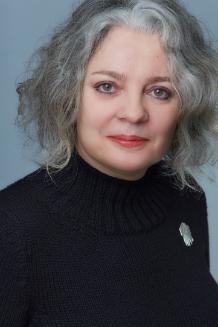
Dr. Karen Johnson is an Associate Professor at Shippensburg University’s Department of Academic Engagement & Exploratory Studies. She serves as Director of the Graduate Writing Center and Co-Editor of the Writing Lab Newsletter: A Journal of Writing Center Scholarship . Over 13 years, she led the Writing Studio and held leadership roles in international writing center organizations. Research interests: Writing center studies, service-learning pedagogy, and assessment in literacy education. Professional service: Treasurer of International Writing Centers Association and Mid-Atlantic Writing Association. Her recent publications focus on writing tutor education, contingent labor in writing programs, and digital scholarship collaborations. She received the Academic Exchange Quarterly Editors’ Choice Award (2015) for her work on tutoring impacts. Dr. Johnson mentors both undergraduate and graduate tutors in professional conference presentations.
Dr. Jacqueline Riding is an Honorary Visiting Fellow in the Department of History of Art at the University of York. Specializing in British art and history of the long eighteenth century, her research focuses on William Hogarth, Jacobitism, and early-Georgian painting. She combines academic expertise with extensive museum and film consultancy work. Her notable roles include former curator of the Palace of Westminster, Director of the Handel House Museum, and historical adviser for major films such as Mike Leigh’s Mr. Turner (2014) and Peterloo (2018). She has curated exhibitions like Basic Instincts at the Foundling Museum and authored award-winning books including Jacobites: A New History of the ’45 Rebellion (2016) and Hogarth: Life in Progress (2021). Riding’s research interests span Hogarth’s artistic legacy, Jacobite cultural history, and the intersection of art with political and social movements. Her work frequently bridges academic scholarship and public engagement, including collaborations with institutions like the Paul Mellon Centre and the Society of Antiquaries of Scotland. Awards: Waterstones’ Best Books 2021 (Hogarth biography), award-winning Jacobites history. Consultancy: Adviser for museums, films, and historical soundscapes, including the Foundling Museum’s Hogarth & The Art of Noise (2019). She holds fellowships at Stanford’s Graduate School of Business and the Clore Leadership Programme, and serves as a trustee for Turner’s House and the Jacobite Studies Trust.
Annette Vee is an Associate Professor of English and Director of the Composition Program at the University of Pittsburgh, housed in the Kenneth P. Dietrich School of Arts & Sciences. She specializes in the intersection of computation and writing, with affiliations to the DSAM Certificate, Forbes Corridor Digital Initiative, Humanities Engage, Pitt Cyber, and STEM Coding Lab. Her research explores coding literacy, blockchain, AI-based text generation, and automated writing systems, with a focus on their implications for education, law, and rhetoric. Key publications include Coding Literacy: How Computer Programming is Changing Writing (MIT Press, 2017) and co-edited TextGenEd: Teaching with Text Generation Technologies (2023). Current projects include a monograph on the historical pursuit of automating writing and a co-curated digital exhibit on the 1966 Dartmouth Seminar. She teaches courses like Digital Humanity and Computational Media , emphasizing digital composition and critical engagement with technology. Vee’s work bridges disciplines, examining how computational systems reshape literacy, pedagogy, and societal trust. She has led a Mellon-funded Sawyer Seminar on information ecosystems and collaborates across computer science and humanities departments to design interdisciplinary programs like the Digital Narrative and Interactive Design major. Her research also addresses ethical concerns in AI, automated writing’s impact on political discourse, and the legal frameworks governing code. Vee advocates for open-access publishing and has published widely in journals like Computational Culture , Interfaces , and Literacy in Composition Studies .
Erik Dietzenbacher is a Full Professor of Interindustry Economics at the University of Groningen's Faculty of Economics and Business. He specializes in input-output analysis, climate change, and regional economics. He holds honorary positions at institutions like the University of the Chinese Academy of Sciences and has been a visiting professor at Rutgers University and UIBE in Beijing. Education: MSc in Econometrics (1982) and PhD in Economics (1991) from the University of Groningen. His academic career spans over three decades, with leadership roles including Chair of the Board of Examiners at FEB and former President of the International Input-Output Association (2013-2018). Research focuses on global value chains, environmental impacts of trade, and structural decomposition analysis. He coordinates large projects like the WIOD (World Input-Output Database), funded by the EU. Notable awards include the Ricardo Torres Gaitán Chair (2023), Officer in the Order of Orange-Nassau (2021), and An Zijie International Trade Research Award (2014). Teaching contributions include pioneering courses on academic writing and research methodology. He has supervised 15 PhD students and developed modular courses on input-output analysis worldwide. His work bridges academia and policy, influencing EU trade and climate policies through frameworks like the FIGARO MRIO database. Leadership roles include Chair of the University Committee for Academic Practice and past Head of the Global Economics and Management department. His research extends to ecological economics and sustainability, with over 100 refereed articles and 15 books, reflecting a H-index of 30 (Web of Science) and 48 (Google Scholar).
Kalypso Filippou is a University Lecturer at the Department of Teacher Education and UTUPeda Center for University Pedagogy and Research at the University of Turku. She co-leads the EqualISM project examining international students' experiences during the pandemic and co-coordinates the Early Career Higher Education Researchers (ECHER) network. She serves as Senior Editor at the Journal of Praxis in Higher Education and is a board member of CHERIF (Consortium of Higher Education Researchers in Finland). Her education includes a PhD from the Doctoral Programme on Educational Policy (KEVEKO), focusing on intercultural thesis supervision in international master’s programs. She holds a Master’s in Learning Systems from the University of Turku and a Bachelor’s in Primary Education from the University of Cyprus. She has conducted research visits in New Zealand, Sweden, and Denmark. Teaching responsibilities include courses on university pedagogy basics, thesis supervision, multicultural education, and research-based teaching practices. She has also contributed to master’s thesis seminars and courses on intercultural teaching methods. Research focuses on higher education internationalization, intercultural pedagogy, doctoral student well-being, and pandemic impacts on student life. Recent work analyzes academic support systems for international students, crisis adaptation strategies, and AI tool ethics in education. Her publications span peer-reviewed journals like the Nordic Journal of Migration Research and policy blogs documenting pandemic-era changes in academic ecosystems. Key research contributions include studies on international students’ social-financial struggles during the pandemic, doctoral student burnout dynamics, and innovative teaching methods like educational escape rooms for curriculum design training. She collaborates internationally through networks like ECHER and produces accessible content through institutional blogs analyzing student experiences and pedagogical innovations.
Cheryl C. Smith is a Professor of English and Associate Dean of the Weissman School of Arts and Sciences at Baruch College, City University of New York. She oversees curriculum, instruction, academic affairs, and Diversity, Equity, and Inclusion (DEI) initiatives at Weissman School. Ph.D., English, Tufts University M.A., English, Tufts University B.A., English/Spanish, Tufts University Dr. Smith's research and teaching interests span World Literature , Early American Literature , and Non-Fiction Writing . Her pedagogical focus includes First-Year Writing , Academic Administration , and Professional Development . She is particularly invested in the role of poetry in education, linking it to Democratic Pedagogy and Social Justice . Her publications and presentations highlight trends in Digital Pedagogy , Open Educational Resources , and Hybrid Course Design . She has co-edited the Journal of Basic Writing for over a decade, emphasizing Equity in Education and Student-Centered Learning . Scientific Awards Faculty Fellow, Transformative Learning in the Humanities (2021) Dean's Fellow for Diversity, Equity, and Inclusion (2020) NEH Fellowship for Summer Seminar (2007) Whiting Teaching Award (2006) Carnegie Fellow for Undergraduate Education (2004) Certificate of Distinction in Teaching, Derek Bok Center (2002) Dr. Smith has led grants for undergraduate research in the classroom and participated in NEH-funded public humanities programming. She has held administrative roles including Faculty Director of the Honors Program and Director of the Great Works of World Literature Program. Her service includes chairing multiple college and CUNY-wide committees and serving on professional organizations like the Council on Basic Writing.
Sarah Gilmore is Professor of Organization Studies and Director of Research Impact at Cardiff Business School, Cardiff University. She also serves as Head of the Management, Employment and Organisation Department. With a distinguished career spanning over two decades, Professor Gilmore brings interdisciplinary expertise that bridges management studies, sport science, and psychoanalytic theory. Professor Gilmore's educational background includes a PhD in Business and Management from the University of Portsmouth (2001), an MSc in Theoretical Psychoanalytic Studies from University College London (2006), a Postgraduate Certificate in Teaching and Learning in Higher Education from the University of Portsmouth (2001), a Postgraduate Diploma in Personnel Management from the University of Portsmouth (1990), and a BA (Hons) in English and European Literature from the University of Essex (1982). Professor Gilmore's research makes significant contributions across three interconnected areas. First, her longitudinal ethnographic studies in elite sport examine the precariousness of sport science professionals, contributing to knowledge about emergent professions within management and organization studies. Second, she explores the emotional labor of sport scientists and the challenges this poses for their professional formation. Third, her work on organizational change and strategic HRM has provided models for how sports clubs can secure high performance outcomes through asset maximization, which has been adopted by several English Premier League and Championship clubs. Her secondary research stream employs psychoanalytical (object relations) theories to examine managerial work in fast-paced environments, particularly focusing on English football managers. This work has evolved to explore the materiality of leadership, collective leadership, and new understandings of socialization. These investigations build upon her earlier papers that used psychoanalytical theory to highlight the role of anxiety in professionally accredited environments. Professor Gilmore's extensive publication record demonstrates her influence across multiple disciplines. Her recent work shows a clear trajectory toward examining precarious work conditions, leadership pathologies (particularly vulnerable narcissism), gender dynamics in organizations, and the intersection of psychoanalytic theory with organizational studies. Her 2023-2025 publications reveal a growing focus on social justice issues, particularly around gender discrimination and resistance in organizational contexts. Best paper award for: Barker, J., Gilmore, S., & Gilson, C. (2013). Rhetorical profiling: Modes of meaning generation in organizational topoi. Canadian Journal of Administrative Science, 30(4), 280-291. Winner of EmeraldLiterati outstanding paper award (2008): Gilmore, S., & Williams, S. (2007). Conceptualizing the 'Personnel Professional': A Critical Analysis of the Chartered Institute of Personnel and Development's Professional Qualification Scheme. Personnel Review, 36(4), 398-414. Professor Gilmore actively supervises PhD students and serves as Series Editor for Dialogues in Critical Management Studies. She is also a valued member of editorial boards for several prestigious journals including Academy of Management Learning & Education, Canadian Journal of Administrative Science, Journal of Organizational Change Management, and Organization. Her commitment to academic service extends to her role as Representative at Large for the Academy of Management CMS Division (2012-2014 & 2015-2017). Professor Gilmore maintains strong connections with professional practice, having worked for not-for-profit organizations and one of the UK's largest public sector trade unions before entering academia. Her current research projects focus on Universal Basic Income impacts on the changing world of work and vulnerable narcissistic leadership, demonstrating her ongoing commitment to addressing contemporary organizational challenges.
Dr. Mónica-Galdana Pérez-Morales is an Associate Professor at the Faculty of Law of the University of Murcia, specializing in Procedural Law within the Department of Financial, International, and Procedural Law . She holds a doctoral degree from the University of Murcia, awarded for her thesis on Configuración del objeto en el proceso ordinario por delitos vinculación con acusación y defensa (2001), supervised by Dr. Fernando Castillo Rigabert and Dr. Fernando Jiménez Conde. Her research focuses on procedural law reforms , labor and criminal processes , and international legal frameworks . She has contributed to topics such as digital evidence in labor disputes, AI applications in legal education, and access to justice for disabled individuals. Her work also addresses cross-border judicial cooperation, bullying liability, and medical malpractice procedures. Her publications span over two decades, with recent emphasis on analyzing legal reforms (e.g., Spain’s 2023 Civil Procedure Law amendments) and their societal impacts. She has been affiliated with the Procedural Law Research Group and previously contributed to the International Law Research Group . No scientific awards are listed, but her extensive academic output reflects dedication to advancing legal procedural standards. She maintains an active role in education through innovative teaching methodologies, including peer evaluation and digital tools integration.
Roslyn Holly Fitch is a distinguished Professor in the Department of Psychological Sciences at the University of Connecticut, where she maintains an active research laboratory (Fitch Lab) focused on developmental neuroscience and neurodevelopmental disorders. Her work bridges basic science with clinical applications, particularly in understanding the neural mechanisms underlying developmental disabilities. Dr. Fitch's research interests center on rodent models of developmental disability and neonatal brain injury, with specific focus on the modulating effects of hormones and experience on neurodevelopment, and neuroprotective strategies. Her laboratory investigates the genetic and neural bases of dyslexia and related language processing disorders, using sophisticated behavioral and neuroanatomical approaches with rodent models. Analysis of Dr. Fitch's recent publications reveals a strong emphasis on genetic models of neurodevelopmental disorders (particularly dyslexia susceptibility genes like DYX1C1 and DCDC2), sex differences in brain injury outcomes, and the development of therapeutic interventions for neonatal hypoxic-ischemic injury. Her work consistently integrates behavioral, anatomical, and molecular approaches to understand the complex interplay between genes, brain development, and cognitive function. Dr. Fitch has been recognized with numerous prestigious awards including the CLAS Excellence in Teaching Award (2012), being a Finalist for CTC Women of Innovation in Academic Innovation (2014), and the National Dyslexia Research Foundation Award for Distinguished Young Researcher in Cognitive Neuroscience (1993). She mentors numerous graduate students and postdoctoral researchers, many of whom have become first authors on significant publications. Her teaching portfolio includes undergraduate courses in Physiological Psychology and graduate seminars in Neurodevelopment and Plasticity, as well as grant writing instruction. The Fitch Lab continues to be at the forefront of research connecting basic neuroscience with clinical applications in developmental disorders.
Morris Siu-Yung Jong is a Professor at The Chinese University of Hong Kong's Faculty of Education, Department of Educational Administration and Policy. With over 100 publications from 2006 to 2025, he has established himself as a leading researcher in educational technology, particularly focusing on innovative applications of virtual reality, artificial intelligence, and game-based learning in formal education settings. His work bridges theoretical frameworks with practical classroom implementations, making significant contributions to how technology enhances teaching and learning experiences. Professor Jong's research interests span multiple cutting-edge domains in educational technology. He has pioneered work in spherical video-based virtual reality (SVVR) applications for education, developing frameworks for immersive learning experiences that transform traditional classroom instruction. His research on AI in education, particularly examining ChatGPT's impact on student engagement and language learning, positions him at the forefront of understanding how emerging technologies reshape educational practices. Additionally, his extensive work on game-based learning, flipped classroom methodologies, and STEM education integration demonstrates a comprehensive approach to technology-enhanced learning across multiple educational contexts and age groups. Analysis of Professor Jong's recent publications reveals a clear progression from foundational work in game-based learning to more sophisticated applications of immersive technologies. His research increasingly focuses on AI integration in educational settings, with a significant portion of his 2023-2025 publications examining ChatGPT's educational applications. The methodological approaches in his work have evolved from basic implementation studies to more sophisticated designs incorporating hierarchical linear modeling, longitudinal analyses, and systematic reviews, demonstrating growing methodological rigor and impact across the educational technology field. Professor Jong has made substantial contributions to educational research through his extensive publication record in top-tier journals including Computers & Education, British Journal of Educational Technology, and Educational Technology & Society. His work has significantly influenced how educators implement virtual reality, AI, and game-based approaches in classrooms worldwide. His research on teacher concerns, implementation challenges, and pedagogical frameworks provides crucial insights for successful technology integration in formal educational settings. Through his supervision of numerous research projects and collaborations with scholars worldwide, Professor Jong has fostered a robust research ecosystem focused on advancing educational technology. His work on design-based research approaches has provided valuable methodological frameworks for studying technology implementation in authentic educational contexts. His recent focus on AI in education positions him as a key contributor to understanding how emerging technologies can be effectively integrated into teaching and learning processes. Professor Jong's research laboratory focuses on immersive learning environments, with particular emphasis on spherical video-based virtual reality applications. His team has developed several innovative frameworks for implementing VR in educational settings, addressing both technical and pedagogical challenges. Current projects appear to focus on AI integration with immersive technologies, exploring how generative AI can enhance virtual learning experiences and support student engagement across various subject areas.
Achuth Padmanabhan is an Assistant Professor in the Department of Biological Sciences at the University of Maryland, Baltimore County (UMBC), where he conducts cutting-edge research on ovarian cancer pathogenesis and therapeutic resistance. He is affiliated with the Interdisciplinary Life Sciences Building and leads an active research laboratory focused on molecular oncology and translational cancer research. Education: BS, Bharathidasan University (2005) PhD, University of Maryland Baltimore County (2011) Postdoctoral Training, Yale University (2015) Instructor, Baylor College of Medicine (2019) Dr. Padmanabhan's research centers on understanding how normal cells transform into cancerous ones, particularly focusing on ovarian cancer. His lab investigates tumor microenvironment dynamics, mechanisms of metastasis, and the molecular basis of chemoresistance. Using multidisciplinary approaches—including molecular, cellular, and organismic tools—his team explores key signaling pathways, protein degradation systems, and transcriptional regulators involved in cancer progression. Specific interests include p53 mutants, ZNF217, ADCK5 kinase, and proteasome isoforms. The recent publications and grants reflect a strong trend toward translational and clinically relevant research, with increasing emphasis on identifying novel therapeutic combinations, overcoming drug resistance, and developing clinically actionable strategies for metastatic ovarian cancer. His work bridges basic science with therapeutic innovation. Scientific Awards and Grants: Scientific Scholar Award – Rivkin Center for Ovarian Cancer American Cancer Society Institutional Research Grant Multiple ATIP Grants – UMB ICTR Elsa U. Pardee Foundation Grant Technology Catalyst Fund Award – UMBC UMBC Summer Research Faculty Fellowship (SURFF) Department of Defense Grants (multiple) National Institutes of Health Grant Ovarian Cancer Alliance of Greater Cincinnati Grants Entrepreneurship and Innovation Grants at UMBC Dr. Padmanabhan has secured substantial grant funding as Principal Investigator from federal, foundation, and institutional sources, demonstrating strong research leadership and external validation. His grants support both basic discovery and translational initiatives, including technology commercialization and curriculum innovation. He mentors graduate students and postdoctoral researchers through his lab and collaborative projects, though specific advisee names are not listed publicly. He is actively involved in academic entrepreneurship and innovation, having received funding from the Alex. Brown Center for Entrepreneurship and supporting curriculum development in innovation. His lab operates within UMBC’s Interdisciplinary Life Sciences Building, leveraging institutional partnerships with UMB and the University of Maryland Cancer Center to advance collaborative, high-impact cancer research.
Professor Şirin Karadeniz Oran serves as Rector's Consultant at Bahçeşehir University's Faculty of Education Sciences, Department of Computer and Instructional Technologies Education. With over two decades of academic experience, she has held progressive academic appointments from Research Assistant to full Professor, alongside significant administrative leadership roles including Dean and Institute Deputy Director. Her educational background includes a PhD in Educational Sciences from Ankara University (2005), where her dissertation focused on hypermedia structures and cognitive flexibility. She also holds a Master's degree in Informatics from Gazi University (1999) and a Bachelor's degree in Technical Education (1995). Professor Karadeniz Oran's research spans Educational Technology , Artificial Intelligence in Education , and Instructional Design , with particular emphasis on digital literacy development, cognitive aspects of learning, and technology integration in educational settings. Her scholarly output demonstrates consistent focus on evolving educational technologies and their practical implementation. Her publication portfolio shows strong emphasis on research methodology and educational technology applications , with numerous editions of methodology textbooks and specialized works on AI in education. The trajectory reveals increasing focus on emerging technologies while maintaining foundational work in research methods. BAU Toplumsal Fayda Ödülü (2018) Yılın Başarılı Kadın Eğitimcisi Ödülü (2016) TUBITAK Yayın Teşvik Ödülü (2009) Bahçeşehir Üniversitesi Yayın Teşvik Ödülü (2008) Professor Karadeniz Oran has supervised 19 graduate theses covering diverse topics from AI literacy for middle school students to technology integration challenges in schools. Her administrative leadership includes serving as Rector (2019-2023), Dean (2019-2017), and multiple departmental leadership positions. She maintains active professional memberships in Educational Sciences and Informatics associations while continuing to teach graduate courses in educational technology and project management.
Maria Victoria Aguilar Sebastian is a Professor of Arabic Language at the Department of Arabic and Islamic Studies, Universidad de Murcia since 1992. She coordinates the EALE research group focused on Teaching-Learning of Foreign Languages (Arabic and Spanish) and has led multiple projects on Arabic language education in multicultural contexts. Doctorate from Universidad Complutense de Madrid (1991) Specializes in Arabic as a Foreign Language (TAFL), Diglossia, and Moroccan Dialect Developed comprehensive Arabic teaching methodologies including Nishan, Alatul, and Letters and Meanings series Her research explores the integration of Arabic varieties in Spain's educational system, challenging traditional dissociation between Modern Standard Arabic and Darija. She has contributed to the European Reference Framework adaptation for Arabic instruction. Key publication trends show focus on: Communicative approaches for Arabic learning Technology-enhanced language instruction Dialectal and standard Arabic co-teaching Arabic language policy in Europe Historical sociolinguistics in al-Andalus
Elisa Modolo is an Instructional Associate Professor of Italian in the Department of Modern Languages at the University of Mississippi , where she also directs the Basic Italian Language Program and the Italian Program. She holds a Ph.D. in Italian Studies from the University of Pennsylvania (2015) and has previously served as an Adjunct in Italian Studies at both the University of Pennsylvania and Temple University. Research Interests include Renaissance and Baroque Italian culture, translation theory, Venetian literature and language, comparative literature, cinema studies, and women and gender studies. Her work explores intersections between text and image in Ovidian rewritings, feminist critiques of convent culture, and intercultural dimensions of Italian language pedagogy. Publications and Grants demonstrate her expertise in Venetian literary traditions, multilingual poetry, and interdisciplinary analysis. She has received fellowships such as the Salvatori Graduate Research Grant and School of Arts and Sciences Dissertation Completion Fellowship . Her scientific awards also include the Apple Award for Outstanding Teaching . Teaching focuses on Italian language instruction (from elementary to advanced levels) and cultural studies, integrating pop culture artifacts to enhance cross-cultural understanding. Her academic work bridges historical Italian debates (e.g., language standardization, gender roles) with contemporary issues.
Dr. Lauren Fine is an Associate Professor in Medical Education at Nova Southeastern University's Dr. Kiran C. Patel College of Allopathic Medicine. She leads the Practice of Medicine I (POM I) course, teaching foundational clinical skills to first-year medical students, and coordinates with problem-based learning (PBL) faculty for integrated medical education. She served as President (2017) and Immediate Past President (2019) of the NSU MD Faculty Council. Education: B.S. in Biology and Minor in Writing from Washington University in St. Louis (2002), MD from University of Miami Miller School of Medicine (2006) Her research focuses on medical education innovations, including interprofessional collaboration, social determinants of health integration, and clinical skills standardization. She has published extensively on asthma, eosinophilic disorders, and technology-enhanced learning. Key publication trends include: Medical education reforms (2015–2025) Clinical skills standardization (2017–2025) Allergy/immunology research (2002–2021) Scientific contributions: Inaugural NSU MD Faculty Council President (2017) Journal of Asthma editorial board member (2014–present) Dr. Fine maintains an active clinical practice in Allergy/Immunology at the William Bill Kling VA Medical Center in Broward County, Florida, while advancing educational frameworks for interprofessional training and competency assessment.