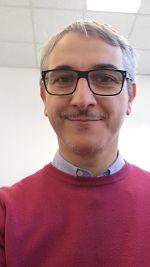
Joaquim Loizu is a Senior Lecturer (MER) at the Swiss Plasma Center (SPC-TH) and the School of Physics and Chemistry (SPH-ENS) at École Polytechnique Fédérale de Lausanne (EPFL). His work bridges theoretical plasma physics with experimental validation , focusing on advanced magnetic confinement concepts for fusion energy. Education PhD in Plasma Physics (2013), EPFL Master in Physics, Imperial College London (2009) BSc in Physics, EPFL Research Interests include: Design and stability of stellarator fusion devices MHD equilibrium and formation of magnetic islands Chaotic magnetic field transport Non-neutral plasma simulations Plasma sheath dynamics and bootstrap current analysis Scientific Contributions span 15 recent publications (2023-2025) on topics like chaotic transport quantification, gyrotron electron gun simulations, and multi-region MHD equilibrium calculations. His work has significantly advanced stellarator optimization and tokamak divertor modeling. Awards European Physical Society Plasma Physics PhD Award (2009) IUPAP Young Scientist Prize in Plasma Physics (2020) Advising includes mentoring PhD students Erol Balkovic , Pierrick Giroud-Garampon , and Zeno Tecchiolli . He contributes to major fusion experiments including Wendelstein 7-X and TCV tokamak , while developing simulation tools like GBS and FENNECS for plasma turbulence and non-neutral plasma studies.
Rajesh Sardar is a Professor in the Department of Chemistry & Chemical Biology at Indiana University Indianapolis (IU Indianapolis), where he leads an active research laboratory focused on plasmonic nanomaterials and their applications. His work bridges analytical chemistry, materials science, and bioanalytical applications, with particular expertise in nanosynthesis, functional plasmonics, and biosensor development. He maintains a well-equipped laboratory with advanced instrumentation including TEM, SEM, NMR, Raman spectroscopy, and various optical characterization tools. Dr. Sardar earned his Ph.D. from The Graduate Center, City University of New York in 2006, followed by a Faculty Internship at the University of Utah (2006-2008) and a Postdoctoral Fellowship at the University of North Carolina at Chapel Hill (2008-2010). His educational background provided the foundation for his interdisciplinary approach to nanomaterials research. His research program is highly interdisciplinary, focusing on the investigation and manipulation of plasmonic properties of inorganic nanomaterials. Key areas include nanosynthesis of noble metal and semiconductor nanocrystals, functional plasmonics through ligand engineering, LSPR-based biosensing for early disease detection, SERS for toxicology applications, and electrocatalysis for solar fuel generation. His laboratory develops novel colloidal synthetic methods to create unique nanocrystal shapes and compositions, which are then functionalized to enhance plasmonic properties for specific applications. This work has significant implications for improving disease diagnostics and enabling low-carbon energy solutions. Analysis of his publication record reveals a clear trajectory from fundamental nanomaterial synthesis toward increasingly applied research, particularly in biomedical diagnostics and energy applications. His early work focused on basic nanoparticle synthesis and characterization, while more recent publications emphasize practical applications in cancer diagnostics, drug detection, and energy conversion. The consistent theme throughout is leveraging plasmonic properties of nanomaterials for ultrasensitive detection and efficient energy conversion. Most-accessed paper (no. 16), October-December, 2015 (ACS Nano) Most-read paper (no. 11), June-July, 2011 (J. Am. Chem. Soc.) Cover Highlights, Vol. 21, No. 34 August 2010 (Nanotechnology) Most-read paper (no. 13), November-December, 2009 (Langmuir) Most-read paper (no. 3), in last 12 months, 2009-2010 (Langmuir perspective) Most-accessed paper (no. 15), October-December, 2007 (Langmuir) Cover Highlights, Vol. 38, No. 1 January 11, 2005 (Macromolecules) Dr. Sardar actively mentors undergraduate and graduate students, as well as postdoctoral researchers, providing them with extensive training in nanomaterial synthesis and characterization. His laboratory has received funding from NSF and NIH for research on nanoplasmonic biosensors for liquid biopsy detection and quantification of cancer-derived biomarkers. He collaborates extensively with researchers at IU School of Medicine, including Professors Melissa Fisher, C. Max Schmidt, Jianjun Zhang, Hristos Kaimakliotis, and Sha Cao, as well as with forensic toxicology experts at Indiana State Department of Toxicology. His research group is currently working on a population study analyzing approximately 1,200 pancreatic disease-related patient samples while detecting around 15 microRNAs and 10 proteins to develop more accurate biomarker panels for earlier pancreatic cancer detection. His laboratory is well-equipped with advanced instrumentation including Microplate Reader, UV-Visible-NIR Spectrophotometer, Transmission Electron Microscopy (TEM), X-ray Diffraction (XRD), Nuclear Magnetic Resonance (NMR), Chemical Glove Box, Gas Chromatography-Mass Spectrometry (GC-MS), Raman Spectroscopy, Scanning Electron Microscope (SEM), and Fourier-transform Infrared Spectroscopy (FTIR). These facilities support his interdisciplinary research program spanning nanomaterial synthesis, characterization, and application development.
Paolo Ricci is a Full Professor and Director at the Swiss Plasma Center (SPC) at École Polytechnique Fédérale de Lausanne (EPFL) since October 2023. He previously held the Tenure Track Assistant Professor position (2010) and Associate Professor position (2016) at EPFL. His academic affiliations include leadership roles in multiple SPC sub-groups, such as Theory, Low Temperature Plasma Physics and Applications, International Installations, Tokamak Physics, Material Group, Plasma Processing, Applied Superconductivity, Edge Plasma Physics, and Administration. Politecnico di Torino (Italy): Master's in Nuclear Engineering (2000) Los Alamos National Laboratory: Doctoral studies in kinetic simulation of magnetic reconnection Dartmouth College: Postdoctoral research in gyrokinetic simulations of Z pinch plasmas Ricci's research focuses on plasma turbulence and instabilities, numerical simulations of laboratory and fusion plasmas, and computational methods for plasma physics. His work spans tokamak and stellarator boundary layer dynamics, scrape-off layer turbulence, fast ion transport, and validation of plasma simulation codes like GBS. His recent publications emphasize global fluid simulations in diverted geometries, snowflake magnetic configurations, and theoretical scaling laws for scrape-off layer widths. His scientific awards include the 2016 Section de Physique Teaching Prize, 2021 Craie d'Or (EPFL physics bachelor students), and 2021 Polysphère d'Or (AGEPoly). Ricci has supervised numerous Ph.D. theses on topics ranging from gyrokinetic moment-based models to scrape-off layer simulations, and actively collaborates with institutions on plasma turbulence validation projects.
Basil Duval is a current researcher at École Polytechnique Fédérale de Lausanne (EPFL), affiliated with the Swiss Plasma Center - Tokamak à Configuration Variable (SPC-TCV) unit within the School of Basic Sciences. His primary institutional email is basil.duval@epfl.ch, and he maintains an active Scopus Author ID (7005912974). His research specializes in plasma physics and nuclear fusion, with concentrated expertise in tokamak operations, magnetic confinement systems, and fusion engineering. Duval has published extensively in premier journals including Nuclear Fusion (114 publications), Plasma Physics and Controlled Fusion (46), and Fusion Engineering and Design (38), demonstrating sustained contributions to controlled thermonuclear fusion research since the 1980s. Duval's work is funded by major international programs including the Swiss State Secretariat for Education, Research and Innovation (SERI), European Union initiatives, and the Euratom Research and Training Programme. He operates within the SPC-TCV team managing Switzerland's primary tokamak facility, focusing on experimental plasma physics and reactor-relevant fusion technologies.
Prof. Dr. Robert Wolf is a Scientific Member at the Max Planck Institute for Plasma Physics in Greifswald and a professor at the Technical University of Berlin, affiliated with Faculty II. His work centers on advancing fusion energy through research on tokamaks and stellarators, particularly the Wendelstein 7-X device. His research interests include plasma stability, transport properties, and the development of heating and diagnostic systems for sustained fusion reactions. As Director of the Stellarator Heating and Optimization Department, he leads critical technical developments in stellarator technology. Prof. Wolf teaches the Basic Course in Plasma Physics at TU Berlin, covering both Part I (Winter Semester) and Part II (Summer Semester), contributing significantly to academic training in plasma science. He has no listed scientific awards in the provided text and no publications are mentioned. However, his leadership role in one of the world’s most advanced fusion experiments underscores his scientific impact. There is no information available about students he may have advised. He is actively engaged in research and academic teaching, with no indication of part-time status, retirement, or emeritus position.
Jérémy Genoud holds dual academic positions at EPFL's School of Basic Sciences: Lecturer in the Physics Section (SPH-ENS) and Scientist at the Center for Plasma Physics Research (SPC-TCV). His work spans experimental tokamak physics research on the TCV device and physics pedagogy within the university's teaching framework. Research focuses on: Plasma confinement dynamics Magnetic fusion energy systems Physics curriculum development Academic supervision includes: PhD candidate Panisset Constant Philippe Based in PPB Building 223 at EPFL's Lausanne campus, with primary contact via jeremy.genoud@epfl.ch and +41 21 693 60 29.
Prof. Marcel Drabbels is a Titular Professor at the École Polytechnique Fédérale de Lausanne (EPFL) , affiliated with the School of Basic Sciences and the Institute of Chemical Sciences and Engineering . He leads the Laboratory of Molecular Nanodynamics (LND) , where his research focuses on the spectroscopy and dynamics of nanoscale systems, particularly using ultrafast lasers and time-resolved electron microscopy. Academic Rank: Professor Appointment: Senior Scientist (1998), Promoted to Titular Professor (2021) Previous Positions: Free University of Amsterdam, FOM Institute, University of California Santa Barbara His research interests include ultrafast molecular dynamics, helium nanodroplets, photodissociation, quantum solvation, and cryogenic electron microscopy . He employs advanced laser and electron imaging techniques to study real-time processes in isolated molecular systems and quantum fluids. The recent publications highlight a strong trend in microsecond time-resolved cryo-electron microscopy , where his group develops methods to flash-melt and revitrify cryo-samples to capture dynamic structural changes in biomolecules and materials. Other key themes include ultrafast electron diffraction , nanoplasma dynamics , and quantum fluid effects in doped helium clusters. Scientific Awards: Prix Polysphères for excellence in teaching (2008) Fellowship from the Royal Dutch Academy of Sciences (1997) Advising: Prof. Drabbels has supervised numerous PhD students, including A. D. B. Clark, V. Oliver Álvarez de Lara, X. Zhang, and E. Loginov. His lab fosters interdisciplinary research at the intersection of physics, chemistry, and structural biology. While no specific grant information is listed, his sustained output suggests active funding support for instrumentation and experimental programs in ultrafast science. Laboratory: The Laboratory of Molecular Nanodynamics (LND) operates at the forefront of time-resolved imaging, combining laser spectroscopy with electron microscopy to probe dynamics at the nanoscale.
Dr. Justin Ball is a Staff Scientist at the Swiss Plasma Center (SPC-TH) within the School of Basic Sciences at the Swiss Federal Institute of Technology in Lausanne (EPFL). His office is located in Building PPB, Room 117, Station 13, 1015 Lausanne, Switzerland. He serves as the Principal Investigator for the EUROfusion Theory, Simulation, Verification, and Validation project focused on negative triangularity. Dr. Ball received his Bachelor's degree in Nuclear Engineering from the University of Michigan and his Master's degree in Nuclear Engineering from MIT. At MIT, he was a leading designer of the original ARC reactor, which later became the foundation for Commonwealth Fusion Systems. He completed his PhD in Theoretical Physics at the University of Oxford in 2016, where he received the European Physical Society Plasma Physics PhD Research Award. His research primarily focuses on theoretical plasma physics and nuclear fusion energy, with special emphasis on the effect of plasma shaping on turbulence in tokamaks. Dr. Ball has made significant contributions to understanding negative triangularity plasmas, gyrokinetic simulations, and plasma transport phenomena. His work bridges fundamental plasma physics with practical fusion energy applications, contributing to the development of more efficient fusion reactor designs. Analysis of his 15 most recent publications (2019-2024) reveals a strong focus on negative triangularity effects in tokamaks, gyrokinetic modeling of plasma turbulence, and optimization of plasma confinement. His research increasingly incorporates experimental validation with TCV tokamak data while advancing theoretical understanding of plasma transport mechanisms. European Physical Society Plasma Physics PhD Research Award Dr. Ball actively supervises PhD students including Anuaruly Oraz, Balestri Alessandro, and Sun Haomin, with past student Volcokas Arnas. His research is supported by EUROfusion funding and contributes to major fusion energy initiatives. He has also secured significant research funding through his involvement with projects that have attracted substantial investment, including the Commonwealth Fusion Systems initiative which has raised $2 billion. As part of the Swiss Plasma Center at EPFL, Dr. Ball collaborates with a multidisciplinary team working on various aspects of fusion energy research. His work connects with experimental groups operating the TCV tokamak and contributes to the broader European fusion research community through EUROfusion. He is also an active science communicator, having co-authored the popular science book 'The Future of Fusion Energy' with Jason Parisi in 2019.
Clark A. Lindgren is a Professor and holds the Patricia A. Johnson Professorship of Neuroscience at Grinnell College. He is affiliated with the Department of Biology, Department of Biological Chemistry, and the Neuroscience program. His research focuses on the chemical synapse, particularly the neuromuscular junction, where neurons communicate with neighboring cells. Dr. Lindgren earned his B.S. in Physics from Wheaton College, followed by M.S. and Ph.D. degrees in Physiology from the University of Wisconsin-Madison. He completed postdoctoral training in Neurobiology at Duke University. Dr. Lindgren's research primarily investigates synaptic transmission and plasticity at the neuromuscular junction. His laboratory studies how presynaptic cells regulate neurotransmitter release and how synapses maintain stability through processes like presynaptic homeostatic potentiation (PHP). A key focus of his recent work has been exploring the role of hydrogen ions (protons) as potential mediators in PHP, challenging long-standing mysteries in neuroscience that have persisted for over four decades. Analysis of Dr. Lindgren's recent publications reveals a consistent focus on synaptic mechanisms at the neuromuscular junction across multiple model organisms (mouse, lizard, frog, Drosophila). His work spans multiple disciplines including neurophysiology, neuropharmacology, and molecular neuroscience, with particular emphasis on the roles of nitric oxide, endocannabinoids, and prostaglandins in modulating synaptic transmission. His research demonstrates an evolution from studying basic neurotransmitter release mechanisms to investigating complex synaptic homeostasis processes involving multiple cell types (the "tripartite synapse" including nerve, muscle, and glial cells). Dr. Lindgren holds the distinguished Patricia A. Johnson Professorship of Neuroscience, reflecting his significant contributions to the field. Over 90 undergraduate students have worked in Dr. Lindgren's laboratory since 1990, contributing to numerous publications where student researchers are denoted with asterisks. His mentoring has provided extensive research opportunities for undergraduates, with students contributing to all aspects of experimental design, execution, and publication. His laboratory has received support for undergraduate research training, though specific grant details are not provided in the available text. Dr. Lindgren's laboratory employs a range of techniques including electrophysiology, confocal microscopy, immunofluorescence, computational modeling, and molecular approaches to study synaptic function. Current projects focus on measuring pH in the synaptic cleft, exploring the morphology of synapses at the neuromuscular junction, computationally simulating pH responses, and investigating PHP mechanisms in the presence of postsynaptic action potentials.
Prof. Dr. Snezana Stanković is a Full Professor at the Department of Textile Engineering within the Faculty of Technology and Metallurgy, University of Belgrade . Appointed in 2022, her work focuses on textile comfort, sustainable materials, and functional clothing design. She teaches courses like "Clothing Construction" and "Thermal Comfort Optimization." Key Research Areas: Textile Engineering, Material Science, Sustainable Textiles Notable Collaborations: Milada Novaković, Dušan Popović, Goran Poparić Her recent publications emphasize eco-friendly cellulose textiles, UV protection, and hemp-based materials. She has mentored 11 students across Basic, Master's, and Doctoral studies, including Ana Mićković (2024) on UV protective hemp textiles and Stefana Milosavljević (2024) on fluid management in knits. Despite her 2000 paper on metal fibers in yarns, no explicit scientific awards are documented in the provided text.
Ugo Siravo is an ETS/HES Engineer at the Swiss Plasma Center (SPC) within EPFL's School of Basic Sciences (SB), specializing in TCV Tokamak Physics and International Installations. Concurrently, he serves as a Lecturer for the Doctoral School of Physics (EDPY-ENS), teaching “Fusion and industrial plasma technologies” under EPFL's Vice Presidency for Academic Affairs. His work bridges engineering execution and academic instruction in fusion energy systems. His research spans Fusion Energy Engineering , Plasma Physics Applications , and Tokamak Technology Development , with specialized expertise in Gyrotron Systems , Neutral Beam Injection , and Electromagnetic Compatibility . This focus drives innovations in TCV tokamak operations, particularly power supply optimization, heating system integration, and ITER-related component validation. His methodology combines experimental validation with numerical simulation to solve high-power RF engineering challenges in nuclear environments. Analysis of his 15 most recent publications (2011-2025) reveals consistent contributions to TCV tokamak engineering, with escalating focus on ITER-compliant systems. Key trends include gyrotron collector thermal management (2023), dual-frequency operation (2019-2024), and electromagnetic compatibility for fusion environments (2011, 2017, 2023). His work demonstrates progression from component testing (2011) to integrated system optimization (2022-2025), emphasizing reliability in high-stress fusion applications. As a Lecturer, Siravo contributes to EPFL's doctoral education in physics but no advising details or grant activities are documented. His professional identity remains anchored in engineering execution within the Swiss Plasma Center framework. He operates within EPFL's Swiss Plasma Center (SPC), which manages the TCV tokamak—one of the world's most flexible magnetic confinement devices. The SPC maintains critical partnerships with ITER and European fusion initiatives, positioning Siravo's work at the nexus of experimental tokamak engineering and international fusion development.
Claude Canizares is the Bruno Rossi Professor of Physics at the Massachusetts Institute of Technology (MIT), within the Department of Physics in the School of Science. He has been a key figure at MIT since joining as a postdoctoral fellow and later ascending to full faculty, serving in major administrative roles including Director of the MIT-Kavli Institute for Astrophysics and Space Research, Associate Provost, and Vice President for Research. He is currently in a post-tenure faculty position (1974–2024) and serves as Associate Director of the Chandra X-ray Observatory Center. Research Interests: His work centers on high-resolution X-ray spectroscopy and plasma diagnostics of cosmic sources. He is particularly known for leading the development of the High Resolution Transmission Grating Spectrometer (HETG) on NASA’s Chandra X-ray Observatory and prior instruments on the Einstein Observatory. His research spans Galactic and extragalactic systems such as active stars, black-hole and neutron star binaries, supernova remnants, quasars, and galaxy clusters. He also uses X-ray sources to study interstellar and intergalactic matter, contributing significantly to cosmology and baryon census studies. Publication Trends: His recent publications (2011–2015) focus on the distribution of baryons and dark matter in galaxies, metallicity in galaxy clusters, and high-resolution X-ray observations of active galactic nuclei. These works leverage the Chandra HETG instrument and emphasize plasma diagnostics, structure formation, and the chemical evolution of large-scale structures. Scientific Awards & Honors: National Academy of Sciences Member (1993) American Physical Society Fellow (1989) Sloan Research Fellowship (1980) AAAS Fellow (1996) Goddard Medal, American Astronautical Society (1997) NASA Public Service Medal (2001, dual) Meritorious Civilian Service, U.S. Air Force (2003) American Academy of Arts & Sciences Fellow (2004) Basic Sciences Award, International Academy of Astronautics (2017) Advising and Grants: While specific students are not listed, he leads the Canizares Chandra/HETG Group, advising researchers and students in X-ray instrumentation and astrophysics. His leadership in major NASA-funded projects like the Chandra HETG indicates sustained grant support from federal agencies. His roles on national advisory boards (NASA Advisory Council, National Academies’ Space Studies Board) reflect influence in shaping research policy and funding directions. Labs and Teams: He leads the Canizares Chandra/HETG Group at MIT and is affiliated with the MIT-Kavli Institute for Astrophysics and Space Research. He plays a central role in the Chandra X-ray Observatory Center, contributing to both scientific operations and instrument development.
Stephan Brunner is a Maître d'enseignement et de recherche (Senior Lecturer) at École polytechnique fédérale de Lausanne (EPFL), affiliated with the School of Basic Sciences (SB), the Center for Plasma Physics Research – Theory (SPC-TH), and education units EDPY-ENS and SPH-ENS. He is based at the PPB 312 building on EPFL's Lausanne campus and is actively involved in teaching and research in plasma physics and fusion energy. His research interests focus on plasma physics , particularly gyrokinetic simulations of turbulence in magnetic confinement fusion devices . He investigates microinstabilities such as ion temperature gradient (ITG) modes and trapped electron modes (TEM), zonal flows, wave-particle interactions, and non-adiabatic electron dynamics. His work bridges theory, simulation, and experiment, often using synthetic diagnostics to validate models against data from tokamaks like TCV and JT-60SA. The most recent articles highlight a strong trend in advanced computational modeling and diagnostic validation . His publications emphasize the development and verification of gyrokinetic codes (e.g., ORB5, PICLS), the analysis of turbulence in realistic plasma geometries, and the integration of experimental measurements with simulation outputs. Key themes include flux-tube and global simulations, collisional effects, magnetic shear, and the role of zonal flows in transport regulation. Stephan Brunner has advised numerous PhD students, including Emmanuel Lanti, Xavier Lapillonne, and Julien Dominski, and has contributed to major collaborative projects in fusion research. He has not received any explicitly mentioned scientific awards in the provided text. He leads or contributes to research on plasma turbulence, computational methods, and fusion energy science, working within teams at EPFL’s CRPP and collaborating with international fusion facilities. His work is foundational to improving predictive capabilities for next-generation fusion reactors.
Mario Barra is a Staff Researcher at CNR-SPIN (Uos Naples) and affiliated with the Department of Physics at the University of Naples Federico II . His career spans two decades of research in organic and hybrid electronic materials, transitioning from superconducting microwave devices (2000-2004) to organic semiconductors (2005-present). Education : 2000: M.A. in Electronic Engineering (summa cum laude), University of Naples Federico II 2004: PhD in Innovative Technologies for Materials, Sensors and Imaging, University of Naples Federico II His research interests focus on: Organic film growth and morphological characterization Charge transport at micro/nano-scales in organic semiconductors Charge-transfer and doping effects in hybrid materials Impedance spectroscopy for bio-electronic applications Ionic/electronic transduction in organic transistors Novel systems combining 2D materials with organic molecules Analysis of his 15 most recent publications reveals expertise in organic electrochemical transistors , MXene-integrated biomedical materials , asymmetrical organic semiconductor design , and advanced biosensing platforms . He has co-supervised approximately 25 Master's theses in Electronic, Biomedical, and Chemical Engineering. His work involves collaborations with institutions like UPC Barcelona, CNR Bologna, and University of Geneva.
Annalisa Radeghieri is Associate Professor at the Department of Molecular and Translational Medicine at the University of Brescia, where she directs the extracellular vesicle laboratory in collaboration with Paolo Bergese. She has held academic positions at the University of Brescia since 2004, progressing from Post-doc (2004) to Assistant Professor (2005-2022) and currently Associate Professor (2022-present). Dr. Radeghieri earned her Degree in Industrial Biotechnology from the University of Bologna (1995-2000) followed by a PhD in Applied Biocatalysis and Industrial Microbiology (2000-2004). Her primary research focuses on extracellular vesicles for diagnostic and therapeutic applications, integrating nanotechnology and biophysics. She has led multiple significant research projects including the UNIBS research unit for the project 'Extracellular vesicles of muscle tissue: new biomarkers for weakness acquired in sepsis-related intensive care' (Ministry of Health, 2023-present) and collaboration on the Horizon 2020-FET project 'Biogenic organotropic wetsuits' (nr 952183). Her work spans cancer therapy, neurodegenerative disorders, and infectious disease mechanisms. Analysis of her recent publications reveals a strong emphasis on extracellular vesicle characterization, biomolecular corona dynamics, and therapeutic applications. Her work bridges basic science with clinical translation, particularly in cancer therapy, neurodegenerative diseases, and sepsis-related conditions. The research demonstrates increasing sophistication in analytical techniques and growing recognition of the importance of standardization in the field. FFABR Grant as PI (2017) Vice President of the Italian Society for Extracellular Vesicles (EVita) Member of the International Society of Extracellular Vesicles Member of the Colloids and Nanosciences Research Center (since 2016) Dr. Radeghieri has secured multiple significant grants including the Ministry of Health project on muscle tissue extracellular vesicles (2023-2027), the Ehlers-Danlos Society project on hypermobile syndrome (2021-present), and the PRIN project on biotechnological nanoparticle platforms (2019-2023). She teaches courses in Biotechnology, Medical Biotechnology, Biomedical Laboratory Technician, Electronic and Telecommunications Engineering, and the Specialization School of Clinical Pathology and Biochemistry. She serves on the Scientific board of PhD programs at the University of Brescia and is actively involved in professional societies. She directs the extracellular vesicle laboratory at the University of Brescia in collaboration with Paolo Bergese, focusing on integrating nanotechnology and biophysics for diagnostic and therapeutic purposes. Her lab has been instrumental in advancing methodologies for extracellular vesicle characterization and application, contributing significantly to the development of standardized approaches in the field.