Kaliramesh (Kali) Siliveru is an Associate Professor and University Outstanding Scholar in the Department of Grain Science and Industry at Kansas State University. His work focuses on grain processing, food safety, and process modeling , with expertise in milling technologies, particle mechanics, and material handling. He holds a B.S. in Food Science from Acharya N.G Ranga Agricultural University, India, and a Ph.D. in Grain Science from Kansas State University. Dr. Siliveru’s research has produced 75+ peer-reviewed articles, 13 book chapters , and impactful studies on reducing microbial contamination in wheat-based products, optimizing pulse processing, and advancing nonthermal technologies like cold plasma. He has received prestigious awards including the ASABE Early Career Engineer of the Year and the University Distinguished Faculty Award for undergraduate mentoring. He teaches GRSC 310 (Materials Handling) , GRSC 810 (Particle Technology) , and GRSC 840 (Advanced Grain Processing) . His lab affiliations include the BIVAP Feed Quality Assurance Lab and Hal Ross Flour Mill, where he explores milling efficiency, microbial control, and sustainable food processing . Current projects address novel applications for minor millets and engineering solutions for safe, nutritious food production.
Summary Bina Bhattarai is an Assistant Professor at the National Food Institute within the Technical University of Denmark (DTU) , specializing in the Research Group for Analytical Food Chemistry . Her research focuses on evaluating the chemical safety of food contact materials, particularly recycled plastics, using advanced mass spectrometry techniques (HR-GCMS/LCMS) and QSAR modeling to assess toxicity. Education: Ph.D. in Analytical Chemistry (2017-2020), Aarhus University M.Sc. in Organic Agriculture and Food Systems (2016), University of Hohenheim Research Interests: Non-target screening of plastic additives, recycled material compliance, and environmental impacts of microplastics. Key Projects: InPlasTwin (2024-2027), enhancing micro/nanoplastics analysis through international collaboration. Professional Activities: Active in conference presentations (e.g., 2022-2023) and committee work with the European Food Safety Authority.
Aldo Todaro is an Associate Professor of Food Science and Technology at the University of Catania since October 1, 2024. Previously, he worked as a University Researcher (2007–2011) and Associate Professor (2019–2024) at the University of Palermo. His research focuses on enzymatic activity in food processing, brewing innovation (malting processes and beer production), and sustainable food technology. Education: PhD in Food Science and Technology (University of Catania, 2006); Laurea in Food Science and Technology (University of Catania, 2001). His research has resulted in over 100 publications (74 ISI/SCOPUS-indexed) and an H-index of 24. He has participated in national and international projects (PRIN, PON, HORIZON 2020) and collaborated with food companies. Currently, he teaches Fundamentals of Unit Operations and has previously taught Unit Operations in Food Technology , Technology and Quality in the Food Supply System , and Food Processing . Scientific Awards: National Scientific Qualification for first-tier professorships (2021) Open badges for digital competence and language proficiency courses Ordinary member of SISTAl since 2012 International Engagement: Visiting professor at the University of Burgundy (2021) Visiting scientist at Hohenheim University (2009) He serves as a referee for journals like the Journal of Agricultural and Food Chemistry and is on the editorial board of three open-access journals. His work spans sustainability assessments (LCA in agrofood), technological innovation in citrus derivatives (via CRA-ITIDA), and digital pedagogy in food science education.
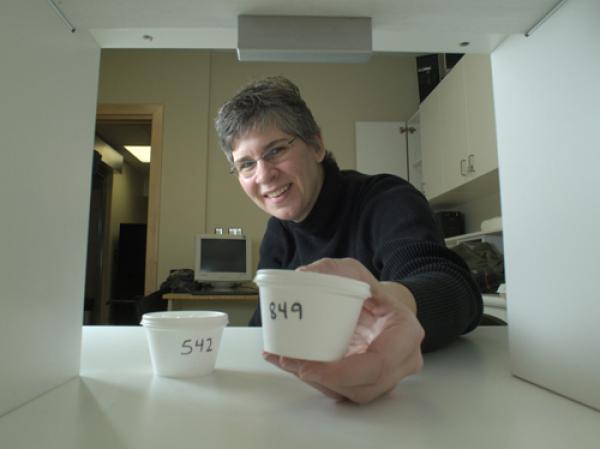
Karin Wendin is a Professor in Food and Meal Science at the Department of Food and Meal Science, Faculty of Natural Science, Kristianstad University. She also maintains an Associate Professor position at the University of Copenhagen since 2012. Her research is centered within the Food and Meals in Everyday Life (MEAL) research group and she plays a key role in the Centre for Food, Health and Retail at Kristianstad University (FOHRK). Dr. Wendin earned her PhD in 'Sensory Dynamics in Emulsion Products Differing in Fat Content' from Chalmers University of Technology in 2001. Her academic career spans over two decades with significant contributions to sensory science and food research. She has collaborated extensively with research institutes including RISE and has held visiting researcher positions at the University of Copenhagen. Wendin's primary research focus is sensory science, defined as 'the discipline that evoke, measure, analyze and interpret reactions to characteristics of food and other materials perceived by the human senses.' Her work investigates how chemical and physical food properties influence human sensory perception through sight, smell, taste, touch and hearing. A substantial portion of her research addresses health, wellbeing, and sustainability challenges, particularly in developing food products with reduced fat, salt, and sugar while maintaining sensory appeal, and exploring alternative protein sources including insect-based foods. She has specialized in adapting food products for specific demographic groups including the elderly, children, teenagers, and individuals with weight concerns. Her research methodology incorporates both objective and subjective sensory assessments using various statistical approaches from classic to multivariate methodologies. Analysis of her recent publications reveals a strong emphasis on sustainable food systems, novel food sources, historical grains in modern contexts, and sensory evaluation methods for high-value products. Her work consistently bridges scientific analysis with practical food industry applications, with many projects involving direct collaboration between academia and industry partners. The research demonstrates increasing focus on UN Sustainable Development Goals related to sustainable consumption, health, and responsible production. Professor Wendin has extensive supervisory experience across multiple institutions including University of Copenhagen, University of Borås, Linköping University, Chalmers University of Technology, Örebro University, and Lund University of Technology. She has served on examination committees for PhD defenses at institutions across Scandinavia and internationally. Her research has been funded by major organizations including Formas, Vinnova, and the Family Kamprad Foundation, as well as through contract research with industry partners where results often remain confidential. She currently leads multiple significant projects including 'Food and Drinks for Seniors' (2024-2026), 'Ending food waste from plant to plate' (2023-2026), 'Nutritious, tasty and health-promoting novel wheat products' (2022-2025), and research on prediction methods for sensory properties of high-value sustainable products. These projects reflect her commitment to addressing contemporary food challenges through interdisciplinary research that combines sensory science with sustainability and health considerations.
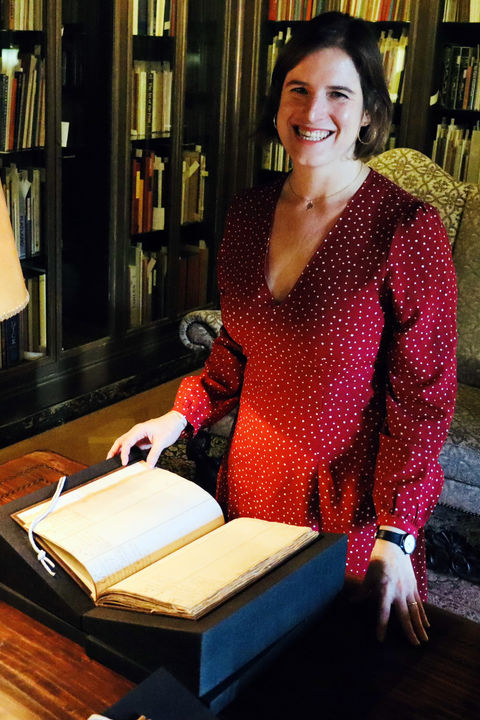
Marissa Nicosia is an Associate Professor of Renaissance Literature in the English Department at Penn State Abington, part of the Pennsylvania State University system. She also serves as an Associate Professor in the Writing Program. Her academic work bridges literary studies, food history, and digital humanities, making significant contributions to our understanding of early modern English culture through innovative interdisciplinary approaches that combine textual analysis with practical experimentation. Dr. Nicosia received her Ph.D. in English from the University of Pennsylvania in 2014 and her B.A. in English Literature and Creative Writing from Barnard College, Columbia University in 2007, where she was elected to Phi Beta Kappa. Before joining Penn State Abington, she taught at Scripps College, the University of Pennsylvania, and the University of the Arts in Philadelphia. Her research focuses on the intersections of early modern English literature, food studies, book history, and political theory. Dr. Nicosia examines how literary texts and historical documents reveal cultural practices, particularly around food and temporality. Her methodology combines historical formalism and critical bibliography to uncover how early modern writers engaged with questions of time, politics, and material culture. She has developed innovative approaches that bridge academic scholarship with public engagement through recipe reconstruction and digital humanities projects. Dr. Nicosia's publications demonstrate a consistent engagement with how historical texts can inform contemporary understanding across multiple formats. Her work spans academic monographs, edited collections, peer-reviewed articles, and public-facing digital humanities projects. She has established herself as a leader in bringing early modern studies to broader audiences through accessible scholarship that connects historical practices to modern experiences in meaningful ways. Franklin Research Grant, American Philosophical Society, 2024-2025 Dibner Research Fellow in the History of Science and Technology, The Huntington Library, 2024-2025 Faculty Senate Outstanding Research Award, Penn State Abington, 2023 Margaret Hannay Fellow, Folger Shakespeare Library, 2022-2023 Ogontz '65 Career Development Professorship, Penn State Abington, 2021-2023 Resident Scholar, Penn State Humanities Institute, 2022 Chief Ogontz Award, Penn State Abington, 2022 President's Award for Engagement with Students, Penn State, 2022 Dr. Nicosia has secured significant grant funding for her research, including a Summer Stipend from the National Endowment for the Humanities (2021) and the Pennsylvania Grants for Open and Affordable Learning (2021-2022). Her innovative teaching approaches have been recognized with multiple awards, including the President's Award for Engagement with Students from Penn State (2022) and the Faculty Senate Outstanding Teaching Award at Penn State Abington (2018). She has mentored numerous undergraduate students through research projects, particularly through her 'What's in a Recipe?' initiative that engages students with early modern manuscript transcription. Her public humanities project 'Cooking in the Archives' has gained national recognition, being featured in the Washington Post, HuffPost: Taste, Edible Philly, CNN.com, and on Talk of Iowa (NPR). This initiative curates transcribed and updated recipes from early modern English household manuscripts, creating a valuable resource for food historians, students, culinary enthusiasts, and the general public. The project has attracted approximately 300,000 visitors and demonstrates Dr. Nicosia's commitment to making academic research accessible and engaging for diverse audiences.
Dr. Maneka Malalgoda is an Assistant Professor in the Department of Food and Human Nutritional Sciences at the University of Manitoba's Faculty of Agricultural and Food Sciences. Her research focuses on grain chemistry, processing quality, and the development of healthy grain-based food systems. PhD in Cereal Science, North Dakota State University MSc in Cereal Science, North Dakota State University BSc in Medical & Pharmaceutical Biotechnology, University of Applied Sciences, Austria Dr. Malalgoda's research investigates the physicochemical properties of grain proteins and starches, their functionality in food processing, and the biological activity of grain biomacromolecules. She explores how these components contribute to nutritional value, safety, and structural integrity in bakery applications. Her recent publications highlight advancements in protein-enriched wholegrain bread, ancient grain processing optimization, oat protein health benefits, and pesticide residue impacts on cereal chemistry. Key trends include the use of analytical techniques (HPLC, LC-MS) and the intersection of traditional grains with modern nutritional needs. Dr. Malalgoda teaches courses in food science, including FOOD 4100: Current Issues in Food and Human Nutrition , FOOD 3220: Grains for Food and Beverage , and FOOD 3200: Bakery Science and Technology . She supervises graduate research at the University of Manitoba's Ellis Building facility.
Jane Wang is a Professor in the Department of Food Science at the University of Arkansas , where she has served since 1999, progressing from Assistant to Full Professor. She also holds the title of Director of the Experiment Station in the Department of Food Science. Her research focuses on starch structure-functionality relationships , rice quality , and biomaterial utilization , with over 120 refereed publications and 5 patents. Education: B.S. in Agricultural Chemistry (1986) from National Taiwan University , M.S. in Food Science (1989) from the University of Minnesota , and Ph.D. in Food Science (1992) from Iowa State University . Postdoctoral research in starch chemistry at Iowa State University (1993-1994). Research Interests: Jane Wang's work explores starch chemistry, rice processing optimization, and value-added applications of agricultural byproducts. She investigates how starch modifications affect food and pharmaceutical properties, with a particular focus on parboiling, germination, and enzymatic treatments. Her research also examines the impact of environmental factors on rice starch development and quality. Scientific Awards: Outstanding Departmental Research Award (2008) Outstanding Volunteer, IFT Carbohydrate Division (2007) Outstanding Mentor, University of Arkansas (2005) Grants & Professional Service: She has secured over $3M in research funding, including USDA-NIFA grants and industry contracts with more than 50 food companies. Jane has served on numerous academic committees (Patent, Promotion & Tenure, Curriculum) and held leadership roles in professional organizations like IFT and AACC. She has also acted as associate editor for Cereal Chemistry and Carbohydrate Polymers , and reviewed for multiple journals and agencies. Labs & Teams: Dr. Wang leads the Carbohydrate Research Program at the University of Arkansas, focusing on starch structure-functionality, rice fortification, and biomaterial development. Her lab collaborates with industry partners and academic institutions to advance food science applications.
Devin Peterson is a Distinguished Professor in the Department of Food Science and Technology at The Ohio State University, with affiliations in the College of Food, Agricultural, and Environmental Sciences. He directs the Flavor Research and Education Center and serves as faculty director of the Foods for Health Discovery Theme Initiative. He received the Presidential Early Career Award for Scientists and Engineers. His research investigates chemical stimuli underlying flavor perception, including taste-aroma interactions, flavor stability, and modulation mechanisms. Current projects focus on pungency suppression in chili peppers, off-flavor reduction in plant proteins, and flavor enhancement strategies for coffee and baked goods. Publications demonstrate advanced analytical approaches to flavor chemistry, including identification of key aroma compounds, enzymatic pathways in flavor development, and sensory-guided fractionation techniques. Recent work also examines flavor interactions with packaging materials and environmental impacts on agricultural products. The Flavor Research and Education Center collaborates with industry partners on flavor innovation. He mentors numerous graduate students and postdoctoral researchers in flavor chemistry and sensory science.
Lisa Duizer serves as Professor and Department Chair in the Department of Food Science at the University of Guelph, where she has been faculty since 2009 after previous appointments at Acadia University's School of Nutrition and Dietetics and Massey University's Institute of Food Nutrition and Human Health. Her research addresses critical challenges in food for aging populations, focusing on sensory properties of foods designed for older adults with dysphagia or malnutrition. Education BASc in Applied Human Nutrition, University of Guelph (1990) MSc in Food Science, University of Guelph (1992) PhD in Food Technology, Massey University (2003) Research Interests Professor Duizer's work centers on sensory science applications for geriatric nutrition, investigating age-related changes in taste and texture perception. She develops evidence-based strategies for improving nutritional quality and acceptability of foods for elderly populations, including pureed food optimization, nutrient fortification techniques, and 'supermenu' development for long-term care settings. Her research integrates human subjects testing with rheological and tribological analysis to establish science-based standards for modified texture foods. Publication Trends Her recent publications (2022-2025) demonstrate expanding interdisciplinary scope, with increasing focus on emotional food responses, space food sensory perception, and plant-based alternatives. The predominant themes involve texture modification for dysphagia management, salt reduction strategies for older adults, and stakeholder-driven interventions for malnutrition in long-term care. This trajectory reflects growing integration of sensory science with healthcare delivery systems and innovative food product development. Scientific Awards No scientific awards were documented in the provided source materials. Advising and Grants Lisa Duizer mentors graduate students with rigorous emphasis on ethical conduct in human subjects research, requiring comprehensive understanding of participant interaction protocols. Her students from nutrition and food science backgrounds have pursued careers as registered dietitians, food product developers in multinational corporations, and research scientists. Her work with the Agri-Food for Healthy Aging group and University Health Network affiliation indicates substantial grant funding from health and agriculture sectors for projects targeting malnutrition intervention in aging populations. Labs and Teams She leads sensory evaluation laboratories within the Department of Food Science and serves as Research Scientist for the Agri-Food for Healthy Aging initiative. Her collaborative network includes the University Health Network, Ontario Ministry of Health and Long-Term Care, long-term care home operators, food distributors, and agricultural producers, facilitating translational research from laboratory to institutional meal service implementation.
Dr. Friedrich Longin is an Adjunct Professor and Group Leader of the Wheat Research Group at the State Seed Breeding Institute of the University of Hohenheim, Germany. He leads research on wheat breeding, alternative wheat varieties, and increasing biodiversity in wheat cultivation. University of Hohenheim: Habilitation in Plant Breeding (2016), Adjunct Professor (2019) University of Hohenheim and China Agricultural University in Beijing: Doctorate in a German-Chinese graduate program University of Hohenheim: Studied agricultural biology, specializing in biotechnology and plant breeding Dr. Longin's research focuses on breeding alternative wheat varieties, pre-breeding in wheat, processing and nutritional quality of wheat varieties, nutrient use efficiency in wheat species, and increasing biodiversity and sustainability in wheat cultivation. His breeding research into alternative crops has led to the resurgence of traditional varieties such as spelt, emmer, and einkorn. His work bridges fundamental plant breeding science with practical applications for sustainable agriculture and food systems. He has made significant contributions to understanding the genetic basis of wheat quality traits, disease resistance, and nutritional properties. His recent publications demonstrate a strong focus on genomics-based approaches to wheat improvement, with particular attention to grain quality, nutritional properties, disease resistance, and the relationship between wheat varieties and human health. There is a clear trend toward integrating molecular breeding techniques with traditional approaches, and an increasing emphasis on understanding the health implications of wheat consumption, particularly regarding inflammatory responses and food sensitivities. Active participant in numerous national and international research projects related to wheat breeding and genetic resources Regularly invited to speak at national and international conferences on wheat breeding and sustainable agriculture Volunteers on several professional committees related to plant breeding and agricultural research Dr. Longin heads the Wheat Research Group at the State Seed Breeding Institute of the University of Hohenheim, which focuses on developing improved wheat varieties with enhanced nutritional quality, disease resistance, and environmental adaptability. His team works closely with farmers, millers, and bakers to ensure that new varieties meet the needs of the entire production chain from farm to fork.
Professor Hailiang Yu is an Honorary Fellow at the University of Wollongong's School of Mechanical, Materials, Mechatronic and Biomedical Engineering. His research focuses on engineering materials, manufacturing processes, and mechanical engineering, with over 100 journal/conference publications and 30 science-focused newspaper commentaries. He serves as co-Editor-in-Chief of Modeling and Numerical Simulation of Material Science , and holds editorial roles in Scientific Reports and International Research Journal of Engineering Science, Technology and Innovation . Yu has secured significant funding through grants such as the Australian Research Council's 'Large-volume gradient materials' project (2017–2020) and 'A Physical-based abrasive wear model' (2013–2016). His work emphasizes cryorolling, microstructure optimization, and advanced material fabrication techniques. He currently supervises Master's and PhD students in materials engineering and manufacturing innovation. Key research themes include cryogenically processed alloys, bimetallic clad sheets, and high-entropy composites. His publications in journals like Metallurgical and Materials Transactions A and Journal of Materials Processing Technology reflect expertise in structural optimization, tribology, and corrosion resistance. Yu aims to become an international leader in materials manufacturing and mechanical engineering.
James D. Kelly is a University Distinguished Professor in the Department of Plant, Soil and Microbial Sciences at Michigan State University (MSU), with a 40-year career in dry bean breeding and genetics. His work focuses on developing high-yielding, disease-resistant bean cultivars using molecular markers and international collaborations through the Legume Innovation Lab. He has trained numerous graduate students, including global researchers like Rwanda's Minister of Agriculture Gerardine Mukeshimana. Education : B.S. and B.Agr. (Hons.) from Queen's University of Belfast (1968-1969); M.S. and Ph.D. in Plant Breeding & Genetics from the University of Wisconsin (1971-1974) His research spans symbiotic nitrogen fixation, drought tolerance, canning quality, and disease resistance in Phaseolus vulgaris . Recent publications highlight QTL mapping, transcriptome analysis, and cultivar registrations like 'Cayenne' and 'Red Cedar'. Scientific recognition includes the University Distinguished Professor title. His lab collaborates globally, impacting food security in East Africa, and he plans to retire soon while maintaining ongoing breeding innovation.
Prof. Benedetta Bottari is an Associate Professor at the Department of Food and Drug Science, University of Parma. She specializes in food microbiology, focusing on lactic acid bacteria, fermented foods, and microbial dynamics in dairy products like Parmigiano Reggiano cheese. Her research employs molecular techniques like PCR analysis and fluorescence microscopy to study microbial viability and biodiversity. Educational Background: PhD in Food Science and Technology (2006–2009), University of Parma MSc in Food Science and Technology (2004), University of Parma BSc in Agricultural Studies, Diploma from G. Marconi High School (1994–1999) Research Interests: Prof. Bottari’s work centers on microbial ecology in food systems, probiotic development, food safety, and the application of advanced molecular methods to study cheese microbiota. She has contributed to projects on prebiotic effects, UV treatment for microbial abatement, and the role of microbial communities in food quality. Grants & Projects: Co-led projects on Parmigiano Reggiano microbiota and probiotic strain selection Scientific coordination of EU-funded dairy science education initiatives Collaborations with industries like Tetra Pak and CIPACK for food safety solutions Teaching: She teaches courses in Food Microbiology, Probiotics, and Functional Foods across undergraduate and graduate programs in Food Engineering, Gastronomy, and Nutrition. Labs & Teams: Her research group focuses on food microbiology, collaborating with institutions like SIMTREA and the Parmigiano Reggiano Consortium to advance food technology and safety.
Kelly Tate is a Teaching Professor in the Department of English and Technical Communication at Missouri University of Science and Technology. She holds an MFA in Creative Writing from the University of Arkansas and a BA in English Language and Literature from the University of Michigan. Her teaching spans seated, blended, and online formats, including courses like English 1120: Exposition and Argumentation, English 1222: American Literature II, and creative writing courses. She serves as her department’s Well-Being Champion and co-designed the Creative Writing minor. Her awards include the College of Arts, Sciences, and Education’s Innovative Teaching Award for a well-being-based narrative unit, the Student Impact Award, and multiple Faculty Achievement Awards for teaching and service excellence. She also received the Faculty Teaching Award for teaching excellence. Outside academia, she pursues creative nonfiction, short stories, photography, baking, travel, and family time with her husband, son, and dog.
Pasi Peura is a Professor of Metals Technology at Tampere University’s Hervanta Campus, specializing in metallurgy and materials science. His research spans alloy development, additive manufacturing, welding, and heat treatment, with a focus on high-entropy alloys and advanced steels for automotive applications. Education: Doctor of Science (Technology), UMIST and The Victoria University of Manchester (1998); Licentiate of Science (Technology), Mechanical Engineering (1994) Peura’s work emphasizes understanding microstructure-property relationships through novel manufacturing techniques like wire arc additive manufacturing (WAAM) and high-speed laser cladding. His group collaborates extensively with industry, leveraging over 20 years of industrial experience. Recent publications highlight advancements in: Wear-resistant composite coatings Quench and partitioning (Q&P) steel treatments Dynamic softening mechanisms in high-entropy alloys Residual stress analysis in flame-cut steel Scientific Awards: DQ Cold Roll Award for research group (2014) He serves on international committees including the International Deep Drawing Research Group (IDDRG) and contributes to standardization efforts in steel testing.