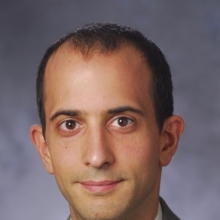
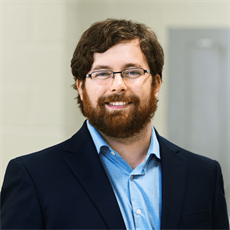
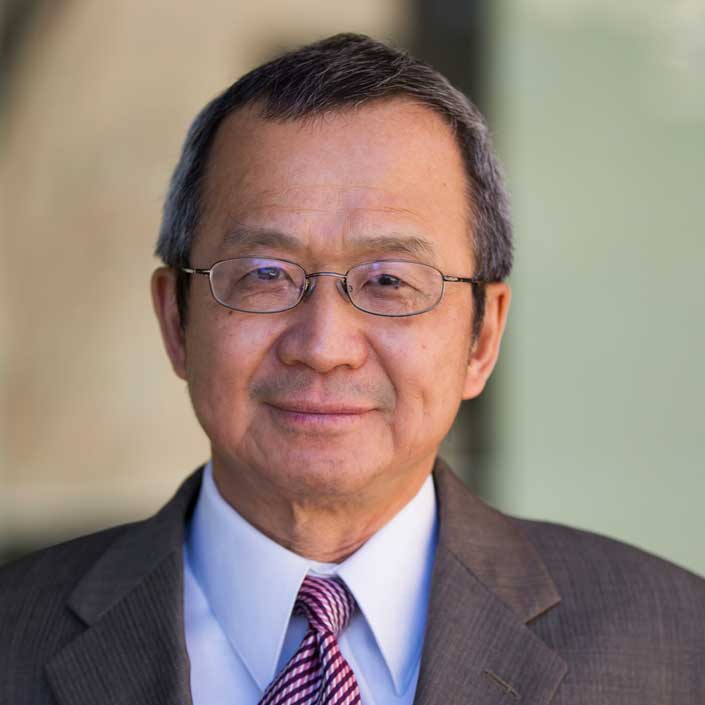
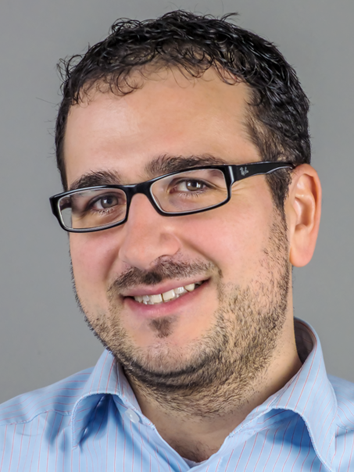
Kwan-Wu Chin is a Professor in the School of Electrical, Computer and Telecommunications Engineering at the University of Wollongong, where he also serves as Head of Postgraduate Studies (HPS) and co-directs the Wireless Technologies Lab (WTL). His research focuses on resource allocation problems in Internet of Things (IoT) systems, maritime networks, edge computing platforms, and integrated sensing-communication systems. Chin leads an active research group currently supervising five PhD students working on UAV networks, edge computing, maritime systems, and metaverse resource allocation. He has graduated over 20 PhD students who now hold positions in academia and industry. Chin serves as editor for Elsevier Computer Communications and IEEE Internet of Things Journal. His work develops optimization techniques using graph theory, stochastic processes, and machine learning for next-generation wireless systems.
Dr. Karim Sabra is a Professor at the George W. Woodruff School of Mechanical Engineering , Georgia Institute of Technology, specializing in Acoustics and Dynamics . He holds a Ph.D. from the University of Michigan (2003) and joined Georgia Tech in 2007 as an Assistant Professor. His research integrates theoretical and experimental approaches to study wave propagation in diverse fields including structural health monitoring, biomechanics, and ocean acoustics. Key areas of focus include passive imaging techniques using ambient noise and diffuse wave fields, with applications in non-invasive monitoring of mechanical systems and seismoacoustic environments. Education: Ph.D., University of Michigan, 2003 M.S., University of Michigan, 2000 M.Sc., École Nationale Supérieure de Techniques Avancées (France), 2000 Research Interests: Dr. Sabra’s work spans acoustics, structural health monitoring, biomechanical systems evaluation, underwater acoustics, and geophysics . Recent projects include developing passive elastography techniques for soft tissues using physiological vibrations and exploring ambient noise-based tomography for ocean environments. His interdisciplinary approach bridges multi-scale engineering challenges with multi-wave tools (acoustical, electrical, optical). Publications: His work focuses on advanced acoustic technologies, including underwater communication systems, passive acoustic identification tags, and ray-based tomography methods. Themes include seamount effects on sound propagation, machine learning for acoustic modeling, and environmental sensing using shipping noise. Awards: R. Bruce Lindsay Award (2011) Fellow of the Acoustical Society of America (2007) Institute of Acoustics A.B. Wood Medal (2009) Advising & Grants: Dr. Sabra mentors graduate students in acoustics and wave phenomena, emphasizing interdisciplinary collaboration. His research is supported by grants focused on underwater acoustics, environmental sensing, and biomedical applications. Labs/Teams: His research group develops novel sensors and algorithms for oceanographic and biomedical applications, collaborating with industry and academic partners.
Dr. Sie Teng Soh is an Associate Professor at Curtin University's School of Electrical Engineering, Computing and Mathematical Sciences. With qualifications including a PhD from Louisiana State University, he specializes in computer networks, wireless systems, and algorithm design. Research focuses on: Network topology optimization for UAV systems Energy-efficient IoT task scheduling Reliable wireless communication protocols Game-theoretic network management Green computing in software-defined networks Publication trends show advancing work in UAV network optimization, with recent articles addressing max-min rate optimization, energy harvesting in IIoT, and machine learning approaches for coverage prediction. His research consistently addresses practical challenges in wireless network deployment under real-world constraints. Teaching areas include advanced courses in network reliability and traffic engineering. Professional service includes editorial roles for IEEE Transactions on Parallel and Distributed Systems and program committee memberships for major conferences including FAST and EuroSys.
Dr. David R. Themens is an Associate Professor in Space Environment within the Space Environment and Radio Engineering (SERENE) group in the School of Engineering at the University of Birmingham. He specializes in modeling and mitigating the impacts of space weather on radio communications and navigation systems, with a particular focus on the ionosphere's effects on these technologies. Dr. Themens earned his academic credentials from Canadian institutions: BSc (Hons) in Physics from the University of New Brunswick (2011) MSc in Atmospheric and Oceanic Science from McGill University (2013) PhD in Physics from the University of New Brunswick (2018) His research primarily focuses on four interconnected areas: ionospheric modeling, ionospheric physics, measurement techniques, and radio propagation. Dr. Themens is particularly interested in the interaction between the ionosphere and the atmosphere, specifically how lower atmospheric forcing drives variability within the ionosphere and the interactions between the ionosphere and thermosphere. He is the principal developer of the Empirical Canadian High Arctic Ionospheric Model (E-CHAIM) , a high-latitude alternative to the International Reference Ionosphere (IRI) used for HF/UHF signal propagation modeling. His work includes exploring synergistic properties of different earth observation instruments, measurement technique development, data assimilation, and empirical modeling. Analysis of Dr. Themens' recent publication record reveals a strong emphasis on space weather phenomena, ionospheric modeling, and radio propagation. His work spans from fundamental ionospheric physics to practical applications in navigation and communication systems. Key themes include the development and validation of ionospheric models, analysis of space weather events (including the May 2024 geomagnetic superstorm), and the impact of solar phenomena on Earth's upper atmosphere. His research increasingly incorporates advanced data assimilation techniques and leverages multiple observational platforms including radar systems, GNSS networks, and satellite measurements. Dr. Themens holds significant leadership positions in the international space science community: Co-Chair of IAG-GGOS Joint Study Group on Understanding Ionospheric and Plasmaspheric Processes (2023-present) Chair of URSI Data Assimilation Working Group (2023-present) Co-Chair of IAGA Geospace Data Assimilation Working Group (2023-2027) URSI Commission G Early Career Representative (2023-2029) Chair of Canadian Association of Physicists Division of Atmospheric and Space Physics (2022-present) Dr. Themens actively mentors graduate students and is 'always looking for new Ph.D. students interested in the ionosphere, data assimilation, and radio propagation.' His research has been supported through contracts with Defence Research and Development Canada (DRDC) and various international collaborations. He leads the Canadian High Arctic Ionospheric Models (CHAIMs) project, which builds upon his doctoral work developing the E-CHAIM model. At the University of Birmingham, he teaches courses in Space System Engineering and Design, Space Mission Analysis and Design, and Space Environment.
E. Veronica Belmega is a Full Professor at ESIEE Paris (Université Gustave Eiffel) and a researcher at the LIGM laboratory in Marne-la-Vallée, France. Previously, she served as an Associate Professor at ENSEA graduate school and Deputy Director of the ETIS laboratory in Cergy. She holds an Engineer Degree from the University Politehnica of Bucharest, M.Sc. and Ph.D. from Université Paris-Sud 11, and an HDR habilitation from Université de Cergy-Pontoise. Her research focuses on AI-driven communication systems, energy efficiency, online optimization, and cyber-physical security, with a strong emphasis on applications in smart grids and IoT. Her work spans securing wireless communications against adversarial attacks, optimizing resource allocation in cognitive radio networks, and leveraging machine learning for GNSS localization and MIMO systems. Notable contributions include game-theoretic frameworks for PMU deployment and energy-efficient NOMA systems. Belmega has received prestigious awards such as the 2021 CY Alliance Award and the L’Oréal-UNESCO fellowship, and serves as an Area Editor for IEEE Trans. on Machine Learning in Communications and Networking. Current projects include a CEA LETI postdoc position on AI localization and a PEPR 5G project. She actively contributes to special issues like the EURASIP JASP on sustainable wireless communications. Belmega’s advising includes PhD student S. Maleki, co-author of her 2024 IEEE SmartGridComm Best Paper Award-winning work.
Tatyana Konkova is a Senior Lecturer in the Department of Design, Manufacturing and Engineering Management at the University of Strathclyde, Faculty of Engineering, Glasgow, UK. She is actively engaged in research, teaching, and professional leadership in the field of Materials Science and Engineering, with a focus on metallurgy and advanced manufacturing techniques. Education: Doctor of Science, Mechanisms of cryogenic plastic deformation and features of microstructure formation in technically pure copper, Institute for Metals Superplasticity Problems, Russian Academy of Sciences (awarded 2011) Master of Business Administration (MBA), Strathclyde Business School (awarded 2023) PG Certificate in Learning and Teaching in Higher Education, University of Strathclyde (awarded 2021) MSc (Hons) in Materials Science and Engineering, Ufa State Aviation Technical University (awarded 2005) BSc in Engineering, Ufa State Aviation Technical University (awarded 2004) Research Interests: Her research spans Severe Plastic Deformation (SPD), cryogenic deformation, additive manufacturing, microstructure evolution, and advanced characterization using EBSD, TEM, and SEM. She focuses on materials such as titanium alloys, copper, and nickel-based superalloys, aiming to bridge fundamental science with industrial applications. Her work emphasizes grain boundary engineering, abnormal grain growth, and deformation-induced boundaries. Publication Trends: Recent publications highlight her growing interdisciplinary work combining additive manufacturing with electric machine design, as well as continued deep microstructural investigations in aerospace and microelectronic materials. Her research integrates data-driven optimization and advanced characterization to improve material performance and manufacturing efficiency. Scientific Awards and Honors: Fellow of the Institute of Materials, Minerals and Mining (FIMMM) Chartered Engineer (CEng) by the Engineering Council Member of the Institution of Mechanical Engineers (MIMechE) Fellow of the Higher Education Academy (FHEA) PG Certificate in Learning and Teaching in Higher Education Advising and Grants: She has supervised undergraduate, postgraduate, and PhD students and serves as Principal Investigator on multiple research projects, including EPSRC-funded CDT in AI-enabled Digital High-Value Manufacturing and AFRC projects on titanium alloy forgeability. She has secured funding from national and international sources, including the Russian Foundation for Fundamental Research. Her leadership in industrial collaboration and knowledge exchange is evident through her roles in Catapult projects and industrial group supervision. Labs and Teams: She has led the Materials Characterisation Theme at AFRC and represented the center in Cross-Catapult forums on additive manufacturing. She is part of the Horizon Europe Working Group with the University of Waterloo and actively collaborates with national and international research teams.
Asier Perallos Ruiz is a Professor in the Faculty of Engineering at the University of Deusto, specializing in the Department of Computing, Electronics and Communication Technologies. His research focuses on RFID technology, wireless sensor networks, and computational intelligence applications with significant contributions to intelligent transport systems and antenna design. Dr. Perallos Ruiz's research interests span multiple domains with a focus on RFID technology , Wireless sensor networks , Internet of Things (IoT) , Computational intelligence , Evolutionary algorithms , and Intelligent transport systems . His work bridges theoretical advancements with practical applications, particularly in transportation systems, healthcare, and industrial automation. His research often involves interdisciplinary collaboration across engineering disciplines. His publication portfolio shows a consistent trend toward improving RFID systems, developing efficient anti-collision protocols, and applying computational intelligence to real-world problems. Recent work has focused on polarization-diversity rotation sensing, customizable RFID platforms, and the integration of RFID with IoT applications. His research demonstrates a progression from foundational RFID technology to more complex system integration and application-specific solutions. Dr. Perallos Ruiz has supervised several graduate students including Muralter Florian (2021), Arjona Aguilera Laura (2018), Cmiljanic Nikola (2018), Lopez Garcia Pedro (2016), and Moreno Emborujo Asier (2016). His research has been supported by various projects focusing on RFID technology, intelligent transportation systems, and wireless communication applications. He leads research teams focused on RFID systems development, wireless sensor networks, and computational intelligence applications. Current work appears to be advancing RFID sensing capabilities, energy-efficient protocols, and system integration for practical applications in transportation and industry.
Christian Rohner is a Professor at the Department of Information Technology at Uppsala University, specializing in the Division of Computer Systems. His research spans over two decades with a clear evolution from early work in opportunistic networking to current cutting-edge research in backscatter communication and physical-layer security. Professor Rohner's research interests focus on wireless communication systems , particularly backscatter communication , sensor networks , and network security . His work on analog backscatter tags has pioneered techniques for channel estimation, reliable flooding protocols, and identification systems for battery-free devices. In wireless security , he has made significant contributions to radiometric fingerprinting, physical-layer authentication, and intrusion detection for IoT systems. His research in information theory applies theoretical frameworks to practical network analysis problems, including modularity computation in probabilistic networks and information decomposition. His recent publications (2020-2025) demonstrate a strong focus on enabling low-power wireless systems, with applications ranging from medical contexts (fat intra-body communication) to temperature sensing with RFID tags. The research shows a clear trajectory toward practical implementations of battery-free sensor networks that can operate without traditional power sources while maintaining security and reliability. Professor Rohner has maintained long-term collaborations, particularly with Thiemo Voigt at Uppsala University, resulting in numerous joint publications across multiple research domains. His work bridges theoretical foundations with practical implementations, making significant contributions to both academic research and potential real-world applications in wireless networking.
Leung Tsang is a Professor of Electrical Engineering and Computer Science at the University of Michigan, Ann Arbor, holding the Robert J. Hiller Professorship of Engineering. He received his SB, SM, EE, and Ph.D. from MIT. His academic career includes positions at Texas A&M University (1980-1983), University of Washington (1983-2014) as Professor and Department Chair (2006-2011), and a visiting Professorship at City University of Hong Kong (2001-2004). He has served as Editor-in-Chief of IEEE Transactions on Geoscience and Remote Sensing and President of the Electromagnetics Academy and IEEE Geoscience and Remote Sensing Society. His research focuses on microwave remote sensing , multiple scattering theory , electromagnetic wave propagation in random media , photonic crystals , and signal integrity . His work spans theoretical advancements (e.g., radiative transfer theory, UV multi-level methods) and practical applications (e.g., snow parameter retrieval, ocean foam modeling, via coupling analysis). Key trends include Development of computational techniques for large-scale scattering problems Integration of neural networks for inversion in remote sensing Investigation of backscattering enhancement and polarimetric signatures Notable awards include Fellow of IEEE and Optical Society of America William T Pecora Award (2012) Van De Hulst Light Scattering Award (2018) Membership in the National Academy of Engineering (2020) His group utilizes high-performance computing resources, including the Flux HPC cluster at the University of Michigan and XSEDE allocations, with specialized nodes for electromagnetic modeling. Current students include Ruoxing Gao (electromagnetic theory), Firoz Borah (snow remote sensing), Jongwoo Jeong (forest scattering), and Zhenming Huang (snow modeling).
Fatemeh Babaeian is a Research Fellow in the Department of Electrical and Computer Systems Engineering at Monash University. She holds a PhD from Monash University (2016–2020), focusing on advanced electromagnetic systems. Her expertise spans applied electromagnetics, high-power microwave systems, RF sensing, antenna design, and signal processing, with notable contributions to chipless RFID technologies and cascaded oscillator modeling. Research interests include high-power RF systems, antenna-oscillator interaction modeling, and innovative RFID applications for sensor networks and secure communications. Her work addresses challenges in microwave engineering, terahertz systems, and inverse scattering problems, leveraging hybrid optimization algorithms and metamaterial principles. Fatemeh has published over 29 peer-reviewed articles, including seminal works on switched oscillator performance evaluation and phase shifter designs. She received the Postgraduate Publications Award (2020) for her impactful contributions. Current research emphasizes antenna-circuit co-design methodologies and high-data-capacity RFID systems for emerging IoT and industrial applications. Collaborations span global institutions, with active projects in high-power microwave systems, THz antenna arrays, and orientation-insensitive RFID tag innovations. She actively supervises PhD students and contributes to interdisciplinary research bridging electromagnetic theory and practical engineering solutions.
Giorgio Sangiovanni is a Professor and Chair of Computational Quantum Materials at the University of Würzburg, affiliated with the Institute for Theoretical Physics and Astrophysics. His research focuses on theoretical and computational studies of quantum materials, topological phases, superconductivity, and strongly correlated electron systems. Key areas include the development of advanced computational methods for quantum impurity problems, electronic structure calculations, and analysis of correlated materials like kagome metals, topological insulators, and Weyl semimetals. His work explores phenomena such as charge order, van Hove singularities, electron-phonon coupling, and topological edge states. Recent studies highlight strain effects, phonon-driven phase transitions, and the interplay between spin, orbital, and lattice dynamics. He leads the Sangiovanni Group, which employs methods like density-functional theory (DFT) combined with dynamical mean-field theory (DMFT) to study complex electronic systems. Publications emphasize theoretical insights into novel quantum materials, with applications ranging from superconductivity to topological electronics. Advising PhD and Master’s students, his group contributes to advancing computational tools and understanding emergent phenomena in correlated materials.
Azriel Z. Genack is a Distinguished Professor of Physics at Queens College, City University of New York. With a career spanning over five decades since earning his Ph.D. from Columbia University in 1973, Professor Genack has established himself as a leading researcher in wave propagation through random media. His laboratory at Queens College, established with Dr. Narciso Garcia, focuses on fundamental studies of microwave and optical wave transport in disordered systems. Genack received his B.A. from Columbia College in 1964 and his Ph.D. from Columbia University in 1973. His academic journey has been dedicated to understanding wave phenomena in complex media, bridging classical wave physics with quantum mechanical concepts. Professor Genack's research explores the universal principles of wave propagation in random systems, with applications to imaging and communications. His work spans Anderson localization, statistical properties of wave transport in space and time, crossovers between ballistic, diffusive and localized regimes, photonic topological insulators, and chiral fiber optics. His laboratory has made seminal contributions including the demonstration of Anderson localization in photonic systems, studies of transmission eigenchannels, and the development of concepts for robust transport in topological photonic structures. Analysis of Genack's recent publications reveals a continued focus on fundamental wave phenomena in increasingly complex systems. His work has evolved from basic studies of wave localization to more sophisticated investigations of topological effects, non-Hermitian systems, and Lévy disorder. The consistent thread through his research is the application of statistical physics approaches to understand wave transport in disordered media across multiple disciplines. Professor Genack's research has led to practical applications, most notably contributing to the formation of Chiral Phonics, Inc., which develops microfabricated optical fiber-based components for sensing and coupling applications. His laboratory at Queens College continues to be at the forefront of research in wave physics, with publications appearing in top journals including Nature Communications, Physical Review Letters, and Science.
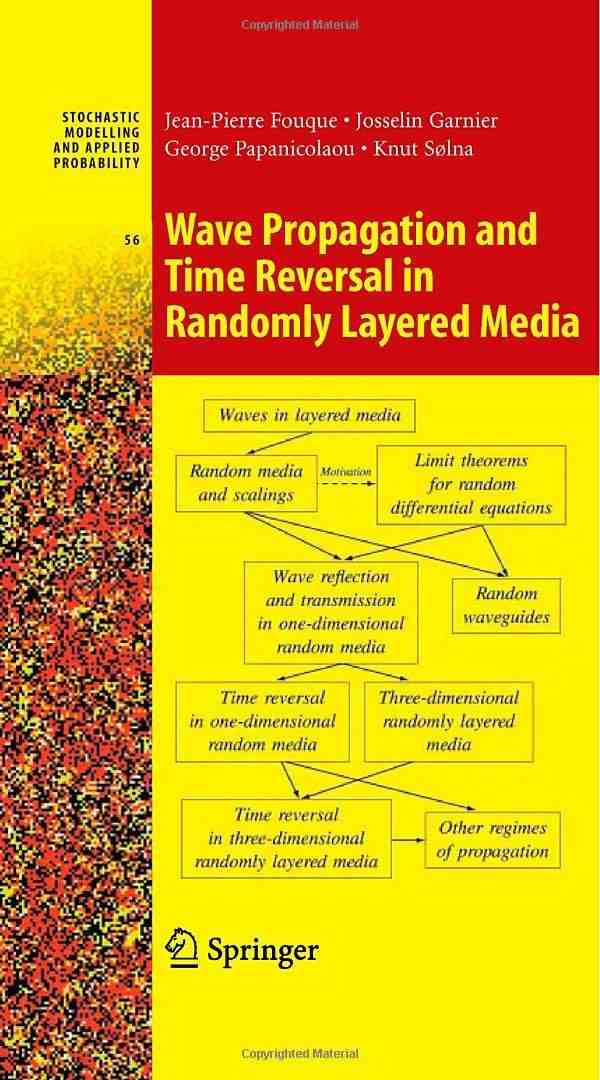
Josselin Garnier is a Professor at Ecole Polytechnique, France, affiliated with the Center for Applied Mathematics. His research focuses on wave propagation in random media, imaging techniques, uncertainty quantification, and inverse problems. He has authored/co-authored multiple influential books including Wave Propagation and Time Reversal in Randomly Layered Media (2007) and Multi-Wave Medical Imaging (2017). His work bridges mathematical theory with applications in optics, seismology, and nuclear engineering. Research interests emphasize stochastic dynamics, nonlinear wave interactions, and Bayesian methods for parameter estimation. He leads a large research group with over 30 PhD students, many working on interdisciplinary projects such as thermalization in optical fibers and seismic fragility analysis. His contributions include developing reduced order modeling approaches for inverse problems and advancing methodologies for uncertainty quantification in nuclear reactor simulations. Key collaborations involve institutions like the French Mathematical Society and the Ciroquo Research & Industry Consortium. His educational contributions include the widely used All-in-one Mathematics textbook series for undergraduate students.
Rakesh is a Professor in the Department of Mathematical Sciences at the University of Delaware (UD), part of the College of Arts & Sciences. He holds a BA(Hons) and MA from the University of Delhi, India, and a PhD from Cornell University, USA. His research focuses on inverse problems for hyperbolic partial differential equations (PDEs), including the Fixed Angle Scattering Problem, Backscattering Problem, and Inversion of the Spherical Mean Value Operator. He has also contributed to dynamical systems, geometry, probability, and economics. Education: BA(Hons) in Mathematics, University of Delhi MA in Mathematics, University of Delhi PhD in Mathematics, Cornell University His research emphasizes theoretical and applied aspects of inverse problems, such as uniqueness, stability, and inversion techniques for hyperbolic PDEs. Recent work includes contributions to formally determined inverse problems in Lorentzian and Riemannian geometries. Earlier research included studies on the spherical mean value operator and one-dimensional hyperbolic inverse problems. His publications span over 30 years, addressing topics like wave equation inverse problems, dynamic pricing models, and spectral analysis of Brownian motion. He has been on sabbatical for 2025. Rakesh collaborates internationally, with notable co-authors including Mikko Salo, Gunther Uhlmann, and Paul Sacks. His work bridges pure and applied mathematics, with applications in physics, engineering, and economics.
Heloisa Nunes Bordallo serves as an Associate Professor in the Condensed Matter Physics group at the Niels Bohr Institute , University of Copenhagen, Denmark. Her research spans multidisciplinary applications of neutron scattering and synchrotron radiation techniques across physics, chemistry, biology, and materials science. Education background: Bachelor & Master in Physics, Universidade Federal do Rio de Janeiro (1988, 1991) Doctor Degree & Habilitation, Université Montpellier II, France (1995, 2008) Qualification as Professeur des universités, France (2009) Her research focuses on understanding structural dynamics in materials ranging from ionic crystals to biological systems. She pioneered work in luminescent impurities, ferroelectrics, molecular magnets, cement paste, clays, and pharmaceutical systems using neutron scattering, X-ray techniques, Raman, and infrared spectroscopy . Current work emphasizes water dynamics in biological materials, drug delivery systems, and dental cements. Her recent publications reveal strong trends in biomaterial physics (dentine, dental cements), clay-drug interactions , and field-induced material responses , demonstrating consistent application of neutron techniques to solve interdisciplinary problems in geosciences, pharmaceuticals, and biomedicine. Major scientific recognition: KIF 2022 Prize (2022) Silver Poster Prize, German Conference (2006) LANL Award for Outstanding Accomplishments (1998) Carlsberg Foundation grants (2013-2014) She actively supervises students (4 bachelor, 4 master, 3 PhD, 3 postdocs) and co-supervises 17 PhD candidates. As an Expert Evaluator for international bodies (REA-ITN, FNRS Belgium, DOE), she leads neutron instrument development for the European Spallation Source and organizes the NBIA Workshop-School on Neutron Science. Her research group XNS Dynamics develops advanced scattering methodologies for complex material systems.