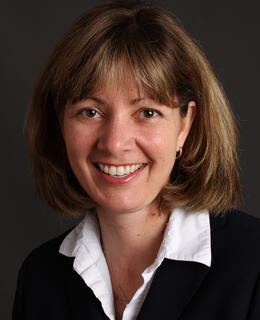
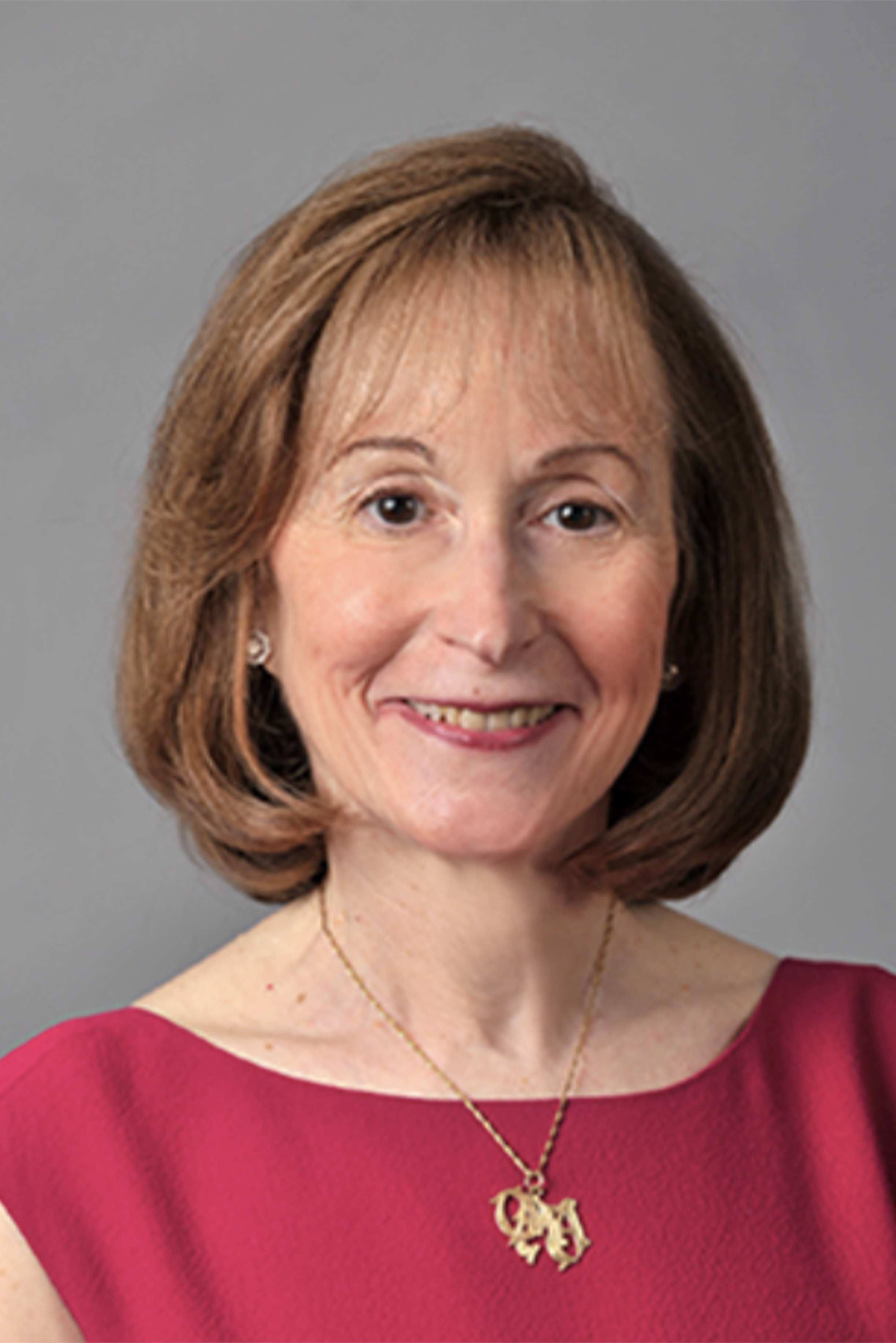
Eileen Klein is an Associate Professor of Social Work and Convener of the BSW Program at Ramapo College of New Jersey's School of Social Science and Human Services. Her work focuses on LGBTQ mental health treatment , community support systems , and policy reform for marginalized populations. Klein has presented extensively at international conferences on topics like cultural competency in social work education and LGBTQ health disparities . Ph.D., M.S., and M.S.W. from New York University and SUNY Buffalo Key research areas: LGBTQ Mental Health, Community Health Disparities, Forensic Social Work Published 15+ works (2013-2021) on topics ranging from polypharmacy to support programs for LGBTQ clients Active in professional development: Delivered presentations at conferences across the U.S. and Italy on topics including integrated treatment and supervision of student interns
Dr. Mbita Mbao is an Assistant Professor in the School of Social Work at Salem State University, where she teaches courses including SWK 700 (Human Behavior), SWK 704/705 (Social Work Practice), and aging-focused courses like SWK 871. Her teaching philosophy emphasizes experiential learning and valuing student experiences. Dr. Mbao's research focuses on behavioral health, aging populations, workforce development, and immigrant issues. She actively works to expand aging-related curriculum and services through her involvement with the Older Adults Behavioral Health Network and Salem for All Ages initiative. Her education includes a BSW from Bowling Green State University, MSW from Rhode Island College, and PhD from Simmons University. As a Licensed Clinical Independent Social Worker, she maintains a clinical practice providing in-home therapy to older adults. Honors include: 2025 North Star Collective Fellow 2019 AGESW Pre-Dissertation Fellow 2021 GSA MCDTAW Early Career Diversity Fellow
Dr. Laura Pacheco is an Assistant Professor at the School of Social Work at Memorial University. She holds a BSW and MSW from McGill University and a PhD in Rehabilitation Medicine from the University of Alberta. Her research focuses on reproductive justice, intellectual disability and parenting, structural violence against women with disabilities, neurodiversity in aging, and social justice within health and social service systems. She has conducted post-doctoral work on support needs for parents with intellectual disabilities and has been a clinician, advocate, and program coordinator in parenting services for over 14 years. She teaches courses emphasizing critical social work practice, anti-oppression, and disability studies. Her funded research includes studies on neurodiverse aging (2020–2023) and service pathways for parents with intellectual impairments (2018–2021). She is an executive member of the International Association on the Scientific Study of Intellectual Disability (IASSIDD) and has contributed to international workshops and conferences. Her work bridges academic research with community engagement, advocating for systemic equity and inclusive policies.
Dr. Andrew D. Eaton is an Assistant Professor at the University of Regina’s Faculty of Social Work (Saskatoon Campus) and holds a Status-Only Assistant Professorship at the Factor-Inwentash Faculty of Social Work, University of Toronto. He earned his PhD and MSW from the University of Toronto and his BSW from Toronto Metropolitan University. His research focuses on HIV/AIDS, mental health crises, aging populations, sexual health, and harm reduction, with a commitment to community-based participatory research. Eaton’s work addresses complex comorbidities affecting marginalized groups, particularly sexual and gender minorities. He leads projects such as the '3 Infections, 1 Fight Study' using geospatial tools to reduce harm from injection drug use, and the 'ReportNeedles.ca' initiative to map needle disposal hotspots. His studies also explore cognitive remediation therapies for aging HIV-positive populations and crisis mental health response models. He holds grants from CIHR, SSHRC, CTN, and OHTN. His publications emphasize innovative interventions, including cognitive training programs, civilian-led crisis response systems, and global comparative studies on sexual identities. Eaton’s lab (eaton-lab.com) fosters collaboration between academics, practitioners, and communities to translate research into actionable health policies and practices.
Roni Berger, PhD, is a Professor at Adelphi University's School of Social Work with over 30 years of academic experience. Her research focuses on trauma in cross-cultural contexts, immigrant/refugee experiences, and posttraumatic growth. She holds clinical credentials as a Licensed Clinical Social Worker (NYS) and Clinical Family Therapist (AAMFT). Education includes: Ph.D. from The Hebrew University of Jerusalem (1994) Psychotherapy certification from Tel Aviv University (1977) MSW and BSW from The Hebrew University of Jerusalem (1974, 1969) Her research examines how sociopolitical environments shape trauma responses across diverse populations including immigrants, refugees, and religious communities. Current investigations explore cultural mediators of posttraumatic growth, trauma-informed pedagogy, and qualitative methodologies for marginalized groups. Publication analysis reveals consistent focus on: cultural competence in trauma care, immigrant mental health interventions, innovative qualitative methodologies, and social work education reform. Recent work addresses pandemic-related pedagogical challenges and cross-cultural manifestations of psychological distress. Awards include: Two Fulbright Awards (Hong Kong 2007, Tel Aviv 2011) President Research Award (2004) NATO Science for Peace sponsorship (2012) Notable advising includes chairing 20+ dissertations on trauma, cultural identity, and marginalized populations. Secured multiple grants including from Fulbright, NATO, and Adelphi University for studies on cultural trauma and community resilience. Leads international educational initiatives in Israel, Ghana, Nepal, and Hong Kong. Directs global trauma education programs, including intensive courses in Israel examining Holocaust intergenerational trauma, security stress, and immigrant experiences. Developed cross-university collaborations in Australia and Hong Kong to advance trauma-informed curriculum development.
Melissa Hardesty is an Associate Professor and Director of the BSW Program in the Department of Social Work at Binghamton University, part of the College of Community and Public Affairs (CCPA). Her research focuses on gender, child welfare, parenting, and kinship, with a methodological emphasis on ethnography and qualitative research. She holds a PhD from the University of Chicago, an MSW from Indiana University Northwest, and a BS from Indiana University-Bloomington. Her work explores intersections of gender, digital representations, and state-mediated family structures. Notable projects include an ethnographic study of foster care and adoption agencies, a visual analysis of political selfies on Tumblr, and studies on Vietnamese sexual behavior and mental health. She collaborates with Binghamton University’s Sexualities Research Laboratory. Recent publications address college student communication around consent, digital identity politics, and systemic issues in child welfare. Her research bridges sociological theory with practical implications for policy and practice. Despite no explicitly mentioned awards, her contributions to social work methodology and critical studies of family dynamics are widely recognized in her field.
Jamie Nappi serves as a Specialist Professor at Monmouth University's School of Social Work, teaching core clinical courses including Clinical Social Work Assessment, Diagnosis and Intervention Planning (SW 645) and Social Work Practice With Individuals and Families (SW 503/342). She actively contributes to university governance as a member of the Interdisciplinary Perspectives on Human Experiences Committee since 2021 and the Council on Social Work Education, Women’s Council since 2022. Her academic credentials include: MSW from Fordham University BSW from Misericordia University Professor Nappi's research examines trauma through multiple lenses—intergenerational transmission, neurobiological impacts, somatic processing techniques, and mindfulness-based interventions. This expertise informs her conference presentations at venues like the Association of Baccalaureate Social Work Program Directors and National Association of Social Workers New Jersey Chapter, where she addresses trauma-informed teaching strategies, private practice development, and anti-racism implementation in predominantly white institutions. She received Monmouth University's 2017 Outstanding Adjunct Award and supports professional development through the School of Social Work’s Professional Education Program, teaching specialized courses in Mindfulness-Based Psychotherapy and Dialectical Behavior Therapy. Concurrently, she maintains a part-time private practice providing trauma-focused clinical services and LCSW supervision for candidates.
Dr. Beth Archer-Kuhn is an Associate Professor at the University of Calgary's Faculty of Social Work, currently on leave until January 2026. With 25+ years of practice experience in child welfare and mental health, she specializes in clinical social work, custody evaluations, and executive leadership. Her academic credentials include a BSW (1986) and MSW (1991) from the University of Windsor, culminating in a PhD in Social Work (2016). Her research examines: The intersection of child custody decisions and domestic violence Inquiry-Based Learning (IBL) in social work education Critical reflexivity in clinical practice Community responses to family violence Recent publications focus on pedagogical innovation during COVID-19, transformative learning frameworks, and women's experiences in shared parenting arrangements under domestic violence. Analysis reveals strong emphases on social justice education, trauma-informed practice, and technology adaptation in higher education. Awards & Honors: Faculty Publication Award (2019) Teaching Scholars Award (2019) VPR Travel Award (2019) She leads major grants including a SSHRC Insight Development Grant studying shared parenting impacts on domestic violence survivors, an Alberta Community Justice Grant for public awareness, and international IBL pedagogy research. Current projects explore AI ethics in education and national recruitment networks for vulnerable populations.
Dr. Sheldene Simola is a Professor at Trent University's School of Business, where she has taught since 2007. She previously served as Associate Director of the School and maintains an active research program focused on workplace ethics, mental health, and organizational behavior. Her educational background includes a PhD and MA from Queen's University, an MBA from Wilfrid Laurier University, and BA/BSW degrees from McMaster University. Her research explores: Workplace mental health interventions and dignity preservation Ethical decision-making frameworks in organizational contexts Moral injury prevention and spiritual dimensions of work Innovative pedagogy for business ethics education Relational cultural approaches to organizational crisis management Her recent publications demonstrate a strong focus on integrating trauma-informed practices into management education, with significant contributions to understanding moral injury prevention and dignity preservation in professional environments. She frequently publishes in top-tier journals including the Journal of Business Ethics and Humanistic Management Journal. Awards and honors include: Elliot Jacques Memorial Prize for outstanding article in psychology Emerald Publishing Literati Network Outstanding Article Award Gold Medal from Laurier School of Business & Economics Multiple Academy of Management 'Best Reviewer' recognitions Teaching awards for pedagogical innovation and student development She teaches graduate and undergraduate courses including Ethics for Organizations, Crisis Management, Workplace Psychological Health, and Spirituality in Humanistic Management. Her instructional approach emphasizes experiential learning methods for developing ethical decision-making skills.
Dr. Diane B. Mitschke is a Professor and former Associate Dean of Academic and Student Affairs at the University of Texas at Arlington's School of Social Work. She holds a PhD in Social Work from the University of Hawaii System, an MSW from the University of Michigan, and a BSW from the University of Texas at Austin. Her academic career includes roles as Director of Graduate Programs and Master of Social Work Program Director. Education: PhD (2006), MSW (2001), BSW (2000) Licensures: Licensed Master Social Worker (2023–2026), Specialist in Aging Certificate (2001) Her research focuses on refugee resettlement, mental health interventions, and cultural integration. Notable projects include evaluations of teen pregnancy prevention programs (Crossroads) and studies on refugee mental health. She has secured over $1.5M in grants for initiatives like Project Match Made in Schools (2019–2021) and Refugee Mental Health Comparisons (2012–2013). Awards include the Academy of Distinguished Teachers (2021) and President's Award for Excellence in Teaching (2020). Her pedagogy innovations include virtual peer mentoring during the pandemic and the Ecological Devastation Bus Tour for environmental social work education. Teaching: Courses on diverse populations, human behavior, and social work practice Service: Leadership roles in university committees, NASW Texas, and refugee advocacy groups She advises over 30 graduate students and collaborates with interdisciplinary teams on projects addressing health disparities and resettlement challenges.
Shirley R. Simon is an Associate Professor at the School of Social Work of Loyola University Chicago, where she has taught both Bachelor of Social Work (BSW) and Master of Social Work (MSW) programs since 1990. She chairs the group work sequence in the curriculum and previously served as Director of the Undergraduate Social Work program at Mundelein College before its merger with Loyola. Group work interventions Contemporary challenges in group work education and practice Hybrid-online social work education Educational trends in clinical social work Current state of group work education in accredited MSW programs Internship supervisors' perspectives on the value of group work Professional development for social work students Older women and the need for group connections Role of part-time faculty in schools of social work Her research also explores group work-related dissertations in social work programs, strategies for connecting students with professional associations, and effective teaching methodologies. She contributes to advancing practices in facilitating effective meetings and social work education trends.
Jennifer Smyer Dickey is a Clinical Associate Professor and the Endowed Chair of Global Leadership at the Diana R. Garland School of Social Work, Baylor University. She directs the Global Mission Leadership (GML) Initiative, fostering reciprocal cross-cultural learning and global leadership. Her work emphasizes cultural humility, international volunteerism, and non-profit impact assessment. Education: PhD in Social Work, Baylor University MSW, Baylor University BSW, Baylor University Research Focus: Dr. Dickey investigates the impact of international volunteers on host communities, cultural humility practices, and strategies for equitable global partnerships. Her recent collaboration with Kenyan alumna Rose Wasike explores Kenyan perspectives on international volunteers, highlighting the role of humility in intercultural relationships. Initiatives: Launched the GML Student Scholarship Program to train international social work leaders. Pioneered transnational partnerships through research and education. Grants & Advising: Her work supports global social work education and leadership development, with a focus on holistic community change.
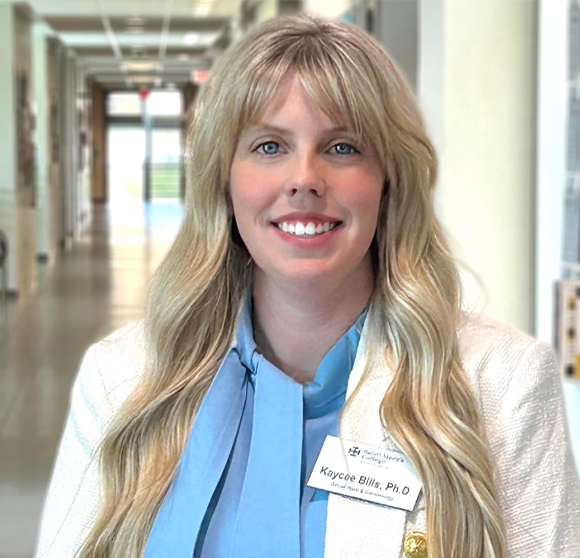
Kaycee Bills is an Assistant Professor in the Social Work department at Saint Mary's College. She holds a PhD from the University of Tennessee, Knoxville, an MSW from Hawaii Pacific University, and a BSW from the University of Saint Francis. Her professional background includes roles in disability case management, foster care, military service (US Navy Reserves), and community mental health. She co-founded the Whitley County Dazzlers (a special needs cheerleading squad) and serves as a board member for the Invisible Disabilities Association. Additionally, she is a research affiliate with Boston College's Racism-Based Violence & Injury Prevention lab. Her research focuses on disability inclusion, bullying mitigation through extracurricular activities, student loan debt disparities, and the intersection of race and disability in mental health outcomes. Recent work includes studies on cyberbullying's impact on LGBTQ+ youth with disabilities and barriers faced by rural students with disabilities. She teaches courses such as Introduction to Social Work and Social Welfare Policy, emphasizing practical mentorship and collaborative research with students. Bills' publications analyze topics like Universal Design for Learning in higher education, maternal stress among low-income mothers, and drug-refusal strategies in rural Native Hawaiian youth. Her work bridges gaps between social work practice and systemic policy reform, particularly in marginalized communities. Outside academia, she advocates for disability representation through sports and supports her daughter's involvement in Special Olympics.
Charles Furlotte is an Assistant Professor in the School of Social Work at St. Thomas University, where he has taught since 2019. Originally from Bathurst, New Brunswick, he is a registered social worker (RSW) in both Ontario (since 2009) and New Brunswick (since 2018), with over a decade of clinical experience in healthcare settings. He is currently completing his PhD in Social Work at McMaster University while maintaining his academic position. Dr. Furlotte earned his Bachelor of Arts (Honours Psychology and English Literature) from Mount Allison University in 2006 and his Master of Social Work from Carleton University in 2009. Prior to joining St. Thomas University, he taught at Carleton's School of Social Work and McMaster University's Department of Health, Aging and Society, and served as a Social Worker with a focus on mental health and psychotherapy. He also held an Assistant Clinical Professor (Adjunct) position at McMaster's Department of Family Medicine. His research focuses on critical approaches to the social study of aging, particularly examining the experiences of lesbian, gay, bisexual, and transgender (LGBT) people aging with HIV and other complex chronic health conditions. His work explores aging-related services for older LGBT individuals, mindfulness applications in social justice approaches to social work practice, and resilience strategies among long-term HIV survivors. His research employs qualitative methodologies, often using community-based participatory approaches. An analysis of his recent publications reveals consistent themes across gerontology, HIV research, and social work practice, with particular emphasis on successful aging frameworks from the perspective of HIV-positive older adults. His research demonstrates strong methodological rigor using qualitative approaches, particularly modified grounded theory and narrative analysis, to explore the lived experiences of vulnerable aging populations. Professor Furlotte has taught across multiple levels of social work education, including Post-degree BSW courses (Theory for Social Work Practice II, Generalist Social Work Practice Skills, Field Instruction), 4-Year BSW courses (Social Work Practice and Human Development, Field Instruction I), and MSW courses (Social Work in Health Care, Research and Evaluation, Advanced Placement). His teaching integrates his clinical expertise with his research interests in aging, HIV, and mindfulness-based interventions. His professional activities extend to community engagement, having presented at numerous forums including The AIDS Network, Hamilton; The AIDS Committee of Toronto; and various academic conferences on HIV and aging. He has contributed to environmental scans of HIV and aging services in Canada and participated in national initiatives addressing the needs of older adults living with HIV.
Mari Ann Graham is an Associate Professor and former MSW Program Director at St. Catherine University since 2019. She holds a PhD in Social Welfare (Case Western Reserve University, 1999), MSW (University of Nebraska-Omaha, 1983), and BSW (University of Nebraska-Omaha, 1979). Her career spans over 35 years in academia, including 25 years at the joint University of St. Thomas program. She specializes in integrating ethics, diversity, spirituality, and applied research into social work education. Education: PhD in Social Welfare, Case Western Reserve University, 1999 MSW, University of Nebraska-Omaha, 1983 BSW, University of Nebraska-Omaha, 1979 Research Interests: Graham focuses on ethical practice, diversity/inclusion pedagogy, spirituality in social work, and integrative teaching methods. She emphasizes practical application through workshops, literature-based learning, and visual media. Her work includes developing ethical frameworks for addressing systemic biases and fostering inclusive educational environments. Publications: Her scholarship bridges theory and practice, with recent works addressing ethical inclusion, race dialogues, and innovative research methods. Earlier contributions include foundational texts on teaching social work through group dynamics and spirituality integration. Awards/Grants: None explicitly mentioned in text. Labs/Teams: Co-developed the Doctor of Social Work (DSW) program at the joint University of St. Thomas program and contributed to interdisciplinary collaborations like the Arbinger Institute’s spirituality work.