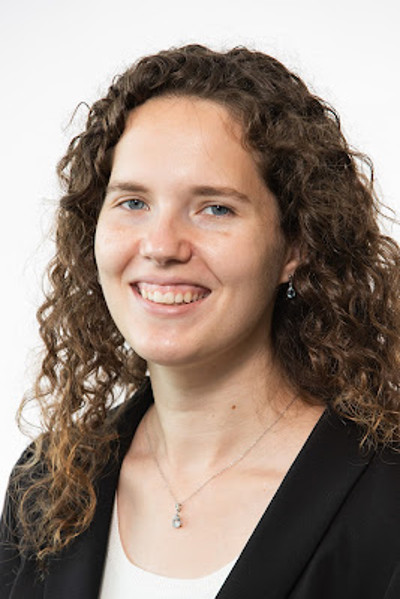
Emily Cook is an Assistant Professor at Texas A&M University, focusing on higher education economics, policy analysis, and institutional decision-making. Her research examines topics such as college pricing structures, STEM education funding, vaccine mandate impacts, and market dynamics in education and aviation sectors. She employs rigorous empirical methodologies to evaluate policy outcomes and institutional behaviors. Her work highlights how federal funding influences STEM curricula, how tuition policies affect student major choices, and the role of peer institutions in shaping reopening strategies during crises. Cook also investigates the equity implications of college pricing models and the structural evolution of industries such as airlines and higher education markets. Notable areas of focus include the interplay between public health policies and educational continuity, the competitive landscape of US universities, and the socioeconomic factors influencing student transitions from high school to college.
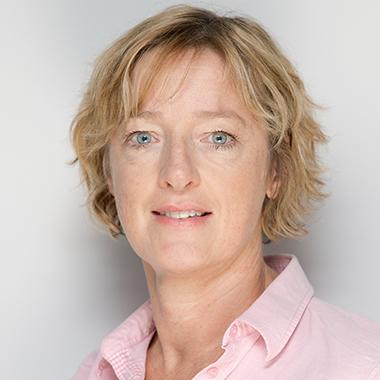
Dr. Laura Zizka is a Professor at the EHL Hospitality Business School, part of the HES-SO university network. She specializes in higher education strategies, crisis communication, and sustainability in hospitality and STEM sectors. Her research bridges academic theory with industry practice, focusing on organizational resilience during crises, digital education transformation post-pandemic, and embedding sustainability literacy in curricula. Education**: BSc HES-SO in Hospitality and Tourism Management Research Themes**: Crisis communication strategies in tourism and hospitality Digital transformation in higher education Pro-environmental behavior in hospitality operations Sustainability integration in STEM and business programs Her work emphasizes bridging educational practices with real-world challenges, such as pandemic communication, stakeholder engagement in sustainability, and employability skills for STEM graduates. Recent studies include analyzing Swiss hoteliers' pandemic communication evolution and exploring AI's role in academic writing through Microsoft Copilot case studies. Grants & Projects**: HES-SO Rectorate-funded project (2019–2020) on destination image and pictorial content impact (CHF 99,000) Longitudinal studies on student/faculty perceptions of digital education (2020–2023) Dr. Zizka collaborates with industry partners like KITRO (food waste tech) and actively contributes to conferences on topics ranging from trauma-informed pedagogy to blended learning models. She advocates for holistic sustainability education and has advised on CSR communication strategies for airlines and hospitality firms.
Dr I-Shuo Chen is a Senior Lecturer in Organisational Behaviour at the School of Management, Faculty of Business and Law, Anglia Ruskin University (ARU). He previously held academic positions at the University of Dundee and Wuhan University, China, and earned his PhD in Business Studies from Trinity College, Dublin. He is actively engaged in research and editorial work, serving as Associate Editor for Frontiers in Psychology – Organisational Psychology . Education and Qualifications: PhD in Business Studies, Trinity College, Dublin Fellow (FHEA), Higher Education Academy (UKPSF), 2018 IPMA-HR Senior Certified Professional, 2000 Research Interests: Dr Chen's research focuses on organisational behaviour, particularly work engagement, work-life balance, green human resource management, creativity, innovation, and higher education. His work explores how personal and organisational resources influence employee well-being and performance, especially in digital and remote environments. Themes such as online leisure crafting, home boredom, and intelligent learning systems are central to his recent investigations. Publications and Research Trends: His recent publications appear in high-impact SSCI and SCI journals such as Computers in Human Behavior , International Journal of Hospitality Management , and Journal of Air Transport Management . The research demonstrates a consistent focus on applying psychological and management theories to practical organisational and educational challenges, with an increasing emphasis on digital transformation, employee resilience, and sustainable HR practices. Scientific Awards and Memberships: Fellow (FHEA), Higher Education Academy (UKPSF), 2018 IPMA-HR Senior Certified Professional, 2000 Associate Member, Chartered Institute of Personnel and Development (CIPD), 2019 Member, Chartered Management Institute (CMI), 2019 Member, UKRI Future Leaders Fellowships Peer Review College, 2021 Member, European Association of Work and Organisational Psychology, 2017 Member, European Academy of Occupational Health Psychology, 2014 Advising, Grants, and Editorial Roles: Dr Chen serves as Associate Editor for Frontiers in Psychology and has been an ad hoc reviewer for numerous top journals including Human Relations , International Journal of Human Resource Management , and Journal of Happiness Studies . While no specific grants or students are listed, his extensive peer review and editorial board involvement indicate active scholarly leadership. Labs and Research Teams: Although no specific lab or research team is named, Dr Chen collaborates internationally and presents regularly at major conferences such as the Academy of Management (AOM) and European Association of Work and Organisational Psychology (EAWOP), suggesting active participation in global research networks.
Prof. Dr. Harald Reiterer is a leading researcher in Human-Computer Interaction at the University of Konstanz, where he has served as Professor since 2009. His academic journey includes a Ph.D. (1991) and habilitation (1995) from the University of Vienna, followed by roles including Senior Researcher at Fraunhofer FIT and Associate Professor at Konstanz. He currently holds multiple leadership roles: Dean of the Faculty of Sciences , Senator of Section 1 , and Consulting Dean . Ph.D. in Computer Science (University of Vienna, 1991) Venia Legendi (Habilitation) in HCI (University of Vienna, 1995) His research focuses on: Interaction Design for mixed reality environments Information Visualization in immersive contexts Hybrid User Interfaces combining physical and virtual elements 3D Object Manipulation in handheld AR Behavioral Analytics through mHealth interventions Recent work explores: Avatar representation in Augmented Reality (2024) Node selection efficiency in Virtual Reality (2024) Peripheral vision toolkits for Head-Mounted Displays (2023) Hybrid interface optimization for Mixed Reality (2023) Smartphone AR extensions for Spatial Memory (2023) Key scientific contributions: Landeslehrpreis 2021 for interdisciplinary exhibition design Development of Colibri cross-reality toolkit (2023) Foundational work on Re-locations for remote collaboration (2022) He leads numerous projects including: SMARTACT (Smart Mobility, 2015-2023) SFB TRR 161 (2009-2027) on XR interface measurement Blended Library (2011-2015) for future library design
Professor Washington Yotto Ochieng serves as Head of the Department of Civil and Environmental Engineering and Chair Professor in Positioning and Navigation Systems at Imperial College London. He directs the Centre for Active Resilience and Security (CARS) and maintains key affiliations with the Centre for Systems Engineering and Innovation, Centre for Transport Engineering and Modelling, Institute for Molecular Science and Engineering, and Space Lab. His extensive advisory roles include the Science Museum Group Board of Trustees, Royal Institute of Navigation Presidency, and Royal Academy of Engineering Africa Steering Committee. His educational background includes a BSc (First Class) in Engineering from the University of Nairobi and MSc (Distinction) and PhD in Civil Engineering from the University of Nottingham. He received an honorary DSc from Technical University of Kenya in 2023. Ochieng's research pioneers critical infrastructure resilience, user-centric mobility, and positioning/navigation/timing (PNT) systems. He has designed satellite navigation systems (including Europe's EGNOS and GALILEO) for multi-domain applications and advanced Air Traffic Management and Intelligent Transport Systems. His work integrates geomatics, transportation engineering, and sustainable mobility to solve global urban infrastructure challenges, with recent emphasis on decarbonization and AI-driven solutions. His 2024-2025 publications reveal strong trends in sustainable transportation decarbonization, AI-optimized traffic management, and resilient urban positioning systems. Research focuses on hydrogen fuel cell trains, carbon-efficient aviation, and deep reinforcement learning applications for emission reduction, demonstrating interdisciplinary integration of engineering, environmental science, and artificial intelligence to address climate challenges. Fellow of the Royal Academy of Engineering (2013) Harold Spencer-Jones Gold Medal from Royal Institute of Navigation (2019) Doctor of Science (honoris causa) from Technical University of Kenya (2023) Elder of the Order of the Burning Spear (EBS) from Kenya (2023) Commander of the Order of the British Empire (CBE) (2024) Ochieng provides strategic guidance to UK Government bodies (Government Office for Science, Department for Transport, FCDO), European Parliament, and European Court of Auditors. His advisory work shaped the Blackett Review on Satellite-derived Time/Position, UK Space Strategy, and Future of Mobility report. He chairs the Science Museum London Advisory Board and leads FCDO's Sustainable Urban Economic Development program in Africa, with significant grant influence through UK National Physical Laboratory and Department for International Development. He directs the Centre for Active Resilience and Security (CARS) and leads Space Lab initiatives, focusing on mission-critical PNT systems and infrastructure resilience. His teams collaborate with international consortia including RTCM Special Committee 134 and US Institute of Navigation, developing next-generation navigation solutions for safety-critical applications across transport, aviation, and urban environments.
Malcolm H. Murfett is a Visiting Professor in the Department of War Studies at King's College London, specializing in naval history, Cold War studies, and British foreign policy. He holds a doctorate from New College, Oxford (1980), and is a Fellow of the Royal Historical Society since 1990. His career spans over four decades with affiliations at institutions including the National University of Singapore, York University, and the Australian Defence Force Academy (ADFA). He has authored or edited over a dozen books on naval warfare, decolonization, and Anglo-American relations. Research focuses include Cold War Southeast Asia, British naval strategy in the 20th century, and the intersection of political leadership with military policy. Notable works include European Navies and the Conduct of War (2018), Cold War Southeast Asia (2012), and Political Leadership in an Era of Decolonisation (2024). He serves as associate editor of the Oxford Dictionary of National Biography and series editor for Cold War in Asia . Teaching spans undergraduate to honours levels, covering topics like 20th-century European history, Cold War dynamics, and naval history. He has won multiple teaching excellence awards at the National University of Singapore. Public engagement includes media consulting for networks like The History Channel, TV/radio scriptwriting, and crisis management training for multinational corporations. Key awards include the Royal Historical Society Fellowship. Ongoing projects involve analyzing decolonization's global impact and British political leadership's evolution through the 20th century. He has organized public lecture series on military history topics and remains active in media-historical collaborations.
Associate Professor Anton Didenko is a leading academic at UNSW Sydney's School of Private & Commercial Law, specializing in FinTech regulation, banking law, and central bank digital currencies (CBDC). He holds law degrees from Russia and the UK, including an MJur and DPhil from the University of Oxford. His research focuses on CBDC design, regulatory sandboxes, open banking frameworks, and cybersecurity in finance. University Affiliation: UNSW Sydney Key Academic Roles: Author of Banking Law in Australia (11th ed, 2024) and lead author of Customer Data Sharing Frameworks (2024) Global Engagement: Adviser to G20, Asian Development Bank, and UN agencies Research Interests: - CBDC policy and design implications - Regulatory frameworks for FinTech innovation - Cybersecurity in financial systems - Transnational commercial law and secured transactions - Open data and customer consent mechanisms Recent Articles: Focus on CBDC adoption in Pacific economies, weaponization of digital currencies in geopolitical conflicts, and comparative analysis of blockchain liabilities. His work bridges legal, technological, and policy dimensions of financial innovation. Awards : Australian Academic of the Year in Digital Finance (2023) Advising & Grants: - No listed advisees - Collaborations include Asian Development Bank-funded Pacific CBDC studies - Co-authored policy reports for UN Capital Development Fund and CPA Australia Labs/Teams: - Editor-in-Chief of the Cape Town Convention Journal - Co-leader of UNSW's FinTech regulation research initiatives
Prof. Juan Alonso is the Vance D. and Arlene C. Coffman Professor and James & Anna Marie Spilker Chair in the Department of Aeronautics & Astronautics at Stanford University. He directs the Aerospace Design Laboratory (ADL), focusing on high-fidelity computational methods for aerospace system design. His expertise spans transonic/supersonic/hypersonic aircraft, rotorcraft, and launch vehicles. Alumni include record-holding teams for human-powered watercraft and lightweight unmanned aerial vehicles. Education: PhD (1997) from Princeton University in Mechanical & Aerospace Engineering; M.A. (1993) Princeton; B.S. (1991) MIT Aeronautics/Astronautics. Research emphasizes multi-disciplinary optimization, numerical methods, and parallel computing applied to advanced aircraft design, sustainable aviation, and UAS systems. Notable contributions include computational design frameworks like SU2 and SUAVE, and initiatives in curriculum development for engineering education. Recent work focuses on: GPU-accelerated CFD solvers, multi-fidelity surrogate models (e.g., VortexNet), contrail simulation frameworks, and battery degradation modeling for electric aircraft. Active in urban air mobility and high-fidelity trajectory optimization for hypersonic systems. Labs/Teams: Aerospace Design Laboratory (ADL) leading open-source computational tools development. Involved in NASA-funded projects and industry partnerships for advanced propulsion systems.
Marat I. Latypov serves as Assistant Professor in the Department of Materials Science and Engineering at the University of Arizona's College of Engineering. He is also a member of the Applied Mathematics Graduate Interdisciplinary Program and leads the Materials Informatics Lab. His research spans computational materials science, sustainable alloy design, and machine learning applications for materials development. Dr. Latypov holds a PhD in Materials Science and Engineering from Pohang University of Science and Technology (POSTECH, South Korea, 2014) and a Dipl.-Ing. in Engineering Physics from Ufa State Aviation Technical University (Russia, 2011). His postdoctoral training included appointments at Georgia Tech/CNRS in France and the University of California, Santa Barbara. His research focuses on materials informatics , physics-informed machine learning , and sustainable structural alloys . Key methodologies include graph neural networks for polycrystal mechanics, vision transformers for microstructure representation, and adaptive experimental design for materials optimization. Recent work emphasizes circular economy applications through construction waste recycling and copper mine tailings valorization. Analysis of his publication record reveals strong emphasis on computational microstructure-property linkages (35% of recent work), machine learning for materials design (30%), and sustainable materials processing (25%), with growing integration of large language models for materials knowledge extraction. NSF CAREER Award (2025) : For damage control in recycled aluminum alloys ISTI Distinguished Faculty Scholar (2024) : At Los Alamos National Laboratory Novelis Hackathon First Prize (2021) : Computer vision application Acta Materialia Outstanding Reviewer (2018) Young Researcher Award (2017) : NanoSPD7 Conference Dr. Latypov advises PhD students including Herbold Fellow Zhuocheng Huang and leads projects funded by NSF and the Grantham Foundation. Current initiatives include chalcopyrite leaching optimization for copper mining and graph neural network development for fatigue prediction. His Materials Informatics Lab maintains collaborations with Los Alamos National Laboratory, MIT, and industry partners including Novelis. The lab operates at the intersection of metallurgy , machine learning , and high-performance computing , with capabilities spanning deep learning, Bayesian inference, and cloud-based computational infrastructure. Recent news highlights participation in CODAS-HEP summer school and publication of vision transformer work in Acta Materialia.
Keunhyun (Keun) Park is an Assistant Professor of Urban Forestry at the University of British Columbia (UBC), affiliated with the Department of Forest Resources Management . He also holds an Adjunct Professor position at Utah State University in the Department of Landscape Architecture and Environmental Planning. Education: BSc and MSc in Landscape Architecture from Seoul National University; PhD in Urban Planning and Design from the University of Utah Research Lab: Faculty lead of the Urban Nature Design Research Lab ( under_lab ) His research focuses on designing healthy, just, and resilient cities through urban nature , with particular emphasis on: Environmental justice and equitable access to urban green spaces Human behavior in public spaces using drone/sensor/VR technology Smart growth urban design impacts on public health and ecological systems Recent publications demonstrate expertise in GIS applications , pedestrian behavior analysis , and urban planning across 20+ studies from 2013-2025. Collaborations include the Vancouver Park Board , Metro Vancouver , and Wasatch Front Regional Council .
Dr. John O. Miller is an Associate Professor of Operations Research in the Department of Operational Sciences at the Air Force Institute of Technology (AFIT), where he has served since 1997 in roles including Military and Civilian Deputy Department Head and Director of the Center for Operational Analysis. A retired U.S. Air Force Lieutenant Colonel, he combines more than three decades of military experience with scholarly expertise in simulation modeling, defense logistics, and operations research. Education: Ph.D. in Industrial Engineering, The Ohio State University, 1997 M.S. in Operations Research, Air Force Institute of Technology, 1987 M.B.A., University of Missouri at Columbia, 1983 B.S. in Biology, United States Air Force Academy, 1980 Dr. Miller’s research focuses on the development and application of simulation methodologies—especially agent-based and discrete-event modeling—to military logistics, weapon system evaluation, and combat readiness. His work often integrates multivariate statistics, experimental design, and optimization techniques to address Air Force and Department of Defense challenges such as sortie generation, munitions supply chains, and directed-energy weapon assessment. Across more than 40 refereed articles, recent publications demonstrate a sustained emphasis on: Metamodeling of large-scale simulations using dynamic Bayesian networks and bootstrapping Agent-based exploration of air-to-air missile concepts and aircraft maintenance manpower Statistical evaluation of pattern-recognition and automatic-target-recognition algorithms Logistics degradation modeling for bomber fleets and brigade combat teams These contributions underscore his leadership in military simulation and defense-focused operations research. Scientific & Teaching Honors: AFIT Instructor of the Quarter, 2005 Tau Beta Pi Engineering Honor Society (Alumnus Member), 2001 AFIT Student Chapter ORSA Outstanding OR Educator, 1999 MORS Barchi Prize Nominee, 1998 Alpha Pi Mu & Omega Rho Honor Societies USAFA Department Instructor of the Year, 1993 Dr. Miller has advised numerous M.S. and Ph.D. students whose dissertations and theses advance simulation optimization, military logistics, and combat modeling. His teaching interests span simulation modeling and analysis, design of experiments, probability and statistics, and operations research methods for defense applications. He maintains active professional memberships in INFORMS, the Military Operations Research Society, and the Air Force Association, and he frequently presents at both invited and organized conferences, fostering collaboration among military, academic, and industry analysts.
Professor Coral Dando is a Professor of Psychology at the University of Westminster, leading research in forensic cognition and investigative interviewing. With a background as a London Police Officer, she completed a BSc (Hons) Psychology and PhD in Applied Forensic Cognition. She is a Chartered Psychologist, National Teaching Fellow, and Registered Forensic Psychologist. Her research focuses on eyewitness memory, deception detection, and cross-cultural interviewing, with a particular emphasis on improving investigative methods in security and forensic contexts. Her academic roles include teaching forensic psychology modules (e.g., detecting deception, investigative interviewing) and supervising PhD students researching topics like virtual environments in interviews and neurodivergent credibility. She has secured significant research funding from entities like the Home Office, FBI, and CPNI, totaling over £2M across projects addressing insider threats, county lines exploitation, and aviation security. Key Research Themes: Eyewitness reliability, cognitive interviewing techniques, cross-cultural persuasion, and insider threat detection. Grants: Includes a 2024 €97,000 COST grant for implementing the Mendez Principles and a 2016 $469,000 FBI-funded study on intelligence interviewing. Professor Dando’s work bridges academia and practice, training professionals from police forces, security agencies, and NGOs. She contributes to policy development and has authored over 100 peer-reviewed publications, including seminal works on the cognitive interview and WAFA (Witness-Aimed First Account) for neurodivergent individuals. Her research emphasizes ethical, context-aware methodologies to enhance justice outcomes.
Leah Okenwa Emegwa is an Associate Professor of Public Health Sciences at the Swedish Red Cross University (part of Red Cross College), where she has worked since 2017. She holds a PhD in Public Health (2011, Karolinska Institutet), a Master's degree in Public Health (2006), and a Doctor of Optometry (2000). Her work experience spans clinical optometry (primary care, aviation vision care) and academic roles including program directorships and vice-dean assignments. Her research focuses on social determinants of health, emphasizing interpersonal violence (gender-based/family violence), workplace health promotion, refugee/migrant health, and human rights-based approaches. She also explores innovative teaching methods in higher education for addressing social change. Key activities include: Representing the Swedish Red Cross University in ASPHER (European public health network) and the Flemingsberg Science Foundation Guest editing journals like Frontiers in Public Health and Socialmedicinsk Tidskrift Peer review for multiple scientific journals Teaching responsibilities include epidemiology, research methods, gender equity, and occupational health at both undergraduate and graduate levels. Her work emphasizes global health challenges such as violence prevention and health equity in vulnerable populations. Publications highlight themes like refugee mental health, workplace violence mitigation, and educational strategies for addressing gender-based violence. Her 2011 doctoral thesis investigated intimate partner violence and reproductive health in Nigeria.
Ana Inés Torres is an Associate Professor in the Department of Chemical Engineering at Carnegie Mellon University's College of Engineering. She leads an active research group focused on sustainable process systems engineering, with affiliations at the Center for Advanced Process Decision-Making and the Wilton E. Scott Institute for Energy Innovation. Her work bridges chemical engineering with sustainability challenges, particularly in decarbonization and circular economy applications. Dr. Torres earned her educational credentials from Universidad de la República Oriental del Uruguay and the University of Minnesota: Ph.D. in Chemical Engineering, University of Minnesota (2013) Diploma in Chemical Engineering, Universidad de la República Oriental del Uruguay (2005) B.S. in Chemistry, Universidad de la República Oriental del Uruguay (2003) Her research interests span process systems engineering with a sustainability focus, particularly in chemical industry decarbonization through electrification and biomass utilization, circular economy network analysis, and environmentally-friendly rare earth element recovery processes. She integrates modeling, analysis, and optimization to design clean and sustainable chemical processes, with growing emphasis on machine learning applications in process optimization. Analyzing her recent publications reveals a strong focus on decarbonization strategies for existing industrial infrastructure, particularly oil refineries, and circular economy network design. Her work demonstrates increasing integration of machine learning with traditional process systems engineering approaches to tackle complex sustainability challenges across multiple scales, from molecular recovery processes to entire supply chain networks. Dr. Torres has received several prestigious recognitions: NSF CAREER award (2024) Dean's Early Career Fellowships award (2025) Consultant for United Nations Industrial Development Organization (UNIDO) (2024) Associate editor of Clean Technologies and Environmental Policy She actively mentors a diverse group of graduate students working on cutting-edge sustainability challenges, with recent projects focusing on circular economy networks, rare earth element recovery, and bio-refinery design. Her research has attracted significant funding, including the NSF CAREER award, and she participates in multiple collaborative initiatives through CMU's energy research centers. Dr. Torres also serves as an invited speaker at major conferences including FOCAPD and FOCAPO/CPC. Dr. Torres leads the Torres Research Group at CMU, which maintains strong connections with industry partners and international organizations including UNIDO. The group operates within CMU's robust energy research ecosystem, collaborating with the Wilton E. Scott Institute for Energy Innovation and the Center for Advanced Process Decision-Making to address complex sustainability challenges through interdisciplinary approaches.
Joanne L. DeTore is a tenured Associate Professor in the Department of Humanities and Communication at the College of Arts and Sciences, Embry-Riddle Aeronautical University, Daytona Beach campus. She previously held academic and leadership roles at Eastern Florida State College, including Chair of the Department of Communications, and served as the University Director of Diversity Initiatives from 2007 to 2010, overseeing diversity programs across all campuses. Education: Harvard Graduate Certificate, Harvard University (2022) Ph.D., Southern Illinois University Carbondale (1998) M.A., College of Saint Rose (1990) B.S., Syracuse University (1987) Her research and teaching focus on diversity and inclusion, gender, race, ethnicity, motherhood, crisis communication, public relations, STEM/aviation and women, popular culture, film, and cross-cultural communication. Her interdisciplinary work bridges humanities and social sciences, emphasizing inclusive pedagogy and cultural critique. She has contributed extensively through scholarly articles, poetry, and book reviews, reflecting a unique blend of academic and creative expression. The recent publications show a strong thematic trend in identity, embodiment, cultural narratives, and educational engagement. Her work spans literary creativity, critical review, and empirical research in communication pedagogy, indicating a broad scholarly impact across humanities and education disciplines. Scientific Awards: Mentor of the Year for the College of Arts and Sciences (August 2024) Dr. DeTore has served as a mentor and advisor, recognized for her contributions to student development. While specific grants are not detailed, her role as former University Director of Diversity Initiatives suggests leadership in institutional programs and initiatives. Her academic trajectory reflects sustained engagement in both teaching excellence and diversity leadership. She is actively involved in scholarly and creative communities, contributing to journals such as Ovunque Siamo: New Italian-American Writing and VIA: Voices in Italian Americana , indicating affiliation with Italian-American cultural and literary networks.