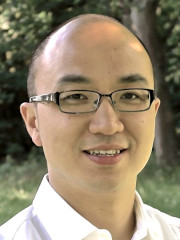
Dr. Graham Brooker is a Senior Lecturer at the University of Sydney's School of Aerospace, Mechanical and Mechatronic Engineering since 1999. He holds a PhD (2005) and degrees from the University of the Witwatersrand. Research Interests: Focuses on radar systems for autonomous navigation, rehabilitation engineering (dementia/Parkinson's), medical robotics (birth simulators), and millimeter-wave imaging. His work improves safety in mining/military environments and quality of life through assistive technologies. Recent Projects: Includes radar-acoustic interactions, entomological harmonic radar, dental robotics, cervical tissue modeling, and force analysis during childbirth. Active in developing low-cost radar solutions for road vehicles and microwave weed killing systems. Awards: Notable recognitions include 2010 AMME Teaching Award, 2012 Faculty Teaching Award, and top-tier conference paper prizes. Holds patents and has authored multiple textbooks like Introduction to Biomechatronics (2012) and Sensors for Ranging and Imaging (2022).
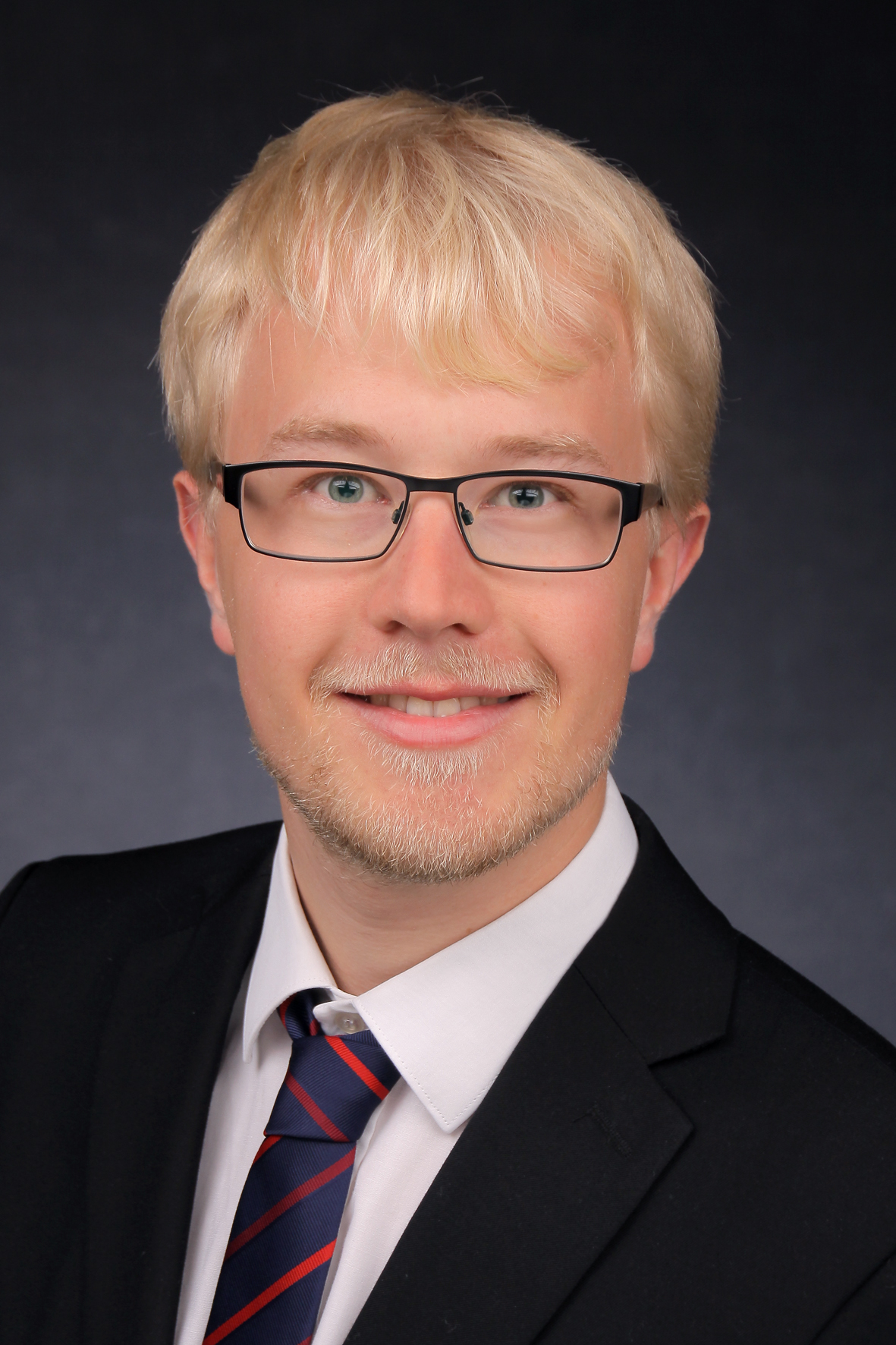
Dr. Jae Hee Lee is a postdoctoral researcher in the Knowledge Technology Group at the University of Hamburg, holding a PhD in Computer Science from the University of Bremen. His research focuses on multimodal language models, explainable AI, and neuro-symbolic integration to enhance model robustness and generalization. Previously, he specialized in spatio-temporal reasoning and multiagent systems, supported by grants like the Feodor Lynen Fellowship (2016–2017). He is an associate editor of AI Communications and co-organizes the International Workshop on Spatio-Temporal Reasoning and Learning. His recent work includes projects like LUMO (DFG-funded, 2025–2029), exploring lifelong multimodal learning through compositional knowledge. Lee advises multiple students, including Björn Plüster, developer of the LeoLM German LLM. Key research interests span explainable vision-language models, causal reinforcement learning, and concept-based explanations. He frequently serves on program committees for AI/NLP conferences (e.g., IJCAI, COLING) and organizes reading groups on LLM/XAI topics.
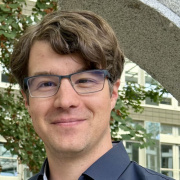
Dr. Simon Bultmann is currently a Postdoctoral Researcher at the Robot Learning Lab, Albert-Ludwigs-Universität Freiburg. Previously, he completed his Ph.D. in the Autonomous Intelligent Systems Group at the University of Bonn (2019–2024) and earned his M.Sc. and B.Sc. in Electrical Engineering and Information Technology from Karlsruhe Institute of Technology (KIT, 2012–2018). His research focuses on collaborative perception, sensor fusion, and machine learning for embedded systems ("Smart Edge Sensors"). Key applications include real-time multi-modal semantic fusion, 3D scene perception, and autonomous UAVs. Awards: Best Paper Award at IEEE SSRR 2020 Finalist for Best Paper Award at RoboCup 2021 His work spans robotics, computer vision, and distributed systems, with contributions to international conferences like ICRA, RSS, and IAS. He has also been involved in competitions such as MBZIRC, demonstrating autonomous UAV capabilities in disaster response scenarios.
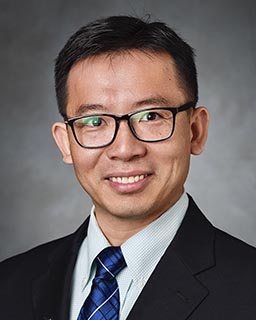
Salman Nazir is Professor at the University of South-Eastern Norway (USN) , Faculty of Technology, Natural Sciences and Maritime Sciences, Department of Maritime Operations. He heads the Training and Assessment Research Group (TARG) and is Scientific Leader of the national Centre of Excellence in Maritime Simulator Training and Assessment (COAST). Since 2019 he has held the rank of Professor, after serving as Associate Professor from 2015 and earlier post-doctoral and lecturer roles in Norway, Italy, South Korea and Pakistan. Education PhD in Industrial Chemistry and Chemical Engineering ( cum laude ), Politecnico di Milano, Italy, 2011–2013 MSc in Chemical Engineering (Process System Engineering), Hanyang University, South Korea, 2007–2009 BSc in Chemical Engineering, Bahauddin Zakariya University, Pakistan, 2002–2006 Research Interests Prof. Nazir’s work sits at the intersection of Human Factors, Safety and Simulation Technology . He investigates how immersive virtual- and augmented-reality simulators, novel training syllabi and evidence-based performance indices can enhance operator competence and safety in complex maritime and process-industry systems. Concepts such as Distributed Situation Awareness , multi-criteria decision making , accident analysis and learning process optimisation are central to his multidisciplinary agenda, which actively involves cognitive scientists, computer scientists, maritime practitioners and industrial stakeholders. Research Trends & Article Overview Across more than 80 peer-reviewed outputs, a clear trajectory emerges: early focus on process-industry training simulators and KPI development evolved into maritime-centric studies on simulator fidelity, VR-based education, and human-automation interaction in autonomous shipping. Recent work (2019–2021) emphasises systematic reviews and comparative European studies, validating VR-headset efficacy, performance-assessment frameworks, and sociotechnical implications of increased automation. Honours & Awards COAST designated one of 12 national Centres of Excellence in Education (SFU) by DIKU, Norway Coordinator/Leader, EU Horizon 2020 project ENHANCE (multi-million NOK) 400 000 NOK MARKOM 2020 Workshop grant PhD cum laude , Politecnico di Milano Young-researcher grants, Politecnico di Milano (2011 & 2013) Merit scholarships, Hanyang University & Korean Government Advising & Grant Portfolio Prof. Nazir currently supervises 6 master students and 1 PhD candidate in “Automated Performance Assessment in Maritime Operations”, while co-supervising additional PhD students at Liverpool John Moores University. He has successfully graduated 3 master and 6 bachelor students . External funding includes EU Horizon 2020, Norwegian SFU scheme, MARKOM 2020, Maritime Technology and Innovation (MTDI) and multiple Italian national grants. Labs & Collaborative Networks He leads TARG at USN, acts as Scientific Leader of COAST , and collaborates with leading international scholars such as Prof. Zaili Yang (Liverpool John Moores), Prof. Annette Kluge (University of Duisburg-Essen), Prof. Davide Manca (Politecnico di Milano) and Prof. Paulo Carvalho (UFRJ, Brazil). These partnerships span computer science, cognitive psychology, maritime logistics and safety engineering, ensuring a truly interdisciplinary research ecosystem.
Stefan Lee is an Associate Professor at Oregon State University in the School of Electrical Engineering and Computer Science. His research focuses on agents that can perceive environments, communicate with humans, and coordinate actions to achieve shared goals. This work spans computer vision, natural language processing, and deep learning, with applications in robotics and embodied AI. Current Role: Associate Professor, Oregon State (2025–) Previous Roles: Assistant Professor (2019–2025), Research Scientist II (2017–2019), Postdoctoral Associate (2016) Research Interests include: Vision-and-Language Navigation (VLN) Multimodal Learning Embodied Artificial Intelligence Robotic Perception and Control Fairness in AI Systems Selected Scientific Awards : ICLR 2023 Best Paper Award EMNLP 2017 Best Short Paper Award CVPR 2019 Oral CVPR 2018 Oral CVPR 2014 Best Paper Award Advising : Mentors 7 PhD students including Zijiao Yang, Xiangxi Shi, and Abhinav Jain. His publications demonstrate consistent leadership in top-tier conferences like ICCV, CVPR, and NeurIPS.
Pan Pan is a Professor in the Department of Biomedical Engineering at Huazhong University of Science and Technology, with extensive research contributions spanning medical image analysis, computer vision, and underwater wireless communications. Their work demonstrates strong interdisciplinary collaboration between biomedical engineering and computer science, with significant industry partnerships including Alibaba. Research interests focus on medical image analysis (particularly automatic breast ultrasound systems), deep learning applications in healthcare diagnostics, and secure underwater communications . Their work bridges theoretical advances with practical clinical applications, developing innovative segmentation algorithms, tumor detection systems, and secure communication protocols for specialized environments. Analysis of recent publications reveals a strong trend toward integrating multi-modal data fusion techniques with uncertainty-aware deep learning models for medical diagnostics. The research spans both fundamental algorithm development (novel segmentation networks, feature matching optimization) and domain-specific applications (ABUS tumor detection, ICU mortality prediction, underwater sensor networks). Pan Pan maintains active collaborations with major Chinese technology companies and academic institutions, evidenced by the consistent publication record in top-tier conferences including CVPR, ICCV, and NeurIPS. While specific awards aren't documented in the provided materials, the research impact is demonstrated through numerous high-impact publications across computer vision and biomedical engineering venues. The research program shows particular strength in translating computer vision techniques to medical applications, with significant contributions to semi-supervised learning approaches for medical image segmentation where labeled data is scarce. Recent work also demonstrates growing interest in secure communications for specialized environments like underwater sensor networks.
Dr. Almas Shintemirov is a Research Fellow at Aalto University's Department of Electrical Engineering and Automation, specializing in robotics, control systems, and human-robot interaction. His research focuses on intelligent robotics, with emphasis on Real-time motion prediction for collaborative robots Nonlinear control algorithms for safe human-robot interaction Open-source robotic hardware design Deep learning applications in autonomous systems
Prof. Dr. Raif Bayır is a Turkish academic at Karabük University's College of Engineering, Department of Mechatronics Engineering. With a career spanning 2000-2024, he has held continuous full-time faculty positions from Assistant Professor to Professor. His research focuses on Robotics, Hybrid/Electric Vehicles, and Artificial Intelligence. Doctorate: Gazi University (2005) - Electronics & Computer Education Postgraduate: Gazi University (1998) - Electronics & Computer Education Undergraduate: Gazi University (1995) - Electronics & Computer Education His work integrates Artificial Intelligence techniques into Electric Vehicle systems, Robotics, and Agricultural Engineering applications. Recent publications emphasize Deep Learning for Mask Detection, Real-Time Battery Monitoring, and Autonomous Navigation Systems. Scientific awards include: 2017 METU Line-Following Robot 1st Prize 2016 TÜBİTAK Domestic Product Award 2015 TÜBİTAK Electromobil Best Design Prize He has advised over 20 graduate theses on topics spanning Electric Vehicle Components, Beehive Monitoring Systems, and Intelligent Control Applications. His research teams have developed multiple TÜBİTAK-supported projects including Automotive Test Stands and Battery Management Systems.
Associate Professor Melrose Brown is a faculty member at UNSW Canberra, School of Engineering and Technology, where he leads numerical space situational awareness research and coordinates the Space Masters program. He holds advanced degrees in Aerospace Engineering and specializes in applying high-fidelity simulations to satellite-environment interactions in Low Earth Orbit (LEO). Research Focus: DSMC/PIC simulations for LEO satellites Orbit propagation and determination Ionospheric drag modeling Atmospheric physics Hypersonic CFD His recent publications analyze thermospheric responses to geomagnetic storms using GITM-OVATION models, ionospheric drag effects, and numerical tools like pdFOAM. Key keywords include Space Weather, Satellite Formation Control, and Computational Fluid Dynamics. He supervises Ph.D. projects related to aerospace engineering and offers scholarships for research in LEO dynamics. His work involves collaborations on CubeSat missions (e.g., M2) and space traffic management systems.
Daniel Leidner is a Cooperation Professor at the University of Bremen and a researcher at the German Aerospace Center (DLR) where he has been contributing to the Institute of Robotics and Mechatronics since 2011. He earned his doctorate in Artificial Intelligence and Robotics from the University of Bremen in 2017. Since 2017, he has led the Semantic Planning Group and the Fault-Tolerant Autonomy Architectures group at DLR, focusing on advanced task planning for autonomous robotic systems and enhancing the reliability of robotic operations in dynamic environments. Leidner's research interests span multiple areas in robotics and artificial intelligence. His work emphasizes developing robust and resilient robotic systems capable of autonomous operation in complex environments. He specializes in creating systems that can not only handle predictable scenarios but also flexibly respond to unforeseen events. His ERC Starting Grant project RECOVER.ME aims to equip robots with metacognitive abilities to autonomously manage hardware malfunctions by integrating formal reasoning with Vision-Language Models. This innovative approach enhances the resilience and efficiency of space robots, reducing the need for manual intervention during missions and leveraging insights from cognitive psychology for improved problem-solving capabilities. Leidner's research portfolio includes significant projects such as RECOVER.ME, FUTURO, EASE, OPERA, Smile2gether, Surface Avatar, and CoViPa. His publications demonstrate a strong focus on autonomous task planning, human-robot interaction, fault tolerance, and metacognitive capabilities in robotic systems. Recent publications highlight advancements in space teleoperation, assistive robotics, and cognitive reasoning for resilient robotic systems. ERC Starting Grant (2024) for project RECOVER.ME Georges Giralt PhD Award (Best European PhD Thesis in Robotics) Helmholtz Doctoral Prize MIT Technology Review Innovator under 35 Award Leidner has served as an advisor to the German Federal Government from October 2023 to July 2024, where he played a crucial role in developing a national strategy for AI-based robotics. His leadership in the Semantic Planning Group and Fault-Tolerant Autonomy Architectures group at DLR demonstrates his significant contributions to advancing robotic capabilities in challenging environments. His work bridges theoretical advances in cognitive robotics with practical applications in space exploration, healthcare, and industrial automation.
Raphael Zaccone serves as an Associate Professor in the Department of Naval, Electrical, Electronic and Telecommunications Engineering at the University of Genoa, where he is an active member of the department board. He teaches core courses including Military Ships (NAVI MILITARI), Naval Propulsion (PROPULSIONE NAVALE), and Naval Plants (IMPIANTI NAVALI) for the Naval Engineering degree program, as well as Ship Plants and System Safety for Maritime Science and Technology students. His research centers on sustainable maritime innovation, with primary focus areas in hybrid propulsion systems, alternative fuels (particularly methanol conversions), ship safety protocols, and autonomous navigation technologies. Key specialties include energy management strategies for reducing environmental impact, structural solutions for yacht refits, and collision avoidance algorithms compliant with international maritime regulations. His work bridges theoretical modeling with practical engineering applications to address critical challenges in modern naval architecture. Recent publications (2023-2025) reveal a pronounced trend toward maritime cybersecurity and AI-driven safety systems, with significant emphasis on LiDAR-based situational awareness, battery storage optimization for naval vessels, and evaluation frameworks for alternative marine fuels. Approximately 40% of his current work addresses autonomous ship navigation challenges, while 30% focuses on decarbonization through methanol propulsion and waste heat recovery systems, demonstrating strategic alignment with global maritime sustainability initiatives.
Hui Yang is a Professor of Industrial and Manufacturing Engineering and Biomedical Engineering at Pennsylvania State University , holding the Gary and Sheila Bello Chair Professor title. He is affiliated with multiple institutions including the Penn State Cancer Institute , Clinical and Translational Science Institute , and Institute for Computational and Data Sciences . Currently serving as PI and Site Director of the NSF Center for Health Organization Transformation (CHOT) , his career includes leadership roles in professional societies such as IISE Data Analytics and Information Systems Society (President 2017-2018) and INFORMS Quality, Statistics and Reliability (QSR) society (President 2015-2016). As Associate Editor for journals like IISE Transactions , IEEE JBHI , and IEEE Transactions on Automation Science , he maintains strong editorial influence. His research integrates nonlinear stochastic dynamics with sensor-based system informatics to advance both smart manufacturing and healthcare engineering . Recent work explores digital twin technologies , blockchain applications , and AI-driven disease modeling for conditions like Alzheimer's and cardiovascular disease . Key scientific contributions include developing character-level linguistic biomarkers for early dementia detection, self-organizing network representations of cardiac systems, and privacy-preserving neural networks for Industry 4.0 environments. His research group has received significant external funding from NSF , DOE , and NIST to address challenges in heterogeneous manufacturing networks , adaptive failure prognosis , and spatiotemporal optimization . Fulbright Award in Science, Technology and Innovation (2022) IISE Fellow (2021) NSF CAREER Award (2015) Through his Virtual Learning Factory and SCOUT spatiotemporal framework , Yang bridges manufacturing analytics with health informatics , creating cross-domain methodologies for system diagnostics/prognostics , process optimization , and smart health monitoring . His Cross Recurrence Analysis Toolbox provides open-source methods for nonlinear time series analysis.
Dr. Yomna Abdelrahman is a Professor of Usable Security and Privacy at the Bundeswehr University Munich . Her research focuses on thermal imaging for security and privacy , virtual reality usability, eye tracking , and biometric authentication . She collaborates with researchers like Florian Alt and Albrecht Schmidt on projects exploring how thermal sensing can enhance user identification and privacy awareness . Key Research Areas : Thermal Imaging, Human-Computer Interaction, Virtual Reality, Password Security, Biometric Authentication, Eye Tracking, Privacy Her recent publications address VR emotion detection , password usability , and privacy implications of thermal imaging . She has contributed to conferences like CHI, MUM, and INTERACT, often examining security-privacy trade-offs and non-invasive biometric systems . Notably, her work on thermal attacks reveals vulnerabilities in mobile authentication through thermal residue. She holds a PhD in Computer Science from the University of Stuttgart (2018), where her thesis, "Thermal Imaging for Amplifying Human Perception," laid the foundation for her later work on thermal-based interaction and cognitive load estimation . Her collaborations span diverse domains, from smart home notifications to industrial worker assistance , reflecting her interdisciplinary approach to usable security and interactive systems .
Tejaswi Kasarla is a Researcher at the VIS Lab, University of Amsterdam, and a Research Scientist Intern at Meta FAIR in Paris. Their work intersects non-Euclidean representation learning (hyperspherical and hyperbolic deep learning) for open-world understanding and multimodal foundation models. Education : Fourth-year PhD candidate at University of Amsterdam (since Oct 2021). Research Experience : Intern at Bosch (Jun 2018–Oct 2018), then Computer Vision Researcher at Bosch (May 2019–Jun 2022). Currently organizing community initiatives like the Women in Computer Vision (WiCV) Workshop at CVPR 2021–2022. Teaching : Teaching Assistant for Applied Machine Learning (Nov 2022, Nov 2021). Research Focus : Non-Euclidean deep learning (hyperspherical/hyperbolic), multimodal foundation models, active learning, and uncertainty quantification in computer vision. Recent work explores hyperbolic safety-aware vision-language models (CVPR 2025 Highlight) and lightweight uncertainty quantification for terrain traversability (ICRA 2024). Publications : Their research appears in top venues like CVPR, NeurIPS, WACV, and workshops (ECCV Beyond Euclidean, ICRA Resilient Off-road Autonomy). Key themes include class separation , active learning , and hyperbolic embeddings . Community Contributions : Organized WiCV Workshops at CVPR 2021–2022, served as a board member since 2022. Peer-reviewed for ICCV, NeurIPS, ICLR, and WiCV/NeurIPS workshops. Interests Beyond Research : Photography and specialty coffee (home barista).
Pascal Morin serves as a University Professor at Sorbonne University within the Faculty of Science and Engineering. He is an active member of the ASIMOV research team at the Intelligent and Robotic Systems Institute (ISIR), located at 4 Place Jussieu in Paris. His office H17 serves as the base for his research activities in advanced robotics and control systems. Professor Morin's research focuses on cutting-edge robotics applications, particularly in unmanned aerial vehicle navigation and control systems. His work spans nonlinear control theory, visual servoing techniques, and micro air vehicle development. Key interests include homography estimation for image stabilization, thermal anemometry for airflow sensing, and obstacle avoidance algorithms for precision robotics. His publications demonstrate consistent innovation in combining theoretical control frameworks with practical robotic implementations. Analysis of his 15 most recent publications reveals strong thematic continuity in UAV navigation systems, with increasing integration of deep learning techniques since 2020. His work consistently addresses GPS-denied environments and sensor fusion challenges, with notable contributions to thermal-based odometry and visual-inertial navigation systems. The research trajectory shows progression from theoretical control frameworks toward increasingly complex real-world applications including power line inspection and microscopy manipulation. Professor Morin actively collaborates with major aerospace institutions including ONERA and DLR, as evidenced by his participation in the EuRoC challenge. His editorial work on MAV navigation special collections demonstrates leadership in the micro air vehicle research community. While specific grant details aren't provided in the source material, his sustained publication output across multiple high-impact journals indicates successful funding acquisition. As a core member of the ASIMOV team at ISIR, Professor Morin contributes to Sorbonne University's leadership in robotics research. The team maintains strong industry connections through publications in Aerospace Lab and collaborations with organizations like AIAA. Current research directions appear focused on thermal sensor integration for MAVs and nonlinear control solutions for challenging operational environments.