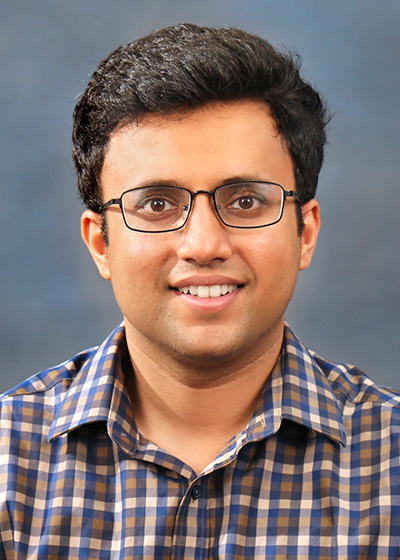
Dr Sudip Mittal is an Assistant Professor in Computer Science & Engineering at Mississippi State University and Associate Research Director of the PATENT Lab. His research spans cybersecurity, artificial intelligence, and cyber-physical systems, with a focus on building self-protecting systems and predictive security for unmanned vehicles. He leads the SECRETS Lab and has published over 70 papers in top venues, with work featured in The LA Times and WIRED. Research interests include: Autonomous intrusion response systems AI-driven threat detection in IoT/CPS Adversarial machine learning His publications (2019-2025) show a strong emphasis on AI security applications, particularly in malware detection, healthcare compliance, and anomaly detection using large language models. Recent articles explore MLOps security, adaptive cyber defense, and synthetic data generation for critical systems.
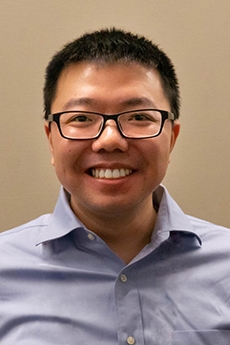
Marco Valtorta is a Professor and Graduate Director in the Department of Computer Science and Engineering at the University of South Carolina’s Molinaroli College of Engineering and Computing. He specializes in Artificial Intelligence, with a focus on normative reasoning under uncertainty, Bayesian networks, causal models, and computational complexity. His work includes developing algorithms for structure learning in graphical models, causal inference, and applications in multiagent systems. Education: Ph.D., Computer Science, Duke University (1987) M.A., Computer Science, Duke University (1984) Laurea, Electrical Engineering, Politecnico di Milano (1980) Research Interests: Dr. Valtorta’s work integrates logical and probabilistic reasoning, with contributions to causal models, chain graphs, and adversarial machine learning. His funded projects include collaborations with the Office of Naval Research (ONR), IARPA, and the U.S. Department of Agriculture (USDA). Notable collaborations include applying Bayesian networks to healthcare and developing frameworks for trustworthiness assessment in AI systems. Grants & Collaborations: Multi-institution IARPA project on Wigmorean/Bayesian networks for argumentation ONR-funded research on Markov properties of directed hypergraphs with Dr. Linyuan Lu Causal analysis for performance modeling of configurable systems His recent publications emphasize causal inference in AI, automated evaluation of text and sentiment analysis systems, and robustness of foundation models. He has pioneered algorithms for learning chain graphs and addressing adversarial attacks in probabilistic models.
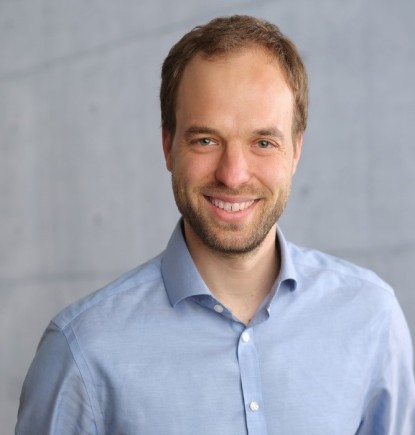
Tae Eun Kim is an Associate Professor in Maritime Safety Management at UiT The Arctic University of Norway, working within the Department of Technology and Security. Her research, teaching, and industrial collaboration focus on maritime safety and human factors, with particular expertise in maritime safety management, accident analysis, Maritime Autonomous Surface Ships (MASS), and human factors in maritime operations. Dr. Kim's research spans four interconnected domains: maritime safety management and leadership, maritime accident and casualty analysis, Maritime Autonomous Surface Ships (MASS), and human factors in maritime operations. She has developed assessment instruments like the Safety Leadership Self-Efficacy Scale (SLSES) and conducted STAMP-based causal analyses of maritime accidents. Her work on MASS addresses safety challenges in mixed navigational environments and examines leadership competencies for autonomous shipping operations. Her human factors research explores how technological advancements impact navigators' performance, crew dynamics, and safety outcomes, including gender parity issues in the maritime industry. Dr. Kim's publication record reveals a strong focus on the intersection of maritime safety, technology, and human performance. Her recent work increasingly addresses autonomous shipping technologies, with numerous publications on AI decision transparency, learning analytics in maritime simulator training, and multi-modal data analysis for nautical skill development. She has conducted systematic reviews on simulator training approaches and scenario design, contributing significantly to methodology development in maritime education and training. Her research demonstrates a clear trajectory toward integrating emerging technologies with traditional maritime safety practices as the industry transitions toward greater automation. Dr. Kim is actively involved in several significant research projects, including the i-MASTER EU Horizon Europe Research and Innovation Project, the REFRAME project, and the SPRICE project (Multidisciplinary approach for spray icing modelling). She is a member of both the Advanced Maritime Ship Operations research group and the Maritime Safety Science (MARSCI) Research Group, demonstrating her commitment to collaborative research in maritime safety science. Dr. Kim teaches several specialized courses at UiT, including SVF-3206 Safety Management and Accident Investigation, TEK-3014 Navigation Technology, MFA-2100 Maritime Digitalization, MFA-8010 Maritime HTO (Human-Technology-Organisation) and Innovation, and MFA-2018 Maritime Administration and Leadership. Her teaching portfolio reflects the interdisciplinary nature of her expertise, bridging engineering, safety science, and organizational behavior in maritime contexts.
Dr. Lauren A. Siegel is a Senior Lecturer in Tourism and Events at the University of Greenwich, part of the Faculty of Business and School of Management and Marketing. She transitioned from a decade-long career in New York City’s tourism and events sector to pursue her MSc at the Hong Kong Polytechnic University (Distinction) and later her PhD at the University of Surrey, focusing on social media’s transformative role in tourism experiences and 'Instagrammable' destinations. Her research examines behavioral performances of travelers, destination impacts, and the interplay between digital media and cultural consumption. Her work has been featured in global media outlets such as BBC, CNN, and The Independent. Education: MSc (Distinction) in Tourism and Events Management from Hong Kong Polytechnic University; PhD in Tourism from the University of Surrey. She is affiliated with the Travel and Tourism Research Association (TTRA), International Federation for IT and Travel & Tourism (IFITT), Royal Geographical Society, and Royal Photographic Society. Research interests center on social media’s impact on tourism behaviors, digital marketing strategies, and the cultural dimensions of travel experiences. Her studies explore how platforms like Instagram shape destination perceptions, tourist behaviors, and the commodification of experiences. She also investigates emerging trends like autonomous vehicles in leisure travel and the socio-cultural effects of student mobility programs like Erasmus+. While no formal grants or advising roles are explicitly detailed, her scholarly contributions emphasize practical solutions for destinations facing overtourism and leveraging behavioral interventions. She actively engages in interdisciplinary research, blending tourism studies with digital sociology and policy analysis.
Zhengtian Xu is an Assistant Professor in the Department of Civil & Environmental Engineering at George Washington University , affiliated with the School of Engineering & Applied Science . His research focuses on optimizing urban transportation systems through mathematical modeling and data-driven analysis, emphasizing emerging mobility services and vehicle technologies. Education: B.S., Tsinghua University (2014) M.S., University of Florida (2016) Ph.D., University of Michigan (2020) Research interests include urban transportation systems, mathematical modeling, operations research, and sustainable mobility solutions. His work addresses challenges such as electrification of ride-hailing services, driver labor dynamics, and last-mile delivery optimization. Recent publications explore topics like drone delivery networks and platform competition in autonomous vehicle markets. No academic awards or student advisees are listed. His articles highlight trends in electrification strategies, behavioral driver dynamics, and urban logistics optimization. He has not disclosed grants or lab affiliations in the provided information.
Victor Becerra is a Professor of Power Systems Engineering at the University of Portsmouth, affiliated with the School of Electrical and Mechanical Engineering within the Faculty of Technology. He is also associated with the Centre for Environmental and Renewable Energy Solutions and the Agile Centre For Equitable Sustainability. His research focuses on advanced control systems, renewable energy integration, smart grids, battery management, and nuclear power plant control. He actively supervises PhD students in topics like optimal control of battery systems and microgrid optimization. His academic work spans over 193 publications, with recent contributions emphasizing techno-economic analysis of green hydrogen, modular energy storage solutions, and optimal control strategies for batteries and nuclear reactors. His research often addresses real-world applications such as grid flexibility at ports, peer-to-peer energy trading platforms, and drone-based inspection of offshore wind turbines. Becerra's expertise includes developing control algorithms for marine structures, sodium-cooled reactors, and unmanned aerial vehicles. He has contributed to books on solar energy engineering and applications, highlighting interdisciplinary approaches to sustainability challenges. His work integrates theoretical models with practical implementations, such as energy management systems for compressed air and advanced BMS for drones. Key themes in his research include renewable energy systems optimization, fault-tolerant control mechanisms, and adaptive control strategies for dynamic environments. He collaborates internationally, addressing global energy challenges through innovative control methodologies and sustainable technologies.
Dr Joseph Lee is a Reader in Corporate and Financial Law at the University of Manchester School of Law . Previously, he served as Senior Lecturer at the University of Exeter and Assistant Professor at the University of Nottingham. He directs the Manchester Online LLM in International Commercial and Technology Law and authored key publications including Crypto-Finance, Law and Regulation (2021) and Web3 Governance: Law and Policy (2025). Principal Investigator for UKRI/British Academy-funded projects Holds visiting positions at Bocconi University, KU Leuven, and National Taiwan University Acting Arbitrator in crypto-assets and fintech disputes His research focuses on commercial law intersecting with emerging technologies, including blockchain governance, AI systems in finance, and cybersecurity regulation. Recent work explores decentralized finance (DeFi), token transferability, and Web3 policy frameworks. Dr Lee contributes to the UN Sustainable Development Goals through digital trust initiatives. His projects include the AI Law and Policy: UK, US and EU Comparative Study (2023-2024), and he convenes the Digital Technology, Crime and the Law Conference 2025 .
Professor Bruce N. Walker holds a joint appointment in the School of Psychology and School of Interactive Computing at Georgia Institute of Technology, within the College of Sciences. His research focuses on human-centered technology design, emphasizing accessibility, auditory displays, and human-AI interaction. He leads the Sonification Lab, pioneering multimodal interfaces and inclusive technology solutions. He earned his Ph.D. in Human Factors and Human-Computer Interaction from Rice University in 2001. Research Interests: Trust in technology, accessible interfaces, sonification, AI-human collaboration, and HCI in non-traditional environments. Current projects include the AccessCORPS VIP initiative to enhance course accessibility and studies on automated vehicle interaction. Awards: Best Paper Award at AudioMostly 2014 for auditory weather reports research. Active in professional organizations like the International Community for Auditory Display and Human Factors and Ergonomics Society. Teaching: Courses include Research Methods for Human Factors, Sensation and Perception, and HCI Foundations. Supervises interdisciplinary teams in the Sonification Lab R&D Studio and AccessCORPS VIP. Labs/Teams: Sonification Lab (multimodal data exploration) and AccessCORPS (disability-inclusive course design). Collaborates on international projects like the Mwangaza initiative for learners with vision impairment in Kenya.
Professor Aniruddha Desai is a Research Professor and Director of the Centre for Technology Infusion (CTI) at La Trobe University. He holds a Bachelor’s in Industrial Electronics, a Master’s in Micro-electronics, and a PhD in Computer Science. His expertise spans microelectronics, AI, IoT, and sensor networks, with a focus on socially impactful applications like transportation, healthcare, and precision agriculture. Research Interests: Ultra-low power systems Micro-nano electronics AI/ML and edge computing IoT and sensor networks Transportation and logistics Major Projects: Led multi-million-dollar R&D programs in areas such as smart cities, energy management, and smart farming. Notable collaborations include the IIT Kanpur - La Trobe University Research Academy and the Asian Smart Cities Research and Innovation Network. Awards: Recipient of the 2016 Vice-Chancellor’s Award for Research Excellence and the 2020 Victorian Tall Poppy Award for Science. Served on advisory panels for the Australian Research Council and provided expert testimony in parliamentary inquiries. Labs/Teams: Directs the CTI, which delivers technology-based innovations to industry and government. Co-founded the Asian Smart Cities network to advance urban technology solutions.
Prof. Benno Liebchen holds a faculty position at the Technische Universität Darmstadt within the Institute for Condensed Matter Physics , part of the Faculty of Physics. He leads the Liebchen Group , dedicated to advancing research in the Theory of Soft Matter , focusing on active matter, colloidal systems, and non-equilibrium phenomena. His work explores collective behavior in self-propelled particles, phase transitions in active fluids, and adaptive strategies in smart materials. Research Interests include: Active matter dynamics and pattern formation Non-equilibrium statistical mechanics Biophysical systems and biomimetic design Computational modeling of soft matter Recent publications highlight breakthroughs in intelligent active particles , self-reverting vortices , and motility-induced phase coexistence . His lab develops tools like the AMEP Python package to analyze active systems. Teaching responsibilities include advanced modules in soft matter physics. Collaborative projects involve interdisciplinary approaches to microswimmer behavior and machine learning-driven optimization of collective systems. Contact: +49 6151 16-24509 / Office: S2|04 104
David Danks is a Professor of Data Science, Philosophy, and Policy at the University of California, San Diego. His work bridges AI ethics, causal inference, and policy, focusing on governance frameworks for emerging technologies. He leads research on trustworthy AI systems, healthcare technology applications, and sociotechnical risks. Danks is affiliated with the DIVER Lab, exploring interdisciplinary approaches to AI's societal impact. His research spans causal discovery algorithms, ethical AI design, and the intersection of science and policy. Notable themes include mitigating bias in quantum machine learning, dynamic certification for autonomous systems, and addressing unforeseen technological harms. He has contributed to national AI policy through roles like the National Artificial Intelligence Advisory Committee. Publications emphasize ethical challenges in AI development, such as algorithmic fairness, epistemic utility, and moral responsibilities in dual-use technologies. His work frequently intersects with healthcare innovation, including personalized hemodynamic models for surgical risk reduction. While no formal awards or grants are listed, Danks' involvement in high-profile initiatives like the CCC Whitepaper on pandemic prevention underscores his leadership in translational ethics and policy.
Associate Professor Jason Thompson holds an Associate Professor position in the Department of Psychiatry at the University of Melbourne. He is affiliated with the Faculty of Medicine, Dentistry and Health Sciences and previously served as Co-Director of the Transport, Health and Urban Systems (THUS) Research Laboratory at the Melbourne School of Design. He earned a PhD in Medicine (2015) from Deakin University, a Master's in Clinical Psychology, and a Bachelor of Science with Honours. His research focuses on computational social science applied to injury rehabilitation, compensation systems, and healthcare design. He has attracted over $5M in research funding and published over 100 articles. Key areas include agent-based modeling, systems dynamics, and policy analysis for public health challenges such as pandemic response and urban mobility. Thompson currently leads the NHMRC Centre of Excellence in Compensable Injury after Road Crashes. Grants: ARC Future Fellowship (2022), DECRA (2017) Awards: Best Paper Award (Computational Social Science Society of the Americas, 2017) Labs: THUS Research Lab (until 2024) His work bridges epidemiological modeling (e.g., influencing Victoria's 2020 pandemic exit strategy) and complex systems analysis for injury prevention and health system design.
Amiya Nayak is a Professor at the School of Electrical Engineering and Computer Science of the University of Ottawa. His research focuses on Fault-Tolerant Computing , Distributed Systems , and Ad hoc and Sensor Networks . He specializes in cybersecurity, IoT security, blockchain integration, and machine learning applications in healthcare and vehicular networks. His work addresses challenges in secure communication protocols, distributed learning frameworks, and energy-efficient network designs. Notable research areas include: IoT Security : Developing frameworks for threat detection, privacy-preserving systems, and blockchain-empowered IoT defenses. Federated Learning : Enhancing healthcare predictions and IoT management through decentralized, privacy-aware machine learning. Vehicular Networks : Securing Vehicle-to-Everything (V2X) communication and optimizing QoS in cooperative internet of vehicles (IoV). Network Optimization : Leveraging deep reinforcement learning and graph neural networks for WDM network restoration and edge computing. His publications (2020–2025) highlight contributions to: Secure authentication protocols in medical sensor networks. AI-driven metaverse security solutions. Decentralized energy trading using NFTs. Energy-efficient sleep scheduling in wireless body area networks (WBANs). Nayak holds a Ph.D. and is a P.Eng. (Professional Engineer). His work bridges theoretical computer science with practical applications in telecommunications and healthcare systems.
Dr. Damian Arellanes is a Lecturer (Assistant Professor) in Computer Science at Lancaster University, UK, affiliated with the Software Engineering Group and Lancaster Centre for Intelligent, Robotic and Autonomous Systems (LIRA). He holds a PhD from The University of Manchester (2020) and a Postgraduate Certificate in Academic Practice from Lancaster University (2023). His research focuses on theoretical foundations of algebraic composition for high-level computation models, including emergent/self-organising systems and software composition. He has contributed to areas such as category theory, control-flow separation, and compositional programming for IoT systems. Education: PhD in Computer Science, University of Manchester (2020) Postgraduate Certificate in Academic Practice, Lancaster University (2023) MSc in Computer Science, supported by CONACYT (2012–2014) BEng in Computer Engineering, supported by PRONABES (2009–2012) Research Interests: Damian’s work emphasizes algebraic semantics, compositional models for software, and theoretical computer science principles. He explores how abstract mathematical frameworks (e.g., category theory) can formalize computational systems and enable scalable IoT solutions. Publications: Damian has published extensively on algebraic composition, IoT systems, and formal methods. Key themes include compositional programming, self-organizing software, and scalable service architectures. Awards: Official Nominator for the VinFuture Prize (2024) Honourable Mention for Most Outstanding Mexican Student in STEM (2021) Nick Sanders Kickstarter Fund (2019) Outstanding Doctoral Paper Award (2019) Best MSc Thesis in AI (2015) Advising & Grants: Damian supervises PhD students, such as Mina Yavari, and actively reviews for journals like IEEE TSC and conferences like TASE. He has secured scholarships and fellowships from CONACYT and the Mexican government. Labs/Teams: Member of LIRA’s Fundamentals Section and the Software Engineering Group at Lancaster University.
Anna Gautier is an Assistant Professor in the Department of Computer Science at Chalmers University of Technology, affiliated with the Division of Data Science and AI. Previously, she was a Digital Futures Postdoctoral Fellow at KTH Royal Institute of Technology (2023–2025), focusing on mechanism design for multi-robot systems. Her research emphasizes planning under uncertainty, multi-agent systems, and human-robot interaction. She holds a PhD from the University of Oxford (2023), an MSc from the London School of Economics, and dual undergraduate degrees from Washington University in St. Louis. Education Background: PhD in Computer Science, University of Oxford (2023) MSc in Applied Mathematics, London School of Economics BA in Mathematics and BS in Computer Science, Washington University in St. Louis Research Interests: Dr. Gautier explores planning algorithms for multi-agent systems, particularly in uncertain environments. She designs mechanisms to coordinate robots and humans, leveraging game theory and formal methods. Her work addresses challenges like resource allocation, risk-aware decision-making, and trust in autonomous systems. Recent projects include contingency planning for autonomous vehicles and auction-based resource distribution. Professional Activities: She co-chairs the ECAI 2025 Demonstration Track and teaches the course Safe Robot Planning and Control at KTH. Her projects include collaborations with WASP-Nest (PerCorSo) and TECoSA on trustworthy autonomy. She actively publishes in top venues like AAMAS and AAAI. Labs and Teams: Affiliated with Chalmers' Data Science and AI division, she leads research in multi-agent systems and human-AI collaboration.