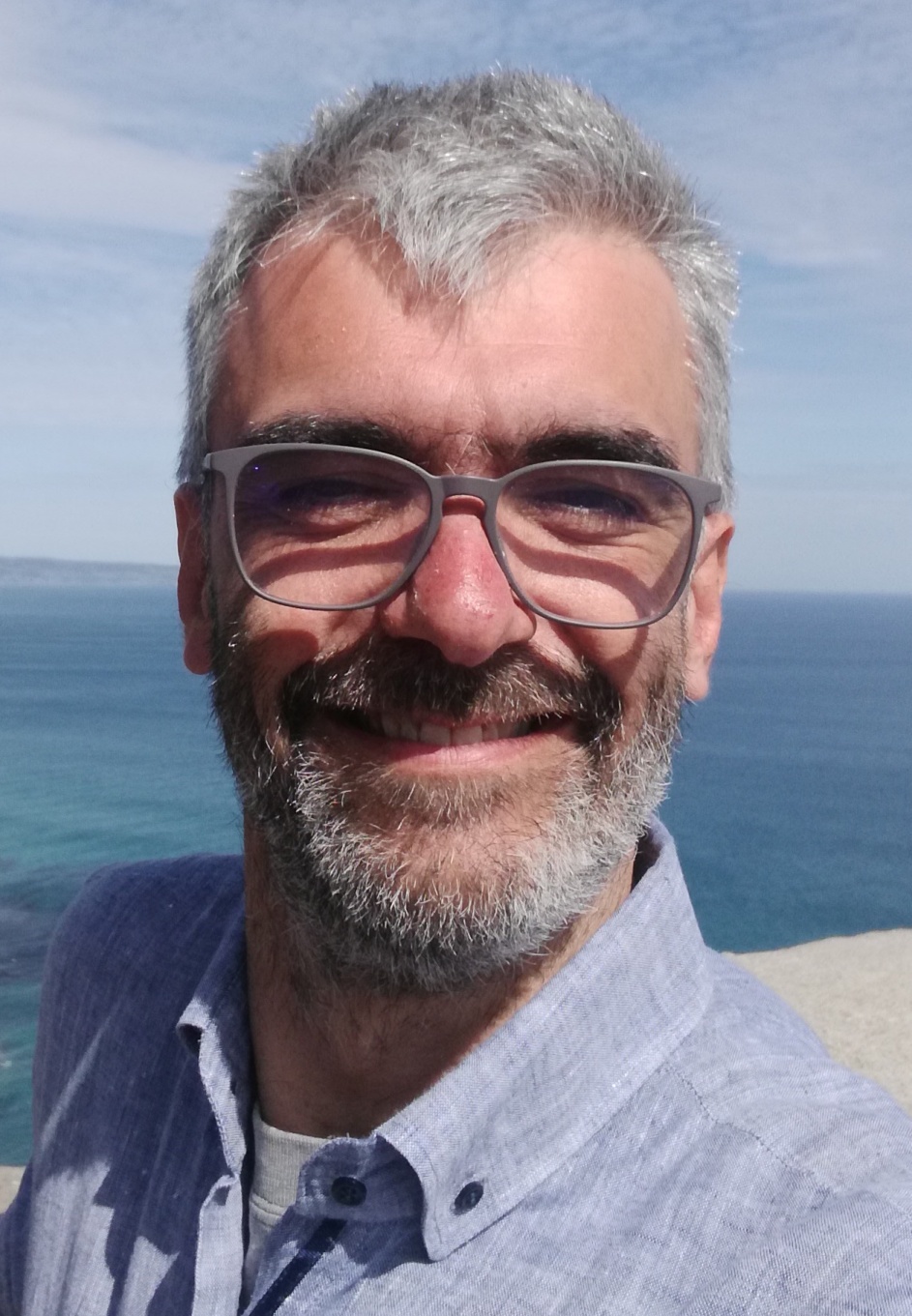
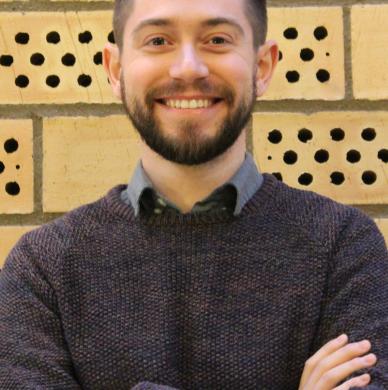
Andrea Garulli is a Professor in Control Systems at the Department of Information Engineering and Mathematics (DIISM), University of Siena. He served as Dean of the Faculty of Engineering (2011-2012) and Director of DIISM (2015-2021). His research focuses on control systems, including system identification, state estimation, robust control, multi-agent systems, and aerospace applications. He co-authored the book *Homogeneous Polynomial Forms for Robustness Analysis of Uncertain Systems* and developed the LFR_RAI toolbox for robustness analysis of uncertain models. Garulli has led projects like ACANTO (social robot navigation) and DALi (autonomous navigation for elderly care). His teaching includes courses on system dynamics, state estimation, and filtering. He is an Associate Editor for *Automatica* and has contributed to initiatives like the Automatic Control Telelab for remote experiments with mobile robots.
Enzo Mastinu is an electronic engineer specialized in embedded systems for biomedical applications, holding an Associate Professor qualification in Bioengineering. He earned his bachelor's and master's degrees in electronic engineering from the University of Cagliari and a PhD in biomedical signals and systems from Chalmers University of Technology, Sweden. His research focuses on advanced prosthetics and neuroprostheses for upper limb amputations, incorporating embedded systems design, control algorithms, sensory feedback, signal processing, AI, and osseointegration. Key projects include the HAND and HAND2 initiatives, funded by the EU and the Italian Ministry of Research, aiming to develop semi-autonomous prosthetic hands. He has published 25 journal articles (75% in Q1) and 21 conference papers, contributing to a PCT patent. Mastinu is a Senior Member of IEEE EMBS and RAS, reviews for ~90 journals/conferences, and edits Transactions on Medical Robotics and Bionics (IEEE) and Scientific Data (Nature). He has supervised ~40 students across PhD, master's, internships, and postdocs, and teaches courses in biomedical engineering and STEM education. His scientific awards include the Marie Skłodowska-Curie Fellowship (2021), National Qualification as Associate Professor (2024), and a Young Researcher Grant (2025). Research emphasizes clinical implementation of prosthetics with neural feedback and intuitive control, as highlighted in high-impact journals like the New England Journal of Medicine.
Sebastiano Vascon is an Associate Professor at Ca' Foscari University of Venice's Department of Environmental Sciences, Computer Science and Statistics (DAIS), and affiliated with the European Center for Living Technology. He earned his PhD in 2016 from the Italian Institute of Technology and University of Genoa, focusing on evolutionary game theory in pattern analysis and computer vision. His postdoctoral work spanned institutions like the Technical University of Munich and ETH Zurich, where he specialized in Active Learning and multi-object tracking. His research merges AI with interdisciplinary challenges, including climate change, environmental science, and cultural heritage preservation. Key areas include graph neural networks, computer vision, and game-theoretic models. He leads projects like RePAIR (AI for cultural heritage reassembly) and EasyWalk (AI-driven mobility solutions), and contributes to initiatives like MEMEX (digital storytelling). Teaching spans courses in Deep Learning, Machine Learning for Environmental Applications, and AI in Cultural Management. Research projects include: RePAIR: AI-driven 3D puzzle solving for artifact reconstruction EasyWalk: Socially-aware navigation systems MEMEX: AI for inclusive digital storytelling Climate modeling with IceBoost framework Publications highlight innovations in trajectory forecasting, environmental risk assessment, and graph-based methods. He actively reviews for top conferences (CVPR, ECCV) and journals.
Giovanni Indiveri is an Associate Professor at the Department of Computer Science, Bioengineering, Robotics, and Systems Engineering (DIBRIS) under the Polytechnic School of the University of Genova . He serves as the Director of the Interuniversity Research Center for Integrated Systems for the Marine Environment (ISME) and is a member of the Technical-Scientific Committee of the University's Strategic Center for Marine Engineering. His work bridges theoretical and applied research in maritime autonomous systems. Research interests focus on Robotics , Control Systems , and Autonomous Vehicles , particularly for marine environments. His contributions include motion planning algorithms, cooperative system design, and navigation optimization for autonomous underwater and surface vehicles. This aligns with broader themes in Systems Engineering and Artificial Intelligence . Recent publications highlight advancements in multi-vehicle motion planning , dynamic scenario navigation , and cooperative autonomous systems . Keywords across his work include Robotics , Control Systems , and Marine Engineering , with subfields like Bearing-Only Tracking and Formation Control . Indiverii is involved in institutional leadership, directing ISME and advising on strategic marine research initiatives. He teaches courses such as Control of Multi-Variable Systems and Automatic Controls for Robotics and Computer Engineering programs. Office hours are available by email appointment.
Federica FERRAGUTI is an Associate Professor at the Department of Engineering Sciences and Methods, University of Modena and Reggio Emilia. Her research focuses on robotics, control systems, and automation, with a particular emphasis on collaborative robotics, surgical robotics, and industrial applications. She teaches courses such as Industrial and Collaborative Robotics, Automatic Controls, and Collaborative Robotics for Smart Industry. Her work integrates advanced control strategies, safety protocols, and human-robot interaction principles to enhance automation in both industrial and medical contexts. Research Interests: Federica’s research spans robotics control, human-robot collaboration, surgical robotics, and safety-critical systems. She develops novel algorithms for motion planning, trajectory generation, and real-time control, with applications in manufacturing and healthcare. Her recent work includes AI-driven augmented reality systems for surgery, energy-efficient safety frameworks, and intuitive robot-assisted welding solutions. Publications: Over 40 peer-reviewed articles in journals and conferences, including work on collaborative robotics safety, real-time surgical AR integration, and industrial automation. Key contributions include high-velocity walk-through programming for industrial robots and energy-based control architectures for shared autonomy. Labs/Teams: Active in the ARSControl research group, focusing on advanced robotics systems. Collaborates with industry partners on projects like MyWelder, an intuitive welding system for SMEs. Engages in EU-funded initiatives like the SARAS project for surgical teleoperation.
Cristian Secchi is a Full Professor in the Department of Engineering Sciences and Methods at the University of Modena and Reggio Emilia. His research focuses on robotics, control systems, and human-robot collaboration with an emphasis on safety, automation, and industrial applications. He teaches courses such as Industrial and Collaborative Robotics and Control of Robotic Systems. Research Interests: Design and implementation of control architectures for collaborative robots. Development of safe human-robot interaction frameworks compliant with ISO/TS 15066 standards. Integration of AI (e.g., large language models) into robotic motion planning. Autonomous systems for urban environments and surgical robotics. Publications highlight advancements in: Energy-efficient trajectory planning. Adaptive control strategies for uncertain environments. Multimodal human-robot communication. Diagnosis of mechanical systems via signal analysis. He leads the ARSControl research group and actively contributes to evolving production systems through smart modular technologies. His work bridges theoretical control frameworks with practical industrial and medical applications.
Agostino Cortesi is a Full Professor at Ca' Foscari University of Venice , affiliated with the Department of Environmental Sciences, Informatics and Statistics. He serves as Rector's Delegate for Research Quality Assessment and Deputy Coordinator of the Scientific Committee for the Innovation Ecosystem Project. His academic career includes a PhD in Applied Mathematics and Informatics from the University of Padova (1992), a postdoctoral fellowship at Brown University, and visiting professor roles at institutions such as the University of Illinois and École Normale Supérieure Paris. Research interests focus on software engineering , static analysis , security applications , and abstract interpretation . He has pioneered techniques for formal verification of software systems and explored cybersecurity in e-Government and robotics. His work spans over 200 publications in top journals and conferences (e.g., ACM TOPLAS, IEEE TSE, POPL, PLDI). Key contributions include advancements in abstract domains for behavioral property verification and security-oriented analysis frameworks. He has held leadership roles including Vice-Rector at Ca' Foscari, Dean of Computer Science programs, and Chair of the Department of Computer Science. Cortesi coordinates EU Horizon 2020 projects (e.g., Families_Share €1.6M) and regional initiatives like CEVID (€360K). He founded Factors , a university spin-off focused on robotic systems verification, which won the 2020 Veneto SmartCup ICT Prize. Education: PhD in Applied Mathematics and Informatics (1992, University of Padova) Editorial Roles: Co-Editor-in-Chief of Springer’s 'Services and Business Process Reengineering', and member of editorial boards for 'Computer Languages' and others Grants: Over €3M in EU and regional funding for projects in cybersecurity, Industry 4.0, and digital innovation Teaching includes courses on Software Correctness , Data Programming , and Computer Networks across Computer Science and Management programs. His research lab actively engages in industrial partnerships with Cisco, Leonardo, and AGID (Italy’s Digital Agency).
Marco Vacca is an Associate Professor in the Department of Electronics and Telecommunications (DET) at Politecnico di Torino and a member of the Interdepartmental Center PIC4SeR - PoliTO Interdepartmental Centre for Service Robotics. His work bridges electronics, nanotechnology, and computing architecture with a focus on innovative solutions to the memory wall problem. His research spans Logic-in-memory computing, Machine learning hardware acceleration, and Nanocomputing with specific emphasis on circuit architectures for probabilistic computing, magnetic devices, hybrid technologies integration, and CAD tools for emerging technologies. Dr. Vacca leads research in RISC-V extensions, hardware accelerators for AI, and autonomous robot systems for agricultural applications through the VLSILAB research group. Recent publications reveal a strong trend toward solving fundamental computing challenges through nanoscale innovations, particularly in memory-centric architectures, molecular field-coupled computing, and novel transistor technologies. His work demonstrates how logic-in-memory approaches can overcome traditional von Neumann limitations while improving energy efficiency for AI workloads. Editorial board member of ELECTRONICS (2021-2023) Program committee member for Design, Automation and Test in Europe Conference (DATE) 2020-2021 Dr. Vacca supervises PhD student Alessandro Varaldi working on 'Hardware AI Accelerators for Automotive Applications' and has led significant research projects including 'Device for Storage and Processing Data and Related Method' (2020-2021) and 'Quantum Computing and Quantum Communication: State of the Art and Applications in the Telco Sector' (2020). His grant portfolio shows strong industry and competitive funding support. As a core member of the VLSILAB research group, Dr. Vacca contributes to advancing VLSI theory and design applications with particular focus on implementing Big Data, Machine Learning, and Neural Networks in specialized hardware architectures that push the boundaries of conventional computing.
Maria Letizia Marchegiani is an Assistant Professor at the University of Parma , affiliated with the Department of Engineering and Architecture . Previously, she held academic positions at Aalborg University (2019) and Oxford Robotics Institute (2014-2018). Education: PhD in Computer Science and Engineering from Sapienza - University of Rome , MSc/BEng in Computer Engineering Her research interests span signal processing , machine learning , and their applications to robotics , autonomous systems , intelligent transportation , and intelligent healthcare . She explores intersections between auditory perception , cognitive modeling , and energy-efficient wearable systems . Recent publications demonstrate expertise in acoustic event localization , ML-SDWSN architectures , thermal camera integration for vehicles, and privacy-preserving wearable systems . Her work addresses challenges in network reliability , urban soundscapes , and human-robot collaboration .
Luca Schenato is a Full Professor in the Department of Information Engineering at the University of Padova. His research focuses on distributed control systems, federated learning, multi-agent optimization, and wireless communication protocols. He has extensive experience in developing algorithms for cyber-physical systems, with applications in robotics, smart grids, and sensor networks. Education and Appointments section lists his academic journey but lacks explicit details. He has held positions related to control systems and information engineering throughout his career. Research interests include: Design of resilient wireless control systems Federated learning architectures for edge computing Distributed optimization under communication constraints Robotics and multi-agent coordination Smart energy management systems His recent publications (2021–2025) demonstrate a strong focus on: Over-the-air federated learning innovations High-speed wireless control systems (e.g., 1 kHz Wi-Fi control) Resilient distributed optimization algorithms Human-centric building automation He has contributed to numerous projects related to networked control systems and has organized conferences like ECC13. His work emphasizes bridging theoretical control principles with practical industrial applications.
Giuseppe Contissa is an Associate Professor at the Department of Legal Sciences, University of Bologna. His work focuses on Legal Informatics, AI & Law, Legal Theory, and Law & Technology, particularly in robotics and automated systems. He holds a PhD in Legal Informatics from the University of Bologna and has extensive experience in research projects like ALIAS (air traffic management liability) and CLAUDETTE (AI-driven contract analysis). He is affiliated with ALMA Ai (Human-Centered AI Institute) and ARCES (Electronic Systems Research). Education: PhD in Legal Informatics (2006, University of Bologna), Master's in Legal Informatics (2002), Laurea in Jurisprudence (2001). Research Interests: Computable legal reasoning, AI ethics in healthcare, liability frameworks for autonomous systems, socio-technical systems governance, and automated vehicle regulation. He leads projects on AI certification in aviation and consumer protection through AI systems. Key Projects: CrossJustice (digital criminal procedure rights), SAFELAND (air traffic safety), and COMPULAW (computable law models). He advises the Council of Europe on AI ethics in justice systems. Labs/Teams: CIRSFID (Computer Law Research), ALMA Ai, and collaborations with CodeX (Stanford).
Umberto Garlando is a Fixed-Term Assistant Professor and Researcher at the Department of Electronics and Telecommunications (DET) of Politecnico di Torino (PoliTO) . He is also a member of the Interdepartmental Center PIC4SeR (PoliTO Interdepartmental Centre for Service Robotics). His academic role focuses on integrating electronics with agritech applications. Current positions: Fixed-Term Assistant Professor (Law 240/10 art.24-a) Department: Electronics and Telecommunications (DET) Research centers: PIC4SeR Garlando's research spans Electrical and Electronic Engineering , Smart Electronic Systems , and Sustainable Agriculture . He specializes in Agritech applications, including sensor systems for plant health monitoring , smart irrigation systems , and tracking systems for the food chain . His work also explores Nanocomputing , particularly CAD tools for emerging technologies . Recent publications highlight his contributions to low-power integrated circuits for agricultural monitoring, IoT-based water stress detection , and energy-autonomous sensor systems for plant impedance analysis. These works reflect his focus on precision agriculture and sustainable farming technologies . Garlando currently supervises PhD students Vincenzo Giannone and Luca Rolle in Electrical, Electronics, and Communications Engineering . His teaching responsibilities include Embedded Systems Integration and Sensors and Data Transmission/IoT for Agriculture at both Electronic Engineering and Agritech Engineering programs.
Carlo Alberto Avizzano serves as Associate Professor in Robotics and Automation at the University of Pisa's School of Engineering, Department of Information Engineering. He coordinates the Department of Excellence in Robotics & Artificial Intelligence (MUR) and leads the Intelligent Automation System Research Group. Research spans robotics, human-robot interaction, computer vision, and control systems Specializes in creating intelligent automation systems with cognitive capabilities Integrates AI, machine learning, and mechatronics for robust autonomous systems His research focuses on developing robots that learn from human examples, adapt to changing environments, and interact through advanced perception systems. Current work emphasizes wearable robotics, UAVs, and industrial automation solutions with applications in medical rehabilitation, firefighting, and manufacturing. He employs distributed computing architectures integrating sensors, real-time control, and knowledge transfer algorithms. Publications reveal strong emphasis on practical implementations: 15 recent works cover exoskeleton design (2024), UAV firefighting systems (2024), industrial bin-picking datasets (2024), and haptic interfaces (2012-2023). Key trends show progression from virtual reality systems (2006-2008) toward modern AI-integrated robotics with industrial and medical applications. Teaching responsibilities include PhD courses in Sensors for Construction, Python Programming for HealthScience, and Digital Perception; plus undergraduate Mechatronics and Computer Vision labs. He serves on PhD boards for Emerging Digital Technologies and Health Science Technology. Extensive patent portfolio including haptic interfaces (2012), sailing simulators (2006), and UAV systems (2024) Research directly translated to commercial products and spin-off companies
Giulio Fontana is affiliated with the Department of Electronics, Information and Bioengineering (DEIB) at Politecnico di Milano. His research spans robotics, artificial intelligence, and their applications in agriculture and healthcare. He contributes to benchmarking frameworks like ACRE and RoCKIn, focusing on standardized evaluation of robotic systems and AI applications. Primary Affiliation: Politecnico di Milano (DEIB) Research Focus: Robotics, AI, Agricultural Engineering, Bioengineering Fontana has pioneered benchmarking competitions such as ACRE (Agri-Food Competition for Robot Evaluation) and RoCKIn, emphasizing quantitative metrics for robotic performance. His work includes AI-driven pesticide reduction in agriculture, SLAM (Simultaneous Localization and Mapping) in autonomous robotics, and assistive devices for hospital logistics. Recent publications highlight AI-sprint for runtime management of AI applications and multimodal interfaces for robotic wheelchairs. Scientific Contributions : Coordinated design of benchmarking competitions (ACRE, RoCKIn) Developed SLAM benchmarking datasets (Rawseeds project) Innovated AI applications for sustainable agriculture Engineered assistive mobility solutions for healthcare
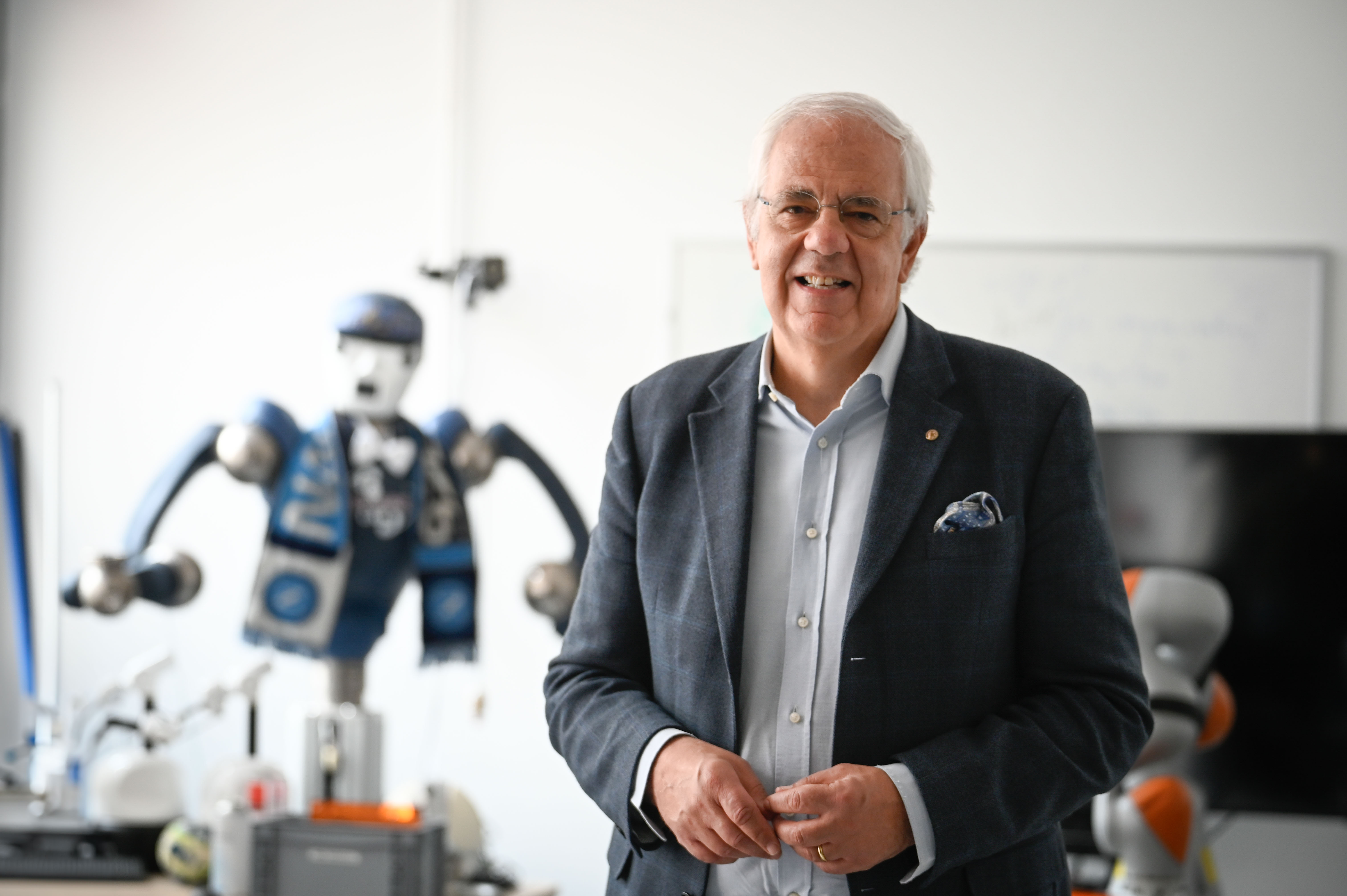
Prof. Bruno Siciliano is a full Professor of Automatics and Robotics at the University of Naples Federico II's Department of Electrical Engineering and Information Technology (DIETI). He directs the PRISMA Lab and chairs the Scientific Council of the ICAROS Center. His research focuses on robotics, automation, and human-robot interaction, with notable contributions to medical robotics, deformable object manipulation, and AI integration. He has received prestigious awards such as the 2024 IEEE RAS Pioneer Award and is a Fellow of multiple international organizations. Affiliations: Director, PRISMA Lab Chair, ICAROS Center Scientific Council Member, ACN Technical-Scientific Committee Research Interests: His work spans robotics education, surgical robotics, non-prehensile manipulation, and AI-driven robotic systems. Notably, his projects include the ERC-funded EndoTheranostics initiative for robotic colonoscopy and RoDyMan for dynamic manipulation. His contributions bridge robotics with healthcare, automation, and cognitive systems. Awards & Honors: 2024 IEEE RAS Pioneer in Robotics and Automation Award Genio Award (2024) for pioneering Italian robotics Fellowships: IFAC, IEEE RAS, and international AI associations Grants & Leadership: ERC Synergy Grant (2023, 10M€) and Advanced Grant (2013) Leadership roles in IEEE RAS and international robotics initiatives Labs & Teams: PRISMA Lab focuses on robotics paradigms like design, knowledge, and human-robot interaction, with projects in medical robotics and autonomous systems.