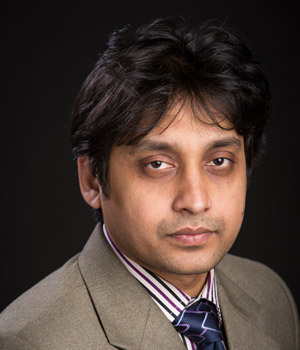
Dr. Tafsir Matin Johansson is an Assistant Professor (Research/Ocean Sustainability, Governance & Management) at the WMU-Sasakawa Global Ocean Institute. He holds a PhD in Maritime Affairs from WMU, an MSc in International Maritime Law from Lund University, and an LL.B. (Honours) from the University of Chittagong. His interdisciplinary research focuses on ocean governance, techno-regulatory frameworks for robotics, Arctic policy, IUU fishing, marine debris, and gender equality in ocean science. Recent work examines climate adaptation in shipping, remote inspection technologies, and sustainable port management. Dr. Johansson has led projects funded by Transport Canada, the European Union, and Swedish/Danish agencies, addressing oil spill response, underwater noise, and autonomous systems. His publications frequently analyze regulatory innovation for emerging technologies and crisis management strategies in maritime operations.
Giovanni Indiveri is an Associate Professor at the Department of Computer Science, Bioengineering, Robotics, and Systems Engineering (DIBRIS) under the Polytechnic School of the University of Genova . He serves as the Director of the Interuniversity Research Center for Integrated Systems for the Marine Environment (ISME) and is a member of the Technical-Scientific Committee of the University's Strategic Center for Marine Engineering. His work bridges theoretical and applied research in maritime autonomous systems. Research interests focus on Robotics , Control Systems , and Autonomous Vehicles , particularly for marine environments. His contributions include motion planning algorithms, cooperative system design, and navigation optimization for autonomous underwater and surface vehicles. This aligns with broader themes in Systems Engineering and Artificial Intelligence . Recent publications highlight advancements in multi-vehicle motion planning , dynamic scenario navigation , and cooperative autonomous systems . Keywords across his work include Robotics , Control Systems , and Marine Engineering , with subfields like Bearing-Only Tracking and Formation Control . Indiverii is involved in institutional leadership, directing ISME and advising on strategic marine research initiatives. He teaches courses such as Control of Multi-Variable Systems and Automatic Controls for Robotics and Computer Engineering programs. Office hours are available by email appointment.
Martijn Mes is a full professor of Transportation and Logistics Management and chair of the Industrial Engineering & Business Information Systems section at the University of Twente, Netherlands. He leads research and education initiatives that integrate AI, simulation and optimisation into logistics and supply-chain innovation. Education: Ph.D. in Operations Research, University of Twente – 2008 M.Sc. in Applied Mathematics, University of Twente – 2002 Post-doctoral researcher, Princeton University, Dept. of Operations Research & Financial Engineering Research focus: Mes develops quantitative models and AI techniques for strategic, tactical and operational logistics challenges. His work spans three application pillars: Emergency & humanitarian logistics – rapid relief distribution with trucks and UAVs Urban logistics – city distribution, self-organising systems and last-mile innovations Sustainable logistics – synchromodal transport, green ports and electric/autonomous fleets Methodologically he combines approximate dynamic programming, reinforcement learning, multi-agent simulation, discrete-event simulation and stochastic optimisation to create decision-support tools for industry and government. Publications trend: Recent articles (2025-2022) exhibit a strong emphasis on integrating reinforcement learning and stochastic optimisation into dynamic vehicle routing, drone-assisted delivery and post-disaster inventory allocation, signalling a shift towards data-driven, real-time logistic systems. Grants & projects: Mes has coordinated and participated in numerous national and European projects on sustainable logistics, urban distribution, port optimisation and healthcare logistics, frequently collaborating with industry partners and public bodies. Teaching & supervision: He coordinates and lectures in the BSc and MSc programmes Industrial Engineering & Management, offering courses on simulation, queueing theory, dynamic programming, Markov chains, transportation management and technology management. He has authored a widely used Plant Simulation tutorial and supervises PhD candidates working on AI-driven logistics, autonomous vehicles and digital twins.
Annette Stahl is a Professor at the Department of Engineering Cybernetics, NTNU, and an Onsager Fellow. She leads the Robot Vision Group and oversees the AILARON project, funded by the Research Council of Norway. Her expertise spans robotic vision, control theory, and autonomous systems. She holds a PhD in Applied Mathematics (Computer Vision) from Heidelberg University. Her research focuses on underwater robotics, autonomous vehicles, and aquaculture monitoring, with applications in fish health analysis and marine environmental sensing. Stahl has supervised numerous PhD and master’s students, including projects on autonomous ships (SFI AutoShip), underwater SLAM (AROS), and plankton identification. She collaborates with industry partners like Zebop AS and SINTEF Ocean. Notable projects include the robotic microplankton sniffer-dog and AI-driven fish welfare monitoring. Her work is published in top journals/conferences like IEEE Access and MIC Journal. She actively contributes to datasets like the VAROS Synthetic Underwater Data Set.
Tobias Neiß-Theuerkauff, M.Sc., is a researcher at the Institute for Applied Photogrammetry and Geoinformatics (IAPG) within Jade University of Applied Sciences, Oldenburg. His work centers on optical 3D metrology applications in surgical assistance and maritime systems, currently contributing to the ASKAR3D project (2023-2026) funded by the Federal Ministry of Education and Research for developing augmented reality-guided knee arthroplasty systems. His research integrates computer vision, photogrammetry, and AI to solve practical challenges in medical imaging and maritime engineering. Recent publications demonstrate a focused shift toward surgical applications, developing AI-driven 3D bone reconstruction and semantic segmentation techniques for knee arthroplasty, while maintaining expertise in maritime 3D visualization established through earlier work on vehicle simulation and autonomous systems. Supported by significant grants including ASKAR3D and CoSAIR (Collaborative Spatial Artificial Intelligence in Realtime), his project portfolio reflects strong federal funding recognition. He has co-supervised Master's research in Geodesy and Geoinformatics, specifically guiding thesis work on point cloud triangulation for Unreal Engine visualization in 2019. As a core member of IAPG's Laboratory for optical 3D metrology, Neiß-Theuerkauff collaborates with leading researchers including Prof. Dr. Frank Wallhoff and Prof. Dr. Thomas Luhmann, bridging theoretical computer vision with clinical and maritime implementations through interdisciplinary teamwork.
Nick Bassiliades is a Professor at the School of Informatics , Aristotle University of Thessaloniki , Greece. His academic roles include serving as President of the Digital Governance Committee and the Digital Transformation of Greek Universities Committee, as well as Director of the Web, Data, and Knowledge Engineering Sector. Education: B.Sc. in Physics, Aristotle University of Thessaloniki (1991) M.Sc. in Applied Artificial Intelligence, University of Aberdeen (1992) Ph.D. in Parallel Knowledge Base Systems, Aristotle University of Thessaloniki (1998) His research focuses on Semantic Web , Ontologies , Knowledge Graphs , and applications in Artificial Intelligence , eGovernment , and Intelligent Agents . Recent publications emphasize ontological frameworks for requirements engineering, explainable AI, and electric vehicle knowledge graphs. He actively contributes to scientific communities as a Senior Member of IEEE and ACM , and serves as Co-Editor-in-Chief for the International Journal of Artificial Intelligence in Business and Management . His work involves collaborations with the Intelligent Systems laboratory and projects like XR4DRAMA for disaster management.
Dr. Paulo Santos is a Senior Lecturer at Flinders University's College of Science and Engineering, specializing in Artificial Intelligence with a focus on explainable AI systems. He holds a PhD from Imperial College London (2003) and has over 20 years of research experience in spatial reasoning, machine learning, and robotics. His work bridges knowledge representation with deep learning to enhance transparency in AI decision-making. Dr. Santos has led research groups in Brazil, collaborated internationally, and secured funding from organizations like the British Council and EU. His expertise spans robotics, computer vision, and cognitive science. Notable achievements include the British Computer Science Machine Intelligence Prize (2004) and the Santander Prize for Science and Innovation (2006). Research interests include reinforcement learning for autonomous underwater vehicles (AUVs), scene graph generation in computer vision, and spatial reasoning for multi-robot systems. Recent work emphasizes sim-to-real transfer learning and fault recovery in underwater robotics.
Rian Mehta is an Associate Professor and Associate/Assistant Dean within the College of Aeronautics at Florida Institute of Technology. With a focus on aviation research, he has contributed to areas such as airport operations, Safety Management System (SMS) implementation, and future cockpit design. He is a commercial-rated pilot and has held roles including Assistant Managing Editor for the International Journal of Aviation Sciences . His work bridges academic research with practical aviation challenges, emphasizing human factors, passenger behavior, and automation acceptance in transportation systems. Dr. Mehta’s research spans topics like flight instructor safety behaviors, consumer trust in autonomous vehicles, and factors influencing pilot training success. He has published extensively on aviation safety, passenger perceptions of autonomous air taxis and driverless ambulances, and the psychological aspects of flight students. His studies often employ predictive modeling and mediation analysis to uncover relationships between variables such as risk perception, safety climate, and technology adoption. While no formal awards are listed, his contributions to aviation education and safety frameworks reflect impactful academic engagement. Dr. Mehta collaborates on interdisciplinary projects that address emerging trends in aviation and healthcare technology, including robotic dental services and mobile health app usability. His work underscores the importance of balancing technological innovation with human-centric design considerations.
Prof. Dr. Christof Büskens is a Professor of Technomathematics at the University of Bremen, leading the AG Optimierung und Optimale Steuerung (Optimization and Optimal Control Group) within the Faculty of Mathematics and Computer Science . His research focuses on Optimization, Optimal Control, and their applications in industrial and real-time systems. He holds leadership roles in interdisciplinary projects such as BESTVILLE and Safety Control Center for autonomous vehicle systems, and has contributed to maritime navigation, renewable energy management, and agricultural robotics. Büskens has supervised numerous PhD and master's students, advancing topics like autonomous exploration, neural architecture search, and trajectory optimization. His work integrates advanced numerical methods with practical applications, emphasizing real-world problem-solving in dynamic systems. Key affiliations include the ZeTeM (Center for Industrial Mathematics) and collaborations with industry partners. He has led over 20 projects since 2020, addressing challenges in autonomous systems, energy systems, and robotics. His educational contributions include courses on numerical analysis and optimal control, fostering interdisciplinary training for future researchers. Büskens' expertise bridges theoretical optimization and applied engineering, with over 100 publications and contributions to software tools like the WORHP solver.
Marel Katsivela is an Associate Professor at the University of Ottawa's Faculty of Law , specializing in comparative legal frameworks for maritime and contract law. She contributes to the Programme de Common Law en Français and focuses on intersections between civil law and common law in Canada. Key Research Areas: Maritime liability, autonomous vessels, force majeure doctrines, tort law comparisons, and regulatory compliance. Her scholarly work examines legal challenges in emerging technologies like unmanned maritime systems, with a particular emphasis on Canadian law and international standards. Publications address: Liability exceptions under Hague-Visby Rules Autonomous vessel regulatory frameworks Comparative analysis of tort defenses (volenti, assumption of risk) Maritime safety and security law Legal definitions of injury and fault Her recent articles highlight ethical concerns in maritime automation and industry adaptation to new technologies. While no specific awards or teaching roles are mentioned in this dataset, her work demonstrates sustained engagement with maritime and comparative law institutions.
Burak Berk Üstündağ is a Professor in the Department of Computer Engineering at the Faculty of Computer and Informatics, Istanbul Technical University (ITU). He has been a key academic figure at ITU since the 1990s, progressing through the ranks from Research Assistant to full Professor, a position he attained in 2019. He has also held significant administrative roles, including Director of the Application and Research Center and membership in the ITU Informatics Institute Management Board. PhD, Control and Computer Engineering, Istanbul Technical University (2000) MSc, Control and Computer Engineering, Istanbul Technical University (1994) BSc, Electrical Engineering, Istanbul Technical University (1991) His research is deeply rooted in Artificial Intelligence , with a focus on Neural Networks , Wavelet-based models , and machine learning applications in environmental, agricultural, and maritime domains. He has developed frameworks like PECNET for multivariate time series forecasting and has pioneered work in cognitive communication systems, particularly for underwater and agricultural monitoring. His work bridges theoretical AI models with real-world applications in precision agriculture, water quality monitoring, and ionospheric forecasting. The most recent articles show a strong trend in applying deep learning (LSTM, DNNs) and hybrid models (Wavelet-NN) to complex, real-time systems. His research spans environmental data science , smart agriculture , underwater acoustics , and cognitive risk management . He emphasizes performance, real-time operation, and intelligence quantification in AI systems. His scientific awards include: Outstanding Young Scientist of the Year (2004) Junior Chamber International - Year's Professional Award (2003) Yılın Meslek Ödülü (2002) Service Award from Air Force Academy (2000) Gelişimine Katkı Ödülü from ITU (1996) Prof. Üstündağ has actively supervised research and led multiple projects as Principal Investigator, including national and institutional grants in AI-driven software systems, social media robots, real-time cognitive risk management, and elderly support devices. He has advised students in AI, neural networks, and intelligent systems, though specific names are not listed. His lab activities are centered around the Software Development Laboratory and cognitive systems research under various funded projects.
Dr. Saulius Rudys is a Senior Researcher at the Institute of Applied Electrodynamics and Telecommunications (IAET) within Vilnius University, focusing on electromagnetic engineering and aerospace technology. His work bridges material science with UAV detection systems and radar innovation. Research Interests : Antenna design, dielectric spectroscopy, UAV radar systems, microwave material analysis Projects : Led multiple high-budget UAV detection projects including EU-funded initiatives His recent publications analyze electromagnetic properties of advanced materials and develop counter-UAV systems using marine radar and GNSS antenna arrays. Key themes include: Microwave characterization of ferroelectrics and ferrites UAV detection via FMCW radar Physical layer security for aviation systems Scientific awards highlight his impact in aerospace security: DLR Galileo Masters winner (2013, 2015, 2016) EU SatCom Challenge Prize (2021) Vilnius University Best Applied Work Award (2020) He has contributed to computational electromagnetic analysis and developed methods for dielectric measurements in coaxial lines and waveguides.
Thor I. Fossen is a Professor of Guidance, Navigation, and Control at the Norwegian University of Science and Technology (NTNU), Department of Engineering Cybernetics. He holds a PhD in Engineering Cybernetics and an MSc in Marine Technology. His research focuses on marine craft hydrodynamics, autonomous systems, inertial navigation, and cybersecurity of control systems. He is an IEEE Fellow and has authored influential textbooks such as the Handbook of Marine Craft Hydrodynamics and Motion Control . **Education**: PhD Eng. Cybernetics, MSc Marine Technology. **Research Interests**: Development of guidance, navigation, and control (GNC) systems for marine and aerial vehicles; cybersecurity for autonomous systems; inertial navigation algorithms; and robotics. Notable contributions include the Marine Systems Simulator (MSS), a widely used MATLAB/Simulink toolbox for vehicle control design. **Recent Trends in Publications**: Focus on autonomous surface/underwater vehicles, adaptive guidance laws, cyber-resilient navigation, and sensor fusion techniques. His work bridges theory and practice, with experimental validations on real systems. **Awards**: Automatica Prize Paper Award (2002), Arch T. Colwell Merit Paper Award (2008), IEEE Fellow (2020+). **Grants & Labs**: Co-founder of Marine Cybernetics AS and ScoutDI AS. Lead developer of MSS software. Active in collaborative projects involving dynamic positioning, wave filters, and cyber-physical systems security.
Mohammad Habib Rahman is the Richard and Joanne Grigg Professor and Chair of the Department of Mechanical Engineering at the University of Wisconsin-Milwaukee (UWM), within the College of Engineering & Applied Science. He also holds affiliate professorships in Computer Science and Biomedical Engineering. His research focuses on bio-robotics, rehabilitation robotics, intelligent control systems, and teleoperation technologies. He directs the Biorobotics Lab and has secured significant grants for projects like the 'smart robotic assistive arm.' Education: PhD in Engineering from École de technologie supérieure (2012), MEngg in Mechanical Engineering from Saga University (2005), and BSc from Khulna University of Engineering & Technology (2001). Research interests include wearable robots, exoskeletons, human-machine interfaces, and applications of IIoT and digital twins in healthcare. He has published extensively on topics like robotic exoskeleton control, rehabilitation systems, and adaptive algorithms. Key achievements include grants from NASA and the National Science Foundation, and recognitions like the Marquis Who's Who Excellence Award (2018) and Excellence in Mentoring (2019). Grants and Projects: $1.49M grant for robotic assistive arm development (2020), NASA-Wisconsin Space Grant Consortium funding (2019), and leadership in the UWM Digital Manufacturing Research Center. His work bridges robotics, control systems, and clinical applications, emphasizing assistive technologies for disabilities and telerehabilitation.
Roger Skjetne is a Professor in Marine Control Engineering at the Norwegian University of Science and Technology (NTNU), affiliated with the Department of Marine Technology under the Faculty of Engineering. His research focuses on autonomous ships, dynamic positioning systems, energy and power management for hybrid-electric vessels, Arctic stationkeeping, and ice management systems. He leads the SFI Autoship research center, which aims to advance autonomous ship technology for safe and sustainable operations in Arctic and maritime environments. Key projects include DigitalSeaIce (multiscale sea ice observation), ENDURE (safety solutions for autonomous ships), and ZEVS (zero-emission passenger vessel systems). His work integrates control systems, robotics, and environmental monitoring to address challenges in marine autonomy and energy efficiency. Skjetne’s research has produced over 150 publications since 2020, with a focus on hybrid control barrier functions, energy optimization, and autonomous navigation. He collaborates with industry partners to translate academic findings into practical maritime solutions.