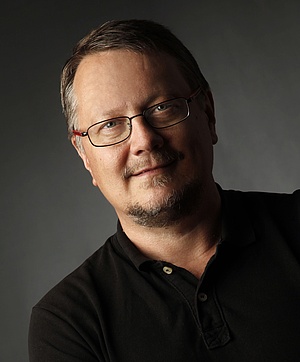
Dominik Schörkhuber is a PreDoc Researcher at the Vienna University of Technology (TU Wien) in the Computer Vision department. With a background in Informatics (BSc, Dipl.-Ing.), he focuses on computer vision applications for autonomous driving, robotics, and human-machine interaction. His work spans driver action recognition, pedestrian prediction, and adaptive lighting systems. Current projects: Empathic Vehicle (2024–2026), SyntheticCabin (2021–2025), SmartProtect (2020–2025) Research themes: Video transformers, synthetic data transfer learning, multi-task learning, and sensor-lighting integration Specializes in 3D sensing, nighttime driving analysis, and mobile video creation tools
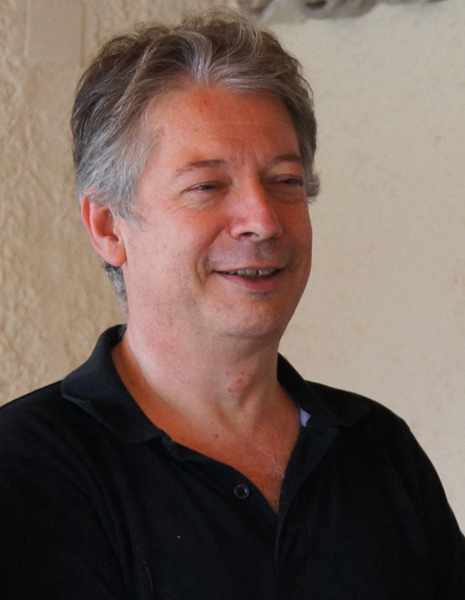
Harold Snieder is a Professor of Genetic Epidemiology at the University Medical Center Groningen (UMCG), The Netherlands, leading the Unit of Genetic Epidemiology and Bioinformatics. Previously, he held roles including Visiting Professor at the Estonian Genome Center (2012–2015) and Full Professor of Pediatrics at the Medical College of Georgia (2005–2006). He earned his MSc from the Vrije Universiteit Amsterdam and PhD from the same institution, with postdoctoral work in London and Augusta. His research focuses on genetic and epigenetic factors influencing cardiovascular diseases, diabetes, kidney function, and mental health, employing twin studies and large cohort analyses. Key achievements include landmark studies on epigenetic markers in type 2 diabetes, genetic contributions to rheumatoid arthritis, and heritability of menopause age. His work has been funded by NIH, EU, and others, yielding over 350 peer-reviewed articles. Awards include the David Fulker Award (2002) and recognition for student mentorship, such as the Allianz European Demography Award (2017) for Felix Tropf’s thesis. Research trends emphasize epigenetic epidemiology, twin studies, and genetic-environmental interactions. His lab, the Unit of Genetic Epidemiology and Bioinformatics, drives interdisciplinary projects in public health and translational sciences. Ongoing efforts explore cardiometabolic diseases, renal biomarkers, and the genetic basis of blood pressure variability.
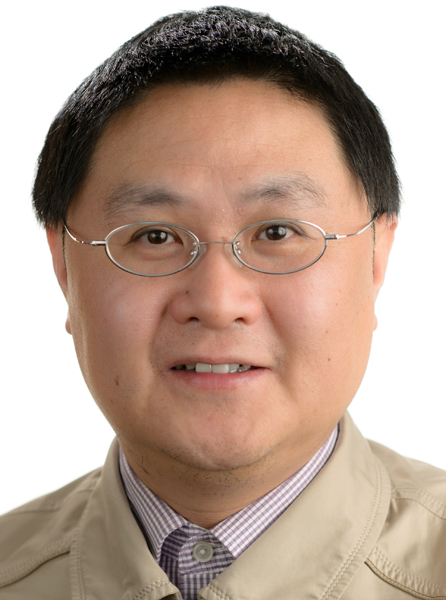
Professor Dong Xu is a Tenured Professor in the Department of Computer Science at the University of Hong Kong (HKU), part of the School of Computing and Data Science. He holds a B.Eng. and Ph.D. from the University of Science and Technology of China (USTC). His career includes tenured roles at Nanyang Technological University and the University of Sydney, alongside postdoctoral research at Columbia University. His research focuses on Artificial Intelligence, Computer Vision, Multimedia, and Machine Learning , with applications in autonomous driving, AR/VR, medical image analysis, and video surveillance. Xu has authored over 150 papers in top journals and conferences, including CVPR, ICCV, and IEEE Transactions. He actively contributes to the academic community as an editorial board member for journals like ACM Computing Surveys and IEEE Transactions, and through leadership roles in conferences such as ACM Multimedia and ICME. Notable awards include Fellowships from IEEE and IAPR, and the IEEE Signal Processing Society Distinguished Lecturer title (2021–2022). Education: B.Eng. (USTC, 2001), Ph.D. (USTC, 2005) Professional Service: Program Coordinator of ACM Multimedia 2024, Guest Editor of over ten special issues.
Martin Steinberger is an Associate Professor at the Institute of Control and Automation (IRT) at Graz University of Technology (TU Graz). His work focuses on advanced control systems, networked control, model predictive control (MPC), and automation in manufacturing and autonomous systems. He leads research into real-time optimization, fault diagnosis, and safety-critical applications in industries like pharmaceuticals and automotive. Research interests include: Networked Control Systems Model-Based Control Autonomous Vehicle Trajectory Planning Process Automation Robotics and Industrial Automation His work bridges theoretical control engineering with practical applications in manufacturing lines, chemical processes, and autonomous driving. Recent studies emphasize digital real-time release testing for pharmaceuticals, universal control concepts for manufacturing systems, and safety-aware trajectory optimization for automated vehicles. His publications frequently address challenges in time-varying delays, packet loss mitigation, and robust observer design for nonlinear systems. Steinberger collaborates on EU-funded projects and regularly contributes to conferences like the International Workshop on Variable Structure Systems. His research often involves experimental validation, as seen in work with compact pharmaceutical manufacturing setups and small-scale autonomous vehicle testing platforms.
University of Applied Sciences Technikum WienAustria
Prof. Wilfried Kubinger serves as the Head of the Department of Electronic Engineering at the University of Applied Sciences Technikum Wien, Austria. He holds a PhD in Technical Sciences from the Technical University of Vienna (1999) and has extensive experience in research and industry. His academic roles include leading the 'Automation & Sensor Technology' competence field and managing the 'Automation & Robotics' research area. **Research Focus:** His work centers on embedded systems, machine vision, autonomous robotics, and real-time control systems. Notable projects include obstacle detection for autonomous vehicles, stereo vision algorithms, and agricultural robotics applications. He actively contributes to IEEE and OVE engineering associations. **Professional Journey:** Prior to academia, he worked at Siemens Austria (2000–2003) as a software developer and project manager, and at AIT Austrian Institute of Technology (2003–2010) managing research projects in autonomous systems. He participated in DARPA Grand Challenge/Urban Challenge as a principal scientist for vision-based obstacle detection. **Publications:** His research spans embedded vision systems, FPGA implementations, and autonomous vehicle technologies. Recent work emphasizes agricultural robotics and Industry 4.0 applications. He also leads R&D project acquisition and implementation for Technikum Wien.
Franz Wotawa is a Professor of Software Engineering at Graz University of Technology. He holds a M.Sc. (1994) and PhD (1996) from Vienna University of Technology. He has served as head of the Institute for Software Technology from 2003–2009 and since 2020. His research focuses on model-based reasoning, software testing, autonomous systems, and diagnosis, with over 390 peer-reviewed publications. He founded Softnet Austria (2006) to bridge research and industry. He leads the Christian Doppler Laboratory for Quality Assurance Methodologies for Autonomous Cyber-Physical Systems since 2017 and has supervised 90+ master and 36+ PhD students. His awards include the 2016 Lifetime Achievement Award from the International Diagnosis Community. He is a member of Academia Europaea, IEEE, and AAAI. **Education**: M.Sc. in Computer Science, Vienna University of Technology, 1994 PhD, Vienna University of Technology, 1996 **Research Interests**: Model-based reasoning, qualitative reasoning, theorem proving, mobile robotics, verification/validation, software testing/debugging, AI, and autonomous systems. **Notable Projects**: A-IQ Ready (2022–2026): Quantum sensing for autonomous systems. ALFA (2024–2027): AI for smart diagnosis in building automation. Bilateral AI (2024–2029): Combining symbolic and sub-symbolic AI. VARCOS (2025–2028): Vehicle-road cooperative systems for autonomous driving. **Awards & Memberships**: Lifetime Achievement Award (2016, International Diagnosis Community) Senior Member, AAAI Member of Academia Europaea, IEEE, ACM, and Austrian Computer Society **Labs/Teams**: Christian Doppler Laboratory for Quality Assurance Methodologies (since 2017). Active in Cluster of Excellence “Bilateral AI” at TU Graz.
University of Natural Resources and Life Sciences ViennaAustria
Karl Stampfer is a Professor of Forest Engineering at the Institute of Forest Engineering within the Department of Ecosystem Management, Climate and Biodiversity at the University of Natural Resources and Life Sciences, Vienna (BOKU). Appointed in 2012, he leads research on digital transformation in forestry operations with emphasis on work safety, steep-terrain harvesting, and climate-resilient infrastructure. His work bridges engineering practice and academic innovation through the Forest Demonstration Centre. His academic credentials include a Diploma (1991), Doctoral degree (1996), and Habilitation (2002), all from BOKU. Career progression shows continuous engagement: University assistant at the Institute of Forest Engineering from 1993, culminating in his full professorship. Stampfer's research focuses on Forest Engineering with three core pillars: (1) Timber harvesting system optimization for steep terrain using winch-assisted and cable yarding technologies, (2) Work safety through UWB sensors and causal accident modeling, and (3) Digitalization via laser scanning (TLS/ALS) for forest inventory, road monitoring, and digital twin development. His work integrates sustainable resource management with practical industry applications. Analysis of his 78 publications reveals a strong 2022-2024 trend: digital tools dominate 65% of outputs, particularly LiDAR for danger zone monitoring and climate adaptation. Safety research comprises 25%, with accident counterfactuals and ergonomic analysis. The remaining 10% addresses biomass logistics and road engineering, reflecting his multidisciplinary approach to European mountain forestry challenges. Scientific recognition includes: Promotion Award of the Foundation '120 Years of University of Natural Resources and Life Sciences, Vienna' (2002) Schrödinger Fellowship at ETH Zurich's Professorship for Forest Engineering (1997) Promotion Award of the Austrian Society for Occupational Medicine (1996) He has supervised numerous theses with no publicly listed advisees. Grant activity centers on externally funded research reports (e.g., SafeForests, LaDiWaldi) despite zero ongoing projects shown. Collaborations with AUVA, Land Kärnten, and international consortia like IUFRO drive his practical knowledge transfer to forest associations and policymakers. Stampfer operates within BOKU's Forest Demonstration Centre and co-leads the HCAI-Lab with Andreas Holzinger. His team specializes in field validation of digital tools, including the Seilgerätesimulator (VR training) and UWB danger zone monitors. Current work targets autonomous harvesting systems and AI explainability for accident prevention, as evidenced by 2025 presentations at FORMEC and Woodmaster events.
Radu Grosu is a Professor at Technische Universität Wien (TU Wien), leading the Forschungsbereich Cyber-Physical Systems . His research focuses on Cyber-Physical Systems (CPS), Machine Learning, and autonomous robotics, with notable contributions to neural network architectures like Liquid Time-Constant Networks (LTC) and their applications in robotics and medical imaging. He is affiliated with the Network Lab and has supervised numerous PhD and Master's students, including Sebastian Michael Bittner, Daniel Scheuchenstuhl, and Sophie Neubauer. His work spans topics such as reinforcement learning, autonomous driving, and IoT ecosystems. Recent projects include developing robust AI systems for healthcare and robotics, such as tumor delineation using PET imaging and neuromorphic IoT architectures for smart villages. Grosu has published extensively on CPS, with over 146 contributions across peer-reviewed journals and conferences. His research emphasizes bridging theory and practice, addressing challenges in safety, scalability, and real-time control in autonomous systems. Key research interests include robotic perception, neural network robustness, and CPS/IoT integration. He has pioneered methods like DeepSTL for translating temporal logic requirements into neural network training objectives and developed frameworks like NimbleAI for neuromorphic sensing-processing systems. His team also explores distributed control algorithms for multi-agent systems, such as flocking drones and formation control using relative distance measurements. Recent work examines the generalization properties of deep filters in CNNs and quantum-classical reinforcement learning models for game AI. Grosu has advised over 20 students on topics ranging from deep learning in wafer defect analysis to bio-inspired neural circuits for auditable autonomy. His lab collaborates on interdisciplinary projects, such as applying AI to battery health estimation and prostate cancer diagnostics. He actively contributes to academic communities, editing special issues on AI in healthcare and CPS resilience, and has organized summer schools on CPS and IoT systems.
Vienna University of Economics and BusinessAustria
Dr. Clemens Schuhmayer is a lecturer at the University of Applied Sciences bfi Vienna's Logistics and Transport Management program since 2007. He also serves as a management consultant specializing in logistics and supply chain management across Europe, with expertise in consulting and logistics planning projects for industry, trade, and services sectors. Education: Matura in Mechanical and Industrial Engineering (1992) from TGM Vienna Diploma in Business Administration (1999) from Vienna University of Economics and Business Doctorate (2003) from Vienna University of Economics and Business His research focuses on urban mobility innovations, particularly self-driving car integration, and transport economics. He has contributed to conferences on business innovation and participated in scientific lectures about autonomous transportation systems. Key professional roles include: Consultant and Partner at TSM Logistik Beratung GmbH (1999-2003), Division Manager at Liebherr Transportation-Systems GmbH (2003-2005), and Senior Consultant at Roland Berger Strategy Consultants GmbH (2005-2006).
Sergei Kalinin is the Weston Fulton Professor at the Department of Materials Science and Engineering, University of Tennessee, Knoxville, and holds a Corporate Fellow position at Oak Ridge National Laboratory (ORNL). His academic affiliations include adjunct professorships at Sung Kyun Kwan University (South Korea) and Penn State University. He earned his M.S. summa cum laude from Moscow State University (1998) and Ph.D. from the University of Pennsylvania (2002), both in Materials Science. Kalinin's research focuses on transformative applications of machine learning and AI in materials science, particularly in: Atom-by-atom fabrication using electron beams Big data analytics in scanning probe/transmission electron microscopy Nanoscale electromechanical phenomena in functional oxides Development of novel microscopy techniques and autonomous experimentation frameworks His recent publications (2024-2025) demonstrate strong emphasis on AI-driven microscopy, autonomous labs, and computational materials design. Over 85% of his last 15 articles involve machine learning applications in experimental physics, with emerging focus on human-AI collaboration and real-time instrumentation control. Major scientific honors include: Blavatnik National Award (2018) Feynman Prize in Nanotechnology (2022) Presidential Early Career Award (2009) 4 R&D100 Awards (2008-2023) Fellowships in APS, MRS, IEEE, AVS He directs the ORNL Institute for Functional Imaging of Materials and leads research on autonomous experimentation systems integrating high-performance computing with microscopy platforms.
Michael Hofbaur is a full Professor at the University of Klagenfurt, where he works in the Institute for Intelligent Systems Technologies within the Faculty of Technical Sciences. His office is located at Lakesidepark Haus B04, Ebene 2, Raum B04.2.206, and he can be contacted at michael.hofbaur@aau.at. Professor Hofbaur has established himself as a leading researcher in robotics with particular expertise in human-robot collaboration, safety systems, and formal verification methods for robotic applications. His research interests focus on the intersection of robotics, safety engineering, and human factors. Professor Hofbaur has made significant contributions to the field of robot safety, particularly in developing methods for safe human-robot collaboration without physical barriers. His work spans multiple dimensions of robotics including kinematic analysis, motion planning, sensor integration, and formal verification techniques to ensure system reliability. He has published extensively on topics such as obstacle avoidance strategies, proximity perception systems, and methods to enhance flexibility in collaborative workspaces while maintaining safety standards. Analysis of his recent publications reveals a clear trend toward integrating formal verification methods with practical robotics applications, particularly focusing on safety-critical aspects of human-robot interaction. His research increasingly incorporates advanced sensing technologies like radar and capacitive proximity sensors to create more intelligent and responsive robotic systems. The work demonstrates a progression from theoretical kinematic analyses toward practical implementations in industrial and collaborative settings, with a consistent emphasis on safety assurance throughout. Professor Hofbaur's research portfolio includes numerous projects related to robotic safety, formal verification, and human-robot collaboration, though specific awards directly attributed to him are not listed in the available materials. His work appears to have significant practical applications in industrial automation and collaborative robotics settings. While specific information about his students and advising activities isn't provided in the available materials, his extensive publication record spanning over two decades suggests he has likely supervised numerous graduate students and postdoctoral researchers. His research activities indicate involvement in both theoretical and applied projects, potentially including collaborations with industry partners given the practical nature of many of his publications. Based on his departmental affiliation and research focus, Professor Hofbaur is likely associated with robotics laboratories at the University of Klagenfurt that specialize in human-robot interaction, safety systems, and formal verification of robotic workflows. These facilities likely include experimental setups for testing collaborative robots, sensor integration systems, and simulation environments for verifying robotic behaviors before physical implementation.
Cansu Demir is a Researcher at the University of Salzburg within the Artificial Intelligence and Human Interfaces department. She holds a Dr. technical and M.Sc. in Human-Computer Interaction alongside a B.Sc. in Computer Science, with research centered on human-AI interaction in automated vehicles and emergency response systems. Education Dr. technical in Human-Computer Interaction M.Sc. in Human-Computer Interaction B.Sc. in Computer Science Her work investigates trust dynamics in autonomous systems, mode awareness transitions via ambient interfaces, and empathic communication to mitigate bystander effects in accidents. She designs and evaluates in-vehicle agents that enhance driver-vehicle collaboration through innovative sensory feedback mechanisms. Recent publications (2021-2024) reveal consistent focus on automotive human factors, with growing emphasis on empathic AI for crisis scenarios and SAE Level 5 autonomy challenges. Her research bridges theoretical HCI frameworks with real-world vehicle interface implementations. Scientific Awards Best paper award in AUI'21 (2021) Exclusive Salzburg AG Scholarship (2022) Performance Scholarship for Master’s excellence (2023) Marie Andeßner Prize for Master's Thesis (2024) World EXPO 2025 Travel Grant (2025) As a core contributor to the EXDIGIT project (2022-2028), she secures interdisciplinary funding while mentoring junior researchers. Her grant portfolio emphasizes European collaborative frameworks for digital innovation. She operates within Salzburg’s AI and Human Interfaces research cluster, collaborating with international teams across the EXDIGIT consortium on long-term automated vehicle studies.
Olga Saukh is an Associate Professor at TU Graz's Institute of Computer Engineering, leading the Embedded Learning and Sensing Systems (ELSS) group. Her research focuses on resource-efficient AI, on-device learning, and robust sensing systems for IoT and environmental monitoring applications. She holds a Dr.rer.nat. and MSc in Computer Science, with expertise in embedded systems and wireless sensor networks. Her work integrates machine learning with hardware constraints, addressing challenges in energy efficiency, real-time adaptation, and adversarial robustness. Notable projects include PCDCNet for air quality forecasting and SensorFormer for sensor calibration. She has contributed to OpenSense Zurich's air pollution monitoring and automated pollen sensing systems. Her research spans over 50 publications since 2006, emphasizing practical deployments in structural health monitoring, smart agriculture, and urban environmental sensing. She leads interdisciplinary projects combining AI, embedded hardware, and data-driven decision-making.
Axel Brunnbauer is a PreDoc Researcher at the Vienna University of Technology (TU Wien), affiliated with the Institute of Computer Engineering (E191-01) under the Faculty of Informatics. His research focuses on Reinforcement Learning, Autonomous Systems, and Cyber-Physical Systems with applications in robotics and control theory. Brunnbauer holds a BSc and Dipl.-Ing. in Informatics from TU Wien. He is currently on leave from active duties but continues academic contributions. His work bridges formal methods with practical robotics applications, emphasizing safe autonomy and multi-agent systems. Key research interests include model-based reinforcement learning, zero-shot transfer in autonomous racing, and scenario-based curriculum learning for autonomous driving. He has published at IEEE ICRA and developed frameworks for STL-based reward shaping in robotics. Teaching activities include the course 'Operating Systems' (2024W) at TU Wien. His technical expertise spans formal verification, distributed control systems, and sensor data processing for embedded systems.
Daniel Recasens is a Full Professor in the Department of Catalan Philology at the Autonomous University of Barcelona since 1995 and Director of the Phonetics Laboratory at the Institut d’Estudis Catalans in Barcelona since 1990. His academic career spans roles as Professor (Profesor Titular) at the same department (1987-1994), Assistant Professor at Yale University (1981) and University of Connecticut (1979-1980), and Research Assistant at Haskins Laboratories (1980-1984). His educational background includes dual doctoral degrees: Ph.D. in Linguistics from the University of Connecticut (1983) and Ph.D. in Romance Philology from the University of Barcelona (1984). Recasens's research centers on Sound change , Dialectology , Historical linguistics , and Experimental phonetics and phonology , with emphasis on Romance languages and Catalan. His work integrates theoretical frameworks with empirical methods to analyze phonetic-phonological processes across diachronic and synchronic dimensions. His accolades include: ICREA Academia Awardee by the Catalan Institution for Research and Advanced Studies (2012-2017) Postdoctoral fellowship from the Hispanic North American Joint Committee (1988-1989) Fulbright-Hays doctoral fellowship (1978-1979) As Principal Investigator for nine Spanish Government-funded projects on experimental phonetics and sound change since 1989, Coordinator of the Generalitat-funded 'Experimental Phonetics Group' since 1994, and Spanish partner in European ESPRIT projects, he has authored 9 books, 70 high-impact journal papers, and 16 book chapters while co-editing 5 volumes and reviewing 150+ journal submissions. His leadership includes Presidency of the 15th International Congress of Phonetic Sciences (2003), Vice Presidency of the International Phonetic Association (2007-2011), editorial board membership for Phonetica and Journal of the International Phonetic Association since 2004, and organization of five international workshops. He directs the Phonetics Laboratory at the Institut d’Estudis Catalans, driving experimental research in speech production and perception through cross-linguistic collaborations.