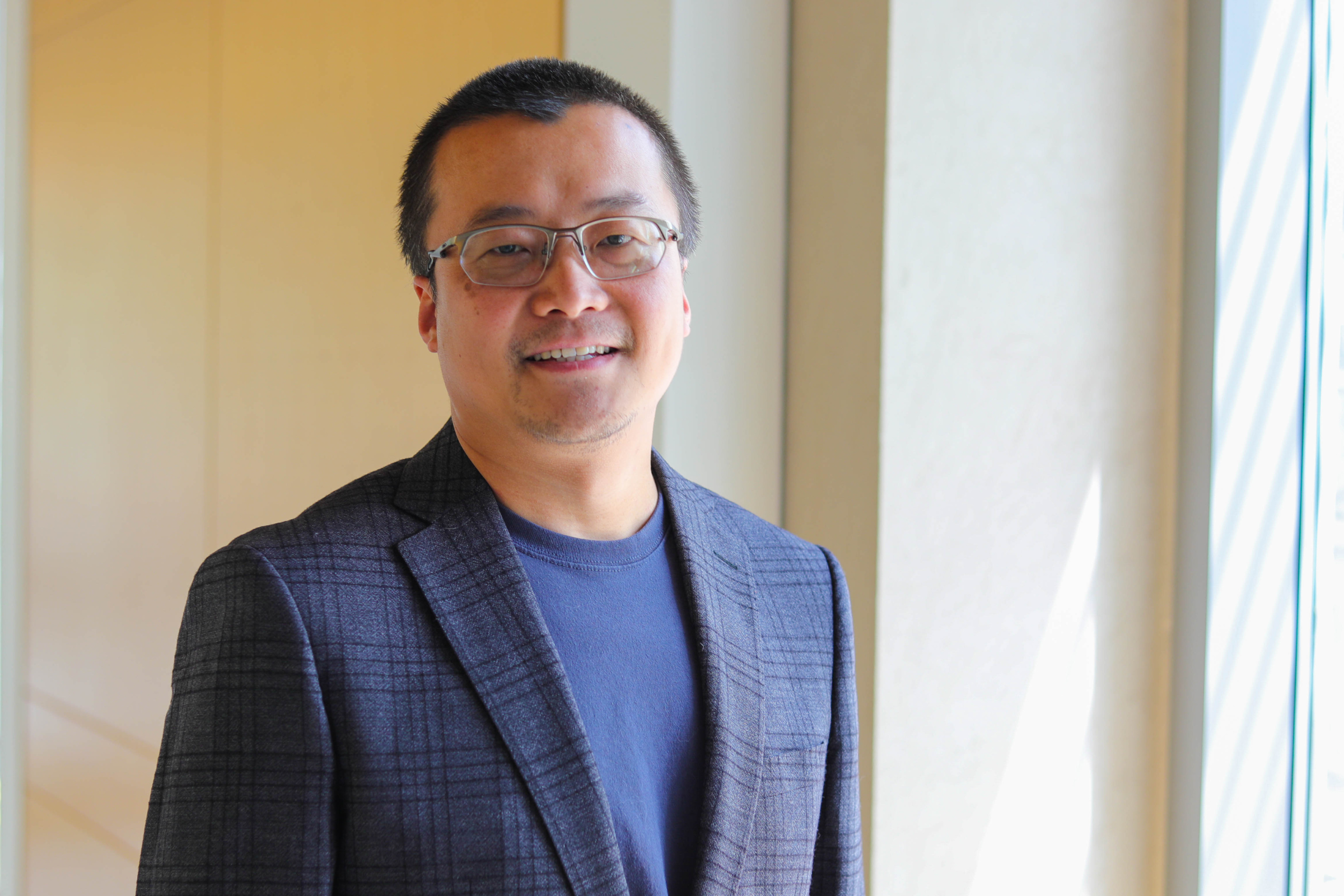
Le Hai Vu is a Professor in the Department of Civil & Environmental Engineering at Monash University, leading research in Intelligent Transport Systems (ITS). He holds an ARC Future Fellowship (2012-2016) and received the ITS Australia National Research Award (2019). Previously, he led the ITS Lab at Swinburne University and the University of Melbourne. His work focuses on autonomous vehicles, traffic systems optimization, and sustainable urban mobility. Affiliations: Monash University (2016–present), University of Melbourne (2011–2016), Swinburne University (2000–2011) Key projects: Building 4.0 CRC, SPARC Hub for Smart Transport Pavements, Sustainable City Size Research Research interests include autonomous vehicle impacts, traffic signal control, bikeability assessment, and multimodal transport integration. Over 200 publications and 17 research projects highlight his expertise in bridging AI and transportation systems. He actively supervises PhD students and collaborates globally on urban infrastructure challenges.
Daniel Ortiz Arroyo is an Associate Professor at Aalborg University's Faculty of Engineering and Science, affiliated with the Intelligent Energy Systems and Flexible Markets department. His research focuses on AI-driven solutions for energy systems, wastewater treatment optimization, robotics, and deep learning applications in industrial systems. He leads and collaborates on projects such as AITEKS (AI for Tech Support), OPTIMIZE (Deep Reinforcement Learning in Fermentation), and amphibious drone development for infrastructure inspection. Key research areas include reinforcement learning for environmental control systems, synthetic data generation for defect detection, and predictive modeling in wastewater treatment. His work integrates machine learning with physical systems to enhance efficiency and sustainability. Notable contributions include grey-box models for N₂O dynamics and amphibious quad-rotor designs for pipeline inspection. Dr. Arroyo has contributed to over 97 publications, including peer-reviewed journal articles and conference proceedings, focusing on AI applications in energy, environment, and robotics. He actively participates in editorial peer review for journals like Evolutionary Intelligence and CRC Press . His projects involve collaborations with industry partners like Novo Nordisk Foundation and Innovation Fund Denmark, addressing challenges in microbial fermentation, fiber rope inspection, and wind turbine maintenance. He maintains a strong emphasis on data-driven innovation and interdisciplinary research.
Anna Lashkay is a researcher at the Department of Psychology, University of Limerick. Her work focuses on trauma psychology, collective resilience, and social identity dynamics in stigmatized contexts. Institution: University of Limerick Department: Psychology Research Interests: Anna specializes in understanding how individuals and communities respond to adverse childhood experiences (ACEs), political violence, and social stigma. Her research explores: Psychological disidentification and dissociation mechanisms Collective resilience in post-conflict societies Health biomarkers linked to trauma responses Stigmatization's impact on trauma recovery Applications of social identity theory in trauma contexts Article Trends: Her publications (2023-2025) reveal a trajectory from individual trauma responses to broader societal resilience patterns. Key themes include integrating physiological data with social psychology frameworks and addressing secondary trauma in community settings. Collaborations: Anna collaborates internationally, with co-authors from diverse institutions. Her work spans theoretical analysis and empirical studies, particularly focusing on Ireland-specific trauma contexts. Contact: Anna.Lashkay@ul.ie
Jeff Trombly is a Clinical Assistant Professor of Supply Chain Management at the University of Tennessee, Knoxville’s Haslam College of Business. He joined the faculty in August 2021 after a career as a transportation analyst, planner, and researcher in public and private sectors. Previously, he served as an adjunct faculty member in the Department of Civil and Environmental Engineering and Haslam College of Business. His expertise spans logistics planning, supply chain network design, and advanced transportation technologies. Education: Trombly holds a Ph.D. and M.S. in Civil Engineering and Urban and Regional Planning from the University of Tennessee, Knoxville, and a B.A. in Geography from the State University of New York College at Plattsburgh. Research Interests: Trombly focuses on logistics operations and management, connected and autonomous vehicle applications, network modeling and design, and transportation management. His work bridges theoretical models with practical applications in transportation infrastructure and supply chain optimization. Grants & Advising: While no specific grants or advisees are listed, his extensive publications reflect contributions to transportation systems, ITS deployment, and policy. His research has addressed topics like transit bus simulators, highway safety tools, and truck parking solutions. Labs/Teams: No lab affiliations are explicitly mentioned, but his collaborative projects likely involve interdisciplinary teams in transportation and supply chain fields.
Franco Zambonelli is a Full Professor of Computer Science at the University of Modena and Reggio Emilia since 2010, with prior roles as Associate Professor (2001–2010) and Researcher (1997–2001). He holds a Laurea in Electronic Engineering (1992) and a PhD in Computer Science (1997), both from the University of Bologna. Research Interests: Focus on distributed and pervasive computing, self-organizing systems, autonomic computing, multiagent systems, and IoT applications in smart cities and healthcare. His work emphasizes agent-oriented software engineering, coordination models for distributed systems, and adaptive service ecosystems. Editorial Roles: Co-Editor-in-Chief of ACM Transactions on Autonomous and Adaptive Systems, and editorial board member of journals like Pervasive and Mobile Computing and Journal of Agent-Oriented Software Engineering. Awards: IEEE Fellow (2013), ACM Senior Member (2009), multiple best paper awards including IEEE SAINT (2001) and CBRM Cybernetics (2004). Grants & Projects: Coordinated EU FP7 Project SAPERE (2010–2013) and led FP6 Project CASCADAS (2006–2008). Currently involved in PRIN 2017 Fluidware (2019–2022) and H2020 CONNECARE (2016–2019). Labs: Agents and Pervasive Computing Lab (agentgroup.unimore.it).
Matthew Breece is an Assistant Professor in Marine Science at St. Mary's College of Maryland. His research integrates acoustic telemetry, remote sensing, and species distribution modeling to study imperiled fish species in coastal ecosystems. Research focuses on conservation technology development, including satellite-based warning systems to reduce human-wildlife conflicts. His work with Atlantic sturgeon and sharks examines migration ecology, habitat selection, and social behaviors using autonomous underwater vehicles and acoustic tracking. Current projects investigate temperate fish responses to offshore developments and spatiotemporal habitat patterns in spawning rivers. His research supports sustainable fisheries management through advanced monitoring technologies and predictive modeling.
Eric Jackson, Ph.D., serves as the Executive Director of the Connecticut Transportation Institute (CTI) and Director of the Connecticut Transportation Safety Research Center (CTSRC) at the University of Connecticut. He holds an Associate Research Professor position. Dr. Jackson earned his B.S. in Civil Engineering from the University of Kentucky (2002), followed by a Master's (2004) and Ph.D. (2008) from UConn. His research focuses on transportation data systems, web-based data analysis, safety data integration, and remote sensing. He has led initiatives like the modernization of Connecticut’s crash data repository (CTCDR) and the Connecticut Roadway Safety Management System (CRSMS). His work emphasizes accessible crash data tools and systemic safety improvements. Dr. Jackson’s recent publications (2021–2025) address topics such as autonomous vehicle-pedestrian interaction, telematics data for crash analysis, and ADAS driver reactions. His research bridges technological advancements with practical road safety solutions. He has collaborated on state-wide infrastructure projects, including asphalt material studies and pavement marking evaluations. Despite no listed awards, his leadership in CT transportation initiatives underscores his impact in the field. Dr. Jackson oversees the CTSRC Safety Analysis Team, driving software development for safety tools like the Highway Safety Manual integration. His work ensures timely, accurate data access for transportation planners and policymakers. He maintains a laboratory focused on data-driven safety analytics and has contributed to over 100 publications, reflecting his commitment to advancing transportation safety through innovation.
Devin Balkcom is a Professor of Computer Science at Dartmouth College, currently serving as Department Chair. He co-directs the Reality and Robotics Lab, focusing on efficient robot design and motion, including knot-tying, autonomous construction, and human motion training. His research spans robotics, motion planning, and human-robot interaction. Affiliations: Dartmouth College, Thayer School of Engineering, Department of Computer Science Labs: Reality and Robotics Lab Research Interests: Efficient robot motion, autonomous underwater construction, modular robotics, robot manipulation, and systems for teaching human movement (e.g., dance, sign language). Recent articles highlight advancements in energy-optimal trajectories for skid-steer rovers, autonomous underwater cement block assembly, and interactive dance lesson systems derived from TikTok videos. His work bridges robotics with applications in education and marine engineering. Grants & Students: Advised numerous PhD/Master’s students (e.g., Yinan Zhang, Weifu Wang) and collaborates on projects involving grants for robotics innovation. Notable student contributions include work on interlocking structures, soft robotics, and human motion analysis.
Xu Ying is a Senior Lecturer in the Engineering Systems and Design (ESD) department at Singapore University of Technology and Design (SUTD). Her research focuses on applying stochastic modeling and game theory to address challenges in service operations management, socially responsible operations, and renewable energy demand-side management. She holds a Ph.D. in Operations Management from Carnegie Mellon University (2015), an M.Phil. in Industrial Engineering from Hong Kong University of Science and Technology (2008), and a B.E. in Control Science from Zhejiang University (2006). Key research areas include optimizing service systems through variability introduction, energy consumption coordination in consumer cooperatives, and crowdfunding models for green energy investment. Her work integrates analytical frameworks with real-world applications in transportation, healthcare, and multi-robot systems. Xu has received notable awards including Honorable Mentions in POMS Student Paper Competitions and the William Larimer Mellon Doctoral Fellowship. Her research trends emphasize interdisciplinary approaches, combining operations research with emerging technologies like multi-agent systems and renewable energy. Advising and grant details are not explicitly listed in the provided materials. Xu's contributions span both theoretical advancements and practical solutions for sustainable and efficient operations management.
Ivona Brandić is a University Professor for High Performance Computing Systems at TU Wien's Institute of Software Engineering and Interactive Systems. Born in Gradačac, Bosnia and Herzegovina, she moved to Austria in 1992 as a refugee during the Bosnian War. She earned a master's degree (2002) and doctorate (2007) in business computer science from TU Wien and completed her habilitation in applied computer science there in 2013. Her career includes roles as an assistant professor (University of Vienna, 2002–2007) and postdoctoral researcher (University of Melbourne, 2008). She transitioned to a tenure-track position at TU Wien in 2014 and became a full professor in 2016. Brandić’s research focuses on cloud computing, energy-efficient ultra-scale systems, and hybrid quantum-classical computing. She has been recognized with the MiA Award (2011), the Austrian Science Fund's Start-Preis (2015), and membership in the Austrian Academy of Sciences' Young Academy (2016). Her work emphasizes sustainable computing, edge systems, and optimizing resource management for distributed applications. Education: Bachelor's degree in Business Informatics (University of Vienna/TU Wien) Master's in Business Computer Science (University of Vienna, 2002) PhD in Applied Computer Science (TU Wien, 2007) Habilitation in Practical Computer Science (TU Wien, 2013) Research Interests: Brandić’s work spans cloud computing, energy efficiency in HPC systems, edge computing, and quantum-classical hybrid systems. She explores autonomic resource management, distributed system resilience, and sustainability in ultra-scale infrastructures. Her projects often address real-world applications like drug design, environmental monitoring, and smart energy grids. Publications: Her 2009 paper Cloud Computing and Emerging IT Platforms is a seminal work in the field. Recent publications focus on quantum-edge integration, energy optimization in AI models, and adaptive edge analytics frameworks. These contributions highlight trends toward sustainable, distributed, and hybrid computational paradigms. Awards: 2011: MiA Award for distinguished contributions by international backgrounds 2015: Austrian Science Fund’s Start Prize 2016: Austrian Academy of Sciences Young Academy Membership Advising & Grants: Brandić leads research groups and has secured grants for projects like NESSUS (energy-efficient cloud systems) and CHIST-ERA’s SDCDN (distributed networks). She mentors students in HPC, edge computing, and quantum systems. Advised topics include workload scheduling, fault tolerance, and energy-aware algorithms. Labs & Teams: She directs research on autonomic cloud management, edge intelligence frameworks (e.g., Sea-LEAP, FRESCO), and quantum-classical workflow systems (RIGOLETTO). Her teams collaborate internationally, integrating academia and industry for scalable, sustainable solutions.
William Ahlberg is a Doctoral student and Researcher at Kungliga Tekniska Högskolan (KTH), affiliated with the Division of Robotics, Perception and Learning. His research focuses on integrating human feedback into autonomous agent development, particularly in creating believable non-player characters (NPCs) for video games through advanced machine learning techniques. He explores algorithms that align human feedback with computational models using active and preference learning extensions, alongside novel interaction modalities for feedback collection. Education details: Doctoral student at KTH's Division of Robotics, Perception and Learning. Research interests emphasize multi-modal adversarial imitation learning, playstyle generation, and human-in-the-loop systems. His recent articles (2023-2025) highlight trends in game AI, NPC behavior modeling, and generative adversarial networks applied to interactive agent training. No scientific awards are listed. He has no recorded advisees or grants in the provided data. His work is primarily conducted within the Robotics, Perception and Learning division at KTH.
Aldy Gunawan is an Associate Professor of Computer Science (Practice) at the School of Computing and Information Systems, Singapore Management University (SMU). He holds a PhD in Industrial and Systems Engineering from the National University of Singapore (2009). His research focuses on Operations Research, Logistics, Artificial Intelligence, and Urban Sustainability, with a strong emphasis on solving complex routing and scheduling problems through optimization techniques. Education : PhD, Industrial and Systems Engineering, National University of Singapore (2009) M.Eng/M.Sc, Industrial and Systems Engineering, National University of Singapore (2004/2002) B.Eng, Industrial Engineering, University of Surabaya (1998) Research Interests : Optimization Algorithms (e.g., Orienteering Problems, Vehicle Routing) Urban Logistics and Sustainability Artificial Intelligence & Machine Learning Applications Decision Support Systems for Logistics and Manufacturing His recent work includes contributions to e-waste collection optimization, blood inventory routing, and agile satellite scheduling. He has published over 50 papers in top journals and conferences, with a focus on practical solutions for real-world logistics challenges. Awards & Honors : Multiple research scholarships from NUS (2002–2008) SAS Prize for Academic Excellence (2003) VICOM Prize for Best Performance in Engineering Courses (2002) ASEAN Graduate Scholarship (2001–2002) Professional Activities : Reviewer for journals like European Journal of Operational Research and Annals of Operations Research Committee member at conferences such as IEEE IEEM and ICORES Member of ORSS, INFORMS, and IEEE His work bridges academic research and industry applications, addressing challenges in smart cities, sustainable logistics, and AI-driven decision-making systems.
Dr. Breanne J. Byiers is a Research Associate Professor in the Department of Educational Psychology at the University of Minnesota , specializing in neurodevelopmental disorders and behavioral assessment. Her research focuses on Rett syndrome, self-injurious behavior, and pain evaluation in intellectual and developmental disabilities (IDD). Key affiliations: NIH National Institute of Child Health and Human Development, Acadia Pharmaceuticals Inc., International Rett Syndrome Foundation Research Themes: Dr. Byiers investigates sensory processing abnormalities, autonomic nervous system function (via salivary cortisol and heart rate variability), and parent-child dynamics in IDD populations. She develops standardized outcome measures for clinical trials in Rett syndrome and employs single-case experimental designs. Grant Activity: Current projects include eye tracking for cognitive assessment in Rett syndrome (2024-2025), dyadic parent-child pain studies (2023-2028), and psychometric evaluation of clinical trial measures (2019-2023). Publication Trends: Recent work emphasizes methodological innovations in behavioral assessment, cross-cultural translation of clinical materials, and biopsychosocial pain mechanisms in developmental disorders.
Dr. Qin Zhu is an Associate Professor in the Department of Engineering Education at Virginia Tech's College of Engineering. His work bridges engineering, ethics, and cultural studies, with a particular focus on Confucian philosophy as a resource for reimagining engineering ethics and education. He is actively involved in research, teaching, and professional service. Ph.D., Engineering Education, Purdue University (2017) Ph.D., Philosophy of Science and Technology (Engineering Ethics), Dalian University of Technology (2011) B.S., Materials Processing and Control Engineering, Dalian University of Technology (2005) Dr. Zhu’s research centers on culturally responsive approaches to engineering education, with strong interests in engineering ethics, global engineering practices, and the ethical dimensions of AI and robotics. He critically examines how cultural values shape technological development and professional identity, advocating for the inclusion of non-Western philosophical traditions—especially Confucianism—in ethical frameworks. His work often explores role-based morality, moral imagination, and the integration of virtue ethics into engineering pedagogy. His recent publications reflect a consistent trend in exploring Confucian ethics in the context of modern technology, with recurring themes in moral competence of robots, ethical leadership, and cross-cultural ethical reasoning. His interdisciplinary scholarship spans engineering, philosophy, and social sciences, contributing to journals in ethics, technology, and education. Dr. Zhu has received numerous honors, including the Best Diversity Paper Award from ASEE and recognition as a Fellow by multiple national institutes. His awards highlight his contributions to ethics education, diversity, and interdisciplinary scholarship. Best Section Paper Award, ASEE Rocky Mountain Section (2022) Resident Fellow, University of Pittsburgh Summer Institute (2019) Editor's Choice Paper, Journal of Engineering Studies (2018) Best Diversity Paper Award, ASEE Engineering Ethics Division (2017) Fellow, Arizona State University Winter School on Responsible Innovation (2017) Summer Scholar, NEH Summer Institute (2016) Outstanding Graduate Student Research Award, Purdue University (2016) Dr. Zhu advises students and leads the Lancset Research Lab, where he mentors emerging scholars in engineering education and ethics. He has secured research grants and is actively involved in professional organizations such as the Society for Ethics Across the Curriculum. He serves on editorial boards for the Journal of Engineering Studies and the Online Ethics Center , contributing to the global discourse on engineering ethics. His research lab and professional affiliations reflect a strong commitment to interdisciplinary collaboration, ethical innovation, and inclusive pedagogy in engineering education.
William S. Ryan is an Assistant Professor in the Department of Psychology at the University of Toronto. He specializes in Social and Personality Psychology, with a focus on Health & Well-being, Workplace Wellness, and Stigmatized Identities. His work integrates Self-Determination Theory (SDT) to explore how social environments impact psychological needs and wellness. Education: Ph.D. in Social Psychology from the University of California, Santa Barbara (2017) B.A. in Psychology from Smith College (2009) Ryan's research spans two primary areas: understanding stigma's impact on health and applying SDT to organizational and social contexts. His WISH Lab collaborates with undergraduates to study well-being, identity, and stigma. He has published extensively on LGBTQ+ health disparities, autonomy support, and motivational dynamics. His 15 most recent articles highlight trends in autonomy, competence, and relatedness (keywords), with subfields including stigma, LGBTQ+ wellness, cardiovascular physiology, and workplace diversity . Ryan's teaching philosophy is grounded in SDT, emphasizing student engagement and psychological need support. He is committed to equity and inclusion , ensuring his lab and research practices reflect diverse, accessible, and inclusive values. His work has implications for global public health, particularly in pandemic response strategies and romantic relationship dynamics.