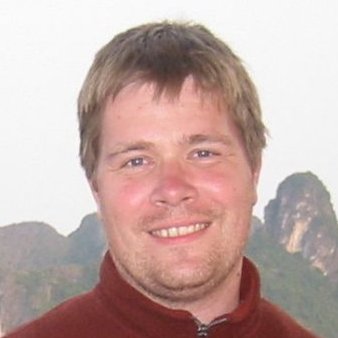
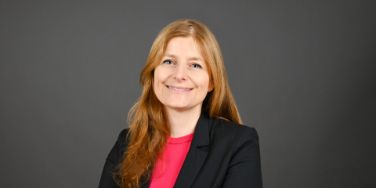
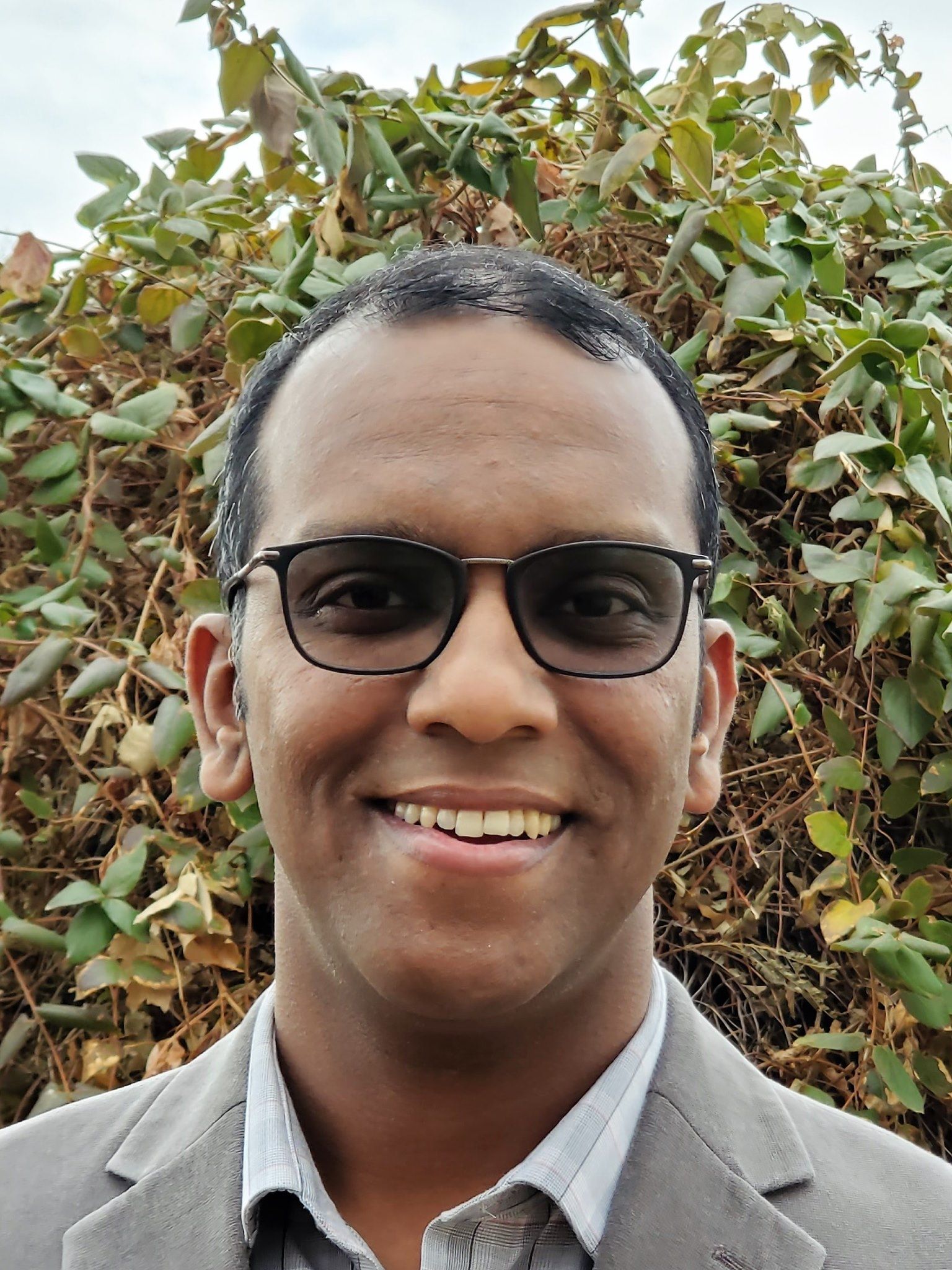
Mohamed Khamis is an Associate Professor at the University of Glasgow , specializing in Human-Computer Interaction (HCI) with a focus on Human-centered Security and Eye Tracking for privacy protection. His research spans Pervasive Displays , Usable Security , and User Privacy in immersive environments. PhD from Ludwig Maximilian University of Munich (LMU) Supervised by Florian Alt and Andreas Bulling Research Interests: Usable Security and Privacy Designing Gaze-based Systems Thermal Attacks and Shoulder Surfing Mitigation Security in Public Displays and Virtual Reality Recent Publications demonstrate expertise in: Drone Interaction and Proxemics Privacy Scales for Measuring Granular Constructs Gaze-enabled Mobile Authentication Multimodal Security Systems Deepfake Privacy Applications XR Dark Patterns Analysis Scientific Contributions: Recipient of multiple Honorable Mention Awards at CHI and MobileHCI Funding from EPSRC for thermal imaging research Keynote speaker at ECCV 2020 Open Eyes Workshop Co-organizer of ETRA workshops on Eye-Gaze for Security
Joseph E. Gonzalez is an Associate Professor in the Department of Electrical Engineering and Computer Science at the University of California, Berkeley, co-director of the Sky Computing Lab and RISE Lab, and member of the Berkeley AI Research (BAIR) group. His work bridges artificial intelligence and data systems with significant impact on large language model infrastructure and deployment. His research focuses on large language models (LLMs) including tool use, RAG, and agent systems; LLM deployment infrastructure; edge-based machine learning; cloud computing innovations; and computer vision applications. He addresses the full machine learning lifecycle from training to serving, emphasizing real-time decision systems and secure execution environments. Scientific Awards: Okawa Research Grant NSF Expedition Award NSF CAREER Award Professor Gonzalez mentors 17 current graduate students and numerous former students/post-docs across AI and systems research. His work is funded by the NSF Expedition grant for the RISE Lab, an NSF CAREER Award, and industrial sponsors including major technology companies. He co-directs the RISE Lab advancing real-time intelligent secure execution systems, and the Sky Computing Lab pioneering cloud computing abstractions. These initiatives tackle low-latency systems, online learning algorithms, and security frameworks for intelligent decision-making in physical environments.
Pascal Vincent is an Associate Professor at the Department of Computer Science and Operational Research , University of Montreal, and a key member of the Montreal Institute for Learning Algorithms (MILA) . He holds a PhD in Computer Science from the University of Montreal and has been pivotal in advancing machine learning and artificial perception. Education: PhD in Computer Science (University of Montreal, 2003) His research spans machine learning , deep learning , representation learning , and neural networks , focusing on unsupervised methods and geometrically inspired algorithms. He explores how intelligent systems can autonomously build meaningful representations from raw data, driven by principles like the manifold hypothesis . Key projects include generative stochastic networks , contractive autoencoders , and high-dimensional sequence transduction . His work has resulted in 15+ recent publications in top venues like NIPS, ICML, and CVPR. Scientific Awards : Best student-paper award at ICML 2012 Honorable mention at NIPS 2011 Funded by FCI, FRQNT, CRSNG, CIFAR, and IBM Pascal has supervised 15+ doctoral and Master’s students , including Florian Bordes, Tom Bosc, and Nicolas Boulanger-Lewandowski, across topics like representation learning and generative models . He is also a co-founder of the UNIQUE (Union Neurosciences & Intelligence Artificielle Québec) research consortium.
Prof. Dr. Sarah Dégallier Rochat is Head of the strategic thematic field 'Humane Digital Transformation' at Bern University of Applied Sciences (BFH). She holds a joint appointment as Professor at the School of Engineering and Computer Science and serves as co-leader of the Computer Perception and Virtual Reality Lab (cpvrLab) within the Institute for Human-Centered Engineering. Her educational background includes: Ph.D. in Robotics from École Polytechnique Fédérale de Lausanne (EPFL) Master's in Mathematics from EPFL Teaching Diploma in Mathematics from Haute École Pédagogique de Lausanne Psychology studies at University of Lausanne Her research focuses on human-centered technological development with emphasis on: Designing inclusive human-machine interfaces through participatory approaches Developing upskilling strategies for industrial workforce adaptation Examining how techno-narratives shape societal perceptions of technology Creating collaborative robotic systems for agile manufacturing (Cobotics) Exploring mixed reality interfaces for worker augmentation Her publications demonstrate strong interdisciplinary focus on robotics and human-centered AI, with recent works exploring human augmentation in industry, ethical AI implementation, and participatory robot programming. The trajectory shows increasing emphasis on socio-technical systems and workforce empowerment. Significant awards include: Industry 4.0 Shapers Award (2019) CHIRA Best Paper Award (2023) She leads multiple research projects funded by Innosuisse, SNF, and EU programs, including: CODIMAN (Cobotics and workplace humanization) Agile Robotics for High-Mix Low-Volume Production Upskill at Work (digital literacy initiatives) Augmented workers with mixed reality interfaces As founder of Auto-Mate Robotics, she develops flexible robotic cells for industrial applications. She co-leads the Computer Perception and VR Lab and serves on advisory boards including the Swiss Cobotics Competence Center and EUA Task Force on AI.
Yoon Chae is an Assistant Professor in the Department of Computer Science and Engineering at the University of Texas at Arlington (UTA), joining the faculty in January 2025. His work bridges wireless networking and low-power IoT systems, with a focus on millimeter-wave technologies and backscatter communication. Education: PhD in Computer Science, George Mason University, 2024 MS in Computer Science, George Mason University, 2022 MS in Electrical and Computer Engineering, University of Minnesota - Twin Cities, 2012 BS in Electrical Engineering, Yonsei University, 2012 His research centers on enabling reliable and high-speed mmWave backscatter by leveraging the unique properties of millimeter waves, with applications in vehicular networks, IoT, and spectrum efficiency. He has pioneered techniques using commodity WiFi and FMCW radar for backscatter communication, significantly advancing the field of low-power wireless systems. The recent publications highlight a strong trend in utilizing commodity hardware (like WiFi and radar) for novel wireless sensing and communication. His work spans mmWave backscatter, vehicular networking using street view imagery, and interference management between ZigBee and WiFi. The research demonstrates innovation in spectrum reuse, low-power design, and integration of real-world data for network optimization. Scientific Awards: Best Paper Award, ACM MobiSys 2022 SIGMOBILE Research Highlight, 2023 Yoon Chae actively contributes to the academic community as a reviewer for top journals including IEEE Transactions on Mobile Computing, IEEE/ACM Transactions on Networking, and ACM Transactions on IoT, as well as conferences like INFOCOM, MobiCom, and SenSys. He serves on program committees and has held leadership roles such as Registration Co-chair for ICNP'25 and Artifact Evaluation Committee for MobiSys'25. He is currently building a research lab and seeking motivated Ph.D. students and research interns to join his team. He has been involved in collaborative projects with Prof. Parth Pathak (George Mason) and Prof. Song Min Kim (KAIST), and his work has been presented at major venues including NSDI, MobiCom, MobiSys, and SenSys. His lab focuses on experimental systems design, wireless sensing, and next-generation IoT networking.
Roderich Gross is a Senior Lecturer in the Department of Automatic Control and Systems Engineering at the University of Sheffield. He is also a Visiting Scientist at CSAIL, MIT, and leads the Enabling Technologies theme at Sheffield Robotics. His academic journey includes a Ph.D. in engineering science from Université libre de Bruxelles (2007), followed by postdoctoral fellowships as a JSPS Fellow (Tokyo Institute of Technology), Research Associate (University of Bristol), and Marie Curie Fellow (EPFL & Unilever). Research Interests : Swarm robotics, self-reconfigurable robots, multi-robot coordination, robotics software/tools (human-robot interaction interfaces, formal design tools), machine learning for behavior inference (Turing Learning, GANs), autonomous systems, natural computing (swarm intelligence, evolutionary algorithms). Scientific Contributions : Inventor of Turing Learning, a machine learning method for behavior inference. Key work includes swarm coordination, self-assembly, fault-tolerant quadcopters, energy-efficient drone delivery, and infrared-based swarm communication. Scientific Recognition : Held prestigious fellowships including JSPS and Marie Curie, and served as Associate Editor for leading robotics journals (IEEE Robotics and Automation Letters, Swarm Intelligence) and conference roles (General Chair DARS 2016, Program Co-Chair GECCO 2018). Grants : Principal Investigator on Horizon Europe OpenSwarm (£463,699), EPSRC Core Capital (£104,196), DSTL Multi Robot Systems (£98,781), and industry-funded modular robotics projects. Labs : Affiliated with the Natural Robotics Lab at the University of Sheffield.
Tim Baarslag is a Senior Researcher and leader of the Intelligent and Autonomous Systems group at CWI (Centrum Wiskunde & Informatica), a Part-Time Professor of Mathematics of Cooperative AI at Eindhoven University of Technology (TU/e), and an Associate Professor at Utrecht University. Additionally, he holds visiting roles as a Scholar at MIT, Associate Professor at Nagoya University of Technology, and Fellow at the University of Southampton. His research focuses on enabling autonomous systems to collaborate through joint decision-making, with applications in smart energy trading, the Internet of Things, and autonomous vehicles. Education: MSc in Mathematics (cum laude), Utrecht University BSc in Computer Science (cum laude), Utrecht University PhD in Automated Negotiation, Delft University of Technology (2014, cum laude) Tim Baarslag investigates foundational theories for cooperative artificial intelligence, particularly in automated negotiation. His work includes developing algorithms for multi-deal coordination, optimizing bidding strategies with reservation values, and creating frameworks like Genius and NegoLog to evaluate automated negotiators. He explores how AI can balance efficiency and fairness in complex, real-world scenarios such as procurement and energy trading. Recent research trends highlight his development of NegoLog, a Python-based negotiation framework with advanced analytics, and his work on multi-deal negotiation protocols. He also investigates preference uncertainty in user-agent interactions and designs optimal concession strategies for risk-seeking agents with high reservation values. Scientific Awards: Cor Baayen Young Researcher Award Academic Pioneer by Elsevier Young Talent by The Financial Daily Science Talent by New Scientist Tim Baarslag leads the Intelligent and Autonomous Systems group at CWI and organizes the International Automated Negotiating Agent Competition. He is involved in the ACM Future of Computing Academy, The Young Academy, and the Netherlands Academy of Engineering. His work is supported by the NWO Vidi grant COMBINE, focusing on coordinating multi-deal bilateral negotiations. Labs & Teams: Intelligent and Autonomous Systems group, CWI EAISI and Combinatorial Optimization groups, TU/e ACM Future of Computing Academy The Young Academy Netherlands Academy of Engineering
Dr. Andy Nguyen is a Senior Lecturer in the School of Engineering at the University of Southern Queensland. He holds a PhD from Queensland University of Technology (QUT), an MEng from the National University of Civil Engineering (NUCE), and a BEng from NUCE. His research focuses on structural health monitoring, integrating machine learning and deep learning techniques to assess infrastructure integrity. Key areas include damage detection in bridges, pavements, and buildings, as well as sustainable construction materials like bamboo. Nguyen leads projects such as the 'Next Generation Living Laboratory for Engineering Education and Engagement,' emphasizing real-world applications of technology in civil infrastructure. His work spans crack detection algorithms, finite element model updating, and vibration-based structural analysis. He collaborates on AI-driven solutions for autonomous vehicle object detection and smart maintenance planning. Nguyen’s contributions include over 50 peer-reviewed publications and active supervision of postgraduate research in composite materials and transport infrastructure. His research outputs highlight advancements in computational mechanics, sensor technologies, and data-driven methods for infrastructure resilience. Nguyen’s expertise bridges civil engineering challenges with cutting-edge machine learning, advancing both theoretical and applied solutions for sustainable and safe structures.
Abdullah Mueen is a Professor and Associate Chair in the Department of Computer Science at the University of New Mexico (UNM), where he has been since 2013. Previously, he worked as a Scientist in the Cloud and Information Sciences Lab at Microsoft Corporation. Research Interests : His work focuses on Temporal Data Mining , with emphasis on efficiency , interactivity , and interpretability . Key areas include Blockchain Data Mining (e.g., BitLink for Bitcoin cluster analysis), Seismic Data Mining (e.g., PAW for aftershock detection), and Social Media Mining (e.g., DeBot for Twitter bot detection). Article Trends : His recent publications span four domains: Seismology : Algorithms for earthquake data analysis (e.g., focal depth inference, aftershock classification). Blockchain : Temporal linkage of Bitcoin addresses (BitLink) and cryptocurrency fraud detection. Traffic Safety : Multi-LiDAR data fusion for real-time road safety monitoring. Time Series Methods : Innovations like MASS similarity search and DAMP anomaly detection for massive datasets. Scientific Awards : ACM SIGKDD Test-of-Time Award (2022) UNM Provost Research Leader Award UNM School of Engineering Junior Faculty Research Excellence Award KDD 2012 Doctoral Dissertation Contest Runner-Up KDD 2012 Best Paper Award Advising and Grants : He has mentored 11 PhD students now employed at institutions like Microsoft, Meta, and Lawrence Livermore National Lab. His research is funded by NSF , NIH , DARPA , AFRL , NEC , Exxon , Microsoft , and LANL .
Long Nguyen is a Professor of Statistics at the University of Michigan, Ann Arbor, with a courtesy appointment in Electrical Engineering and Computer Science. He is affiliated with the Michigan Institute for Data Science (MIDAS) and the Vietnam Institute for Advanced Study in Mathematics (VIASM). His research focuses on Bayesian nonparametrics, optimal transport, machine learning, and spatiotemporal data analysis. Nguyen holds a PhD in Computer Science from UC Berkeley and has held postdoctoral positions at Duke University and the Statistical and Applied Mathematical Institute. Education: B.Sc. in Computer Science from Pohang University of Science and Technology; M.Sc. in Mathematics from Arizona State University; Ph.D. in Computer Science from UC Berkeley (2007). Research Interests: Bayesian nonparametric methods, optimal transport theory, statistical inference for complex models, and applications in spatiotemporal data, functional data analysis, and hierarchical modeling. He emphasizes developing scalable algorithms and geometric approaches for statistical learning. Editorial Roles : Annals of Statistics Journal of Machine Learning Research SIAM Journal on Mathematics of Data Science Bayesian Analysis Awards : IMS Fellow, ASA Fellow NSF CAREER Award IEEE Signal Processing Young Author Award L. J. Savage Dissertation Award (via student Aritra Guha) Advising & Collaborations : Guided over 20 PhD students and postdocs, many now in academia and industry. Collaborates on projects in AI ethics, music theory, and environmental data science. Active in organizing summer schools in Vietnam on Bayesian statistics and machine learning. Labs & Teams : Co-leads the Statistical Machine Learning reading group at U-M and collaborates with the VIASM on advanced mathematical research in Hanoi.
Albert H. Titus is a Professor in the Department of Biomedical Engineering and an Adjunct Professor in the Department of Electrical Engineering at the University at Buffalo, State University of New York. He serves as Associate Vice President for Regulatory Support in the Office of the Vice President for Research and Economic Development. His research focuses on analog VLSI design for neuromorphic visual processing, biosensors, wearable devices, optoelectronic systems, and neural networks. Education: PhD in Electrical and Computer Engineering, Georgia Institute of Technology (1997) MS in Electrical Engineering, University at Buffalo (1991) BS in Electrical Engineering, University at Buffalo (1989) Research Interests: His work spans wearable and implantable sensors, bioinstrumentation, neural network-based visual processing, analog VLSI implementations, optoelectronics, and electronic packaging. He pioneered CMOS-based neuromorphic systems and developed patented technologies for glare sensing and RF power calorimetry. Publication Trends: His recent articles emphasize CMOS-integrated sensors, machine learning for bioimpedance analysis, implantable medical devices, and xerogel-based optical biosensors. These works bridge biomedical engineering and microelectronics. Scientific Recognition: He is a Fellow of the National Academy of Inventors and has received the SUNY Chancellor’s Award for Excellence in Service (2017), NSF CAREER award, and Western New York Inventor of the Year (2010). His inventions include a patented low-power glare sensor (U.S. Patent 7,586,079) featured in Popular Science’s 2011 Top Ten Inventions. Academic Leadership: As a faculty member, he has supervised nearly 20 PhD and over 40 MS students, while teaching courses in circuits, IC design, sensors, and signal processing across electrical and biomedical engineering disciplines.
Dmitri Perkins is a Professor at the Department of Computer Science and Electrical Engineering within the College of Engineering and Information Technology at the University of Maryland, Baltimore County (UMBC). He has held leadership roles including Senior Program Director at the National Science Foundation (2021-2024) and Lead Program Director for the NSF's Industry-University Cooperative Research Centers (2015-2019). His research spans wireless and mobile networking paradigms, including cognitive radio, sensor networks, and large-scale heterogeneous systems. Ph.D., Computer Engineering, Michigan State University (2002) M.S., Computer Engineering, Michigan State University (1997) B.S., Computer Science, Tuskegee University (1995) His research focuses on adaptive protocol design , spectrum management , and network security . Key areas include dynamic spectrum access , cross-layer optimization , and formal performance evaluation in wireless systems. Publications highlight innovations in cognitive radio networks , IoT protocols , and secure wireless communication . Recent publications emphasize machine learning for spectrum efficiency , edge computing in heterogeneous networks , and security frameworks for wireless systems. The 15 most recent works (2002-2018) demonstrate expertise in protocol design , network scalability , and spectrum optimization . NSF CAREER Award (2005) NSF Director's Award for Superior Accomplishment (2024) ONR Research Fellow, U.S. Naval Research Lab (2013-2014) He leads a research lab at UMBC offering RA positions in spectrum research , IoT/CPS systems , and wireless cybersecurity . Prior to UMBC, he served as Hardy Edmiston Endowed Professor at the University of Louisiana at Lafayette and held roles at the U.S. Naval Research Laboratory.
Dr. Hongwei Wang is a Senior Researcher at Tencent AI Lab Seattle , specializing in applied machine learning for Natural Language Processing and Interconnected Systems . His work bridges Knowledge Graphs , Recommender Systems , and Graph Neural Networks , with a focus on large language models and retrieval-augmented generation. Ph.D. (2018), B.E. (2014) in Computer Science from Shanghai Jiao Tong University Postdoctoral Researcher : Stanford University (2019-2021), University of Illinois Urbana-Champaign (2021-2022) Dr. Wang’s research explores integrating Knowledge Graphs with Graph Neural Networks to enhance recommendation systems, language models, and information retrieval. His work spans Retrieval-Augmented Generation , Representation Learning , and GAN-based Graph Modeling , with recent papers on State-Space Exploration for LLM agents and Semantic Watermarking . His 15 most recent publications (2022-2024) focus on Retrieval Granularity , Interactive Memory , and Agent Systems , with keywords spanning Computer Science , Machine Learning , and Knowledge Graphs . Trends highlight advancements in Token-Level Semantic Matching , Schema-Guided Event Prediction , and Multi-Document Summarization . Scientific Awards: 2020 CCF Outstanding Doctoral Dissertation Award 2018 Google Ph.D. Fellowship Dr. Wang contributes to open-source projects like DKN and RippleNet , with 11 repositories on GitHub. He actively engages in Knowledge Graph Conferences (KDD, WWW, AAAI) and studies Chinese Classical Poetry and Film Arts .
Fred Feinberg is the Joseph and Sally Handleman Professor of Marketing and Professor of Statistics (by courtesy) at the University of Michigan, where he is also an Affiliated Faculty member of the Center for the Study of Complex Systems. His work integrates advanced Bayesian methods with large-scale marketing data to illuminate how people make choices under uncertainty. Education Ph.D., Sloan School of Management, Massachusetts Institute of Technology (1989) Doctoral program in Mathematics, Cornell University (1983–84) S.B. Mathematics & S.B. Philosophy, Massachusetts Institute of Technology (1983) Research Focus Feinberg’s scholarship centers on discrete choice models that leverage real-world decisions to infer latent attributes such as demographics, product appeal, and socioeconomic status. Methodologically, he employs Hierarchical Bayes (HB) models and cutting-edge MCMC algorithms to handle massive data sets, while theoretically he advances dyadic utility theory and optimal search under uncertainty. Applications span click-through behavior, menu-based choice, online dating preferences, spatial marketing, and consumer reactions to intangible or aesthetic product features. Recent empirical studies explore the wearout versus weariness effects of online advertising, the impact of data breaches on consumer behavior, and dynamic pricing for digital media subscriptions. Across these projects, Feinberg couples rigorous statistical innovation with actionable managerial insights, bridging marketing science, operations, and engineering. Scientific Awards & Leadership Joseph and Sally Handleman Endowed Professorship Past President, INFORMS Society for Marketing Science Departmental Editor, Production and Operations Management Former Co-Editor, Marketing Science Co-author (with T. Kinnear & J. Taylor) of the textbook Modern Marketing Research: Concepts, Methods, and Cases Grants & Collaborations While explicit grant lists are not provided, Feinberg’s prolific publication record in top-tier journals (e.g., Journal of Marketing Research , Marketing Science , Management Science ) and editorial board service imply sustained external funding and interdisciplinary partnerships, particularly with operations, engineering, and computer-science groups. Laboratories & Teams Feinberg is formally affiliated with the Center for the Study of Complex Systems (CSCS) at the University of Michigan, where he collaborates on network-based choice frameworks and large-scale behavioral data analytics. He maintains active ties to the Ross Marketing faculty and the Department of Statistics, fostering joint workshops and doctoral training initiatives.
Sriraam Natarajan is a Professor and Director of the Center for Machine Learning and StaRLing Lab at The University of Texas at Dallas (UTD), part of the Erik Jonsson School of Engineering & Computer Science. He holds additional roles as a hessian.AI Fellow at TU Darmstadt and an RBCDSAI Distinguished Faculty Fellow at IIT Madras. His expertise spans Artificial Intelligence, Machine Learning, and their applications in healthcare, with a focus on Relational Learning, Reinforcement Learning, and Graphical Models. He has been honored as an AAAI Fellow (2025), elected to the AAAI Executive Council, and recognized with the UTD Outstanding Graduate Teaching Award. Education: Completed his PhD in Computer Science at Oregon State University in 2007 under Prof. Prasad Tadepalli. Postdoctoral work at the University of Wisconsin-Madison with Professors Jude Shavlik and David Page. Previously served as faculty at Indiana University and Wake Forest School of Medicine. Research: Active in developing AI systems for healthcare, including predictive models for gestational diabetes and cardiac arrest in children. His work emphasizes integrating human knowledge into machine learning (e.g., Human-in-the-Loop systems) and advancing statistical relational AI frameworks like Markov Logic Networks and Probabilistic Circuits. Publications: Over 100 peer-reviewed articles, including notable works on causal learning, relational reinforcement learning, and knowledge graph construction. Recent focuses include explainable AI and scalable probabilistic models. Awards: AAAI Fellow, RBCDSAI Distinguished Fellowship, UTD Teaching Excellence Award. Advising and Collaboration: Mentored over 30 students, many now in academia and top institutions like IBM Research, Facebook, and Microsoft. Collaborates globally on projects like GLAD (Glocalized Anomaly Detection) and StaRLing Lab initiatives. Labs/Teams: Leads the StaRLing Lab, focusing on statistical relational AI, and directs UTD's Center for Machine Learning. Engaged in interdisciplinary projects with healthcare, robotics, and data science communities.