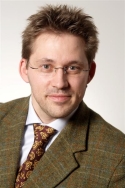
Robert Alexander Limas Sierra is a Lecturer at the Department of Control and Computer Science (DAUIN) at Politecnico di Torino, Italy. He is also a PhD student in Computer and Systems Engineering, 38th cycle (2022-2025), affiliated with the CAD research group and an IEEE student member. B.S./M.Sc. in Electronic Engineering (2019/2022) - Universidad Pedagógica y Tecnológica de Colombia His research focuses on computer architectures, AI/ML, GPU computing, and hardware reliability . Key themes include neural network robustness, tensor core optimization, and fault tolerance in AI accelerators. Recent publications address self-testing libraries for GPUs, CNN error mitigation, and reliability implications of edge computing. Teaching activities include collaboration in Computer Sciences and Automotive Engineering courses (2023/24 and 2024/25 academic years).
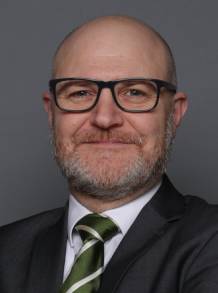
Nicola Bosso is a Full Professor at the Department of Mechanical and Aerospace Engineering (DIMEAS) at the Polytechnic University of Turin, Italy. He serves as a member of the College of Mechanical, Aerospace and Automotive Engineering and has been continuously involved in the PhD program in Mechanical Engineering for multiple cycles from 2015/2016 through 2024/2025. His academic career spans over a decade of teaching and research in mechanical engineering with a strong emphasis on railway systems and multibody dynamics. Research Focus: Professor Bosso specializes in experimental mechanics and multibody dynamics with particular expertise in railway dynamics, monitoring systems, and vehicle dynamics. His research encompasses roller rig testing methodologies, wear analysis of materials, and wheel-rail contact mechanics. His work aligns with several Sustainable Development Goals including Industry, Innovation and Infrastructure (Goal 9), Sustainable Cities and Communities (Goal 11), Responsible Consumption and Production (Goal 12), and Climate Action (Goal 13). His research integrates computational engineering with experimental validation to address complex railway engineering challenges. Publication Trends: Recent publications demonstrate a strong focus on digital twin technology for freight wagon monitoring, advanced wear simulation algorithms, and thermo-mechanical interactions in braking systems. His work increasingly combines AI techniques with traditional engineering approaches, reflecting the evolving nature of railway engineering research. The publications span conference proceedings and journal articles in high-impact railway engineering venues. Advising and Research Leadership: Professor Bosso has supervised PhD students including Matteo Magelli (35th cycle, 2019-2023), whose thesis focused on numerical and experimental tools for train braking simulations. He leads numerous research projects including AI4FREIGHT (2025-2029), a Railway Freight Wagon Monitoring System based on Digital Twins, and various consulting projects with railway industry partners. His research portfolio spans competitive national grants, regional innovation centers funding, and commercial contracts with railway technology companies. Research Infrastructure: He is affiliated with the Design and experimentation of industrial and railway systems and microsystems (DIMEAS) research group, where he contributes to the development of testing methodologies and simulation tools for railway applications. His work involves close collaboration with industry partners on practical railway engineering challenges, including derailment prevention, vehicle dynamics optimization, and innovative testing equipment development.
Eun-Young KANG is an active researcher in the fields of Energy-aware Systems , Formal Methods , and Software Verification . She has contributed to research projects such as CFV: Federated Centre for Software Verification , VEREV: Verification of recursive, evolutive, real-time software , and TPA: Theory and Practice of Automata and Logics , with a focus on Cyber-Physical Systems and Automotive Software Verification . Her research interests include: Formal verification of concurrent and real-time systems Energy-aware modeling techniques Requirements engineering for automotive systems ADL model analysis and implementation Statistical methods for energy consumption Timed constraints in software design Her work aligns with the UN Sustainable Development Goals (SDGs) , particularly in energy efficiency and sustainable software verification. Key publications highlight advancements in Stateflow , EAST-ADL , and energy-aware real-time systems .
Eric Giacomo Armando is a Full Professor at the Department of Energy (DENERG) within the College of Electrical and Energy Engineering at Politecnico di Torino. He serves as a member of the Power Electronics Innovation Center (PEIC) and leads the PEEMD research group. Research Interests: Electrical Machines Power Electronics Electric Drives Energy Conversion Sustainable Motor Drive Systems Wide Bandgap Semiconductors Recent Publications focus on GaN converter technologies, flux control algorithms, thermal management via 3D-printed heatsinks, and fault tolerance in multi-phase motors. His work appears in IEEE ECCE, APEC, and industry applications journals. Supervised Students: Stefano Savio (PhD, ongoing, researching GaN multilevel inverters for motorsport) Enrico Vico (completed PhD, focusing on overcurrent protection for GaN semiconductors) Projects: Includes EU-funded E-motors, PNRR SEMDY, and commercial contracts with HBM Italia Srl and Servotecnica SpA. He holds multiple national/international patents in traction inverters and battery chargers.
Mauro Velardocchia is a Full Professor at the Polytechnic University of Turin , affiliated with the Department of Mechanical and Aerospace Engineering (DIMEAS) . With over 20 years of academic leadership, he specializes in automated vehicles, connected mobility systems, and advanced powertrain engineering . Research focus on vehicle dynamics, magnetic transmission systems, and energy-efficient automotive technologies Active in European and national research projects including OWHEEL, EFFEREST, and CliMAFlux Teaching contributions to Mechanical Engineering programs since 2000 His recent publications analyze autonomous off-road navigation, tracked vehicle dynamics, and digital twin technologies . Current research projects emphasize sustainable mobility (Goal 9), climate action (Goal 13), and engineering education (Goal 4). Key technical expertise in nonlinear vehicle modeling Leadership in EU-funded MSCA and Horizon Europe projects
Marco Esposito is a Fixed-term Assistant Professor in the Department of Mechanical and Aerospace Engineering at the Polytechnic University of Turin. He is affiliated with the College of Mechanical, Aerospace, and Automotive Engineering and actively participates in the AESDO (Aircraft and Engine Structural Design and Optimization) research group. His primary contact is marco.esposito@polito.it . Dr. Esposito's research centers on Computational mechanics, Load identification, Shape sensing, and Structural health monitoring, with specific applications to aerospace structures. His work bridges theoretical developments in computational mechanics with practical structural monitoring solutions for aircraft and spacecraft components. He has developed innovative approaches for shape sensing using the inverse Finite Element Method (iFEM), including single-sensor configurations and hybrid shell-beam formulations that enable accurate structural deformation monitoring with minimal sensor requirements. His recent publications reveal a strong focus on practical applications of shape sensing technology, particularly for composite aerospace structures like wing panels and stiffened structures. The research demonstrates a progression from theoretical formulations to experimental validation, with increasing sophistication in handling complex structural geometries and sensor configurations. Much of this work contributes to the development of the DIMOSS (DISPLACEMENT MONITORING USING STRAIN SENSORS) software platform. Dr. Esposito supervises PhD students including Vincenzo Biscotti (researching Shape sensing and Structural Health Monitoring approaches for aerospace Digital Twin applications) and Alessio Galfione (researching Shape reconstruction of space structures from strain measurements). He serves as Scientific Manager for the DIMOSS project (2024-2025), which has resulted in patented software for structural monitoring. Within the academic community, he teaches advanced courses on the finite element method at PhD level and contributes to various aerospace engineering programs at Master's and Bachelor's levels, covering topics from structural mechanics to aeronautical structures and aerospace technologies.
Winnie Ng Picoto is an Associate Professor of Information Systems and Operations Management at ISEG - Higher Institute of Economics and Management , part of the University of Lisbon . She holds a PhD in Management from the Technical University of Lisbon (2011), a Master's in Information Systems Management from ISEG, and a degree in Industrial Engineering and Management from Instituto Superior Técnico. As a member of the Advance Research Center, she focuses on digital innovation and its organizational impact. PhD in Management (2011), Technical University of Lisbon Master's in Information Systems Management (2005), ISEG BSc in Industrial Engineering and Management (2003), Instituto Superior Técnico Her research explores digital transformation , sustainable information systems , and emerging technologies . Key areas include cloud computing adoption, IOT applications in commerce, and CRM systems driving organizational innovation. Recent work examines digital nativity, data-driven marketing regulation, and psychological factors in IT security compliance. She has supervised 45+ Master's students since 2007, with thesis topics spanning blockchain in food supply chains , AI chatbots in e-commerce , BI dashboards , and mobile app success factors . Her professional roles include Associate Dean at ISEG (2022) and coordination of the Master in Management Information Systems (2011-2019) and Bachelor in Management (2019).
Prof. Dr. Holger Giese is a full Professor at the System Analysis and Modeling Group of the Hasso Plattner Institute for Digital Engineering in Potsdam, Germany. He leads research initiatives in model-driven engineering , self-adaptive systems , and cyber-physical systems , with a focus on causal representations , neuro-symbolic AI , and multi-agent reinforcement learning . His research explores the intersection of formal modeling and machine learning , addressing challenges in: Runtime verification and validation of dynamic systems Model transformation and synchronization Code generation for self-optimizing architectures Probabilistic decision-making under uncertainty Transfer learning for autonomic computing Recent work (2024-2025) emphasizes neuro-symbolic approaches for robust multi-agent systems , spatio-temporal graph modeling for cloud systems, and incremental query evaluation in dynamic environments. Collaborations span institutions like IBM Japan, Krems University, and Humboldt University. He actively teaches courses such as Advanced Topics in Software Engineering , Graph Neural Networks , and AI Ethics Engineering , and leads labs including the Model-Driven Engineering Laboratory (MDELab.de) and Software Engineering for Self-Adaptive Systems (self-adaptive.org) .
Zoltán Benedek is an academic at the Budapest University of Technology and Economics, affiliated with the Department of Automation and Applied Informatics. His academic rank is Lecturer, and he works within the Applied Computer Science Group. His research bridges naval engineering and applied informatics, focusing on ship propulsion systems, scale effects in hydrodynamics, and intelligent transportation technologies. Position: Lecturer Institution: Budapest University of Technology and Economics Department: Department of Automation and Applied Informatics Dr. Benedek’s research spans several decades, primarily addressing the hydrodynamics of ship propulsion systems , with a focus on scale effects in small ship models, wake fraction analysis , and thrust deduction modeling . His work also intersects with transportation informatics , particularly in developing frameworks for mobile navigation systems and on-board vehicle controllers . His publications reflect a consistent interest in optimizing propeller efficiency and resolving hydrodynamic discrepancies between ship models and full-scale prototypes. Recent trends in his publications emphasize the integration of computational methods in marine hydrodynamics and transportation systems , including data compression techniques for embedded controllers and .NET-based navigation frameworks. These works highlight his interdisciplinary approach, merging naval engineering principles with software and automation advancements. The Applied Computer Science Group at the Department of Automation and Applied Informatics serves as his primary research hub, linking his contributions to broader informatics and automation initiatives.
Dr. Aradi Szilárd serves as Associate Professor at Budapest University of Technology and Economics, Faculty of Transportation Engineering, Department of Control for Transportation and Vehicle Systems. He also holds a Senior Research Fellow position at SZTAKI since 2022. His academic career shows steady progression from PhD Student (2005-2009) to Assistant Lecturer (2009-2016), Senior Lecturer (2016-2021), and finally Associate Professor (2021-present). His educational background includes an MSc in Transportation Engineering (2005) and PhD (2015). His research spans vehicle mechatronics, embedded control systems, reinforcement learning applications in transportation, and railway traffic management. Dr. Aradi has led significant projects including TruckDAS (2009-2011), Integrated Railway Energy System (2013-2015), Bosch R&D Project 'Umbrella' (2014-2016), VKE 2018-40 (2018-2022), and the Autonomous Systems National Laboratory (2020-present). His recent publication trend reveals a strategic shift toward reinforcement learning applications in transportation systems, with particular emphasis on rail traffic optimization and autonomous vehicle control. Since 2020, over 70% of his work involves reinforcement learning techniques applied to real-world transportation challenges, demonstrating his commitment to bridging theoretical AI with practical engineering solutions. Dr. Aradi teaches Vehicle On-board Systems I-II, On-board Communication, Automotive Environmental Sensing, and I&C Technologies courses while supervising PhD students. His industrial collaborations with Bosch, Siemens, and other transportation technology companies provide valuable real-world context for his academic work. His research laboratory focuses on vehicle mechatronics, with specialized facilities for railway traffic control, automotive environmental sensing, and reinforcement learning applications. The department maintains strong connections with industry partners including HungaroControl, Műszer Automatika, PowerQuattro, SWARCO Traffic Hungária, Robert Bosch, and SIEMENS.
Dr. Balázs Németh is an Honorary Associate Professor and Senior Research Fellow at the Budapest University of Technology and Economics' Department of Control for Transportation and Vehicle Systems. He is affiliated with the MTA SZTAKI Systems and Control Lab and focuses on vehicle dynamics, integrated vehicle control, and optimal trajectory design. PhD in Transportation Sciences (2013) Automotive Engineer (2009) His research spans vehicle mechatronics and network virtualization, addressing challenges in road, air, and railway transportation automation. He has developed novel service placement algorithms for 5G and IoT edge cloud platforms, emphasizing delay constraints and resource elasticity. Recent work includes scalable edge cloud architectures and cost-efficient virtual network embedding. His publications highlight interdisciplinary expertise in transportation systems and network function virtualization. Scientific Awards János Bolyai Research Scholarship (2014-2017) Campus France Scholarship (2014) Multiple Publication Awards from the Institute for Computer Science and Control (2012-2017) Dr. Németh has contributed to multi-operator orchestration frameworks and self-healing systems in 5G networks, combining transportation control theory with modern cloud and network technologies.
Professor Simon Burton holds the Chair in Systems Safety at the Department of Computer Science, University of York. He also serves as Business Lead for the Centre for Assuring Autonomy, focusing on interdisciplinary safety assurance for AI-based systems. Chair in Systems Safety, University of York Business Lead, Centre for Assuring Autonomy Convenor, ISO TC22/SC32/WG14 (Safety and AI for road vehicles) His research investigates systems safety engineering at the intersection of AI, legal/ethical considerations, and regulatory frameworks. Key questions include defining application-specific safety thresholds, engineering autonomous systems using AI and safety analysis, and constructing evidence-based safety arguments with residual uncertainty modeling. He leads ISO standardization efforts including the ISO PAS 8800 Road vehicles - Safety and artificial intelligence standard. His career spans industry roles at DaimlerChrysler, Bosch, and Fraunhofer Institute before returning to academia. He works with the High Integrity Systems Engineering Group and maintains off-campus office arrangements.
Associate Professor Heiner Heimes serves as Chair of Production Engineering of E-Mobility Components at RWTH Aachen University . His work focuses on advanced manufacturing technologies for electric mobility, including battery systems, fuel cells, and sustainable production processes. Member of the Institute Management Contact: h.heimes@pem.rwth-aachen.de Research interests span battery technology , fuel cell systems , production engineering , and electric mobility solutions . His recent publications emphasize techno-economic models, defect detection, and process optimization in EV battery manufacturing. Key article trends include solid-state batteries , laser-based drying , automated disassembly , and AI-driven production , reflecting his contributions to scalable, sustainable e-mobility infrastructure. Scientific awards: As a collaborator in numerous studies, Heimes contributes to advancing dynamic capability models for electric mobility and optimizing hairpin stator production . His work addresses challenges in battery recycling, thermal management, and Industry 4.0 implementation.
Carlos Lli Torrabadella is a researcher at Antonio de Nebrija University's Higher Polytechnic School , specializing in Transport Engineering and Infrastructure . He is affiliated with the GREEN Nebrija Research Group on Automotive Engineering and earned his PhD in 2016 with a thesis on technical services offshoring in Spain. Education: Doctorate from Universidad Antonio de Nebrija (2016) His research focuses on offshoring in engineering services , industry 4.0 adaptation for SMEs , and interdisciplinary collaboration in engineering education . Recent work explores Python-based knowledge integration and collaborative robotics for manufacturing. Google Scholar publications reveal trends in global engineering operations, educational innovation, and cultural service governance. Key themes include knowledge services internationalization, digital transformation, and cross-border investment analysis. Contact: clli@nebrija.es
Lylia Abrouk is a Research Professor in the Data Science department at the University of Burgundy . Her work focuses on leveraging semantic technologies, machine learning, and ontologies to address challenges in financial fraud detection and decision support systems. Her research integrates: Semantic Web for knowledge representation and ontology population Community Detection in collaborative networks User Modeling for personalized decision support Machine Learning in financial analytics and automotive data Recent publications highlight her contributions to: Ontology-driven fraud detection in interbank transactions Decision trees for cost-sensitive financial modeling Knowledge extraction using hybrid learning approaches Data analytics for automotive industry applications She collaborates extensively within the Data Science team, applying semantic modeling to real-world problems in banking and insurance sectors.