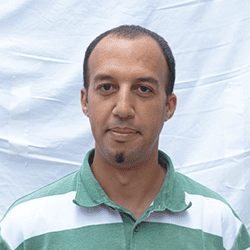
Amine MEHEL is a Research Professor at ESTACA's Mechanics and Environment Center (MSCE) since 2010, specializing in air quality and pollution control in transport systems. His work bridges experimental and numerical studies of turbulent flow interactions with pollutants and nanoparticles. Research Axes : CQA (Characterization of Air Quality) and EDP (Spatiotemporal Dynamics of Pollutants) Key Projects : CEPARER (2022-2025), AmCoAir (2020-2023), CAPNAV (2019-2022), CAPTIHV (2015-2018) His expertise includes experimental facilities like wind tunnels, PIV/LDV measurements, and CFD simulations using Eulerian-Lagrangian approaches. He supervises PhD students and coordinates teaching projects like PIRATE and PRI. Recent publications focus on ultrafine particle dispersion in vehicle wakes, brake emissions in underground stations, and cabin air quality characterization.
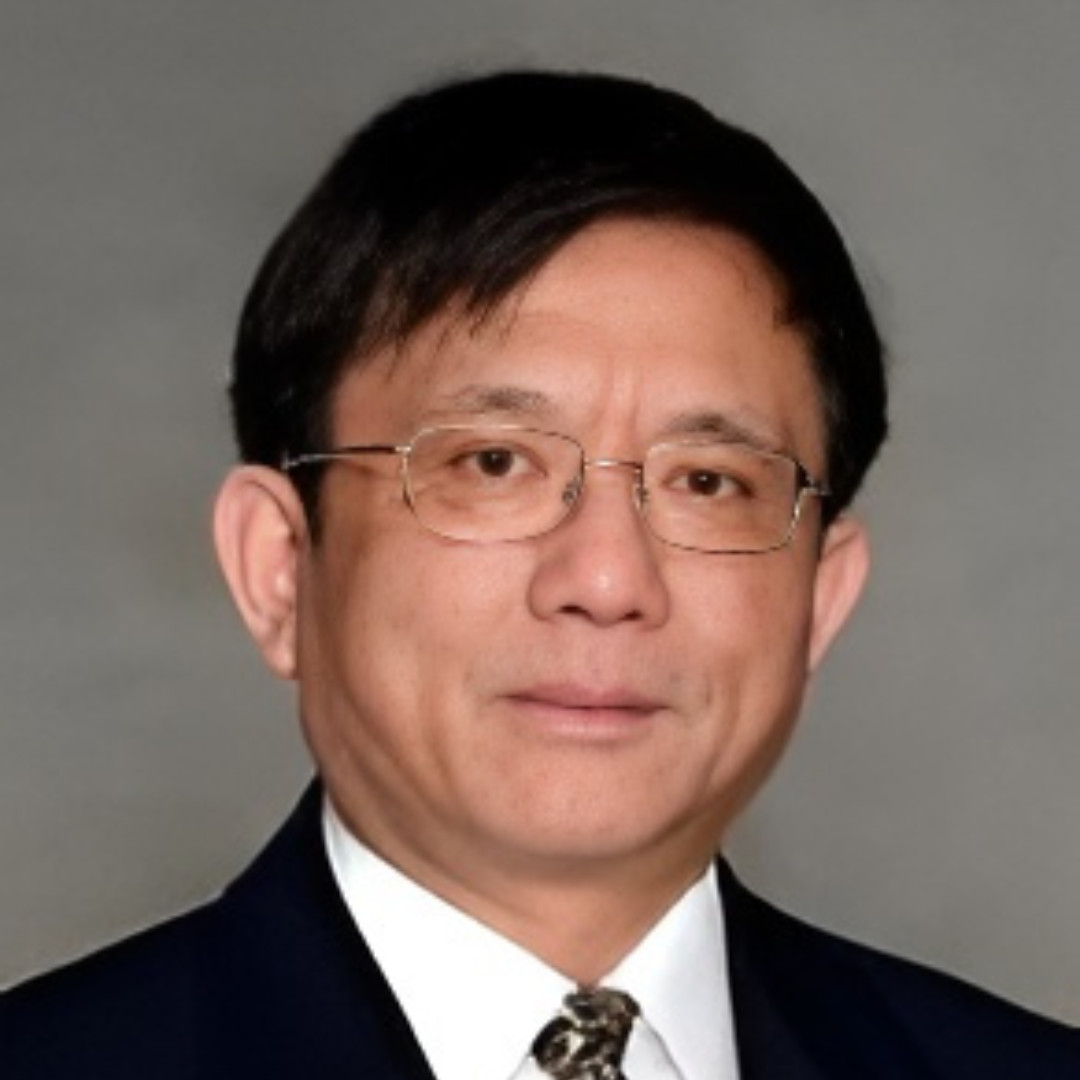
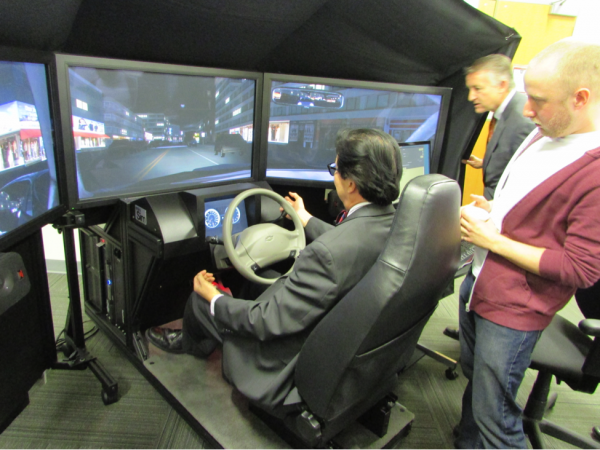
Dr. Yuping He is a Professor in the Department of Automotive and Mechatronics Engineering at the University of Ontario Institute of Technology (UOIT). He holds a PhD in Mechanical Engineering from the University of Waterloo (2002) and has extensive academic and industry experience, including postdoctoral fellowships at the University of Windsor and University of Waterloo. His research focuses on autonomous driving, vehicle dynamics, chassis design, and active safety systems, with expertise in modeling and simulation techniques. Education: PhD (Mechanical Engineering), University of Waterloo, 2002 MASc (Automotive Engineering), Tsinghua University, China, 1991 BASc (Automotive Engineering), Hubei Automotive Industries Institute, China, 1985 Research interests include automated design synthesis, multidisciplinary optimization, and driver-hardware-in-the-loop simulations. He has contributed to advancements in heavy vehicle stability control, trailer steering systems, and energy-saving strategies for steer-by-wire vehicles. His work bridges mechanical systems, control engineering, and real-time simulation technologies. Awards include the 2010 Research Excellence Award from UOIT’s Faculty of Engineering and Applied Science, and a nomination for the Governor-General’s Gold Medal (2003). His publications span journals like Vehicle System Dynamics and ASME Journal of Computational and Nonlinear Dynamics , with a focus on improving vehicle safety and performance through advanced control strategies. Advising and Grants: Dr. He has advised student teams in capstone projects, including the 2010 FEAS Capstone Design Competition-winning team. His research integrates industrial collaboration, as seen in roles like Senior Product Engineer at American Axle & Manufacturing (2005). His work emphasizes practical applications in automotive and mechatronic systems.
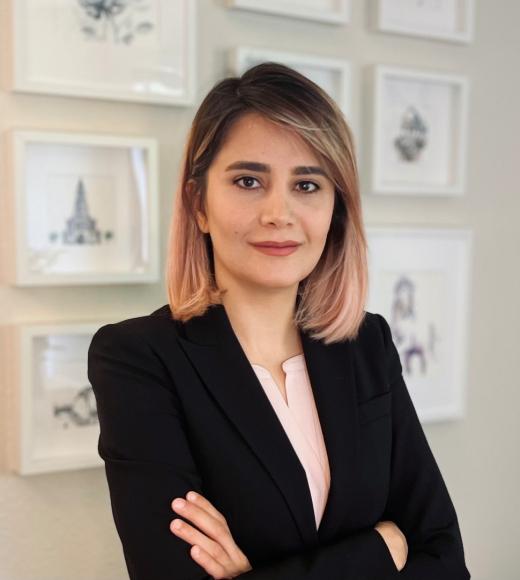
Shima Nazari is an Assistant Professor in the Department of Mechanical and Aerospace Engineering at the University of California, Davis. Her research focuses on dynamics and control with applications to transportation systems, energy systems, and electrified/automated vehicles. She leads the CORE Lab, exploring advancements in hybrid powertrains, autonomous vehicle control, and energy-efficient systems. Education: Ph.D., Mechanical Engineering, University of Michigan (2019) M.S., Electrical Engineering, University of Michigan (2016) M.S., Mechanical Engineering, Sharif University of Technology, Iran (2012) B.S., Mechanical Engineering, Sharif University of Technology, Iran (2009) Her research interests span dynamics and control theory applied to hybrid electric vehicles, powertrain optimization, and autonomous systems. She has contributed to advancements in energy-efficient vehicle designs, regenerative braking, and control strategies for electrified powertrains. Her work often bridges mechanical and electrical engineering disciplines to address real-world challenges in transportation and energy. Recent research trends in her articles emphasize data-driven control methods, hybridization strategies for autonomous systems, and thermal management of energy storage solutions. These studies reflect her commitment to interdisciplinary innovation. Although no scientific awards are explicitly mentioned, her contributions to the field are evident through her active research and publications. She advises students in her lab and collaborates on grants focused on sustainable mobility solutions. Dr. Nazari is affiliated with the UC Davis College of Engineering and actively contributes to graduate programs in Dynamics, Controls, Vehicles, and Robotics. The CORE Lab serves as a hub for experimental and computational research in her areas of expertise.
Dr. Ahmed Badawy is a Lecturer in Electrical Engineering at Lancaster University's School of Engineering, where he has been serving since 2017. His academic journey includes advanced degrees in electrical engineering and significant research experience in power electronics and renewable energy systems. Dr. Badawy's educational background includes: B.Sc. in Electrical Engineering from the Faculty of Engineering, Alexandria University, Egypt (2008) M.Sc. in Electrical Engineering from the Faculty of Engineering, Alexandria University, Egypt (2012) Ph.D. in Electrical Engineering from the Electric and Electronic Engineering Department at the University of Strathclyde, Glasgow, U.K. (2016) Dr. Badawy's research focuses on power electronics and energy conversion systems, with particular expertise in DC-DC converters, multi-level converters, and electric machines. His work emphasizes digital control of power electronic systems for applications in renewable energy integration, electric vehicles, and power quality improvement. His research has significant implications for sustainable energy systems and transportation electrification. His recent publication record demonstrates a strong focus on electric vehicle power systems, particularly modular converter topologies for on-board charging applications. There's a clear trend toward integrated solutions for EV charging that combine renewable energy sources with grid connectivity. His work also shows significant contributions to control methodologies, including model predictive control and hierarchical control systems for power electronic converters. Dr. Badawy mentors several PhD students working on cutting-edge research in power electronics and renewable energy systems. His research group is actively involved in projects related to sustainable energy conversion and electric transportation. Dr. Badawy is affiliated with Energy Lancaster and the TALOS research group at Lancaster University, where he contributes to interdisciplinary research on sustainable energy systems and power electronics applications.
Georges FOKOUA is a Lecturer-Researcher at ESTACA (École Supérieure des Techniques Aéronautiques et de Construction Automobile), Paris-Saclay Campus, Saint-Quentin-en-Yvelines, France. He serves as the Training Manager for the 5A Specialty in New Energies and Environment. His academic career spans multiple institutions, including IRSTEA Rennes as a Research Engineer (2014-2016) and the Naval School in Brest as a Teaching and Research Assistant (2009-2014). Dr. FOKOUA's research focuses on experimental and numerical fluid mechanics with particular interest in multiphase flows, turbulence, wake flows, and the characterization of spatio-temporal dynamics of particulate and gaseous pollutants. His work bridges fundamental fluid mechanics with practical applications in transportation systems, naval propulsion, and environmental engineering. He has developed expertise in advanced measurement techniques including PIV, LDV, Ombroscopy, hot wire, optical probes, PTV, and both mono- and biphasic CFD using Ansys-Fluent, Comsol Multiphysics, and Matlab. His publication record demonstrates strong expertise in particle dispersion in transportation systems, with recent work focusing on brake particle dispersion in underground train stations, vehicle wake flows, and ultrafine particle dispersion. His earlier work investigated bubble effects in Taylor-Couette flow for naval propulsion applications. His research consistently combines experimental work with numerical modeling to address complex fluid dynamics problems. Dr. FOKOUA actively supervises doctoral and master's students, with current PhD candidates working on topics related to air quality in vehicle cabins, particulate pollutant dispersion in vehicle wakes, and navigation emissions. He has also contributed significantly to major research projects including CEPARER (2022-2025), AmCoAir (2020-2023), and CAPNAV (2019-2022), all funded by ADEME with various industrial partners. As an educator, he teaches Fluid Mechanics, Thermodynamics, Thermal Engineering, and Energy Conversion and Transfer courses across all undergraduate and graduate levels at ESTACA. He has also led the Euroglider project (2016-2019), developing a two-seat electric propulsion glider for pilot training.
Dragan S. Antic is a Professor at the Department of Automation, Faculty of Electronics, University of Niš. He earned his PhD in Automation from the same institution in 1994, following a Master's (1991) and Bachelor's (1987) degree in the same field. His research focuses on control systems, signal processing, and neuro-fuzzy systems, with a strong emphasis on sliding mode control, orthogonal function-based modeling, and adaptive neural networks. He has published 51 papers in journals with impact factors and currently participates in 2 national and 8 international research projects. Key research areas include dynamic system modeling, quasi-orthogonal filters, and finite-time stability analysis of time-delay systems. His work often integrates mathematical techniques with engineering applications, such as anti-lock braking systems and PID control optimization. Contact details include his office at Aleksandra Medvedeva 4, Niš, and the email dragan.antic@elfak.ni.ac.rs. Professional contributions include foundational research in endocrine neural networks and low-pass filter design, with notable publications in journals like Electronics Letters and Journal of the Franklin Institute . His efforts bridge theoretical advancements with practical engineering solutions in automation and control.
Ratnak SOK is an Associate Professor at Waseda University, specializing in thermal engineering, electrified vehicles, and internal combustion engine research. His work spans transportation electrification , CFD modeling , waste heat recovery , and low-carbon/e-fuel ICEs with aftertreatment systems. Doctor of Engineering (2015, Waseda University) MSME (2011, Institut Teknologi Bandung) Diplôme d'Ingénieur (2009, Institut de Technologie du Cambodge) DUT (2006, Institut de Technologie du Cambodge) His research focuses on xEV thermal management , internal combustion engine efficiency , and thermoelectric waste heat recovery , supported by 44 peer-reviewed papers and 340 Scopus citations. Recent work integrates machine learning and CFD simulations for combustion control and battery modeling. Scientific accolades include: Young Investigator Award (2025 Japan Society of Automotive Engineers) SAE International Journal editorial board member Chair, 2025 ASME Rail Transportation Symposium His academic leadership extends to organizing technical sessions at IEEE, SAE, and FISITA conferences.
Professor Chris Lee is a faculty member in the Department of Transportation Science and Engineering at the University of Windsor's Faculty of Engineering. His research focuses on advancing transportation safety through the analysis of driver behavior, traffic flow dynamics, and the integration of emerging technologies like autonomous vehicles and machine learning. Key areas include collision risk prediction, driver vigilance assessment, and the development of advanced car-following models. He has contributed to initiatives such as the Transportation Science and Engineering scholarship program, supporting student research in innovative technologies like driving simulators for lane change behavior studies. His work bridges engineering and human factors, addressing challenges such as driver response to autonomous systems, heavy vehicle traffic management, and cross-cultural automotive design. Lee's interdisciplinary approach leverages data analytics, physiological signals, and machine learning to solve real-world transportation problems. His research has implications for policy-making, infrastructure design, and vehicle safety standards. Lee has collaborated extensively on projects analyzing crash precursors, variable speed limits, and the impact of ITS (Intelligent Transportation Systems) on safety. His publications span over two decades, demonstrating a commitment to both academic rigor and practical applications in transportation engineering. Notable contributions include refining car-following models, studying driver aggression, and evaluating the effectiveness of traffic management strategies.
Goran S. Nikolić is an Assistant Professor at the Faculty of Electronics, University of Niš, Serbia, where he is affiliated with the Department of Electronics. He has been actively contributing to academic and research activities since completing his education at the same institution. Research Interests: His work centers on embedded systems and low-power electronics, with applications in wireless sensor networks, automotive instrumentation, and data acquisition systems. His research bridges theoretical design with practical implementation in real-world engineering contexts. The available publications, though early in his career, indicate a strong focus on efficient, practical electronic systems. These works span topics such as sensor-based automotive measurement, energy-efficient wireless nodes, and standalone data logging devices—highlighting a consistent theme in applied electronics and instrumentation. Scientific Awards: No awards or honors mentioned in the provided text. Advising and Grants: There is no information available about students advised by Goran S. Nikolić. However, he is currently participating in one national research project, indicating ongoing engagement in funded research activities. Labs and Research Teams: While no specific lab or team name is mentioned, his affiliation with the Department of Electronics at the Faculty of Electronics in Niš suggests involvement in research groups related to measurement systems, embedded design, or telecommunications infrastructure within the faculty.
Russell Barnell serves as a Technical Instructor in the Auto Technology department at Washburn Institute of Technology, a division of Washburn University in Topeka, Kansas. He teaches foundational automotive technology courses including suspension, steering, and brake systems across multiple course sections. Education: Bachelor of Science in Education, Northwest Missouri State University Master of Liberal Studies, Fort Hays State University Professional Focus: Mr. Barnell specializes in automotive subsystems instruction, with concentrated expertise in vehicle suspension and steering (courses AUT 140 and AUT 145) and brake systems (courses AUT 150 and AUT 155). His teaching portfolio also includes foundational student success methodologies through WIT 001 courses. Awards: Certificate of Teaching and Learning (2024-2025) Instructional Responsibilities: He delivers comprehensive technical instruction through multiple daily sections of core automotive courses, covering both theoretical concepts and practical applications in suspension, steering, and braking systems for vocational training students.
Taehyung Kim is an Associate Professor at the University of Michigan-Dearborn in the Department of Electrical and Computer Engineering , College of Engineering and Computer Science. His research focuses on power electronics , motor drives , and electric/hybrid power systems for vehicles and aircraft , with an emphasis on renewable energy integration and fault-tolerant control . Education Ph.D., Electrical & Computer Engineering, Texas A&M University M.S., Electrical Engineering, Korea University B.S., Electrical Engineering, Korea University His research interests include energy conversion systems, power electronics for electric vehicles, evaluation and diagnosis of AC motors, and position sensorless control of permanent magnet motors. He leads the KIM Laboratory , which explores unmanned aerial vehicles (UAVs) , battery systems , and powertrain reliability . The 15 most recent articles (2024-2021) highlight his work on hybrid UAVs , fault detection algorithms , cost-effective converters , and powertrain optimization . These publications span power electronics , renewable energy integration , and electric propulsion systems , with applications in transportation electrification and industrial power systems . Scientific Awards NSF Mid Career Advancement Award, 2023 IEEE-IAS Prize Paper Award (2nd Place), 2012 Best Paper Award, IEEE Transportation Electrification Conference, 2021 Listed in "World Top 2% Scientists" (Stanford University, 2020-2024) Listed in Marquis Who’s Who in America Technical Program Co-Chair, 2009 IEEE Vehicle Power and Propulsion Conference Prof. Kim has advised numerous PhD and Master’s students , including Feng Zhou , Sreekanthreddy Chalapala , and Sahithya Parvathareddy . He has secured significant grants from the NSF , Department of Energy , and industry partners like Ford, focusing on smart monitoring , fault identification , and energy management for electrified systems. His lab’s facilities include advanced power electronics labs and hybrid powertrain testing environments .
Prof. Sebastian Kaiser is a full professor at the University of Duisburg-Essen's Institute for Combustion and Gas Dynamics, where he leads research on reactive fluid dynamics since 2011. His academic background includes a Bachelor's from Dartmouth College, Diplomingenieur from RWTH Aachen, and PhD from Yale University, followed by postdoctoral work at Sandia National Laboratories. Research Focus: Kaiser specializes in optical diagnostics for reactive systems with emphases on: High-speed imaging of combustion processes Nanoparticle synthesis via spray-flame techniques Tribology and fluid-structure interactions Engine diagnostics using laser-based methods His work bridges experimental techniques and simulation development for energy and propulsion systems. Publication Trends: Recent articles (2023-2025) demonstrate consistent focus on advanced optical diagnostics applied to combustion systems, nanoparticle synthesis, and engine research. Key methodologies include laser-induced fluorescence, high-speed imaging, and machine learning for fluid dynamics analysis. Awards & Honors: Harding-Bliss Prize for Engineering Excellence (Yale, 2005) SAE Excellence in Oral Presentation Award (2008) NRW Returning Scientists Grant (2010) Professional Affiliations: Member of Society of Automotive Engineers (SAE) and The Combustion Institute, with extensive experimental facilities for reactive flow characterization.
Professor Jin Kusaka is a distinguished faculty member at Waseda University's Faculty of Science and Engineering and Graduate School of Environment and Energy Engineering. With a Doctor of Engineering degree from Waseda University, he has established himself as a leading researcher in thermal engineering, particularly in the fields of internal combustion engines, fuel cells, batteries, and catalysts. His research interests span across several critical areas of modern energy systems: Internal Combustion Engine technologies for improved efficiency and reduced emissions Fuel cell development and optimization Battery thermal management systems for electric vehicles Catalyst design and performance enhancement for emission control Waste heat recovery systems using thermoelectric generators Alternative and synthetic fuels for decarbonization of transportation Professor Kusaka's extensive publication record (179 papers with 2,548 Google Scholar citations and an h-index of 23) demonstrates his significant contributions to the field. His recent research focuses on cutting-edge topics including battery thermal management under various driving conditions, thermoelectric waste heat recovery systems for natural gas engines, machine learning applications for engine control systems, and advanced combustion strategies for alternative fuels. His work bridges fundamental research with practical automotive applications, addressing critical challenges in energy efficiency and emission reduction. His notable scientific achievements have been recognized through several prestigious awards: JSAE Oral Presentation Award (October 2005) SAE SETC 2003 Paper Award (October 2003) JSAE Asahara Memorial Award (2001.05) Professor Kusaka is an active member of several professional societies including The Japan Society of Mechanical Engineering, Combustion Society of Japan, and The Society of Automotive Engineers, reflecting his commitment to advancing engineering knowledge and practice. His research group appears to be highly productive, with numerous publications featuring collaborations with researchers like Ratnak Sok, who frequently appears as first author on papers with Professor Kusaka as corresponding author.
Jonas Sjöberg is a Full Professor of Mechatronics at Chalmers University of Technology, where he leads the Mechatronic research group in the College of Engineering. His research spans multiple aspects of mechatronic systems with a strong focus on automotive applications. Sjöberg holds leadership roles in numerous research projects related to autonomous vehicles, vehicle control systems, and transportation safety. His research interests encompass a broad spectrum of mechatronics applications, with particular emphasis on model-based methods, signal processing, control systems, system identification, and optimization for design and product development of mechatronic systems. Sjöberg's work bridges theoretical control engineering with practical automotive applications, especially in the domains of Automotive Active Safety and Hybrid Electric Vehicles. Analysis of Sjöberg's recent publications reveals a strong research trajectory focused on autonomous vehicle technologies, with particular attention to vehicle dynamics control, intersection safety, road surface condition estimation, and optimization of vehicle maneuvers. His work demonstrates a consistent approach of applying advanced control theory to solve real-world transportation challenges, with increasing emphasis on machine learning techniques integrated with traditional control systems. Sjöberg actively supervises research and education at both undergraduate and graduate levels while leading multiple research projects funded by VINNOVA, the European Commission, and other organizations. His research group collaborates extensively with both academic institutions and industry partners in the automotive sector. His laboratory work focuses on mechatronic systems development, particularly for automotive applications including autonomous bicycles, bus docking systems, and vehicle control algorithms. The research group maintains strong connections with the automotive industry, particularly in Sweden's robust vehicle technology ecosystem.
Antonio Tota serves as an Associate Professor at the Department of Mechanical and Aerospace Engineering (DIMEAS) at Polytechnic University of Turin. His academic career spans multiple prestigious institutions including research positions at University of Surrey and Ohio State University. His primary appointment focuses on automotive engineering with particular expertise in vehicle dynamics and control systems. Associate Professor at DIMEAS, Politecnico di Torino Researcher at University of Surrey (2018) Visiting Researcher at Ohio State University (2016) Visiting Researcher at University of Surrey (2014-2015) Dr. Tota's research focuses on automated and autonomous vehicle systems , with particular emphasis on vehicle dynamics control and electric powertrain optimization . His work bridges theoretical control algorithms with practical implementation in automotive applications. His research interests span automated vehicle systems , automotive powertrains , hybrid and electric vehicle technologies , and advanced control and optimization techniques for enhancing vehicle performance and safety. His publication record demonstrates consistent contributions to the field of vehicle dynamics and control, with recent work focusing on anti-rollover prevention for heavy vehicles, advanced suspension control techniques, and energy management for hybrid electric vehicles. His research shows a clear trajectory toward increasingly sophisticated control systems for next-generation automotive applications, particularly in the areas of autonomous driving and electrified powertrains. Gold Best Research Paper Award 2020 (IFIT 2020, IFToMM Italy) PhD Research Quality Award 2016 (awarded by Politecnico di Torino) Dr. Tota currently supervises three PhD students (Gianluca Frison, Davide Lazzarini, and Luca Zerbato) working on advanced automotive control systems. His research is supported by competitive EU funding, including the GEN1200 project (2024-2027) focused on climate, energy and mobility challenges, and the OWHEEL project investigating wheel corner concepts for automated driving comfort. His collaborative approach is evident through numerous co-authored publications with international researchers. Dr. Tota leads research activities within the Vehicle Mechanics research group at DIMEAS, focusing on experimental validation of advanced control algorithms for both conventional and electrified vehicles. His work combines theoretical development with rigorous experimental testing, maintaining strong connections with automotive industry partners.