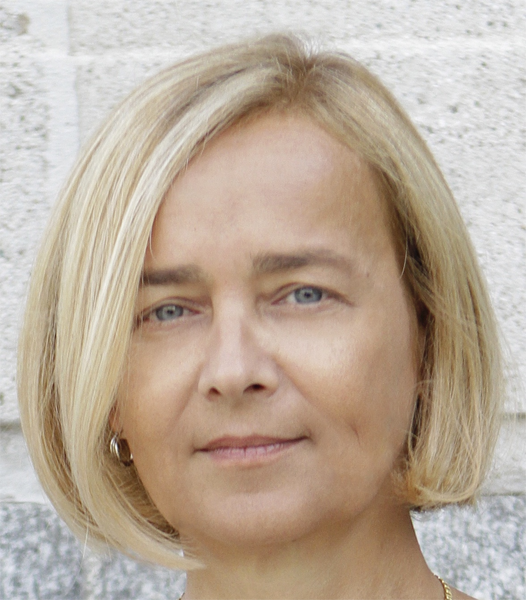
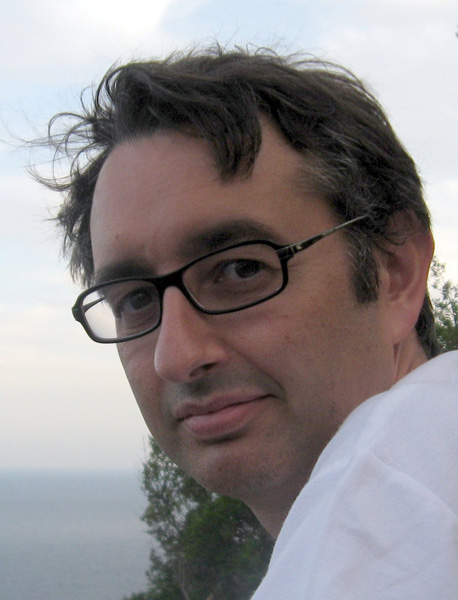
Beng Chin Ooi is a Lee Kong Chian Centennial Professor at the National University of Singapore (NUS), School of Computing (SoC). He holds a B.Sc. (1st Class Honors) and Ph.D. in Computer Science from Monash University. His research focuses on database systems, large-scale analytics, and distributed computing. He has held leadership roles including Dean of School of Computing (2007–2013) and Director of Smart Systems Institute (2011–2021). Key achievements include the Singapore President’s Science Award (2011), ACM Fellow (2011), IEEE Fellow (2009), and multiple best paper awards. His work emphasizes scalable data management, blockchain systems, and healthcare data analytics. Education: Monash University (B.Sc., Ph.D.) Leadership: Dean (SoC), Director (Smart Systems Institute) Awards: Over 15 major honors including ACM SIGMOD E.F. Codd Innovations Award (2020) His research spans distributed databases, big data systems, and innovative applications of blockchain technology. Recent work includes NASI (neural architecture search) and Rafiki (ML-as-a-service).
Professor Marta Zofia Kwiatkowska is Professor of Computing Systems and Fellow of Trinity College at the University of Oxford, where she has held a faculty position since 2007. She previously served as Professor of Computer Science at the University of Birmingham (2001–2007), Reader and Lecturer at the University of Birmingham (1994–2001), and Lecturer at the University of Leicester (1986–1994). Her academic career began as Assistant Professor at the Jagiellonian University in Kraków, Poland (1980–1988). Education: BSc/MSc in Computer Science, Jagiellonian University, Kraków MA, University of Oxford PhD, University of Leicester Research Interests: Professor Kwiatkowska spearheaded the development of probabilistic and quantitative verification methods on the international stage. Her work bridges theory and practice through the PRISM model checker—the leading software tool in probabilistic model checking—used worldwide for research and teaching. Application domains include communication and security protocols , nanotechnology designs , power management , ubiquitous computing and systems biology . She investigates automated verification , temporal logics , semantic models for concurrency , real-time systems , and biological process modelling . Current grant funding exceeds £3.7 million from EPSRC, EU and ERC, including the prestigious ERC Advanced Grant VERIWARE. Scientific Awards & Honours: Fellow of the Royal Society Fellow of the ACM Fellow of the European Association for Theoretical Computer Science (EATCS) Fellow of the British Computer Society (BCS) Fellow of the Polish Society of Arts & Sciences Abroad ERC Advanced Grant VERIWARE (€2.046 M, 2010–2015) Top Cited Article Award, Theoretical Computer Science (2005–2010) Best Paper Award, QEST 2006 Doctoral Supervision & Grants: Professor Kwiatkowska actively supervises doctoral students (D.Phil. at Oxford) and post-doctoral researchers. She welcomes applications in areas aligned with her research interests, detailed here . Current students include Charlie Griffin, Daqian Shao, Matthew Yuan and Minghao Liu; past students and researchers number over twenty, many now in faculty or industry leadership roles. Laboratory & Teams: She leads the Oxford Quantitative Verification group within the Department of Computer Science. Ongoing projects include FUN2MODEL, ELSA, FAIR and the flagship PRISM probabilistic model checker. The group maintains strong collaborations with biological, robotics and engineering teams worldwide.
Dr. Alexander Plopski is an Assistant Professor at the Institute of Visual Computing, Technische Universität Graz. His research focuses on advancing augmented reality (AR) technologies, human-computer interaction (HCI), and optical display systems. He holds a PhD, M.Sc., and BSc in relevant fields. His work emphasizes perceptual optimization in AR displays, eye tracking integration, and accessibility solutions for color vision deficiencies. Key research areas include gaze-contingent AR interfaces, light field manipulation for extended reality, and multimodal interaction techniques. Notable contributions include the development of the 'guitARhero' interactive AR guitar tutorial system and studies on focal distance effects in optical see-through displays. His publications span topics from AR display calibration to gesture recognition using radar sensing. He has explored applications in industrial training, medical AR, and robotic telemanipulation. His work often bridges theoretical perceptual studies with practical system implementations, aiming to enhance user experience and accessibility in AR/VR environments.
Univ.-Prof. Martin Pinzger is a Professor at the Department of Informatics Systems, Alpen-Adria-Universität Klagenfurt. He serves as Head of Department and Member of the Senate, actively contributing to academic governance. Research Focus: Automating Software Engineering Tasks, Mining Software Repositories, Program Analysis, Software Evolution and Visualization Recent Work: Developing tools for API evolution analysis, cybersecurity AI (CAI), robotics benchmarking (RobotPerf), and dependency validation His research combines empirical studies with tool development for software maintenance and security. Current projects address challenges in REST API breaking changes, cloud security certifications, and robotic system performance evaluation. Publications since 2023 demonstrate continued engagement with topics spanning AI-driven code segmentation, microservice API evolution, and cybersecurity tool development. Key trends include cross-disciplinary applications of NLP to software engineering and security-focused tool creation. Contact: martin.pinzger@aau.at
Philipp Haindl is a lecturer at the Department of Computer Science and Security at St. Poelten University of Applied Sciences. His work focuses on software engineering, cybersecurity, and AI integration in education and manufacturing. Software Engineering Cybersecurity Artificial Intelligence DevOps Quality Assurance Research Interests: Dr. Haindl explores software metrics, inter-service security in microservices, and AI tools like ChatGPT in programming education. He investigates quality models and non-functional requirements in DevOps environments. Publications: Recent work includes studies on ChatGPT's impact in software engineering education, systematic reviews of microservice security, and frameworks for human-AI teaming in manufacturing.
University of Applied Sciences Upper AustriaAustria
Roman Franz Froschauer is a Professor of Production Informatics at the Upper Austria University of Applied Sciences, Research Center Wels. Since 2018, he has served as Director of Studies for the Master's program in Robotic Systems Engineering and leads the Smart Automation & Robotics research group. His career spans academic and industrial roles, including senior software development and project management at AlpinaTec Technical Products GmbH (2010-2016). Education: Ph.D. in Computer Science (2010) from Johannes Kepler University Linz; Master's in Industrial Informatics (2005) from Upper Austria University of Applied Sciences. Research Areas: Software engineering for intelligent automation systems, human-robot interaction (HRI), control systems, and applications of IEC 61499 standards. His work focuses on proactive collaboration, trajectory planning, and user-centered design for assistive robots in office and industrial settings. Scientific Activities: Active in peer-review, conference organization, and technology development. Projects include VRoboCoop (human-robot trust), MARIE (office robotics), and Autility (automated utility vehicles). Key Contributions: Frameworks for modular manufacturing (PlugBot), skill-based engineering, and intralogistics automation (ATLAS).
Donatella Sciuto is a Full Professor of Computer Science and Engineering at Politecnico di Milano, serving as Executive Vice Rector overseeing research strategies. She holds a PhD from the University of Colorado, Boulder and an MBA from Bocconi University. Her research focuses on embedded systems design, low-power electronics, and cyber-physical systems, with contributions to smart cities and ICT infrastructure. Education: Bachelor's in Electronic Engineering, Politecnico di Milano (1984) PhD in Electrical and Computer Engineering, University of Colorado, Boulder MBA, SDA Bocconi School of Management Research Interests: Embedded systems, multiprocessor architectures, hardware/software co-design, power-efficient computing, and building automation via IoT technologies. She leads the Embedded Systems Design research group at Politecnico di Milano and coordinates EU-funded projects in smart cities and reconfigurable systems. Awards: IBM Women Leaders in AI (2021) IEEE Fellow (2011) EDAA Fellow (2010) Outstanding Contribution Award, IEEE Computer Society (2009) Professional Roles: Board Member: Bank of Italy, Istituto Italiano di Tecnologia, STM, Avio Former President, IEEE Council of Electronic Design Automation (2011-2013) Executive Committee Member, Design Automation and Test in Europe (DATE) conference Labs/Teams: Leads the Embedded Systems Design and Design Methodologies group at Politecnico di Milano, collaborating with CEFRIEL on executive education programs in embedded systems and IoT.
Peter Mohr-Ziak is a researcher affiliated with both the Institute of Computer Graphics and Vision at the University of Technology Graz (TU Graz) and VRVis Forschungs GmbH. His primary focus areas include Augmented Reality (AR) and Mixed Reality (MR) systems, specifically in the domains of AR visualization, content generation for AR, and head-mounted display (HMD) technologies. He is actively involved in projects with AVL List GmbH in addition to his academic research. Academic Rank: Researcher at TU Graz Education: Telematics, TU Graz Peter's research interests center on creating interactive AR systems with applications in industrial assembly, remote assistance, and education. His work spans technical aspects of AR visualization and practical implementations for skill training (e.g., guitar tutorials) and complex tasks like maxillofacial surgery. He investigates spatial rendering techniques, adaptive perspective models, and light field applications in mixed reality environments. Recent research trends include: 2024: Expanding into human-robot interaction and AR affordance templates 2023: Developing interactive guitar tutorials and state-aware configuration detection systems 2022: Advancing focus cues in video see-through MR and assembly instruction authoring 2019-2020: Improving HMD interaction with TrackCap and light field remote assistance 2017: Creating adaptive perspective rendering and video tutorial retargeting systems Scientific recognition includes: 2021: ISMAR Best Conference Paper 2017: CHI Best Paper Honorable Mention He contributes to projects at TU Graz's Institute of Computer Graphics and Vision, including collaborations with VRVis Forschungs GmbH and AVL List GmbH, while maintaining personal interests in photography and drone flying.
Jürgen Cito is an Associate Professor in the Department of Software Engineering at the Faculty of Informatics, TU Wien, where he leads research in probabilistic programming, security, and configuration management. His work is supported by major grants from the Austrian Science Fund (FWF), European Commission, and Meta Platforms, Inc., with active projects spanning 2022-2027. His research focuses on the intersection of software engineering and machine learning, particularly in static analysis of probabilistic programs, AI-driven penetration testing, and infrastructure security. Key contributions include identifying secret exposure in configuration files, grammar inference for ad hoc parsers, and performance prediction from source code, often combining empirical studies with tool development. Analysis of his 15 most recent publications (2020-2024) reveals three dominant trends: (1) Security vulnerabilities in configuration management systems, especially secret leakage in dotfiles; (2) Application of large language models to offensive security testing; and (3) Machine learning techniques for performance prediction and AutoML optimization in software contexts. Cito has supervised 22 Master's students on cutting-edge topics including AI security, infrastructure as code, and program analysis. His current research portfolio includes: Types4Strings (FWF, 2024-2027): Type systems for string processing Cloud Open Source Research Mobility Network (EU, 2023-2026): Open-source cloud infrastructure Software Assistants for Probabilistic Programming (Meta, 2022-2026): AI tools for probabilistic code He is embedded in TU Wien's Institute of Software Technology and Interactive Systems (E194), collaborating on cross-institutional projects focused on software security and developer tooling, with particular emphasis on empirical validation of security practices and configuration management systems.
Frank Leymann is a Professor of Computer Science at the University of Stuttgart, where he serves as Director and Founder of the Institute of Architecture of Application Systems. His career spans academia and industry, including 20 years at IBM Germany as a Software Architect. Research Focus: Workflow Management, Service Computing, Cloud Computing, Quantum Computing, Pattern Languages, Digital Humanities. Standards: Co-author of BPEL, BPMN, WS-RF, TOSCA, Human Task specifications. His work on quantum computing emphasizes hybrid quantum-classical applications and practical integration challenges. He pioneered the OASIS cloud standard TOSCA and developed the open-source OpenTOSCA platform, which has over 1,000 downloads. Scientific awards include an Honorary Doctorate from the University of Crete (2015), IBM Distinguished Engineer (2000), and IBM Academy of Technology membership (1996). Google Scholar cites his work over 43,300 times (H-Index 89), ranking him among the world's top computer scientists.
Javier Esparza is a Professor and Chair of Foundations of Software Reliability and Theoretical Computer Science at the Technical University of Munich (TUM), Germany. He has held academic positions at several prestigious institutions including the University of Stuttgart, University of Edinburgh, and Technische Universität München since 1990. His work focuses on theoretical computer science with applications in software verification and formal methods. His educational background includes: M.S. in (Theoretical) Physics from the University of Zaragoza (Spain, 1987) Ph.D. in Computer Science from the University of Zaragoza (Spain, 1990) Habilitation in Computer Science from the University of Hildesheim (Germany, 1994) Professor Esparza's research interests span multiple areas of theoretical computer science and formal methods. He has made significant contributions to the fields of software verification, model checking, and Petri nets. His work on algorithms for the design and verification of reactive and distributed systems has been particularly influential. He has developed theoretical foundations and practical tools for analyzing systems with infinitely many states, pushing the boundaries of what can be formally verified. His research on formal models for distributed systems, particularly Petri nets and process algebras, has provided new insights into concurrency theory. Additionally, his work on the analysis of probabilistic systems and applications of linear and constraint programming to verification problems has opened new avenues for research. His recent publications demonstrate a continued focus on fundamental problems in verification and theoretical computer science, with particular emphasis on population protocols, model checking techniques, and theoretical foundations of distributed computing. His work bridges the gap between theoretical insights and practical applications in software reliability. His scientific achievements have been recognized with several prestigious awards: Doctor honoris causa in Informatics, Masaryk University (2009) Dissertation prize, University of Zaragoza (1990) TeachInf Award for best Bachelor course at TU München (2009) TeachInf Award for best Master course at TU München (2010) Diploma for excellent Teaching, TU München (2011) Member of Academia Europaea (2011) Professor Esparza has successfully advised numerous PhD students who have gone on to make their own significant contributions to computer science. His research has been consistently supported by competitive grants from major funding bodies including the German Research Council (DFG), the British Engineering and Physical Sciences Research Council, and the European Union. His research projects have often involved international collaborations, reflecting the global recognition of his work. He leads a vibrant research group at TUM focused on theoretical computer science and verification. The group has developed several influential software tools including Rabinizer, Peregrine, Owl, and Strix, which are widely used in both academia and industry for verification tasks. His group maintains strong collaborations with research institutions worldwide, particularly in Europe.
Michael Hofbaur is a full Professor at the University of Klagenfurt, where he works in the Institute for Intelligent Systems Technologies within the Faculty of Technical Sciences. His office is located at Lakesidepark Haus B04, Ebene 2, Raum B04.2.206, and he can be contacted at michael.hofbaur@aau.at. Professor Hofbaur has established himself as a leading researcher in robotics with particular expertise in human-robot collaboration, safety systems, and formal verification methods for robotic applications. His research interests focus on the intersection of robotics, safety engineering, and human factors. Professor Hofbaur has made significant contributions to the field of robot safety, particularly in developing methods for safe human-robot collaboration without physical barriers. His work spans multiple dimensions of robotics including kinematic analysis, motion planning, sensor integration, and formal verification techniques to ensure system reliability. He has published extensively on topics such as obstacle avoidance strategies, proximity perception systems, and methods to enhance flexibility in collaborative workspaces while maintaining safety standards. Analysis of his recent publications reveals a clear trend toward integrating formal verification methods with practical robotics applications, particularly focusing on safety-critical aspects of human-robot interaction. His research increasingly incorporates advanced sensing technologies like radar and capacitive proximity sensors to create more intelligent and responsive robotic systems. The work demonstrates a progression from theoretical kinematic analyses toward practical implementations in industrial and collaborative settings, with a consistent emphasis on safety assurance throughout. Professor Hofbaur's research portfolio includes numerous projects related to robotic safety, formal verification, and human-robot collaboration, though specific awards directly attributed to him are not listed in the available materials. His work appears to have significant practical applications in industrial automation and collaborative robotics settings. While specific information about his students and advising activities isn't provided in the available materials, his extensive publication record spanning over two decades suggests he has likely supervised numerous graduate students and postdoctoral researchers. His research activities indicate involvement in both theoretical and applied projects, potentially including collaborations with industry partners given the practical nature of many of his publications. Based on his departmental affiliation and research focus, Professor Hofbaur is likely associated with robotics laboratories at the University of Klagenfurt that specialize in human-robot interaction, safety systems, and formal verification of robotic workflows. These facilities likely include experimental setups for testing collaborative robots, sensor integration systems, and simulation environments for verifying robotic behaviors before physical implementation.
Prof. Daniel Müller-Gritschneder is a Full Professor of Computer Architecture at TU Wien's Institute of Computer Engineering (Faculty of Informatics) since 2024. Previously, he held roles as research group leader at TU Munich's Chair of Electronic Design Automation and acting professor for Real-Time Systems at TU Munich. He earned his Dipl.-Ing. (2003), Dr.-Ing. (2009), and Habilitation (2019) from TU Munich. His research focuses on Electronic System Level Design, RISC-V domain-specific architectures, embedded ML compiler toolchains, functional safety, and hardware security. He collaborates extensively with industry partners like Infineon, Bosch, BMW, and Mercedes. Active in the RISC-V community, he co-initiated the RISC-V Summit Europe and serves on steering committees for conferences such as DAC, ICCAD, and DATE. Key Research Themes: RISC-V ISA extensions and toolchain development Edge AI/ML on embedded systems Secure and safety-critical processor design High-level synthesis and performance simulation Awards: Best Student Paper Award (2024), IEEE Winter Conference on Computer Vision Habilitationspreis (2019), TU Munich Alumni Association Senior IEEE Member (2019) Teaching includes courses like 'High-Level Synthesis', 'Computer Organization', and 'Embedded Systems Design'. Current projects involve lightweight software for IoT devices and pre-silicon validation of safety-critical RISC-V systems. His work bridges academic research with industrial application through collaborative projects and open-source tool development.
Prof. Gerald Steinbauer-Wagner is an Associate Professor at TU Graz's Institute of Software Engineering and Artificial Intelligence. He specializes in autonomous intelligent systems, focusing on decision-making architectures for robots in uncertain environments. His research integrates software engineering, AI, and robotics to develop reliable systems for applications in disaster response, planetary exploration, and industrial automation. Research Interests: Steinbauer-Wagner's work addresses challenges such as robot navigation in unstructured terrains, human-robot collaboration, and trustworthiness in autonomous systems. Key areas include explainable AI, fault diagnosis, and multi-robot coordination. His team explores solutions for off-road robotics, collective perception, and certification of autonomous systems. Recent Projects: Current initiatives include developing autonomous systems for subterranean rescue missions (ROBO-MOLE), optimizing robot localization using machine learning, and creating educational frameworks for AI literacy in schools. His group also contributes to the RoboCup Logistics League and planetary exploration cascades through analog missions like AMADEE-20. Awards & Recognition: No specific awards listed, but his work has been recognized through extensive publications in top venues like IEEE/RSJ IROS, ICRA, and RoboCup symposiums. Lab & Teams: Leads the Autonomous Intelligent Systems (AIS) research group at TU Graz, collaborating with industry partners like the Smart Factory. His team develops integrated robot systems for production, logistics, and disaster response scenarios.
Simon Haller-Seeber is a Systems Engineer at the Department of Computer Science (Intelligent and Interactive Systems) at the University of Innsbruck, a role he has held since 2010. He also serves as a part-time Lecturer in Scientific Computing and Science Education. His academic background includes a Master's degree in Computer Science (2024) and a Bachelor's degree (2006), alongside professional certifications like Engineer Degree (2012) and Apprentice Instructor (2014). Research & Education: Focused on Free Software, System Automation, and Educational Robotics. He co-founded the STAIR-Lab and contributed to initiatives like ROSSINI workshops promoting youth robotics innovation. His work bridges robotics with pedagogy, emphasizing open-source tools and accessible education platforms. Publications: Recent works include web-based robotics IDEs (2025), AI-driven training frameworks (2023), and taxonomies for robotics action models (2019). His 2020 paper on recycling automation won the ROBOVIS Best Paper Award. Grants & Projects: Led EU-funded projects like IMAGINE (2018–2021) and participated in Squirrel/PaCMan (2014–2018). Co-organizes RoboCup Junior and the Computer Camp Malbun. Awards & Roles: Recognized for educational robotics contributions. Active in academic governance as former Senate member and board chair of 'brainity' and 'Natur Mensch Technik' associations.