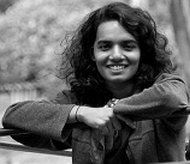
Ingela Nyström is a Professor in Visualization at Uppsala University's Department of Information Technology. She serves as the node coordinator for InfraVis and as Director of Postgraduate Studies at the Department of Information Technology. Her interdisciplinary work bridges Uppsala University's three academic domains through collaborations with the Centre for Image Analysis (CBA), Centre for Women's Mental Health (WOMHER), Uppsala Centre for Digital Humanities (CDHU), and Medtech Science & Innovation (MTSI). Medical image analysis 3D visualization Haptics in surgery planning Interactive segmentation Digital geometry Biomedical engineering Her recent research focuses on rotation-equivariant neural networks for biomedical image classification, interactive segmentation tools for cranio-maxillofacial surgery planning, and precision evaluation of intraoral scanning technologies. Publications since 2023 demonstrate continued work on 3D imaging protocols for implant dentistry and surgical applications. 2024: Equivariant CNNs for rotation-invariant biomedical imaging 2023: In vivo precision studies of full-arch implant scans 2021: Virtual surgical planning with haptic assistance 2016-2017: Multimodal robotics perception and 3D segmentation tools 2014: Orbital morphology analysis in craniosynostoses 2005-2011: Foundational work in 3D skeletons and fuzzy object measurements
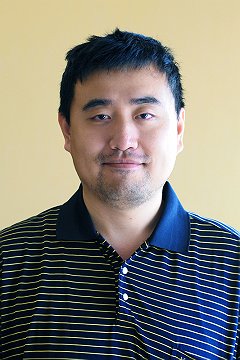
Xiaoyin Wang is an Associate Professor in the Department of Computer Science at the University of Texas at San Antonio, specializing in software testing, privacy, and program analysis. Her research focuses on enhancing software quality through innovative approaches to build systems, virtual reality testing, and privacy policy enforcement. She earned her PhD from Peking University in 2012 and completed postdoctoral work at UC Berkeley. Her research interests span Software Testing and Analysis , Software Privacy , Build Systems , and Virtual Reality Testing . She develops techniques for detecting privacy leaks in mobile apps, optimizing build scripts, and testing immersive applications. Her work bridges program analysis with practical software engineering challenges, particularly in security-critical contexts. Recent publications reveal strong trends in Virtual Reality testing frameworks (e.g., VRGuide, VRTest), automated build diagnostics (PExReport, HireBuild), and privacy policy verification (GUILeak, DAISY). Her research increasingly integrates machine learning for bug prediction and test oracle generation, with significant contributions to augmented reality testing and cross-project compatibility analysis. President's Research Achievement Award (UTSA, 2019) NSF CAREER Award (2019) for build script analysis Distinguished PhD Dissertation Awards from CCF (2013) and Peking University (2012) MSRA Fellowship (2009) Wang actively advises PhD students including Rodney Rodriguez (defended 2022, now at Accenture) and Xueling Zhang (defended 2021, now Assistant Professor at RIT). She leads NSF-funded projects including CAREER: Analysis and Repair of Build Scripts for DevOps and EAGER: Tracing Privacy-Policy Statements into Code . Her service includes chairing ICSE 2019 proceedings and serving on ASE/ICSE/ISSTA program committees. Current work focuses on security analysis for AR applications and automated privacy compliance verification.
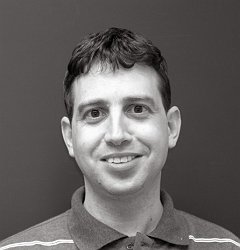
Shachar Itzhaky is an Associate Professor in the Department of Computer Science at Technion - Israel Institute of Technology, Haifa. His research spans multiple areas of programming languages, formal methods, and software engineering, with a focus on making program development and verification more accessible and efficient. He has served on program committees for numerous prestigious conferences including PLDI, POPL, SPLASH, and ICFP. Dr. Itzhaky's research interests center around program synthesis, automated reasoning, and formal verification. His work in program synthesis explores techniques for automatically generating programs from high-level specifications, with applications in end-user programming and software development. In automated reasoning, he has made significant contributions to e-graph based reasoning, invariant inference, and property-directed verification. His research in formal methods focuses on practical applications for program verification, particularly for data structures and security properties. An analysis of his recent publications reveals a strong focus on leveraging advanced formal techniques for practical program understanding and generation. His work consistently bridges theoretical foundations with practical applications, particularly in program synthesis, verification, and end-user programming tools. The trend shows increasing integration of machine learning techniques with traditional formal methods, as well as expanding applications to security and privacy domains. ACM SIGPLAN John C. Reynolds Doctoral Dissertation Award Dr. Itzhaky has been actively involved in the programming languages research community, serving on numerous program committees and contributing to the advancement of formal methods and program synthesis. His work has practical implications for software development tools, security analysis, and end-user programming environments. While specific grant information isn't detailed in the provided text, his extensive publication record in top-tier venues suggests successful funding for his research endeavors. His work on projects like Object Spreadsheets and Lifty demonstrates a commitment to creating practical tools that address real-world programming challenges. Dr. Itzhaky's research is conducted within the vibrant programming languages and formal methods group at Technion's Computer Science department. His work intersects with multiple research threads including program synthesis, verification, and security, suggesting collaboration across these areas within the department. His tools like EPR-based Verification, PDR∀, and VeriCon represent significant technical contributions that likely form the basis of ongoing research projects with students and collaborators.
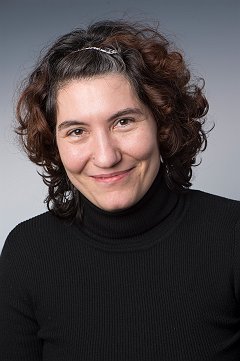
Laura Dietz is a tenured Associate Professor in the Department of Computer Science at the University of New Hampshire, where she leads the TREMA lab. Her academic journey began with a PhD from the Max Planck Institute for Informatics in Saarbruecken, Germany (2011), followed by postdoctoral positions at the University of Massachusetts Amherst (2010-2015) and University of Mannheim (2015-2016). Her educational background includes PhD studies at both the Max Planck Institute for Informatics (2007-2011) under Prof. Gerhard Weikum and Prof. Tobias Scheffer, and earlier research at Humboldt University in Berlin. She has built a distinguished career bridging theoretical computer science with practical applications in information retrieval and machine learning. Dietz's research primarily focuses on the intersection of information retrieval, natural language processing, and knowledge graphs, with a parallel research initiative in watershed data science. She is particularly known for her work on entity-aspect linking, complex answer retrieval, and the vision of automatic Wikipedia construction. Her approach integrates fine-grained knowledge annotations with text understanding to create comprehensive information systems that go beyond traditional 10-blue-links search paradigms. In watershed data science, she applies similar machine learning techniques to environmental data streams, focusing on solute transport analysis during storm events. Her recent publications reveal a strong trend toward fine-grained semantic understanding, particularly in entity-oriented search tasks. She has pioneered methods for entity-aspect linking that significantly improve retrieval accuracy by capturing different contexts in which entities appear. Her work increasingly integrates knowledge graphs with neural architectures, showing sophisticated understanding of how to leverage both structured and unstructured information for better search experiences. Best paper award at JCDL 2018 for work on entity-aspect linking NSF CAREER Award (2019-2023) for "Utilizing Fine-grained Knowledge Annotations in Text Understanding and Retrieval" OSSI Award 2013 from UMass ICB3 for open-source hardware/software Dietz actively mentors PhD and Masters students through the TREMA lab, with current research focusing on entity ranking, topic extraction, conversational search, and watershed forecasting. Her grant portfolio includes the NSF CAREER award and funding from the Northeast Big Data Innovation Hub for forecasting salinity in rivers during storm events. She has also coordinated the TREC Complex Answer Retrieval track (2017-2019), creating important benchmarks for the IR community. The TREMA lab (Text Retrieval, Entity Modeling, and Applications) serves as the hub for Dietz's research activities, bringing together students and collaborators to work on cutting-edge problems in information access. The lab's work spans both theoretical contributions to information retrieval and practical applications in domains ranging from environmental science to scientific publication analysis.
Yun Lin is an Associate Professor and Deputy Head of the Department of Computer Science and Technology at Shanghai Jiao Tong University's School of Computer Science. Prior to joining SJTU, Lin served as a Research Assistant Professor at the National University of Singapore working with Prof. Dong Jin Song. Lin leads the CoPhi ("Code Philia") research group, which focuses on the intersection of Software Engineering, AI, and Security. Lin's research spans three major areas: Automatic Programming (including code editing, software testing, and debugging), Explainable AI (focusing on representation interpretation and training data attribution), and Web Misinformation (particularly phishing and scam detection). The research has resulted in numerous tools including CoEdPilot for code editing recommendation, DeepDebugger for interactive debugging of deep classifiers, and Phishpedia for phishing webpage detection. Lin's recent publications demonstrate a strong trend toward integrating AI techniques, particularly large language models and vision language models, with traditional software engineering and security tasks. The work shows increasing sophistication in understanding project context, handling interactive nature of programming tasks, and addressing security challenges in the age of generative AI. Key themes include consistency-based approaches for anomaly detection, agent-based frameworks for complex tasks, and hybrid models that combine symbolic reasoning with neural approaches. ACM Distinguished Paper Award in ICSE'18 for "Towards Optimal Concolic Testing" Distinguished Reviewer Award in FSE'25 2nd prize Research Prototype Award in ChinaSoft'24 Lin advises a large team of PhD, Master's, and undergraduate students, with several publications co-authored with students appearing in top venues. Current research is supported by collaborations with National University of Singapore, particularly with Prof. Dong Jin Song, and includes projects on code editing, GUI testing, and phishing detection. The CoPhi group maintains active development of multiple research tools and datasets. The CoPhi research group under Lin's leadership focuses on building practical tools that bridge the gap between theoretical advances and real-world programming and security challenges. The group's work spans from fundamental program analysis techniques to applied security solutions, with an increasing emphasis on leveraging AI capabilities while maintaining explainability and reliability.
Professor Przemysław Herman is a full Professor at Poznań University of Technology, affiliated with the Faculty of Automatic Control, Robotics and Electrical Engineering, specifically in the Institute of Automation and Robotics. His primary research focuses on control systems for robotic vehicles, particularly marine and underwater vehicles, with extensive work on trajectory tracking algorithms and quasi-velocities based control methods. Professor Herman's research interests span Robotics, Control Systems, Marine Vehicles Control, Underwater Vehicles, Trajectory Tracking, and Quasi-Velocities Based Control. His work addresses complex challenges in controlling asymmetric underactuated vehicles, with special attention to horizontal motion dynamics and vehicles with shifted center of mass. He has developed specialized controllers for underwater vehicles, hovercrafts, and indoor airships, often validating his approaches through detailed numerical simulations. His publication record shows a consistent research trajectory from 2001 through 2025, with recent publications focusing on advanced control algorithms for marine vehicles. Professor Herman has supervised two doctoral dissertations and reviewed three others, demonstrating his role in mentoring the next generation of researchers in robotics and control systems. Professor Herman's research has significant applications in marine robotics, autonomous systems, and vehicle control engineering. His work on applying underwater vehicle controllers to hovercraft systems demonstrates the cross-platform applicability of his research contributions.
Laurent Crouzeix is a Lecturer at the University Institute of Technology in Mechanical and Production Engineering of Toulouse (IUT GMP), part of the University of Toulouse. He is a member of the Composite Materials and Structures group (MSC) at the Clément Ader Institute, where he serves as Co-Animator of the Implementation, Processes and Properties (MaPP) axis. His academic position is firmly within the engineering faculty, focusing on practical and theoretical aspects of composite materials. Professor Crouzeix's research centers on the critical relationship between manufacturing processes of composite structures and their resulting mechanical properties. His work specifically addresses: Effects of defects and variabilities generated during production of composite parts from thermosetting prepregs Manual draping and autoclaving processes Abrasive water jet machining for composite structure repair Automatic production of thermoplastic composite parts by strip deposition Methods for repairing thermoset (TD) and thermoplastic (TP) composite structures His research approach combines rigorous experimental observations with sophisticated numerical simulations to predict mechanical behavior. This dual methodology has resulted in approximately 70 scientific contributions spanning from 2006 to 2022, demonstrating consistent productivity in high-impact journals such as Composites Part A, Composites Part B, and Composite Structures. His publication trend shows particular focus on abrasive water jet applications and composite repair methodologies in recent years. Professor Crouzeix plays a significant role in managing experimental facilities at ICA Toulouse, overseeing critical equipment including multiaxial test frames, polymerization autoclaves, and advanced machining systems for composite materials. His technical leadership extends to coordinating spaces and resources for the Jacqueline Auriol training center and participating in various institutional committees. As an educator, he coordinates solid mechanics courses, teaches composite materials manufacturing and repair, and covers Aeronautical Sciences for undergraduate students, while also contributing to Master's level education in mechanical testing and composite structure repair through the European Master Erasmus Mundus program.
Adriano Jorge Cardoso Moreira is an Associate Professor with Habilitation at the Department of Information Systems, School of Engineering, University of Minho, Portugal. He holds multiple leadership roles including Scientific Coordinator of Urban Computing at Centro de Computação Gráfica and Director of the MAP-tele PhD Program. His research is conducted primarily through the Urban Computing Lab , focusing on smart place technologies. Education: PhD in Electrical Engineering (1997) and Bachelor's in Electronic and Telecommunications Engineering (1989), both from University of Aveiro, Portugal. Research Focus: His work spans indoor positioning, mobile/context-aware systems, urban computing, and wireless network simulation. Key innovations include fingerprinting algorithms for localization, multi-sensor fusion techniques, and human mobility analysis. Research outputs consistently address real-world industrial challenges such as warehouse management, factory automation, and urban infrastructure. Research Output Trends: Recent publications (2021-2023) emphasize practical applications of Wi-Fi/LoRaWAN fingerprinting, machine learning for sensor calibration, and industrial vehicle tracking. Over 70% of recent works involve experimental validation in real environments, reflecting a strong applied research focus. Key thematic clusters include radio map optimization, multi-sensor datasets, and scalability of positioning systems. Awards & Recognition: First Prize, EvAAL-ETRI Indoor Localization Competition (Off-site track, 2015 & 2017) Second Prize, EvAAL-ETRI Indoor Localization Competition (2016) IEEE Senior Member status Patent in computational geometry Projects & Funding: He leads/participates in numerous EU/national projects including: ORIENTATE (2021-2023): Low-cost indoor positioning for factories Lab4U&Spaces (2021-2023): Urban space solutions AR WARE (2018-2022): AR for warehouse management SAMU (2015-2018): Smart autonomous mobile units Lab & Team: He established/leads the Urban Computing Lab developing technologies for smart environments. Previously headed the Computer Communications and Pervasive Media Group (until 2016). Current team includes PhD/Master students working on wireless positioning and mobility analysis.
Anthony Galt Greenwald is a prominent social psychologist and Professor of Psychology at the University of Washington, where he has been on faculty since 1986. He received his B.A. from Yale University in 1959, followed by an M.A. (1961) and Ph.D. (1963) from Harvard University. After completing his doctoral studies, he held a postdoctoral fellowship at the Educational Testing Service from 1963 to 1965. Greenwald is best known for developing the Implicit Association Test (IAT), a revolutionary method for measuring unconscious biases and implicit attitudes. His research has fundamentally changed how psychologists understand the relationship between conscious and unconscious cognition, particularly in the areas of prejudice, stereotypes, and self-esteem. He co-founded Project Implicit in 1998, a non-profit organization dedicated to research and education about implicit social cognition that has collected data from millions of participants worldwide. His work demonstrates that people can hold implicit biases that operate outside of conscious awareness or control, challenging traditional views of prejudice. This finding has significant implications for understanding discrimination across numerous domains including healthcare, education, legal contexts, and organizational settings. Greenwald's publications show a consistent focus on methodological rigor, with recent work addressing statistical practices, data transparency, and practical applications of implicit bias research. Greenwald's most influential publications include 'Measuring individual differences in implicit cognition: the implicit association test' (1998), 'Implicit social cognition: attitudes, self-esteem, and stereotypes' (1995), and the popular book 'Blindspot: Hidden Biases of Good People' (2013) co-authored with Mahzarin Banaji. His ongoing research continues to refine implicit bias measurement techniques and explore potential remedies for implicit bias. Greenwald has received numerous accolades for his work, including the Distinguished Scientific Contribution Award from the American Psychological Association. His research has been cited tens of thousands of times, making him one of the most influential psychologists of his generation. He remains active in research and continues to mentor students at the University of Washington.
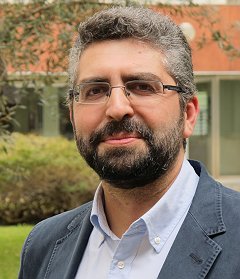
Antonio Ruiz-Cortés is Professor of Software and Service Engineering at the University of Seville and an elected member of the Academy of Europe. He currently heads the Applied Software Engineering Group at the University of Seville and has served as President of the Spanish Society on Software Engineering (SISTEDES) since September 2018. His research spans multiple critical areas of modern software engineering: Service-Oriented Computing Software Architecture Business Process Management Testing methodologies Software Product Lines Automatic Model Analysis Professor Ruiz-Cortés has established himself as a leading researcher in REST API testing and verification, with multiple influential publications in top software engineering conferences. His work bridges traditional software engineering with emerging domains like quantum computing, demonstrating remarkable adaptability. He has developed practical tools including RESTest and AGORA that address real-world testing challenges faced by industry practitioners. His scientific contributions have been recognized with the Most Influential Paper award at SPLC 2017. He serves as associate editor for Springer Computing and has organized major conferences including JCIS 2008, SPLC 2017, SISTEDES 2018 and BPM 2020, demonstrating significant leadership in the academic community. Professor Ruiz-Cortés maintains active research funding supporting his work in service-oriented computing and software testing, though specific grant details aren't provided in the available information. His presidency of SISTEDES reflects his commitment to advancing software engineering research in Spain.
Ajitha Rajan is a Professor (Personal Chair of Software Testing & Verification) at the School of Informatics, University of Edinburgh. She joined the university in December 2012 as a Reader (equivalent to Associate Professor in American terms) and was promoted to Professor in 2024. Prior to her position at Edinburgh, she held postdoctoral positions at Oxford University and Laboratoire d'Informatique de Grenoble in France. She earned her PhD in Computer Science from the University of Minnesota in August 2009 under Professor Mats Heimdahl. Her research focuses on two primary directions: Automated Software Testing (including test input generation, test oracles, and coverage measurement) and Biomedical AI (particularly cancer survival models and interpretability for biological sequences and medical images). Her work has applications in safety-critical systems, blockchains, embedded systems, and medical diagnostics. She has made significant contributions to explainable AI for healthcare applications, especially in lung cancer detection and cancer survival analysis. Her recent publications demonstrate a strong trend toward interdisciplinary research at the intersection of software engineering and biomedical applications. She has numerous publications in top venues including ICSE, ASE, and healthcare-focused conferences. Her work increasingly focuses on making AI systems more interpretable and trustworthy, particularly in medical contexts where model decisions can have life-or-death consequences. ACM SIGSOFT Distinguished Reviewer Award, ISSTA 2025 Best Paper Award at ICHI 2025 Promoted to Professor (Chair in Software Testing & Verification) 2024 SICSA Best Supervisor Award 2024 ACM Distinguished Paper Award 2008 Professor Rajan actively supervises PhD students in both software testing and biomedical AI domains. She leads several funded projects including MANIFEST (a cancer immunotherapy response research platform), a Huawei Joint Lab project on RobustCheck, a Royal Society Industry Fellowship on AutoTest, and the KATY project on clinical knowledge for personalized medicine. Her research group includes current PhD students working on explainable AI for medical image analysis, scenario-based testing for autonomous driving, and protein design applications.