- Control Systems
- Robotics
- Humanoid Robots
- +۷ مورد دیگر
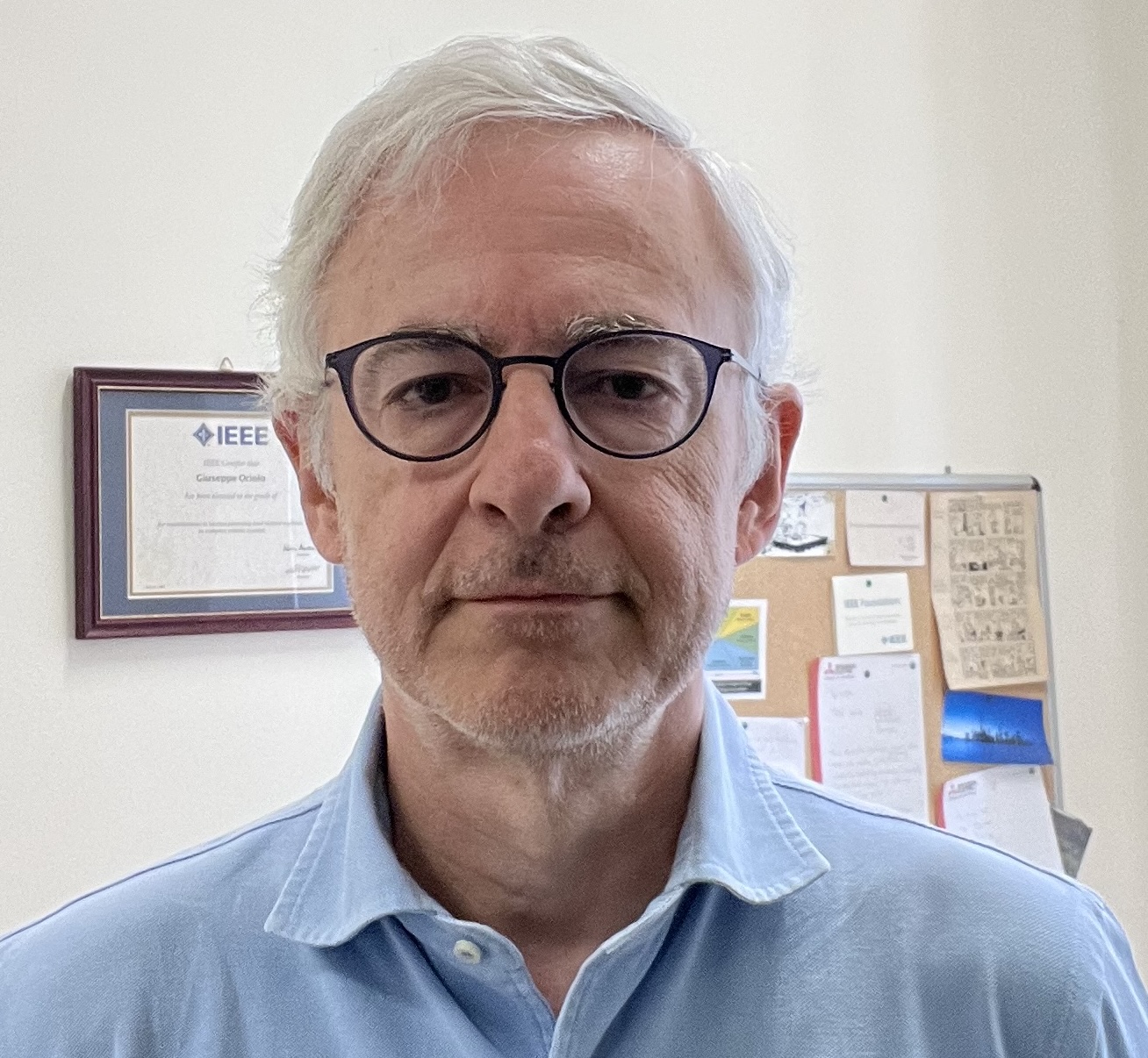
Joseph Oriolo is a Full Professor of Automatic Control and Robotics at the Department of Computer, Control and Management Engineering (DIAG) at Sapienza University of Rome, where he also serves as the director of the DIAG Robotics Lab. He received his Ph.D. in Control Engineering from Sapienza University of Rome in 1992 and joined the DIAG in 1994. As an IEEE Fellow, he has made significant contributions to the field of robotics and control systems. His research spans multiple areas within robotics and control engineering, with particular focus on humanoid robots , mobile robots , UAVs , visual motion control , multi-robot systems , and sensor-based navigation . His work bridges theoretical control systems with practical robotics applications, emphasizing motion planning, learning control, and kinematically redundant robots. His research has resulted in over 230 publications in international journals and conferences, as well as two books. An analysis of his recent publications (2022-2025) reveals a strong emphasis on advanced control techniques for humanoid and mobile robots, particularly Model Predictive Control (MPC) applications for gait generation, navigation, and manipulation. His work increasingly integrates vision-based approaches for safe human-robot interaction and navigation in complex environments, with a growing focus on real-world applications including crowd navigation and cooperative robotics. Best Paper Award at the 17th International Workshop on Human-Friendly Robotics (HFR 2024) IEEE Robotics and Automation Magazine Best Paper Award for 2020 IEEE Fellow Professor Oriolo has served in significant editorial roles including Associate Editor (2001-2005) and Senior Editor (2009-2014) of the IEEE Transactions on Robotics. He has been actively involved in major robotics conferences, serving as Organization Chair for the 2007 IEEE International Conference on Robotics and Automation in Rome and on the Program Committees of numerous international conferences including ICRA, IROS, and RSS. He currently teaches courses on Control Systems and Autonomous and Mobile Robotics at Sapienza University of Rome. As director of the DIAG Robotics Lab, he leads research efforts in humanoid robotics, mobile manipulation, and autonomous navigation. The lab focuses on developing control frameworks that enable robots to operate effectively in complex, dynamic environments, with applications ranging from industrial automation to human-robot collaboration.