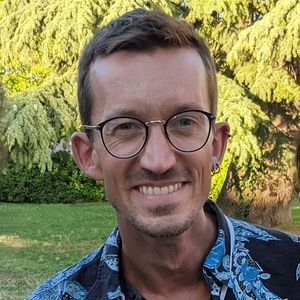
Carlos Ramisch is an Assistant Professor in Computer Science at Aix Marseille University, France, affiliated with the TALEP research group at LIS (Laboratoire d'Informatique et Systèmes). His work centers on computational linguistics and natural language processing, with a primary focus on multiword expressions (MWEs), language models, and semantic analysis. He actively contributes to the PARSEME community, organizing shared tasks on verbal MWE identification. His research includes developing the mwetoolkit for MWE discovery and SLICE for interpretable contextual embeddings. He has led funded projects such as SELEXINI (2022-2026) and PARSEME-FR (2016-2021). His methodological innovations span cross-lingual dependency parsing via typological features (NAACL 2019), compositionality prediction for nominal compounds (Computational Linguistics 2022), and lexical substitution datasets (IWCS 2017). He supervises students in NLP internships and co-authored the educational comic strip La grande aventure du TAL . His editorial roles include the LSP series on Phraseology and MWEs, and he has chaired multiple MWE workshops (2010-2022).
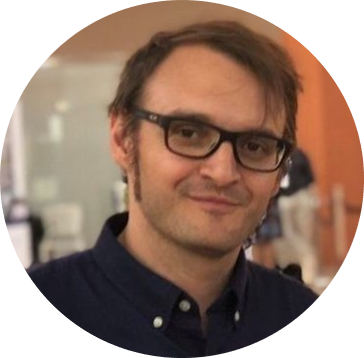
Brent Strickland is a Chargé de Recherche (Researcher) at the Institut Jean-Nicod , affiliated with CNRS/ENS/EHESS/PSL. His work focuses on how core knowledge systems —cognitive structures present from infancy—automatically influence adult processes like language, memory, and reasoning. Notably, he explores how these systems may explain universal patterns in grammatical categories (e.g., gender systems in languages) and guide higher-level cognition. Research Themes : Core knowledge in adults, language acquisition, cognitive biases, social category processing. Teams : Co-director of the Intelligence Collective team and member of the Linguæ team at Institut Jean-Nicod. His research bridges philosophy of mind , psychology , and linguistics , emphasizing evolutionary and computational perspectives.
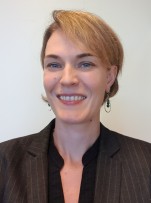
Celine Combes is a Lecturer in Developmental Psychology at the University of Angers, Faculty of Letters, Languages and Human Sciences (LLSH), Department of Psychology, where she has been faculty since 2015. Her research examines digital tool impacts on cognitive development in youth, with primary focus on SMS writing in adolescents and executive function development related to screen usage. Her educational background includes a Doctorate in Psychology from the University of Toulouse Jean Jaurès (2014). Key research interests span Developmental Psychology Cognitive processes in digital communication Executive function development Adolescent language behavior Digital media effects on child cognition Recent publications (2020-2022) demonstrate strong activity in screen time cohort studies, bullying dynamics, and executive function research, frequently appearing in Q1/Q2 journals. Her work shows consistent French institutional collaboration with emphasis on gender-specific analyses and adolescent populations. While no specific awards are documented, her publication record includes high-impact contributions to journals like Journal of School Violence (Q1) and International Journal of Bullying Prevention (Q2). Current research appears grant-supported through university channels, though specific funding sources aren't detailed. She maintains an active research profile within the Department of Psychology at Angers, focusing on empirical studies of digital interactions in developmental contexts without a named laboratory structure. Her work bridges theoretical psychology and practical applications for education and child development policy.
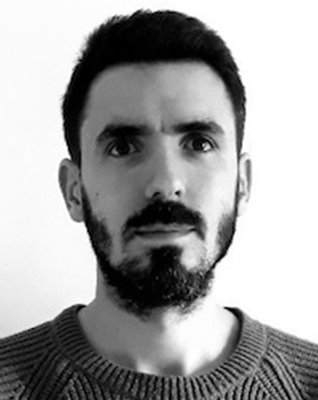
Allan Fousse is an Associate Professor in Data Engineering at ISAE-ENSMA, France, affiliated with Laboratory LIAS (a joint research unit between ISAE-ENSMA and ENSIP). His work bridges engineering and human-centered computing through task modeling and simulation research. His core research areas include: Data Engineering Human-Computer Interaction Task Modeling Software Engineering Simulation He specializes in developing task model simulators like ProtoTask to address inaccuracies in user interface design processes. Publications from 2012-2016 reveal consistent focus on model validation techniques, with trends showing evolution from tool development (2012) to comprehensive methodology reviews (2015) and accuracy refinement (2016) in task modeling. He operates within ISAE-ENSMA's Data Engineering team at Laboratory LIAS, which maintains parallel research groups in Automatic Control and Real Time systems across Poitiers and Chasseneuil campuses.
Clément QUINTON is an Associate Professor at the University of Lille, affiliated with both Inria and the CRIStAL laboratory (Centre de Recherche en Informatique, Signal et Automatique de Lille). He is an elected member of the laboratory council and maintains offices in both the Inria building (Room B312) and the M3 building (Room 224) at the Cité Scientifique campus. Dr. QUINTON is a member of the Spirals research team and holds the HDR (Habilitation à Diriger des Recherches), a French academic qualification that allows him to supervise PhD students. Dr. QUINTON's research spans several areas within computer science, with a primary focus on parallel computing, polyhedral models, and hardware acceleration. His work bridges theoretical computer science with practical applications in embedded systems and biomedical monitoring. He has made significant contributions to the fields of: Polyhedral compilation and loop optimization techniques High-level synthesis for FPGA-based hardware acceleration Systolic array design and parallel architectures Disruption-tolerant wireless sensor networks for biomedical applications Sustainable software engineering and cloud configuration Application of Large Language Models to software development Analysis of Dr. QUINTON's publication history reveals a consistent research trajectory that began with foundational work in parallel algorithms and systolic arrays, evolving toward more contemporary applications involving FPGA acceleration, polyhedral compilation, and biomedical sensor networks. His recent work shows increasing interest in sustainable computing, cloud architectures, and the application of Large Language Models to software engineering challenges. This evolution demonstrates his ability to adapt theoretical computer science concepts to address emerging technological challenges. Dr. QUINTON has supervised numerous PhD students whose research aligns with his expertise: Virginie Amand: Sustainable software services using large-scale models Alexandre Bonvoisin: Frugal software architectures for cloud-native microservices Tristan Coignion: Energy impact of Large Language Models for code Edouard Guegain: Software optimization through configuration (defended September 2023) Brell Péclard Sanwouo Chekam: Automatic detection and correction of side-channel vulnerabilities in cryptographic libraries Nada Zine: Complex and self-adaptive software systems Maxime Huyghe: Sustainable software services development based on Language Models (LLM) As a member of the Spirals research team at Inria and CRIStAL, Dr. QUINTON contributes to a collaborative environment focused on software engineering, system architecture, and sustainable computing. His work bridges theoretical computer science with practical applications in healthcare monitoring, cloud computing, and energy-efficient software development.