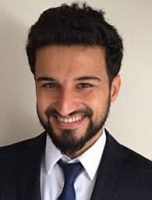
Tuomas Välimäki is a Doctoral Researcher affiliated with the Faculty of Engineering and Natural Sciences. His research focuses on robotics and automation, with a strong emphasis on sensor calibration, visual navigation, and control systems for hydraulic manipulators. He holds a Master of Science (Technology) in Automation Engineering. Master of Science (Technology), Automation Engineering (2015) Lower-Degree Level Tertiary Education in Technology (2015) His research explores Robotics Engineering , Motion-based Calibration , and Probabilistic Movement Primitives . Key themes include optimizing sensor configurations for autonomous systems, trajectory tracking in hydraulic manipulators, and gaze-direction strategies for visual navigation tasks. His work intersects with Computer Vision , Control Systems , and Mechatronics . Tuomas’s publications highlight advancements in sensor fusion , multi-camera systems , and probabilistic motion planning . These studies focus on improving accuracy and efficiency in robotic perception and control, particularly for mobile platforms and industrial manipulators.
Carsten Q. Schneider is a Professor in the Department of Political Science and the Doctoral School of Political Science, Public Policy, and International Relations at Central European University (CEU). He has been a key academic and administrative leader at CEU since 2004, serving as department head (2014–2017), program director for the MA in Political Science (2021–2022), and currently as Pro-Rector for External Relations since 2022, overseeing academic partnerships, communications, outreach, and alumni relations. PhD in Political and Social Science, European University Institute Diploma in Political Science, Free University, Berlin His research and teaching focus on political regime change, democratization in Europe and Latin America, and comparative methodology—especially qualitative comparative analysis (QCA) and set-theoretic methods. He is the author of multiple leading books on QCA published by Cambridge University Press and has published extensively in top journals such as Comparative Political Studies , Political Analysis , and Democratization . His recent publications demonstrate a strong trend toward integrating computational methods—particularly machine learning and automated text analysis—with traditional comparative frameworks. His 2025 article on illiberal leaders uses 38,000+ speeches across 120 countries to show how right-wing strongmen exacerbate inequality. This reflects a broader interdisciplinary shift in his work, combining political theory, methodological innovation, and large-scale data analysis. David Collier Mid-Career Achievement Award, American Political Science Association (2019) CEU Distinguished Teaching Award (2019) Elected Member, German Academy of Young Scientists (2009–2014) As Pro-Rector for External Relations, Schneider leads CEU’s engagement with academic networks, including CIVICA: The European University of Social Sciences, where he chairs the Permanent Design Team. He represents CEU in the Austrian Private Universities Conference (ÖPUK) and serves on internal governance bodies such as the Senate Committee on Strategic Development. He has advised on research transparency standards and promotes open science in qualitative and multimethod research. He has conducted research stays at Harvard University, UC Berkeley, WZB Berlin, and Pompeu Fabra, reflecting his strong international academic network.
Professor Martin Reed is a Professor and Deputy Head of the School of Computer Science and Electronic Engineering at the University of Essex. His academic career spans over two decades, with significant contributions to computer networking and network security research. He has played a key leadership role in curriculum development for the school, merging the curricula of two former departments into the current structure. Martin Reed earned his PhD from the University of Essex in 1997 and completed his BEng (1st Class) with an Industrial Year at BBC Research Department from the University of Surrey in 1989. His educational background provided a strong foundation for his subsequent research career in networking technologies. Professor Reed's research focuses on computer networking and network security, with particular emphasis on Internet of Things security, Software Defined Networking (SDN) security, Information Centric Networking, and multimedia transmission over networks. His work bridges theoretical research with practical applications, addressing real-world challenges in network infrastructure. He has supervised numerous PhD students who have gone on to contribute to these fields, and his research has evolved to address emerging challenges in networked systems as technology has advanced. Analysis of Professor Reed's recent publications reveals a strong focus on applying artificial intelligence and machine learning techniques to network security challenges, particularly in the context of Software Defined Networking and Internet of Things environments. His work demonstrates a progression from traditional network security approaches to more sophisticated, AI-driven solutions that can adapt to evolving threats. There's also a clear trend toward addressing security challenges in distributed and edge computing environments, reflecting the changing landscape of networked systems. Professor Reed has successfully secured funding from multiple prestigious sources including the European Commission, Innovate UK, and British Telecommunications. His grants portfolio demonstrates his ability to translate theoretical research into practical applications with industry relevance. He has led projects focused on network security, information-centric networking, and IoT security, often collaborating with industry partners to ensure real-world applicability of research outcomes. As an academic supervisor, Professor Reed has guided numerous PhD students through their research journeys, with recent completions focusing on topics like IoT security, SDN security, and information-centric networking. His supervision record spans over a decade, showing consistent engagement with emerging research areas as the field has evolved. He also serves as an external examiner for undergraduate and postgraduate programs at multiple UK universities, contributing to academic quality assurance across the sector.
Professor Theodoridis Ioannis is a distinguished faculty member in the Department of Informatics at the University of Piraeus, where he serves as Director of the Data Science Laboratory within the School of Information and Communication Technologies. With a career spanning over two decades, he has established himself as a leading expert in data management and analysis. His research interests focus on Data Science, particularly in databases, big data management, data mining, and geoinformatics. Professor Theodoridis has made significant contributions to spatial database systems, time series analysis, and distributed data processing. His work bridges theoretical foundations with practical applications in areas such as smart cities, mobility analytics, and scientific data management. His publication record demonstrates consistent research productivity with over 100 peer-reviewed articles in top-tier venues, accumulating more than 10,000 citations. His research output shows a clear evolution from foundational database techniques toward contemporary challenges in big data analytics, machine learning integration, and privacy-preserving methods. Member of editorial board of ACM Computing Surveys (since 2016) Reviewer for numerous international journals and conferences Active participant in data management conference committees Professor Theodoridis has secured significant research funding through Horizon 2020 projects, serving as project coordinator and research team leader since 2001. His work demonstrates strong industry and academic collaboration, with applications spanning multiple domains. He has also co-authored three influential monographs in his field. He leads the Data Science Laboratory, which serves as a hub for interdisciplinary research at the intersection of database systems, machine learning, and domain-specific applications. The laboratory fosters collaboration between computer scientists, domain experts, and industry partners to address real-world data challenges.
Cornelius Born , M.Sc., is a researcher affiliated with KrcmarLab at the Technical University of Munich (TUM) , specifically within the Department of Information Systems and Business Process Management (Informatik 17). His work sits at the intersection of information systems, healthcare, and human-AI collaboration. Education: M.Sc. in Information Systems – Technical University of Munich Visiting Graduate Student – ETH Zurich, Switzerland Exchange Semester – Tsinghua University, Beijing, China B.Sc. in Information Systems – Duale Hochschule Baden-Württemberg, Mannheim Research Interests: Cornelius focuses on Information Systems in Healthcare , investigating how digital technologies transform clinical workflows. He explores Digital Transformation in Hospitals , from electronic health records to advanced analytics, and studies Human-AI Collaboration , ensuring that AI-driven decision support tools integrate seamlessly and ethically into healthcare settings. Project Involvement: He is actively contributing to the ZNAFlow project, which targets data-driven process optimization in healthcare environments. Industry Experience: Prior to his academic role, Cornelius gained practical experience at Roland Berger and EY , providing strategic IT and process consulting to healthcare and public-sector clients. Contact: cornelius.born@tum.de
Dr. Yi Mei is an Associate Professor and Associate Dean (Research) at the Faculty of Engineering, Victoria University of Wellington, New Zealand. He serves as Programme Director for Computer Science & Computer Graphics within the School of Engineering and Computer Science and is affiliated with the Centre for Data Science and Artificial Intelligence (CDSAI). Dr. Mei's research focuses on evolutionary computation for combinatorial optimisation , with specific expertise in genetic programming , automatic algorithm design , explainable AI , and multi-objective optimisation . His work bridges theoretical foundations with practical applications in transportation, healthcare, manufacturing, and aquaculture. His publication portfolio shows a clear trajectory toward increasingly complex real-world applications of evolutionary computation, with recent work focusing on emergency medical dispatch optimization , dynamic transportation systems , and explainable AI for routing problems . The research demonstrates strong interdisciplinary connections between evolutionary computation, machine learning, and domain-specific optimization challenges. Victoria University of Wellington Ki te Pae - Research Excellence Award 2024 Multiple Best Paper Awards at ACM Genetic and Evolutionary Computation Conference (GECCO) from 2022-2024 HUMIES Silver Award at GECCO 2023 IEEE Transactions on Evolutionary Computation Outstanding Associate Editor (2024, 2025) Fellow of Engineering New Zealand and IEEE Senior Member Dr. Mei has successfully supervised numerous PhD and Master's students whose research has received recognition, including the ACM SIGEVO Dissertation Award. He leads significant research projects funded by MBIE Endeavour Smart Idea Fund ($1M NZD), New Zealand Royal Society Catalyst Leaders Fund ($150K NZD), and industry partners like Honda Research Institute Europe. His service contributions include editorial roles for top journals including IEEE Transactions on Evolutionary Computation and leadership positions in IEEE Computational Intelligence Society. Dr. Mei leads the Evolutionary Computation for Combinatorial Optimisation Group (ECCO) and the Evolutionary Computation and Machine Learning Research Group (ECRG) at Victoria University of Wellington. He also chairs the IEEE Taskforce on Evolutionary Scheduling and Combinatorial Optimisation (TESCO), fostering international collaboration in evolutionary computation applications.
Karl-Johan Grinnemo is an Associate Professor at Karlstad University's Department of Computer Science, specializing in network quality, 5G, and IoT research. His work focuses on multi-connectivity, network slicing, edge computing, and energy-efficient IoT protocols. Grinnemo has held roles including Senior Lecturer (2014) and tenured position since 2010. He collaborates with institutions like KTH Royal Institute of Technology, RISE, and European universities on EU-funded projects. His research includes the PLANS policy framework for network slicing and machine learning-driven NB-IoT optimization. Grinnemo teaches advanced courses in networking, databases, and machine learning, and advises numerous student projects. He is a Senior IEEE Member and has published over 100 papers on transport protocols and cellular networks. Education: PhD in Computer Science (2006), postdoctoral work at Karlstad University. Research: Policy-based network slicing, edge computing optimization, and 6G/IoT innovations. Awards: Senior Member of IEEE.
Leman Akoglu is the Heinz College Dean's Tenured Associate Professor at Carnegie Mellon University's Heinz College of Information Systems and Public Policy. She holds courtesy appointments in the Machine Learning Department (MLD) and the Computer Science Department (CSD) within the School of Computer Science (SCS). Her research focuses on anomaly detection, graph mining, machine learning, and data mining, particularly in identifying anomalies in large, dynamic datasets. She is currently on academic leave as a full-time Amazon Scholar until Spring 2026. Education: Ph.D. in Computer Science from Carnegie Mellon University (2012), B.S. in Computer Science from Bilkent University (2003-2007). Research Interests: Data Mining, Graph Mining, Machine Learning, Anomaly Detection, Self-Supervised Learning, Outlier Detection, Fraud Detection, and Healthcare Analytics. She leads the DATA Lab at Heinz College, exploring scalable computational methods for anomaly detection across domains like healthcare, finance, and cybersecurity. Recent Work Highlights: Contributions include trajectory anomaly detection, self-supervised time series analysis, and fair outlier detection. Her work appears in top conferences like KDD, SIAM SDM, AAAI, and NeurIPS. She has received prestigious awards such as the SDM/IBM Early Career Award and NSF CAREER Award. Teaching: Courses include Machine Learning for Problem Solving and Big Data and Large Scale Computing at CMU. She emphasizes practical machine learning processes, feature design, and scalable methods.
Caroline Shamu is an Assistant Professor at Harvard Medical School with dual appointments in the Department of Radiology at Massachusetts General Hospital and the Department of Biological Chemistry and Molecular Pharmacology. She serves as Scientific Director for HMS Research Cores and Technology and directs the ICCB-Longwood Screening Facility, which provides high-throughput small molecule and RNAi screening resources. Dr. Shamu earned her Ph.D. in Cell Biology from the University of California San Francisco and completed postdoctoral training in the Department of Cell Biology at Harvard Medical School. Her research focuses on: Development of high-throughput screening technologies (RNAi, small molecules) Assay design and optimization for complex biological systems Bioinformatics infrastructure for large-scale data integration Standardization of metadata and data exchange protocols Implementation of screening repositories and open-source LIMS Her publications demonstrate extensive work in screening methodology innovation, with consistent focus on data standardization, imaging platforms, and translational applications in cancer research and drug discovery. Recent articles emphasize computational approaches for off-target effect prediction and interoperable data frameworks. Leadership & Infrastructure: Dr. Shamu oversees technology cores supporting academic screening initiatives and develops open-source tools like the Screensaver LIMS. Her work bridges experimental biology with data science to advance collaborative research.
Ramnatthan Alagappan is an Assistant Professor at the Siebel School of Computing and Data Science, University of Illinois. His research focuses on distributed systems, storage systems, and fault tolerance in modern datacenter environments. He leads projects investigating high-performance storage abstractions, replication strategies, and reliability engineering for distributed infrastructure. Key research areas include filesystem design, crash consistency mechanisms, and optimizing storage hierarchies for hybrid NVM environments. His work emphasizes practical implementations of theoretical models, such as the LazyLog shared log abstraction and IONIA replication framework for disk-based key-value stores. Alagappan has received the NSF CAREER Award (2024) for his research on datacenter-aware storage systems. His recent publications address challenges in disaggregated datacenters, fault tolerance for modern workloads, and automated reliability testing for cluster management systems. He collaborates extensively on projects involving distributed storage protocols, log-based systems, and performance optimization for large-scale infrastructures. His research spans theoretical contributions (e.g., consistency models) to applied systems work (e.g., implementing fault-tolerant storage stacks), with a focus on bridging gaps between hardware capabilities and software system design.
Dr. Halil Yetgin is a Lecturer in Computing Science at the Department of Computer Science, Middlesex University, within the Faculty of Science and Technology. His expertise spans wireless networks optimization, AI-driven solutions, and IoT automation. He holds a PhD in Wireless Communications from the University of Southampton and has held academic roles in Turkey and Slovenia. Teaching Roles: Module Leader for CST2133 (Data Science and Machine Learning) and CST3133 (Advanced Topics in Data Science/AI) Programme Leader for BSc Computer Science (Systems Engineering) Research Focus: Lifetime optimization of wireless networks Multi-objective optimization using evolutionary algorithms (e.g., NSGA-II) AI applications in IoT, vehicular networks, and UAV systems Zero-touch IoT provisioning and anomaly detection Publications & Collaborations: Over 20 peer-reviewed articles in journals like IEEE Transactions and conferences (ENASE, WCNC) Contributions to EU-funded projects and IEEE technical committees Editorial roles in several journals Advising: Supervised multiple MSc and PhD students in AI-driven wireless systems and optimization. Labs/Teams: Active in the Next Generation Wireless Research Group and collaborations with Jožef Stefan Institute.
Dr. Gangaraju Vanteddu is a Professor of Quantitative Business Methods at the Harrison College of Business and Computing, Southeast Missouri State University. He holds a PhD in Industrial Engineering from Wayne State University (2008). His research focuses on Supply Chain Management, Applied Probability/Statistics, Optimization, and Six Sigma Quality. He maintains professional certifications as a Certified Supply Chain Professional (CSCP), Certified Quality Engineer (CQE), and Certified Reliability Engineer (CRE). Education: PhD in Industrial Engineering, Wayne State University (2008) M.Tech in Industrial Quality/Reliability, Indian Statistical Institute (India) B.Tech in Civil Engineering, Sri Venkateswara University College of Engineering (India) Research Interests: Dr. Vanteddu’s work bridges theoretical frameworks and practical applications in supply chain resiliency, blockchain technology integration, and quality management. His recent focus includes improving supply chain visibility through blockchain, optimizing tactical planning in niche industries like dimension stone, and aligning educational accreditation with stakeholder expectations. His publications span journals like International Journal of Production Economics and Decision Sciences Institute proceedings. Professional Contributions: He chairs the Quantitative Methods Curriculum Committee, contributed to establishing an ASCM student chapter, and reviews for journals like International Journal of Production Research . Awards include the 2017 Copper Dome Faculty Fellowship for teaching excellence and multiple recognitions for teaching effectiveness from Wayne State University. Awards & Activities: Copper Dome Faculty Fellowship (2017) Member of ASQ’s Armand V. Feigenbaum Medal Committee (2007–present) Editorial roles for International Journal of Information and Operations Management Education and a forthcoming supply chain resilience handbook Advising & Service: Served on tenure/promotion committees, search committees for faculty positions, and chaired the HCBC Handbook Revision Committee. Advises online MBA students and participated in university-wide initiatives like the Academic Assessment Committee.
Dr. John Friedlan is an Associate Professor of Accounting at Ontario Tech University’s Faculty of Business and Information Technology, where he also serves as Program Director, Commerce. With over 20 years of experience, he has taught at York University’s Schulich School of Business and holds a PhD from the University of Washington. His research focuses on critical analysis of financial reporting, managerial accounting, and the integration of business analytics into decision-making. Dr. Friedlan has been recognized for his teaching excellence, including the Educator of the Year Award (1992) and the Seymour Schulich Award for Teaching Excellence (2000). His educational background includes a Bachelor of Science from McGill University, an MBA from York University, and a PhD from the University of Washington. Prior to academia, he worked at Nabisco Brands and served on the Board of Examiners at the Canadian Institute of Chartered Accountants, qualifying as a Chartered Accountant in 1980. Dr. Friedlan’s research explores topics such as supply chain resilience, risk-averse decision-making, and disruption management. His work bridges theoretical frameworks with practical applications, leveraging computational methods in operations research and analytics. Recent articles address challenges in electric vehicle infrastructure planning, supply chain recovery strategies, and environmental disclosure practices. He actively contributes to practitioner journals like CGA Magazine and CA Magazine , emphasizing real-world relevance. His scientific contributions include over 15 peer-reviewed articles, with a focus on optimizing complex systems under uncertainty. Beyond research, Dr. Friedlan advocates for experiential learning, integrating industry partnerships to prepare students for data-driven business environments.
Professor Zi-Qiang Zhu is a distinguished academic and researcher in electrical engineering at the University of Sheffield, holding a Personal Chair and leading the Electrical Machines and Drives Research Group. He earned his BEng and MSc from Zhejiang University and his PhD from the University of Sheffield. His career spans over 35 years, focusing on high-efficiency permanent magnet machines and drives for electric vehicles, renewable energy, and industrial applications. He has secured over £30M in research funding and founded key research centers like the Sheffield Siemens Gamesa Renewable Energy Research Centre. Research interests include novel machine designs (Halbach, switched-flux, magnetically geared), control strategies (PWM, sensorless), and thermal management. His work has resulted in over 100 patents and 1000+ papers, including 400+ IEEE Transactions contributions. Notable awards include the 2021 IEEE Nikola Tesla Award and multiple best paper prizes. He has chaired major conferences and delivered over 26 keynote speeches globally. Education : BEng (Zhejiang U, 1982), MSc (Zhejiang U, 1984), PhD (Sheffield U, 1991) Affiliations : Royal Academy of Engineering/Siemens Chair, Founding Director of CRRC Electric Drives Tech Centre His research spans from fundamental electromechanical theory to industrial partnerships with Rolls Royce, Siemens, and others. Key areas of impact include wind power generators, EV propulsion, and energy-efficient domestic appliances.
Yixin Sun is an Anita Jones Career Enhancement Assistant Professor in the Department of Computer Science and an Assistant Professor in the Department of Electrical and Computer Engineering at the University of Virginia's School of Engineering and Applied Science. Their research focuses on network security and privacy, including routing security, anonymity systems, and network attacks and defenses. Sun holds a B.A. from the University of Virginia (2013) and a Ph.D. from Princeton University (2019). Research interests span critical areas such as TLS and DNS security, IoT device vulnerabilities, connected vehicle systems, and privacy-preserving protocols like those in the Tor network. Their work addresses real-world challenges, such as securing internet infrastructure against routing attacks and enhancing anonymity in dynamic network environments. Recent publications explore topics like RPKI-based Tor relay selection, Mutual TLS certificate configurations, and Bluetooth traffic interception from health devices. Despite no explicitly listed scientific awards, Sun’s contributions to network security have advanced methodologies for detecting malicious DNS activities, securing vehicular networks, and improving threat prioritization systems. Their dual appointments reflect expertise bridging computer science and electrical engineering, emphasizing interdisciplinary approaches to cybersecurity.