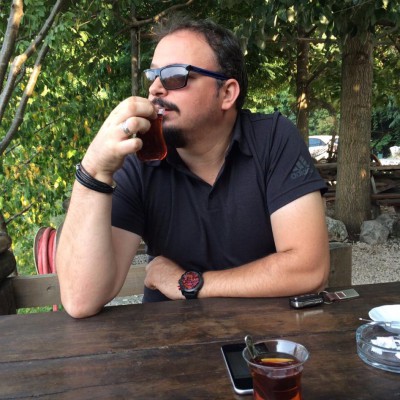
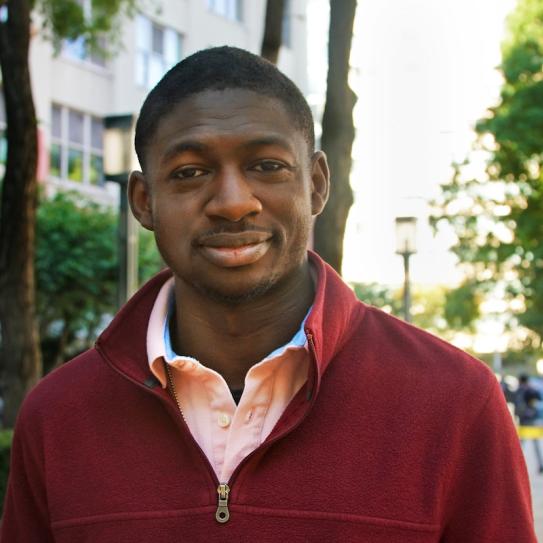
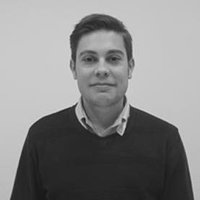
Masood Parvania is the Roger P. Webb Endowed Professor at the University of Utah in Electrical and Computer Engineering. He serves as Director of the Utah Smart Energy Laboratory (U-Smart) and Co-Director of the NSF WIRED Global Center . His research focuses on mathematical optimization , control theory , and machine learning applications in power system operation, resilience, and interdependent infrastructure modeling. His work addresses critical challenges including: Equity-aware grid restoration Climate-resilient energy systems Cyber-physical security analysis Hybrid energy storage coordination Extreme heat event mitigation strategies Key research trends across his 15 most recent publications reveal deep integration of: Renewable energy with storage systems Machine learning in real-time grid operation Cybersecurity frameworks for critical infrastructure Equity metrics in energy distribution Honors include: IEEE Outstanding Associate Editor Award (2022) University of Utah Presidential Scholar (2020) IEEE Utah Section Outstanding Educator Award (2017) Multiple Best Reviewer and Distinguished Service Awards As Associate Editor for IEEE Transactions on Power Systems , he actively shapes energy research discourse while leading NSF-funded initiatives like: U.S.-Canada Climate-Resilient Grid Center ($90M+ Western EV Infrastructure Scale-Up Wasatch Multi-Modal Corridor Electrification
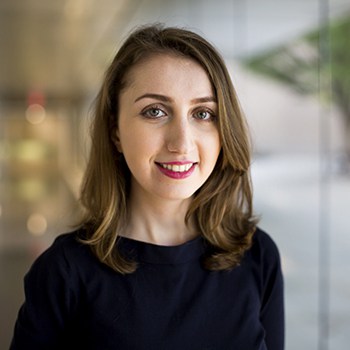
Neda Masoud is an Associate Professor in the Department of Civil and Environmental Engineering at the University of Michigan, College of Engineering, leading research at the intersection of shared mobility systems and connected vehicle technologies. Education: PhD in Civil and Environmental Engineering, University of California Irvine (2016) MS in Physics, University of Massachusetts Dartmouth (2011) BS in Industrial Engineering, Sharif University of Technology (2008) Research Interests: Her work investigates peer-to-peer ridesharing, multi-modal transportation systems, and challenges in connected/automated vehicles. Key areas include operational tools for shared mobility, policy insights for regulators, cybersecurity frameworks, and control authority transitions in semi-autonomous vehicles. She develops routing/scheduling algorithms and examines societal impacts like transportation inequality. Scientific Awards: NSF CAREER Award for “Peer-to-Peer Models and Mechanisms for the Next Generation of Transportation Systems” Advising and Grants: Dr. Masoud advises 6 current PhD students and has mentored 4 former PhD students. She leads 15+ major research projects funded by NSF, US DOT CCAT, Ford, DENSO, and MIDAS, totaling over $10M in grants. Current initiatives include military digital twins, vehicle cybersecurity, and wireless power transfer for connected vehicles. Laboratory: She directs the Next Generation Mobility Systems (NGMS) Lab, which operates from 1430 GG Brown Building and collaborates with global institutions including Tsinghua University.
João Luiz Afonso is a Full Professor at the Department of Industrial Electronics, Engineering School, University of Minho, Portugal. He received his B.Sc. and M.Sc. degrees in Electrical Engineering from the Federal University of Rio de Janeiro, Brazil, in 1986 and 1991, respectively, and his Ph.D. in Industrial Electronics from the University of Minho in 2000. He obtained his Habilitation degree in Electronics and Computers Engineering in 2016. His academic and professional journey includes: Member of the IE R&D Group at Centro ALGORITMI Director of the Department of Industrial Electronics (2017-2021) Coordinator of the Group of Energy and Power Electronics (GEPE) Steering committee member of the thematic line "Smart Cities and People" at ALGORITMI Vice-president of TMOB-HUB - Transportation and Mobility Research Hub Professor Afonso teaches several courses including Electrical Machines, Power Quality and Active Power Filters, Renewable Energies and Electric Mobility, Power Electronics for Smart Grids, and Environmental, Social and Economic Sustainability. His extensive research portfolio spans Power Electronics technologies applied to Power Quality, Active Power Filters, Renewable Energy, Electric Vehicles, Energy Efficiency, Energy Storage Systems, Innovative Railway Systems, Smart Grids, Smart Cities, and Aerospace. His publication record is impressive with over 300 publications including 55 papers in international journals with referee, 240 papers in international conferences with referee, and 9 book chapters. His research impact is evidenced by 4047 citations, an h-index of 30, and 71 papers in Q1/Q2 journals. He has supervised 17 Ph.D. theses and 74 M.Sc. theses, demonstrating his commitment to academic mentorship. Professor Afonso has participated in 32 research projects, coordinating 21 of them. His editorial contributions include being a member of the Editorial Board for MDPI Energies and MDPI Electronics, and serving as Guest Editor for 13 Special Issues of Journals. He has organized several international conferences including GreeNets 2018 and SESC 2019-2023. Among his notable recognitions: IEEE Senior Member since 2016 Listed among the "World's Top 2% Scientists" for 2021 and 2022 Active participation in editorial boards of multiple journals His research group, GEPE, focuses on advancing Power Electronics technologies for sustainable energy systems. Professor Afonso's work bridges theoretical research with practical applications, particularly in the integration of renewable energy sources, electric mobility solutions, and smart grid technologies. His leadership in transportation and mobility research through TMOB-HUB demonstrates his commitment to addressing real-world challenges in sustainable transportation.
Assistant Professor Sukru Kitis is a dedicated academic at Kütahya Dumlupınar University's Simav Faculty of Technology, Department of Electrical-Electronics Engineering. With over 15 years of academic experience, he has progressed from Instructor (2009-2019) to Doctor Lecturer (2019-present), currently serving as Deputy Head of Department since 2022. His academic journey includes a Bachelor's and Master's in Electrical-Electronics Engineering from Niğde University, followed by a PhD from Sakarya University. His educational background includes: 1999-2004: Bachelor's in Electrical-Electronics Engineering, Niğde University 2004-2007: Master's in Electrical-Electronics Engineering, Niğde University 2008-2019: PhD in Electrical-Electronics Engineering, Sakarya University Professor Kitis's research spans two primary domains with significant interdisciplinary connections: biomedical engineering and renewable energy systems. His biomedical work focuses on advanced signal processing techniques for EEG and ECG analysis, novel filter design for medical applications, and increasingly, machine learning approaches to medical diagnostics including thyroid cancer examination, obesity stage detection, and neurological disorder assessment. His energy research centers on geothermal heating system automation, solar energy applications, and innovative vehicle design using alternative energy sources. These research strands converge in his recent work on providing energy for biomedical devices using renewable resources. His publication record demonstrates strategic evolution from circuit design and biomedical instrumentation (2012-2017) toward data-driven healthcare solutions (2018-2025), while maintaining parallel expertise in sustainable energy systems. This dual focus creates unique opportunities for students interested in the intersection of healthcare technology and sustainable engineering. Professor Kitis has received recognition for his scholarly contributions, most notably the Best Paper award in 2017. His research impact extends through: 93 publications including journal articles and conference proceedings 3 major research projects related to forest fire monitoring, electric vehicle design, and geothermal system automation 2 scientific awards including Best Paper 2017 As an educator and mentor, Professor Kitis supervises numerous graduate students working on cutting-edge projects at the intersection of electrical engineering, biomedical applications, and renewable energy. His administrative roles as Department Head (2019-2021) and current Deputy Head of Department demonstrate leadership within his academic community while maintaining active research and teaching responsibilities. His lab environment emphasizes practical application of theoretical concepts, with students working on real-world problems in medical device development, energy system optimization, and data-driven healthcare solutions. The interdisciplinary nature of his research creates a dynamic environment where electrical engineering principles meet medical and environmental challenges.
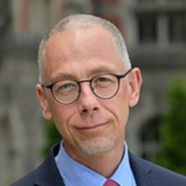
Dr. Marek Olesz is a Professor at the Department of Electrical Power Engineering, Faculty of Electrical and Automation Engineering, Gdańsk University of Technology. His research encompasses high-voltage engineering, insulation diagnostics, partial discharges, and electromagnetic compatibility. He holds leadership roles in organizations including the Polish Society of Theoretical and Applied Electrical Engineering (Chairman) and the Polish Committee for Lightning Protection (Vice-Chairman). Research interests include: Quality of electricity and electromagnetic compatibility in power systems Degradation mechanisms in polyethylene insulation Partial discharge measurement techniques for cable and transformer diagnostics Innovations in surge arrester testing and high-voltage line design His recent publications (2023-2025) focus on AI-driven transformer lifetime prediction, CNN-based corrosion classification in cables, and safety enhancements for photovoltaic systems. Notable projects include: Pylon 2 : Developing innovative structures for high-voltage lines with integrated communication systems. Stratus : Creating high-power electromagnetic pulse systems for UAV countermeasures. Dr. Olesz is an active member of the High Voltage Team , which researches short-circuit dynamics, insulation degradation, and power quality. He has supervised 200+ teaching activities but no specific advisees are listed.
Dr. Andrzej Augusiak is a Professor at Gdańsk University of Technology's Faculty of Electrical and Control Engineering, where he leads research in the Department of Power Converters and Energy Storage. He also serves as Deputy Organizational Manager of the LINTE^2 Laboratory, focusing on industrial-scale energy systems testing. His research spans: Smart grid optimization and renewable energy integration Electric vehicle infrastructure and energy storage solutions Mathematical modeling of energy systems and efficiency planning Recent publications emphasize practical applications in voltage regulation, automated grid control, and engineering education. He has authored 22+ articles, with 2023-2024 works exploring PLC controllers for grid stability and smart grid pedagogy. Notable awards: First-degree team award for organizational excellence (2011) Second-degree team award for organizational contributions (2010) He directs major projects including DTH-SMART GRID (hybrid transformers) and TEACHENER (interdisciplinary energy education). His lab, LINTE^2, provides quasi-industrial environments for advanced power system experiments.
Professor Frank Truckenmüller is a faculty member at Reutlingen University's Faculty of Engineering in the Department of Energy Systems and Energy Efficiency. He serves as a key researcher at the REZ - Reutlinger Energiezentrum (Reutlingen Energy Center), focusing on practical implementation of energy system innovations. His research centers on virtual power plant technologies, particularly the 'Virtuelles Kraftwerk Neckar-Alb' demonstrator project. Key interests include: Power distribution automation and cable network optimization Electricity price forecasting for energy markets Integration of renewable energy sources into grid systems CO2 heat pump technologies and low-voltage grid management Regional energy cycle development Recent publications (2021-2024) demonstrate strong activity in grid automation, with multiple papers on cable distributor systems and virtual power plant implementation. His work bridges theoretical modeling with practical field applications, particularly in the Neckar-Alb region. Professor Truckenmüller teaches Energy Technology covering: Development trends in energy systems Conventional and renewable energy technologies Energy conversion fundamentals Energy systems team management His research is supported through the ZIM-Kooperationsnetzwerk 'Virtuelles Kraftwerk Neckar-Alb', which provides practical demonstration capabilities for virtual power plant concepts. The REZ facility enables collaboration on decentralized energy systems and grid integration challenges. Office hours are Wednesdays by appointment in Building 20, Room 214. Contact: frank.truckenmüeller@reutlingen-university.de | +49 7121 271 7100.
Daniel Vignon is an Assistant Professor in the Department of Civil and Urban Engineering at NYU Tandon School of Engineering , and a key member of the C2SMARTER University Transportation Center. Since 2022 he has led the FEATS laboratory (For the Economic Analysis of Transportation Systems), where he integrates engineering and economics to design policies for emerging mobility services and smart infrastructure. Education Ph.D., Civil Engineering, University of Michigan, Ann Arbor, 2022 M.A., Economics, University of Michigan, Ann Arbor, 2022 B.S., Mechanical Engineering, MIT, 2017 Research Interests Dr. Vignon’s scholarship lies at the intersection of transportation economics , operations research , and urban policy . He develops analytical and empirical models to understand how new mobility technologies—ride-hailing, connected and automated vehicles, and smart infrastructure—affect market outcomes, social welfare, and regulatory effectiveness. His work informs evidence-based policy design aimed at reducing congestion, enhancing safety, and ensuring equitable access. Recent Research Trends Across 11 major publications (2021-2025), his research has progressively deepened from foundational studies on ride-hailing driver labor supply and parking strategies for automated vehicles to comprehensive evaluations of congestion-pricing policies and the economic underpinnings of automated-driving safety and liability. A clear trajectory emerges: early micro-behavioral analyses of driver responses to incentives have evolved into large-scale policy evaluations using rich empirical data from New York City and nationwide, culminating in forward-looking investigations of taxation and insurance regimes for automated-vehicle markets. Scientific Awards No specific awards are listed in the provided material. Advising & Grants Dr. Vignon currently advises PhD student Yanchao Li on a project examining the welfare impacts of NYC’s ride-hailing congestion surcharge, funded under the $15 million C2SMARTER Tier 1 UTC grant (2023-2028). Additional grant and fellowship details are not disclosed in the text. Labs & Teams He directs the FEATS laboratory and is an active researcher within the C2SMARTER consortium, a seven-university center led by NYU Tandon that tackles urban mobility challenges through integrated research, education, and technology transfer initiatives.
Professor Arunachala Mada Kannan is a distinguished academic at the Polytechnic School, Ira A. Fulton Schools of Engineering, Arizona State University . With over 30 years of experience in low-temperature fuel cells, battery technologies, and solar energy systems , he has made significant contributions to clean energy research . His career spans roles as Engineering Graduate Program Chair (since 2017), Professor (since 2014), and Associate Professor (2005-2014). Education : Ph.D. in Batteries & Fuel Cells (Indian Institute of Science, 1990), M.S. in Chemistry (Madurai Kamaraj University, 1985), B.S. in Chemistry (Madurai Kamaraj University, 1983), MBA in Statistical Process Control (Madras University, 1999) Dr. Kannan's research focuses on: Fuel Cell Technologies (PEMFC, DMFC, AFC) Battery Systems (Li-ion, SLA, solid-state) Solar Energy (DSSC, CSP) Green Hydrogen Production Nanomaterials for Energy Applications His recent publications highlight advancements in: Photoelectrochemical water splitting using doped TiO2 nanostructures Medium entropy alloys as bifunctional electrocatalysts Graphene-based composites for supercapacitors and metal-air batteries Surface patterning techniques for enhanced catalytic performance Thermal management systems using phase change materials Scientific Recognition : Fulbright Specialist (2011-2015) ASU-CTI Dean’s Awards for Service (2013) and Creative Activities (2011) Marquis WHO’s WHO in America (2009) Best Employee Award at Exide Industries (1998) Research Funding includes projects from: SRP Salt River Project IRENA Argonne National Laboratory US Civil Research & Development Foundation His work bridges fundamental materials science with applied energy solutions , emphasizing sustainable technology development for global energy challenges.
Christian Andreasen is an Associate Professor at the University of Copenhagen's Department of Plant and Environmental Sciences, where he leads the Plant Protection research group in the Section for Crop Sciences. He earned his MSc in Agronomy (1986) and PhD in Weed Science (1990) from the Royal Veterinary and Agricultural University (now University of Copenhagen). His academic career includes roles as Assistant Professor (1991-1995), Associate Professor (1995-present), and Head of Crop Sciences (2004-2015). His research spans weed biology, sustainable crop protection, and seed technology, with emphasis on: Non-chemical weed control (laser weeding, thermal methods) Crop-weed interactions in changing climates Seed science and quinoa cultivation in tropical zones Biodiversity conservation in agricultural systems Publications (2019-2025) demonstrate strong focus on sustainable agriculture technologies, particularly laser-based weed control, climate adaptation of crops, and biochar soil applications. Research consistently addresses herbicide alternatives, precision agriculture, and resilience of crops like quinoa under abiotic stresses. He actively advises PhD candidates and has supervised 10+ doctoral projects. Major grants include Horizon 2020's WeLASER project (2021-2024) on autonomous laser weeding, AC/DC Weeds (2021-2022) for perennial weed management, and Sweedhart (2016-2019) on harvest weed seed control. Leads field and laboratory facilities at Taastrup Campus, collaborating internationally through NIBIO (Norway) and DanSeed consortium.
Professor Ahmed El Hajjaji is a full Professor at the University of Picardy Jules Verne, where he serves as Director of the Doctoral School of Sciences, Technology and Health (ED STS). He is affiliated with the Faculty of Sciences and works in the Department of Electronics, Electrical Engineering, and Automation. Professor El Hajjaji leads the Control & Vehicle (COVE) research team at the Modeling, Information and Systems Laboratory (MIS). His academic leadership includes: Director of the Electronics, Electrotechnics and Automation Department since October 2008 Director of the Professional University Institute of Electrical Engineering and Industrial Computing since June 2006 Head of the Control & Vehicle (COVE) team at the MIS Laboratory since 2000 Holder of the Doctoral and Research Supervision Bonus since 1999 Professor El Hajjaji's research focuses on automatic control systems with applications to automotive engineering and electrical energy systems. His work spans theoretical control theory development and practical implementation in vehicle dynamics, fault diagnosis, and power electronics. He has made significant contributions to areas including: Model reduction techniques for complex systems Sliding mode and adaptive control approaches Fault-tolerant control systems Applications of fractional calculus to control engineering Energy management for electric and hybrid vehicles His publication record shows consistent output with numerous articles from 2023-2025 in high-impact journals including IEEE Transactions, IET Control Theory and Applications, and Journal of Computational and Applied Mathematics. His research demonstrates a strong connection between theoretical control advancements and practical engineering applications, particularly in automotive systems. Professor El Hajjaji actively supervises research through his COVE team and as Director of the Doctoral School, providing opportunities for students interested in control systems engineering and its applications.
Dr. Alfonso González Briones is an Associate Professor in the Department of Computer Science and Automation at the University of Salamanca, where he conducts cutting-edge research in intelligent systems and their applications. He is a prominent member of the BISITE Research Group and has also worked with the GRASIA Research Group at Complutense University of Madrid as a 'Juan De La Cierva' postdoc. His academic journey at the University of Salamanca includes a Bachelor of Technical Engineering in Computer Engineering (2012), a Bachelor's Degree in Computer Engineering (2013), a Master's Degree in Intelligent Systems (2014), and a PhD in Computer Engineering (2018). His research focuses on Ubiquitous Computing and Ambient Intelligence for developing smarter, more energy-efficient cities that improve social welfare and promote sustainable development. His work spans Multiple Agent Systems (MAS), energy optimization, smart cities infrastructure, Industry 4.0 applications, and machine learning techniques for various domains including social networks, transportation, and agricultural systems. Dr. González Briones has published extensively with over 30 journal articles and 60 conference proceedings publications, demonstrating consistent productivity across multiple domains of computer science and artificial intelligence. His research trends show a clear progression from foundational work in multi-agent systems toward increasingly sophisticated applications in smart cities, energy management, and Industry 4.0 contexts, with a growing emphasis on practical implementations that address real-world challenges. 2nd place in 1st SENSORS+CIRTI Award for best national thesis in Smart Cities (CAEPIA 2018) Juan de la Cierva State Program Grant in ICT - Information and Communication Technologies (2018) Member of scientific committees for Advances in Distributed Computing and Artificial Intelligence Journal (ADCAIJ) and British Journal of Applied Science and Technology (BJAST) Reviewer for prestigious journals including Supercomputing Journal, Journal of King Saud University, Energies, Sensors, Electronics, and Applied Sciences As an active researcher, Dr. González Briones has participated in 10 international research projects and served on technical committees for prestigious international conferences including AIPES, HAIS, FODERTICS, PAAMS, and KDIR. His work bridges academic research with practical industry applications, particularly in energy optimization systems, IoT, and Machine Learning solutions for real-world problems. He has also collaborated with private research centers including Virtual Power Solutions in Portugal and AIR Institute, where he worked as Project Manager in Industry 4.0 and IoT projects. His research infrastructure includes work with the BISITE Research Group, where he develops and implements multi-agent architectures for optimizing energy consumption and other complex systems. His laboratory work spans smart home energy management, intelligent transportation systems, semantic analysis for Industry 4.0, and social network analysis applications.