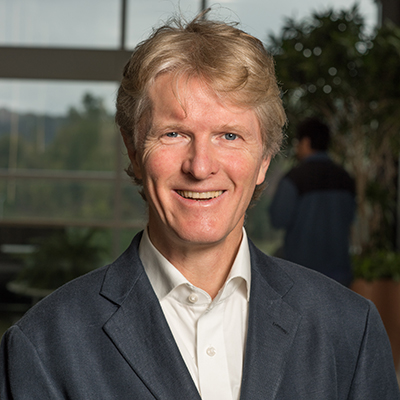
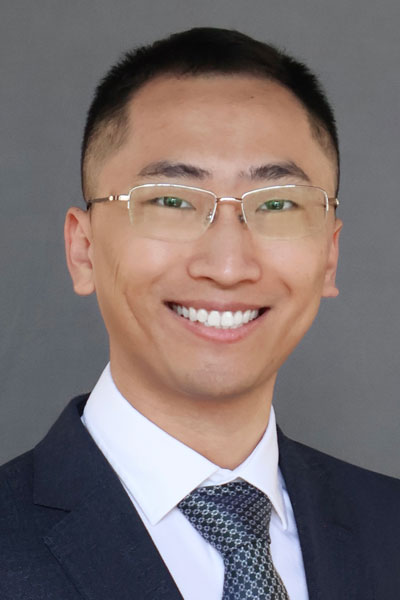
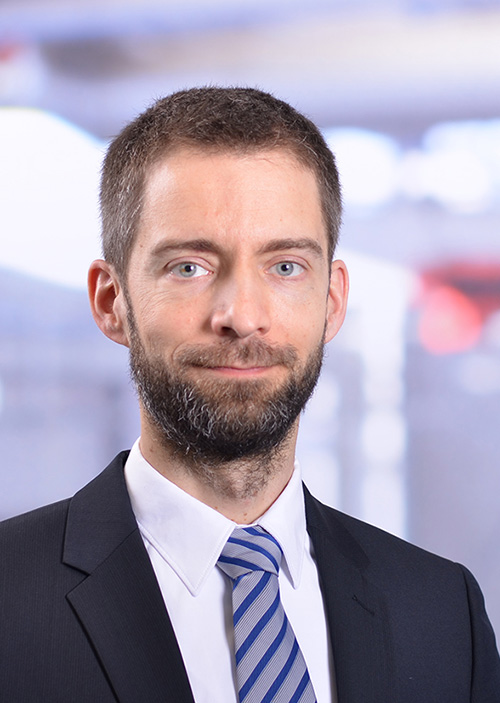
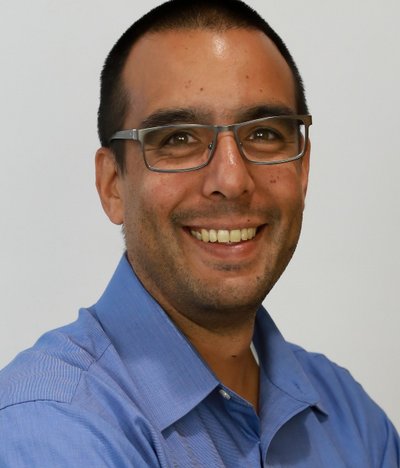
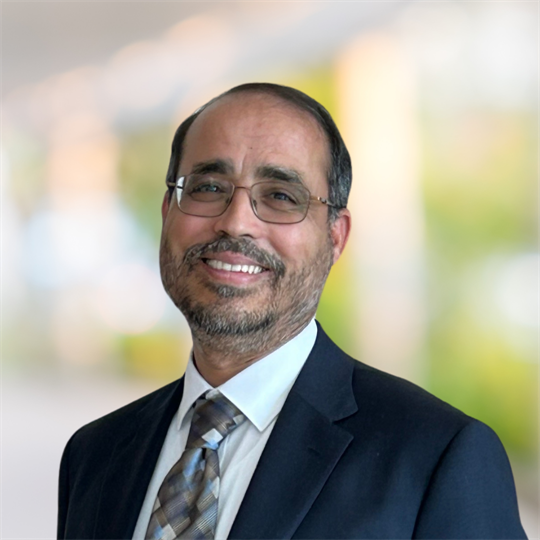
Dr. Michael Bachmann is an Associate Professor in the Department of Microbiology and Molecular Genetics at Michigan State University (MSU). His research focuses on combining bioluminescence imaging with molecular genetic screens to study immune interactions with cancer cells and mismatched transplants, aiming to modulate immune responses for clinical benefit. Prior to joining MSU, he worked at Stanford University and completed his graduate studies under Dr. James I. Mullins at Harvard. His educational background includes medical training in Frankfurt, Mainz (Germany), and the Hammersmith Hospital in London. Research interests include cancer immunology, extracellular vesicle-mediated metastasis, and the development of novel imaging probes for cell fate tracking. His laboratory integrates advanced imaging techniques with genetic screens to uncover mechanisms governing tumor immunity and transplant rejection. Recent publications highlight innovations in bioluminescent reporter proteins, extracellular vesicle biology, and high-throughput cancer biomarker detection. Work extends to interdisciplinary areas such as automotive safety engineering, reflecting a blend of biomedical and applied research. Dr. Bachmann’s laboratory serves as a hub for collaborative projects at MSU, emphasizing translational applications of imaging technology in oncology and immunology.
Ayhan Kural is an Associate Professor in the Department of Mechanical Engineering at Istanbul Technical University. His research focuses on neural networks, control systems, and autonomous systems, with notable contributions to visual inspection, energy management, and unmanned vehicle control. He leads projects such as 'Modeling and Control of a Pneumatic System' (2021-2022). Research Interests: Neural Network Applications in Manufacturing and Robotics Autopilot and Control Systems for Aerospace and Automotive Applications Energy Management Strategies for Electric Vehicles Feature Detection and Localization in Robotics Awards: Recipient of the TUBITAK Incentive Award in 1994, 2009, and 2014. Grants & Projects: PI of the BAP-funded project 'Modeling and Control of a Pneumatic System' (2021-2022).
Hongyu Zheng is an Assistant Professor in the Department of Industrial and Systems Engineering and holds a courtesy appointment in Civil and Environmental Engineering at the University of Tennessee, Knoxville (UTK), within the Tickle College of Engineering. He leads the Electrified, Autonomous, and Shared Transportation (EAST) Lab, focusing on next-generation mobility systems. Ph.D. in Transportation System Analysis and Planning, Northwestern University, 2024 M.S. in Civil and Environmental Engineering, Northwestern University, 2024 M.S. in Transportation Engineering, Zhejiang University, 2019 B.Eng. in Civil Engineering, Zhejiang University, 2016 Dr. Zheng's research lies at the intersection of industrial engineering and mobility, emphasizing data-driven modeling, optimization, and economic analysis. His methodologies include applied economics, game theory, machine learning, bi-level optimization, and network modeling. Key application areas include autonomous transportation, shared mobility systems, transportation electrification, smart logistics, and equity in transit. His work aims to improve the efficiency, sustainability, and fairness of urban transportation networks. The recent publications reflect a strong trend toward integrating economic and behavioral modeling with advanced computational techniques to solve complex mobility challenges. His research spans theoretical modeling (e.g., game-theoretic competition in bikesharing) and real-world applications (e.g., impact of ridesplitting, pandemic effects on taxi markets). There is a clear focus on emerging technologies like autonomous vehicles, modular passenger-freight systems, and AI-based forecasting tools, often validated with real-world datasets from cities like Shenzhen and Hangzhou. Scientific contributions have been recognized through publications in top journals such as Transportation Science , Transportation Research Part A/B/C , and IEEE Transactions on Intelligent Transportation Systems . Notably, he received the Best Paper Award at the 9th International Workshop on Computational Transportation Science (CTS) in 2017. Dr. Zheng is actively involved in mentoring and research funding. He is currently recruiting fully funded Ph.D. students for Fall 2025 or Spring 2026. He also welcomes remote undergraduate and graduate visitors. While specific grants are not listed, his active lab and publication pipeline suggest ongoing research support. He teaches IE 430/530 (Supply Chain Engineering) and IE 691 (Advanced Topics: Game Theory and Its Applications in Mobility Systems). He leads the Electrified, Autonomous, and Shared Transportation (EAST) Lab at UTK, which focuses on innovation in sustainable and intelligent mobility. The lab integrates methodological advances in optimization, machine learning, and economics to design and analyze future transportation systems. Current research directions include modularity in co-modal transport, ethical transit pricing, and competition dynamics in shared mobility markets.
Pablo García González is a Full Professor and Director of Postgraduate and Doctoral Studies at the ICAI School of Engineering, Comillas Pontifical University. He is affiliated with the Department of Electronics, Automation and Communications and conducts research at the Institute for Research in Technology (IIT). His academic career has been centered on control systems and power electronics applications in electric power networks. His research interests include: Control of electric power systems Power electronics and its applications FACTS devices (UPFC, STATCOM) Active filters HVDC systems Stability and control of modern power grids His recent publications focus on advanced power system control, including DC segmentation for oscillation mitigation, integration of plug-in electric vehicles for frequency control, and modeling of power electronics devices. These works appear in top journals such as IEEE Transactions on Power Systems and International Journal of Electrical Power & Energy Systems. Notable scientific contributions include: Supervision of PhD theses on PEV aggregation and active power filtering Leadership in major research projects funded by MCIN, Comunidad de Madrid, and the European Commission Authorship of book chapters on STATCOM control and smart grids Technical reports on HVDC-VSC systems and power system protection He has advised on numerous industrial projects for companies like Endesa, Unión Fenosa, and Reganosa, and has contributed to outreach through Comillas Magazine. His work bridges academic research and practical engineering solutions for modernizing electrical grids.
Andreas Sonderegger is a Lecturer at the Department of Psychology , University of Fribourg , and group leader of the Human Factors Lab . His research focuses on Human-Computer Interaction , Usability Engineering , and User Experience (UX) , with particular emphasis on: Web accessibility for diverse user groups Neurofeedback systems for cognitive enhancement Human factors in automated driving Cross-cultural usability testing Physiological computing for user state assessment His recent publications analyze: Neurofeedback applications for tinnitus treatment Human-AI decision-making comparisons Physiological indicators in automated driving Usability of no-code robotics programming He has contributed to journals such as: Computers in Human Behavior Scientific Reports Ergonomics International Journal of Human Computer Studies
Uğur Ufuk KÖRPE serves as a full-time Researcher in the Department of Electrical and Electronics Engineering at Ahi Evran University's Faculty of Engineering and Architecture since 2021. His academic foundation includes comprehensive education from Karabük University across all degree levels. Academic Background: PhD in Electrical and Electronics Engineering (2022), Karabük University MSc in Electrical and Electronics Engineering (Thesis, 2020-2022), Karabük University BSc in Electrical and Electronics Engineering (2015-2020), Karabük University Specializing in Electrical Machines and Energy Conversion with emphasis on Control Theory and Applications, Dr. KÖRPE's research focuses on advanced control methodologies for electric motors. His work addresses critical challenges in motor drive systems including parameter variations, magnetic saturation effects, and thermal dependencies through innovative predictive and adaptive control frameworks. Current investigations integrate machine learning techniques with traditional control paradigms to enhance motor performance in electric vehicle applications. Publication analysis reveals concentrated expertise in model predictive control (MPC) variants for permanent magnet and induction machines, with recent work (2021-2025) demonstrating progressive sophistication from basic MPC implementations to reinforcement learning-enhanced adaptive systems. Key thematic developments include unscented Kalman filter integration for real-time parameter estimation and deep reinforcement learning for handling nonlinear motor characteristics. Research Funding: Principal Researcher for ‘Speed Control Implementation in Brushless AC Motors’ (2022-2023), funded by Higher Education Scientific Research Projects Collaborative work primarily occurs with Karabük University researchers including Ozan Gülbudak and Mustafa Gökdað, forming a consistent research team across six publications between 2021-2025. Current investigations focus on robust control solutions for electric vehicle propulsion systems under varying operational conditions.
Piotr Burnos serves as a Professor at the Department of Metrology and Electronics within the Faculty of Electrical Engineering, Automatics, Computer Science and Biomedical Engineering at AGH University of Science and Technology in Kraków, Poland. His office is located in room 211 of building B-1 (second floor), with contact details including telephone +48 12 617 28 27 and email burnos@agh.edu.pl. Burnos specializes in Weigh-in-Motion (WIM) technology for vehicle enforcement, focusing on sensor accuracy under real-world conditions including temperature fluctuations and pavement mechanics. His research addresses critical challenges in dynamic vehicle weighing systems, particularly for administrative enforcement applications where measurement precision directly impacts road infrastructure protection and legal compliance. Key contributions include thermal error compensation, multi-sensor fusion, and Polish implementation frameworks. Analysis of his 15 most recent publications (2015-2018) reveals consistent advancement in WIM system reliability through temperature modeling, pavement interaction studies, and administrative integration. His work bridges metrological precision with practical enforcement needs, emphasizing Polish regulatory contexts while contributing to broader transportation engineering knowledge. No scientific awards were documented in the source materials. While specific student advisement or grant information isn't provided in available sources, Burnos' research demonstrates sustained focus on applied transportation engineering problems with direct societal impact through infrastructure protection and regulatory enforcement.
Nicholas J. Wittner is a Professor in Residence at Michigan State University College of Law, teaching Product Liability Law and Practice, Advanced Civil Procedure, Automated Vehicles and the Law, and Advanced Product Liability seminars. With 20 years as Nissan North America's assistant general counsel and 11 years as General Motors' executive attorney managing nationwide product liability litigation, he brings extensive industry expertise to academia. Education: B.S. (1975, with high honors) from Michigan State University J.D. (1979, cum laude) from Wayne State University Law School, member of Wayne Law Review Professor Wittner specializes in automotive legal frameworks, particularly product liability prevention and regulatory compliance for autonomous vehicles. He is nationally recognized for expertise in advanced transportation technologies, having chaired programs at the Autonomous Vehicle Safety Regulation World Congress and advised engineers globally on safety compliance. His work bridges automotive engineering and legal practice through international teaching engagements. Professional Leadership: Co-chair of ABA Products Liability Committee Member of American Law Institute (ALI) and contributor to Restatement Third on Products Liability Chair of Product Liability Advisory Council (PLAC) Faculty Adviser for Law College's Symposium on "The Transformation of Transportation" He has authored the widely-used textbook "Civil Litigation for Foreign-Educated Lawyers" (4th edition) and taught internationally across Europe, the Middle East, and Asia, focusing on civil litigation frameworks for foreign legal professionals.
Prof. Dr.-Ing. Peter Urban is a Professor and Deputy Director at the Institute of Automotive Engineering, RWTH Aachen University in Germany. His research encompasses automotive engineering with focus areas including vehicle acoustics, electric vehicles, autonomous systems, and safety engineering. He leads initiatives in vehicle design and traffic psychology research. Research Focus: Vehicle acoustics and noise reduction technologies Electric vehicle architecture and battery integration Autonomous delivery systems and urban mobility solutions Crash safety and occupant protection systems Sustainable transportation design His recent publications demonstrate strong emphasis on electric vehicle component integration (battery housings, lightweight structures), traffic noise reduction methodologies, and safety assessments for autonomous systems. Work frequently addresses European standards and certification requirements.
Arturo Tejada Ruiz is a Part-time Assistant Professor at the Mechanical Engineering Department of Eindhoven University of Technology (TU/e), specializing in Safe Autonomous and Cooperative Vehicles . He also serves as a Senior Scientist at TNO in the Integrated Vehicle Safety department, supporting OEMs and regulators in certifying automated vehicles. His research integrates human factors , artificial intelligence , and motion control to enable socially acceptable self-driving systems. Education : BSc/MSc/PhD in Electrical Engineering (Pontificia Universidad Católica del Perú, Old Dominion University) Research Focus : Developing reference models of human driving to extract safety requirements for automated vehicles, with emphasis on probabilistic risk evaluation and real-time collision probability estimation. Recent work includes the PRISMA method for data-driven risk measures and novel approaches for multi-circular shape approximations in collision probability estimation. Publications highlight advancements in: Motion planning algorithms for autonomous vehicles Stochastic and robust model predictive control Human-centric safety certification frameworks His work bridges theoretical modeling with industrial applications, particularly in quantifying risk trends and improving computational efficiency for real-world deployment.
Esther Engelhard is an Associate Professor at the Utrecht University School of Law , affiliated with the Molengraaff Institute for Private Law and the Utrecht Centre for Accountability and Liability Law (UCALL) . Her work bridges fundamental and practice-oriented research in liability law, with a focus on transnational legal sources and empirical insights. Expertise : Liability Law, Personal Injury, Damage and Compensation Roles : Deputy judge at the Court of Appeal in 's-Hertogenbosch, board member of UCALL, and permanent contributor to legal journals such as Netherlands Journal of Civil Law (NTBR) and Liability, Insurance and Damages . Her research explores civil liability in contexts like privacy violations, automated systems (e.g., self-driving cars), and work-related accidents. She emphasizes balancing interests between victims and perpetrators, integrating societal and empirical considerations, and the regulatory role of the European Union. Key publications include works on liability for autonomous vehicles, disaster compensation, and privacy law. Her articles often intersect technology, ethics, and legal frameworks, addressing emerging challenges in liability and insurance. SHE has supervised PhD programs and contributed to legal education through courses on Tort Litigation, Advanced Liability Law, and executive education. She has also served as a guest editor for the NTBR special issue on Damages (2018).
Roberto Couto Calviño is an Assistant Professor at the University of Vigo, affiliated with the Faculty of Law's Commercial Law Department in Ourense. His research focuses on European Union legal frameworks, digital contracting, and financial services regulation. Education: PhD in Private Law (2019) from the University of Vigo, thesis supervised by Dr. Ana María Tobío Rivas. His research interests include: Consumer financial services regulation in the EU Algorithmic governance in digital platforms Electronic contract formation and validity Technology-driven legal formalities Article trends reveal expertise in EU law, commercial law, and technology regulation, with emphasis on post-pandemic financial services, autonomous vehicle insurance, and algorithmic pricing. His work bridges traditional legal frameworks with digital transformation challenges.
Dr. Elkafi Hassini is a tenured Professor in the Operations Management department at McMaster University 's DeGroote School of Business. As Associate Dean, Research , he drives academic innovation while maintaining an active research agenda in supply chain analytics and sustainability. Key research themes include data-driven optimization , IoT integration , and supply chain risk management Active in smart freight systems , food delivery logistics , and urban delivery networks Lectures on applied optimization and procurement strategy His work has been published in top journals including Production and Operations Management , European Journal of Operational Research , and INFORMS Journal on Applied Analytics . Recent research explores: Time-slot pricing in on-demand delivery IoT-enabled supply chain visibility Freight bottleneck analytics Equitable ride-sharing design Post-pandemic logistics transformation Awarded by CFI , NSERC , and SSHRC , he leads the Smart Freight Centre partnership and advises on Peel Region e-commerce logistics. Collaborations include researchers from King Fahd University and Harbin Institute of Technology .
Burcu ÇARKLI YAVUZ serves as an Assistant Professor at Sakarya University's Faculty of Computer and Information Sciences, Department of Information Systems Engineering. Her academic career spans over a decade with continuous contributions since 2013, including current administrative roles as Dean's Assistant (2023-2024) and Department Vice Chair (2021-2023). Education: PhD in Computer and Information Engineering (2019), Sakarya University - Thesis: 'Hemoglobin Protein Secondary Structure Prediction by Improved Clonal Selection Algorithm' MS in Computer and Information Engineering (2010), Sakarya University - Thesis: 'A Data Mining Application with Apriori Algorithm in the Healthcare Sector' BSc in Mathematics-Computer Programming (2005), Istanbul Cultural University Her research integrates artificial intelligence with critical applications across healthcare and renewable energy. Specializing in data mining and bioinformatics, she develops novel algorithms for protein structure prediction, medical diagnostics, and photovoltaic system optimization. Current work focuses on Marine Predators Algorithm applications for perinatal mental health screening and adaptive MPPT techniques for solar energy systems, demonstrating interdisciplinary impact from biomedical engineering to climate change mitigation. Publication analysis reveals three dominant research thrusts: (1) AI-driven healthcare solutions (depression/anxiety detection, diabetes diagnosis), (2) Photovoltaic optimization (MPPT algorithms, flicker analysis), and (3) Bioinformatics (protein structure prediction using clonal selection). Her work consistently bridges theoretical algorithm development with practical implementations, evidenced by industry collaborations like the 2023 'Electric Vehicle Regulation-Compliant Sound Alert Systems' project. Teaching responsibilities include graduate and undergraduate courses in Deep Learning, Python Programming, Operations Research, and Introduction to AI. She has supervised numerous graduation projects and taught specialized courses like 'Big Data Technologies' in collaboration with Havelsan. Her editorial service for IEEE Access (2018-2020) and conference organization roles demonstrate academic leadership beyond teaching and research.
Dr. Raluca Csernatoni is a Professor in European Security and Defence at the Brussels School of Governance (Vrije Universiteit Brussel, Belgium) and a Senior Policy Expert at the Centre for Security, Diplomacy and Strategy (CSDS) . She leads the EU-funded "EU Cyber Diplomacy Initiative - EU Cyber Direct (EUCD)" and co-leads the Flemish Research Council (FWO) Research Network on "Technology, Security and Conflict" (2024-2029). As a Carnegie Europe Fellow , she focuses on the intersection of emerging technologies (particularly AI) with EU governance and security. Education: PhD and MA in International Relations from Central European University; BA from West University of Timişoara. Additional Appointments: Visiting Faculty at Central European University (Vienna) and Co-leader of the "Governance of Emerging Technology" Research Group at the Royal Military College Saint-Jean (Canada). Her research spans EU security and defense policy , AI governance , cybersecurity , and geopolitical implications of technology . Publications include a co-edited book on "Emerging Security Technologies and EU Governance" (2020) and articles in journals like Geopolitics and European Security . She contributes to EU-funded projects on digital partnerships and military AI governance. Scientific Awards: Carnegie Europe Fellow Flemish Research Council (FWO) Research Network Leader She collaborates with institutions such as the EU Cyber Direct project, CRITIC (Royal Military College Saint-Jean), and previously worked at Charles University (Prague) and the Institute for European Politics (Berlin). Her work addresses the EU’s strategic autonomy in technology, cyber diplomacy, and the security implications of AI.