
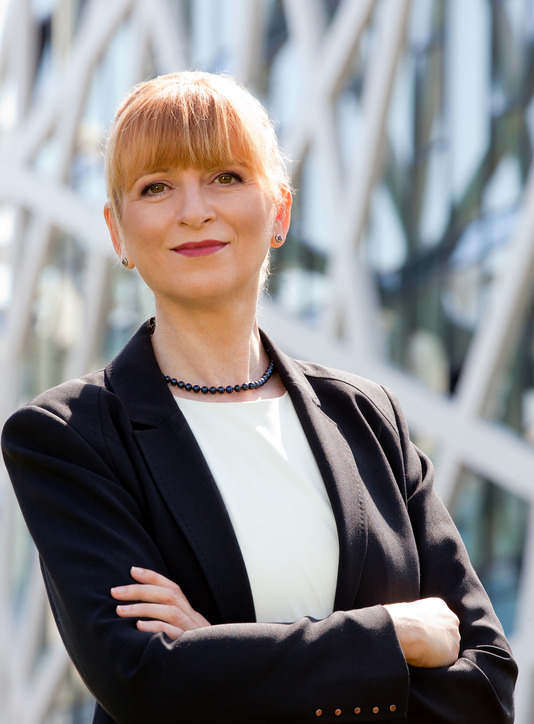
Prof. Dr. Heike Schinnenburg is a Professor of Business Administration with a focus on Human Resource Management at the Faculty of Economics and Social Sciences, Osnabrück University of Applied Sciences. She directs the Master's program in Business Management and specializes in talent management, international HRM, career research, and change management. Her research explores AI's impact on jobs, gender dynamics in careers, and organizational resilience in global contexts. She holds a PhD from Leibniz University Hannover and has extensive industry experience as a consultant and HR director. Her academic career includes guest professorships at Shanghai University of International Business and Economy. Key research projects include inclusive education's impact on workforce development and cultural factors in change management. Her publications span over 50 articles in journals like Employee Relations and Personalquarterly , addressing topics such as frontline work challenges, virtual leadership, and global talent strategies. She frequently presents at international conferences and collaborates on EU-funded research initiatives.
جستوجوی استاد و پژوهشگر
استاد راهنما، استاد دانشگاه یا پژوهشگر مناسب برای مسیر پژوهشیتان را پیدا کنید و با او ارتباط بگیرید.
نمایش ۷۳۶-۷۵۰ از ۱۲٬۱۸۳ استاد راهنما
اطلاعات این پروفایلها از صفحات عمومی دانشگاهها جمعآوری شده و ممکن است بهروز نباشد.
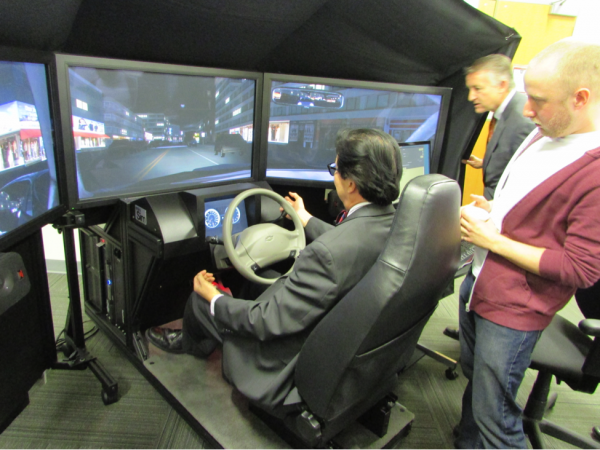
Professor Chris Lee is a faculty member in the Department of Transportation Science and Engineering at the University of Windsor's Faculty of Engineering. His research focuses on advancing transportation safety through the analysis of driver behavior, traffic flow dynamics, and the integration of emerging technologies like autonomous vehicles and machine learning. Key areas include collision risk prediction, driver vigilance assessment, and the development of advanced car-following models. He has contributed to initiatives such as the Transportation Science and Engineering scholarship program, supporting student research in innovative technologies like driving simulators for lane change behavior studies. His work bridges engineering and human factors, addressing challenges such as driver response to autonomous systems, heavy vehicle traffic management, and cross-cultural automotive design. Lee's interdisciplinary approach leverages data analytics, physiological signals, and machine learning to solve real-world transportation problems. His research has implications for policy-making, infrastructure design, and vehicle safety standards. Lee has collaborated extensively on projects analyzing crash precursors, variable speed limits, and the impact of ITS (Intelligent Transportation Systems) on safety. His publications span over two decades, demonstrating a commitment to both academic rigor and practical applications in transportation engineering. Notable contributions include refining car-following models, studying driver aggression, and evaluating the effectiveness of traffic management strategies.
Fernando Sánchez-Figueroa is a Full Professor at the University of Extremadura's Department of Computer Systems Engineering and Telematics. He is a co-founder of Homeria Open Solutions, a spin-off engaged in R&D projects under EU frameworks. His research focuses on Software Engineering, Machine Learning, Data Visualization, and Ambient Intelligence. He has authored over 50 scientific articles and led numerous R&D contracts with public and private entities. Key roles include: Academic: Full Professor at University of Extremadura Entrepreneur: Co-founder of Homeria Open Solutions Research: Participation in EU-funded projects and development of AI-driven solutions for healthcare, smart cities, and education Research Interests: Machine Learning applications in healthcare, predictive analytics for education, and sustainable smart city technologies. His work bridges theoretical advancements with practical implementations, such as medical image segmentation using SAM models and cost-efficient UAV systems. Publications: Recent works include decision support systems for employability analysis, zero-shot learning in medical imaging, and recommender systems for education. He emphasizes data-driven approaches and model-driven engineering in software development. Impact: Developed tools like CompareML for preliminary data analysis and LiveSankey for advanced web visualization. His contributions span academia and industry, addressing challenges in healthcare, urban sustainability, and educational technology.
George Vouros is a Professor in the Department of Digital Systems at the University of Piraeus, Greece. He is the head of the AI Lab (http://ai-group.ds.unipi.gr/ai-group/) and director of the MSc in Artificial Intelligence program in collaboration with the Institute of Informatics and Telecommunications at NCSR Demokritos. He completed his BSc in Mathematics (1986) and PhD in Artificial Intelligence (1992) at the University of Athens. His research focuses on Expert Systems, Knowledge Management, Multi-Agent Systems, Reinforcement Learning, and Mobility Analytics. He has served as program chair and committee member for major conferences (AAMAS, AAAI, IJCAI) and editorial roles in journals like Discover Artificial Intelligence (Springer Nature) and Information (MDPI). He has supervised 13 PhD students and currently oversees 4. His work spans EU-funded projects and national initiatives, emphasizing scalable mobility analytics, air traffic management automation, and ontology engineering. He is also President of the Hellenic A.I. Society and actively promotes interdisciplinary applications of AI in healthcare, transportation, and environmental monitoring. Recent research highlights include deep reinforcement learning for tactical air traffic conflict resolution, LLM-integrated ontology engineering, and multimodal generative adversarial imitation learning for flight trajectory modeling. His work bridges theoretical advancements with real-world applications in critical infrastructure systems.
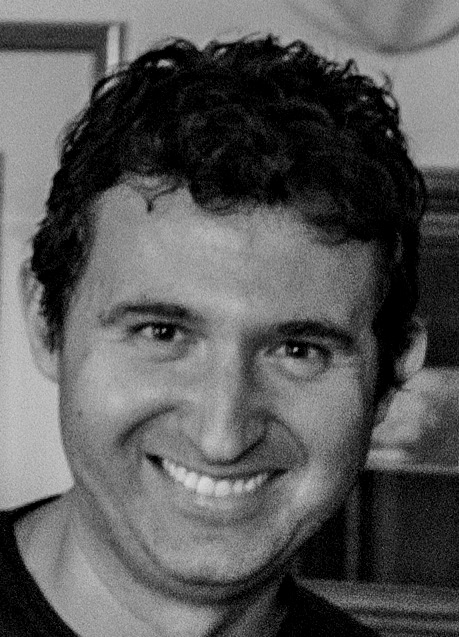
Luca Sterpone is a Full Professor at the Department of Control and Computer Science (DAUIN), Politecnico di Torino. He serves as Head of the Control and Computer Engineering Department (2023-2027), coordinates the Aerospace and Safety Computing Lab, and is a member of the Academic Senate and Power Electronics Innovation Center (PEIC). His research spans reconfigurable computing, fault tolerance, and radiation effects analysis in electronic systems. Professor since 2021 Department Head (DAUIN) since 2023 Coordinates international collaborations with ESA, AMD Xilinx, NVIDIA, and Thales Alenia Space Develops radiation-hardened FPGA tools (SETA, VERI-Place, PyXEL) 2007 EDAA Outstanding Dissertation Award and 2005 IEEE Best Paper Award Research Focus : Designing radiation-tolerant systems for aerospace, including fault-tolerant AI accelerators, FPGA reliability, and software-based error mitigation. He investigates soft error propagation in nanoscale circuits and develops tools for radiation sensitivity analysis in VLSI. His work integrates hardware-software co-design for mission-critical applications. Awards : EDAA Outstanding Dissertation Award (2007) IEEE European Test Symposium Best Paper (2005) SMACD Best EDA Tool Award (2018) ARC Best Paper candidate (2018) Teaching : He leads courses in Reconfigurable Computing (PhD level), GPU Programming , and Operating Systems . He has formal responsibility for teaching roles across 9 bachelor's and 7 master's years, and mentors multiple PhD students. Collaborations : Coordinates with the European Space Agency (ESA), University of Bielefeld, Universidad de Sevilla, and industrial partners like AMD Xilinx, NVIDIA, and General Motors. He leads projects such as RESCHIP4EU, VEGAS, and TERRAC for radiation-hardened computing solutions.

Aaron Shugar is a Professor and current Bader Chair in Art Conservation at Queen’s University. With a background in archaeometallurgy and conservation science, he specializes in non-destructive analysis techniques for cultural heritage, including X-ray fluorescence (XRF), Raman spectroscopy, and hyperspectral imaging. His work bridges art history, material degradation, and technological innovation. Honours H.B.A. in Anthropology and Law & Society from York University M.S. in Archaeological Materials from the University of Sheffield Ph.D. in Archaeometallurgy from University College London His research focuses on historic artist’s pigments , ancient metallurgy , and technical history of artifacts , with particular interest in degradation pathways and manufacturing processes. Recent publications highlight trends in AI integration with XRF analysis and preservation of modern materials in art conservation. Bader Chair in Art Conservation Mellon Foundation Professor in Conservation Science Aaron co-directed the Archaeometallurgy Laboratory at Lehigh University, served as a guest scientist at NIST, and remains a research associate at the Smithsonian Institution. He actively contributes to TEFAF’s Scientific Vetting Committee and acts as a forensic materials expert for the Court of Arbitration for Art.
Maxime CORDYمشاهده پروفایل
پژوهشگر
Maxime CORDY is a Research Scientist at the Interdisciplinary Centre for Security, Reliability and Trust (SnT) , University of Luxembourg, within the Security, Design and Validation group (SerVal) . He holds a PhD from the University of Namur (Belgium, 2014) and specializes in software engineering, applied artificial intelligence, and cybersecurity. His work focuses on adversarial machine learning, deep learning robustness, and model checking for critical systems. Research interests include adversarial attacks on tabular data , energy system optimization , code understanding models , and software quality assurance . Recent projects address challenges in secure AI deployment, automated test generation, and fault detection in large language models. Publications emphasize empirical studies on adversarial defenses, data augmentation for code models, and energy consumption forecasting. He contributes to tools like Daedalux (variability-aware model checking) and benchmarks like Tabularbench for adversarial robustness evaluation. Current affiliations include leadership within the SerVal group and collaborations on interdisciplinary projects such as MALETSQUE (Machine Learning Techniques for Software Quality Evaluation). His work bridges theoretical computer science with practical applications in energy systems, medical imaging, and space program design.
Tushar Sharmaمشاهده پروفایل
استادیار
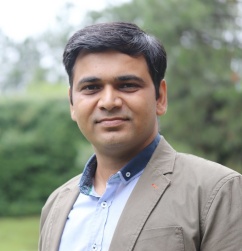
Tushar Sharma is an Assistant Professor in the Faculty of Computer Science at Dalhousie University, Canada. His research focuses on software engineering, particularly software quality, refactoring, technical debt, and the application of machine learning in software engineering (ML4SE). He leads the SMART Lab and is actively involved in projects related to Green AI and sustainable software development. PhD : Software Engineering, Athens University of Economics and Business, Greece (2019) MS : Computer Science, Indian Institute of Technology-Madras, India His research interests span software design and architecture, code and design quality, refactoring, technical debt, mining software repositories, and applied machine learning for software engineering. He is particularly interested in sustainable AI, green software engineering, and the use of large language models for code. His work bridges empirical studies with practical tool development to improve software maintainability and quality. His recent publications highlight a strong trend in code smell detection, refactoring automation, energy-aware AI, and the reliability of large language models in software engineering. He has developed tools like Designite and DPy and contributed datasets such as MaRV and DACOS, emphasizing empirical validation and reproducibility in software engineering research. Dean's Research Excellence Award Best Artifact Award, SCAM 2023 IEEE Senior Member Tushar Sharma has secured significant research funding, including an NSERC Discovery Grant for DevQOps, Mitacs Accelerate grants with industry partners, and contributions to the $154M Canada First Research Excellence Fund project. He actively mentors students and collaborates with industry. He leads the SMART Lab at Dalhousie and has organized workshops such as SATToSE 2018. He is also a founding developer of Designite, a widely used software design quality assessment tool.
Professor Yngve Karl Frøyen works at the Department of Architecture and Planning, Faculty of Architecture and Design, Norwegian University of Science and Technology (NTNU). With expertise in sustainable transport solutions, urban spatial modeling, and GIS applications for planning, he has taught and supervised urban and regional planning topics since 2010. His work spans multiple master programs and involves improving transport modeling tools for walking, transit, and bicycling modes. Research Focus: Sustainable urban transport (walking, bicycling, public transit), urban density, GIS methods, land use-transport interactions, and urban logistics. Teaching: Courses in GIS methods, land use-transport integration, regional planning, and master thesis supervision. Publications: 15+ works on transport modeling, urban density impacts, bicycle infrastructure, and planning methodology. Outreach: Regularly presents at conferences and seminars on topics like urban logistics, walking modeling, and transport policy. His academic career spans from 1981 civil engineer graduation to current professorship, with prior roles at Norwegian Institute of Urban and Regional Research (NIBR) and SINTEF. He combines technical GIS proficiency with policy-oriented planning expertise.
Sami Repo is a Professor in Electrical Engineering, focusing on power distribution systems and smart energy technologies. His work spans distribution network automation, flexibility services, and integration of distributed energy resources. Doctor of Science (Technology) in Electrical Engineering (2001) Master of Science (Technology) in Electrical Engineering (1996) His research interests include smart grids, congestion management, and cyber-physical energy systems. Recent publications address challenges in electric vehicle charging, green hydrogen regulation, and photovoltaic revenue optimization. He serves as an examiner and doctoral dissertation opponent, contributing to academic evaluation in electrical engineering programs. Key subtopics include EV charging control, EU energy policy, and renewable energy integration. Examiner for Wenlong Liao (2023): Modelling and optimization of active distribution networks Opponent for Etherden Nicholas (2012): Distributed energy resource hosting capacity
- Digital Trust
- Cybersecurity
- Blockchain
- +۱۲ مورد دیگر
Dr. Felix Härer is a Lecturer and researcher at the University of Applied Sciences FHNW, School of Business, Basel, Switzerland, and also teaches externally at the University of Fribourg. He is affiliated with the Digital Trust Competence Center, where he conducts research and teaching in IT Security, Cybersecurity, Digital Trust, Blockchain, AI, Cloud Computing, and Systems Modeling. His research interests span a broad and interdisciplinary range, including: Digital Trust and Cybersecurity Blockchain and Decentralized Systems AI and Knowledge-based Systems (including LLMs and RAG) Software and Systems Modeling (BPMN, ArchiMate) Data Science and ETL-based Analytics Zero Trust and Secure Architectures His recent publications (2020–2023) demonstrate a strong focus on blockchain interoperability, model-driven engineering, decentralized applications, and the integration of AI with conceptual modeling. He explores scalable architectures, cross-chain query languages, and secure attestation mechanisms, often combining modeling approaches with emerging technologies. His work bridges academic rigor with practical implementation in distributed and cloud environments. Scientific awards include: Best Paper Award at IEEE PKIA 2023 He actively supervises bachelor’s and master’s theses and student projects in digital trust and related domains. He has served on PhD committees externally and is a reviewer and program committee member for journals and conferences such as IEEE Transactions, WWW, CAiSE, and EMISAJ. His professional experience includes industry work at Siemens Healthineers in software engineering. He is a member of the IEEE Blockchain Group (Switzerland) and contributes to UN/CEFACT standards for e-commerce and supply chain data. He is involved in organizing workshops and conferences, including B4ISE 2025, B4TDS 2023–2024, and DESRIST 2023, and has delivered keynotes on Computational Trust and Blockchain Interoperability.

Remco M. Dijkman serves as Full Professor in Information Systems at Eindhoven University of Technology (TU/e), chairing the Information Systems group within the Industrial Engineering and Innovation Sciences school. He additionally holds a Full Professor position at EAISI High Tech Systems and acts as research director for high-tech supply chains at the European Supply Chain Forum—a network of over 50 multinational companies. His research centers on Business Process Management with emphasis on data-driven optimization of business processes. His academic background includes both PhD and Master's degrees in Computer Science from the University of Twente. Publications span Information Systems, Computers in Industry, and Transactions on Software Engineering and Methodology, with over 100 papers and service on the editorial board of Information Systems. He has held visiting positions at New York University, Hasso Plattner Institute, IBM Zurich Research Lab, Humboldt-University Berlin, and Queensland University of Technology. Dijkman's research interests focus on detecting, diagnosing, and predicting optimal execution scenarios in business processes, developing mathematical models for quantitative process analysis , and resource assignment optimization . These are primarily applied in transportation logistics and high-tech supply chains, where he investigates data-driven predictions for transport order assignment and supply chain planning. His work bridges artificial intelligence with practical business applications. Recent publications (2024-2025) reveal concentrated efforts in deep reinforcement learning for resource allocation, process pattern discovery, and software library development (GymPN, SimPN). Key trends include predictive process monitoring for healthcare applications, event data enrichment frameworks, and uncertainty handling in logistics planning—demonstrating strong interdisciplinary integration. Scientific recognition includes: Best Demo Award (2019) Best Reviewer Award (2016) Test of Time Award (2019) He has supervised 150 students, including Lotte Vugs who received the Dow Chemical Best OML Master Thesis Award in 2020. Grant leadership spans eight projects: NXTGEN Smart Industry (2023-2030), CollChain (2023-2029), CERTIF-AI (2020-2025), FENIX (2019-2023), and DynaPlex (2021-2024), focusing on digital twins, federated networks, and AI-driven supply chain solutions. Dijkman directs the Information Systems group at TU/e and leads the European Supply Chain Forum's high-tech supply chain research. His work integrates with semiconductor manufacturing and transportation logistics through collaborations with industry partners, while his 2023 invited talks at Technical University of Munich and Humboldt University Berlin highlight his international engagement.
David Soler Soneira is a Professor in the Department of Electrical Engineering and Systems at the School of Engineering (ICAI) of Comillas Pontifical University, where he has been teaching since 1994. He is also a Visiting Researcher at the Institute for Research in Technology (IIT), focusing on electric power systems. His academic and professional work is deeply rooted in the technical and economic aspects of modern power systems. Research Interests: His primary research areas include ancillary services, operation and planning of electric power systems, and electricity market economics. He specializes in voltage control, reactive power management, and regulatory models for grid services. His work bridges engineering and market design, contributing to the efficient and stable operation of power networks. Publications and Research Trends: His most recent publications, primarily in IEEE journals, focus on voltage regulation, secondary reserve markets, and reactive power markets. These works emphasize market mechanisms, economic valuation, and operational strategies for ancillary services in competitive electricity environments. His research consistently addresses real-world challenges faced by transmission and distribution operators. Scientific Awards: Director of prizewinning work in Honorary Distinction to the best Doctoral Thesis on Engineering «Modelo regulatorio del control de tensiones en los sistemas eléctricos de potencia» by Pablo Frías Marín, Universidad Pontificia Comillas, Jan 2009 Advising and Grants: He has supervised at least one doctoral thesis and has led or participated in numerous research and consulting projects funded by major energy companies such as Iberdrola, Unión Fenosa, Duro Felguera Energía, and REE (Red Eléctrica de España). These projects have focused on voltage control strategies, automation of power plants, and regulatory modeling. Labs and Teams: He is affiliated with the Institute for Research in Technology (IIT), a leading research center in energy systems at Comillas Pontifical University, where he contributes to advanced research in power systems and energy policy.

Sean Robson is a Professor of Policy Analysis at the RAND School of Public Policy and a Senior Behavioral/Social Scientist at the RAND Corporation. He serves as Associate Director of the Workforce, Development, and Health Program within RAND Project AIR FORCE, where he leads research on manpower, personnel, training, and readiness issues for the U.S. military. Robson holds a Ph.D. in industrial-organizational psychology from the University of Tulsa and a B.S. from James Madison University. His research expertise lies in the scientific validation of assessment and selection systems, physical and psychological fitness standards, and workforce development in military contexts. His research interests span military education and training, operational readiness, gender integration in the military, workforce diversity, enlisted personnel management, leadership, and competency modeling. He has led numerous projects to establish evidence-based physical fitness tests for Air Force Special Warfare and combat specialties in the Army, and has contributed to reforms in recruiting, classification, and resilience programs. Recent publications highlight a strong trend in applying data science, machine learning, and policy analysis to improve human resource management in the Air Force and Department of Defense. His work increasingly integrates artificial intelligence and optimization models to modernize workforce systems, while maintaining a core focus on human performance, resilience, and readiness. Assessment and selection for special operations Physical and behavioral fitness standards Military workforce development Machine learning in HR STEM talent in defense Robson has made significant contributions through RAND’s research portfolio, with over 37 research publications and multiple expert insights. His scientific work informs high-level defense policy and operational practices, particularly in the U.S. Air Force and Army. He has also advised on diversity initiatives, abuse prevention in training, and energy-sector workforce development. He is actively involved in current defense research, with recent and forthcoming publications in 2024 and 2025, indicating ongoing leadership and scholarly impact. He is based at RAND and can be contacted at Sean_Robson@rand.org.
Zhe Houمشاهده پروفایل
مدرس ارشد
Zhe Hou is a Senior Lecturer at the School of Information and Communication Technology , Griffith University, Australia. His academic journey includes a PhD in automated reasoning for separation logic from the Australian National University (2015) and prior research roles at Nanyang Technological University, Singapore (2015-2017). He joined Griffith University in 2017 and became permanent faculty in late 2019. Research Interests : Formal methods for software verification Automated reasoning with logical frameworks Blockchain technology and security Quantum computing verification Integration of LLMs with rigorous reasoning Sports analytics via model checking Recent Publications demonstrate expertise in neural-symbolic reasoning, blockchain security, quantum SAT solvers, and runtime verification frameworks. His work combines formal logic with machine learning for applications in cybersecurity and AI trustworthiness. Scientific Awards : ACM SIGSOFT Distinguished Paper Award (2025) Supervision Roles : Principal/Associate Supervisor for 6+ doctoral projects in blockchain security, AI verification, and network security. Professional Activities : Editor for Springer-Nature and Formal Aspects of Computing special issues, conference chair for ICFEM, ICECCS, and ISACE symposia.
فقط ۷۵۰ نتیجه اول نمایش داده میشود. برای رسیدن به نتایج دقیقتر، جستوجو را با فیلترها محدودتر کنید.