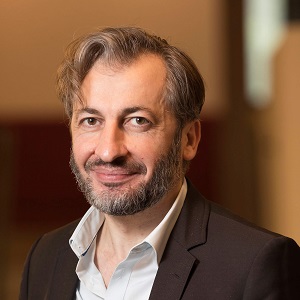
J.S. Rellermeyer is a Professor at Delft University of Technology's College of Electrical Engineering, Mathematics and Computer Science , specializing in Data-Intensive Systems . His work bridges software engineering, machine learning, and distributed systems to address challenges in AI reliability and sustainability.
Dr. Mojtaba Rostami Kandroodi is a University Lecturer at Tilburg University's Tilburg School of Humanities and Digital Sciences (TSHD) within the Department of Intelligent Systems. His academic profile demonstrates active engagement in both teaching and research, with courses including Machine Learning, Mathematics for Premasters DSS, and supervision of Master's theses through the Data Science in Action program. Dr. Rostami Kandroodi's research centers on the intersection of cognitive neuroscience, computational modeling, and psychiatric disorders. His work investigates how motivational biases influence decision-making processes, with particular focus on reinforcement learning mechanisms in both healthy individuals and those with psychiatric conditions. He examines how neurochemical factors like dopamine and substances such as LSD modulate learning processes, seeking to understand the neurocognitive basis of conditions including depression, anxiety, and addiction. His research employs sophisticated computational models to analyze behavioral data from probabilistic reversal learning tasks, revealing nuanced insights into reward-punishment asymmetries and cognitive control mechanisms. Analysis of his publication record shows a consistent focus on reinforcement learning dynamics across multiple contexts. His work spans from theoretical computational models of asymmetric updating in volatile environments to clinical investigations of learning biases in psychiatric populations and pharmacological studies examining how substances alter learning processes. This research trajectory demonstrates both methodological sophistication and clinical relevance, bridging computational neuroscience with practical applications for understanding and potentially treating psychiatric disorders. Dr. Rostami Kandroodi maintains active collaborations with researchers across institutions, as evidenced by his co-authorship with prominent figures like Hanneke den Ouden. His teaching responsibilities in Machine Learning and data science methodologies complement his research focus, creating a cohesive academic profile centered on quantitative approaches to understanding cognition and behavior.
Bennett Kleinberg is an Associate Professor in Behavioural Data Science at the Department of Methodology and Statistics at Tilburg University (The Netherlands) and the Department of Security and Crime Science at University College London (UK). His academic journey includes a PhD from the Department of Psychology at the University of Amsterdam and a previous position at the UCL Dawes Centre for Future Crime. Professor Kleinberg's research revolves around the interplay between psychological research and computational methods to study human behaviour. His work addresses two key questions: How can computational methods enhance our understanding of the human mind and behaviour? And how can psychological research methods inform our understanding of computational model behaviour? His substantive research interests include deception detection and legal psychology, human resilience, and machine behaviour. In the Computational Psychology and Computational Methods (CPCM) Lab, his team collects data through psychological experiments and applies techniques from natural language processing, adversarial machine learning, and statistical modeling to better understand human behavior. His recent publications (2023-2025) demonstrate a strong interdisciplinary focus, spanning psychology, computer science, criminology, and AI research. Key trends include the application of computational methods to deception detection, analysis of large language models, and examination of human-AI interactions. His work often bridges theoretical psychological concepts with practical computational approaches, resulting in publications in high-impact journals across multiple disciplines. Scientific publications that use promotional language receive more citations Verbal deception detection enhanced through adversarial attacks Computational text analysis for identifying embedded lies Analysis of cognitive phenomena in large language models Applications of NLP to legal and security contexts Professor Kleinberg actively supervises students through limited positions to ensure close mentorship quality. His teaching responsibilities include the joint BSc in Data Science and the innovative MSc programme 'AI for Psychological Research.' The Computational Psychology and Computational Methods Lab offers structured pathways for PhD students, thesis projects, and research internships (minimum 6 months), with all projects required to align with the lab's core focus on computational methods to study human behavior and psychology.
Dr. Vicente Alarcon-Aquino is a Professor in the Department of Computing, Electronics, and Mechatronics at Universidad de las Americas Puebla (UDLAP), Mexico. He received his Ph.D. and D.I.C. degrees in Electrical and Electronic Engineering from Imperial College London in 2003. He previously served as department head from October 2012 to June 2018 and spent a research stay at King's College London in 2017. Dr. Alarcon-Aquino is a Senior Member of IEEE, a Level I member of the Mexican National System of Researchers (SNI), and a Fellow of the Mexican Academy of Sciences. His educational background includes: Ph.D. and D.I.C. in Electrical and Electronic Engineering, Imperial College London, UK (2003) Dr. Alarcon-Aquino's research focuses on cybersecurity, network monitoring, anomaly detection, wavelet analysis, and machine learning. His work spans theoretical foundations to practical applications in network security, with significant contributions to intrusion detection systems, cryptographic techniques, and machine learning approaches for security applications. He has developed innovative methods combining wavelet transforms with neural networks for various security and signal processing applications. His scholarly contributions include over 180 research articles in refereed journals and conference proceedings, a book on MPLS networks, and numerous citations. As an editor, he serves as Associate Editor for IEEE Access Journal and as Academic & Section Editor for PeerJ Computer Science, focusing on Security & Privacy. Notable professional recognitions include: Senior Member of IEEE Mexican National System of Researchers (SNI Level I) Member of the Mexican Academy of Sciences Dr. Alarcon-Aquino has supervised over 70 theses, including 8 Ph.D. dissertations, 15 Master's theses, and more than 37 Bachelor's theses. His supervision spans topics including network intrusion detection, information security, encryption algorithms, wavelet-based signal processing, neural networks, EEG signal processing, and biometric cryptosystems. He has hosted international research students from institutions including the Polytechnic University of Madrid and Kiel University of Applied Sciences. His research group at UDLAP focuses on developing advanced security solutions for modern network environments, with particular emphasis on applying machine learning techniques to cybersecurity challenges. Current projects include blockchain-based security solutions, federated learning approaches for intrusion detection, and advanced anomaly detection systems for IoT environments.
Pengcheng Liu is an Associate Professor in the Department of Computer Science at the University of York, holding this position since January 2020. He maintains active memberships in IEEE, IEEE Robotics and Automation Society (RAS), IEEE Control Systems Society (CSS), and the International Federation of Automatic Control (IFAC), while serving on the IEEE Technical Committee for Bio Robotics, Soft Robotics, Robot Learning, and Safety, Security and Rescue Robotics. His research spans robotics, machine learning, automatic control, and optimization, with specialization in humanoid robotics, rehabilitation systems, agricultural applications, and human-computer interaction. Key focus areas include developing lightweight neural networks for embedded agricultural systems, bionic-companionship frameworks for service robots, EMG-controlled rehabilitation devices, and precise control of robotic manipulators using ROS/Gazebo. His work consistently bridges theoretical control systems with practical implementations in healthcare and precision agriculture. Analysis of his publication trends reveals strong emphasis on applying machine learning to real-world robotics challenges, particularly in resource-constrained environments (e.g., agricultural robotics with efficient neural networks) and human-centered applications (e.g., rehabilitation gloves and brain-computer interfaces). Recent work demonstrates increasing integration of computer vision with control systems for autonomous operation. His notable scientific awards include: Global Peer Review Awards from Web of Science (2019) Outstanding Contribution Awards from Elsevier (2017) Dr. Liu has secured and managed research funding through major programs including EPSRC, Newton Fund, Innovate UK, Horizon 2020, Erasmus Mundus, FP7-PEOPLE, and NSFC. He serves as a regular reviewer for EPSRC, NIHR, and NSFC grant panels while reviewing for over 30 flagship journals and conferences in robotics, AI, and control systems. His editorial roles include Associate Editor for IEEE Access and PeerJ Computer Science, where he has edited 17 publications. Though specific lab affiliations aren't detailed, his research in agricultural robotics, rehabilitation systems, and humanoid platforms suggests active collaboration with York's robotics and AI research groups, particularly in developing practical implementations of control algorithms and machine learning models for real-world deployment.
Paulo Jorge Coelho serves as an Adjunct Professor in the Electrical Engineering Department at the School of Technology and Management, Polytechnic University of Leiria, and as an integrated researcher with the ROBiTECH (Advanced Robotics and Smart Factories) group at INESC Coimbra's Leiria delegation. With over 20 years of academic experience since 2004, he specializes in Microprocessors, Industrial Automation, and Computer Vision instruction. Education: Ph.D. in Informatics (2019), Trás-Os-Montes and Alto Douro University Specialization in Automation and Control (2007), Coimbra University Bachelor of Electrical Engineering (2004), Coimbra University Research Focus: His work bridges industrial automation and computer vision with cutting-edge machine learning applications in biomedical imaging, ambient assisted living, and assistive technologies. Current projects emphasize practical implementations for reducing physical impairments and enhancing healthcare solutions through deep learning frameworks. Publication Trends: Recent work (2024-2025) reveals strong interdisciplinary convergence between healthcare diagnostics (schizophrenia/EEG analysis, perinatal depression prediction) and industrial/computer vision systems (sports analytics, activity recognition). His research consistently leverages sensor fusion and deep learning architectures to solve real-world problems across medical and engineering domains. Professional Engagement: Active member of the Portuguese Engineers Order and Portuguese Association for Pattern Recognition, with significant editorial contributions (89+ edited articles) across AI and computer vision domains. Previously served as course director and Scientific-Pedagogical Committee member for the Master's in Electrical and Electronic Engineering. Research Infrastructure: Operates within ROBiTECH's advanced robotics ecosystem at INESC Coimbra, focusing on smart factory solutions and human-robot interaction systems. His lab environment integrates industrial automation testbeds with biomedical sensor networks for cross-domain innovation.
Moshe Y. Vardi is University Professor and the Karen Ostrum George Distinguished Service Professor in Computational Engineering at Rice University, where he has been a faculty member since 1993. He holds joint appointments as Professor of Computer Science, member of the Ken Kennedy Institute for Information Technology, and Fellow for Science and Technology Policy at the Baker Institute for Public Policy. Vardi leads Rice's Initiative on Technology, Culture, and Society, reflecting his dual expertise in computational logic and societal implications of technology. With over 50,000 citations, Vardi ranks among the most influential computer scientists globally. His research centers on automated reasoning, a branch of artificial intelligence with applications spanning machine learning, database theory, computational complexity, knowledge in multi-agent systems, and computer-aided verification. Vardi has made seminal contributions to the application of logic in computer science, earning him the moniker 'the calculus of computer science' for his work. Vardi's scholarly output includes over 750 papers and two foundational books: 'Reasoning about Knowledge' and 'Finite Model Theory and Its Applications.' His work shows a clear trajectory from theoretical foundations to societal impact, with recent publications increasingly addressing the ethical dimensions and societal consequences of technological advancement, particularly in artificial intelligence and automation. IEEE TCCH Outstanding Leadership Award, 2025 CAV Award, 2025 ICDT 2025 Test-of-Time Award Knuth Prize Foreign Member of the Royal Society ACM SIGMOD Codd Award IEEE Computer Society Goode Award ACM Kanellakis Award Vardi served as Editor-in-Chief of Communications of the ACM for a decade until 2017 and continues as Senior Editor. His thought leadership extends beyond academia through public commentary on technology's societal impact, particularly regarding AI's effect on employment and ethical considerations in technological development. He maintains an active engagement with students through courses on logic in computer science and research ethics seminars.
Hans Henseler serves as a part-time Lecturer in Digital Forensics & E-Discovery at Leiden University of Applied Sciences since 2016. He also holds significant positions as a senior advisor at the Netherlands Forensic Institute's Digital and Biometric Traces division and as Chairman of the Board of Directors of Digital Forensic Research Workshop (DFRWS). His career spans nearly three decades in digital forensics, beginning at the Forensic Laboratory (now NFI) in 1992. Throughout his career, he has worked with major organizations including ZyLAB, PWC, Fox-IT, Tracks Inspector, and Magnet Forensics, participating in high-profile investigations such as fraud cases at Bouwfonds and corruption investigations at Siemens and Daimler. Computer Science graduate from Delft University of Technology PhD in Artificial Neural Networks from Maastricht University (1993) Former lecturer at Amsterdam University of Applied Sciences (2009-2016) Founder of Volto Labs and advisory board member of DuckDuckGoose AI Henseler's research focuses on the evolving landscape of digital evidence, particularly in IoT forensics and AI applications. He established the IoT Forensics Lab at The Hague Security Delta to address emerging challenges as cyberspace and the physical world merge. His recent publications examine how language models can serve as 'co-pilots' in digital evidence search, reflecting his commitment to integrating cutting-edge technology into forensic practice. He has developed innovative educational approaches, including a dual education program in collaboration with the FIOD and Police, and has plans for a professional master's degree in Forensic ICT. His teaching philosophy emphasizes practical, hands-on experience, preparing students to handle the 'ever-growing mountain of digital evidence' in professional settings. Henseler's career demonstrates consistent dedication to the three pillars he identifies as central to his work: pioneering, innovating, and exchanging knowledge. His extensive industry experience directly informs his academic work, creating a valuable bridge between theoretical knowledge and practical application in the rapidly evolving field of digital forensics.
Ciano Aydin serves as Professor of Philosophy of Technology at the University of Twente, where he also heads the Department of Philosophy of Technology and acts as Vice-Dean (Education Portfolio) for the Faculty of Behavioral, Management, and Social Sciences (BMS). Additionally, he holds a professorship in Philosophy and Applied Sciences at Delft University of Technology. His academic work bridges theoretical philosophy with practical technological applications, focusing on how digital transformations reshape society. Aydin's research interests center on the philosophical dimensions of technology, with particular emphasis on algorithmic bias, digital privacy, and the societal implications of AI. His work critically examines how data collection influences human behavior and how digital networks transform organizational structures. He argues that technology is increasingly embedded in our physical environment through invisible sensors that monitor behavior, raising profound ethical questions about privacy in the digital age. His recent publications reveal a consistent focus on the dual nature of technological advancement - examining both threats and opportunities in digital transformation. Aydin's work demonstrates how biased data leads to biased algorithms, challenging the notion that AI can be truly neutral since it reflects the biases inherent in our world. He emphasizes that humans cannot be fully represented by datasets, arguing for philosophical reflection as essential to achieving genuine diversity and inclusion. As an educator, Aydin serves as core lecturer in the Digital Transformations program, guiding executives through technological revolutions from the Industrial Revolution to the current digital network society. His teaching emphasizes developing thoughtful visions for organizational roles within the evolving digital landscape rather than merely replicating physical processes online.
Jeffrey Dellosa serves as a Professor at Caraga State University in the College of Engineering and Geosciences, Butuan, Philippines. His academic career focuses on renewable energy research with particular emphasis on solar photovoltaic systems for rural development applications in the Philippines. He holds a Doctor of Engineering degree specializing in Renewable Energy from Ateneo de Davao University (2019-2023). Education: Doctor of Engineering in Renewable Energy, Ateneo de Davao University (2019-2023) Professor Dellosa's research spans multiple domains within renewable energy engineering, with particular expertise in solar photovoltaics, energy conversion systems, and power generation technologies. His work bridges theoretical research with practical applications for rural electrification and sustainable development. Current research directions include floating solar photovoltaic systems, IoT-based energy monitoring, and renewable energy integration for healthcare facilities. Analysis of his publication record reveals a strong emphasis on practical implementation of renewable energy solutions in the Philippine context, with increasing focus on interdisciplinary approaches combining AI, IoT, and traditional energy engineering. Recent publications demonstrate a shift toward comprehensive system design that addresses both technical and socioeconomic aspects of renewable energy deployment in rural communities. Professor Dellosa leads research in Nelson Jr Enano's Lab and collaborates extensively with regional institutions on renewable energy projects. His work has resulted in 67 publications with significant readership (60,773 reads) and citations (286 citations), demonstrating impactful contributions to the field of renewable energy engineering in Southeast Asia.