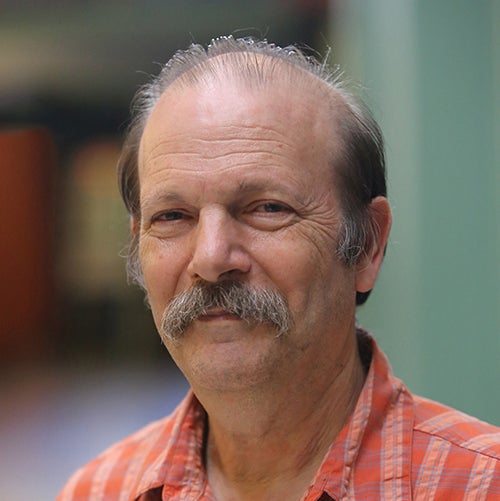
Moshe Y. Vardi
عضو هیئت علمی · Automated Reasoning
National Research Institute for Mathematics and Computer Scienceمعرفی
Moshe Y. Vardi is University Professor and the Karen Ostrum George Distinguished Service Professor in Computational Engineering at Rice University, where he has been a faculty member since 1993. He holds joint appointments as Professor of Computer Science, member of the Ken Kennedy Institute for Information Technology, and Fellow for Science and Technology Policy at the Baker Institute for Public Policy. Vardi leads Rice's Initiative on Technology, Culture, and Society, reflecting his dual expertise in computational logic and societal implications of technology.
With over 50,000 citations, Vardi ranks among the most influential computer scientists globally. His research centers on automated reasoning, a branch of artificial intelligence with applications spanning machine learning, database theory, computational complexity, knowledge in multi-agent systems, and computer-aided verification. Vardi has made seminal contributions to the application of logic in computer science, earning him the moniker 'the calculus of computer science' for his work.
Vardi's scholarly output includes over 750 papers and two foundational books: 'Reasoning about Knowledge' and 'Finite Model Theory and Its Applications.' His work shows a clear trajectory from theoretical foundations to societal impact, with recent publications increasingly addressing the ethical dimensions and societal consequences of technological advancement, particularly in artificial intelligence and automation.
- IEEE TCCH Outstanding Leadership Award, 2025
- CAV Award, 2025
- ICDT 2025 Test-of-Time Award
- Knuth Prize
- Foreign Member of the Royal Society
- ACM SIGMOD Codd Award
- IEEE Computer Society Goode Award
- ACM Kanellakis Award
Vardi served as Editor-in-Chief of Communications of the ACM for a decade until 2017 and continues as Senior Editor. His thought leadership extends beyond academia through public commentary on technology's societal impact, particularly regarding AI's effect on employment and ethical considerations in technological development. He maintains an active engagement with students through courses on logic in computer science and research ethics seminars.