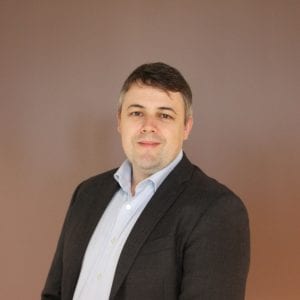
Dr. Ali Kashani is a Senior Lecturer at the University of New South Wales (UNSW) within the School of Civil and Environmental Engineering. His research focuses on sustainable and low-carbon concrete materials, robot-aided construction (particularly 3D printing), and Circular Economy-aligned applications. Leadership in cementitious materials innovation Expertise in 3D printing for construction Advocate for waste valorisation and carbon capture Dr. Kashani has secured approximately $7 million in research funding and holds a patent in lightweight concrete foam. His work spans 70+ publications with 9,000+ citations, including media coverage in the Sydney Morning Herald and The Fifth Estate. He actively contributes to professional organizations such as MECLA, RILEM, and ASTM. Recent research trends include AI and optimization algorithms for sustainable concrete mix design, chloride diffusion modeling, and 3D printing performance analysis. His publications often address waste material integration, durability assessment, and eco-friendly construction practices. Scientific Awards: National and NSW Awards for 'Excellence in Concrete' (Technology and Innovation) from the Concrete Institute of Australia Churchill Fellowship for Digital Construction and 3D Printing sponsored by AVJennings Dr. Kashani serves as Co-Chair of the cement and concrete working group at MECLA and contributes to RILEM and ASTM committees. His email is ali.kashani@unsw.edu.au , and his office is located in the Civil Engineering Building (H20), Level 2, Room CE204, UNSW.
Dr. Ghazal Bargshady is a Lecturer at the University of Canberra , with expertise in Affective Computing , Artificial Intelligence , and Healthcare Technology . Her roles include teaching units such as Computer Vision, Data Analytics, and Soft Computing, as well as supervising PhD and Master by Research students in AI-driven projects for healthcare and road safety. Education: She earned her PhD in Artificial Intelligence and Computer Vision from the University of Southern Queensland in 2020. Research Interests: Dr. Bargshady specializes in Computer Vision Deep Learning Biosignal Processing Facial Expression Analysis Human Factors in AI Wearable Sensors Multimodal Data Fusion Brain–Computer Interfaces Her work addresses real-world challenges in pain assessment, depression recognition, and driver safety using cutting-edge AI models. Article Trends: Her recent publications focus on Transformer architectures , fNIRS signal analysis , multimodal pain detection , and depression severity estimation via facial video data. These studies highlight her contributions to AI in healthcare , transportation safety , and biomedical signal processing . Teaching Activities: Dr. Bargshady has lectured units including Programming for Data Science , Computer Vision , and Soft Computing , emphasizing practical AI applications.
Professor Clinton Fookes is a faculty member at the Queensland University of Technology (QUT) within the School of Electrical Engineering & Robotics . His research focuses on leveraging computer vision and artificial intelligence to develop automated systems that understand, anticipate, and interact with human behaviors, with applications in medical diagnostics, autonomous vehicles, defense, and industrial efficiency . Research areas include AI adaptability, multimodal biosignal analysis, and human-machine interaction Collaborates with CSIRO Data61, Defence Science and Technology Group, Orica, Airbus, and Sentient Vision Systems Develops systems for human action detection, infrastructure monitoring, and stress response prediction His work addresses critical challenges in AI deployment, such as environmental adaptability and reducing diagnostic errors in medical and autonomous systems. Recent publications highlight trends in self-supervised learning, zero-shot knowledge transfer, multimodal integration , and 3D reconstruction for healthcare , while exploring ethical AI use in sectors like mining and defense . Professor Fookes emphasizes interdisciplinary collaboration, bridging engineering, medicine, and social sciences to advance AI systems capable of real-world impact. His research agenda includes improving AI memory capabilities and explainability for safer, more reliable automation.
Summary Associate Professor Mehrdad Arashpour is an internationally recognized researcher and educator in construction and civil infrastructure, focusing on automation and information technologies. He leads the ASCII Lab at Monash University's Department of Civil and Environmental Engineering. His academic roles include Head of Construction Engineering and membership in the CIB's Working Commission on Off-site Construction (W121) and Infrastructure Task Group (TG91). Education: Ph.D., RMIT University, Australia M.Sc., Grenoble University, France B.Sc., IU University, Iran Research Interests: Digital twins, computer vision, robotics, BIM integration, sustainable construction, and automation in construction processes. His work contributes to UN Sustainable Development Goals, particularly in sustainable cities and communities. Grants & Awards: Over $6M in grants from ARC, Austroads, and industry partnerships. Recognitions include Editor's Choice Paper (ASCE, 2019) and Outstanding Reviewer (Elsevier, 2016). Teaching: Courses like Risk Management in Engineering Projects and Infrastructure Research Project. Advises on PhD topics in computer vision, robotics, and BIM. Labs & Collaborations: ASCII Lab focuses on smart, sustainable solutions for construction. Collaborates with global researchers and organizations like SPARC Hub and Building 4.0 CRC.
Professor Stuart Phinn is a distinguished academic at the University of Queensland, serving as Professor in the School of the Environment and Centre Director of the Remote Sensing Research Centre (Earth Observation Research Centre). He also maintains affiliations with the Centre for Marine Science. With a career spanning over two decades, Professor Phinn has established himself as a leading expert in earth observation and environmental monitoring, with over 559 publications including 295 journal articles. His educational background includes a Bachelor (Honours) of Science (Advanced) from The University of Queensland and a Doctor of Philosophy from San Diego State University. Professor Phinn's leadership extends to founding directorships of Australia's national earth observation coordination body (www.eoa.org.au) and collaborative research infrastructure (www.tern.org.au), as well as a world-leading research-to-operational program supporting government environmental monitoring (www.jrsrp.org.au). He also leads the Earth Observation for Government Network. Professor Phinn's research focuses on monitoring environmental change using earth observation and field data. His work primarily involves using images collected from satellites and aircraft, combined with field measurements, to map and monitor Earth's environments and how they change over time. This research is conducted in collaboration with environmental scientists, government agencies, NGOs, and private companies. A growing aspect of his work focuses on national coordination of earth observation activities and the collection, publishing, and sharing of ecosystem data. His work provides solutions to support sustainable development and resource use for governments, industries, and communities. His recent publications demonstrate a consistent focus on applying earth observation technologies to solve environmental challenges across multiple domains. The 15 most recent articles reveal strong themes in coral reef mapping and monitoring, land cover change detection, fire resilience analysis, and advanced remote sensing techniques including multi-sensor fusion and machine learning applications. His work spans terrestrial, coastal, and marine environments, with significant contributions to understanding environmental change in Australia and internationally, particularly in Indonesia. Professor Phinn has secured substantial research funding from diverse sources including government agencies (Queensland Government, Great Barrier Reef Marine Park Authority), industry partners (SmartSat CRC, Blue Economy CRC), and international organizations (Google Inc, Vulcan Inc). Current projects include evaluating impacts of threats to endangered reptiles, automating tree-scale vegetation structure monitoring, and continuing the Joint Remote Sensing Research Program. As an academic supervisor, Professor Phinn has mentored numerous PhD and Master's students, with current supervision spanning topics from forest disturbance analysis to kelp forest mapping and fire resilience of mine site rehabilitation. His extensive supervision history demonstrates his commitment to training the next generation of earth observation scientists. The Earth Observation Research Centre he directs fosters a collaborative research environment focused on transforming satellite and airborne images with field survey data into meaningful environmental information for decision-making.
Sarah Howard is an Honorary Professor at the School of Education, University of Wollongong, and concurrently holds roles such as Visiting Professor at Vrije Universiteit Brussel. Her research focuses on leveraging new technologies and data science to understand classroom practices, teacher change, and technology integration. Key areas include cultural and individual factors influencing teachers' digital technology use, blended learning environments, and automated classroom observation systems. She leads projects like national app use studies in primary schools and data/video mining methods for digital-physical space integration. Her academic roles include supervision of higher-degree research students across multiple institutions. Funding includes ARC grants and internal university schemes exploring rural student potential, generative AI in education, and flexible learning spaces. Her work emphasizes innovative educational technologies, teacher professional development, and systemic educational change. Recent publications span AI in education, blended learning frameworks, and teacher readiness for online instruction. She collaborates internationally, with a focus on integrating theoretical and practical insights to drive educational innovation.
Dr. Mike Seymour is a Senior Lecturer at the University of Sydney Business School, specializing in Human-Computer Interaction (HCI), Digital Humans, and AI ethics. He holds a BSc, MBA, and PhD from the University of Sydney. His research focuses on photorealistic digital faces for immersive interfaces, blockchain socio-technical systems, and agile project management in creative industries. Dr. Seymour is a member of the Sydney Nano Institute and leads the Motus Lab. He has published in top journals like *Harvard Business Review*, *Communications of the ACM*, and *Information Systems Research*. His current projects include ARC-funded research on digital humans for anti-racism initiatives and adaptive AI for brain injury patients. He has received awards such as the SOAR Prize and ECR Researcher of the Year. His teaching spans CX, UX, and project management courses (e.g., INFS2040, INFS3080). Media engagements include ABC News, Sky News, and *The Australian Financial Review* for commentary on AI ethics and film industry trends. Education: BSc (University of Sydney) MBA (University of Sydney) PhD (University of Sydney) Research Themes: Real-time photorealistic avatars Deepfake ethics Agile methodologies in VFX Grants: A$450K ARC DP25 grant for anti-racism digital humans Earned $200K in industry partnerships (e.g., Epic Games) Labs/Teams: Leads the Motus Lab and collaborates with the Digital Human Research Group.
Prof. Ping Yu is a Professor at the University of Wollongong's School of Computing and Information Technology, where she has held leadership roles such as Director of the Centre for Digital Transformation (2013–2020). Her work focuses on digital health, health informatics, and data-driven solutions for aged care, with collaborations involving the World Health Organization (WHO), NSW Health, and over 11 aged care providers. She has pioneered projects like the WHO’s eSTEPS platform and AI-driven analytics to optimize healthcare resources. Her research integrates socio-technical perspectives to address challenges in technology adoption and healthcare system improvements. Her research interests span data engineering, data quality, ontology development, and generative AI applications in healthcare. Key areas include extracting insights from unstructured health records, improving clinical decision-making, and enhancing patient outcomes through mHealth and telemedicine innovations. She also explores the impact of green spaces on healthy aging and disparities in healthcare access across regions. Prof. Yu has secured over $4.5 million in research funding, including significant grants from the Australian Research Council. She has mentored 29 postgraduate students to completion, emphasizing interdisciplinary research and practical implementation. Her awards include the prestigious 2022 Telstra Brilliant Women in Digital Health Award and the 2008 Don Walker Award for contributions to health informatics. Her advising and grants narrative highlights her role as a mentor and her success in securing competitive funding. Her work bridges academia and industry, with projects like improving pressure injury risk management in aged care using EHRs and analyzing agitation in dementia through AI. She contributes to education policy, including co-designing academic leadership programs and enhancing clinical informatics curricula in the AI era. Prof. Yu leads multi-disciplinary teams at UOW and collaborates with global institutions, focusing on labs and initiatives like the Appendicectomy Surgical Pathway Ontology (ASPO) and the 6A framework for hypertension management via mHealth. Her research emphasizes real-world impact, from reducing hospital readmissions to optimizing surgical workflows and improving public health communication strategies during crises.
Professor Glen Tian is a Professor at the School of Computer Science , Queensland University of Technology . He holds two PhDs: one in computer and software engineering from the University of Sydney (2009) and another in industrial automation from Zhejiang University (1993) . His academic career spans institutions including Hong Kong University of Science and Technology, Curtin University, and the University of Maryland at College Park. Editor-in-Chief of the Handbook of Real-Time Computing (Springer) Associate Editor for Information Sciences (Elsevier) and Asia-Pacific Journal of Chemical Engineering (Wiley) His research focuses on big data computing , cloud computing , computer networks , smart grid communication and control , networked control systems , and cyber-physical system security . Applications include power systems , medical big data , vehicular networks , and transport systems . Recent publications highlight advancements in smart grid communications , distributed optimization , secure multi-agent systems , and medical imaging analysis . He has led QUT's Big Data Lab and served as Leader of QUT's Networks and Communications Discipline . Scientific achievements include Over 20 research grants totaling >$6M 6 Australian Research Council (ARC) grants 1 MRFF-TTRA grant ($745,623) 1 ATN-DAAD Australia-Germany Collaborative Grant 1 DEST International Science Linkage grant He supervises PhD students in big data bioinformatics , smart grid optimization , and cyber-physical security , while mentoring 30+ postdocs and research fellows. Current projects include mitigating cyberattacks on power systems and developing AI-based atheroma diagnostic tools .
David Lo is the OUB Chair Professor of Computer Science at Singapore Management University's School of Computing and Information Systems, where he directs the Information Systems and Technology Cluster and the Center for Research on Intelligent Software Engineering. An ACM Fellow, IEEE Fellow, and ASE Fellow, his research focuses on AI for Software Engineering (AI4SE), leveraging machine learning, data mining, and NLP to enhance software analytics and automation. Research Highlights: AI4SE, code LLMs, human-AI synergy in software engineering, software reliability, and empirical studies of practitioner pain points Awards: IEEE TCSE Distinguished Service Award, university-wide Teaching Excellence Award, Outstanding Graduate Supervisor Award, 2 Test-of-Time Awards, and 11 ACM SIGSOFT/IEEE TCSE Distinguished Paper Awards Leadership: General Chair of ASE'16 and MSR'22, PC Co-Chair for ASE'20, FSE'24, and ICSE'25, ACM SIGSOFT Executive Committee member His work has received over 20 awards, 37,000 citations, and an H-index of 100. As an educator, he has mentored trainees who became faculty and R&D experts globally.
Kanchana Kariyawasam serves as Associate Professor in the Department of Accounting, Finance and Economics within Griffith University's Business School. Holding a PhD in IP Law from Griffith University, an LL.M (Advanced) in IP Law from The University of Queensland, and an LL.B (Hons) from the University of Colombo, she maintains active research affiliations with the Law Futures Centre (2009-2024) and Griffith Asia Institute (2019-present). Her research spans Intellectual Property Law with specialized focus on Copyright and Artificial Intelligence, IP and Right to Repair, Patent Law in Biotechnology, and Gender Equality in IP systems. Current projects examine AI-generated works, digital exhaustion doctrine, and NFT legality under Australian copyright frameworks, reflecting strong alignment with Sustainable Development Goals 4 (Quality Education) and 9 (Industry Innovation). Professor Kariyawasam's funded research portfolio includes significant projects such as the WIPO Study on Illegal Retransmission of Live Broadcasts (2023), Queensland Government Ewaste initiatives (2022), and Griffith University's Right to Repair Workshop (2020). Her publications demonstrate consistent output in high-impact journals including European Intellectual Property Review and International Journal of Law and Information Technology , with recent works analyzing AI copyright challenges, spatial data protection, and medical device repair rights. Deputy Vice-Chancellor's 2024 Student Experience of Teaching Survey Commendation Green Impact Gold Award Recipient (2023, Griffith Repair Cafe) Highly Commended Griffith Award for Excellence in Teaching (Large Classes) Two GBS teaching citations She currently supervises five doctoral candidates researching AI data privacy, patent law intersections, and agricultural IP issues, while having successfully completed supervision of four doctoral theses including works on female entrepreneurship and agribusiness marketing. As Coordinator of Griffith Repair Cafe and Steering Committee Member of Australian Repair Network, she bridges academic research with community engagement on repair rights and e-waste reduction.
Associate Professor David Rye is an Honorary Associate Professor in the School of Aerospace, Mechanical and Mechatronic Engineering at the University of Sydney, affiliated with the Australian Centre for Field Robotics. His research focuses on interdisciplinary robotics, blending engineering, social sciences, and art to explore human-robot interaction, tactile sensing, and autonomous systems. Key areas include social robotics, cooperative robot behavior, and creative robotics design. His work spans theoretical and applied robotics, including studies on robot collaboration dynamics, tactile feedback systems, and robotic excavation. Notable contributions include developing EIT-based sensitive skins for robots and analyzing human comfort in multi-agent interactions. He has led projects such as the Fish-Bird art-robotics collaboration and the experimental human-robot interaction facility funded by ARC grants. Publications highlight advancements in human-robot collaboration ethics, motion planning for social robots, and control systems for autonomous machinery. His interdisciplinary approach bridges robotics engineering with creative arts, fostering innovations in both technical and artistic domains.
Professor Jennifer Whyte is a Professor and Director of the John Grill Institute for Project Leadership at the University of Sydney's School of Project Management (Faculty of Engineering). Her research focuses on project leadership, systems integration, digital transformation in construction, and future-making practices. She previously led the School of Project Management (2021-23) and holds a retained Professorship at Imperial College London's Department of Civil and Environmental Engineering. She is a Policy Fellow of the Institution of Civil Engineers, contributing to industry policy and advisory boards such as the UK Construction Leadership Council. Education: Holds a PhD and is a Fellow (FICE) of the Institution of Civil Engineers. Her work bridges academia and industry, emphasizing practical impact through tools like digital twins and visualization technologies. Current projects include the Alan Turing Institute's Data-Centric Engineering Programme (Grand Challenge III) and the EPSRC-funded VENTURA Project's Virtual Decision Room initiative. Research interests span infrastructure projects, innovation ecosystems, and leadership in complex environments. She actively supervises doctoral students exploring areas like risk management in construction and digital transformation in public institutions. Awards include recognition for policy contributions and leadership in project-based organizations. Grants include funding for Big Data-driven stakeholder engagement in mega-projects and collaborations on new energy technologies. Her global links include Imperial College London and ongoing partnerships with institutions in the UK and Australia.
Dr. Amir Tavakoli Taba is a Senior Lecturer in Medical Imaging Sciences at the University of Sydney, where he co-directs the Medical Image Optimisation and Perception Group (MIOPeG). He specializes in improving medical imaging accuracy, particularly in breast cancer diagnosis, through advancements like phase-contrast tomography and AI integration. His work bridges technological innovations (e.g., low-dose imaging) with clinical practice, emphasizing quality control and radiologist performance analysis. Education: PhD (University of Sydney) MEngSc (University of New South Wales) BSc (University of Tehran) Research Interests: Dr. Taba’s research focuses on phase-contrast computed tomography (PCT), AI-driven diagnostic tools, and clinical workflow optimization. His projects include the world’s first PCT clinical trial (scheduled for 2024 in Melbourne) and collaborations with institutions like ANSTO, Harvard Medical School, and the University of Iowa. He also investigates radiologist expertise development and the role of social networks in medical decision-making. Grants & Awards: NHMRC Synergy Grant (IMPACT: Implementation of X-ray Phase-Contrast Tomography) International recognition, including the SPIE Medical Imaging Award Advising & Labs: Current students: Mohammed ALANAZI (abdominal CT optimization), Jenna ARBID (phase-contrast imaging) Labs: MIOPeG, part of the Sydney Vital and Sydney Catalyst cancer research networks Teaching: Courses in imaging technologies, medical image perception, and clinical capstone projects for diagnostic radiography students.
Prof Scott Crowe is a leading academic and clinical researcher in radiation oncology medical physics, affiliated with the Royal Brisbane and Women’s Hospital and the Hudson Institute of Medical Research (HBI) Cancer Care Services. His work bridges clinical practice and advanced research in radiotherapy technologies. Clinical Role: Clinical Lead for Cancer Care Services at HBI, overseeing radiation oncology medical physics. Education: Post-doctoral fellowship at Queensland University of Technology (QUT). Research Interests focus on: 3D Printing: Developing patient-specific phantoms and devices for radiotherapy applications (e.g., lung, vaginal, and oral molds). Dosimetry: Advancing measurement techniques (ionization chambers, Monte Carlo simulations) and addressing challenges like small field dose corrections, skin dose enhancement, and secondary cancer risk assessment. Adaptive Radiotherapy: Real-time motion adaptation systems, including Radixact Synchrony and TomoTherapy, to improve treatment accuracy. Quality Assurance: Statistical process control for beam energy variations, gamma evaluation methods, and machine performance checks. Publication Trends highlight his expertise in integrating 3D printing with dosimetry, optimizing adaptive radiotherapy workflows, and improving quality assurance protocols. His work spans Monte Carlo simulations , proton therapy , and image-guided radiotherapy . Supervision: Mentors higher degree research students in radiation oncology physics. Conferences: Regular presenter at international scientific meetings. Labs & Collaborations: Manages the radiation oncology medical physics research portfolio at Royal Brisbane and Women’s Hospital, collaborating with Hudson Institute on clinical translation projects.