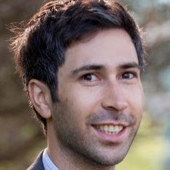
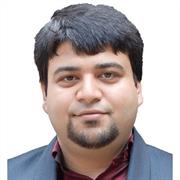
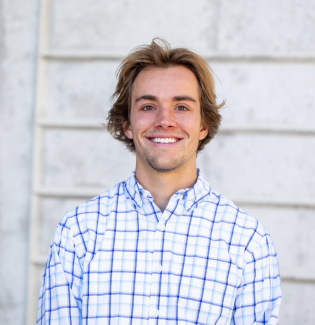
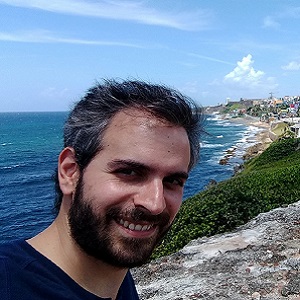
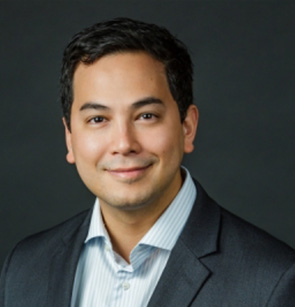
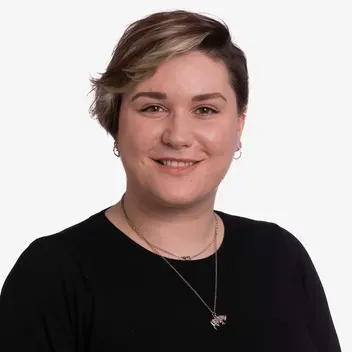
Eve Hoggan is an Associate Professor at the Department of Computer Science, Aarhus University. Her research focuses on multimodal interaction, haptic technologies, and collaborative systems in hybrid work environments. She is a principal investigator in projects like ABLE (2025–2028) and MACHS (2025–2028), which explore adaptive interactive devices and asymmetries in hybrid collaboration spaces. Her work emphasizes user-centered design principles, particularly in developing customizable interfaces like MouthIO (oral interaction systems) and Feelix (haptic feedback tools). She has contributed significantly to understanding challenges in hybrid meetings, including backchannel communication and synchronous interaction asymmetries. Key projects include ReWork (2022–present), investigating the future of hybrid work, and Mirrorverse (2023), which tailors video conferencing interfaces in real-time. Her research integrates technical innovation with sociological insights, addressing both technical and human factors in interactive systems.
Luca Fabris, MD, PhD, is an Adjunct Professor in the Department of Medicine (Digestive Diseases) at Yale School of Medicine. He holds academic appointments in both Digestive Diseases and Internal Medicine. His research focuses on hepatology, cancer biology, and metabolic disorders, with particular expertise in cholangiocarcinoma, liver fibrosis, and molecular mechanisms of liver diseases. Education: Dr. Fabris earned his MD from the University of Padova (1987) and PhD from the University of Milan (1997). His work integrates clinical medicine with advanced research methods, including machine learning applications in histology analysis (BiliQML initiative) and molecular biomarker studies. Research interests span cancer metastasis mechanisms, tumor microenvironment dynamics, and the interplay between liver diseases and cardiovascular complications. Recent studies highlight contributions to understanding SARS-CoV-2 pathophysiology and therapeutic strategies for cholangiocarcinoma and hepatocellular carcinoma. Collaborations include work with Mario Strazzabosco, MD, PhD, and other international researchers. His publications emphasize translational approaches, bridging basic science discoveries to clinical diagnostics and treatments.
Amir Shabani is a Lecturer in the School of Sustainable Energy Engineering at Simon Fraser University (SFU). He holds a Ph.D. in System Design Engineering from the University of Waterloo (2011), an M.Sc. in Electrical and Electronics Engineering from Iran University of Science and Technology (2004), and a B.Sc. in the same field (2001). His research focuses on Artificial Intelligence, Machine Learning, Computer Vision, and Smart City technologies, with emphasis on applications in interactive robotics, affective computing, and IoT systems. Dr. Shabani teaches courses such as SEE 231 (Electronic Devices and Systems), SEE 332 (Power Systems Design and Analysis), and SEE 333 (Network and Communication Systems). His academic interests span System Design (e.g., AI, Robotics, Data Structures) and Electronics (e.g., Embedded Systems, IoT). He actively contributes to smart building automation, renewable energy systems, and human-centric technologies like social robotics for elderly care. His publications address advanced topics including edge computing for social robots, facial emotion recognition, and intelligent occupancy detection in smart environments. His work bridges theoretical computer vision with practical engineering solutions for sustainable energy and urban infrastructure.
Joel Zylberberg is an Associate Professor in the Department of Biology at York University, holding a Canada Research Chair (Tier 2). His research focuses on understanding how the brain encodes sensory information, particularly in the visual cortex and retina, and translating this knowledge into advancements in machine learning and prosthetics. His work integrates computational neuroscience, theoretical physics, and artificial intelligence to develop technologies like camera-to-brain translators and next-generation retinal prosthetics. Education details are not explicitly listed, but his research spans interdisciplinary areas including Biophysical neural adaptation mechanisms Machine learning algorithm optimization Synaptic plasticity dynamics Visual information processing His recent articles emphasize bridging neuroscience and AI, exploring topics like neural network pruning, retinal computation models, and sleep-stage classification for medical applications. While no specific grants or awards are listed, his Canada Research Chair position highlights his recognized expertise.
Dr. Xiaoqing Guo is a Research Fellow at the Department of Engineering Science, University of Oxford. She holds a PhD from City University of Hong Kong (2022) and a B.Eng from Beihang University (2018). Her research focuses on medical image analysis, computer vision, and machine learning, with an emphasis on multimodal learning, human-machine interaction, and robust AI systems. She is affiliated with the Institute of Biomedical Engineering and the Noble Group, contributing to projects like the Turing AI WLR Fellowship. Her educational background includes: B.Eng in Biological Science & Medical Engineering (Beihang University, 2018) PhD in Electrical Engineering (City University of Hong Kong, 2022) Research interests span medical imaging , multimodal systems , and domain adaptation . Recent work includes MMSummary for fetal ultrasound video summarization, Pose-GuideNet for fetal head ultrasound guidance, and IterMask2 for brain lesion segmentation. She explores challenges like noisy labels, open-set generalization, and few-shot learning for rare diseases. Her publications reflect a trend toward medical AI applications , cross-modal systems , and domain adaptation . Notable contributions include novel frameworks for segmentation, anomaly detection, and adaptive learning. Awards include the 2024 Asian Deans’ Forum Rising Star and 2023 Global Top 80 Chinese Young Female AI Scholars. She was also a CVPR Outstanding Reviewer (2023) and recipient of the Chow Yei Ching Doctoral Research Award (2022). Dr. Guo’s work bridges theory and clinical practice, with projects in collaboration with institutions like the University of Oxford’s Visual AI Research Group. She is involved in initiatives like the Turing AI Fellowship and contributes to advancing medical imaging technologies.
Dr. Debaditya Acharya is a Lecturer in Geospatial Science at RMIT University's School of Science, where he teaches Remote Sensing and Photogrammetry. His research focuses on computer vision, machine learning, and 3D building modeling, with applications in indoor localization, augmented reality, and LiDAR technologies. He holds a PhD from the University of Melbourne (Australia), where his thesis addressed visual sensing for infrastructure-free indoor positioning using 3D models. Prior to his current role, he worked as a CSIRO Postdoctoral Fellow in the Machine Learning & AI Future Science Platform and as a postdoctoral researcher at RMIT, focusing on fisheries anomaly detection and food automation via deep learning. Key projects include developing the ISPRS benchmark for indoor modeling, 3D reconstruction of the Royal Exhibition Building using LiDAR, and pedestrian tracking frameworks for the Queen Victoria Market. His work emphasizes open-source solutions for spatial digital twins and geospatial data integration in data-scarce regions. Debaditya is actively involved in supervising research students at the Masters and PhD levels, particularly in smart city frameworks leveraging digital twins, IoT, and augmented reality applications.
Prof. Dr. Benjamin Grewe is an Associate Professor at the Department of Information Technology and Electrical Engineering at ETH Zürich. His research focuses on the intersection of artificial intelligence, neuroscience, and neural networks, with a particular emphasis on cortical hierarchies, continual learning, and biologically plausible algorithms. He leads projects involving deep feedback control, synaptic connectivity analysis, and neural ensemble dynamics. Grewe teaches courses such as Learning in Deep Artificial and Biological Neuronal Networks and Reinforcement Learning Basics , integrating theoretical and applied perspectives. His work bridges computational models with biological insights, contributing to advancements in medical robotics, process control, and AI safety. His research interests span neural network architectures , continual learning , and biological neuronal systems . Recent projects explore synaptic plasticity in cortical microcircuits and the application of AI to surgical planning and industrial automation. Grewe’s publications reflect a multidisciplinary approach, addressing challenges in both technical and biological domains. No scientific awards are explicitly mentioned in the provided texts. His advising and grant activities remain unspecified in the available data. His lab, part of the Neural and Intelligent Systems group, focuses on developing biologically inspired algorithms and neural interfaces.
Jonas Köpping is a Researcher at the Institute of Geochemistry and Petrology (ETH Zurich), part of the D-EAPS (Earth and Planetary Sciences) school under Prof. Thomas Driesner's group. His work focuses on magma emplacement dynamics, volcanic processes, and structural analysis of igneous systems. Key research areas include sheet intrusion mechanics, phreatic eruptions, and paleostress reconstruction in carbonate rocks. His research integrates field observations, laboratory experiments, and numerical modeling to address questions about magma transport, crustal deformation, and tectonic influences on igneous systems. Notable contributions include studies on magma finger dynamics, sill emplacement mechanisms, and the impact of igneous intrusions on stratigraphic records. Publications span experimental petrology, structural geology, and volcanology, with a focus on advancing understanding of shallow crustal processes. His work has implications for volcanic hazard assessment and subsurface imaging techniques. Köpping collaborates closely with the ETH Zurich GeoPetro group and utilizes advanced analytical methods such as 3D seismic reflection data and automated paleostress analysis.
Zois Boukouvalas is an Assistant Professor in the Mathematics and Statistics Department at American University. His research focuses on interpretable machine learning models for analyzing multi-modal data, integrating information geometry, statistics, and optimization. He applies these methods to biomedical imaging, social/linguistic trends, and chemical data for drug discovery. Boukouvalas holds a PhD in Applied Mathematics from UMBC (2017) and has received grants from the Energetics Technology Center for projects on machine learning in energetic materials and misinformation detection. Education: BS in Mathematics (University of Patras, Greece), MS in Applied and Computational Mathematics (Rochester Institute of Technology), MS and PhD in Applied Mathematics (UMBC). His work bridges theoretical foundations with practical applications, emphasizing ethical AI and underrepresented student inclusion. Recent contributions include panel discussions on AI in energetic materials and co-organizing conferences on latent variable methods in machine learning. Research interests span misinformation detection, multimodal learning, and algorithmic transparency. He has published extensively on topics like hate speech detection, stock market prediction via news data, and data fusion techniques for high-impact events. Awards highlight his innovation in human-assisted machine learning and materials discovery.
Dr. Russell T. Shinohara is a Professor in the Department of Biostatistics at The Johns Hopkins Bloomberg School of Public Health. His research focuses on quantitative biomedical imaging and biomarkers, particularly assessing structural and functional brain changes across the lifespan and in neurological/psychiatric disorders. He holds a PhD from Johns Hopkins (2012), MSc (2007), and Honors BSc (2006) from McGill University. Key research interests include neuroimaging analysis, machine learning applications in healthcare, and understanding brain pathology in conditions like multiple sclerosis and epilepsy. Notable collaborations span institutions globally, with a focus on automated diagnostic tools and multi-center harmonization of neuroimaging data. Featured work includes advancements in central vein sign detection for MS diagnosis, AI-driven epilepsy subtype identification, and environmental exposure studies linking chemical mixtures to child cognitive outcomes. His methods have been published in journals like Biological Psychiatry , JAMA Neurology , and NeuroImage . Current initiatives emphasize reproducible brain development charts, harmonization of structural connectomes, and leveraging big data to reduce site-related biases in neuroimaging studies.
Dr. Sathish Ramakrishnan is an Assistant Professor of Pathology at Yale School of Medicine, leading the Ramakrishnan Lab. His research focuses on cellular and molecular mechanisms of fusion proteins in exocytosis, cancer signaling, and disease progression. He holds a PhD from University Montpellier (2014), an MS in Physics from the University of Cambridge (2009), and a BEngSci from Anna University (2006). His work employs engineered lipid bilayer platforms and single-molecule imaging to study SNARE complexes and their regulators. Key interests include therapeutic discovery through understanding exocytosis pathways, with recent breakthroughs in photosensitive nanoprobes for extracellular vesicle isolation and dual-phase insulin secretion models. Dr. Ramakrishnan has published extensively on SNARE dynamics, membrane fusion, and protein-lipid interactions. Notable achievements include the ADRC Scholar Award (2022) and academic excellence awards in engineering. His lab collaborates with experts in biophysics, pharmacology, and molecular medicine, advancing translational research in drug discovery and biomedical applications.
George Johnson is an Associate Professor in Biomedical Sciences at Swansea University's Faculty of Medicine, Health and Life Science. He serves as Director of Employability and Entrepreneurship for the Medical School and teaches on the Genetics Degree programme. His research is conducted within the DNA damage group (in vitro Toxicology group) at the Institute of Life Science. Johnson's research focuses on genetic toxicology, human health risk assessment, dose response modeling, and imaging flow cytometry. His work bridges fundamental research in DNA damage mechanisms with practical applications in pharmaceutical risk assessment, particularly regarding N-nitrosamine impurities. He has developed advanced methodologies for benchmark dose analysis and quantitative risk assessment that have been adopted by regulatory agencies worldwide. His publication record shows a strong trend toward increasingly sophisticated quantitative approaches to genetic toxicology, with recent work focusing on N-nitrosamine risk assessment, imaging flow cytometry applications, and development of frameworks for translating in vitro genotoxicity data to in vivo risk predictions. The 2023-2025 publications demonstrate growing emphasis on computational modeling and quantitative risk assessment methodologies. UKEMS Young Scientist Award (2012) Fellow of the Higher Education Academy (2013) British & European Registered Toxicologist (2014) EEM(G)S Young Scientist Award (2014) Elected President of EEMGS society (2019) Johnson actively supervises postgraduate research, with current projects focusing on deep learning applications for genotoxicity assessment, mutagenicity of compounds using benchmark dose analysis, and validation of mutagenicity assays for nitrosamine assessment. He has led numerous international collaborations with organizations including US-FDA-NCTR, Health Canada, RIVM-Netherlands, and major pharmaceutical companies. As a consultant through Swansea Innovations, he works with pharmaceutical, food additive, and chemical industries on deriving point of departure metrics for human health risk assessments. He is a steering member and co-chair of subgroups for the Health and Environmental Sciences Institute (HESI) Genetic Toxicology Technical Committee, providing an international forum for advancing understanding of scientific issues related to human health, toxicology, and risk assessment.
Sira Elena Palazuelos Cagigas is a Professor in the Department of Electronics at the University of Alcalá, specializing in Electronics Technology. She is affiliated with the GEINTRA research group, focusing on Electronic Engineering Applied to Intelligent Spaces and Transport. PhD in Electronics Engineering from Universidad Politécnica de Madrid (2001) Research interests: Intelligent environments, assistive technologies, machine learning, signal processing Her recent work explores stress detection via wearable sensors, automatic functional assessment systems (EYEFUL project), and distributed acoustic sensing in optical fibers. She has contributed to robotics localization in intelligent spaces, time-of-flight camera calibration, and word prediction systems for Spanish and Portuguese languages. Key article trends show interdisciplinary research combining electronics engineering with healthcare applications, AI-driven solutions for physical disability support, and advanced computer vision techniques. Her publications span from 2025 (submarine fiber sensing) to foundational work in 2001 on Spanish word prediction systems. As part of GEINTRA, she develops multisensory systems for analyzing human activity in intelligent spaces and transportation systems. While no specific awards or grants are mentioned in the provided texts, her extensive publication record demonstrates sustained contributions to her fields.
Galadrielle Humblot-Renaux is a Research Fellow at Aalborg University's Technical Faculty of IT and Design, affiliated with the Department of Architecture, Design and Media Technology and the Section for Media Technology in Aalborg, Denmark. Her work focuses on AI-driven solutions for computer vision, robotics, and uncertainty quantification in machine learning systems. Key Research Areas Out-of-Distribution Detection and Robustness Testing 3D Semantic Segmentation and Point Cloud Processing Uncertainty Quantification in Renewable Energy Systems Human-Robot Interaction and Speaker Identification Marine Ecology Image Analysis via Multi-Annotator Datasets Scientific Contributions She has created two influential datasets: JAMBO (2024) for underwater benthic habitat classification and Why Talk to People When You Can Talk to Robots? (2021) for far-field speaker identification challenges. Her publications across 2018-2025 demonstrate interdisciplinary expertise bridging AI theory with practical applications in robotics, automotive systems, and ecological monitoring.
Dr. Zoe Johnston is a Lecturer at the University of Dundee, affiliated with the School of Medicine and the Department of Diabetes Endocrinology and Reproductive Biology. Her research focuses on male contraception development, reproductive biology, and the impact of environmental factors on fetal endocrine systems. She employs high-throughput screening platforms to identify compounds affecting sperm motility and develops tools for studying human spermatozoa. Her work also explores fetal adrenal gland development and the consequences of maternal smoking or exposure to chemicals like etoposide on fetal health. Research interests include male contraceptive mechanisms, pharmacological modulation of sperm function, steroidogenesis in fetal organs, and the effects of environmental toxins on endocrine systems. Her studies bridge medicinal chemistry, cell biology, and developmental biology to address fertility, contraception, and pregnancy-related health challenges. Dr. Johnston's recent publications highlight advancements in contraceptive drug discovery, fetal endocrine signaling disruptions linked to maternal obesity, and the impact of cigarette smoke components on adrenal steroid production. Her work contributes to understanding both normal developmental processes and pathological conditions arising from environmental or pharmacological exposures.