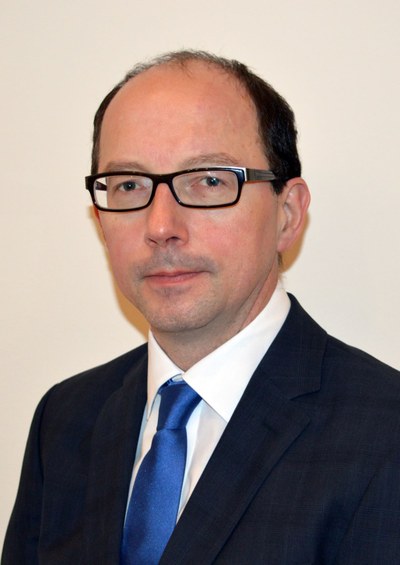
Jose Maria Armingol Moreno is a Full Professor at the University Carlos III of Madrid, affiliated with the Department of Systems Engineering and Automation. He serves as Director of the Master's Degree in Internet of Things: Applied Technologies and leads the Intelligent Systems Laboratory research group within the Duque de Santomauro Institute of Motor Vehicle Safety. His expertise spans autonomous systems, computer vision, robotics, and intelligent transportation infrastructure. Key research interests include vehicle safety, sensor fusion, and deep learning applications in traffic monitoring and autonomous navigation. He has authored over 100 peer-reviewed articles, with recent work focusing on 3D vehicle detection, UAV battery systems, and intelligent infrastructure for smart cities. Dr. Armingol has also led numerous projects on autonomous vehicle development, cooperative driving systems, and traffic safety technologies. His contributions include patented innovations in vehicle inspection and collision avoidance systems.
Nikolas Francis is Assistant Professor in the Department of Biology at University of Maryland and member of the Brain and Behavior Institute. His research investigates neural mechanisms of auditory perception and decision-making using in vivo electrophysiology, 2-photon imaging, and automated behavioral paradigms in mice. He develops computational approaches to analyze cortical network dynamics during sensory-guided behavior. Education: PhD, Massachusetts Institute of Technology (2011) BA, University of Iowa (2003) His lab examines how auditory cortex represents and transforms sound information during perceptual tasks, focusing on neural coding principles, attention mechanisms, and decision processes. Recent work explores how psilocybin modulates cortical processing while preserving basic auditory representations. He has developed automated home-cage systems for longitudinal behavioral monitoring that reveal circadian patterns in task engagement. Analysis of his publications shows emphasis on information coding strategies across cortical layers, with recent work examining network-level information transfer and psychedelic modulation of sensory processing. His NIH-funded research combines neurophysiological recordings with computational modeling to understand neural sequence generation during decision-making. He teaches courses in neurobiology and mentors graduate students through UMD's Neuroscience and Cognitive Science program. His lab maintains collaborations with machine learning researchers developing novel analysis methods for neural ensemble data.
Prof. Dr. Stefan Raunser is a Director at the Max Planck Institute of Molecular Physiology, leading the Department of Structural Biochemistry in Dortmund, Germany. His research focuses on high-resolution structural studies of proteins and complexes using cryo-electron microscopy (Cryo-EM) and tomography (Cryo-ET), with major contributions to understanding toxin-mediated membrane permeation, actin cytoskeleton dynamics, and muscle sarcomere architecture. Key research areas: Cryo-EM/ET methodology, actin-myosin interactions, Tc toxin mechanisms, and in situ structural biology. His group developed widely used software tools like SPHIRE-crYOLO and TomoTwin for automated particle picking and structural data mining. Recent publications highlight structural insights into Tc toxin injection mechanisms, actin filament turnover, and sarcomere organization. His work bridges molecular structure with functional biology, particularly in muscle physiology and bacterial pathogenesis. Despite extensive collaborations, no specific student names or scientific awards are explicitly mentioned in the provided text. The department emphasizes technological innovation to advance biomedical and cellular research.
Philipp Fleck is a researcher at the Institute of Visual Computing at Graz University of Technology (TU Graz). His work focuses on augmented reality (AR), virtual reality (VR), and computer graphics, with applications in industrial systems, medical imaging, and situated analytics. He has developed tools like CECILIA and RagRug for game content exploration and spatial data analysis. Research Highlights: AR for heavy machinery safety using laser projections Thermochromic temperature sensing for cost-efficient thermal imaging Compact World Anchors for large-scale localization Situated analytics frameworks for physical-digital integration Scientific Contributions: His publications span 3D reconstruction, SLAM, image processing, and IoT-ready XR-WebApps. Awards include Best Paper at VISAPP 2020 and Honorable Mention at IEEE VR 2024.
Haimin Wang is a Professor in the Department of Physics at New Jersey Institute of Technology (NJIT). He holds dual roles as Director of the Institute of Space Weather Sciences and Distinguished Professor at the Ctr for Solar-Terrestrial Research. His research focuses on solar dynamics, space weather, and solar magnetic field studies. He leads multiple NSF-funded projects exploring solar eruptions, magnetic flux ropes, and AI-driven space weather forecasting. Roles: Director (Institute of Space Weather Sciences), Distinguished Professor (Physics) Key Affiliations: NJIT, Big Bear Solar Observatory (BBSO), Daniel K. Inouye Solar Telescope (DKIST) Notable Grants: 33 federal grants since 2001, including NSF-funded projects on AI for space weather and high-resolution solar observations Research Interests: Solar flares, coronal mass ejections, magnetic flux ropes, solar wind dynamics, and machine learning applications in heliophysics. His work combines observational data from instruments like SDO/HMI and GST with advanced computational models to understand explosive solar phenomena. Recent studies include predicting halo CMEs using transformer models and analyzing small-scale magnetic structures in the solar wind. Collaborations: International partnerships in solar physics, including joint projects with researchers in magnetic field analysis, solar eruption dynamics, and space environment forecasting. Key Projects: CyberTraining AI initiative, DKIST Critical Science Program, SHINE solar flare studies Labs/Teams: Institute of Space Weather Sciences, NJIT Space Weather Lab
Madhu Khurana is a Lecturer in the Department of Digital Forensics and Cyber Security at the University of South Wales, affiliated with the Faculty of Computing, Engineering and Science. Her research focuses on cybersecurity, IoT security, AI-driven threat detection, and educational technology. Key areas include malware analysis, blockchain in IoT ecosystems, and network security challenges in encrypted environments. Her work spans technical innovation and interdisciplinary applications, such as using deep learning for deepfake detection and exploring gamification in cybersecurity education. She has conducted studies on simulation-based learning methodologies and the impact of digital marketing strategies on management practices. Notable projects include autonomic cloudlet management systems and partial confirmatory factor analysis in green marketing. Publications highlight her contributions to understanding IoT security risks, evaluating threat modeling approaches, and analyzing the societal impact of media and technology. Her research bridges theoretical frameworks with practical solutions for modern cybersecurity challenges.
István Sárándi is a postdoctoral researcher in the Real Virtual Humans group led by Prof. Gerard Pons-Moll at the University of Tübingen, Germany. He holds a PhD in Computer Vision from RWTH Aachen University (2023) and a master’s degree in Computer Science from RWTH Aachen (2015), with earlier studies at the Budapest University of Technology and Economics (2011). His research focuses on robust and efficient 3D human pose estimation, including work on truncation-robust methods (MeTRAbs), synthetic data generation (STAGE), and cross-dataset learning. He has won 3D pose estimation competitions at ECCV 2018 and 2020 and received Outstanding Reviewer Awards at CVPR 2021 and 2022. His PhD was funded by the Bosch Research Foundation. Education: PhD: RWTH Aachen University (2023) MSc: RWTH Aachen (2015) BEng: Budapest University of Technology and Economics (2011) Key Achievements: 1st place in ECCV 2018 and 2020 3D pose challenges Outstanding Reviewer Awards (CVPR 2021/2022) Developed MeTRAbs, STAGE, and other influential methods Publications emphasize advancing 3D human understanding through robust learning techniques, synthetic data, and multi-task frameworks. Supervised theses include work on temporal modeling of multi-person interactions and pose-conditioned human image synthesis. Active in teaching, including deep learning and computer vision courses at RWTH Aachen.
Mario Krenn is a Full Professor (W3) of "Machine Learning in Science" at the University of Tübingen since June 2025, leading the Artificial Scientist Lab. His research bridges artificial intelligence , quantum physics , and experimental design , focusing on developing AI systems that act as "artificial muses" to inspire novel scientific discoveries. ERC Starting Grant recipient (2024) for ArtDisQ project Developed PyTheus, a framework for AI-driven quantum experiment design Created XLuminA, a JAX-based simulator for microscopy and photonics Co-inventor of SELFIES, a robust molecular string representation His work has led to experimental implementations of AI-designed quantum protocols (e.g., entanglement without pre-existing resources) and gravitational wave detector concepts. He explores scientific understanding in human-AI collaboration, nonlocal interference phenomena, and the philosophical implications of AI-generated discoveries. Recent projects include predicting research trends via knowledge graphs and developing virtual reality tools to visualize AI-conceived quantum experiments. Scientific awards include the ERC Starting Grant 2024 and International Quantum Technology Emerging Researcher Award (Highly Commended) 2020 . He serves on the editorial board of Machine Learning: Science and Technology and actively promotes open science through GitHub repositories and community-driven initiatives.
Nina Marie Pedersen is an Associate Professor in the Department of Nursing, Health and Bioengineering at Oslo and Akershus University College of Applied Sciences in Fredrikstad. Her research focuses on cell biology and molecular mechanisms underlying cancer progression, particularly the roles of endosomal systems in cell migration, invasiveness, and signaling pathways. She has published extensively on topics such as ER-endosome contact sites, protease shedding, and membrane trafficking. Key research interests include: Cancer cell invasiveness mechanisms Endosomal dynamics and their impact on cellular processes Protease regulation and metastasis Membrane contact site biology Recent work highlights contributions to understanding how endosomal protease shedding facilitates cancer cell invasiveness and the role of protrudin in ER-endosome interactions. Pedersen also collaborates on developing automated cell migration tracking tools (CellTraxx) and explores bioengineering applications in health sciences. Her teaching spans bioengineering foundations, cell/molecular biology, and molecular diagnostics. She leads the Biomedical Technology research group and actively contributes to interdisciplinary projects in health and bioengineering.
Marc T. P. Adam is an Associate Professor in Computing and Information Technology at the School of Information and Physical Sciences, University of Newcastle . With a PhD in Information Systems from Karlsruhe Institute of Technology, he specializes in Human-Computer Interaction with applications in Health Informatics and Behavioral Cybersecurity . Education : PhD (Dr. rer. pol.) from Karlsruhe Institute of Technology; Diploma in Computer Science from University of Applied Sciences Würzburg-Schweinfurt Academic Affiliation : University of Newcastle (2014-present); Karlsruhe Institute of Technology (2010-2014) His research explores the intersection of technology and human behavior, focusing on NeuroIS applications for understanding emotional responses in digital environments. Key projects include the HealthyEatingQuiz.com.au and NMNT.com.au platforms for nutrition behavior change. He employs interdisciplinary methodologies combining design science research with physiological measurements like eye tracking and heart rate variability. Recent work demonstrates the impact of nature imagery in user interfaces on consumer trust and aesthetics, while his cybersecurity research investigates how time pressure affects organizational security behaviors. His publications span topics from fake news detection to mHealth system design , with a particular interest in digital nudging for health behavior change. As an educator, he emphasizes applied IT approaches through business analytics , human-centred design , and experimental research methods . His work features collaborations with international researchers across Australia, Germany, and China.
Wallapak Tavanapong is a Professor at Iowa State University, specializing in Data Sciences, Applied Machine Learning, and Multimedia Systems. His work integrates computational techniques with medical imaging and political science applications. He leads research in automated quality assessment for colonoscopy procedures and interpretable AI models for healthcare diagnostics. Research focuses on improving medical imaging analysis through machine learning, including real-time feedback systems during colonoscopies and developing datasets like IDCIA for cellular image analysis. He has pioneered methods for handling class imbalance in medical image classification and leveraging social media data for policy agenda analysis. His recent articles emphasize interpretable AI (e.g., CountXplain), confusion-based training strategies, and visual concept-based active learning. His work bridges technical innovation with clinical and policy applications, addressing challenges in healthcare quality and data-driven decision-making. No scientific awards are explicitly listed in the provided materials. His research has been applied in multi-center clinical trials for colonoscopy improvement and has contributed to advancements in endoscopic procedure monitoring systems.
Ralf Lämmel is Professor and Head of the Software Languages group at the University of Koblenz. His research spans software language engineering, model-driven development, and semantic web technologies. He specializes in API analysis, data validation (SHACL constraints), and variability management for software systems. Recent work focuses on AI-assisted workflows for archaeology and trust analysis in large language models. Publications demonstrate growing interest in knowledge graph validation and semantic web applications. He has developed tools like the Virtual Platform for software variability and ProGS for property graph validation. Service includes program committee memberships for software engineering conferences and editorial roles. He leads research groups exploring API evolution and RDF validation techniques.
Dr. Peter Steinbach leads the Group of Artificial Intelligence at the Helmholtz-Zentrum Dresden-Rossendorf (HZDR), focusing on interdisciplinary research spanning computational science, space physics, and machine learning applications. His work integrates advanced computing techniques with domain-specific challenges in healthcare, microscopy, and space weather monitoring. Education & Background: While specific educational details are not provided, his research portfolio indicates advanced expertise in physics, computational methods, and software engineering. His career has been centered at HZDR, contributing to major projects like the CLIJ GPU-accelerated image processing framework and space weather studies using ionospheric wave analysis. Research Interests: Steinbach's work emphasizes practical AI applications, including educational tools for machine learning (e.g., "Teaching Machine Learning in 2020") and medical AI systems. His computational science contributions include optimizing high-performance computing for fluid dynamics and parallel processing. In space physics, he investigates VLF transmitter propagation, plasmaspheric dynamics, and geomagnetic storm impacts using satellite data from DEMETER and ground-based networks. Key Projects: Developed CLIJ, a GPU-accelerated image processing tool integrated with Fiji, revolutionizing microscopy workflows. Advanced understanding of ionospheric processes through studies on Schumann resonances and plasmaspheric hiss effects. Pioneered techniques for lightning detection and Q-burst analysis to map Earth's crust conductivity. Technical Contributions: Steinbach has optimized MPI-based fluid dynamics models for GPU systems and created benchmarking tools like gearshifft for heterogeneous computing platforms. His work bridges theoretical research with practical software solutions for the scientific community.
Rafal Kozik is an active Associate Professor at Lublin University of Technology's Faculty of Electrical Engineering and Computer Science, Department of Computer Science. With over 200 publications spanning from 2008 to 2025, he has established himself as a prominent researcher in cybersecurity, artificial intelligence, and explainable AI systems. His work demonstrates strong collaboration with researchers including Michal Choras, Marek Pawlicki, and Aleksandra Pawlicka, with whom he has co-authored numerous significant publications. Dr. Kozik's research focuses primarily on cybersecurity applications of artificial intelligence, with particular emphasis on explainable AI (xAI) systems, fake news detection, network intrusion detection, and financial cybercrime analysis. His work bridges theoretical AI advancements with practical security applications, addressing critical challenges in making AI systems both effective and transparent in security contexts. He has made significant contributions to understanding the dual nature of explainability in security systems - how it can both enhance trust and potentially create new vulnerabilities. His recent publication trends show an increasing focus on the intersection of AI explainability and security, with numerous high-impact papers in 2023-2025 examining how explainable AI can be leveraged for security applications while also addressing how these same techniques might be weaponized against security systems. His work spans multiple domains including cybersecurity, disinformation detection, financial crime analysis, and even environmental applications like wildfire prevention systems. Dr. Kozik has been actively involved in major European cybersecurity initiatives, serving as an editor for ESORICS 2024 (European Symposium on Research in Computer Security) proceedings. His research has been published in top venues including IEEE Transactions, Computers & Security, Neurocomputing, and major conference proceedings like ARES and DSAA. His work demonstrates strong practical application focus, with numerous projects addressing real-world security challenges through innovative AI approaches. He has contributed significantly to the development of tools and frameworks for network security, fake news detection, and financial transaction monitoring that balance effectiveness with explainability requirements.
Chris Mattmann is an academic affiliated with the University of Southern California, specializing in data science, machine learning, and high-performance computing. His work spans interdisciplinary applications in Earth sciences, climate modeling, and distributed systems. He has contributed to projects like the Earth System Grid Federation and Apache open-source software. His research emphasizes scalable data management, secure parser development, and automated machine learning systems. Education & Background: While specific educational details aren't listed, his extensive publication record in top-tier journals and conferences indicates advanced training in computer science and computational science. Research Interests: Focus areas include distributed computing infrastructure for scientific applications, machine learning for geosciences, and data-intensive systems. He explores challenges in data movement, scalable supercomputing, and open-source tools for scientific workflows. Publications: Over 150 peer-reviewed articles since 2003, with recent work on super-resolution satellite data, deep learning in geosciences, and secure parser systems. His contributions highlight advancements in both foundational computing and applied environmental science.