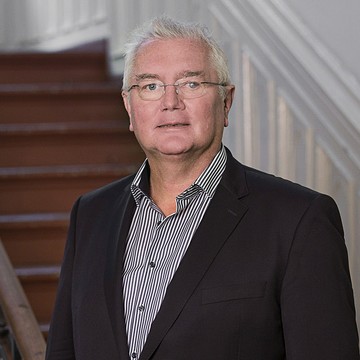
Bernhard J. Berger is a Lecturer in the Department of Computer Engineering at the Institute of Embedded Systems, Hamburg University of Technology (TUHH). His research focuses on software security, static code analysis, machine learning, optimization, and research data management. He has held significant roles such as Program Committee member for ICPC 2025 and MSR 2025, and has received awards including the Best Reviewer Award (ICPC 2023) and Best Engineering Paper Award (SCAM 2019). His work spans interdisciplinary applications including maritime systems security, GPU-accelerated AI, and evolutionary algorithms. Recent studies emphasize AI-driven security tools (e.g., ML-SAST) and domain-specific language approaches to optimization (EvoAl). He has contributed to over 30 peer-reviewed publications, with notable work in IEEE Transactions on Software Engineering and Science of Computer Programming. Berger collaborates closely with industry through DAAD review committees and serves on artifact evaluation boards for ISSTA and ARES conferences. Education: Doctoral Thesis (2022), Diploma in Computer Science (2007) Key Projects: ArchSec tool suite, Threat Modeling Frameworks, Bauhaus static analysis methodology Lab Affiliation: Embedded Systems Design Group His advisory roles include Deputy of TUHH's Election Verification Committee and Session Chair at IEEE Congress on Evolutionary Computation 2023. Current research trends integrate machine learning with static analysis for automated vulnerability detection, while also exploring explainable AI techniques for neural network optimization.
Danica Kragic is a Professor of Computer Science at the School of Electrical Engineering and Computer Science at the Royal Institute of Technology (KTH) in Stockholm, Sweden. She serves as the Director of the Centre for Autonomous Systems and leads the Robotics, Perception and Learning Lab at KTH. Her research focuses on advancing robotics capabilities through computer vision and machine learning approaches. MSc in Mechanical Engineering from the Technical University of Rijeka, Croatia (1995) PhD in Computer Science from KTH (2001) Professor Kragic's research primarily centers on robotics, computer vision, and machine learning, with particular emphasis on robotic manipulation, grasp planning, and human-robot interaction. Her work bridges theoretical foundations with practical applications, exploring how robots can understand and interact with objects in complex environments. She investigates how visual and tactile sensing can be integrated to improve robotic perception and manipulation capabilities, with applications ranging from industrial automation to assistive robotics. Her recent publications demonstrate a strong focus on advanced grasp planning techniques, tactile sensing for manipulation, and mathematical representations for robotic control. Kragic's research shows increasing integration of machine learning approaches with traditional robotics frameworks, particularly in the areas of grasp synthesis, object recognition, and human-robot collaboration. Her work spans theoretical contributions in mathematical representations of grasps to practical implementations of robotic systems capable of adapting to novel objects and situations. 2007 IEEE Robotics and Automation Society Early Academic Career Award IEEE Fellow ERC Starting Grant (2012) Member of The Royal Swedish Academy of Sciences Member of The Royal Swedish Academy of Engineering Sciences Honorary Doctorate from Lappeenranta University of Technology Professor Kragic's research has been supported by major funding bodies including the EU, Knut and Alice Wallenberg Foundation, Swedish Foundation for Strategic Research, and Swedish Research Council. While specific student names aren't listed in the provided information, her publication record suggests extensive mentorship of PhD students and postdoctoral researchers in robotics and computer vision. Her lab, the Robotics, Perception and Learning Lab, serves as a hub for interdisciplinary research connecting computer science, engineering, and cognitive science perspectives on robotic systems. As Director of the Centre for Autonomous Systems at KTH, Kragic oversees a major research initiative focused on advancing autonomous technologies. Her Robotics, Perception and Learning Lab brings together researchers working on visual perception, machine learning, and robotic manipulation, with particular emphasis on developing systems that can understand and interact with objects in unstructured environments. The lab's work spans theoretical foundations of robotic manipulation to practical implementations of systems capable of learning from experience.
Kuldeep S. Meel is the Stephen Fleming Early-Career Associate Professor at the School of Computer Science, Georgia Institute of Technology, and an Associate Professor at the University of Toronto (on leave). He previously held a NUS Presidential Young Professorship at the National University of Singapore. His research focuses on automated reasoning, aiming to enable computing systems to handle uncertain real-world environments through scalable techniques integrating randomized algorithms, statistical inference, formal methods, distribution testing, and software engineering. Core research areas: Automated Reasoning, Formal Methods, Approximate Model Counting, Probabilistic Inference, Constraint Solving His research group has achieved significant recognition in both individual awards and publications. Key trends in his recent work include advancing model counting algorithms, developing frameworks for probabilistic explanations, and improving scalability in formal verification and constraint satisfaction. His tools have consistently ranked top in international competitions, demonstrating practical impact in automated reasoning. 2019 NRF Fellowship for AI 2022 ACP Early Career Researcher Award 2020 IEEE Intelligent Systems AI's 10 to Watch Top placements in Model Counting, SAT, and CAV competitions He mentors a diverse group of PhD and Master's students and collaborates with institutions worldwide. His group's publications span premier conferences in AI, formal methods, and design automation, reflecting interdisciplinary contributions to theoretical and applied computer science.
Kevin M. Lynch is a Professor of Mechanical Engineering at Northwestern University's McCormick School of Engineering, where he also serves as Director of the Center for Robotics and Biosystems. His research spans multiple domains of robotics, with particular expertise in dynamics, motion planning, and feedback control of mechanical systems. Dr. Lynch received his Ph.D. in Robotics from Carnegie Mellon University in 1996, with a thesis on "Nonprehensile Robotic Manipulation: Controllability and Planning" under advisor Prof. Matthew T. Mason. He earned his B.S.E. with honors in Electrical Engineering from Princeton University in 1989. His research interests focus on robotics, particularly dynamics, motion planning, and feedback control of mechanical systems. He investigates mechanics, planning, and control of robotic manipulation (juggling, throwing, pushing, rolling, vibration, etc.) and locomotion. His work also explores self-organizing systems, particularly decentralized control of mobile sensor networks and swarm robotics, underactuated dynamic systems, and physical human-robot interaction with industrial applications. Recent research has expanded into bio-inspired active electrosense, underwater robotics, control and optimization for robot swarms, swarm shape control, and functional electric stimulation. Dr. Lynch's recent publications demonstrate a strong trend toward rehabilitation robotics and human-robot interaction, particularly in lower-limb exoskeletons for gait training and rehabilitation. His work bridges fundamental robotics research with practical applications in healthcare, showing increasing integration of swarm robotics principles with human-centered design. The publications also reveal continued strong contributions to fundamental robotics theory, particularly in swarm formation control and manipulation dynamics. George Saridis Leadership Award in Robotics and Automation (2022) Harashima Award for Innovative Technologies (2017) IEEE Fellow (2010) Charles Deering McCormick Professor of Teaching Excellence (2007-10) Society of Automotive Engineers Ralph R. Teetor Educational Award (2007) Early Career Award in Robotics and Automation (2001) McCormick School of Engineering and Applied Science Teacher Of The Year Award (1998-1999) NSF Career Award (1998) As Director of the Center for Robotics and Biosystems, Dr. Lynch oversees significant research grants and initiatives in robotics. He has made substantial contributions to robotics education through his "Modern Robotics" book and associated Coursera specialization, which has reached thousands of students worldwide. His professional service includes serving as Editor-in-Chief of IEEE Transactions on Robotics, where he oversaw a 90% increase in submissions during his tenure. Dr. Lynch leads research groups focusing on swarm robotics and rehabilitation robotics, with particular emphasis on the Center for Robotics and Biosystems at Northwestern University. His teams integrate expertise from mechanical engineering, electrical engineering, computer science, and rehabilitation medicine to develop innovative robotic systems for both industrial applications and healthcare solutions.
Marta Kwiatkowska is a Professor of Computing Systems at the University of Oxford and a Fellow of Trinity College. Her research focuses on probabilistic verification , quantitative model checking , and formal methods for complex systems including autonomous robots, medical devices, and biological systems. She leads the development of the PRISM and PRISM-games probabilistic model checkers. Key research areas: Probabilistic systems, formal verification, autonomous robotics, medical device analysis, systems biology Grants: ERC Advanced Grant VERIWARE, EPSRC Programme Grant Mobile Autonomy Awards: 2024 ETAPS Test-of-Time Tool Award for PRISM Students: Current and former advisees in topics spanning formal methods, robotics, and quantitative verification The PRISM-games extension enables verification of stochastic multi-player games with applications in network protocols, autonomous systems, and game theory. Her work bridges theory, algorithms, and practical implementation, with real-world applications in ubiquitous computing and nanotechnology.
Kaiyu Hang is an Assistant Professor in the Department of Computer Science at Rice University, where he directs the Robotics and Physical Interactions Lab (RobotΠ Lab). His research spans multiple domains of robotics with a focus on physical interaction systems. Before joining Rice, he completed his postdoc at Yale University, earned his Ph.D./M.Sc. at KTH Royal Institute of Technology, and received his B.Eng. from Xi'an Jiaotong University. His research interests include robotic manipulation, grasping, in-hand manipulation, optimization, planning, learning, estimation, and control systems. He develops algorithms that enable robots to physically interact with other robots, people, and the world across scales from small grasping tasks to large-scale dual-arm and multi-robot manipulation systems. His work has practical applications in factories, kitchens, hospitals, warehouses, and construction sites. His recent publications demonstrate strong trends in in-hand manipulation techniques, energy-efficient drone operations, and benchmarking frameworks for robotic grasping. The 2025 IROS papers accepted highlight his leadership in developing standardized competition frameworks for evaluating robotic manipulation capabilities across diverse hardware platforms. ASME Rising Star of Mechanical Engineering (2024) NSF CAREER Award (2023) Multiple finalist awards at IEEE-RAS Humanoids and ICRA conferences Junior Fellowship Award from Institute for Advanced Study, HKUST (2017-2018) As an educator, he has taught multiple robotics courses including COMP 462/562: Introduction to Modern Robotics and COMP 461: Senior Design in A Robotized World. He serves as Faculty Advisor for the Rice Robotics Club and participates in graduate admissions. His lab actively recruits Ph.D. students and offers research opportunities for undergraduate and master's students who have completed core robotics courses.
Prof. Dr. Melanie Zeilinger is an Associate Professor at the Department of Mechanical and Process Engineering at ETH Zurich, leading the Intelligent Control Systems group at the Institute for Dynamic Systems and Control. She holds a diploma in Engineering Cybernetics from the University of Stuttgart (2006) and a Ph.D. in Electrical Engineering from ETH Zurich (2011). Her postdoctoral research included stints at EPFL (2011–2012), a Marie Curie fellowship at UC Berkeley and the Max Planck Institute (2012–2015), and a professorship at the University of Freiburg (2018–2019). Her research focuses on learning-based control, distributed control systems, and robotics , with applications to medical devices (e.g., hydrocephalus shunts) and human-in-the-loop systems. She organizes the Conference on Learning for Dynamics and Control (L4DC) and contributes to initiatives like the "Algorithm on My Team" project. Her awards include the ETH Medal for her PhD thesis, a Marie-Curie IO Fellowship , and an SNF Assistant Professorship grant . She serves as an Associate Editor for IEEE Control Systems Letters and actively reviews for top journals/conferences like IEEE TAC, Automatica, and NeurIPS. Key projects include: VIEshunt: A smart ventricular shunt for hydrocephalus treatment, combining control systems and medical engineering. Autonomous Racing: Contextual tuning and safety-certified learning-based MPC for real-time obstacle avoidance. Data-Driven Control: Integrating Gaussian processes and state-space models into MPC frameworks for uncertain systems. Her work bridges control theory, machine learning, and robotics, addressing societal challenges such as healthcare and energy efficiency.
Baris Fidan is a Professor in Mechanical & Mechatronics Engineering at the University of Waterloo, with cross appointments in System Design Engineering and Electrical & Computer Engineering. He is a senior member of IEEE and AIAA. His research focuses on cooperative/adaptive control, autonomous systems, multi-agent networks, and vehicular control applications. He leads the Cooperative & Adaptive Mechatronic Systems (CAMS) Lab, which develops control strategies for autonomous vehicles, robotic systems, and intelligent transportation. Education: PhD in Electrical Engineering, University of Southern California (2003) Masters in Electrical & Electronic Engineering, Bilkent University (1998) Bachelor's in Electrical & Electronic Engineering & Mathematics, Middle East Technical University (1996) Research Interests: His work spans adaptive control theory, sensor networks, multi-agent coordination, autonomous vehicle networks, and biomedical systems control. He emphasizes practical applications in intelligent transportation, robotic navigation, and distributed system optimization. Grants & Projects: He has led major grants including NSERC Discovery Programs on cooperative mechatronic systems and 3D autonomous vehicle coordination. Industrial projects include autonomous driving strategies, vehicle control optimization, and high-precision gear manufacturing technologies. Labs/Teams: Directs the CAMS Lab, which collaborates on projects involving distributed motion planning, sensor localization, and autonomous vehicle networks. Current projects address challenges in urban autonomous driving, cooperative robotic systems, and resilient sensor networks.
Dr. Chandranath Adak is an Assistant Professor at the Department of Computer Science and Engineering, Indian Institute of Technology Patna (IIT Patna), and concurrently serves as a Visiting Fellow at the School of Computer Science, University of Technology Sydney (UTS), Australia. He holds a Ph.D. in Analytics from UTS (2019) and previously served as an Assistant Professor at Indian Institute of Information Technology Lucknow (IIITL) and the Centre for Data Science at JIS Institute of Advanced Studies, Kolkata. Education: Ph.D. (Analytics), University of Technology Sydney (2019) M.Tech., Computer Science and Engineering, University of Kalyani (2014) B.Tech., Computer Science and Engineering, West Bengal University of Technology (2012) Research Interests: His work spans Computer Vision, Deep Learning, Reinforcement Learning, Document Image Analysis, and AI-driven solutions for healthcare, forensics, and industrial automation. He has pioneered methods in biomarker detection using electrochemical sensors combined with ML models, handwriting analysis for educational and forensic applications, and anomaly detection in industrial systems. His research bridges theoretical advances with real-world applications, such as medical diagnostics and quality control systems. Publications: His recent work includes innovations in biosensor-based medical diagnostics, handwriting evaluation systems, and transformer networks for historical document analysis. These contributions reflect a focus on interdisciplinary applications of AI across healthcare, cultural heritage preservation, and industrial automation. Awards: Start-up Research Grant, SERB, India (2022) Dr. Kalam Doctoral Scholarship, UTS (2018) IEEE CIS Graduate Student Research Grant (2017) Senior Member, IEEE (2024) Teaching & Supervision: Taught courses at UTS including 'Introduction to Data Analytics' and supervised research in machine learning and computer vision. His mentorship emphasizes hands-on experience with AI tools and real-world problem-solving. Labs & Teams: Engaged in collaborative projects at UTS's CIBCI Centre and Griffith University's IIIS, focusing on computational intelligence and sensor-driven AI systems.
Kostas Bekris is a Professor in the Department of Computer Science at Rutgers University, specializing in Robotics and Artificial Intelligence. His research focuses on motion planning, autonomous manipulation, and robot control, with notable contributions to tensegrity robotics, perception-driven systems, and large-scale package handling. He leads a team conducting groundbreaking work in robotics, supported by grants from NSF, NASA, and industry collaborators like ExxonMobil. His group emphasizes interdisciplinary approaches, combining machine learning, topological methods, and differentiable physics modeling to advance robot capabilities in complex environments. Education details are not explicitly stated in the provided texts, but his academic career has included significant mentorship of PhD students and postdoctoral researchers. Key projects involve vision-driven manipulation pipelines, obstacle detection systems (PROBE), and resilient robot designs inspired by biological structures. He has been recognized for his work through prestigious awards including the NASA Early Career Grant and multiple NSF grants, as well as team achievements in robotics competitions like the Amazon Picking Challenge. Research interests span robotics subfields such as: Autonomous manipulation in cluttered environments Learning-based control for dynamic systems Topological data analysis for motion reasoning Tensegrity and soft robotics architectures Sim-to-real transfer in robotic tasks His team's work has produced open-source software tools and datasets, advancing benchmarks in manipulation and perception. Recent articles emphasize scalable solutions for industrial automation and robust navigation strategies in unstructured settings. Scientific achievements include: Development of PROBE for proprioceptive obstacle detection Advances in differentiable physics engines for tensegrity systems NSF-funded projects on robotic rearrangement and modular morphologies Advising contributions span over a decade, with current advisees focusing on topics like non-prehensile manipulation and large-scale storage optimization. Collaborations with industry (e.g., ExxonMobil) and academic partners (Yale University) reflect his commitment to applied robotics research. Labs and teams under his leadership include the Rutgers CS Robotics Group, contributing to projects like the ARIAC challenge platform and packing/industrial automation systems. Future work targets improved robot resilience in disaster scenarios and enhanced human-robot collaboration paradigms.
Prof. Dr. Christian Homburg holds the Chair of Business-to-Business Marketing, Sales & Pricing at the University of Mannheim's Faculty of Business Administration. Since 2007, he has been a Professorial Fellow at the University of Melbourne. His research spans marketing strategy, sales management, pricing, and customer relationship management, with a focus on business-to-business contexts. He collaborates with global firms such as Accenture, BOSCH, SAP, and BASF. Research Interests: Prof. Homburg explores topics like sales force automation, key account management, IoT in marketing, and augmented reality in sales. His work bridges academic theory and practical implementation, emphasizing organizational systems driving customer and competitor responsiveness. Scientific Awards: Hermann Billing Prize (1989) Multiple Best Paper Awards from the American Marketing Association (1997-2010) Louis W. Stern Award (2009) Best Paper Awards from Journal of the Academy of Marketing Science and Journal of Business to Business Marketing Publications: Author of 7+ editions of Marketing Management , co-editor of the Handbook of Customer Loyalty Management , and contributor to leading journals like Journal of Marketing and Strategic Management Journal .
Luca Peretti is an Associate Professor in Electric Machines and Drives at KTH Royal Institute of Technology, affiliated with the School of Electrical Engineering and Computer Science and the Department of Electrical Engineering, Division of Electric Power and Energy Systems. He works as a researcher in the EMD (Electric Machines and Drives) group and serves as Partner Director for KTH's strategic partnership with ABB. Education: M.Sc. in Electronic Engineering (2005) from University of Udine, Ph.D. from University of Padova (2008) Professional Experience: Postdoc at University of Padova (2009-2010), Principal Scientist at ABB Corporate Research (2010-2018), Associate Professor at KTH (2018-present) His research focuses on: Automatic parameter estimation in electric machines Multiphase drive systems Sensorless control algorithms Loss segregation in drive systems Condition monitoring of industrial and transportation applications Recent publications demonstrate expertise in variable phase-pole machines, harmonic plane decomposition, predictive control algorithms, and advanced modeling of permanent magnet motors. Key application areas include transportation electrification, wind energy systems, and industrial drive technologies. Scientific roles include: Associate Editor, IET Electric Power Applications Journal (2019-present) Theme Co-Leader, Swedish Electromobility Center (2020-present) Member, IEEE (2021-present) and IET (2006-present) He leads the strategic partnership with ABB and contributes to doctoral program committees at University of Padova.
Madelon Hulsebos is a Researcher at CWI in Amsterdam, where she leads the Table Representation Learning (TRL) Lab and contributes to the Database Architectures group. She is also a faculty member of the European Laboratory for Learning and Intelligent Systems (ELLIS) Amsterdam unit. Her career bridges academia and industry, including a postdoctoral fellowship at UC Berkeley and prior industry experience in automating data analysis pipelines with ML. Education : PhD in Computer Science (University of Amsterdam, 2023), with research at Sigma Computing and MIT; Postdoctoral Fellow (UC Berkeley, 2024). Her research focuses on establishing tabular data as a key AI modality through Table Representation Learning , generative models for relational data, and robust systems for data analysis. Key interests include: Relational Table Embeddings LLMs for QA/text2SQL and data wrangling Retrieval over Data Lakes and Databases Agentic Systems for Data Science Democratizing insights from structured data Recent work highlights trends in benchmarking table retrieval (TARGET), semantic column detection (AdaTyper, Sherlock), and large-scale tabular data curation (GitTables, SchemaPile). These projects address challenges in metadata utilization, data lake search, and end-to-end systems for structured data. She has secured significant funding, including the NWO AiNed Fellowship Grant ($1M) for her 5-year DataLibra project. Madelon organizes workshops at NeurIPS , SIGMOD , and ACL , and reviews for top venues like VLDB and NeurIPS. Scientific Awards : NWO AiNed Fellowship Grant ($1M) She actively mentors students and collaborates on European AI initiatives, including monthly TRL seminars and workshops. Her lab's tools (GitTables, TARGET) are widely adopted for training foundation models on tabular data.
Morteza Fayazi is an Assistant Professor in the Department of Electrical and Computer Engineering at the University of Utah, with an adjunct position in the Kahlert School of Computing. His research focuses on Electronic Design Automation (EDA), applying machine learning to automate analog and mixed-signal circuit design, and developing high-performance computing systems. He holds a B.Sc. from Sharif University of Technology, and M.S.E./Ph.D. degrees from the University of Michigan. His research interests include AI-driven EDA, RF/circuit automation, and energy-efficient processors. Key achievements include the MEDAL lab’s work on terahertz radars, systolic-array processors (e.g., DAP and Versa), and open-source frameworks like FASCINET and Tablext. He has received awards such as the 2024 College of Engineering Dean’s ETR Fund and the 2017 Outstanding Undergraduate Thesis Award. Teaching responsibilities include multiple iterations of the Digital System Design course (ECE/CS 3700). His work spans over 15 peer-reviewed articles in IEEE Transactions, ACM, and top conferences like ICCAD and VLSI-SOC, emphasizing automation, efficiency, and AI integration in hardware design.
Paolo Ienne is a Professor at the Swiss Federal Institute of Technology in Lausanne (EPFL), where he leads the Processor Architecture Laboratory (LAP) within the School of Computer and Communication Sciences. His research focuses on advancing reconfigurable computing systems through innovative FPGA architectures and high-level synthesis methodologies. His primary research domains include reconfigurable computing, FPGA architecture design, dynamically scheduled dataflow circuits, and hardware acceleration techniques. Recent work emphasizes memory system optimization for FPGAs, formal verification of circuit transformations, and rapid C-to-hardware compilation flows. He has pioneered approaches for handling thousands of outstanding memory misses in FPGA accelerators and developed novel techniques for switch-block exploration without explicit pattern enumeration. Analysis of his 2023-2025 publications reveals a strong trend toward practical FPGA deployment challenges, with increasing focus on HBM integration, virtual memory systems for PCIe-attached devices, and formally verified circuit transformations. His work consistently targets real-world bottlenecks in high-level synthesis toolchains while maintaining theoretical rigor in dataflow architecture design. Professor Ienne's laboratory receives support from the Swiss National Science Foundation and industry partners including Huawei, enabling cutting-edge research in FPGA-based acceleration. His collaborative network spans major semiconductor companies and academic institutions worldwide, with frequent co-authorship on conference proceedings and journal publications in IEEE and ACM venues.