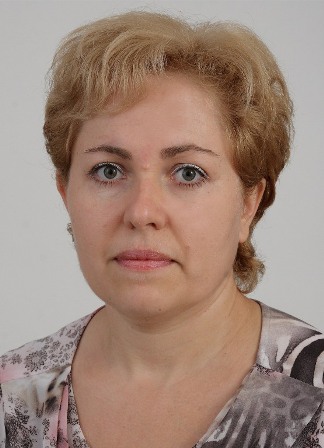
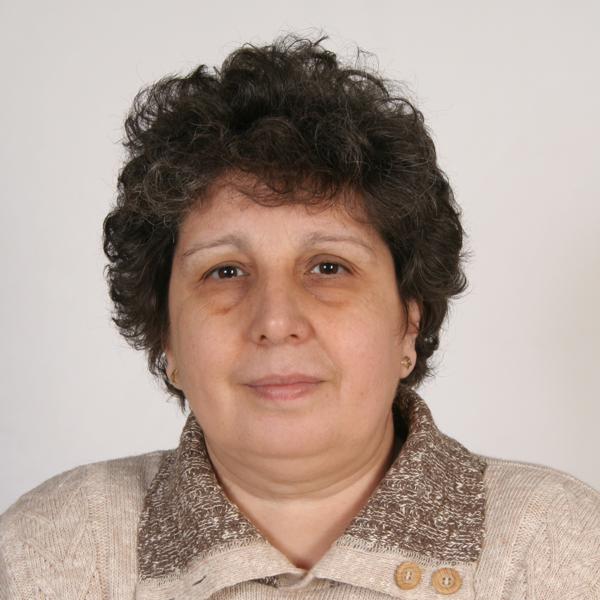
Fatme Yuseinova Rashidova is a Senior Lecturer at the Technical University - Gabrovo , affiliated with the College of Engineering and the Department of Automation, Information and Control Technology . Her work bridges computer science , educational technology , and systems engineering . Research Focus: Automated scheduling, distance learning platforms, cybersecurity in Industry 4.0, and AI applications in education. Publications: 29 scientific works, including a 2025 textbook on internet-based systems and recent papers on timetabling optimization, SWOT analysis in education, and AI challenges. Projects: Participated in 14 research initiatives, including electronic voting systems, smart medicine dispensers, and cybersecurity frameworks for industrial environments. Contributions: Developed centralized timetabling systems, virtual admission environments, and online testing platforms. Her projects emphasize reducing administrative burdens, improving accuracy in educational processes, and enhancing student satisfaction.
Dessislava Georgieva Petrova-Antonova is a Professor at Sofia University's Faculty of Mathematics and Informatics , specializing in the Department of Software Technologies . Her work focuses on service-oriented architectures, web services, and big data systems for smart cities. She holds a PhD in Software Technologies from Technical University of Sofia (2007) and an MSc in Computer Systems and Control (2000). PhD: Technical University of Sofia, Faculty of Computer Systems and Control (2007) MSc: Technical University of Sofia, Faculty of Computer Systems and Control (2000) Research Interests: She pioneers methodologies for testing web service compositions (e.g., TASSA ), develops big data platforms for smart governance, and explores digital twin modeling for urban environments. Her projects integrate IoT, quality of service (QoS) frameworks, and data-driven policy tools. Projects: Leads initiatives like National CogniTwin (National Science Fund, 2019–2022) and Big4Smart (NSF, 2017–2020). Collaborates in EU programs such as Digital Twin Cities Centre (2020–2025) and People Network+ (FP7, 2012–2013). Labs & Collaborations: Affiliated with the GATE Center of Excellence and contributes to international teams in big data and smart city research. Her work bridges academia and industry through tools like TESSI (Web Service Testing Tool) and faultInjector (BPEL Fault Injection Tool).
Minka Miteva Yordanova serves as a Part-time Lecturer in the Department of Mathematics, Computer Science and Natural Sciences at Technical University - Gabrovo, actively contributing to academic and research activities since 2011 through multiple institutional projects. Her research focuses on the intersection of management theory and information technology applications, with primary expertise in: Organizational Management and Business Process Modeling Information Systems Design and Security Computer-Based Educational Methods and Web Accessibility Economic Growth Analysis in National Sectors Analysis of her 15 publications (2011-2016) reveals consistent emphasis on practical implementations of management models in Bulgarian academic and business contexts, particularly in IT project execution, organizational communication, and time management systems. Her work predominantly appears in UNITECH and INFOTEH conference proceedings, demonstrating strong institutional collaboration within Southeast European academic networks. Dr. Yordanova has participated in seven internal research projects at TU Gabrovo (2011-2018) as both researcher and team member, addressing critical areas including modern educational technologies, economic forecasting for EU structural funds, and computer-based research methodologies. These projects involved cross-functional teams of 5-10 specialists focused on translating theoretical models into operational frameworks for national economic development.
Prof. Dobroslav Danailov Dankov is a leading academic and researcher at the Department of Electronics, Technical University Gabrovo. He holds a Doctoral degree in Technical Sciences and serves as department head. His primary affiliation is within the Faculty of Electrical Engineering and Electronics, specializing in power electronics, semiconductor devices, and industrial automation. His research focuses on high-efficiency power conversion, wide-bandgap semiconductors (SiC/GaN), induction heating systems, and reliability engineering. Notable projects include modernization of technical education facilities, development of electric vehicles, and energy-efficient electronic converters. He leads over 20 scientific projects, including EU-funded initiatives under 'Smart Growth' and national grants. Dr. Dankov has authored 9 books and 101+ publications, emphasizing topics like GaN transistor applications, power supply reliability, and inverter design. His work spans international conferences (IEEE, PCIM) and peer-reviewed journals. He advises 3 PhD students and actively contributes to academic curriculum development in electronics engineering. Key achievements include pioneering studies on SiC/GaN transistor integration, high-frequency induction systems, and failure rate modeling in power electronics. His research bridges theoretical models with practical industrial applications, advancing energy efficiency and system reliability in modern electronics.
Todor Nedev Todorov is a Senior Assistant at the Faculty of Electrical Engineering and Electronics at Technical University - Gabrovo, Bulgaria, holding a Doctor (scientific and educational) degree in Technical Sciences. He works in the Department of Automation, Information and Control Technology, with office location in cabinet 3411. Dr. Todorov's research focuses on sensor systems and electronic nose technology for food quality assessment and authentication. His work integrates artificial neural networks with gas sensor arrays to develop innovative solutions for monitoring food products during processing and aging. He has made significant contributions to applications in cheese classification, sunflower oil quality assessment, and bean origin identification. Analysis of Dr. Todorov's publication record from 2012-2023 reveals a consistent research trajectory centered on electronic nose systems and their applications in food science. His work shows progression from basic sensor development to sophisticated neural network implementations for food quality assessment. The research demonstrates strong interdisciplinary connections between electrical engineering, food science, and artificial intelligence. Dr. Todorov has been actively involved in numerous research projects, primarily focusing on sensor systems for environmental monitoring and food quality control. His project portfolio includes both internal university research initiatives and international collaborations aimed at incorporating technology into educational curricula. His laboratory work appears centered around sensor development and integration, particularly gas sensor arrays for food quality monitoring applications. The research infrastructure likely includes electronic nose systems, neural network training environments, and food product testing facilities.
St. Cyril and St. Methodius University of Veliko TarnovoBulgaria
Dovgun Andriy Yaroslavovych is an Associate Professor at the Department of Computer Science, Yuriy Fedkovych Chernivtsi National University. His academic profile includes a Candidate of Physical and Mathematical Sciences degree (specialty 01.05.01 - Theoretical Foundations of Informatics and Cybernetics) and formal certification in computer science teaching methods. Research Focus : Stochastic dynamic systems, automatic control, biomedical optics, algorithms, and information technologies. Key Publications : Authored educational manuals on data structures (2024), algorithms (2022), and contributed to cross-platform decision support systems analysis (2023). Professional Affiliation : Member of the Chernivtsi IT Cluster since 2019.
St. Cyril and St. Methodius University of Veliko TarnovoBulgaria
Petya Ivanova Petrova, PhD, is an Associate Professor at the Department of Finances and Accounting within the Faculty of Economics at the University of Veliko Tarnovo. Her academic work focuses on sustainability reporting, environmental accounting, digital transformation in accounting practices, and risk management frameworks. Current projects: 2025 EU-focused study on rural financial literacy, 2024 research on digital and green solutions for rural development. Recent publications explore CSRD compliance, social media accounting, and Industry 4.0 challenges. Research Trends: Analysis of 15 most recent articles reveals consistent themes in Bulgarian corporate sustainability practices, EU regulatory adaptation, and digitalization impacts. Sub-fields include sustainability reporting, risk disclosure in consolidated financial statements, and environmental accounting. Projects: She leads interdisciplinary initiatives connecting accounting education with rural development needs, emphasizing EU policy transfer and digital transformation. Teaching: Contributions to advanced accounting education and curriculum development for finance & accounting programs, with focus on practical applicability for Bulgarian businesses.
European Graduate School of Economics and ManagementBulgaria
Achim Menges is a contemporary architect and Professor of Digital Design at The European Graduate School (EGS) and the founding director of the Institute for Computational Design at the University of Stuttgart. He also holds a visiting professorship at Harvard University's Graduate School of Design. His research integrates biomimetic engineering, parametric design, evolutionary computation, and computer-aided manufacturing through interdisciplinary collaboration with engineers, computer scientists, and biologists. Education: Began at Technical University of Darmstadt (Germany), graduated with honors from the Architectural Association School of Architecture in London (2002). Taught at AA School (2002-2012), Rice University (visiting professor), and Offenbach University of Art and Design (2005-2008). Currently at University of Stuttgart since 2012. Research focuses on biomimetic principles applied to architecture, such as humidity-responsive wood structures (e.g., FAZ Pavilion, 2010). Key themes include material computation, adaptive systems, and the synergy between biological processes and digital fabrication. His work emphasizes translating natural phenomena into functional architectural solutions without mechanical control systems. Scientific contributions include the FEIDAD Awards (2002, 2003), RIBA Tutor Prize (2004), Bentley Educator of the Year (2005), and ACADIA Award (2007). Over 10 major publications since 2004, including Material Computation: Higher Integration in Morphogenetic Design (2012). Labs/Teams: Leads the Institute for Computational Design (ICD), affiliated with Germany's Biomimetics Competence Network and Computer Science in Architecture Network. Active in international research evaluations and conference committees.
Rosen Pasarelski is a Professor in the Telecommunications Department at New Bulgarian University (NBU), where he has taught since 2003. His academic career includes roles as assistant professor (2003–2015) and current professor status since 2015. He has directed NBU's Telecommunications bachelor's program (2005–2015) and actively participates in departmental councils and seminars. Education : PhD in Radio Transmitter and Receiver Equipment (2009), Master's in Telecommunications Systems (2003), Bachelor's in Telecommunications Systems (2001), Specialist degree in Telecommunications (1999) His research focuses on radio communications , wireless networks , and WEB technologies , with recent publications exploring 5G network optimization, microwave antennas for space-based radar, IoT vehicle tracking, and femtocell technologies. He has contributed to projects including satellite studio development, WLAN network analysis, and electromagnetic field safety studies. Recent publications highlight trends in 5G network algorithms , radio wave attenuation modeling , and AI-driven cybersecurity . His work often intersects telecommunications engineering with practical applications in smart city infrastructure and educational technology . He teaches courses such as: Network Administration and Virtualization Applied Software for Telecommunications Mobile Communications WEB Services Installation Computer Hardware/Software Installation Technical expertise includes LINUX systems , cloud computing , VoIP security , and WiMAX protocol analysis . He holds advanced English and Russian language proficiency alongside native Bulgarian.
St. Cyril and St. Methodius University of Veliko TarnovoBulgaria
Valentina Volodymyrivna Dvorak serves as an Assistant Professor in the Department of Computer Science at Chernivtsi National University. Her professional activities span across computer vision, deep learning, IT project management, and business analysis, with significant contributions to both academic research and practical applications in these fields. Dr. Dvorak holds a Candidate of Technical Sciences degree with specialization in Pressure Processing Processes and Machines. Her educational background includes a Master's in Metallurgical Equipment (2004) and a degree in Organizational Management (2010) from Donbass State Machine-Building Academy. This unique combination of metallurgical engineering and computer science expertise informs her interdisciplinary research approach. Her research interests prominently feature Computer Vision and Deep Learning applications across diverse domains including medical diagnostics, satellite imagery analysis, and industrial process optimization. Dr. Dvorak has made significant contributions to convolutional neural network implementations, automated recognition systems, and polarization-correlation microscopy techniques for biomedical applications. Her work bridges theoretical computer science with practical implementations in healthcare, manufacturing, and environmental monitoring. Analyzing her publication record reveals a strong focus on practical applications of deep learning, with particular emphasis on computer vision systems for medical diagnostics, industrial quality control, and environmental monitoring. Her research demonstrates consistent progression from fundamental metallurgical process optimization to advanced AI applications. Certificate of acknowledgment as scientific supervisor for BLACK SEA SCIENCE 2022 Educational Grant from SoftServe for developing training course (2021) Dr. Dvorak actively contributes to IT education through multiple textbooks including 'Deep Learning for Computer Vision,' 'IT Project Management,' and 'Intelligent Data Analysis.' Her professional development includes numerous certifications from Sigma Software University and SoftServe, reflecting her commitment to staying current with industry practices. She serves as a member of the Bukovina Information Technology Cluster and provides scientific consulting for SKB 'Electronmash KM.'
Plamen Iliev, PhD, is an Associate Professor in the Department of Economics at New Bulgarian University (NBU) in Sofia, Bulgaria. His teaching responsibilities include: Financial Control and Auditing Standards Theory of Control Auditing Internal Control Audit in the Public Sector Financial Management and Control Fundamentals of Financial Control Public Finance Controlling He holds office hours on Tuesdays (16:15-18:00), Wednesdays (13:00-14:30), and Thursdays (17:15-18:00) in Room 604/2k of the Library Building at NBU. His research spans critical areas in financial oversight. Key disciplines include: Financial Control Internal Control Auditing Controlling Taxation Crisis Management Digitalization in Audit He has investigated fraud prevention in EU fund management, tax control systems, and the digital transformation of auditing practices with emphasis on practical applications across public and corporate sectors. Analysis of his 15 publications (2016-2020) reveals a decisive shift toward digitalization in control systems. Early works established foundations in financial control and audit standards, while recent research intensively explores electronic control mechanisms, IT audit integration, and fraud detection in digital environments. Over 40% of his output addresses public finance applications, particularly EU fund management irregularities, demonstrating consistent interdisciplinary work bridging economics, accounting, and information technology to solve contemporary financial oversight challenges. No information is available regarding PhD or Master's students under his supervision, though he teaches multiple bachelor's level courses. The absence of grant documentation suggests his current academic focus remains primarily on teaching and publication output rather than externally funded research projects. No formal research laboratories or dedicated teams are specified in association with Professor Iliev. His collaborative work appears confined to departmental activities within NBU's Economics Department, evidenced by co-authored publications and conference presentations, but no structured research groups or specialized facilities are documented.
Zvezditsa Petrova Nenova is a distinguished faculty member at the Technical University of Gabrovo, Bulgaria, where she serves in the Department of Fundamentals of Electricity and Electrical Engineering. With a career spanning nearly four decades, she has established herself as a leading expert in sensor systems, environmental monitoring, and measurement technologies. Her extensive research portfolio includes 15 books, 139 scientific publications, and leadership in 33 research projects, demonstrating her significant contributions to engineering education and research. Dr. Nenova's research focuses on the development and application of advanced sensor systems for environmental monitoring, with particular expertise in humidity sensing elements, thin-film technologies, and measurement systems. Her work bridges materials science, electrical engineering, and environmental applications, resulting in numerous innovations in sensor design and implementation. She has pioneered research in doped oxide films, graphene-based sensors, and piezoelectric measurement systems, contributing significantly to the field of environmental monitoring technology. Analysis of her recent publications reveals a consistent focus on improving humidity sensing technologies through advanced materials science. Her work increasingly incorporates nanotechnology approaches, particularly with graphene and doped metal oxides, while maintaining practical applications for environmental monitoring systems. The research shows a progression from fundamental material characterization to sophisticated sensor system integration, demonstrating both theoretical depth and practical implementation. Dr. Nenova has successfully supervised three PhD students to completion, guiding research in air environment monitoring systems and advanced sensor technologies. Her extensive project portfolio includes both national and international collaborations, with significant participation in EU-funded programs including Erasmus+ and Leonardo da Vinci initiatives focused on vocational education and industrial automation.
Goran Danailov Goranov is a Professor at the Technical University - Gabrovo , affiliated with the Faculty of Electrical Engineering and Electronics and the Department of Electronics. His research focuses on control systems , sensor networks , electric vehicles , and microcontroller applications . Projects: Led and participated in 15 research initiatives, including electric vehicle development and contactless power transmission systems. Students: Advises three PhD students in areas like digital control and sensor networks. His work involves FPGA design , Arduino-based solutions , and industrial automation , with recent publications addressing Hall element testing, wind turbine controllers, and open-source hardware for education. He has authored four textbooks and contributed to 74 scientific publications, emphasizing energy efficiency and embedded systems.
Иван Симеонов Симеонов is an Associate Professor at Technical University Gabrovo specializing in Computer Systems and Networks. He holds a PhD in Computer Science (2006) and has extensive experience in ultrasonic sensor technology, embedded systems, and automated manufacturing. His career spans roles from researcher to academic leadership in technical fields. Key research focuses include non-contact ultrasonic material analysis, sensor design, and computer-aided engineering solutions. Education: Graduated from VMÉI (Gabrovo) in Electronic Technology, earned PhD in 2006 with thesis on computerized measurement systems. Fluent in English, German, and Russian with strong technical communication skills. Research interests emphasize interdisciplinary applications of computer systems in engineering contexts. His work bridges hardware design (e.g., programmable logic circuits) with software solutions (image processing algorithms). Notable projects include intelligent ultrasonic sensors for industrial automation and non-destructive material testing systems. Publications span 11 peer-reviewed articles and 68 conference presentations, focusing on ultrasonic technologies and embedded systems. Active member of ACM, Bulgarian Union of Automation and Informatics, and academic computer systems communities. Led over 15 research projects funded by national and EU programs, including EU's Erasmus initiatives for education innovation in computing.
Professor Stephan Ivanov Ivanov serves as Head of the Department of Automation, Information and Control Technology within the Faculty of Electrical Engineering and Electronics at Technical University - Gabrovo. With a Doctorate in Technical Sciences, he has established himself as a leading researcher in sensor systems and industrial automation. His academic career spans over two decades with continuous contributions to both theoretical and applied research. Dr. Ivanov's research focuses on the intersection of microcontroller technology, programmable logic devices, and sensor systems. His work particularly emphasizes humidity and gas sensors, electronic nose technology, and the application of artificial neural networks in fire detection and food quality assessment. A significant portion of his recent research explores the innovative use of acoustic waves combined with deep learning for firefighting applications, representing a cutting-edge interdisciplinary approach. His publication record demonstrates consistent scholarly output, with 86 publications including books, conference papers, and journal articles. The most recent works (2022-2025) show a clear trend toward integrating deep neural networks with physical sensor systems, particularly in fire detection and environmental monitoring. His research bridges theoretical computer science with practical engineering applications, resulting in numerous international collaborations. As an educator and mentor, Professor Ivanov has supervised five PhD students, with three currently active in their research. His leadership extends to coordinating multiple international projects focused on incorporating 3D design and programming into educational curricula. His work demonstrates a commitment to both advancing scientific knowledge and applying it to practical educational and industrial challenges.