Dr. Mathew Todres is a Senior Lecturer in Management at the School of Business, Faculty of Business and Law, University of Wollongong. His research focuses on Management, Change Management, International Business Management, and Strategic Management, with a particular emphasis on Social Entrepreneurship and Workplace Value Congruence. He has conducted action research in Social Enterprise Development and published in journals such as the Social Enterprise Journal and Journal of Business Ethics . Dr. Todres currently supervises PhD candidates Douglas Opoku Agyeman (Micro Entrepreneurship in West Africa) and Grant Hughes (Sports Management). He has received a University of Wollongong Faculty of Business Start-Up Grant (2018). His peer-reviewed work spans organizational behavior, narrative analysis, and social enterprise innovation. His research interests include autoethnographic analysis, narratological analysis, and the application of social theory to entrepreneurial practices. Dr. Todres has contributed to journals such as Medical Education and serves as a reviewer for Journal of Spirituality, Leadership, and Management , among others. His work bridges theoretical frameworks with practical applications in organizational dynamics and social impact initiatives.
Michaela D.E. Meyer is a Professor in the Department of Communication Studies at Christopher Newport University (CNU), specializing in critical media studies, LGBTQ+ issues, and television/film analysis. Her research bridges interpersonal communication, gender and sexuality studies, and emerging adulthood narratives. Ph.D. in Communication, Ohio University M.S. in Journalism, Ohio University Ph.B. in International Studies, Miami University Her research focuses on intersectional representation in media , LGBTQ+ narratives , and relational aggression in film . She employs narrative and autoethnographic methods to critique political ideologies in popular culture, such as neoliberalism in Fixer Upper and feminist critiques in Glee and Shondaland . Michaela’s recent articles explore themes like disability discourses in Korean television , feminist film auteur theory , and nostalgia in streaming reboots . These works highlight identity politics , gender representation , and media’s role in social discourse . Paul Boaze Prize, Ohio University (2025) Outstanding Panel Award in Sexuality and Gender Identity, Central States Communication Association (2025) Faculty Excellence Award in Undergraduate Research Mentorship, CNU (2025) James W. Chesebro Award for Scholarly Distinction, Sexual Orientation and Gender Identity Caucus of CSCA (2021) She has mentored undergraduate research and contributed to critical media pedagogy , with grants and service awards reflecting her commitment to diversity and inclusion in academia. Her full scholarship and honors are detailed in the scientific_awards section.
Gayle Letherby is a Visiting Professor of Sociology at the University of Plymouth’s Peninsula Medical School (Faculty of Health), and holds visiting roles at the University of Greenwich and the University of Bath’s Centre for Death and Society (CDAS). She is an Academician of the Academy of Social Sciences (since 2007) and recipient of the 2023 Lifetime Contribution to Autoethnography Award. Her research focuses on feminist methodology, health sociology, grief and bereavement, mobility studies, and criminology. She has supervised over 20 doctoral students across multiple universities, including topics like non-motherhood, occupational therapy, and gang culture in African Caribbean communities. Her teaching spans undergraduate and postgraduate levels, covering crime theory, auto/biographical research, and feminist epistemology. Notable collaborations include participatory studies on homeless individuals’ food experiences and ethnographic explorations of medical decision-making. Her interdisciplinary work bridges sociology, criminology, and health studies, with a strong emphasis on autoethnographic and creative methodologies. Recent research explores themes like grief narratives, gendered travel experiences, and the emotional dimensions of doctoral journeys. She has contributed to policy discussions on family-centred care and has been a guest lecturer globally, including at York University (Canada) and University College Cork (Ireland). Awards: Academy of Social Sciences Academician (2007), Lifetime Contribution to Autoethnography (2023) Teaching Expertise: Feminist research methods, criminology, sociology of health, gender studies Key Research Areas: Auto/biography, non-motherhood, medical sociology, mobility, grief studies
Janice McGregor is an Associate Professor of German Studies at the University of Arizona, affiliated with the College of Humanities and the Interdisciplinary PhD program in Second Language Acquisition and Teaching (SLAT). She holds a PhD in German Applied Linguistics from Penn State and previously served as Assistant Professor of German at Kansas State University (2012–2018). Her research focuses on three core areas: ideologies in language learning/teaching, discourses around intercultural learning in study abroad, and reflexive qualitative research methods in applied linguistics. She emphasizes the importance of examining social interactions and authentic language use patterns across communities. Her work critiques traditional methodologies in study abroad research, advocating for more reflexive and decolonized approaches. Notable contributions include analyzing interactions in study abroad contexts, the role of authenticity in language learning, and the ethical dimensions of global mobility programs. Current courses include GER 244 (Real Talk: Why Language Matters) and GER 508 (Approaches to German Studies). Her research methodologies often integrate autoethnography and critical discourse analysis. McGregor’s articles consistently address themes of agency, authenticity, and methodological innovation. Recent work explores ungrading practices and the use of technology in L2 learning. She actively participates in academic discourse through her contributions to conferences like the Tucson Humanities Festival and her involvement in curricular decolonization initiatives.
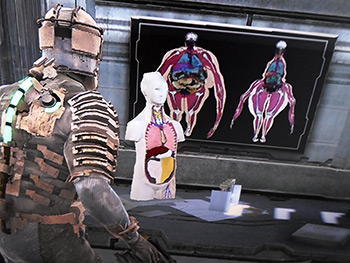
Diane Carr is a Professor of Media and Cultural Studies at the Institute of Education, University College London (UCL), where she serves as Director of the Digital Media MA Programme. Based in the Culture, Communication & Media department, Carr is an established scholar in game studies, media studies, and critical disability studies. Her work bridges academic research with practical applications in digital media education. Carr's research focuses on media studies and cultural studies perspectives on digital games and players, with particular emphasis on critical analysis, methodology, representation, and screen studies. During 2024-25, her research follows two key themes: developing ludic autoethnography to articulate real-world experiences of discrimination, and examining complicity with big tech, datafication, and AI in games and education. Her work consistently explores the intersection of disability studies with game studies, challenging normative representations of ability in digital spaces. Carr's publications reveal a sustained engagement with disability representation in games, particularly through analyses of titles like Dead Space and Deus Ex. Her research demonstrates how games function as cultural texts that both reflect and shape societal attitudes toward disability, ability, and bodily difference. She employs textual analysis and autoethnographic approaches to examine how games construct notions of normalcy and deviance. UCL Widening Participation community of practice awards (2022) ONE UCL Award for collegiality, 'Ways of Working/Working Together' (2021) UKLA Postgraduate Research Prize (2015) Carr has supervised numerous PhD students including Danielle Kleinerman (in progress), Angeliki Symeonidi (2020), Bruno de Paula (2019), and Angela Colvert (2015). Her research funding includes significant projects like 'Disability and Community: Dis/engagement, Dis/enfranchisement, Dis/parity and Dissent' (2016-2021) funded by the AHRC, 'Alternative Futures: Disability and Community' (2014-2015), and 'Digital Games: Representations of disability' (2013-2014). She has also led projects on AI education using science fiction and virtual worlds in higher education. As Director of the Digital Media MA Programme, Carr leads initiatives that connect game studies with critical media education. Her teaching includes research design and game studies on the MA Digital Media Critical Studies program. Notably, Carr is deaf, bringing lived experience to her critical disability studies work while actively contributing to academic discourse on accessibility and representation in digital spaces.
Irene Albers is a full Professor at Free University of Berlin's Department of Philosophy and Humanities, holding dual appointments at the Peter Szondi Institute for General and Comparative Literature and Institute for Romance Philology since 2004. She chairs both the Examination Board and Doctoral Committee for General and Comparative Literature, serves as Trustee of Studienstiftung des deutschen Volkes since 2004/05, and has been Principal Investigator for the Friedrich-Schlegel Graduate School for Literary Studies and Cluster Languages of Emotion since 2007. Her research bridges comparative literature, anthropology, and visual culture with institutional leadership spanning editorial projects and international conferences. Her educational background includes: Born in Bremen (1967) Romance Studies, Philosophy, and German Studies at Universities of Tübingen, Tours, and Konstanz M.A. from University of Konstanz (1993) Ph.D. from University of Konstanz (1999) on literature and photography in Émile Zola, Proust, and Claude Simon Albers' core research examines literary anthropology through colonial/postcolonial lenses, focusing on French literary engagement with Africa, surrealism, and literature-photography intersections. She pioneered studies on Michel Leiris' ethnological poetics and Claude Simon's photographic techniques, extending to historical emotion research (anatomy of affects, body language) and romance novella traditions. Her work consistently challenges Eurocentric literary canons through primitivism critique and heteronomy aesthetics, emphasizing textual restitution and cultural reclamation. Recent publications (2018-2025) reveal a sharp turn toward colonial restitution ethics, particularly in oral literature provenance. Articles increasingly analyze literature as colonial loot, connecting French modernism with African/Caribbean contexts through collaborative projects with anthropologists like Eléonore Devevey. This trajectory builds from earlier surrealist studies to concrete frameworks for decolonizing literary scholarship, spotlighting institutional complicity in cultural appropriation while advancing symmetrized modernity revisions. Scientific awards include: Senior Fellow and Prize Winner of the Zukunftskolleg, University of Konstanz (2009) Albers supervises master's and doctoral students through dedicated AVL colloquia while securing major research funding as Principal Investigator for Friedrich-Schlegel Graduate School (2007-present) and Cluster Languages of Emotion (2007-2012). Her current DFG-funded project 'Literature as Colonial Loot?' with Andreas Schmid pioneers philological provenance research. Earlier, she contributed to Collaborative Research Center 511 'Literature and Anthropology' (Konstanz, 1999-2002) and DFG-funded conferences on Claude Simon. She leads the DramaNet research project and co-edits the 'machina' series at transcript Verlag since 2010. As board member (2007-2009) and deputy (2008-2012) of Cluster Languages of Emotion, she coordinates Area D 'Cultural Codings of Emotions'. Her Zukunftskolleg fellowship (2012-2013) and Marcel Proust Society collaborations underscore sustained engagement with literary anthropology networks.
Dr. Simon Thomas is a Senior Lecturer at the University of South Wales' South Wales Business School, specializing in Pilgrimage, Memorial & Tourism Studies. He leads the Doctor of Business Administration program and oversees the Tourism, Hospitality and Events Group. With a PhD in Pilgrimage Tourism (2013), he has extensive experience in doctoral supervision and external examining roles across UK institutions. Education: PhD Pilgrimage Tourism, University of South Wales (2013) MA Heritage Tourism, University of Wales Trinity College Carmarthen (2005) PgCert Education (Tourism), University of Wales Newport (2003) BA (Hons) Tourism & Leisure Management, University of Glamorgan (2001) Research Interests: Focused on pilgrimage tourism, heritage tourism innovation, and sustainable tourism development. His work bridges academic inquiry with practical applications, including a Knowledge Transfer Partnership (KTP) with the Cardiff Story Museum rated 'outstanding' by the KTP Board. Key themes include secular pilgrimage dynamics, autoethnographic methodologies, and cultural identity in tourism. Publications: Over 20 peer-reviewed articles and book chapters, including studies on Lourdes pilgrimage, Welsh heritage entrepreneurship, and thanatourism. Recent work explores NGO engagement strategies and digital tourism innovation. Awards: Fellow of the Higher Education Academy (FHEA) Outstanding KTP Board Rating (Cardiff Story Museum collaboration) 4* ABS Full Paper Award Advising & Grants: Supervised over 25 doctoral candidates across business and tourism disciplines. Active in external examining roles (e.g., Coventry University, Bishop Grossteste University) and curriculum design. Led projects funded by the Welsh Government and private sector partnerships. Labs & Teams: Research Lead for the Tourism, Hospitality and Events Group, fostering interdisciplinary collaboration on tourism policy, innovation, and cultural heritage.
Dr. Hilary Cremin is the Head of the Faculty of Education at the University of Cambridge and holds the rank of Professor. Her work centers on peace education, conflict transformation, and innovative methodologies such as photo-voice, poetry, and autoethnography. She chairs the Cambridge Peace Education Research Group (CPERG), which promotes research and practice in peace education through seminars and online resources. Her research explores the intersection of education and peacebuilding, emphasizing ethical and embodied approaches to conflict resolution in schools and communities. Education : PhD in Education, University of Leicester PGCE, University of Oxford (Wolfson College) BA (Hons) in French and European Literature, University of Warwick Research Interests : Hilary’s work addresses global challenges in education and peacebuilding, including: Developing transrational approaches to peace education Reducing epistemic violence through reflexive methodologies Empowering youth through restorative justice and civic pedagogy Exploring embodiment and arts-based practices in educational research Awards : Fellow of the Royal Society of Arts Leadership and Service : In addition to her academic role, Hilary serves as Chair of the Degree Committee in the Faculty of Education and has extensive experience as a mediator and educational consultant. She has collaborated with schools, communities, and international organizations to advance conflict transformation and peacebuilding initiatives. Labs/Teams : Cambridge Peace Education Research Group (CPERG) — fostering global dialogue and practical resources for peace education researchers and practitioners.
Dr. George Allen O. Villanueva is an Associate Professor in the Department of Communication and Journalism at Texas A&M University, affiliated with the Race & Ethnic Studies Institute and Latinx/o/a & Mexican American Studies programs. His research focuses on how marginalized communities of color navigate structural oppression through communication, media, activism, and expressive culture. His interdisciplinary work integrates critical theories from communication, anthropology, and sociology. Dr. Villanueva holds a PhD in Communication from the University of Southern California and has taught at Loyola University Chicago before joining Texas A&M. Education: B.A. in Black Studies and History (UC Santa Barbara), M.Sc. in Global Media and Communications (London School of Economics), and PhD in Communication (USC Annenberg School). Research Interests : Urban equity advocacy, communication infrastructure, critical hip hop pedagogy, anti-displacement strategies, and engaged scholarship. His methods emphasize participatory and autoethnographic approaches to address systemic inequities in cities. Notable projects include the Chinatown anti-displacement map and walking tour, the Hollywood Community Studio, and the Northeast Los Angeles Riverfront Collaborative. His 2022 book Promoting Urban Social Justice won the 2023 Jane Jacobs Book Award for its contribution to urban communication studies. Community Engagement : Over 20 years of experience in community organizing, urban planning, and social change advocacy, including roles in electoral politics and strategic communication consulting.
Megan Adams is an Associate Professor at the School of Curriculum Teaching and Inclusive Education, Monash University. Her work focuses on inclusion, diversity, and reducing educational inequalities for marginalized groups, with a particular emphasis on teacher education, early childhood education, and international education contexts. She has contributed to pedagogy and curriculum development through research projects and teaching roles. Recent research projects include collaborations with preservice teachers, studies on inclusive classrooms in preschools, and consultancy work on curriculum content for international development assistance. Her work aligns with the UN Sustainable Development Goals Inclusive education Pedagogy and curriculum development as key areas of impact. Her recent publications highlight trends in Gender studies and masculinity disruption through play Transitions in international education settings Online teaching during the pandemic Professional identity formation among immigrant educators LGBTIQ+ inclusive curriculum design Family-school dynamics in early childhood Scientific awards include Vice-Chancellor's Excellence Award (2024, nominated) Dean’s Equity and Inclusion Award (2024) ATEA Research Recognition (2019) Dean's Research Excellence Commendation (2019) Dean's Early Career Grant (2017) She actively engages in external academic events, peer review, and policy advisory roles, including contributions to the Australian Early Education Institute and Tasmanian Government preventative health strategy. Her teaching includes units on diversity, inclusive learning environments, and educational research projects.
Dr. Michiel Kamp is Assistant Professor of Musicology at Utrecht University's Department of Media and Culture Studies within the Faculty of Humanities. He holds a PhD from the University of Cambridge (2015) and co-founded the Ludomusicology research group. His research employs hermeneutic and semiotic approaches to analyze video game music and related audiovisual media. Key interests include musical transmediality, ubiquitous music, phenomenologies of listening, participatory culture, sound synchronization, ecological psychology, musical affordances, ludomusicality, and the aesthetics of background music. Publications focus on phenomenological approaches to game music, hermeneutic analyses of interactive soundtracks, and theoretical frameworks for understanding musical meaning across media platforms. Recent work explores VR audio experiences and historical perspectives on musical interfaces. Dr. Kamp has organized numerous international conferences on video game music and edited foundational publications in ludomusicology. His monograph Four Ways of Hearing Video Game Music presents a comprehensive theoretical framework for game music analysis.
Dr. Ahmet Atay is a Professor of Global Media and Communication at the College of Wooster. He holds a Ph.D. from Southern Illinois University-Carbondale. His research focuses on diasporic experiences, queer and immigrant identities, new media technologies, and critical communication pedagogy. He is the author of Globalization’s Impact on Identity Formation: Queer Diasporic Males in Cyberspace and co-editor of numerous volumes on digital media, intercultural communication, and postcolonial studies. His work bridges media studies, cultural analysis, and queer theory. Education : Ph.D., Southern Illinois University-Carbondale Research Interests : Atay explores transnational queer digital networks, postcolonial communication, autoethnographic methodologies, and the intersection of technology with diasporic identity. He critiques globalization’s impact on cultural and gendered identities, particularly through media representation. Recent work examines pandemic-era pedagogical shifts and service-learning in higher education. Publications Trends : His 2022 articles emphasize critical pedagogy and media narrative evolution, while 2021 works focus on queer digital spaces and decolonial frameworks. Earlier studies (2020–2019) analyze Italian cinema, autoethnography, and international faculty experiences. His writing consistently links digital media to identity politics across transnational contexts. Awards : 2021 Top Three Finalist, ASHE CIHE Award for Research on International Higher Education Advising & Grants : No listed advisees, but his collaborative edited volumes suggest extensive mentorship in academic publishing. No grants explicitly mentioned. Lab/Teams : No dedicated lab mentioned, but his work involves global academic networks through co-edited books and interdisciplinary research partnerships.
Stacy Holman Jones is a Professor of Theatre and Performance in the School of Languages, Literatures, Cultures and Linguistics at Monash University. With over 23 years of academic experience, she has developed an international reputation for leadership in performance studies, particularly in feminist and queer theory, new materialist research, and critical arts-based methodologies. Her educational background includes a PhD in Communication/Performance Studies from the University of Texas at Austin (2001), an MA in Communication from California State University Sacramento (1996), and a BA in Humanities (1988). Professor Jones's research focuses on performance as socially, culturally, and politically resistive and transformative activity. She is a recognized leader in critical autoethnography and has published over 100 articles, book chapters, and editorials, as well as authored, co-authored, and edited 14 books including the influential Handbook of Autoethnography (2013, 2021) and Queering Autoethnography (2018). Her work spans cultural critique, social inclusion, education, resilience building, designing for social impact, and enhancing health and wellbeing among minoritarian communities. Analysis of her recent publications reveals a strong trajectory toward creative ecological approaches to mental health, collaborative autoethnographic methods, and innovative design for social impact. Her research increasingly integrates performance studies with mental health applications, particularly in educational settings, while maintaining strong connections to queer theory, new materialisms, and critical autoethnography. International Congress of Qualitative Inquiry's Special Career Award National Communication Association's Distinguished Service Award in Performance Studies Janice Hocker Rushing Early Career Research Award Organization for the Study of Communication, Language, and Gender Feminist Teacher/Mentor Award Over the Rainbow Recommended Book List for Queering Autoethnography (2019) International Congress of Qualitative Inquiry Qualitative Book Award, Honourable Mention (2020) Multiple Good Design Awards for 'The Tomorrow Party' (2024) Professor Jones has been part of 3 successful ARC applications totaling $1,353,604, including as Lead CI for DP200102876 Staging Australian Women's Lives (2020-2023). She is currently accepting PhD students with supervision interests in theatre and performance studies, social change and social justice, and health and wellbeing research. She serves as the founding editor of Departures in Critical Qualitative Research and has been actively involved in professional organizations including serving as President of the International Congress of Qualitative Inquiry (2015-2018). Her current research activities include multiple collaborative projects such as 'Playing Transitions - Settling and Belonging in School together' (2024-2027), 'Learning Creates: Tomorrow Party' (2024), and 'Canopy: Creative partnerships for policy advocacy in Climate and Health' (2024), demonstrating her commitment to interdisciplinary, impact-focused research that bridges theory and creative practice.
Mehmet Soyer , Assistant Professor at Utah State University’s College of Arts & Sciences , specializes in the School of Social Sciences . His work bridges environmental sociology , social inequality , and pedagogical innovation . Research Focus : Socio-environmental conflicts, hydraulic fracturing impacts, autoethnography, and community-engaged learning. Teaching Philosophy : Advocates for experiential learning, digital tools, and brave spaces in classrooms. Publication Trends : Recent work highlights climate activism, inclusive education, and interdisciplinary approaches to sustainability. Earlier research explores Kurdish identity, sociological theory, and health dynamics.
Simon Hayhoe is a Reader in Education at the University of Exeter's School of Education and an Associate of the Scottish Sensory Centre, University of Edinburgh. His work focuses on sensory impairment, ageing, inclusive technologies, and participatory research methodologies. He has held roles at the University of Bath (2016-2023), Canterbury Christ Church University, and Sharjah Women’s College, UAE. His research has been supported by a Horizon 2020 grant and a Fulbright Fellowship, among others. Education: PhD in Education (University of Birmingham, 2006), PGCE in Secondary Technology (University of Bath, 1997), MEd (University of Leicester, 1995), BA in Technical Communication (Coventry Polytechnic, 1993). His research interests include sensory impairment philosophies, accessible museum technologies, and inclusive education policies. Notable projects include the ARCHES initiative on cultural heritage accessibility and the Sound Pad Project, which co-created inclusive technologies with marginalized communities. He has delivered keynotes at institutions like MIT, Harvard, and the Metropolitan Museum of Art, and serves on editorial boards for journals such as British Journal of Visual Impairment and Discover Global Issues . His awards include the Fulbright Scholarship and fellowships from the British Computer Society and Metropolitan Museum of Art.