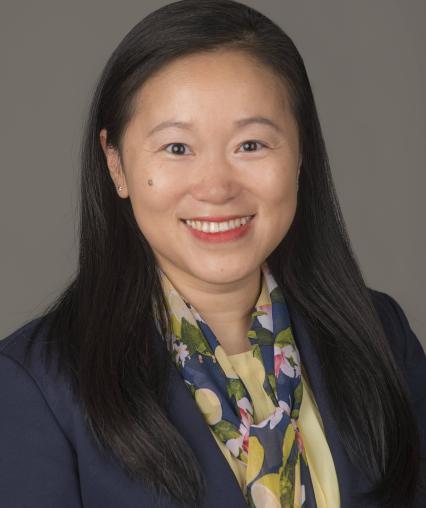
Adrian Gepp is Professor of Data Analytics at Bangor Business School, Bangor University, affiliated with the Institute of European Finance and Tourism Research Group. He specializes in extracting insights from complex datasets to address socio-economic challenges. His research integrates machine learning and predictive modeling across diverse domains: Fraud detection systems using AI and blockchain High-frequency forecasting in tourism and finance Sports analytics for performance optimization Healthcare analytics for clinical decision-making Financial vulnerability assessment across demographics Recent publications demonstrate strong cross-disciplinary trends: Dominant focus on AI applications in fraud detection (35% of recent works) Emerging research in high-resolution tourism forecasting frameworks Significant contributions to sports analytics methodology in women's athletics Continued work on financial wellbeing modeling across age cohorts Awards and recognition: Best Paper Award, 43rd EBES Conference Madrid (2023) Supervision and grants: Active PhD supervisor with specialization award Secured £500k+ external research funding Leads industry collaborations on customer churn prediction and data dashboards Professional engagement includes invited talks on AI in business practices and consultation for organizations like JCB and Kodergarten.
Ala Sarah Alaqra is an Associate Professor (Docent) in Information Systems Research at Karlstad University, Sweden. She holds dual roles as a researcher and educator, contributing significantly to the fields of privacy engineering, cybersecurity, and human-computer interaction. Her work bridges technical innovation with user-centric design principles, addressing challenges in healthcare systems, cloud computing, and digital transformation. **Research Projects:** INNOPATH (2025–current): Innovating policy frameworks for innovation commons. INCREDILAB (2024–current): Enhancing climate resilience through digital education. Cross Border Cyber Capacity (CBCC) (2023–current): Strengthening cybersecurity collaboration between Sweden and Norway. PAPAYA (2018–2020): Developing privacy-preserving analytics platforms for cloud services under Horizon2020. PRISMACLOUD (2015–2018): Securing privacy in cloud services funded by Horizon2020. **Teaching:** Responsible for 15+ courses across bachelor’s, master’s, and thesis levels, including: Bachelor’s courses: Interaction Design, Web Analytics, User-Centered Prototyping. Master’s courses: AI in Law, AR/VR Research, Experimental Multimedia Methods. Thesis supervision in information systems and technology. **Research Focus:** Prioritizes user-centric solutions for privacy challenges in cloud computing, eHealth systems, and crisis management. Her work emphasizes practical implementations of cryptographic technologies, digital well-being during pandemics, and stakeholder collaboration in tech adoption. **Grants & Collaborations:** Secured funding from VINNOVA, EU Horizon2020, and Interreg initiatives. Collaborates with municipalities, healthcare providers, and tech firms to translate research into actionable solutions. **Labs/Teams:** Engaged in the INCREDILAB initiative and cross-border cybersecurity projects. Leads interdisciplinary teams addressing privacy-technology interface challenges.
Jonathan Jackson is a Senior Lecturer in Software Engineering and Management at Queen Mary University of London (School of Physical and Chemical Sciences). He holds Chartered IT Professional (CITP) status from BCS and leads undergraduate/postgraduate degree apprenticeship programmes. His research focuses on ethical use of Generative AI/LLMs in education, higher-order thinking skills, and industry collaboration. Teaching: IOT454u (Stakeholder Management), IOT453u (Quality Driven Development) Research Interests: LLMs in education, authentic assessment, and pedagogical innovation Publications: Focus on AI ethics, work-based learning, and mobile learning applications His articles explore topics like Bloom’s taxonomy in LLM use, team-based live projects, and mLearning prototypes for medical terminology. Professional: Programme Leadership for Digital Apprenticeships Engagement: Industry partnerships for authentic learning experiences
Alba Bordetas Bonilla is a Lecturer in Spanish at the Department of Applied Foreign Languages (LEA) at Toulouse - Jean Jaurès University, where she teaches knowledge, practice, and learning of the Spanish language. She is affiliated with the NeuroPsychoLinguistics Laboratory (LNPL), actively contributing to research and administrative functions, including serving as Communication Officer and Co-Coordinator of Languages in LEA. Her research centers on second language acquisition, with a strong focus on Spanish as a heritage language in France, multilingual learners, linguistic awareness, and multimodal comprehension through audiovisual and narrative media. She explores how cognitive processes like mental representation, lexical memory, and inferencing support language understanding. The trends in her scholarly output from 2013 to 2023 reveal a consistent commitment to innovative, interdisciplinary pedagogy, integrating theatre, poetry, digital tools, and authentic artistic materials into language education. Her work emphasizes learner autonomy, emotional and aesthetic engagement, and the use of technology to enhance comprehension and self-regulated learning. Scientific Contributions and Projects: Co-leader of the ENCLAE/FabulaE project, developing a digital tool for Spanish learners using narration and personification. Co-leader of the Virtualang project promoting intercultural podcast creation between French and Spanish university students. Member of the INMIGRA3 project on heritage Spanish in France, funded by European and Madrid regional funds. Administrative and Professional Roles: Member of the Board and Council of the LNPL. Communication Officer, LNPL. Co-Coordinator of Languages, LEA Department. Educational Manager, Second Year LEA – Spanish. Reviewer for the digital learning platform "Languages in Acts" (2013). She has presented at numerous academic conferences and contributes to teacher training and curriculum development in applied linguistics.
Kaishan Kong is an Associate Professor of Chinese in the Department of Languages at the University of Wisconsin-Eau Claire, College of Arts and Sciences. She serves as the TEFL Advisor and is actively engaged in teaching, research, and community outreach. Her work bridges language and culture, with a strong commitment to intercultural citizenship and social justice in language education. Ph.D. in Second Languages and Cultures Education, University of Minnesota, United States M.A. in Intercultural Communication, University of Sheffield, United Kingdom B.A. in English Education, Zhanjiang Normal University, China Her research focuses on second language acquisition, intercultural communication, study abroad experiences, and teacher education. She explores how language learning intersects with identity, cultural competence, and transformative experiences. Her teaching emphasizes experiential learning, virtual exchange, and the integration of culture in language classrooms. Her recent publications (2018–2023) reflect a strong trend toward intercultural citizenship, social justice, and innovative pedagogies such as virtual exchange and community-based learning. These works span journals and edited volumes in language education, highlighting her contributions to both theoretical and practical aspects of teaching languages. She has been recognized with prestigious awards including the Fulbright U.S. Scholar Award (2020–2021) and the Chancellor Brian Levin-Stankevich University Fellow (2024–2025). Chancellor Brian Levin-Stankevich University Fellow (2024–2025) Fulbright US Scholar (2020–2021) Dr. Kong mentors students and advises the TEFL program. She has led initiatives in study abroad, community engagement, and international collaborations. Her work includes virtual exchanges between the U.S. and Malaysia, outreach to local communities, and professional development for language educators. She has not mentioned specific grants, but her Fulbright and Chancellor’s Fellow awards suggest active grant-supported research and teaching. She is involved in research projects on mediated learning, identity in language learning, and the role of technology in fostering intercultural communication. Her lab or team efforts are reflected in collaborative publications and virtual exchange programs, often involving international partners and interdisciplinary approaches.
Burcu KOÇ FERRAIOLI is a faculty member at Sakarya University, Faculty of Education, Department of Foreign Language Education. She holds the academic rank of Assistant Professor and is actively involved in teaching and research in English Language Teaching (ELT). Her work focuses on teacher education, intercultural communication, and technology integration in language learning. University: Sakarya University School: Faculty of Education Department: Department of Foreign Language Education Email: burcukoc@sakarya.edu.tr Her research interests include English language teaching, teacher education, intercultural communication, language assessment, and the use of digital tools such as TED Talks and Netflix in language learning. She has conducted studies on feedback practices, working memory in language learning, and curriculum analysis in Turkish ELT programs. The trends in her publications reflect a strong commitment to pedagogical innovation, teacher development, and the integration of real-world contexts into language classrooms. Her work spans from cognitive aspects of language learning to policy-level analysis of teacher education curricula, showing a comprehensive approach to ELT research. She has contributed to several research projects, including those on mentoring during the pandemic, outdoor learning in early childhood, and Erasmus+ initiatives. Her scholarly output includes articles in international journals and conference proceedings, with a focus on practical and theoretical aspects of language teaching. Mapping Effective Approaches to Support International Students' Social and Cultural Integration in Host Countries English language pre-service teachers' perspectives on TED Talks as an educational support Investigating the Relationship Between ELT Students' Verbal Working Memory Capacity, Reasoning Ability, and Foreign Language Proficiency of Productive Skills Burcu KOÇ FERRAIOLI advises pre-service teachers and engages in curriculum development and professional development projects. She has not received any explicitly mentioned scientific awards. She leads and participates in research projects focused on active learning, digital pedagogy, and intercultural citizenship in language education. She is involved in research teams working on outdoor-oriented practices in early childhood education and digital Turkish language teaching. Her lab-like environments include project-based research groups under Erasmus+ and national educational development initiatives.
Dr. Heather Macías is an Associate Professor in the Teacher Education department at California State University, Long Beach, within the College of Education. She holds a Ph.D. and M.A. in Education from UC Santa Barbara and an M.A.T. with a Single Subject Teaching Credential from the University of Southern California. Her research and teaching are centered on equity, culturally responsive pedagogy, and the educational experiences of marginalized students. Ph.D. Education, University of California, Santa Barbara M.A. Education, University of California, Santa Barbara M.A.T. Secondary Teaching/Single Subject Teaching Credential, University of Southern California B.A. Fine Arts, University of Southern California Dr. Macías' research interests include content area literacy, teacher education, preservice and inservice teacher development, funds of knowledge, culturally responsive and sustaining pedagogy, multilingual education, secondary Ethnic Studies, and the experiences of queer and trans preservice teachers. She integrates Drag Pedagogy and Indigenous ontologies into her scholarly work, challenging deficit perspectives and advocating for asset-based frameworks in education. Her recent publications and conference presentations reveal a strong trend toward using culturally responsive methods in STEM and AI education, emphasizing social justice, equity, and the integration of students' lived experiences. She explores how digital tools, project-based learning, and mixed reality simulations can support inclusive teaching practices. Fellowship, Institute for Teachers of Color Committed to Racial Justice (2024-2025) University Early Academic Career Excellence Award, CSULB (2023-2024) La Academia Liderazgo Fellowship, HACU (2022-2024) Emerging Research Fellowship, Branch Alliance (2021-2023) California Teacher Education Research Fellowship (2019-2020) Dr. Macías has been actively involved in grant-funded research, serving as PI, Co-PI, evaluator, and consultant on projects related to STEM equity, AI for social good, and arts education. She mentors future educators and leads initiatives like the Dual Language Development program. Her service includes organizing the CSULB Black Lives Matter at School Week of Action and participating in national panels on ethnic studies and queer education. She is also affiliated with research centers and collaboratives focused on closing opportunity gaps in education.
Dr. Jaine Beswick is an Associate Professor in the Department of Modern Languages at the University of Southampton. Her research focuses on sociolinguistics and sociophonetics, particularly in diasporic and multilingual contexts such as island communities and borderlands. She explores language use, identity, and belonging among migrants, with a focus on Portuguese, Galician, Spanish, and English. Education: BA Hons in Spanish, Portuguese, and French with Linguistics; MA in Language and Linguistics; PG Diploma in International Relations (Rio de Janeiro); PhD in Sociolinguistics from the University of Bristol. Current roles include Departmental UG Senior Tutor, member of the Faculty Concordat Wellbeing and Family Policy working group, and the Faculty EDI Network. She leads the Future of Human Communication (FHC) Centre of Excellence in FEPS. Research projects include a longitudinal study on economic migration to Jersey and examinations of style-shifting in multilingual encounters. Awards include the Academic Award for Best Response to Feedback (2009). Supervision: Currently advising four PhD students in Applied Linguistics/ELT. Active in teaching sociophonetics, sociolinguistic theory, and language variation. Grants: Received funding from the Societe Jersiaise and Lord Countanche Library for research on migration in Jersey.
Dr. KimMarie Cole is an Associate Professor and Chair at SUNY Fredonia. She holds a Ph.D. from the University of Wisconsin-Madison and an M.A. from the Monterey Institute of International Studies. Her research focuses on classroom discourse analysis, sociolinguistics, and second language acquisition. Dr. Cole emphasizes culturally responsive pedagogy and language identity formation in diverse educational settings. Her professional presentations span topics like student engagement strategies, language authenticity in STEM contexts, and creating inclusive classroom environments. Notable venues include the American Association for Applied Linguistics and the SUNY Fredonia Teaching and Learning Conference. No scientific awards or grants were explicitly mentioned in the provided text. Dr. Cole has advised no listed students, though her teaching roles suggest active involvement in mentoring. Her work interrogates the intersection of language use, identity, and educational equity through an ethnographic lens.
Constantine V. Nakassis is a Professor and Chair of the Department of Anthropology at the University of Chicago. His research focuses on linguistic anthropology, semiotics, and media studies with a regional emphasis on Tamil Nadu, India. Key interests include Tamil cinema, trademark law, youth culture, and the intersection of branding with neoliberalism. He is the author of Doing Style: Youth and Mass Mediation in South India (2016) and is currently completing Onscreen/Offscreen , a book analyzing Tamil cinema. Nakassis organizes the annual Chicago Tamil Forum workshop, fostering interdisciplinary discussions on South Indian media and culture. His work bridges film theory with anthropological inquiry, examining topics like cinematic presence, indexicality, and the ontological politics of media images. Notable contributions include studies on Tamil cinema's use of spoof imagery, the semiotics of counterfeiting, and the role of brands in contemporary society. Nakassis has held editorial roles including co-editing the Cultural Anthropology special issue on 'Brand Neoliberalism' (2013). His publications span journals such as Journal of Linguistic Anthropology , Signs and Society , and Current Anthropology , with a focus on media anthropology and semiotic theory.
Dr. Thaisa Hughes is a part-time Senior Lecturer in Deaf Studies and Interpreter Education at the University of Wolverhampton, affiliated with the Department of Social Sciences within the School of Social Science and Humanities, Faculty of Arts, Business, and Social Sciences. She holds a PhD in Interpreter Education completed in December 2023 and a Postgraduate Certificate in Higher Education (PGCHE), both from the University of Wolverhampton. Her research focuses on improving sign language interpreter training through situated learning, authenticity in educational environments, and interprofessional collaboration. She emphasizes community of practice models and the integration of real-world contexts in interpreter education, particularly within healthcare settings. Her recent publications explore instructor modeling and legitimate peripheral participation in medical interpreting education, reflecting a consistent focus on experiential and authentic pedagogy. The articles highlight her contributions to interpreter training frameworks using sociocultural learning theories. Dr. Hughes actively supervises PhD students as a second supervisor and participates in PhD progression panels. She also serves as a peer reviewer for journals such as Scientific Reports and conference proceedings in language and culture. She maintains a dual professional identity as both an academic and a practicing sign language interpreter. Second supervisor for one PhD student Member of two PhD progression panels Peer reviewer for Scientific Reports (2024), Educational Action Research (2024), and Language and Culture conference (2016–2017) She has been a registered sign language interpreter with NRCPD since 2008 and continues a part-time freelance interpreting practice alongside her academic duties.
Vidhyasaharan Sethu is an Associate Professor at the School of Electrical Engineering and Telecommunications, UNSW Sydney. His educational background includes a PhD from UNSW, a Master of Engineering Science in Signal Processing from UNSW, and a Bachelor of Engineering in Electronics and Communication Engineering from Anna University. His research focuses on speech signal processing with emphasis on machine learning applications. Primary interests include: Speech-based emotion and mental state recognition systems Affective computing and voice biometrics Integration of machine learning with signal processing Uncertainty quantification in speech systems Adaptive audio front-ends and acoustic modeling Recent publications (2021-2025) demonstrate strong focus on: Ambiguity-aware emotion recognition using advanced ML techniques Speaker verification and biometric security systems Novel acoustic modeling frameworks Applications of large language models in speech processing Cross-disciplinary work in materials science via ML approaches Research Funding: ARC Discovery Projects (2020, 2019) ARC LIEF Grant (2019) UNSW Research Infrastructure grants (2018-2019) Huawei Innovation Research Program (2018) ARC Linkage (2017) NICTA International Postgraduate Award (2006-2009) Teaching includes courses in: Data Science for Electrical Engineers (ELEC9741) Speech Processing (ELEC9723) Digital Signal Processing (ELEC3104) Electrical Systems Design (ELEC2117)
Mehmet Keskinöz is a Professor in the Department of Computer Engineering at Istanbul Technical University, Faculty of Computer and Informatics. He holds a PhD and MS from Carnegie Mellon University and a BS from Boğaziçi University in Electrical and Electronics Engineering. His academic journey includes faculty positions at Sabancı University and a research role at Carnegie Mellon. PhD, Carnegie Mellon University MS, Carnegie Mellon University BS, Boğaziçi University, Electrical and Electronics Engineering His research focuses on Artificial Intelligence, Machine Learning, Data Mining, and Wireless Sensor Networks . He has made significant contributions to distributed detection, semantic segmentation, and large language models for software engineering tasks. His work often integrates belief functions and network coding for robust system design. Recent publications highlight trends in AI-driven applications such as semantic segmentation using recursive context networks, automatic test generation via large language models, and behavioral biometrics for continuous authentication. His earlier work centered on optical storage and sensor network optimization. He has been actively involved in national research evaluation, serving on panels for TÜBİTAK, TTGV, and the Ministry of Science and Technology. He is an IEEE member since 1998. IEEE Member (1998–Present) Project Evaluation Panelist, TÜBİTAK Advisory Board Member, Ministry of Science, Industry, and Technology He has supervised several students (8 supervised works listed) and contributed to research grants through national and institutional collaborations. His administrative roles include Rector Advisor and Erasmus Coordinator at ITU. He leads research in intelligent systems and sensor networks, with ongoing work in AI applications for software engineering and cybersecurity. His lab activities likely involve machine learning, network coding, and biometric systems, though specific lab names are not mentioned.
Bernardo Bader is Professor of Architecture and Art at the Academy of Fine Arts Munich, where he leads the Master’s program in Architecture and Art. He is also the founder and principal of bernardo bader architekten , based in Dornbirn, Austria. His academic and professional work is deeply rooted in the architectural traditions of the Alpine region, with a strong emphasis on material authenticity, craftsmanship, and environmental integration. Academy of Fine Arts Munich – Faculty of Architecture University of Liechtenstein – Guest Lecturer, Master’s Program in Architecture His research and design practice focus on sustainable architecture, cultural identity, sacred spaces, and public infrastructure. Bader’s projects often explore the relationship between built form and landscape, using timber and stone to create structures that are both timeless and contextually responsive. His work bridges artistic expression with functional rigor, particularly in educational, religious, and civic buildings. The 15 most recent publications reflect a consistent engagement with themes of sustainability, cultural continuity, and architectural poetics. Projects such as the Islamic Cemetery in Altach, the Alpine Sports Center in Schruns, and the revitalization of Hohenems’ Old Town demonstrate a deep commitment to social responsibility, ecological performance, and aesthetic clarity. These works span residential, institutional, and urban scales, united by a minimalist yet expressive architectural language. Bernardo Bader has received numerous awards and recognitions: Piranesi Award 2012 Mies van der Rohe Award Nomination (2013, 2019) Aga Khan Award for Architecture 2013 State Prize 2024 | Architecture and Sustainability International Architecture Award 2014 Dezeen Awards 2019 Nomination Colour-Structure-Surface 1st Prize Vorarlberg Building Owners' Prize 2015 Design Award of the Wüstenrot Foundation European Public Space Award Finalist 2014 He actively mentors students through studio reviews, juries, and academic collaborations at institutions including ETH Zurich, the University of Liechtenstein, and his own department in Munich. While no formal list of advisees is available, his pedagogical influence extends across Europe. His studio has secured multiple competition wins and public commissions, indicating sustained grant and project funding. Bader’s work is often developed through competitive processes and public contracts, reflecting strong institutional support. Bernardo Bader leads bernardo bader architekten , a design studio known for its rigorous conceptual approach and high-quality execution. The team collaborates with engineers, landscape architects, and artists on projects that serve both local communities and broader cultural discourse. The studio functions as a living laboratory for architectural innovation, particularly in timber construction and sustainable urban development.
Magdalena Thien is a Professor of German at the Department of Lexicology and Pragmatic Linguistics, Faculty of Humanities, University of Białystok, Poland. She is also a visiting researcher at the Leibniz Institute for the German Language in Mannheim (2023) under a DAAD scholarship, highlighting her active engagement in international academic collaboration. Her research centers on the intersection of linguistics and language didactics, particularly focusing on spoken Standard German and its pedagogical application in German as a foreign language (DaF) contexts. She critically examines the disciplinary boundaries and methodological tensions between theoretical linguistics and language teaching, advocating for a more balanced and respectful interdisciplinary relationship. The recent publications reveal a strong thematic consistency: analyzing how linguistic research can be effectively integrated into language teaching, understanding learner perceptions of native speaker usage, and reconstructing the academic identity of language didactics. Her work often employs empirical and discourse-analytic methods, especially in digital environments like internet forums. Scientific contributions include several peer-reviewed journal articles and edited volumes that explore the dynamics between linguistic theory and classroom practice. Notable works appear in Glottodidactica , Studia Germanica Gedaniensia , and German as a Foreign Language . Visiting Researcher, Leibniz Institute for the German Language, Mannheim (2023) Editor and author in key publications on language teaching and interdisciplinary dialogue Active contributor to debates on linguistic norms and didactic methodology She has not publicly listed advisees or grants, but her editorial roles and research projects indicate leadership in her field. No laboratory or team is mentioned, but her work is deeply embedded in academic networks across Germany and Poland.