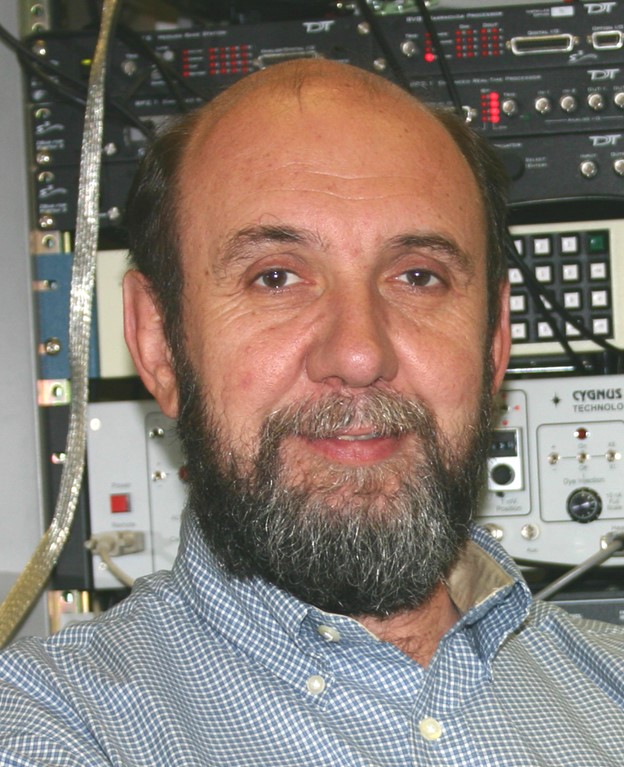
Alexander Galazyuk is a Professor of Anatomy and Neurobiology at Northeast Ohio Medical University (NEOMED), part of the College of Graduate Studies. He holds a Ph.D. from the Bogomoletz Institute of Physiology in Ukraine and has over 30 years of academic experience, including postdoctoral research at the University of Illinois. His primary research focuses on auditory neuroscience, particularly the neural mechanisms underlying sound processing, tinnitus, and hearing loss. His lab pioneered a mouse model for tinnitus research and employs electrophysiological and behavioral methods to study auditory system dynamics. Key research areas include residual inhibition mechanisms for tinnitus treatment, glutamate receptor modulation in auditory neurons, and the role of DNA methylation in bat longevity. Galazyuk teaches Neurobiology to medical students and graduate students, emphasizing cellular and molecular neuroscience. His work bridges basic science and translational research, contributing to understanding hearing disorders and aging processes. Publications highlight collaborations on auditory neuroscience, epigenetic aging studies in bats, and neurophysiological techniques. His research has advanced methodologies for assessing hearing deficits and tinnitus, with implications for clinical applications. Galazyuk’s interdisciplinary approach integrates neurobiology, genetics, and behavioral science to address critical questions in sensory neuroscience.
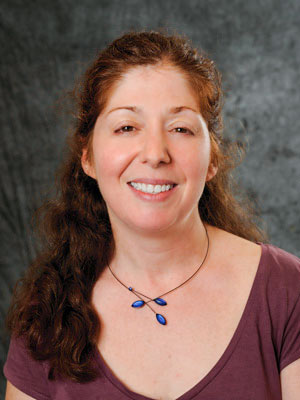
Merri Rosen, Ph.D., is an Associate Professor of Neurobiology and Director of the Hearing Research Group at Northeast Ohio Medical University (NEOMED). Her work explores how early life experiences—particularly hearing loss and stress—impact neural circuits critical for auditory perception. She uses Mongolian gerbils as an animal model to study developmental effects on sound processing. Education : Ph.D. in Neurobiology from Duke University (2002), M.S. in Neuroscience from Brandeis University (1995), B.A. in Psychology/Music from Wesleyan University (1990). Her research integrates neurophysiological, behavioral, and computational methods to understand perceptual deficits arising from early auditory deprivation. Current NIH-funded projects investigate how developmental conductive hearing loss and stress alter auditory neural pathways. Rosen also leads interventional studies to remediate perceptual deficits through targeted stimulus exposure. Key awards include NIH R01 grants for auditory processing research and a multi-institutional grant on childhood hearing outcomes. She teaches graduate courses in Medical Neuroscience and Statistical Data Analysis. Labs/Teams : Director of NEOMED's Hearing Research Group, member of the Institutional Animal Care and Use Committee (IACUC).
Sharad Shanbhag, Ph.D., is a Research Assistant Professor in the Department of Anatomy and Neurobiology at Northeast Ohio Medical University (NEOMED). His research focuses on understanding neural mechanisms underlying acoustic communication, particularly the role of the amygdala in processing social vocalizations and contextual information. He investigates how amygdalar neurons integrate auditory inputs to mediate emotional responses, with implications for disorders like autism, schizophrenia, and tinnitus. Education: Ph.D. in Neuroscience, University of Minnesota (1999) B.A. in Physics and Neuroscience, Hampshire College (1992) Research Interests: Neural circuits in the amygdala involved in acoustic communication Role of the amygdala in fear conditioning and emotional responses Disruptions in amygdala function linked to neurological and psychiatric disorders Key Article Trends: Recent work explores social vocalization coding in the basolateral amygdala (2016) and auditory spatial processing in midbrain-forebrain interfaces (2009). His studies use animal models (e.g., guinea pigs, owls) to dissect neural mechanisms of vocalization perception and spatial auditory processing. Awards/Grants: No specific awards or grants listed in the provided data. Labs/Teams: Works within NEOMED’s research programs focusing on neurobiology and auditory neuroscience, though specific lab affiliations are not detailed here.
Bradley Winters, Ph.D., is an Assistant Professor of Anatomy and Neurobiology at Northeast Ohio Medical University (NEOMED), affiliated with the College of Medicine. His research focuses on understanding the neural mechanisms underlying sound localization, particularly how synaptic plasticity and neuronal dendrite morphology contribute to auditory processing. He employs electrophysiological techniques, microscopy, and molecular biology methods such as two-photon calcium imaging and in situ hybridization. Education: Ph.D. in Neuroscience, Washington State University, 2012 B.S. in Biology, Colorado Mesa University, 2008 Research Interests: Dr. Winters investigates how sound localization circuits in the auditory system compute spatial information from basic acoustic cues. His work addresses synaptic plasticity in binaural neurons, developmental influences on neural circuits, and the role of dendritic ion channels in signal integration. He studies both mice and Mongolian gerbils to explore tonotopic organization and neural projections in the lateral and medial superior olive regions. Teaching: He instructs Medical Neuroscience for medical and graduate students and Cellular and Molecular Neurobiology for graduate students. Labs & Positions: His laboratory at NEOMED utilizes advanced techniques to study auditory processing. He currently lists postdoctoral researcher and graduate student positions available through the NEOMED career portal.
Victor Bray, MSC, PhD, FNAP is a Professor at the Osborne College of Audiology within Salus University's Elkins Park Campus. He holds academic appointments in audiology with Drexel University integration. His professional roles include serving as Immediate Past-president of the Academy of Doctors of Audiology (ADA), President of the Audiology Academy of the National Academies of Practice (NAP), and leadership in organizations like ASHA and AAA. Education: PhD in Speech & Hearing Science from University of Texas at Austin MSC in Audiology from Auburn University BS in Biochemistry from University of Georgia Research Focus: Dr. Bray investigates hearing assistance technologies, comorbidities of hearing and balance disorders, and audiology's evolving role in healthcare systems. His work emphasizes interdisciplinary care, audiology workforce dynamics, and evidence-based practices in hearing aid technology. Professional Recognition: Salus University Presidential Medal of Honor (2020) ADA David Goldstein Outstanding Audiologist Award (2016) NAP Distinguished Public Policy Fellow (2014) UT Austin Outstanding Alumnus (2011) Advocacy & Grants: His advocacy efforts focus on audiology's professional standing and educational standards. He co-authored policy-relevant publications on workforce benchmarks and Au.D. program outcomes. No specific grant details were explicitly listed in provided texts. Labs & Teams: Collaborates with institutions like Hamilton CapTel on patient engagement strategies and cochlear implant research. Active in interprofessional initiatives linking audiology to diabetes care and chronic disease management.
Shamin Sadrafshari is a Researcher at the University of Bath, affiliated with the Department of Mechanical Engineering. He is part of the Foundry: Centre for Digital, Manufacturing & Design and the Centre for Bioengineering & Biomedical Technologies (CBio), as well as the Bath Institute for the Augmented Human. His research focuses on biomedical engineering, neural interfaces, and energy harvesting technologies. Current projects include improving tactile display systems through the IAA-funded 'Improving User Experience on Sensory Substitution Tactile Display Pad' (2023-2023). Research interests span urinary bladder physiology, neural signal processing, piezoelectric energy harvesting, and MEMS-based actuators. His work bridges mechanical engineering with bioelectronics, focusing on applications like spinal cord injury rehabilitation and industrial tool monitoring. Notable contributions include advancements in tool condition monitoring using machine learning, velocity-selective neural processing systems, and vibration-based energy harvesting designs. Collaborations span veterinary medicine, microelectronics, and human-computer interaction. Ongoing work aims to develop neural interfaces for bladder control systems and optimize manufacturing processes through real-time tool wear analysis. His research portfolio includes 15 peer-reviewed publications since 2011, with recent focus on biomedical device design and smart manufacturing solutions. Current affiliations emphasize interdisciplinary innovation in augmented human technologies and bioengineering.
Gerald Obermair is a Professor at Karl Landsteiner Private University of Health Sciences since March 2019, leading the Department of Physiology within the Department of Pharmacology, Physiology, and Microbiology. He directs the Mental Health and Neuroscience PhD Program launching in 2023, leveraging his experience from establishing a neurophysiology doctoral program in Innsbruck. Biology degree, followed by neurobiology/biochemistry studies in Ohio (USA) PhD in Innsbruck, Austria, where he maintains a part-time research group Current focus on calcium channel subunits (α2δ/β4) in brain disorders Research Interests : Gerald investigates voltage-gated calcium channels in neuronal signaling and their role in neurodevelopmental/neurodegenerative diseases . His work connects α2δ subunit mutations to Autism Epilepsy Depression Neuropathic pain Synucleinopathies He explores how calcium channel subunits like β4 modulate both channel functions and non-channel nuclear processes . Publication Trends : His recent articles focus on CACNA2D/CACNB4 gene variants , α2δ subunit roles in synaptic imbalance, and calcium channel regulation in retinal and auditory systems. Studies employ Knockout mouse models Electrophysiology Genetic sequencing CRISPR/Cas9 Presynaptic protein interactions Synucleinopathy research Lab & Collaborations : He leads research groups in both Innsbruck (part-time) and Krems , collaborating on projects like CavX (calcium channels in excitable cells) and Neonatal Seizures (completed). His work bridges basic science with clinical applications in Neurology Pediatrics Ophthalmology Psychiatry
Andrew Niels Perkis is a Professor at the Department of Electronic Systems, Faculty of Information Technology and Electrical Engineering, Norwegian University of Science and Technology (NTNU). His research focuses on the intersection of art and technology, with emphasis on immersive media experiences, quality of experience (QoE) modeling, transmedia storytelling, and sensor-based digital narratives. He co-founded the Sense-IT laboratory and leads the ARTEC task force for art-technology research directions. Current research areas: IoT-driven digital storytelling, immersion and presence, media value chain quality assessment Applications: Creative industry business models, public space art installations, VR hazard awareness tools Recent publications address VR usability for geohazard visualization, motor task performance in immersive environments, and stakeholder engagement frameworks. His work integrates technical innovation with human-centric design principles. Awards: Winner, SXSW 2018 Place by Design competition NM Art and Design Prize (2016)
Sylvain Baillet serves as Adjunct Professor of Neurology and Neurosurgery, Biomedical Engineering, and Computer Science at McGill University, and Professor of Neuroscience at Université de Montréal. He is Director of the Centre de recherche at CHUM and Director of Research & Innovation at CHUM, working primarily through the Montreal Neurological Institute-Hospital (The Neuro), a leading bilingual academic healthcare institution and McGill research/teaching institute. Dr. Baillet graduated from Ecole Normale Supérieure Paris-Saclay in Applied Physics and earned his PhD summa cum laude in Physics from University of Paris (Paris-XI). His distinguished international career includes positions as Research Associate at the University of Southern California, tenured Principal Investigator at CNRS in France (2000), Head of the Brain Imaging group at La Salpetriere University Hospital (2005), and Associate Professor at the Medical College of Wisconsin (2008) before joining McGill University in 2011. As a global leader in brain imaging and multimodal electrophysiology, Dr. Baillet's research focuses on understanding the nature and macroscopic mechanisms of large-scale, network brain activity across time scales from milliseconds to the lifespan. His lab takes a multi-disciplinary approach blending imaging, multi-scale electrophysiology, cognitive and clinical neuropsychology, biophysics, computational models and data science. Rather than specializing in specific brain functions, his work seeks common denominators across neurological phenomena with particular expertise in magnetoencephalography (MEG) for time-resolved brain imaging. His recent publications demonstrate a strong trajectory toward applying advanced neuroimaging techniques to understand Parkinson's disease, Alzheimer's disease, psychosis, and chronic pain, while maintaining significant contributions to open science infrastructure. His work shows increasing integration of genetics with neurophysiology, attention to sustainability in neuroimaging, and development of predictive models for neurological conditions. Dr. Baillet's scientific recognition includes: Tier-1 Canada Research Chair of Neural Dynamics of Brain Systems (2018) French Academy of Sciences award for outstanding publication in Biology Election to the Academy of Science, Royal Society of Canada (2025) Open Science Leadership Award from the Tanenbaum Open Science Institute With over 11,700 citations and 4 articles in the Top 1% of most-cited publications in Neuroscience, Dr. Baillet has trained 130 students (74 graduates) and 13 post-doctoral fellows from diverse backgrounds, with 20 trainees securing faculty positions worldwide. His research is supported by a substantial funding portfolio exceeding $36 million from agencies including NSERC, CIHR, SSHRC, CFI, Compute Canada, Brain Canada, FRQS, FRQNT, NIH, and private donors, currently managing 14 active grants with 8 as PI or co-PI. Dr. Baillet founded the McConnell Brain Imaging Centre (Canada's largest), recruiting 6 PI leaders and 9 highly qualified personnel while raising $6.4 million in infrastructure grants. His lab hosts the Brainstorm software integration (27,600 user accounts), with training workshops attended by over 2,000 students/faculty worldwide. He co-founded the Open MEG Archives (OMEGA), now with Release 3 containing over 150 hours of MEG recordings from 644 participants, demonstrating his commitment to open science and collaborative neuroscience.
Eric C. Lai, PhD is a Professor in the Developmental Biology Program at Memorial Sloan Kettering Cancer Center (MSKCC), where he leads an active research laboratory focused on RNA biology and developmental mechanisms. He holds affiliations with the Center for Stem Cell Biology and the Gerstner Sloan Kettering Graduate School of Biomedical Sciences. Dr. Lai received his BA from Harvard College and his PhD from the University of California, San Diego. Dr. Lai's research spans multiple areas of RNA biology, with particular emphasis on microRNAs and other small regulatory RNAs, alternative mRNA processing and modification, and Notch signaling in neural development. His lab utilizes Drosophila melanogaster as a primary model system, complemented by mammalian studies, to investigate fundamental mechanisms of gene regulation. Key research areas include the biogenesis and function of microRNAs, tissue-specific alternative polyadenylation, RNA circularization, and RNA methylation (m 6 A) pathways. Analysis of Dr. Lai's recent publications reveals a strong focus on RNA regulatory mechanisms with implications for both basic biology and disease. His work demonstrates how RNA processing events like alternative polyadenylation, circularization, and methylation create tissue-specific regulatory networks, particularly in neural contexts. Recent studies have uncovered novel roles for RNA-binding proteins, identified conserved mechanisms of miRNA targeting, and revealed how RNA modifications influence development and disease processes. Dr. Lai's scientific achievements have been recognized with numerous prestigious awards: Louise and Allston Boyer Young Investigator Award for Basic Research, MSKCC (2009) Kimmel Scholar, Sidney Kimmel Foundation for Cancer Research (2007-2009) V Scholar, V Foundation for Cancer Research (2006-2008) Career Award in the Biomedical Sciences, Burroughs Wellcome Fund (2005) Special Fellow, Leukemia and Lymphoma Society (2004-2006) Fellow, Damon Runyon Cancer Research Foundation (2000-2003) Dr. Lai mentors a diverse team of researchers including postdoctoral fellows, research scientists, and graduate students. His lab has received continuous funding through competitive grants that support investigations into RNA regulatory networks during development. Current projects focus on understanding how RNA processing mechanisms contribute to tissue patterning and how their dysregulation may underlie disease processes. The lab maintains strong collaborations with structural biologists, particularly with Dinshaw Patel's laboratory at SKI, to elucidate molecular mechanisms of RNA-protein interactions. The Lai laboratory operates within the Developmental Biology Program at MSKCC, with physical space in the Rockefeller Research Laboratories. The lab maintains specialized facilities for Drosophila genetics, molecular biology, and high-throughput genomic analyses. Dr. Lai actively participates in the Gerstner Sloan Kettering Graduate School, mentoring PhD students and contributing to graduate education in biomedical sciences.
Dr. Linh H. Nghiem is a Lecturer in Statistics at the School of Mathematics and Statistics, University of Sydney. He specializes in methodological and applied statistics, with a focus on measurement error modeling, dimension reduction, and graphical models. His applied research includes collaborations on the psychology of music and its role in enhancing social empathy. Linh’s methodological work addresses challenges in high-dimensional data analysis, longitudinal modeling, and privacy-preserving statistical techniques. His publications reflect interdisciplinary research, including crossmodal interactions between auditory and visual perception, and applications in behavioral studies. Recent trends in his work include advancements in heteroscedastic measurement error models and their applications in biomedical statistics, computational methods, and music psychology. He is also affiliated with the Sydney Southeast Asia Centre, contributing to collaborative research initiatives. Dr. Nghiem supervises research students such as Nia, who is exploring financial risk through semi-metric machine learning. He was awarded the 2023 Faculty Startup Scheme grant for Methodologies for complex datasets, supporting his dual focus on statistical innovation and applied behavioral research.
Tron Vedul Tronstad is an Associate Professor at the Department of Electronic Systems, Faculty of Information Technology and Electrical Engineering, Norwegian University of Science and Technology (NTNU), and a Researcher at Sustainable Communication Technologies, SINTEF AS. His interdisciplinary work bridges engineering and clinical applications in hearing and communication technologies. His research interests focus on acoustic signal processing , speech communication , hearing assessment tools , and classroom acoustics , particularly in low-resource settings. He has led projects adapting standardized hearing tests like the Digit Triplet Test for Swahili speakers and evaluating real-world acoustic conditions in Tanzanian classrooms. His work emphasizes global hearing health and accessible auditory diagnostics. The recent publications reflect a strong trend in speech intelligibility under noise and reverberation , cross-linguistic validation of hearing tests , and measurement of listening effort in assistive technologies. These efforts span disciplines including audiology, acoustical engineering, and public health. Scientific Contributions: Development of culturally and linguistically adapted hearing assessments Field studies on educational acoustics in sub-Saharan Africa Innovative evaluation methods for speech enhancement systems Tronstad actively collaborates with institutions such as SINTEF, NTNU, University of Oslo (UIO), and the University of Girona (UdG). He contributes to advancing sustainable communication technologies through research, development, and international dissemination. While no formal students or grants are listed in the provided text, his project-based work suggests involvement in funded research initiatives and supervision within SINTEF-NTNU collaborative frameworks. He is affiliated with research environments focused on auditory technology innovation and sustainable communication solutions , particularly through the SINTEF-NTNU partnership in electronic systems and health-related signal processing.
Reinhard Kopiez is a Professor of Music Psychology at the Hanover University of Music, Drama and Media since 1998. He served as President of the European Society for the Cognitive Sciences of Music (ESCOM) from 2009 to 2012 and has been an editor of the journal Musicae Scientiae since 2013. Research Focus: Interdisciplinary studies at the intersection of music psychology, cognitive sciences, and educational psychology. Methodological Expertise: Signal detection theory, experimental design for auditory research, and validation of psychological instruments. His publications span topics like musical audiation and tonal memory groove perception and emotional engagement personality and self-theories in musical achievement technical standardization of audio playback devices in experiments Co-authors include prominent researchers in music cognition and psychology.
Jason Tait Sanchez serves as Associate Professor and Director of Graduate Studies in the Department of Communication Sciences & Disorders at Northwestern University's School of Communication, where he is also a Fellow of the Hugh Knowles Center. His research focuses on neural mechanisms underlying auditory processing, with emphasis on time-coding in the brainstem. His educational trajectory includes a BA in Communication Disorders from the University of Northern Colorado, MA in Audiology and Speech Sciences from Michigan State University, PhD in Audiology and Neuroscience from Kent State University, and an Otolaryngology Fellowship at the University of Washington. Dr. Sanchez's research program centers on auditory neuroscience , specifically investigating synaptic transmission, ion channel function, and developmental specialization in the auditory brainstem using avian models. His work combines electrophysiological, anatomical, and computational approaches to unravel how neural circuits encode temporal information for sound localization and speech processing, with implications for hearing disorders and neural plasticity. Analysis of his 2015-2020 publications reveals a cohesive research trajectory examining intrinsic neuronal properties and ion channel mechanisms in the avian nucleus magnocellularis. His work demonstrates how specialized cellular features enable precise temporal coding, with applications spanning molecular neuroscience, clinical audiology, and computational modeling of auditory processing. His scientific recognition includes: 2019 Faculty Appreciation Recipient (Northwestern Athletics) 2017 & 2016 Northwestern University Faculty Honor Roll 2015 Clarence Simon Award for Teacher and Mentor 2014 Young Investigator Award (American Auditory Society) Dr. Sanchez directs the Central Auditory Physiology Laboratory and has secured significant research funding, including NIH/NIDCD R01 DC017167 (Molecular Mechanisms of Tonotopy Development) and R03 DC0103841 (Synaptic Function Regulation), alongside Knowles Hearing Research Center support. His grant portfolio reflects sustained investigation into developmental auditory neuroscience with translational potential. The Central Auditory Physiology Laboratory employs integrated approaches including in vivo electrophysiology, anatomical analysis, and computational modeling to investigate neural coding principles, with particular focus on how developmental processes shape auditory circuitry for precise temporal processing.
Michail Terzakis is a researcher at the College of Built Environment, Department of Building Acoustics, Eindhoven University of Technology. His work focuses on outdoor-to-indoor sound propagation models, façade sound insulation, and the non-auditory health effects of noise, particularly in children. He is affiliated with the university's research initiatives on environmental noise exposure and computational acoustics. His research connects with the UN Sustainable Development Goals for sustainable cities and public health. Key collaborations include Dr. C. Van Hoorickx and Prof. M. Hornikx. Broad research areas: Building Acoustics, Environmental Health, Computational Modeling Notable contributions: PhD thesis on noise exposure studies (2025), conference papers on sound insulation (2024), noise attenuation factors (2024), and sleep quality indicators (2022). His work integrates acoustic measurement techniques, finite element analysis, and epidemiological methods to address urban noise challenges. Contact: m.e.terzakis@tue.nl .