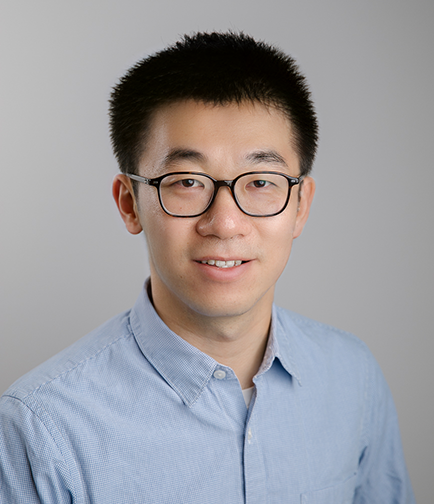
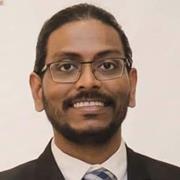
Dr. Dong Gong is a Senior Lecturer and ARC DECRA Fellow (2023-2026) at the School of Computer Science and Engineering (CSE), UNSW. He holds an adjunct position at the Australian Institute for Machine Learning (AIML), University of Adelaide. His research focuses on machine learning challenges in dynamic environments, including continual learning, foundation models, generative models, and applications in interdisciplinary areas like mining and agriculture. Research interests include learning with non-ideal supervision, foundation model adaptation, generative models, and interdisciplinary problems combining CV/ML with domain-specific applications. His work often addresses real-world scenarios such as mineral exploration and soil trait analysis using CV/ML technologies. Outstanding Reviewer: NeurIPS 2018 Outstanding Area Chair: ACM MM 2024 ARC DECRA Fellowship (2023-2026) Advising and grants: Actively supervises PhD/MPhil students in computer vision and ML. Collaborates with industry and government on research projects. Utilizes advanced infrastructure like UNSW's Katana supercomputing cluster and Gadi (NCI). Labs/Teams: Involved in interdisciplinary research groups at UNSW CSE and AIML, focusing on dynamic learning paradigms and real-world applications of AI.
Mahmoud Karimi is a Senior Lecturer at the School of Mechanical and Mechatronic Engineering , University of Technology Sydney (UTS), leading the Vibroacoustics Research Group within the Centre for Audio, Acoustics and Vibration. He holds a PhD in Mechanical Engineering from UNSW with specialization in vibration and acoustics, and has conducted visiting research at University of Cambridge, Technical University of Munich, and INSA Lyon. His research focuses on computational hydroacoustics, vibroacoustics, and uncertainty quantification in noise/vibration problems. Academic Leadership : Editor-in-Chief of Acoustics Australia since 2025 Research Income : Attracted $6M in competitive grants ($2M as Chief Investigator) since 2017 Technical Expertise : Specializes in acoustic black hole structures, flow-induced vibration modeling, and leak detection in buried pipelines Scientific Awards : Recipient of ARC DECRA Fellowship (DE190101412) 2019-2022 Research Trends : His 91+ publications demonstrate expertise in hybrid acoustic modeling techniques, sustainable hempcrete development, and vibration energy harvesting solutions with applications in mining, rail systems, and water infrastructure. International Collaborations: University of Cambridge (UK), Technical University of Munich (Germany), INSA Lyon (France) Teaching Portfolio: Advanced numerical methods, dynamics & control, and computational modeling at UTS
Leong Shu Min is a Lecturer in the School of Information Technology at Monash University Malaysia. She holds a Ph.D. in IT from Monash University Malaysia (2023), focusing on privacy-preserving and emotional understanding of human faces using machine learning. She earned her Master of Engineering Science (2020) and B.Eng. (Hons) in Electronics with Computer specialization (2018) from Multimedia University. Her research emphasizes face analysis, emotion recognition, and security-related image processing. Education Ph.D., IT, Monash University Malaysia (2019–2023) M.Eng.Sc., Multimedia University (2018–2020) B.Eng., Multimedia University (2014–2018) Research Interests Her work centers on facial recognition systems, emotion analysis, and privacy-preserving techniques. She explores Local Binary Pattern algorithms and micro-expression recognition, aiming to enhance security and ethical AI applications. Recent projects include detecting synthetic music and uncovering biases in video-based emotion recognition systems. Projects Chief Investigator in the Æinstein: Adversarial AI amongst Materials Discovery Domains project (2024–2026), focusing on AI-driven material discovery and ethical AI challenges. Advising She has been accepting PhD students since 2020, mentoring research in facial analysis and machine learning applications.
Dr. Sirojan Tharmakulasingam serves as a Lecturer and Research and Development Coordinator at the Signals, Information & Machine Intelligence lab within the Faculty of Engineering at the University of New South Wales (UNSW) Sydney. His work bridges theoretical machine learning with practical applications in edge computing and high-performance systems. His research spans multiple cutting-edge domains including machine learning, artificial intelligence, data science, edge computing, and high-performance computing. Dr. Tharmakulasingam specializes in developing next-generation inference models by integrating machine learning, signal processing, mathematical modeling, and computing across diverse data types including images, video, audio, and quantum molecular data. His work has significant implications for scientific computing, telecommunications, and healthcare applications. Analysis of his publication trends reveals a strong focus on practical AI implementations, with increasing emphasis on edge computing solutions, quantum applications, and energy-efficient models. His recent work demonstrates progression from foundational machine learning techniques toward specialized applications in scientific computing and real-time systems. Dr. Tharmakulasingam holds a Doctor of Philosophy from UNSW Sydney and a Bachelor of Science of Engineering from the University of Moratuwa in Sri Lanka. His academic journey reflects a strong foundation in both theoretical and applied engineering principles. As Research and Development Coordinator for the Signals, Information & Machine Intelligence lab, he oversees critical research infrastructure and collaborations. His work location in Room 447 of the EE&T Building (G17) places him at the heart of UNSW's engineering research ecosystem, with access to the Mark Wainwright Analytical Centre's extensive facilities.
Mahsa Salehi is a Senior Lecturer in the Department of Data Science & AI at Monash University’s Faculty of Information Technology. She holds a PhD in Computer Science from the University of Melbourne and previously served as a postdoctoral researcher at IBM Research Australia. Her research focuses on data mining, machine learning, and time series analysis, with applications in healthcare, cybersecurity, and smart grids. Education: PhD in Computer Science, University of Melbourne (2016) MSc in Software Engineering, Amirkabir University of Technology (2009) BSc in Information Technology & Computer Engineering, Amirkabir University of Technology (2008/2006) Her key research interests include multi-dimensional time series analysis, anomaly detection, brain-inspired machine learning, and non-stationary data learning. She has led or contributed to over 40 research outputs, including high-impact papers on anomaly detection frameworks (e.g., CARLA) and EEG representation learning (EEG2Rep). Her work bridges theoretical advancements with practical applications, such as detecting urinary anomalies in seniors and securing smart grid systems against cyberattacks. Dr. Salehi has secured significant grants, including AU$246K from ARENA (2019–2021) and AU$30K from Emotiv Research (2022–2024). She is an Associate Editor of the ACM Transactions on Knowledge Discovery from Data and has been recognized with awards like the ICDM 2022 Best Paper Runner-Up and IBM’s Manager’s Choice Award (2016). Grants & Projects: Privacy-Preserving Machine Learning (CSIRO Next Gen, 2023–2027) AI for Clean Energy & Sustainability (Monash, 2023–2027) Deep Learning for Brain EEG Analysis (PhD Top-Up, 2022–2025) Her contributions extend to editorial and patent activities, including roles at IBM Research and collaborative projects with industry partners like Emotiv.
Farshid Hajati is a Lecturer in Data Science at the University of New England's School of Science and Technology. He holds a PhD from Western Sydney University and has industry experience as a Senior Data Scientist at Australian government health agencies. His expertise spans machine learning, medical AI, and computer vision. Dr. Hajati's research develops deep learning solutions for medical applications including retinal disease detection, cardiac arrhythmia classification, and fungal infection diagnosis. He has secured significant funding including $433,000 for an intracranial pressure assessment device and $100,000 from Google Research. His publications demonstrate consistent innovation in multimodal medical AI, with recent advances in interpretable graph networks for biomedical data and handheld retinal imaging. Earlier foundational work established methods for 3D face recognition and dynamic texture analysis.
Lawrence Harvey is an Associate Professor in RMIT University's School of Design and founding director of SIAL Sound Studios. His practice-based research explores spatial sound through electroacoustic composition, urban soundscapes, and speaker orchestra performance. He has curated and performed 34 concerts for the RMIT Speaker Orchestra, a 32-channel spatial audio system, while leading research projects funded by the Australian Research Council. Recent collaborations include 'The Planting' with Indigenous thinkers and 'Site and Sound' exhibitions at McClelland Gallery. His publications investigate sound curation methodologies, noise transformation in urban environments, and interdisciplinary approaches integrating sound with architecture and drawing. Current research develops sonic responses to ecological challenges through critical listening practices.
James Bradbury is a Music Lecturer at the Conservatorium of Music, University of Western Australia. He holds a PhD in Music Technology (2021) from the same institution. His research focuses on integrating machine learning into music creation and performance, with expertise in sound art, experimental art, and software development for creative applications. Previously, he served as a Post-Doctoral Research Fellow in Creative Coding at the University of Huddersfield (2021–2022). Education: Doctor of Philosophy in Music Technology, University of Western Australia (2021) Research Interests : Bradbury explores machine learning's role in shaping contemporary music through real-time interactive systems, sound art installations, and experimental music performance. His work emphasizes computational tools for creative processes, including the Fluid Corpus Manipulation (FluCoMa) platform, which enables novel compositional workflows. He investigates how algorithmic approaches can expand artistic expression while maintaining human creativity at the core. Research Trends : Recent works highlight interdisciplinary collaborations between music and computer science, particularly in developing open-source tools like FluCoMa. His performances and publications demonstrate a focus on non-narrative musical forms and real-time algorithmic generation. The 2025 Audible Edge performance exemplifies this through live machine learning-driven sample selection. Awards and Grants : No specific awards or grants mentioned in the provided texts. His contributions are primarily reflected in creative outputs and academic publications. Labs and Teams : Active within the Conservatorium of Music, Bradbury collaborates with institutions like the University of Huddersfield and participates in festivals such as Audible Edge. His work is closely tied to the FluCoMa research collective, emphasizing open-source software development for artistic innovation.
Associate Professor Melissa Day is affiliated with the School of Psychology at The University of Queensland (UQ) under the Faculty of Health, Medicine and Behavioural Sciences, where she serves as Director of Higher Degree Research. She is also an Affiliate Associate Professor at the University of Washington. Her program focuses on optimizing non-pharmacological treatments for chronic pain through randomized controlled trials and mechanisms of cognitive-behavioral and mindfulness-based interventions. Bachelor of Science, The University of Alabama Masters (Coursework), The University of Alabama Doctor of Philosophy, The University of Alabama Research interests span chronic pain management, mindfulness-based cognitive therapy (MBCT), cognitive-behavioral therapy (CBT), neurosciences, and adapting therapeutic approaches for low-socioeconomic groups. Her 15 most recent works emphasize telehealth delivery, athlete pain dynamics, and psychosocial treatment variability. She leads the Centre for Innovation in Pain and Health Research (CIPHeR) and chairs the Australian SHAPE Futures EMCR Network, promoting early-career researchers in SHAPE disciplines.
Lim Jit Yan is a Lecturer at the School of Information Technology, Monash University Malaysia. He holds a PhD in Information Technology (2023) from Multimedia University, specializing in self-supervised metric-based meta-learning for few-shot image classification, and a B.IT (Hons) in Artificial Intelligence (2019) from the same institution. His research focuses on few-shot learning, computer vision, and deep learning, with contributions to medical image analysis (e.g., Covid-19 detection), transfer learning applications, and generative models. He has published extensively since 2021, with notable work on self-supervised feature fusion and prototypical networks for few-shot learning. Research interests include few-shot learning techniques, neural architecture design for image classification, and real-world applications like healthcare diagnostics and autonomous systems. Recent work emphasizes self-supervised learning and transformer-based models to address data scarcity challenges in AI. No formal scientific awards are listed. Advising details are not provided in the text, though his publications suggest collaborative research with colleagues like Lim K.M. and Lee C.P. His research spans theoretical advancements and applied projects, including work on pill image recognition, traffic sign detection, and brain tumor classification.
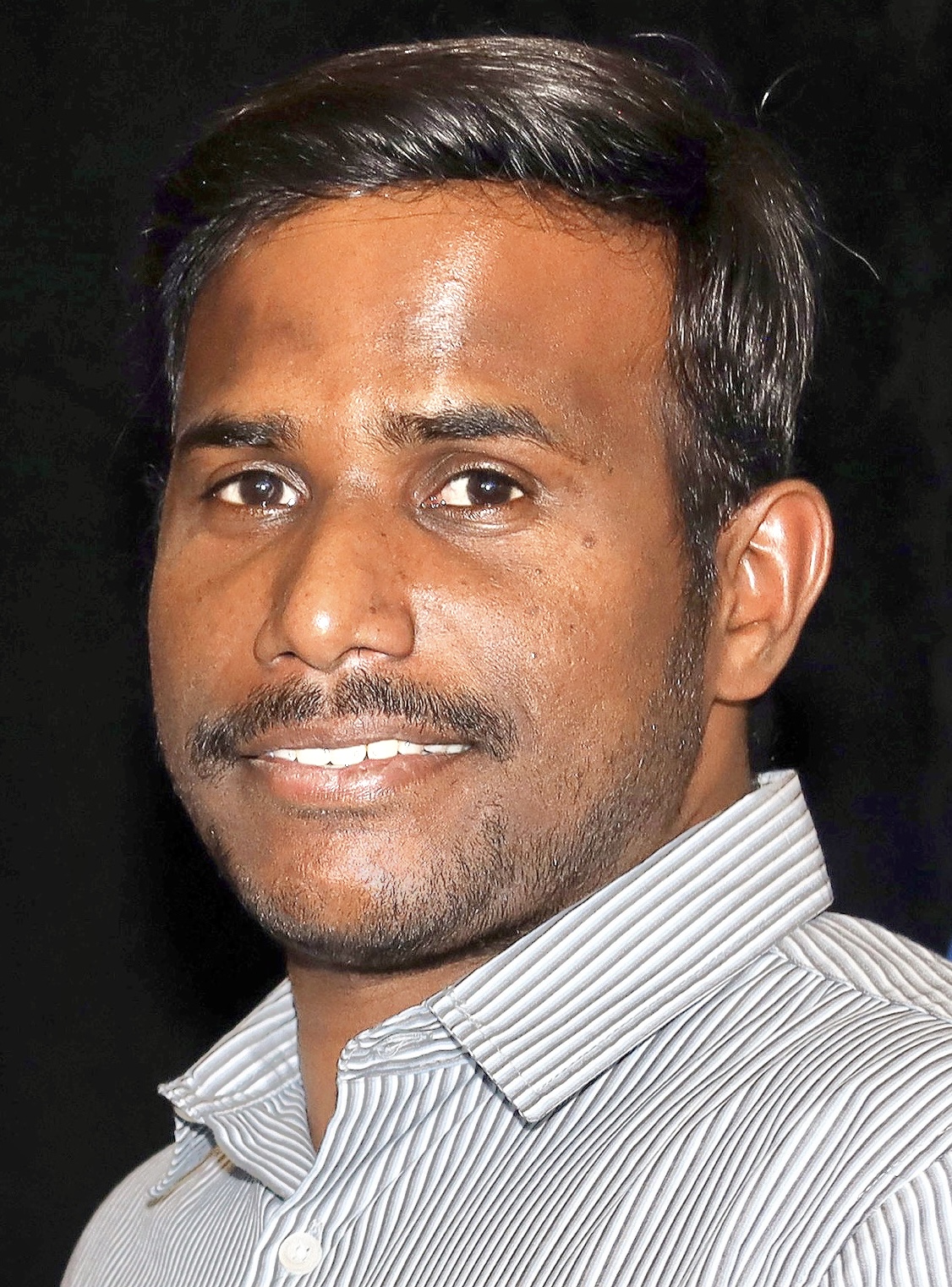
Dr. Avinash Singh is a Senior Lecturer at the School of Computer Science at the University of Technology Sydney (UTS), Australia. He serves as co-chair of the IEEE Neuroethics Framework for the Workplace, sponsored by IEEE Brain, and is a member of the IEEE Standards Committee on Unifying Brain-Computer Interfaces (BCI). He also serves as an expert advisor for UNICEF and The Centre of Neurotechnology and Law, UK. Dr. Singh completed his PhD in Computer Science in 2019 at UTS, collaborating with the Technical University of Berlin, Germany, the University of California San Diego, USA, and the US Army Research Lab. Prior to his doctorate, he earned a Master's in Software Systems from Birla Institute of Technology and Science Pilani, India, and earlier degrees in Computer Science and Mathematics from Indian institutions. Working at the intersection of machine learning, cognitive neuroscience, and mixed-reality, Dr. Singh focuses on designing and developing real-world neuroadaptive BCI systems. His research integrates AI technologies with cognitive neuroscience to explore cognitive functions, discover relationships between brain dynamics, evaluate everyday interactions, and develop robust next-generation neuroadaptive BCIs. His work spans areas including neuroadaptive BCI applications for improving interpersonal communication, sensory augmentation for blind individuals, and dream reconstruction from brain signals. Analysis of Dr. Singh's recent publications reveals a consistent focus on developing novel EEG signal processing techniques, creating neuroadaptive interfaces, and applying BCI technology to real-world problems. His work shows increasing integration of deep learning with neuroscience, particularly in the context of cognitive conflict detection, spatial navigation, and assistive technologies for the visually impaired. The research demonstrates strong interdisciplinary connections across computer science, neuroscience, and human-computer interaction. Google TensorFlow Faculty Award (2021) Dr. Singh actively supervises PhD students and has received multiple research grants, including ARC Linkage Projects and NHMRC Ideas Grants. His funded research spans neuro-AI for personalized image generation, sensory augmentation for blind individuals, and ethical frameworks for BCI technology. He leads the UTSxDream Recording project (formerly DreamMachine) and collaborates with international institutions on BCI standardization efforts. Dr. Singh founded the India Future Society, a think tank focused on transhumanism, and actively advocates for the ethical development of neurotechnology. His work bridges academic research with practical applications in assistive technology, human-robot collaboration, and spatial navigation systems.
Matthew Butler is an Associate Professor in the Department of Human-Centred Computing at Monash University's Faculty of Information Technology. His research focuses on Inclusive Technologies , particularly improving access to visual information for people who are blind or have low vision (BLV) through innovations like 3D printing, conversational agents, and multisensory interfaces. He has over 20 years of academic experience and held leadership roles including Deputy Dean (Education) and Associate Dean (Learning and Teaching). Education: PhD in Computing Education (Monash University, 2010) Graduate Certificate of Higher Education (Monash University, 2006) Bachelor of Engineering (Electronic and Computer Engineering, Monash University, 1996) Research Interests: Matthew’s work emphasizes participatory design with the BLV community, addressing challenges in data exploration, orientation/mobility, arts/culture access, and education . Key projects include accessible data visualization systems, inclusive museum experiences, and tactile navigation tools. His contributions align with UN Sustainable Development Goals related to education and disability inclusion. Grants & Projects: Accessible Data Exploration and Analysis for Blind People (Australian Research Council, 2023–2027) Inclusive Gallery Experiences: Bendigo Art Gallery Project (Helen Macpherson Smith Trust, 2019–2022) Co-leads the Monash Assistive Technology and Society Centre’s Education Pillar Awards: Senior Fellow of the Higher Education Academy Labs/Teams: Active contributor to Monash’s Assistive Technology and Society research initiatives, focusing on multisensory design for disability inclusion.
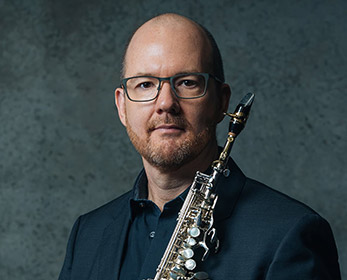
Matthew Styles is a Senior Lecturer in Saxophone Studies at the Western Australian Academy of Performing Arts (WAAPA), Edith Cowan University. He serves as Coordinator of Honours (Music) and is a postgraduate supervisor with extensive experience in musician injury research through collaboration with sports science specialists. As a faculty member, he teaches research preparation courses, creative projects, and woodwind workshops across undergraduate and postgraduate levels. Matthew holds a Doctor of Musical Arts from the University of Western Australia (2008), a Bachelor of Music with Second Class Honours from the same institution, and two Certificate IV qualifications in Training and Assessment (2013 and 2023). His academic journey includes studies at the Royal College of Music, London, and mentorship under renowned saxophonists including Bob Berg, Martin Robertson, Dr. Kyle Horch, Dr. Otis Murphy, and Dr. Eugene Rousseau. His research interests center on cross-genre pedagogy and performance, specifically bridging classical and jazz traditions for classical musicians, and developing injury mitigation strategies for saxophonists through multi-disciplinary approaches with sports science. With over 30 years of professional experience as a saxophonist across jazz, classical, funk, and avant-garde genres, Styles brings practical insight to his academic work. His research outputs demonstrate consistent productivity with publications spanning from 2009 to 2025, showing particular focus on saxophone health, performance techniques, and cross-genre exploration. The publications reveal a trajectory from performance-focused outputs toward increasingly research-intensive work examining health, pedagogy, and interdisciplinary approaches. 2004 Churchill Fellowship HenriSelmerParis Artist D'Addario Artist JLV Sound Ambassador Dr. Styles actively supervises doctoral and master's students, currently serving as Principal Supervisor for three PhD candidates and Associate Supervisor for one PhD candidate. His completed supervision portfolio includes four PhD students as Principal Supervisor and five as Associate Supervisor across diverse musical topics. He has secured research funding including an ECU Early Career Researcher Grant ($23,560) for his project 'Saxology: recasting third stream music for the saxophone' (2014-2015). As director of 'The Phone Co.', he leads performance initiatives that integrate his research interests with practical application. His professional activities extend to membership in the Australian Society for Performing Arts Healthcare (since 2012), Performing Arts Medical Association (since 2015), and Western Australian Music (since 2022), where he serves as a conference reviewer, demonstrating his commitment to advancing knowledge in performing arts healthcare and music education.
Richard Savery is an Honorary Research Fellow at Macquarie University's Faculty of Arts, affiliated with the Performance and Expertise Research Centre and the Centre for Applied Artificial Intelligence. His work bridges artificial intelligence, robotics, and music, focusing on creative interactions and trust-building through robotic musicianship. He holds a PhD in Music Technology from Georgia Institute of Technology (2021) and a Master's from UC Irvine. Key roles include developing the NSF-funded Keirzo rapping/drumming robot and publishing the edited book Sound and Robotics (2023). Research interests include emotional musical prosody, human-robot collaboration, and robotic performance. Notable projects include Shimon the singing robot and IVF sonification. Awards include a GANG Award (2015) for game audio. Active in interdisciplinary collaborations, he has composed music for films, ads, and video games, including Gunman Taco Truck and Gathering Sky . His work spans academic grants ($800k NSF-NRI grant), industry partnerships, and public installations like the Un[contained] Arts Festival's beehive exhibit. Over 50 publications highlight his contributions to robotics, music tech, and AI ethics.
Phil Edwards is a Lecturer in the School of Art at RMIT University, specializing in interdisciplinary art practices that explore hybridity, cultural critique, and contemporary artistic expression. His research spans children’s art, outsider art, and the intersection of fine art with everyday aesthetics. He holds a Master’s degree examining innate aesthetic tendencies in everyday object assemblages and a PhD analyzing the role of audio CDs in fine art culture. Research Interests: Edwards focuses on six core themes: children’s art/outsider art’s relationship to formal painting, fake poetry integration in visual art, alchemy as metaphor, music brut, temporality in hybrid art forms, and abstract landscape painting. His creative works often blend digital media (e.g., Instagram-based projects) with traditional techniques. Teaching & Supervision: Edwards supervises Masters and PhD students in research topics like border identity visualizations (Maria Penne’s DFA project). He actively mentors projects such as An Exploration of Zen-inspired Poetic Nature Painting and Museum of Emotion . Exhibitions & Projects: His works include installations like Museum of Platitudes AND Aphorisms and digital projects such as Continual Instagram Painting . He frequently exhibits in venues like the c3 Art Gallery and George Paton Gallery, emphasizing public engagement and conceptual depth.