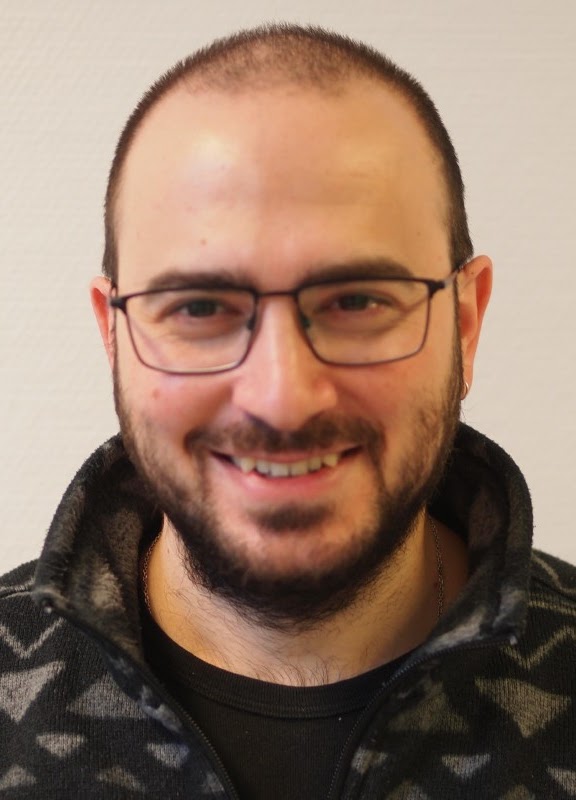
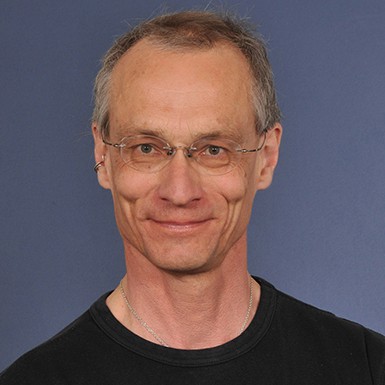
Desmond Elliott is an Associate Professor in the Natural Language Processing section at the Department of Computer Science, University of Copenhagen (UCPH). His research focuses on multimodal and multilingual models with specific emphasis on vision-language integration and tokenization-free NLP approaches. He teaches Bachelor and Master's level courses including Advanced Topics in Natural Language Processing (since 2019), Grundlæggende Data Science (since 2023), and previously Data Science (2021-2023). His research interests center on building and understanding multimodal and multilingual models , particularly exploring vision and language interactions through billion-parameter systems. Current work investigates cultural representation disparities in vision-language models, parameter-efficient captioning, and multimodal distributional semantics across diverse domains including food culture and medical imaging. His methodology emphasizes real-world applicability in non-English contexts and ethical considerations in multimodal systems. Elliott's recent publications (2025) demonstrate leadership in multimodal NLP, with significant contributions to vision-language pretraining, multilingual evaluation frameworks, and clinical NLP applications. His work spans theoretical advancements in model architectures and practical implementations addressing challenges in low-resource languages and domain adaptation. Best Long Paper Award at EMNLP 2021 Best Poster Award at COLING 2019 As an active educator, Elliott contributes to courses on Fair and Transparent Machine Learning and previously taught Information Retrieval. His research collaborations span international institutions with particular focus on European and non-English language contexts, reflecting UCPH's recognition as Europe's #1 institution for HCI research over the past decade.
Jan Damsgaard is a Professor at the Department of Digitalization, Copenhagen Business School, where he conducts research at the intersection of digital technology and business transformation. His work spans multiple domains including artificial intelligence, blockchain, digital platforms, and payment systems, with significant contributions to understanding how organizations navigate digital disruption. Professor Damsgaard's research interests focus on digital transformation , artificial intelligence implementation , blockchain applications , and digital sovereignty . He examines how organizations can strategically leverage emerging technologies while addressing governance challenges and societal implications. His work particularly emphasizes practical applications in the public sector, financial systems, and small-to-medium enterprises. His recent publications reveal a strong focus on AI adoption in Danish businesses , digital sovereignty challenges , and blockchain applications for sustainable commerce . The research demonstrates increasing attention to regulatory frameworks, national security implications of technology dependence, and practical implementation strategies for emerging digital tools across various sectors. With over 132 publications including books, journal articles, and conference contributions, Damsgaard has established himself as a leading voice in digitalization research. His work extends beyond academia through extensive media engagement, with over 1,122 press appearances where he discusses current technology trends and their societal implications. Professor Damsgaard actively participates in public discourse through media contributions, expert panels, and advisory roles. His research connects academic insights with practical business applications and policy recommendations, particularly regarding digital governance, payment systems, and AI implementation strategies across sectors.
Teresa Hirzle is a Tenure Track Assistant Professor at the Department of Computer Science , University of Copenhagen , specializing in Human-Centred Computing . Her research focuses on Human-Computer Interaction (HCI) , Virtual Reality (VR) , Extended Reality (XR) , and Gaze-Based Interaction . Research Interests: Designing interaction techniques for immersive environments Eye movement analysis for educational applications Addressing digital eye strain in interactive systems Evaluating user experience in VR/AR Recent Research Trends: Her recent publications examine AI representation in VR co-creation, VR sickness in locomotion, eye strain in gaze-driven systems, and hybrid applications of comics/AR. She also explores pedagogical implications of eye tracking in remote learning. Contact: Email: tehi@di.ku.dk Office: Sigurdsgade 41, 2200 København N.
Yanbo Wang is an Associate Professor and Vice Head of the Wind Power Research Programme at AAU Energy, part of Aalborg University's Faculty of Engineering and Science. He leads research in Electric Power Systems and Microgrids, focusing on intelligent energy systems and flexible markets. His work emphasizes stability analysis, control strategies for hybrid AC/DC systems, and renewable energy integration. He supervises multiple PhD projects on topics like multi-port energy routers and wind power converter optimization. Research interests include power electronics, microgrid stability, and energy storage systems. Key projects include the EU-funded 'S3SF: Smart Energy Solutions for Sustainable Future' and machine learning-based control strategies for multi-energy systems. He has authored over 176 publications, with recent work on DC microgrid reliability, converter design, and offshore wind energy systems. His team collaborates internationally to advance grid-friendly technologies and smart energy solutions. Notable contributions include advanced control schemes for retired batteries in DC microgrids and stability assessment methodologies for offshore wind inverters. He advises on six PhD projects and maintains a lab focused on renewable energy systems and power electronics innovation.
Ole Winther is a Professor at the Department of Biology, University of Copenhagen, specializing in Computational and RNA Biology. He also holds a joint appointment as Professor at DTU Compute, Technical University of Denmark. His research bridges machine learning, bioinformatics, and natural language processing with applications in biological sequence analysis, transcriptomics, and health informatics. Education: 1998: PhD in Physics, University of Copenhagen 1994: Master of Science in Physics, University of Copenhagen Winther's research focuses on developing advanced machine learning methodologies for biological applications. He has pioneered protein language models for sequence analysis (DeepLoc, SignalP, DeepTMHMM), interpretable deep learning for RNA subcellular localization, and benchmarking frameworks for DNA language models. His work spans latent variable models, variational inference, diffusion models, and novel architectures for deep generative modeling, with increasing emphasis on practical healthcare applications including rare disease diagnosis through findzebra.com and medical question answering with large language models. Scientific Recognition: ELLIS Fellow (2021) Head of ELLIS Copenhagen Unit H-index of 61 (Google Scholar, May 2023) 19,700+ citations (Google Scholar, May 2023) Winther has supervised 25+ PhD students to completion with 7 currently in progress, along with over 100 master's projects. He frequently serves as PhD opponent and committee chairman across European institutions. His research is supported by substantial funding including multiple Novo Nordisk Foundation grants totaling over 60 million DKK for the Center for Basic Machine Learning Research in Life Science and CAZAI projects, plus significant funding from the Danish Independent Research Fund. He leads an active research group developing cutting-edge machine learning approaches for bioinformatics and NLP challenges. Winther co-founded two spin-out companies: findzebra.com (2014, 2018), a search engine for rare diseases, and raffle.ai, an NLP startup for enterprise search. He initiated DTU's popular BSc in AI and Data program and teaches the highly enrolled MSc course in Deep Learning (450+ students) and PhD course in Bayesian Data Analysis.
Filippo Menczer is a Professor of Informatics and Computer Science and Director of the Center for Complex Networks and Systems Research at Indiana University School of Informatics and Computing. He maintains courtesy appointments in Cognitive Science and Physics, and is affiliated with the Center for Data and Search Informatics and the Biocomplexity Institute. Additionally, he holds a Fellowship at the ISI Foundation in Torino, Italy. His research spans computational analysis of digital ecosystems with emphasis on: Web Science: structural and behavioral analysis of internet-scale systems Social Media Dynamics: information diffusion, meme competition, and attention economy modeling Complex Networks: traffic pattern analysis, popularity dynamics, and social link prediction Publications from 2009-2012 reveal consistent focus on social network analytics and information diffusion mechanisms. Key trends include modeling attention-limited meme competition, bursty popularity patterns in social media, and social link prediction through metadata analysis. His work integrates network science, computational social science, and data mining to decode online behavior. His scientific recognition includes: Fellow of ISI Foundation (2013) He leads the NaN research group within the Center for Complex Networks and Systems Research, focusing on interdisciplinary approaches to complex information networks and social media analytics.
Sara Shafiee is a Senior Researcher at the Department of Civil and Mechanical Engineering , Technical University of Denmark (DTU) . She specializes in product configuration systems, manufacturing engineering, and AI-driven innovation. Her work bridges technical systems with organizational agility, emphasizing sustainability and customer-centric design. External Roles: Founder & CEO of DivERS (Jan 2021–) External Lecturer at Copenhagen Business School (2022–2024) Senior Business Consultant at Haldor Topsoe AS (2017–2019) Research Focus: Her work addresses challenges in product configuration systems, generative AI applications, and sustainable construction. Key themes include: Optimal product design through recommendation systems Agile methodologies in knowledge-intensive development Environmental impact monitoring via configurators Publications Trends (2023–2025): Recent work explores AI-driven manufacturing optimization, consumer-centric innovation strategies, and the integration of environmental monitoring into design systems. High-impact areas include generative AI applications (13K+ downloads) and modular construction configurators. Awards: Agnes & Betzy Award (2025) Nordic Women in Tech Leadership Award (2022) Best Digital Startup (Venture Cup Denmark, 2021) Innovation Fund Denmark Role Model (2018) Advising & Grants: Supervised PhD projects on recommendation systems and configurator design. Lead PI of the RECODE project (DFF Grant DKK 10M+, 2024–2027) focusing on deep learning for engineer-to-order systems. Labs & Teams: Core member of DTU’s Design and Manufacturing Systems group, collaborating with industry partners like Haldor Topsoe and DivERS to develop scalable configurator solutions.
Georgios Arvanitidis is an Associate Professor at the Technical University of Denmark (DTU) in the Department of Applied Mathematics and Computer Science, specifically within the Section for Cognitive Systems (CogSys). He has established himself as a leading researcher in geometric machine learning, focusing on the application of differential geometry principles to enhance machine learning models. His work bridges theoretical mathematics with practical applications in artificial intelligence, with particular emphasis on understanding the geometric structure of data manifolds and latent spaces. Dr. Arvanitidis completed his educational journey with a Bachelor's degree from the Department of Informatics at the Aristotle University of Thessaloniki, followed by a Master's degree in Computer Science from Saarland University supported by the Max Planck Institute for Informatics. He earned his PhD at DTU's Cognitive Systems section under the supervision of Søren Hauberg, with additional research experience at Philipp Hennig's Probabilistic Numerics group. Prior to his current position as associate professor, he was a PostDoc at the Max Planck Institute for Intelligent Systems working with Bernhard Schölkopf. Dr. Arvanitidis's research primarily focuses on differential geometry in machine learning , where he explores how geometric structures can enhance representation learning and statistical modeling. His work in generative models investigates how learning the geometry of data manifolds can improve deep learning architectures. In the domain of deep learning theory , he examines why deep learning models generalize effectively on unseen data, with particular attention to the curvature properties of loss landscapes. His research in approximate Bayesian inference applies geometric principles to improve uncertainty quantification in neural networks. Through his innovative approaches, Dr. Arvanitidis has established himself as a leading researcher in geometric machine learning, contributing to both theoretical foundations and practical applications across various domains including robotics and life sciences. The publication trends of Dr. Arvanitidis reveal a consistent and evolving focus on geometric approaches to machine learning problems. His recent work (2023-2025) demonstrates increasing sophistication in applying Riemannian geometry to deep learning architectures, with particular emphasis on latent space geometry, optimization on manifolds, and geometric interpretations of neural network behavior. A notable pattern is the progression from foundational work on geometric representations to more applied research in areas like robotics and causal inference. His publications span top-tier conferences including NeurIPS, ICML, ICLR, and AISTATS, reflecting the high impact of his research. The interdisciplinary nature of his work is evident in collaborations across mathematics, computer science, and robotics domains, with recent papers addressing challenges in multimodal sampling, safety guarantees for dynamical systems, and counterfactual explanations. Dr. Arvanitidis has received several notable scientific awards and recognitions: Sapere Aude starting grant from the Independent Research Fund Denmark (DFF) GADL funding i-Rase, Pathfinder, and EIC (European Innovation Council) funding Best reviewer award for NeurIPS 2019 Best reviewer award for NeurIPS 2018 Best student paper award at Robotics: Science and Systems (R:SS) 2021 Dr. Arvanitidis actively mentors PhD students and researchers, currently supervising Alejandro Valverde, Johanna Gegenfurtner, and Albert Kjøller Jacobsen. He has previously co-supervised Alison Pouplin's PhD and worked with research assistant Georgios Pantis. His group receives substantial funding through multiple prestigious grants including the Sapere Aude starting grant from the Independent Research Fund Denmark, as well as European Innovation Council funding. He has been instrumental in creating opportunities for students interested in geometric machine learning, offering BSc and MSc thesis projects focused on generative models, deep learning theory, and optimization techniques. Dr. Arvanitidis also contributes significantly to the academic community as a reviewer for top conferences including ICLR and TMLR, and as an area chair for NeurIPS, ICML, AISTATS, and UAI. He co-organized the Machine Learning Summer School 2020 in Tübingen, further demonstrating his commitment to education and community building. Dr. Arvanitidis leads a vibrant research group focused on geometric machine learning within the Cognitive Systems section at DTU. His team includes multiple PhD students working on cutting-edge research at the intersection of differential geometry and artificial intelligence. The group has developed notable software tools, including the "geometric_ml" GitHub repository with over 70 stars, which contains implementations for applying Riemannian geometry in machine learning. His research has practical applications in robotics, where geometric approaches enable more robust motion planning, as evidenced by his work on "Reactive Motion Generation on Learned Riemannian Manifolds" which received a best student paper award. Additionally, his methodologies have found applications in life sciences, as mentioned in his 2022 AISTATS paper. The collaborative nature of his work is evident through extensive partnerships with researchers at institutions including the Max Planck Institute for Intelligent Systems, University of Cambridge, and various European universities. His recent news items indicate active engagement with the academic community through talks, conference presentations, and ongoing supervision of new PhD students joining his group.
Sadegh Talebi is a Tenure Track Assistant Professor in the Machine Learning Section at the Department of Computer Science, University of Copenhagen . His research focuses on theoretical aspects of reinforcement learning, Markov decision processes, online learning, stochastic multi-armed bandit problems, and resource allocation in networks. Education BSc in Electrical Engineering (minor: Electronics) from Iran University of Science and Technology (IUST) (2004) MSc in Electrical Engineering (minor: Communication Systems) from Sharif University of Technology (2006) PhD in Electrical Engineering from the Department of Automatic Control at KTH Royal Institute of Technology (supervised by Alexandre Proutiere and Mikael Johansson) Research Specializes in theoretical foundations of reinforcement learning and online learning Key contributions in stochastic optimization, MDPs, and bandit algorithms Collaborates on applications in resource allocation and quantum computing Publications include high-impact work on offline RL, differentially private exploration, and scalable MDP solutions in journals like Neural Processing Letters and conferences such as NeurIPS and UAI.
Ilias Chalkidis is an Assistant Professor specializing in Natural Language Processing at the Department of Computer Science, University of Copenhagen. He is actively affiliated with the Natural Language Processing research section, contributing to both theoretical and applied advancements in the field. His research spans multiple high-impact domains with particular emphasis on: Legal natural language processing and multilingual legal reasoning Large language model applications in political and social contexts Fairness-explainability trade-offs in AI systems Innovative representation learning techniques for textual data Analysis of his recent publications reveals a strong focus on bridging legal informatics with cutting-edge NLP methodologies. His work on multilingual legal corpora (including the 689GB MultiLegalPile dataset) and legal decision influence prediction demonstrates practical applications for judicial systems. Simultaneously, his investigations into LLMs as voting assistants and European political spectrum analysis showcase innovative intersections between computational social science and language technology. His technical contributions to contrastive learning and hyperbolic embeddings provide foundational advances for document representation. Chalkidis actively participates in the research community through workshop organization (Natural Legal Language Processing Workshop 2023-2024) and conference presentations. His research has been published in top-tier venues including ACL, EMNLP, and ECAI, with significant citations reflecting community impact. While specific advising relationships aren't documented in the provided materials, his collaborative work patterns suggest active mentorship within the NLP research ecosystem.
Henrik Jeldtoft Jensen is a Professor of Mathematical Physics and leads the Centre for Complexity Science at Imperial College London. His work spans multiple disciplines, focusing on the statistical mechanics of complex systems, with applications in physics, biology, neuroscience, and finance. Professor, Mathematical Physics Leader, Centre for Complexity Science Institution: Imperial College London His research interests lie at the intersection of theoretical physics and complex systems. He is best known for developing the Tangled Nature Model of evolving ecosystems, which has been extended into financial modeling through the Tangled Finance approach. His work in brain dynamics involves analyzing fMRI and EEG data using tools from statistical physics. He has made significant contributions to self-organized criticality and stochastic dynamics of complex systems, particularly in condensed matter and evolutionary contexts. The recent publications reflect a strong trend toward interdisciplinary complexity science, integrating concepts from physics, biology, economics, and neuroscience. Keywords across these works include complexity, statistical mechanics, dynamical systems, and network theory, with subfields ranging from neural avalanches to financial instability and biodiversity modeling. Henrik Jensen is the author of two influential books: Self-Organized Criticality and Stochastic Dynamics of Complex Systems (with Paolo Sibani), which have been widely cited across disciplines. He has supervised numerous PhD and postdoctoral researchers through the Centre for Complexity Science, though specific names are not listed. His research has been supported by grants from UK research councils and international collaborations, particularly in interdisciplinary complexity projects. He is affiliated with the Centre for Complexity Science, a multidisciplinary research hub at Imperial College London that brings together physicists, mathematicians, biologists, and social scientists to study complex adaptive systems.
Freja Stær Hincheli serves as a Lecturer at the Department of Computer Science , University of Copenhagen. Her work intersects multiple domains within machine learning, with a particular emphasis on quantum-inspired algorithms, medical imaging, and sustainable AI development. Keywords : Machine Learning, Quantum Computing, Medical Imaging, Natural Language Processing, Computational Biology Key Collaborations : SCIENCE AI Centre Her research spans quantum-enhanced neural networks, explainable AI for medical diagnostics, and energy-aware model design. Recent publications highlight applications in cross-cultural recipe adaptation, emotion-aware dialogue systems, and climate-conscious AI strategies. The Machine Learning Section at DIKU focuses on theoretical foundations and applications including medical image analysis , biological data modeling , and quantum computing , aligning with her contributions.
Helle Damgaard Zacho is a Clinical Professor at Aalborg University's Faculty of Health Sciences and Senior Physician at Aalborg University Hospital's Department of Clinical Physiology and Nuclear Medicine . Her work bridges clinical practice with advanced nuclear medicine research. Primary Affiliation: Aalborg University Hospital Academic Role: Clinical research and education at Faculty of Health Sciences Research Focus: PET/CT imaging for cancer diagnostics Zacho leads or co-leads multiple high-impact projects including FAPI/PSMA PET/CT studies for prostate, ovarian, and gastric cancers . Her fingerprint highlights expertise in: Prostate Cancer (100%) Positron Emission Tomography-Computed Tomography (84%) Bone Metastasis (50%) Gallium 68 applications (65%) Deep learning in radiology Cancer staging methodologies Her recent publications focus on optimizing FAPI and PSMA PET/CT for metastatic cancer detection, with active clinical trials in ovarian and prostate cancer diagnostics. While no formal awards are listed, her 147+ publications and 8 ongoing projects demonstrate substantial research output. Media coverage highlights her team's potential 'super-weapon' for cancer diagnostics (2023-2024), including national press attention for Denmark's best clinical trial 2025. She serves as a peer reviewer for journals like World Journal of Gastroenterology and participates in major urological cancer conferences.
Shuai Zhao is an Assistant Professor at the AAU Energy Department, Faculty of Engineering and Science, Aalborg University. His research focuses on applying machine learning and artificial intelligence techniques to enhance reliability and condition monitoring in power electronic systems, with specific interests in lifetime estimation, fault diagnosis, and health management of critical components like capacitors and semiconductor devices. Institution: Aalborg University School: Faculty of Engineering and Science Department: AAU Energy Email: szh@energy.aau.dk His research spans multiple domains including: Physics-informed machine learning for power converter systems Remaining useful life prediction with hybrid Bayesian deep learning Thermal transient analysis and stress emulation methods IoT-enabled monitoring schemes for semiconductor devices Neural network applications in lithium-ion battery prognostics Recent publications show a strong trend toward integrating domain-specific physics with machine learning frameworks to address real-world challenges in: Power electronics reliability under operational stress Anomaly detection in multivariate time-series data Robust fault diagnosis for railway traction systems Temperature estimation in electric vehicle motors Imbalanced data handling in diagnostic systems Capacitance degradation modeling under environmental factors Current projects demonstrate collaboration with leading institutions on: AI-assisted long-term maintenance strategies Physics-informed neural network architectures Smart agricultural monitoring systems via IoT platforms Advanced particle filter methods for life prediction
Ingemar Johansson Cox serves as a Professor within the Machine Learning section at the Department of Computer Science, University of Copenhagen. His research bridges theoretical machine learning foundations with practical applications across medical data analysis, information retrieval, remote sensing, and sustainability initiatives. His research portfolio emphasizes machine learning applications in high-impact domains, particularly medical data analysis (e.g., early detection of gynecological malignancy using online search activity) and sustainability (e.g., reducing AI's carbon footprint). The Machine Learning section actively contributes to the university's SCIENCE AI Centre, focusing on both algorithmic innovation and real-world problem-solving in biological modeling and environmental monitoring. Recent publication trends reveal expanding work in quantum computing applications for biomolecular modeling, sustainable AI frameworks, and cross-cultural NLP systems. His 2024-2025 output demonstrates strong interdisciplinary collaboration, especially in medical informatics and climate-related AI research. Professor Cox operates within the Department of Computer Science's robust research ecosystem, which includes dedicated compute clusters and specialized initiatives like TreeSense for global tree resource monitoring through remote sensing and deep learning. The department's infrastructure supports large-scale machine learning projects requiring significant computational resources.