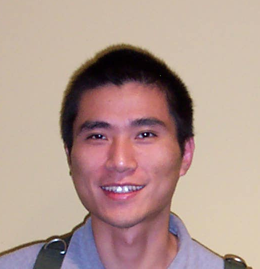
Frank L. Brown is a Professor of Chemistry & Biochemistry at the University of California, Santa Barbara, with a joint appointment in Physics and the Biomolecular Sciences & Engineering (BMSE) program. His research focuses on theoretical and computational studies at the interface of physical chemistry and biophysics, particularly biomembrane dynamics and spectroscopy. Dr. Brown received his B.S. in Chemistry and B.A. in Applied Mathematics from UC Berkeley, followed by a Ph.D. in Physical Chemistry from MIT. He has held postdoctoral appointments at UC San Diego and the University of Chicago before joining UCSB in 2001. He is the recipient of prestigious awards including the Alfred P. Sloan Research Fellowship and the Presidential Early Career Award in Science and Engineering. His laboratory employs tools from statistical mechanics, hydrodynamics, and quantum mechanics to study biomembrane structure, dynamics, and interactions with embedded proteins. Key research areas include lipid bilayer fluctuations, membrane protein diffusion, and interpretation of spectroscopic techniques like single-molecule fluorescence and neutron spin echo. Dr. Brown has mentored numerous graduate students and postdoctoral researchers, with notable alumni including Brian Camley, Max Watson, and Golan Bel. His research is supported by grants from agencies such as the National Science Foundation and the Department of Energy. He directs the Brown Research Group, which collaborates with institutions like the CNSI Center for Scientific Computing. His work bridges computational modeling and experimental biophysics, advancing understanding of membrane systems in health and disease.
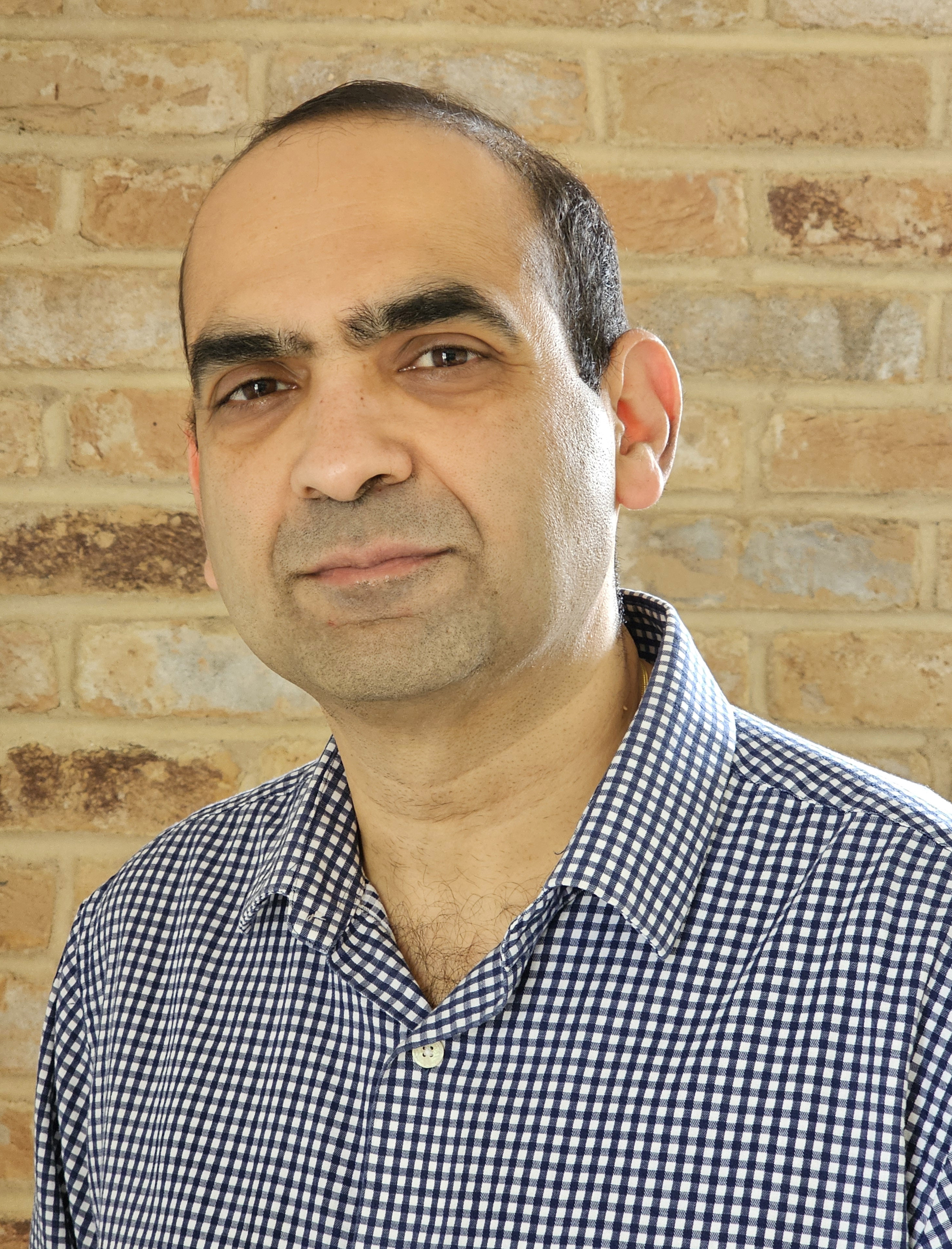
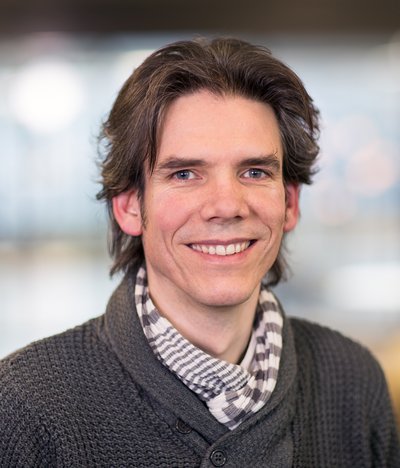
R. Edwin García is a Professor at the School of Materials Engineering at Purdue University, where he has been faculty since 2005. He holds appointments in the Materials Engineering department within Purdue's College of Engineering, specifically in the School of Materials Engineering located in the Neil Armstrong Hall of Engineering at Purdue's West Lafayette campus. His educational background includes: B.S. in Physics from the National University of Mexico (1996) M.S. in Materials Science and Engineering from Massachusetts Institute of Technology (2000) Ph.D. in Materials Science and Engineering with a minor in Applied Mathematics from Massachusetts Institute of Technology (2003) Professor García's research focuses on the design of materials and devices through the development of a fundamental understanding of the solid state physics of individual phases, their short and long range interactions, and associated microstructural properties and time evolution. His current research emphasizes establishing relationships between material properties and resultant performance and degradation in electrochemical systems. He integrates computational approaches ranging from kinetic Monte Carlo, phase field and level set methods, to finite elements, finite volumes, and symbolic computing. His work particularly addresses microstructure design, crystallographic texture, and grain boundary science and engineering to control the topology of underlying phases and establish practical relations between processing, microstructure, and material properties. His recent publications demonstrate a strong focus on lithium-ion battery technology, ferroelectric materials, and computational modeling of material behaviors. The research trends show increasing integration of machine learning with traditional computational methods, exploration of novel sintering techniques like flash sintering, and deeper investigation into the fundamental mechanisms of material degradation in energy storage systems. His work spans multiple length scales from atomistic to continuum modeling, reflecting a comprehensive approach to materials design and analysis. Professor García teaches several courses including MSE 230 (Structure and Properties of Materials), MSE 350 (Thermodynamics of Materials), MSE 597G (Modeling and Simulation of Materials), MSE 597I (Introduction to Computational Materials), and MSE 597N (Physical Properties of Crystals). He mentors graduate students in areas related to computational materials science, battery technology, and microstructural evolution. His research group, the Laboratory of Computational Microstructures, focuses on developing home-grown analytical theories and algorithms to resolve relevant time and length scales in materials systems. The group's work has significant implications for portable power sources, including rechargeable batteries and fuel cells, as well as for ferroelectric ceramic applications.
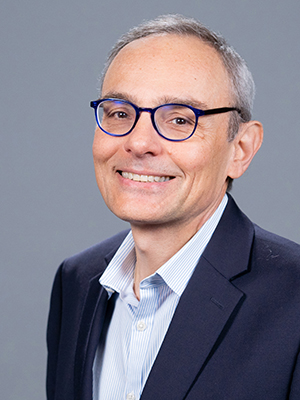
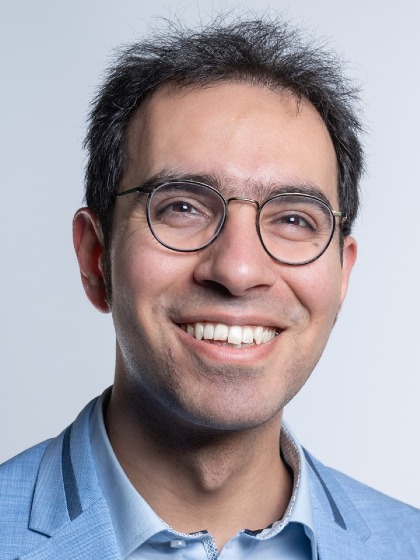
Frank L. H. Brown is a Professor at the University of California, Santa Barbara with joint appointments in the Department of Physics and Department of Chemistry and Biochemistry. His research focuses on theoretical and computational approaches to understanding biomembrane dynamics and related biophysical phenomena, situated within the College of Letters and Science. Dr. Brown's research interests span the interface between physical chemistry and biophysics. He employs a variety of theoretical tools including statistical mechanics , hydrodynamics , elasticity theory , and quantum mechanics to study complex biological systems. His work particularly emphasizes the dynamics and structure of biomembranes and the interpretation of various spectroscopy experiments including single molecule fluorescence, neutron spin echo, and flicker spectroscopy. Analysis of his publication record reveals a consistent focus on computational modeling of lipid bilayers, membrane proteins, and related phenomena, with particular emphasis on developing novel theoretical frameworks for understanding membrane behavior across multiple scales. Dr. Brown leads an active research group that includes current members Ehsan Noruzifar (Postdoctoral Researcher) and Sean Cray (Graduate Student). His former group members include numerous successful scientists such as Grace Brannigan, Brian Camley, Lawrence Lin, and Max Watson who completed their graduate studies under his supervision, along with several postdoctoral researchers. His research has been supported by funding that enables theoretical and computational investigations of biomembrane systems. The Brown Research Group operates at the intersection of physics, chemistry, and biology, with facilities connected to the Biomolecular Sciences & Engineering Program and the California NanoSystems Institute (CNSI) at UCSB. Their work combines advanced computational techniques with theoretical physics to address fundamental questions about soft and living matter systems, particularly at biological interfaces.
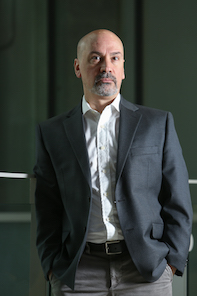
Xiaoning Qian is a Professor in the Department of Electrical and Computer Engineering at Texas A&M University, where he also serves on the Faculty Advisory Committee for the Texas A&M Institute of Data Science (TAMIDS) and the Executive Committee for the Texas A&M TRIPODS Research Institute for Foundations of Interdisciplinary Data Science (FIDS). He holds a joint appointment in the Applied Math group within the Computational Science Initiative at Brookhaven National Laboratory (BNL). Previously, he was an Associate Professor (2018-2022) and Assistant Professor (2013-2018) at Texas A&M, and an Assistant Professor in the Department of Computer Science and Engineering at the University of South Florida (2009-2013). Dr. Qian received his B.S.E. and M.S.E. degrees from Shanghai Jiaotong University, China, and his M.Ph. and Ph.D. degrees in Electrical Engineering from Yale University. Dr. Qian's research focuses on developing mathematical models and computational algorithms in signal processing, machine learning, and Bayesian methods, particularly in learning, uncertainty quantification, and experimental design. His work spans multiple disciplines, with applications in life sciences and materials science. His research group, the Biomedical Imaging, Sensing, and Genomic Signal Processing Group, actively applies probabilistic models and optimization algorithms to solve complex problems in interdisciplinary domains. His research has evolved from foundational work in bioinformatics and biomedical image processing to more recent applications in materials science and broader AI for science initiatives. Dr. Qian has received numerous scientific awards and recognitions including: National Science Foundation (NSF) CAREER Award Segers Family Dean's Excellence Professorship II in the College of Engineering TEES (Texas A&M Engineering Experiment Station) Senior Faculty Fellow Montague-Center for Teaching Excellence Scholar J. T. Oden Faculty Fellow at the University of Texas, Austin Finalist of the 2023 INFORMS QSR Best Paper Faculty Impact Fellow from the Department of Electrical & Computer Engineering As an advisor , Dr. Qian has mentored numerous graduate students through their PhD and MS programs, with many of his alumni securing positions at prestigious institutions and companies including NIH/NCBI, Microsoft, Baidu Research Lab, and Qualcomm. His research has been supported by multiple grants, including an NSF CAREER award and collaborative research funding from the Information Integration and Informatics program. He is actively recruiting postdoc and graduate student research assistants for projects in machine learning and optimization methods with applications in bioinformatics and materials science. Dr. Qian is involved with several research initiatives including the Objective-Based Uncertainty Quantification (ObjectiveUQ) project, which provides a mathematical framework for integrating prior knowledge and data while enabling effective operational and experimental design under uncertainty. He also co-organizes the Bio-Seminar series for the Biomedical Imaging, Sensing & Genomic Signal Processing group at Texas A&M.
Vikram Deshpande is a Professor in the Department of Engineering at the University of Cambridge, UK, where he has been employed since 2010. He also maintains significant international connections, having served as a Visiting Professor at the Technical University of Eindhoven (2009-2017) and previously holding positions at the University of California, Santa Barbara and Brown University. His research spans multiple disciplines within solid mechanics and materials science, focusing on fundamental mechanisms that govern material behavior across different scales. His research interests encompass Mechanobiology , where he explores cellular organization mechanisms; Solid mechanics with applications to impact and failure; Data-driven mechanics approaches; Microarchitectured solids including mechanical metamaterials; Fluid-structure interaction in impact scenarios; Chemo-mechanics of battery materials; and Dislocation mechanics for understanding material deformation. His work uniquely bridges fundamental physics with practical engineering applications, particularly in developing materials with tailored mechanical properties. The analysis of his recent publications reveals a strong focus on mechanical metamaterials, cellular mechanics, and electro-chemo-mechanical phenomena in energy storage systems. His research demonstrates a consistent pattern of addressing fundamental scientific questions while maintaining strong connections to practical engineering applications, particularly in materials design, protective systems, and energy technologies. His publications frequently combine experimental approaches with sophisticated modeling techniques across multiple scales. 2024 Zdeněk P. Bažant Medal for Failure and Damage Prevention 2023 Fellow, Royal Academy of Engineering and International Member US National Academy of Engineering 2022 Warner T. Koiter Medal and William Prager Medal 2022 European Research Council (ERC) Advanced Grant 2021 Gili Agostinelli Prize and IIT Bombay Distinguished Alumnus Award 2020 Fellow, Royal Society of London and Rodney Hill Prize Professor Deshpande has served on numerous editorial boards including the Journal of the Mechanics and Physics of Solids (current Associate Editor), Modelling and Simulation in Materials Science and Engineering, and Proceedings of the Royal Society A. He chairs the Royal Society Sectional Committee 4 and serves on the Advisory Board of the European Mechanics Society EUROMECH. His leadership extends to directing the International Conference on Fracture and chairing the EUROMECH Mechanics of Materials Conference committee. His research group at Cambridge, accessible through cambridgesolidmechanics.co.uk, focuses on developing fundamental understanding of material behavior to enable the design of next-generation engineering materials.
Jeffrey C. Suhling is the Quina Distinguished Professor and Department Chair of Mechanical Engineering at Auburn University . His research focuses on the mechanical and thermal behavior of lead-free solder alloys , particularly in automotive electronics and high strain rate applications . He has extensively studied the reliability of hybrid SAC-LTS solder joints under thermal cycling, vibration, and shock. Scientific awards : Quina Distinguished Professor His work integrates finite element modeling , microstructural analysis , and machine learning to predict solder joint failure and optimize material performance. Key areas include creep behavior , damage accumulation , and interfacial reliability in extreme environments.
Panayiotis Papadopoulos is a Professor and the Byron and Elvira Nishkian Chair in Structural Engineering at the University of California, Berkeley. He serves as Director of the CoE Aerospace Engineering Programs and contributes to the Computational Solid Mechanics Lab. Education: Ph.D. in Civil Engineering, University of California, Berkeley (1991) M.S. in Civil Engineering, University of California, Berkeley (1987) Dipl. in Civil Engineering, Aristotle University, Thessaloniki, Greece (1986) Research Interests: Professor Papadopoulos specializes in computational mechanics, solid mechanics, biomechanics, and applied mathematics. His work bridges theoretical modeling with advanced numerical methods, focusing on multiscale analysis, thermomechanical coupling, and material failure mechanisms. Publication Trends: His recent research emphasizes multiscale finite element methods, thermomechanical analysis of deformable solids, and biomechanical modeling. Key themes include contact mechanics, phase transformations in shape-memory alloys, and computational approaches for microstructural analysis. Scientific Awards: Byron and Elvira Nishkian Chair in Structural Engineering Labs and Teams: He leads the Computational Solid Mechanics Lab, which develops advanced numerical frameworks for material behavior under complex thermomechanical conditions.
Dr Peng Gong is a Lecturer in Metallurgy at the University of Manchester's Department of Materials, joining in April 2024. She holds a PhD in Engineering from the University of Sheffield (2016), where her research on low-energy consumption manufacturing of high-strength steels earned the prestigious Brunton Medal. Her work focuses on sustainable materials design and manufacturing for aerospace, nuclear reactors, and wind turbines, with a particular emphasis on hydrogen transmission/storage, recycling obsolete steels, advanced electrical steel development, and fusion reactor materials. Dr Gong has secured significant funding, including a 2021 Early Career Researcher (ECR) grant from the EPSRC SUSTAIN Future Manufacturing Hub as Principal Investigator and a 2023 EPSRC Fellowship for designing reduced-activation ferritic-martensitic (RAFM) steels for fusion reactors. She is an active member of the Institute of Materials, Minerals & Mining (IOM3), contributing to the field since 2021. Her research expertise spans thermodynamic analysis, microstructure characterization, and hydrogen embrittlement studies. Key contributions include advancing martensitic steel development and addressing strength-ductility trade-offs in materials for fusion reactors. She has also pioneered low-cost Ni-free maraging steels and explored magnetic properties of novel alloys. Grants: EPSRC ECR Grant (2021, PI), EPSRC Fellowship (2023) Awards: Brunton Medal (2016), EPSRC Fellowship (2023) Labs/Teams: Department of Materials at University of Manchester
Johann Guilleminot is an Associate Professor in the Thomas Lord Department of Mechanical Engineering and Materials Science at Duke University. He joined Duke in 2017 after a Maître de Conférences position at Université Paris-Est. His research bridges computational mechanics, materials science, and uncertainty quantification, with applications in additive manufacturing, biomedical implants, and naval systems. Education: M.S. in Theoretical Mechanics, Lille University of Science and Technology (2005) Ph.D. in Theoretical Mechanics, Lille University of Science and Technology (2008) Habilitation in Mechanics, Université Paris-Est (2014) His work focuses on probabilistic methods for heterogeneous materials, stochastic solvers, and scientific machine learning. Recent projects include data-driven uncertainty quantification in molecular dynamics and additive manufacturing simulations, funded by the Army Research Office, NSF, and national laboratories. Scientific Awards: No specific awards listed in the provided text. Lab & Collaborations: Leads the Guilleminot Lab at Duke, collaborating with Sandia National Laboratories and the U.S. Naval Research Laboratory. Research spans atomistic-to-continuum coupling, inverse problems, and stochastic modeling for predictive simulations.
Prof. Dr. Marco Cicalese is a Professor of Mathematical Continuum Mechanics at the Technical University of Munich (TUM), holding a position in the Department of Mathematics within the TUM School of Computation, Information and Technology. He has been at TUM since 2012, following roles as an Assistant Professor at the University of Naples (2005–2012) and a researcher at SISSA (2004–2005). His research focuses on variational analysis of atomistic and continuous systems, multiscale problems, and geometric inequalities. Education: PhD in Applied Mathematics from the University of Naples (2004), MSc in Physics (details not specified). His editorial roles include Associate Editorships at Acta Applicandae Mathematicae and Mathematics in Engineering . Research interests encompass calculus of variations, nonlinear elasticity, and phase transitions, with contributions to discrete-to-continuum limits and stability of geometric inequalities. Teaching includes courses on partial differential equations, calculus of variations, and mathematical modeling. His work often bridges discrete and continuous models, with applications to materials science and continuum mechanics. Recent publications explore topics like Wulff crystal emergence, fractional vortices, and surfactant effects in phase transitions.
Pablo D. Zavattieri is the Jerry M. and Lynda T. Engelhardt Professor in Civil Engineering at the Lyles School of Civil Engineering, College of Engineering, Purdue University. His research focuses on solid mechanics applied to the multiscale modeling of advanced and innovative engineering materials, with emphasis on bridging between atomistics to continuum-based models and combining computational tools with experimental validation. Education: B.S./M.S., Instituto Balseiro, Argentina, 1995 Ph.D., Purdue University, 2000 Professor Zavattieri's research spans solid mechanics applied to multiscale analysis and design of advanced architectured materials, interfaces, and complex structures. His work lies at the intersection of Solid Mechanics and Materials Engineering, focusing on developing novel materials with exceptional properties inspired by natural systems. His contributions include micromechanical models for polycrystalline materials, new fracture models for thin-walled structures, and pioneering work on biomimetic materials using 3D printing technology. Current projects investigate the multiscale modeling of heterogeneous and hierarchical materials, micro and nanomechanics of biological materials, bioinspired materials, architectured materials, micropatterned interfaces, and smart materials. His publication record demonstrates a strong focus on understanding natural materials like chiton radular teeth, nacre, and mantis shrimp structures, translating these biological designs into engineered solutions. His recent work spans biological materials characterization, phase-transforming cellular materials, cellulose nanocrystal composites, and 3D printing of cementitious materials, consistently combining computational modeling with experimental validation across multiple length scales. Scientific Awards and Recognitions: NSF CAREER award (2013) Roy E. & Myrna G. Wansik Research Award (2013) Purdue University Faculty Scholar (2015-2020) Kavli Frontier of Science Fellow of the National Academy of Science (2015) National Academy of Engineering US Frontier of Engineering Symposium attendee (2014) Engineering Fracture Mechanics Journal Most Cited Articles award (2005-2009 period) Second Most Cited Journal of the Mechanics and Physics of Solids Article (2007-2012) Cover page of Cellulose journal (2013) Cover page of Advanced Functional Materials journal (2014) Professor Zavattieri has mentored numerous graduate students who have received prestigious awards including William and Mary Goetz Graduate Scholarships, William L. Dolch Graduate Scholarships, Purdue Doctoral Fellowships, and SURF Research Symposium awards. His research has been supported by NSF, AFOSR, INDOT/JTRP, Forest Product Laboratory, General Motors, Velcro, and the Purdue Research Foundation. Notable projects include a $7.5M DoD/MURI award for 'Convergent Evolution to Engineering: Multiscale Structures and Mechanics in Damage Tolerant Functional Bio-Composite and Biomimetic Materials' and multiple NSF grants focusing on biomimetic materials and 3D printing of civil infrastructure. He directs the Multi-Scale Mechanics and Materials by Design Lab at Purdue University, which maintains a strong collaborative network with institutions including UC Riverside (David Kisailus' group), UC San Diego, Northwestern University, and UC Berkeley. The lab has produced significant research on biological materials like chiton radular teeth, mantis shrimp structures, and nacre, translating these natural designs into engineered solutions for applications in infrastructure, lightweight structural materials, and energy absorption systems.
Dr. Soheil Solhjoo is an Assistant Professor at the University of Groningen (UG) within the Engineering Systems and Design (ESD) group, part of the Engineering and Technology Institute Groningen (ENTEG) at the Faculty of Science and Engineering. His research focuses on model-based engineering design, physics-based deep learning, and digital twins, with expertise in constitutive modeling, molecular dynamics simulations, contact mechanics, and physics-informed neural networks. Prior to UG, he conducted postdoctoral research in European projects like VMAP and UPSIM, contributing to multiscale material modeling and hyperelastic material development for soft biological tissues. He holds a PhD from the University of Groningen (2017), where his thesis addressed nanotribological studies, including contact area measurement in atomistic simulations and continuum mechanics applications in nanocontacts. Academic Role: Assistant Professor (since 2024) Institution: University of Groningen Department: Engineering Systems and Design (ESD) Research Interests Dr. Solhjoo's research spans materials science and mechanical engineering, emphasizing: Constitutive modeling of metallic materials Molecular dynamics and statics simulations Contact mechanics at atomic and macro scales Integration of physics-based principles into neural networks Multiscale material characterization Publications Trends His articles predominantly address material deformation mechanisms, constitutive model validation, and nanoscale contact analysis. Key themes include hot deformation behavior of metals, computational methods for material characterization (e.g., HDFT tool), and bridging atomistic simulations with continuum mechanics. Awards & Grants No specific awards listed, but contributions to collaborative EU projects (VMAP, UPSIM) highlight his grant-funded research activities. Actively involved in educational grants for mechanical and industrial engineering curriculum innovation. Labs & Teams Part of the ESD group and ENTEG, collaborating with academic and industrial partners in EU frameworks. Maintains a research portal with open-access tools like the Hot Deformation Fitting Tool (HDFT).
Harold S. Park is a Professor of Mechanical Engineering and Materials Science & Engineering at Boston University. He leads research in computational nanomechanics, focusing on nanowire mechanics, soft materials, and coupled electromechanical phenomena. Park earned his PhD from Northwestern University in 2004 and has held faculty positions since 2007. His work bridges atomistic simulations and continuum mechanics, addressing challenges in nanoscale material behavior and energy conversion. Education: PhD, Northwestern University (2004) MS, Northwestern University (2001) BS, Northwestern University (1999) Research Interests: Park’s lab explores topological mechanics, phononic metamaterials, and machine learning-driven materials design. Key areas include surface-dominated plasticity in nanomaterials, flexoelectricity in 2D materials, and energy harvesting via crumpling mechanics. His team develops multiscale models to predict mechanical behavior across length scales. Publications: Over 150 peer-reviewed articles span topics like nanowire deformation mechanisms, nanoresonator dynamics, and topology-optimized metamaterials. Recent work highlights include enhancing nanowire Q-factors via strain tuning and designing non-reciprocal elastic systems. Awards: NSF CAREER Award (2007) DARPA Young Faculty Award (2008) ASME Fellow (2016) John Argyris Award (2016) Advising & Teams: Park mentors graduate students and postdocs in experimental and computational mechanics. Notable advisees include Dr. Penghui Cao (UC-Irvine faculty) and Dr. Saman Seifi. His lab collaborates with industry partners on nanomaterials for sensors and energy systems. Labs: Affiliated with the Materials by Design Center at BU, focusing on computational and experimental nanomechanics. Active in editorial roles for journals like Journal of Applied Mechanics and Nano Letters .
Johan Pieter Maria Hoefnagels is Associate Professor of Micromechanics of Materials at Eindhoven University of Technology (TU/e), Department of Mechanical Engineering, where he leads the independent Hoefnagels group and the strategic Multi-Scale Laboratory dedicated to integrated micro-mechanical testing. Education: MSc (2000) and PhD (2005) in Applied Physics, Eindhoven University of Technology – thesis on “A novel diagnostic approach for studying silicon thin film growth” . International research visits to IMEC (Belgium), SUNY Albany (USA), NIST (USA), Harvard University (USA), Colorado School of Mines (USA), and KAUST. Research Focus: His group integrates advanced micro-mechanical testing, high-resolution microscopy (SEM, EBSD, AFM, µCT, DIC) and numerical modelling to understand and control micro-scale damage and failure mechanisms in pursuit of durable, sustainable materials. Ductile damage and fracture in metals Interface delamination and adhesion in stretchable electronics Size effects in miniaturised components and thin films Crystal plasticity and martensite/ferrite interface mechanics Hybrid and multi-phase material systems Research Output & Trends: Since 2019 his work has concentrated on multi-scale experimental–numerical studies of advanced steels (martensite/ferrite interfaces, dual-phase steels), additive manufacturing (wire-arc 316L), stretchable electronics (Cu/rubber delamination), and cellulose fibre networks. Recent articles reveal a strong emphasis on high-resolution digital image correlation, automated slip-system identification, and coupled hygro-thermo-mechanical testing. Scientific Awards & Recognition: NWO VIDI (2012), VENI (2008), RUBICON (2005) personal grants – totalling ~€10 M Editor-in-Chief, Strain – An International Journal for Experimental Mechanics (IF 2.2) Dutch representative, European Structural Integrity Society (ESIS) >150 invited/keynote conference presentations; organiser of 20+ international symposia Acta Materialia & Scripta Materialia 2019 Excellence in Reviewing award; Top Reviewer 2011, Engineering Fracture Mechanics PhD Advising & Grants: Principal supervisor of 27 PhD students and 18 post-docs/EngDs; co-author of 24 granted research proposals and 8 equipment investment proposals. The Multi-Scale Laboratory hosts state-of-the-art micro-mechanical testers and microscopes, serving departments across TU/e.
Jacob Fish holds the Rosalind and John J. Redfern Jr. Chair in Engineering at Columbia University's Department of Civil Engineering and Engineering Mechanics within the Fu Foundation School of Engineering and Applied Science. His research program focuses on computational mechanics and multiscale modeling with applications across material science and structural engineering. His research interests center on developing advanced computational frameworks for multiscale analysis of heterogeneous materials. Key areas include computational continua, atomistic-to-continuum coupling, fracture mechanics of composites, and thermomechanical modeling of advanced materials. His work bridges theoretical developments with practical engineering applications through reduced-order modeling and data-physics integration. His recent publications demonstrate strong trends in multiscale computational engineering, particularly in homogenization techniques, phase-field fracture modeling, and data-driven approaches for material behavior prediction. The research spans from atomistic simulations to structural-scale analysis with emphasis on computational efficiency and physical fidelity. Fellow, U.S. Association for Computational Mechanics (USACM) Computational Structural Mechanics Award, 2005 Fellow, International Association for Computational Mechanics (IACM), 2002 National Science Foundation Presidential Young Investigator Award, 1992 Walter P. Murphy Fellowship, Northwestern University, 1986 Fish serves as Editor-in-Chief of the International Journal for Multiscale Computational Engineering and has secured numerous research grants focused on multiscale modeling of advanced materials. His collaborative network spans multiple institutions and disciplines, particularly in computational mechanics and material science. His laboratory develops computational frameworks for multiscale analysis with applications in structural engineering, material science, and biomechanics, focusing on efficient algorithms for complex material behavior prediction.