Tomas Palacios is a Professor of Electrical Engineering at the Massachusetts Institute of Technology (MIT) , where he directs the Center for Graphene Devices and 2D Systems and leads the Microsystems Technology Laboratories (MTL). His research focuses on pushing the boundaries of microelectronics through novel semiconductor materials and device architectures, including Gallium Nitride (GaN) and 2D materials like graphene and molybdenum disulfide (MoS2). Professor, MIT Electrical Engineering and Computer Science Director, MIT Center for Graphene Devices and 2D Systems Clarence J. LeBel Professor, MIT Faculty Director, Northeast Microelectronics Internship Program (NMIP) Research Interests span multiple cutting-edge domains: High-frequency electronics (>300 GHz) for 6G and quantum applications High-voltage power devices (600V–10kV) for energy conversion Post-silicon logic devices using 2D materials High-temperature electronics (e.g., Venus rover applications) Distributed neural networks on large-area 2D materials Graphene-based biosensors and chemical detection systems Scientific Contributions include: Double recipient of the IEEE George Smith Award for groundbreaking GaN transistor work Co-invented first MoS2 electronic circuits Developed world’s first Wi-Fi-to-electricity conversion antenna Led MIT’s Microsystems Technology Laboratories since 2021 Advising Philosophy emphasizes cross-layer expertise, with students gaining experience from materials synthesis to system-level prototyping. His lab has incubated startups like Vertical Horizons , focused on GaN power devices for AI and EVs.
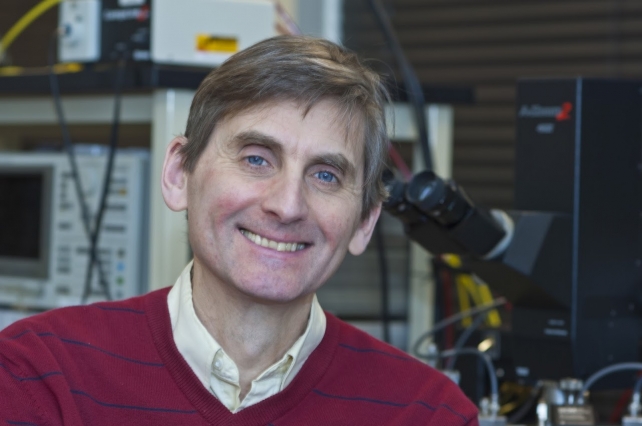
Andras Kis is a Full Professor at the École Polytechnique Fédérale de Lausanne (EPFL), affiliated with the School of Engineering (STI) across multiple institutes including the Institute of Electrical Engineering (IEL), Institute of Materials Science (IMX), and teaching programs in Electrical Engineering (SEL-ENS). He leads the Laboratory of Nanoscale Electronics and Structures (LANES) and serves on the PhD program committee for Microsystems and Microelectronics. PhD, EPFL (2003) MS, Physics, University of Zagreb (1999) Baccalaureate, MIOC High School Research Focus: Pioneering work on 2D materials for electronic and optoelectronic devices, particularly transition metal dichalcogenides like MoS2 and PtSe2. His research spans: Transistor design with atomically thin semiconductors Excitonic devices and valleytronics Nanofluidics and ionic logic Optical properties of 2D heterostructures Scalable fabrication of 2D materials Defect engineering and doping techniques Scientific Impact: Based on analysis of 15 most recent publications, his work focuses on advancing 2D materials for next-generation electronics through innovations in: Van der Waals heterostructures Thermoelectric and optoelectronic applications Nanofabrication techniques Spintronic and quantum transport phenomena Memristive and neuromorphic devices Characterization of electronic and optical properties Awards & Recognition: Fellow of the Institute of Electrical and Electronics Engineers (IEEE) Lotfi A. Zadeh Award for Emerging Technologies (2024) Highly Cited Researcher (Clarivate Analytics) Teaching & Academic Leadership: Currently teaching courses including Lab in Nanoelectronics , Physical Models for Micro and Nanosystems , and Semiconductor Devices II . He has supervised over 20 PhD students in his research group at EPFL. Laboratory & Collaborations: Directs the Laboratory of Nanoscale Electronics and Structures (LANES) which focuses on fundamental and applied research in 2D materials and nanoelectronic devices. His work bridges materials science, condensed matter physics, and microelectronics engineering.
Kumar Varoon Agrawal is an Associate Professor at École Polytechnique Fédérale de Lausanne (EPFL), holding the Gaznat Chair for Advanced Separations. He is affiliated with the School of Basic Sciences (SB), the Institute of Chemical Sciences and Engineering (ISIC), and the Laboratory of Advanced Separations (LAS) in Sion, Switzerland. Additionally, he contributes to the Swiss Doctoral School in Chemical and Bioengineering (SCGC) and serves as Vice President of the Confédération des Chimistes et des Génie Chimique (CCE). Research Focus: Material Chemistry & Engineering at the Ångström scale for high-performance inorganic and hybrid membranes, emphasizing energy-efficient molecular separations. Teaching: Courses include Fundamentals of separation processes , Diffusion and mass transfer , and Chemical engineering product design . Scientific Contributions: His 15 most recent publications (2025-2020) span topics like graphene pore engineering , 2D material synthesis , carbon capture , and gas separation membranes , with keywords such as Nanotechnology , Materials Science , and Molecular Transport . Subfields include Atomic-Scale Pores , Membrane Stability , and Industrial Scalability . Students and Collaborations: He advises 10 current PhD students and has mentored 9 past PhD candidates in areas like graphene membranes , ion separation , and MOF films . He is an Academic Referent for the EPFL Carbon Team and a committee member for the EDCH Doctoral Program in Chemistry and Chemical Engineering.
Dr. Robert O’Connor is an Assistant Professor at the School of Physical Sciences, Dublin City University (DCU) , specializing in interface chemistry and thin film characterization. His work bridges semiconductor physics and energy harvesting technologies , with a focus on materials like high-κ dielectrics and III-V substrates. BSc in Applied Physics (2001), DCU PhD in Semiconductor Physics (2005), DCU His research employs X-ray photoelectron spectroscopy (XPS) and atomic layer deposition (ALD) to study material interfaces in devices such as MOSFETs and photoelectrochemical systems . He leads a 4-year SFI-funded project on solar water splitting for hydrogen fuel and collaborates with Trinity College Dublin (SPOKE project) and IMEC, Belgium on area-selective deposition techniques. His lab utilizes a state-of-the-art integrated ALD-XPS tool . His scientific awards include the Marie Curie Intra-European Fellowship , Irish Research Council EMBARK Fellowship , and SFI TIDA Award . Publications span high-κ dielectrics , self-assembled monolayers , and block copolymer lithography , with recent work on graphene oxide heterostructures and recyclability in additive manufacturing . He supervises 5 postgraduate students and teaches modules like Final Year Project (PS451) and Solid State Physics I (PS204) . Collaborations include institutions such as IMEC and Trinity College Dublin , with tools like the integrated ALD-XPS system at DCU.
James S. Speck is the Seoul Viosys Professor of Solid State Lighting in the Department of Materials at the University of California, Santa Barbara (UCSB), within the College of Engineering. His research focuses on the materials science of wide bandgap semiconductors such as GaN and β-Ga₂O₃, emphasizing epitaxial growth, defect engineering, and device applications. He holds over 725 publications and has co-founded Soraa, a company commercializing GaN-based lighting technologies. Education: Sc.D. in Materials Science (MIT), S.M. in Metallurgy (MIT), B.Sc.Eng (University of Michigan). Research Interests: GaN-based semiconductors, nitride materials, epitaxial growth mechanisms, nonpolar/semipolar GaN, and β-Ga₂O₃. His work addresses threading dislocations, defect dynamics, and optoelectronic device performance. Awards: IEEE Photonics Society Aron Kressel Award, APS Fellowship, MRS Fellowship, and multiple best paper awards. Key Contributions: Pioneered MBE growth of GaN, developed V-defect engineering for LEDs, and advanced β-Ga₂O₃ research. Collaborates on Soraa’s high-brightness LED technologies. Lab/Teams: The Speck Group studies GaN heterostructures, defect mitigation, and wide bandgap semiconductor applications. Recent work includes V-defect-controlled LEDs and β-Ga₂O₃ etching techniques.
Plamen Atanassov is a Chancellor’s Professor in the Department of Chemical and Biomolecular Engineering with a joint appointment in Materials Science and Engineering at the Samueli School of Engineering, University of California, Irvine . His work focuses on developing advanced electrocatalysts for energy conversion and storage systems. Department: Chemical and Biomolecular Engineering, Materials Science and Engineering Academic Rank: Professor (Chancellor’s Professor honorific) Research Themes: Electrocatalysis, Bio-electrocatalysis, Fuel Cells, Energy Harvesting Research Interests: Prof. Atanassov specializes in non-platinum and platinum-based electrocatalysts for fuel cells, bio-inspired energy systems , and carbon dioxide valorization technologies . His group has pioneered: Atomically dispersed metal-nitrogen-carbon catalysts Novel synthesis methods for durable electrocatalysts Machine learning-guided fuel cell optimization Electrochemical ammonia and urea production Hydrogen evolution reaction with non-precious metals Scientific Contributions: With over 380 peer-reviewed papers (101 h-index), 50 issued US patents , and 35+ PhD students advised , his work bridges fundamental electrochemistry and industrial-scale energy solutions. Recent publications emphasize catalyst durability under realistic conditions, CO2 reduction, and sustainable manufacturing practices.
David B. Graves is a Professor of Chemical and Biological Engineering at Princeton University, affiliated with the Princeton Plasma Physics Laboratory. He holds a B.S. (1978) and M.S. (1981) from the University of Arizona and a Ph.D. (1986) from the University of Minnesota. Research focuses on non-equilibrium plasma for semiconductor fabrication, biomedical applications, and sustainable chemical processing. Leadership in plasma-surface interactions, atomic layer etching, and plasma medicine. His work bridges plasma physics, surface chemistry, and machine learning, addressing challenges in nanofabrication and energy-efficient plasma processes. Notable contributions include plasma-roadmap initiatives and innovations in plasma-enabled additive manufacturing. Awards: Plasma Chemistry Award (2025), ISPlasma Prize (2024), and multiple fellowships (APS, AVS, IOP). Labs/Teams: Graves Group, collaborating on plasma applications in nanotechnology and biomedicine.
Friedrich Prinz is the Leonardo Professor in the School of Engineering at Stanford University, holding dual professorships in Mechanical Engineering and Materials Science and Engineering. He is also a Senior Fellow at the Precourt Institute for Energy and an affiliate of the Stanford Woods Institute for the Environment. Additionally, he directs the Nanoscale Prototyping Laboratory and co-directs the NPL-Affiliate Program. He earned a PhD in Physics from the University of Vienna (1975) and joined Stanford in 1994 after faculty roles at Carnegie Mellon University. His research focuses on nanoscale energy conversion and storage, employing advanced fabrication techniques like atomic layer deposition (ALD) to develop prototype fuel cells and capacitors. His lab investigates material structures using scanning tunneling microscopy, impedance spectroscopy, and atomic-scale modeling. Prinz has authored over 360 publications and advised numerous students. Notable awards include AAAS Fellowship (2007) and the AM Strickland Prize (2005). His work bridges solid-state physics, materials engineering, and renewable energy technologies. He teaches courses in manufacturing processes, quantum field theory applications, and advanced material science. Current roles include supervising doctoral and postdoctoral researchers in energy-related nanotechnologies.
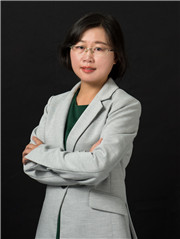
Associate Professor Hu Yunfei is affiliated with the School of New Materials and New Energy at Shenzhen University of Technology , where she leads the New Energy Systems and Smart Microgrids Laboratory . She is a member of the China Renewable Energy Society and Guangdong Solar Energy Association . PhD in Materials Processing Engineering (2005), South China University of Technology Bachelor of Engineering (2000), South China University of Technology Her research focuses on new energy systems , solar-storage direct-flexible systems , and high-efficiency photovoltaic devices , including perovskite solar cells , tandem solar cells , and transparent conductive oxides . Her work spans fundamental materials science and applied energy systems. The 15 most recent publications highlight her expertise in polycrystalline silicon thin films , transparent conductive oxides , perovskite solar cells , and optoelectronic materials . These works reflect trends in improving solar cell efficiency, stability, and manufacturing scalability. She has led projects such as the development of consumer solar power optimizers , optical performance testing for bifacial solar panels , and industrial collaborations on silicon ribbon substrates . Her projects are funded by institutions like the Norwegian Science Foundation and National Natural Science Foundation of China . At Shenzhen University of Technology, she oversees the New Energy Systems and Smart Microgrids Laboratory , integrating advanced materials and system design for renewable energy applications.
Stacey F. Bent is the Jagdeep and Roshni Singh Professor in the School of Engineering at Stanford University, where she serves as Professor of Chemical Engineering with courtesy appointments in Chemistry, Electrical Engineering, and Materials Science and Engineering. She also holds the position of Vice Provost for Graduate Education and Postdoctoral Affairs and is a Senior Fellow at the Precourt Institute for Energy. Her academic journey began with a B.S. in Chemical Engineering from UC Berkeley (1987) followed by a Ph.D. in Chemistry from Stanford University (1992), after which she completed postdoctoral work at AT&T Bell Laboratories and served as an assistant professor at New York University before joining Stanford in 1998. Dr. Bent's research focuses on understanding and controlling surface and interfacial chemistry with applications in semiconductor processing, micro- and nanoelectronics, nanotechnology, and sustainable energy. Her group employs molecular-level approaches to study semiconductor surface functionalization, atomic layer deposition mechanisms, nanoscale light absorption materials, photovoltaic interface engineering, and catalyst/electrocatalyst deposition. Her lab maintains extensive facilities including over ten ALD/MLD reactors, ultra-high vacuum chambers with in situ XPS capabilities, and various characterization tools for materials analysis. Her recent publications reveal strong focus areas in atomic layer deposition techniques, battery interface engineering, catalyst design for syngas conversion, and nanoscale patterning technologies. The research spans fundamental surface science to practical energy applications, with particular emphasis on developing precise materials synthesis methods for advanced electronic and energy systems. Among her numerous accolades are election to the National Academy of Engineering (2020), the ACS Award in Surface Chemistry (2018), and the ALD Innovator Award (2021). She has also received multiple teaching awards including the Tau Beta Pi Award for Excellence in Undergraduate Teaching (2006) and the Stanford Medal for Faculty Excellence Fostering Undergraduate Research (2013). Braskem Award for Excellence in Materials Engineering and Science (AIChE) (2021) ALD (Atomic Layer Deposition) Innovator Award (2021) National Academy of Engineering (2020) ACS Award in Surface Chemistry (2018) Fellow of the American Chemical Society (2013) AVS Fellow (2006) Dr. Bent has mentored over 70 graduate students and postdocs who have gone on to successful careers in academia, industry, and government. Her research group maintains strong collaborations with national laboratories and industry partners, particularly in semiconductor manufacturing and energy technologies. She previously served as Director of the TomKat Center for Sustainable Energy for 10 years and as co-Director of the Center on Nanostructuring for Efficient Energy Conversion (CNEEC), a DOE Energy Frontier Research Center. The Bent Research Group operates state-of-the-art facilities including multiple ALD/MLD reactors capable of depositing over 30 materials, in situ characterization tools, and access to Stanford's shared equipment facilities for advanced materials analysis. The group's international composition (with members from over 10 countries) reflects its global impact in surface science and materials engineering.
Mikko Ritala is a Professor at the University of Helsinki's Department of Chemistry. His research focuses on atomic layer deposition (ALD), thin film materials, and catalytic processes. He leads the HelsinkiALD research infrastructure and has been a project manager for initiatives like the Intel-Ritala 2023-2026 corporate-funded project. Ritala has received the Alfred Kordelin Foundation Award (2010) for his contributions to materials science. His work spans interdisciplinary areas including energy materials, biomedical coatings, and environmental applications of advanced materials. Key research interests include developing novel ALD processes for functional thin films, optimizing photocurrent responses in energy systems, and exploring catalytic etching techniques. He actively collaborates internationally and organizes conferences such as the Materials for Advanced Metallization Conference (MAM2025) and the International Conference on Atomic Layer Deposition (ALD 2024). Ritala's research group has published extensively (>625 outputs) on topics like ALD-grown oxides, carbides, and fluorides, as well as applications in photovoltaics and environmental engineering. The HelsinkiALD laboratory under his leadership serves as a hub for ALD innovation and industrial partnerships.
Timothy K. Minton is a Professor in the Department of Aerospace Engineering Sciences at the University of Colorado, Boulder, and a member of the Aerospace Mechanics Research Center (AMREC). He holds a PhD from the University of California, Berkeley (1986) and a BS from the University of Illinois, Urbana-Champaign (1980). His research focuses on gas-phase and gas-surface reaction dynamics, particularly in hypersonic flow environments and space material degradation. He has held editorial roles at The Journal of Spacecraft and Rockets and The Journal of Physical Chemistry , and has been recognized with prestigious awards including Fellowships from the American Physical Society (2015) and American Association for the Advancement of Science (2012). Dr. Minton’s work emphasizes understanding atomic oxygen interactions with satellite materials, shock layer chemistry, and material durability in low-Earth-orbit environments. His innovations include the development of the Table-Top Shock Tunnel (TTST) for rapid material testing and durable coatings for space applications. He has also contributed to advancing models for carbon oxidation and nitridation processes. His awards highlight leadership in aerospace and chemistry, including the NASA Monetary Award (1995) for semiconductor etching innovations and the Charles & Nora Wiley Award (2002) for meritorious research. He maintains a courtesy appointment in the Department of Chemistry at CU Boulder and actively collaborates with industry (e.g., Skeyeon, Inc.) and international institutions.
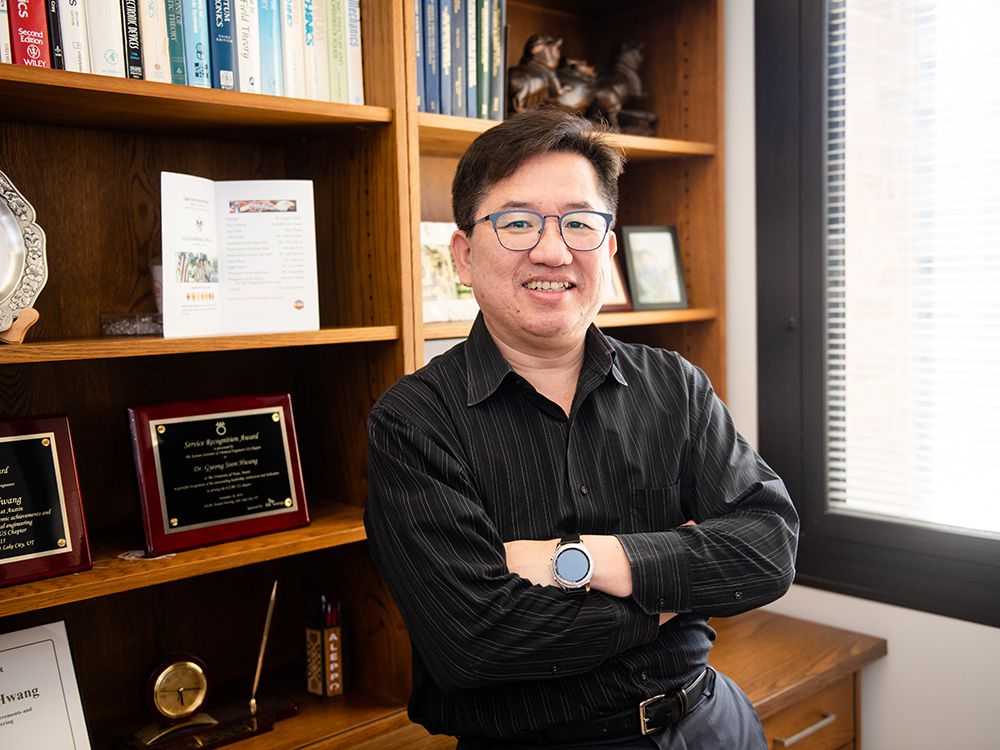
Gyeong Hwang is a Matthew Van Winkle Regents Professor of Chemical Engineering at The University of Texas at Austin. He leads the Hwang Research Group focused on computational materials discovery and design for energy and electronic applications. His work emphasizes multiscale modeling of nanostructured materials, with applications in energy storage/conversion, carbon capture, and semiconductor processing. Educational Qualifications: Ph.D., Chemical Engineering, California Institute of Technology (1999) M.S., Applied Physics, California Institute of Technology (1998) M.S., Chemical Engineering, Seoul National University (1993) B.S., Chemical Engineering, Seoul National University (1991) Research Interests: Hwang's research integrates first-principles modeling with experimental validation to address challenges in: - Surface chemistry and interfacial reactions - Nanostructured materials synthesis - Electrochemical device fabrication - CO₂ capture mechanisms His group develops computational tools for predicting material behaviors at atomic and continuum scales. Recent Publications Trends: Publications (2023-2025) focus on: - Solid-state battery interfaces - Plasma-enhanced material deposition - Ionic liquid interactions - Thermal/spatial transport phenomena - Electrochemical reaction mechanisms Awards: NSF CAREER Award (2005) Electrochemical Society's F.M. Becket Memorial Award (1999) Korean Chemical Engineering Service Award (2010) Advising & Grants: Leads interdisciplinary research funded by NSF, industry partnerships, and regents' endowments. Active in graduate student training through courses like ChE 379 (Molecular Simulation) and ChE 348 (Numerical Methods). Labs/Teams: The Hwang Research Group operates state-of-the-art computational facilities for quantum mechanics simulations and multiscale modeling. Collaborates with experimental groups globally on materials prototyping.
Dr. Triratna Muneshwar is an Assistant Professor in the Department of Metallurgical Engineering and Materials Science at the Indian Institute of Technology Bombay (IIT Bombay), where he has been serving since November 2021. His research focuses on advanced thin film deposition techniques, particularly atomic layer deposition (ALD) and atomic layer etching (ALE), for next-generation semiconductor devices. Ph.D. in Materials Engineering, University of Alberta, Canada (2014) Dual Degree (B.Tech & M.Tech) in Metallurgical Engineering and Materials Science, IIT Bombay (2009) His research interests lie at the intersection of materials science and semiconductor technology, with a strong emphasis on modeling and experimental analysis of vacuum thin film processes. He investigates atomic layer deposition of oxides, nitrides, and metals, surface reaction kinetics , dopant distribution in thin films , and parasitic reactions in high-aspect-ratio structures . His work bridges lab-scale innovation to industrial fabrication (Lab-to-Fab). Dr. Muneshwar's publications reveal a consistent focus on improving the precision, efficiency, and scalability of ALD processes. His work spans plasma-enhanced ALD , precursor chemistry , in-situ characterization , and numerical modeling of growth mechanisms. Key themes include precursor utilization optimization, nucleation control, and material characterization for logic and memory applications. Scientific recognitions include: Featured Article, Journal of Applied Physics (2016) Editors Pick, Journal of Applied Physics (2018) U.S. Patent on precursor utilization in pulsed ALD processes Dr. Muneshwar has mentored research at the postdoctoral and associate levels and continues to build a research program involving graduate students and collaborative projects. His prior experience includes a Postdoctoral Research Fellowship and Research Associate role at the University of Alberta. He is actively involved in advancing ALD/ALE technologies with industrial relevance. His research is conducted within the MEMS department at IIT Bombay, leveraging advanced fabrication and characterization facilities. He collaborates with teams working on semiconductor materials, nanofabrication, and process modeling, contributing to India's growing expertise in microelectronics and advanced materials.
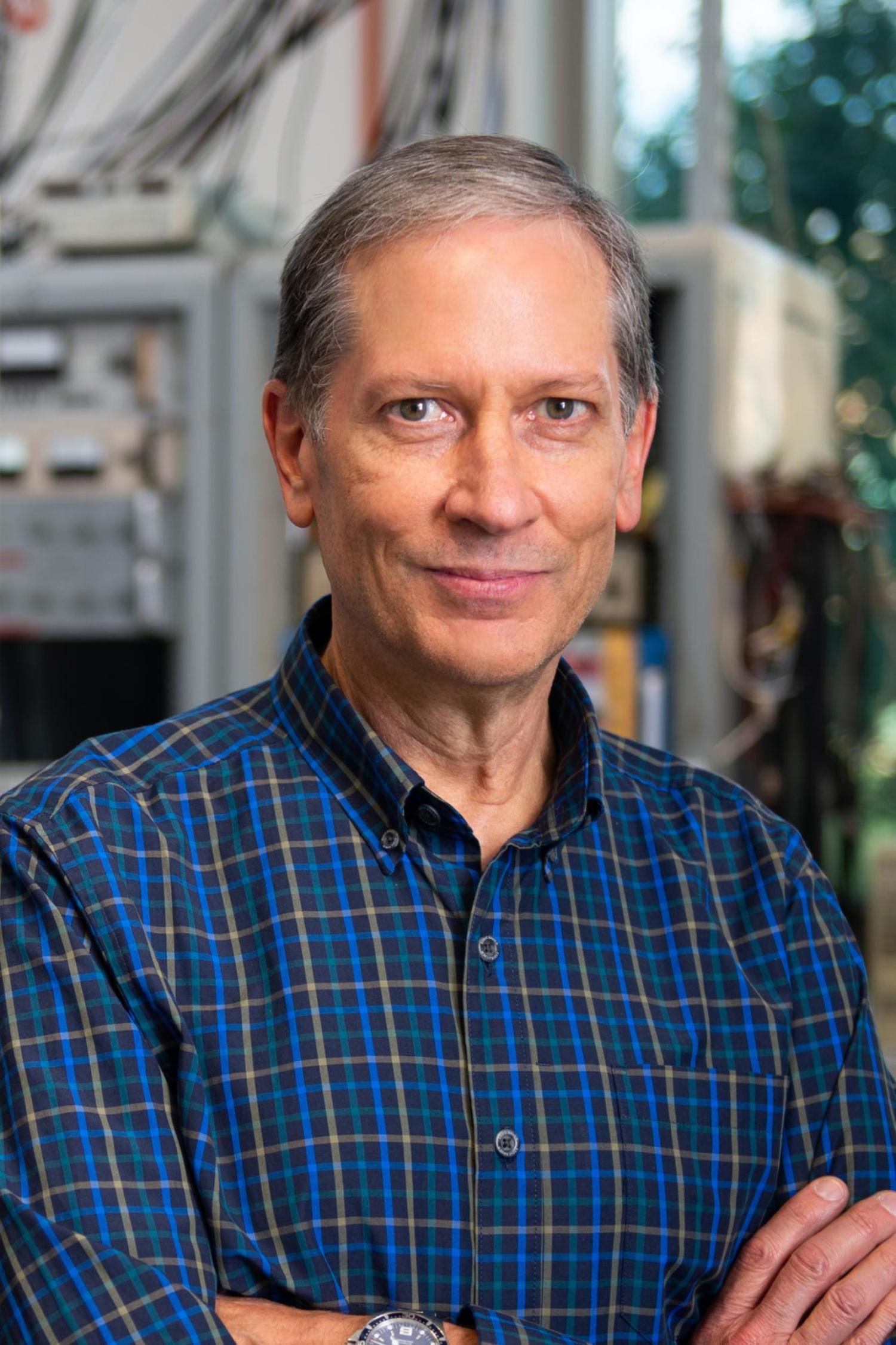
Jesús del Alamo serves as the Donner Professor of Science within MIT’s Department of Electrical Engineering and Computer Science, leading cutting-edge research in semiconductor device physics with applications spanning logic, high-frequency, and power electronics. His work bridges fundamental materials science with practical device engineering to address next-generation computing challenges. Academic Credentials: PhD, Stanford University MS, Stanford University Research Focus: Professor del Alamo’s expertise centers on transistor physics and semiconductor device innovation, particularly III-V compound semiconductors (InGaAs, GaN) and diamond MOSFETs. Current investigations target reliability mechanisms in GaN transistors for RF/power applications, novel analog computing architectures, and electrochemical ionic synapses for neuromorphic hardware. His group pioneers atomic-scale fabrication techniques like thermal atomic layer etching for sub-5nm devices while exploring quantum confinement effects in vertical nanowires. Publication Evolution: Recent work (2023-2025) demonstrates a strategic shift toward neuromorphic computing, with 60% of publications focusing on electrochemical synapses and ferroelectric memories for AI acceleration. This builds upon decades of transistor scaling research, now converging with materials innovations in HfZrO 2 ferroelectrics and protonic conductors to enable energy-efficient analog deep learning hardware. Award Recognition: Louis D. Smullin Award for Excellence in Teaching Amar Bose Award for Excellence in Teaching Intel Outstanding Researcher Award Semiconductor Research Corporation Technical Excellence Award Semiconductor Industry Association-Semiconductor Research Corporation University Researcher Award Collaborative Leadership: He directs research within MIT’s Microsystems Technology Laboratories (MTL), collaborating with faculty including Bilge Yildiz (electrochemical systems) and Ju Li (computational materials). Current projects integrate device physics with neuromorphic algorithms, supported by semiconductor industry partnerships focused on translating fundamental discoveries into practical AI hardware solutions. Research Infrastructure: His group operates within MIT’s MTL cleanroom facilities, utilizing advanced characterization tools for in-situ device analysis and leveraging partnerships with industry leaders in semiconductor manufacturing to prototype novel transistor architectures.