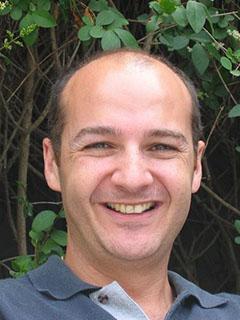
Peijun Zhang is a leading structural biologist and Professor at the University of Oxford, affiliated with the Nuffield Department of Medicine and the Structural Biology Laboratory (STRUBI). She serves as the Director of the Electron Bio-Imaging Centre (eBIC) at Diamond Light Source, where she leads a world-class cryo-EM and cryo-ET facility. Her research group focuses on the structural mechanisms of human pathogens, particularly HIV-1 and bacterial signaling systems. Her educational background includes a Ph.D. in Molecular Biophysics from the University of Virginia, an M.S. in Physics, and a B.S. in Electrical Engineering from Nanjing University. She completed postdoctoral training at the National Cancer Institute and was previously faculty at the University of Pittsburgh School of Medicine. Dr. Zhang's research integrates cutting-edge cryo-electron microscopy and tomography with biochemical, biophysical, and computational methods to study large macromolecular complexes in situ . Her work spans HIV-1 capsid assembly and nuclear import, host-pathogen interactions, bacterial chemotaxis arrays, and chromatin architecture. She is deeply involved in method development, including software like emClarity for subtomogram averaging and advanced cryo-FIB/SEM techniques. Her recent publications (2020–2025) demonstrate a strong trend in in situ structural biology, capturing transient viral and cellular processes at high resolution. Themes include viral entry, capsid dynamics, chromatin organization, and correlative imaging, reflecting her leadership in pushing the boundaries of 3D electron microscopy. She has received several scientific awards, including: Carnegie Science Emerging Female Scientist Award Senior Vice Chancellor’s Award U.S. Department of Health and Human Services 'On-the-Spot' Award Dr. Zhang actively mentors a research team including postdoctoral associates and PhD students. She leads the Oxford Particle Imaging Centre (OPIC), a BSL-3 facility, and secures major funding for advanced instrumentation and research. Her work bridges fundamental science and translational applications in virology and infectious disease. She is associated with key facilities such as eBIC and OPIC, which provide cutting-edge cryo-EM access to the scientific community. Her lab continues to pioneer new imaging technologies to resolve molecular structures within their native cellular environments.