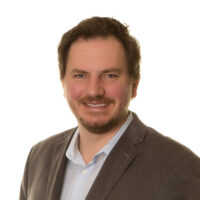
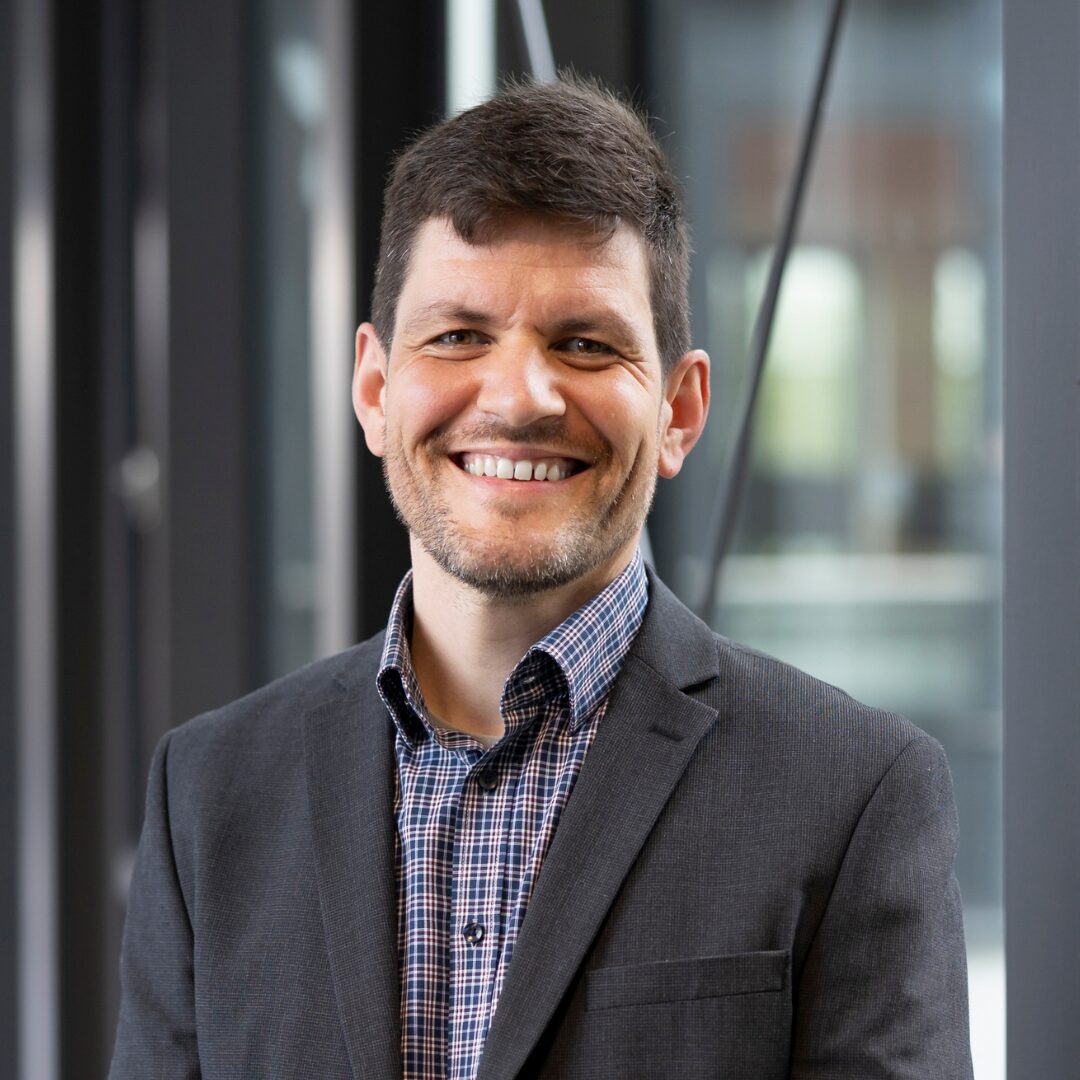
Nabil Bassim is an Associate Professor in the Department of Materials Science and Engineering at McMaster University and serves as Scientific Director of the Canadian Centre for Electron Microscopy (CCEM). His research focuses on advanced electron microscopy techniques, ion microscopy, nanofabrication, and beam-sample interactions, applied to nanomaterials, 2D materials, and structural materials like concrete and alloys. He holds a B.S. in Mechanical Engineering from the University of South Florida, and M.Sc. and Ph.D. degrees from the University of Florida. Research interests include: Development of novel electron/ion microscopy techniques Nanomaterial synthesis and characterization Beam-induced damage and doping mechanisms Structural materials analysis Machine learning optimization for microscale processes Recent publications demonstrate strong focus on semiconductor characterization, nanomaterials synthesis, and advanced microscopy techniques. Article trends highlight innovative approaches to nanoscale analysis, materials for energy applications, and correlative microscopy methods. As Faculty Lead for McMaster Engineering's Aerospace and Defense Initiative, Dr. Bassim coordinates interdisciplinary research. He co-founded the FIB-SEM User Meeting and teaches graduate courses in electron/ion microscopy characterization techniques.
Ying Wu is a Professor of Physics at Duke University within the Trinity College of Arts & Sciences . His research focuses on the nonlinear dynamics of charged particle beams , coherent radiation sources , and the development of novel accelerators and light sources using advanced mathematical frameworks like Lie Algebra, Differential Algebra, and Frequency Analysis. His work has significantly enhanced understanding of nonlinear phenomena in light source storage rings and collider rings, with applications in Gamma-ray source development Free-electron laser (FEL) technology Beam stability and diagnostics VUV mirror protection systems Polarization-controlled radiation sources High-reflectivity cavity design Recent publications highlight experimental and theoretical advances in Orbital angular momentum beam generation Photonuclear cross-section measurements Storage ring lattice optimization Multi-color FEL operation Longitudinal beam instability control Differential algebra for particle dynamics Current research programs include collaborations with the High Intensity Gamma-ray Source (HIγS) facility and the Triangle Universities Nuclear Laboratory , with active grants from the Department of Energy (1997–2027), National Institutes of Health (2024–2026), and Ian's Friends Foundation (2024–2025). Ying Wu's laboratory specializes in Free-electron laser cavity design Gamma-ray beam characterization Storage ring diagnostics systems High-current electron beam control Polarization-sensitive detection Next-generation light source development
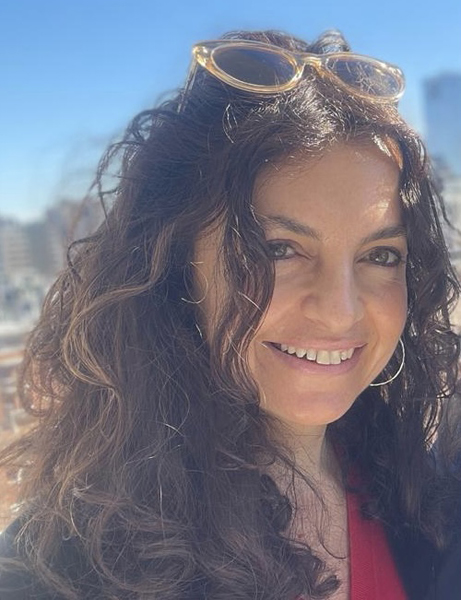
Elisa Riedo is a tenured Professor of Chemical and Biomolecular Engineering at New York University (NYU) Tandon School of Engineering, with joint appointments as Professor of Physics in NYU’s College of Arts and Science and as affiliated Professor of Mechanical Engineering at Tandon. She serves as Director of Faculty Development at NYU Tandon and has held prior tenured positions at Georgia Tech (2003–2015) and CUNY ASRC (2015–2018). Her academic career spans over two decades, with a Ph.D. in Physics from the University of Milano (2000) and postdoctoral work at EPFL. Her research focuses on nanotechnology , graphene and 2D materials , and thermal scanning probe lithography (tSPL) , with applications in biomedical diagnostics quantum electronics electromagnetic interference shielding mechanical reinforcement of materials She pioneered tSPL for sustainable nanofabrication and discovered diamene—a single-layer diamond structure from graphene under pressure. Her recent work involves transparent infrared electrodes using silver nanowires (2025) and self-organized graphene stacking domains for quantum technologies (2024). She has secured major grants from National Science Foundation , Department of Defense , and Army Research Office . Scientific honors include: 2023 NYU Tandon Excellence in Research Award 2013 American Physical Society Fellow 2005 CREA Innovation Award Membership in the Academy of Europe (2023) She contributes to editorial boards for journals like 2D Materials and Applications and advises companies such as Mirimus Inc. and SwissLitho AG .
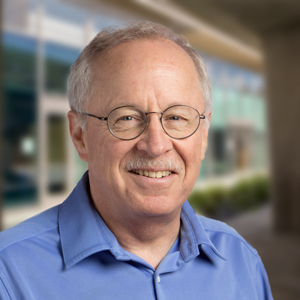
William Balch, PhD, is a Professor in the Department of Molecular and Cellular Biology at Scripps Research. His research focuses on linking genetic variation in human populations to protein function using machine learning tools like Gaussian Process (GP) modeling. He pioneered concepts in proteostasis and spatial covariance, exploring how genetic and environmental factors influence protein folding and disease. Education: Ph.D. in Microbiology from University of Illinois (1979) Research interests include inherited diseases (e.g., CFTR, AATD, NPC1), aging-related proteostasis collapse, and host-pathogen interactions in SARS-CoV-2. His lab develops computational platforms to model protein design and discover therapeutic interventions. Key projects involve GP-based analysis of genetic diversity, small molecule therapeutics targeting chaperone systems, and understanding viral evolution via spatial covariance. His work bridges genomics and phenomics to address disease mechanisms at atomic resolution. Grants and collaborations focus on protein-folding correction, with applications in precision medicine and climate change mitigation through RuBisCo optimization in plants.
Prof. Dr. Michael Horn-von Hoegen is a full professor in the Faculty of Physics at the University of Duisburg-Essen , Germany. His research focuses on ultrafast structural dynamics , surface physics , and 2D materials , particularly using electron diffraction and plasmonic imaging techniques. He leads the Horn-von Hoegen Group , which plays a central role in the Collaborative Research Center CRC 1242 Non-Equilibrium Dynamics of Condensed Matter in the Time Domain , where his team investigates driven phase transitions and phonon systems with sub-femtosecond temporal resolution. Location: Office Window MF260, Faculty of Physics, Lotharstr. 1-21, 47057 Duisburg Contact: Tel. +49 (203) 379 1439 | Fax +49 (203) 379 1555 His research spans ultrafast electron diffraction of photo-induced phase transitions in atomic wires and topological materials , with recent breakthroughs on Kibble-Zurek dynamics in the Si(001) surface and chiral plasmon polaritons . The group’s 15 most recent publications (2025-2022) address phenomena such as negative thermal expansion in 2D materials , electron-phonon coupling in Pb/Si heterostructures , and quantum pathway analysis in Bismuth films . These works are categorized under disciplines like Condensed Matter Physics , Nanooptics , and Ultrafast Dynamics , with subfields including Ising Model Transitions , Plasmon Focusing , and Time-Resolved Diffraction . Prof. Horn-von Hoegen serves as DFG Liaison Officer for the University of Duisburg-Essen, providing guidance on Deutsche Forschungsgemeinschaft (DFG) proposals . His group has mentored notable researchers including Dr. Simon Sindermann (postdoc at IBM), Dr. Anja Hanisch-Blicharski (Leopoldina Fellow), Dr. Hichem Hattab (Leopoldina Fellowship), and Dr. Marin Petrovic (Humboldt Fellow). The group’s laboratory facilities include advanced ultrafast electron diffraction and photoemission microscopy systems, enabling studies of atomic-scale processes such as molecular dynamics simulations of laser-excited surfaces and domain wall motion in Si(553)-Au systems .
Martin Holler is a Professor at the Institute of Mathematics and Scientific Computing at the University of Graz, Austria, where he leads the research group Applied Mathematics and Machine Learning . His work bridges theoretical mathematics with practical applications in imaging and machine learning. Research Focus: His primary research areas include the mathematics of data science, variational methods in imaging, dynamic and multi-modality inverse problems, and biomedical imaging. He has made significant contributions to model-based regularization techniques, particularly with Total Generalized Variation (TGV) approaches for image and video reconstruction. Publication Trends: Over the past decade, Holler's research has evolved from traditional variational methods for image reconstruction toward increasingly sophisticated machine learning approaches. His recent work (2021-2023) focuses on integrating deep learning with variational methods, particularly for motion separation in medical imaging and learning-informed parameter identification in partial differential equations. His publications demonstrate a consistent thread of applying rigorous mathematical frameworks to solve practical problems in medical imaging and computer vision. Mathematics of data science and machine learning Generative models in machine learning Variational methods in imaging Dynamic and multi-modality inverse problems Model-based regularization Biomedical imaging Image and video decompression Technical Leadership: Holler has developed several open-source software packages implementing advanced reconstruction algorithms, particularly for multi-modal imaging problems. His GitHub repositories show active maintenance and development of these tools, which have been cited in the medical imaging community.
Possu Huang serves as Assistant Professor of Bioengineering in the Department of Bioengineering at Stanford University's School of Engineering. His research group operates from the Shriram Center for Bioengineering, sharing laboratory space with the Bintu Lab while maintaining an active interdisciplinary program bridging computational and experimental protein engineering. His educational journey includes: B.A. in Molecular and Cell Biology (Biochemistry) from UC Berkeley Ph.D. in Biochemistry and Molecular Biophysics from Caltech Postdoctoral training as Senior Fellow at University of Washington Dr. Huang's research focuses on atomic-precision protein design through integrated computational-experimental approaches. His lab has pioneered breakthroughs including the first computationally designed protein-protein interface, TIM barrel fold design principles, and the eOD HIV immunogen. Current work leverages machine learning , structural biology , and library optimization to develop therapeutic proteins and nanotechnology platforms, with particular emphasis on achieving natural-level complexity in engineered systems. Analysis of his 2023-2025 publications reveals three dominant trends: (1) generative AI for all-atom protein design (e.g., Protpardelle, SHAPES), (2) immunology applications targeting MHC complexes for HIV vaccine development, and (3) optogenetic tools through engineered fluorescent proteins. These works consistently integrate deep learning with wet-lab validation to solve biomedical challenges. Dr. Huang has mentored nine graduate students to completion, including PhD candidates Carla (defended June 2025), Christian (defended May 2025), and master's students Shankara and Kirsten. His lab maintains active social media presence (@possuhuanglab) and regularly publishes high-impact research while training the next generation of protein engineers. The Huang Lab operates as a dynamic interdisciplinary hub where computational biologists collaborate with experimentalists to push the boundaries of protein design. Current projects include developing tetravalent nanobody platforms, photoswitchable binders for temporal protein control, and AI-driven solutions for HIV immunogen design, all conducted within Stanford's state-of-the-art bioengineering facilities.
Paul Midgley is the Professor of Materials Science at the University of Cambridge , affiliated with the Department of Materials Science & Metallurgy . His research focuses on advancing electron microscopy techniques for nanoscale structural analysis. BSc, MSc, PhD from the University of Bristol Research Interests: Development of 3D electron tomography, precession electron diffraction (PED), and multi-dimensional imaging techniques to study materials at atomic and nanoscale resolutions. Applications span semiconductor nanowires, catalysts, pharmaceuticals, and metal-organic frameworks (MOFs). Notable Trends: Recent work emphasizes nanoscale heterogeneities in halide perovskites, mechanochemical amorphisation of MOFs, and structural analysis of pharmaceutical formulations using 3D electron diffraction. Collaborations integrate machine learning and advanced reconstruction algorithms. Scientific Awards: Fellow of the Royal Society (FRS) Honorary Fellow of the Royal Microscopical Society (HonFRMS) MAE (Materials Ageing and Environment) Award Labs & Teams: Leads the Electron Microscopy Group at Cambridge. Research involves dual beam SEM-FIB, EDX, and EBSD techniques for mesoscale tomography. Collaborates with institutions in the UK, Europe, and globally.
Daniel Braun is a Professor at the University of Tübingen, affiliated with the Faculty of Mathematics and Natural Sciences and the Department of Physics. He holds the Theoretical Physics (Braun Chair) and has been active in academia since October 1, 2013. Email: daniel.braun@uni-tuebingen.de Research Interests: His work bridges quantum optics, metrology, and gravitational physics. He explores quantum-enhanced measurement techniques, nonlinear optical phenomena in curved spacetime, and mechanical systems for fundamental tests of physics. Institutional Affiliation: Institute for Theoretical Physics (ITP) Recent Publications (2025-2024): Focus on quantum-limited interferometry, machine learning applications in quantum channels, gravitational effects in particle accelerators, and nonlinear soliton dynamics in relativistic settings. Scientific Awards: No specific awards mentioned in the provided data.
Professor Klaus McDonald-Maier is a full Professor in the School of Computer Science and Electronic Engineering (CSEE) at the University of Essex , where he leads the Embedded and Intelligent Systems (EIS) Research Laboratory and heads the Intelligent Embedded Systems and Environments Research Group . He is also Director of Impact , Visiting Professor at the University of Kent, and Visiting Research Affiliate at NASA Jet Propulsion Laboratory, California Institute of Technology. Education PhD in High-Performance Parallel Neural Network Architectures, Friedrich-Schiller-University Jena (Germany, 1999) Electronic Engineering studies, University of Ulm (Germany) Electronic Engineering studies, Cardiff University (Wales) Electronic Engineering studies, École Supérieur de Chimie Physique Électronique de Lyon (CPE-Lyon) (France) Research Interests Professor McDonald-Maier’s research integrates embedded systems , System-on-Chip (SoC) architectures , and AI-driven robotics . He pioneers visual place recognition techniques that remain robust under severe appearance and viewpoint changes, develops cybersecurity frameworks based on ICMetrics for autonomous vehicles and IoT, and designs approximate real-time computing solutions for energy-constrained multicore and FPGA platforms. His work on radiation-tolerant systems supports space and nuclear applications, while his bio-inspired algorithms enable lightweight, neuromorphic perception on resource-limited robots. Publication Trends Between 2022 and 2025 his output converges on FPGA-accelerated AI , secure edge intelligence , visual navigation for autonomous systems , and healthcare analytics . He repeatedly couples rigorous algorithmic innovation with practical hardware deployment, yielding energy-efficient, real-time systems validated in domains ranging from autonomous driving to post-stroke rehabilitation. Scientific Awards & Recognition Best Paper Award – IEEE Transactions on Sustainable Computing (2024) Best Paper Award – IEEE/ACM DATE (2024) Best Paper Award – IEEE Systems Journal (2022) Best Paper Award – IEEE Sensors Journal (2021) Best Paper Award – IEEE Access (2020) Research Grants & Industrial Collaboration He has secured major funding from EPSRC , EU Horizon 2020 , Innovate UK , and industry partners. Current projects span trustworthy autonomy, radiation-hardened edge AI, and AI-enhanced rehabilitation technologies. He is Chief Scientist of UltraSoC Technologies Ltd and CEO of Metrarc Ltd , commercialising University research in semiconductor debug and cybersecurity respectively. Laboratory & Team Leadership As Director of the Embedded and Intelligent Systems Laboratory (EIS Lab) , he oversees a multidisciplinary team of researchers and PhD students, providing state-of-the-art FPGA, robotics, and embedded-systems facilities. The lab collaborates closely with NASA JPL, UK Atomic Energy Authority, and leading semiconductor firms to translate fundamental research into high-impact industrial solutions.
Tyler L Cocker is an Associate Professor in the Department of Physics & Astronomy at Michigan State University , pioneering ultrafast terahertz nanoscopy. His research focuses on developing lightwave-driven THz-STM to capture femtosecond-scale electron dynamics at atomic resolution, with recent work revealing molecular orbital dynamics and black phosphorus heterostructures. Education: Ph.D., University of Alberta (2012) B.Sc., University of Victoria (2006) His group explores ultrafast processes in quantum materials using complementary techniques like s-SNOM and THz spectroscopy, addressing fundamental questions about nanoscale charge transport and elementary excitations. Recent publications include Nature Photonics and Nature Nanotechnology papers on atomic-scale THz spectroscopy and interlayer transport in 2D materials. Awards include the 2024 DOE Early Career Award, 2021 ARO Young Investigator Award, and 2020 IRMMW-THz Young Scientist Award. Scientific Awards: DOE Early Career Award (2024) MSU Teaching Award (2023) ARO Young Investigator Award (2021) IRMMW-THz Young Scientist Award (2020) Jerry Cowen Endowed Chair (2019) The group has secured multiple grants from ONR, AFOSR, and DURIP, supporting development of third-generation THz-STM systems. Former students like S. Eve Ammerman (first PhD graduate, 2022) and Vedran Jelic (now at NRC Ottawa) have received prestigious fellowships and awards.
Dr. Stuart Gibson is a Senior Lecturer in Physics and Astronomy at the School of Physics and Astronomy, University of Kent. He is the co-inventor of the EFIT-V facial composite system, widely adopted by UK police constabularies and international agencies. His academic contributions span interdisciplinary research bridging forensic science, computational methods, and machine learning. Research Interests: Forensic applications of digital image processing Machine learning in natural sciences Facial composites for criminal investigations Medical image analysis Computer vision with security applications Teaching: Stuart teaches numerical and computational methods, mathematical techniques for physical sciences, and digital forensics. His pedagogical focus integrates theoretical frameworks with practical forensic and computational tools. Publications & Collaborations: Over his career, Dr. Gibson has published extensively in journals such as Pattern Recognition Letters , ACS Nano , and Utilities Policy . His work includes innovations in evolutionary algorithms, facial composite systems, and applications of machine learning to muon spectroscopy and Raman spectroscopy.
Dr. Jing Fu is an Associate Professor in the Department of Mechanical & Aerospace Engineering at Monash University. He holds a PhD in nano/microfabrication processes for biomedical applications from Pennsylvania State University (2008). His research focuses on nanoengineering tools, particularly Focused Ion Beam (FIB) technology for imaging and manipulating single cells. He is a principle scientist in collaborative projects with CSIRO MCN and Australian Synchrotron, exploring nanomaterial dynamics in immune cells. His expertise spans FIB/SEM/TEM, cryogenic environments, and multidisciplinary biomedical engineering. Education: M.Eng/Ph.D., Pennsylvania State University, USA (2008). Postdoctoral Fellowship at NIH (2008–2010). Joined Monash Faculty of Engineering in 2010. Research Interests: 3D visualization of HIV viral entry, compositional mapping of mammalian cells, and FIB-driven correlative imaging. Projects include '3D Cryo-FIBSEM Imaging Facility' (2015–2017) and 'Targeting NDM-producing superbugs' (2013–2015). Current collaborations involve tooth enamel evolution studies (2025–2028). Key Contributions: Over 90 publications, including work on graphene encapsulation for APT, ion beam fabrication of nanostructures, and polymyxin antibiotic efficacy. His research aligns with UN SDGs for health and innovation. Grants & Awards: ARC and NHMRC funding for projects on superbug targeting and imaging facilities. Active in multidisciplinary teams addressing biomedical challenges.
Cheong Sang-Wook is a Distinguished Professor at Rutgers University , holding the Henry Rutgers Professor and Board of Governors Professor titles. He serves as Director of the Center for Quantum Materials Synthesis (cQMS) , focusing on advanced materials synthesis and characterization. Key research themes: Quantum Materials , Multiferroics , Topological Defects , and Ferroelectricity . His work spans condensed matter physics , with breakthroughs in magnetoelectric coupling , chiral materials , and quantum spin liquids . Recent publications highlight innovations in polar domain imaging , altermagnetic synthesis , and topological photon emergence , reflecting his leadership in quantum materials and multiferroic oxides . Collaborations include institutions like NJIT and Ho-Am Foundation . Notable awards: James C. McGroddy Prize , KBS Overseas Compatriots Award , and Ho-Am Prize . Recognized as Highly Cited Researcher (2014, 2016, 2018, 2024), with former students like Namjung Hur and Yew San Hor advancing in academia.
Prof. Christian Liebscher is a Professor of Advanced Transmission Electron Microscopy at the Ruhr University Bochum , affiliated with the Faculty of Physics and Astronomy and the Research Center Future Energy Materials and Systems (RC FEMS). His work focuses on developing cutting-edge TEM techniques to understand energy-related materials' atomic-scale structure-functionality relationships. He combines aberration-corrected scanning TEM (STEM), 4D-STEM, and in-situ microscopy with machine learning to analyze complex material datasets. Education and Career: 2000–2006: Study of Materials Science at the University of Bayreuth. 2006–2010: PhD at the University of Bayreuth (summa cum laude) with a thesis on phase and dislocation analysis in superalloys. 2011–2014: Postdoc at the University of California, Berkeley, and the National Center for Electron Microscopy (Lawrence Berkeley National Laboratory). 2014–2015: Staff scientist at the University of Duisburg-Essen. 2015–2024: Group leader at the Max Planck Institute for Sustainable Materials in Düsseldorf. Research Interests: Prof. Liebscher’s research bridges microscopy innovation and materials understanding. He emphasizes atomic-scale characterization of interfaces, defects, and grain boundaries in metals and alloys using advanced STEM and 4D-STEM. His work addresses how structural features—like segregation, strain, and phase transitions—impact material properties. He also pioneers machine learning tools to automate data analysis from microscopy and tomography, advancing materials dataspaces. Key topics include energy materials (e.g., PEM fuel cells), high-entropy alloys, and nanomaterials for applications like semiconductors and electromagnetic absorption. Scientific Contributions: His publications highlight trends in grain boundary phase transitions, microstructure-property correlations, and integration of AI into microscopy. For example, recent work explores how grain boundary complexions affect mechanical strength in alloys and how in-situ TEM reveals deformation mechanisms under realistic conditions. He has contributed significantly to methodologies like scanning precession electron diffraction tomography and unsupervised machine learning for atomic-resolution datasets. Labs and Collaborations: Prof. Liebscher leads the Advanced Transmission Electron Microscopy group at RUB, building on his previous leadership at the Max Planck Institute. His lab collaborates with institutions like the Lawrence Berkeley National Laboratory and integrates interdisciplinary approaches combining experimental microscopy with computational modeling.