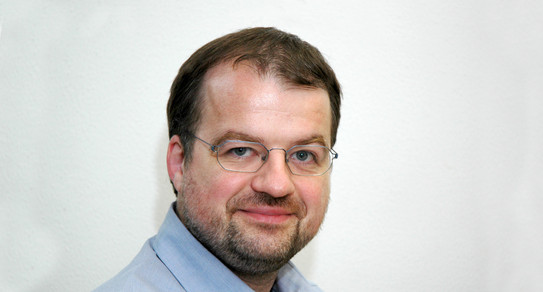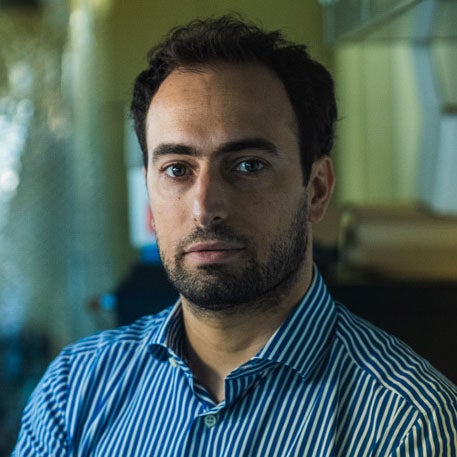
Dennis Schlippert is a researcher at the Institute of Quantum Optics within the Faculty of Mathematics and Physics at Leibniz University Hannover. He leads the BMBF junior research group QuIS-g focusing on Very Long Baseline Atom Interferometry (VLBAI) for quantum tests of the equivalence principle and sensor fusion research. His work is closely associated with multiple collaborative research centers including SFB 1464 TerraQ and SFB 1227 DQ-mat. Dr. Schlippert completed his doctoral studies in physics at Leibniz University Hannover from 2010-2014, earning his PhD with a dissertation on Quantum Tests of the Universality of Free Fall. Prior to that, he conducted research at the Jet Propulsion Laboratory at Caltech (2008-2009) and completed his diploma thesis on Bose-Einstein condensation in optical dipole traps. His educational background includes general physics studies at Leibniz University Hannover from 2005-2010. His primary research interests focus on quantum tests of fundamental physics principles, particularly using atom interferometry techniques. He specializes in Very Long Baseline Atom Interferometry for gravity sensing, quantum clock interferometry, and macroscopically delocalized quantum states of matter. His work bridges theoretical quantum mechanics with practical applications in precision measurement and gravitational physics. Key areas include Bose-Einstein condensates, quantum metrology, gravitational wave detection, and space-based quantum experiments. Analysis of his recent publications reveals a strong focus on advancing atom interferometry techniques for fundamental physics tests. His work spans quantum tests of the equivalence principle, gravitational time dilation measurements, quantum sensors for gravitational wave detection, and space-based quantum experiments. The research demonstrates increasing sophistication in experimental setups, moving from laboratory demonstrations toward practical applications in geodesy, navigation, and fundamental physics. HALOSTAR Fellow (2009-2012) BMBF Quantum Futur junior research group leadership Dr. Schlippert actively participates in multiple research collaborations and leadership roles. Since 2021, he has served on the board of CRC TerraQ as a representative of students and young academic staff. He is a member of the Young BWG (Braunschweig Scientific Society) since 2020 and serves on the board of Cluster of Excellence QuantumFrontiers. He represents academic staff on the QUEST Leibniz Research School Faculty Council and previously served as Student Representative on CRC geo-Q. His research is conducted within the Guided Matter Wave Interferometry working group at the Institute of Quantum Optics. This team develops advanced atom interferometry techniques for precision measurements of gravitational effects and fundamental physics tests. The group's work spans laboratory experiments, theoretical modeling, and development of instrumentation for future space-based quantum experiments.